Diploma 14
Islands: Rethinking the Settlement Form from Property to Care
At the very root of the current climate crisis lies the concept of property: a pervasive apparatus of governance that for centuries has dispossessed communities of their sources of sustenance, substituting an ethos of care with one based on exploitation. By property we mean, above all, land property: a juridical framework that has reduced a means of existence into a commodity. Within the logic of this apparatus, land is no longer a place to inhabit, but a resource to plunder as ‘standing reserve’ for the sake of profit. This condition becomes legible in the form of the settlement.
A settlement is the primary form of sedentary cohabitation and as such it includes not just homes, but all those facilities that make collective life possible such as streets, paths, fields and gathering spaces. Until recently, many settlements in different parts of the world were semi-autonomous and driven by self-sustenance. Since the dawn of capitalism – and in certain cases, even earlier – the settlement has ceased to be a mere form of coexistence, becoming instead a device to control people and goods. The modern settlement was meant to expand land exploitation ad infinitum, from the domestic interior to the management of natural resources. It is precisely this understanding of our relationship with the world – and each other – in terms of property rather than care that we need to fight in order to deal with the current climate crisis.
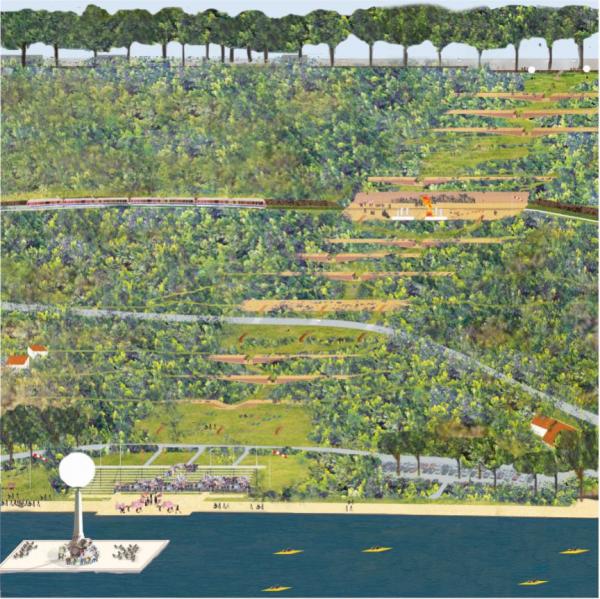
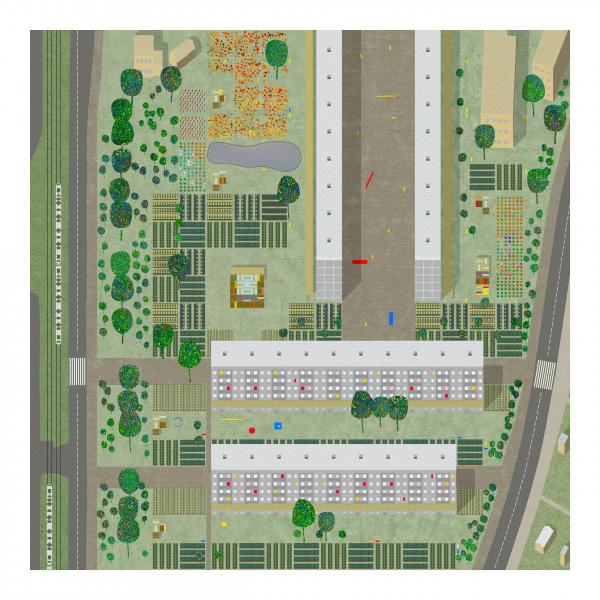
DIP14 will address this crisis by revisiting the settlement, both in urban and rural contexts, through projects that question its concrete architectural definition, from the design of homes to the organisation of circulation and landscape. The settlement is ultimately the nexus between planning policies and the design of everyday life and as such, it needs to be addressed not as a design sic et simpliciter, but rather as a project of maintenance and existential commitment. We will reimagine ways to transform this physical form into a space of care: a self-organised ‘island’, in which social relationships are driven by localised practices of commoning instead of exploitation. The figure of the island is often construed as a space of exclusion and segregation, yet its defined form makes it a place of potential for autonomy and experimentation, within and against both the state and the market. By conceiving the urban world as a confederation of islands, our projects will address the way in which communities can pursue their emancipation and give it a significant architectural form.