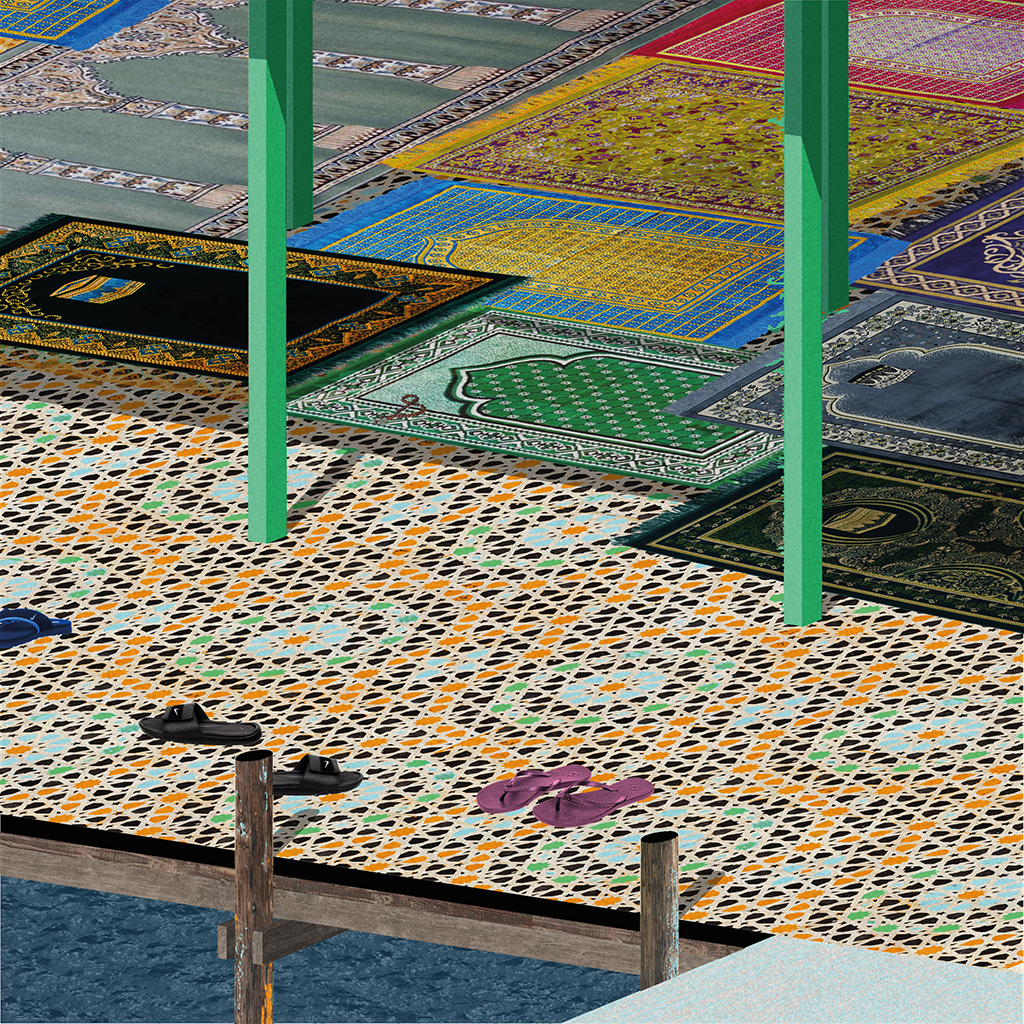
Gotong-Royong: An Autonomous Floating Settlement in Brunei
Hafizah Mohd-nor, MArch (Year: 5)
Water settlements have been victims of romanticization and exclusion from the discourse of urbanization, eclipsed by the colonial canon of the gridded settlement of dry land. The need to trace boundary lines on the landscape was a tool of control to demand cultures be legible to colonialist’s conventions. The notion of settling on water means, and has always meant throughout history, the search for forms of governmentality based on strong local autonomies. Upon examination of three water settlements in Benin, Iraq and Brunei, water was seen as no man’s land challenging the foundational legal tenets of sovereignty.
The project decolonizes the act and narrative of settling, challenges ownership by replacing it with the notion of possession and advocates the role of the architect as adviser of systems rather than designer of specifics. The project is a manual for a floating settlement in Kampung Ayer, Brunei that articulates a high degree of community agency vis-a-vis the need for state support. ‘Gotong-Royong’, in Malay is a conception of a social ethos of communal work. The project urges for a paradigm shift in viewing the ecological landscape not as a place that belongs to us but as a place where we belong to.
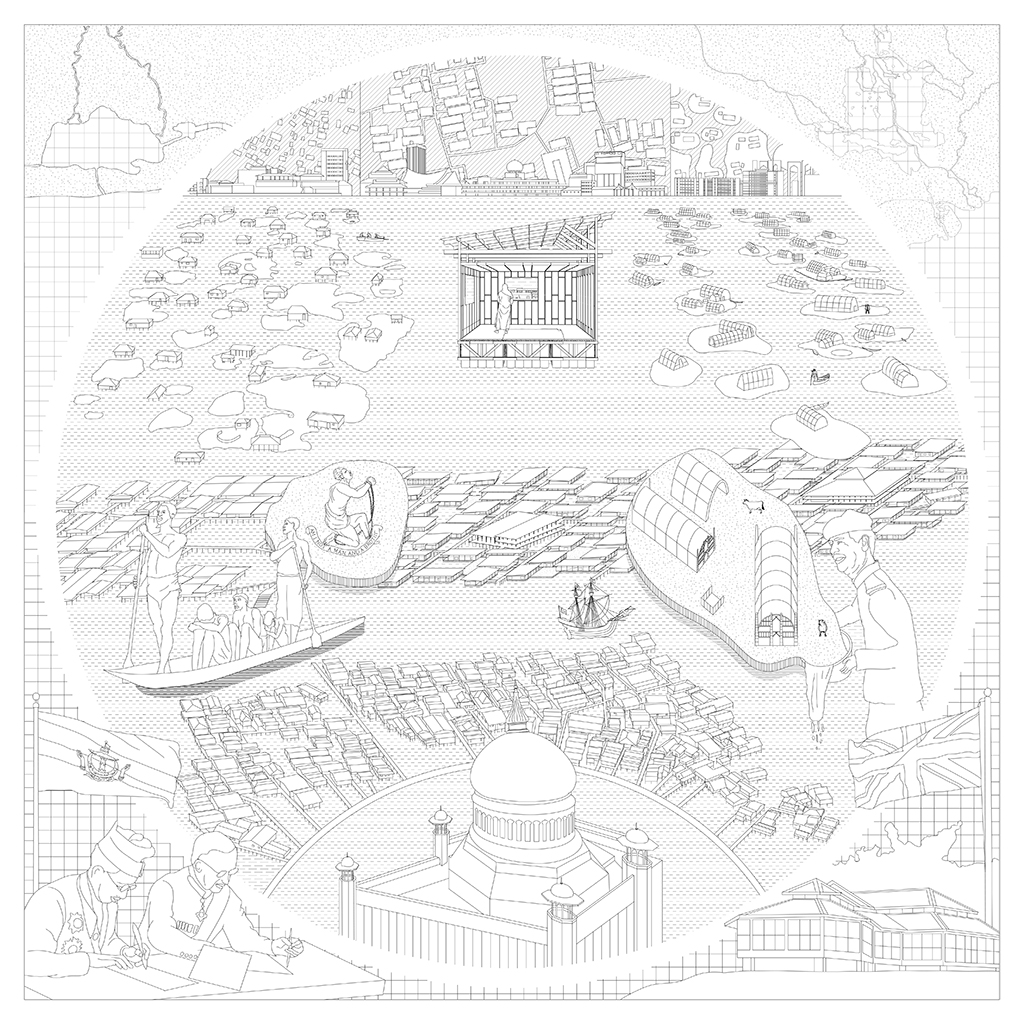
Analagous Map summarizing the thesis of Res Omnium: Settling on lake, marshland and river with the proposal
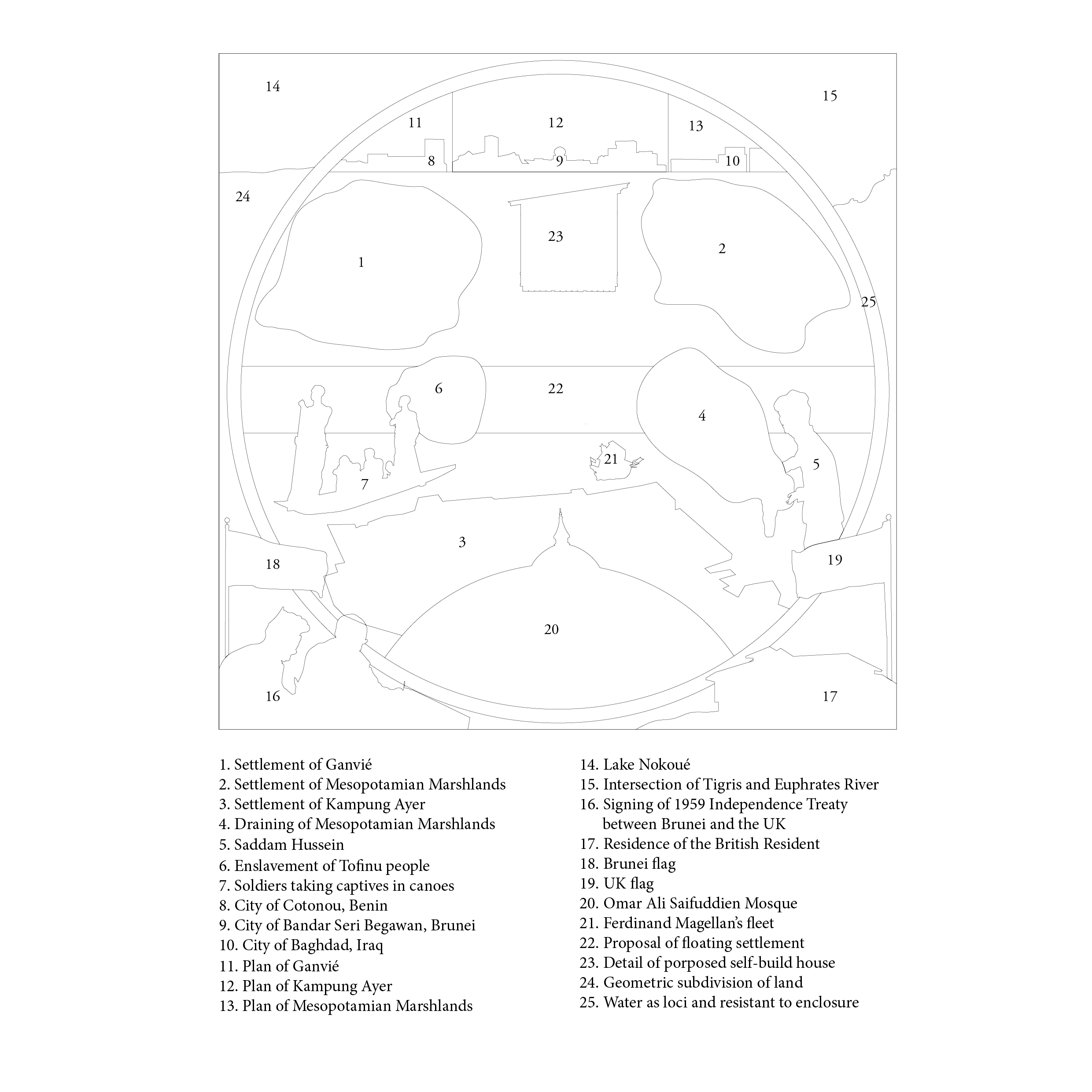
Legend for Analagoup Map
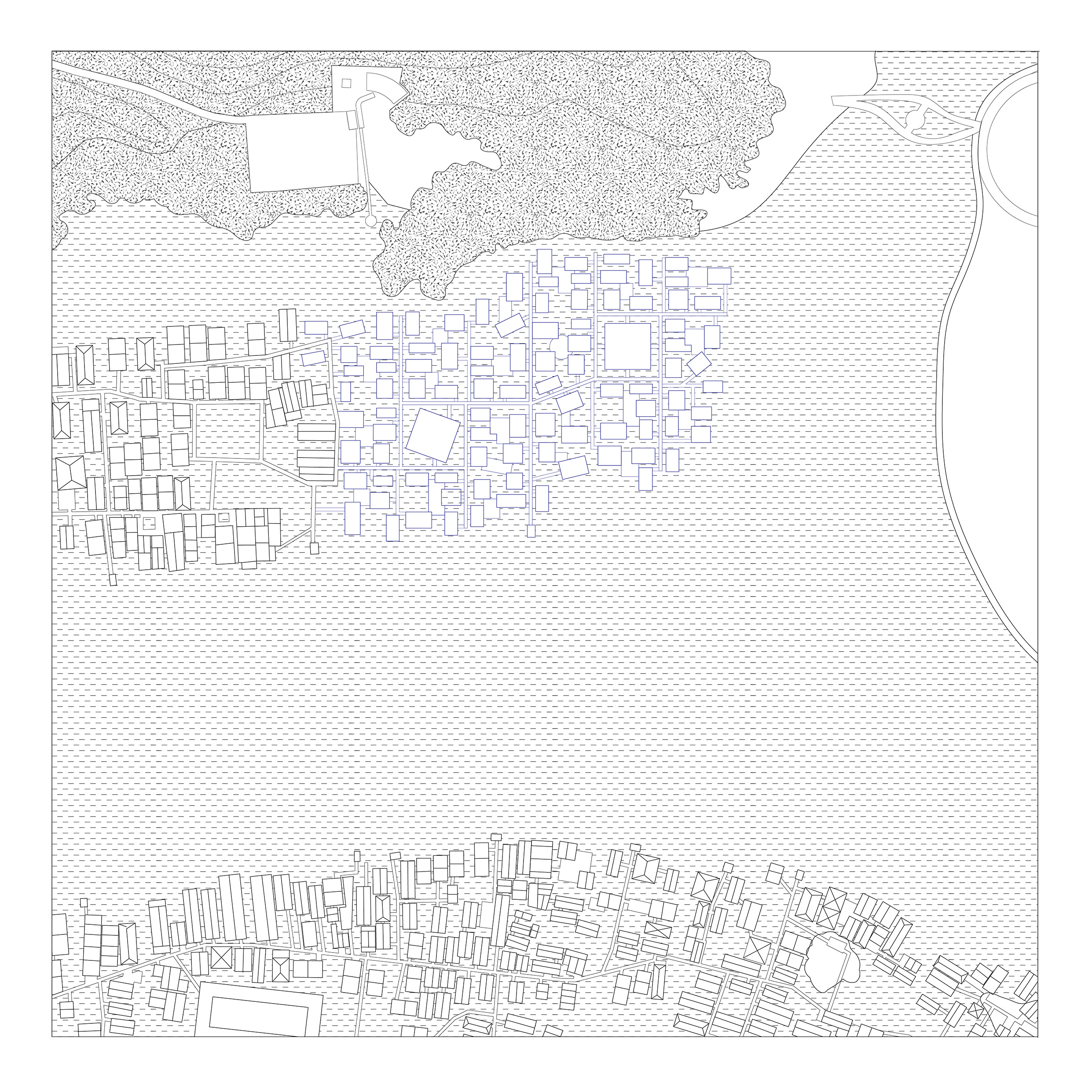
Proposed scenario of floating water settlement merges with the existing morphology.
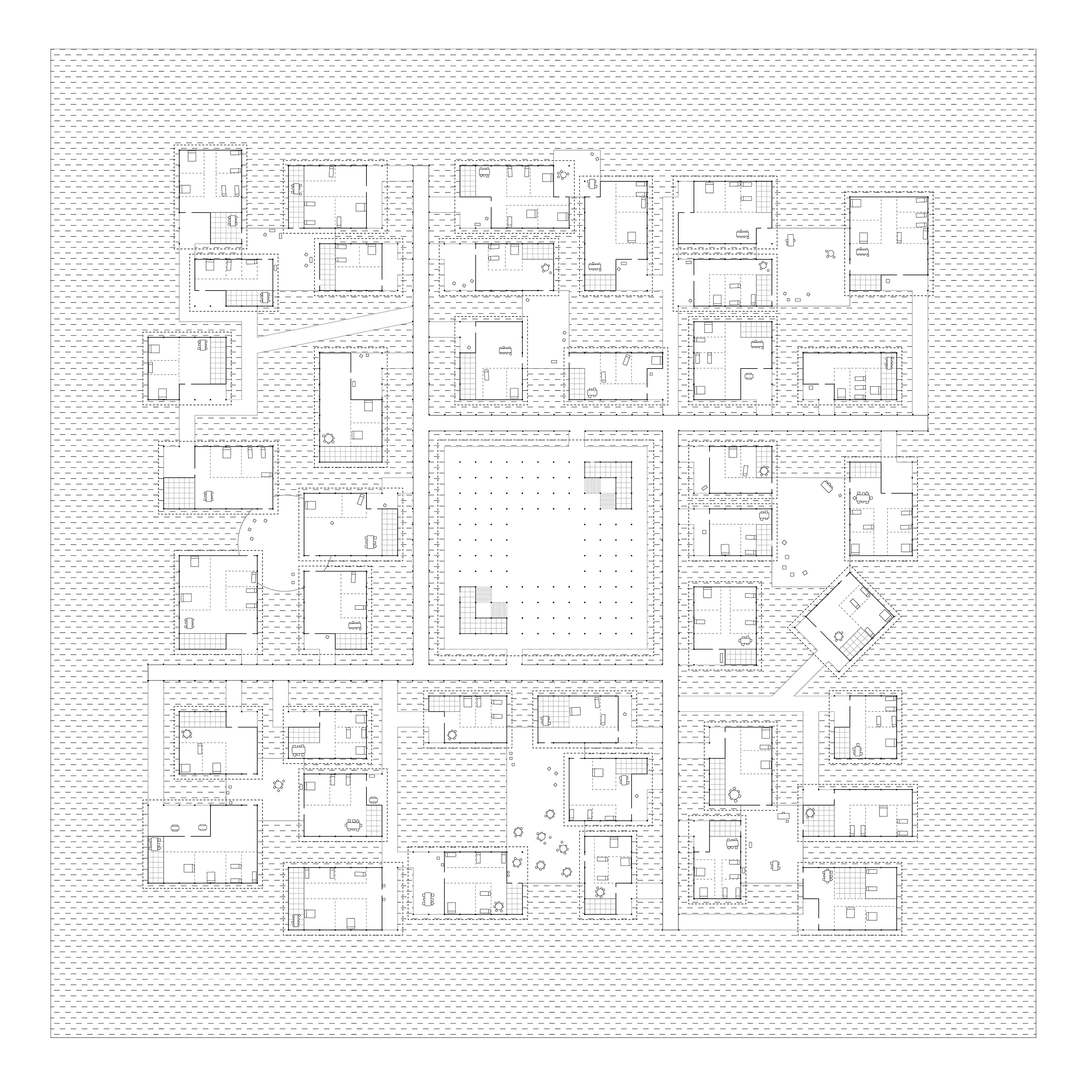
Proposed scenario of civic module with commoning back verandahs as a new typological innovation.
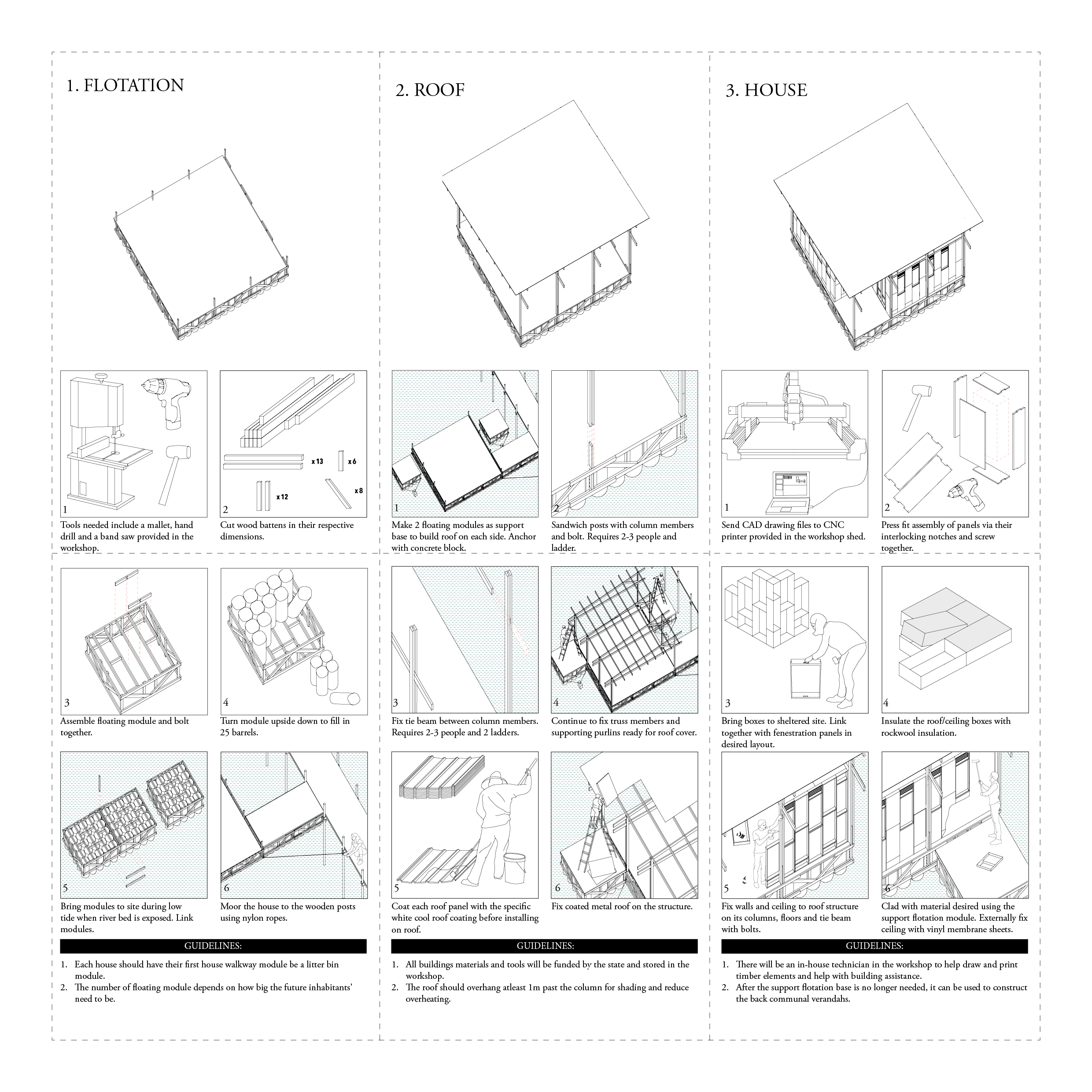
Role of the architect is to advice on systems of construction that can be adjusted by inhabitants.
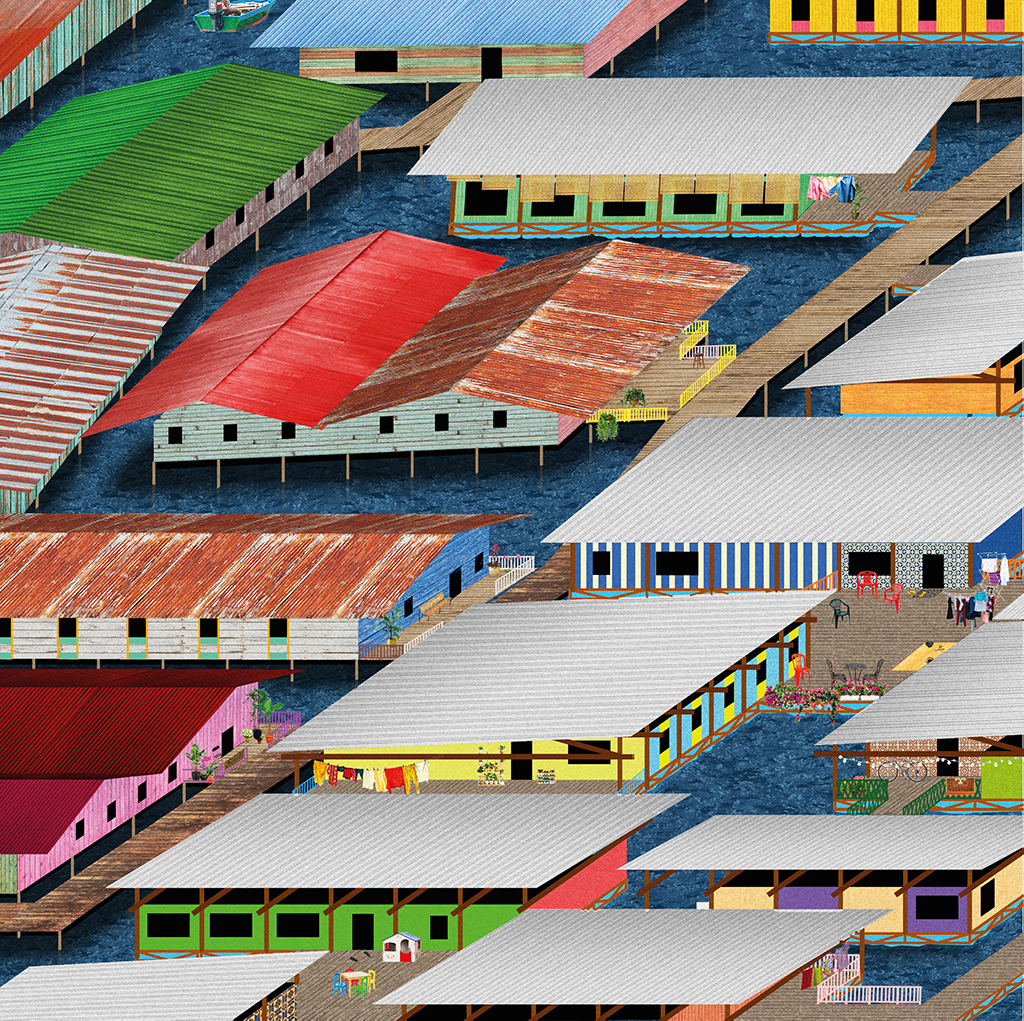
The floating proposal merges with the existing morphology- the new blue barrel system contrasting the wooden stilts.
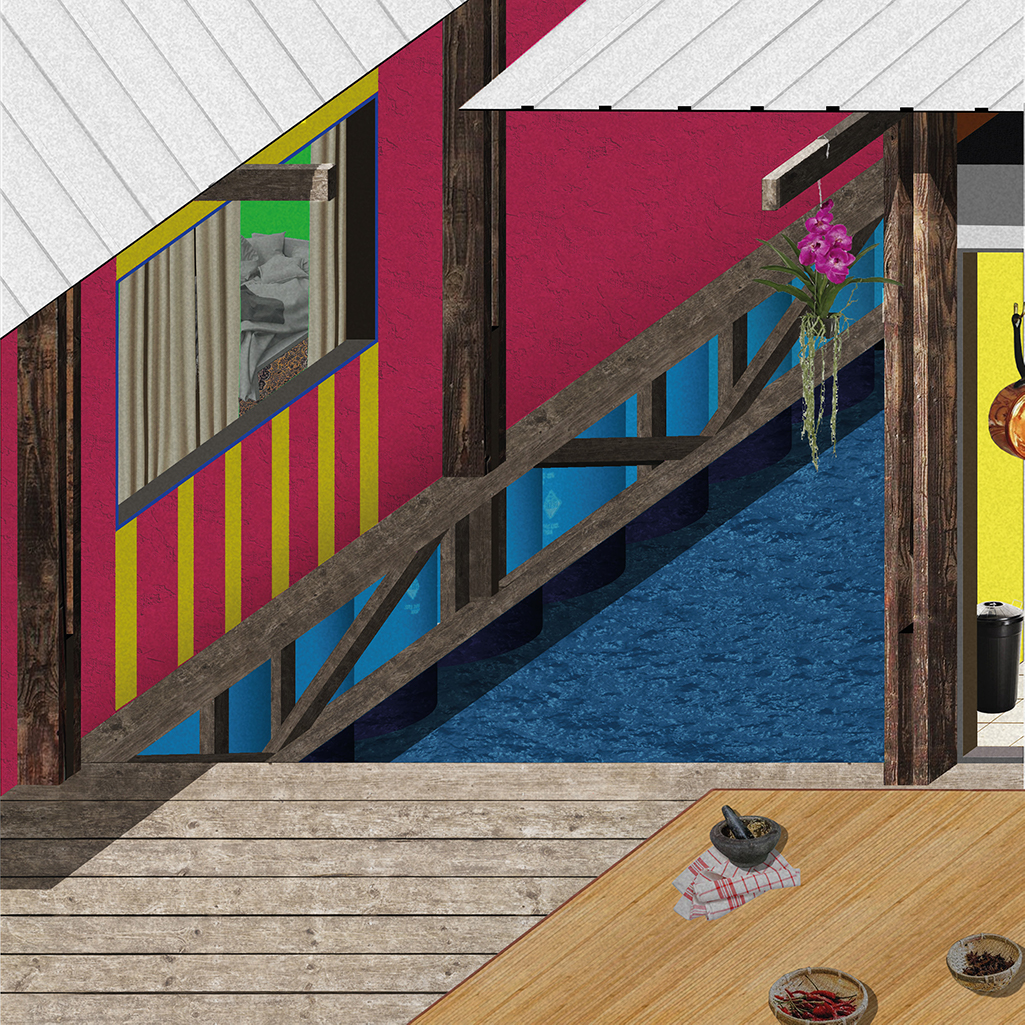
The finality of property lines is replaced with the fluidity of water as spaces of negotiation manifesting in verandahs.
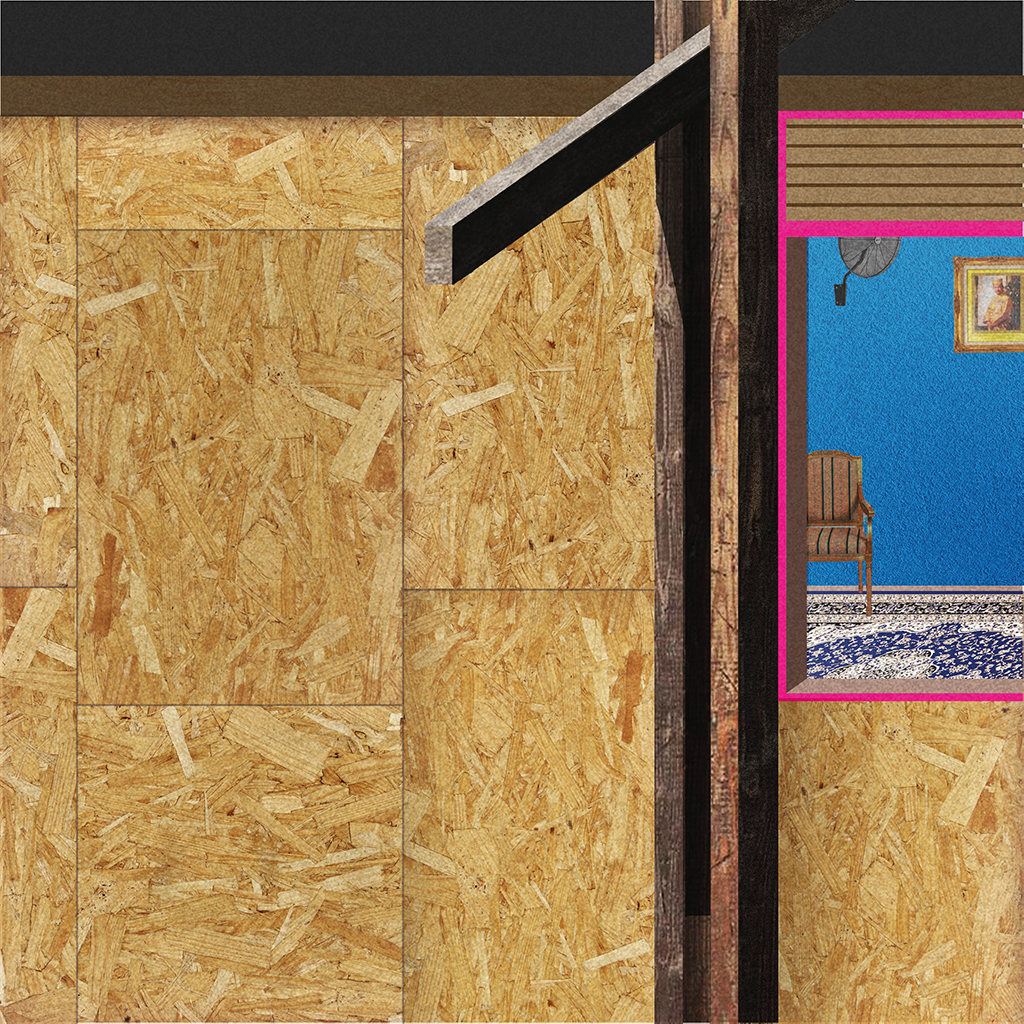
The self-build construction technique merges prefabrication methods and traditional carpentry to empower residents.
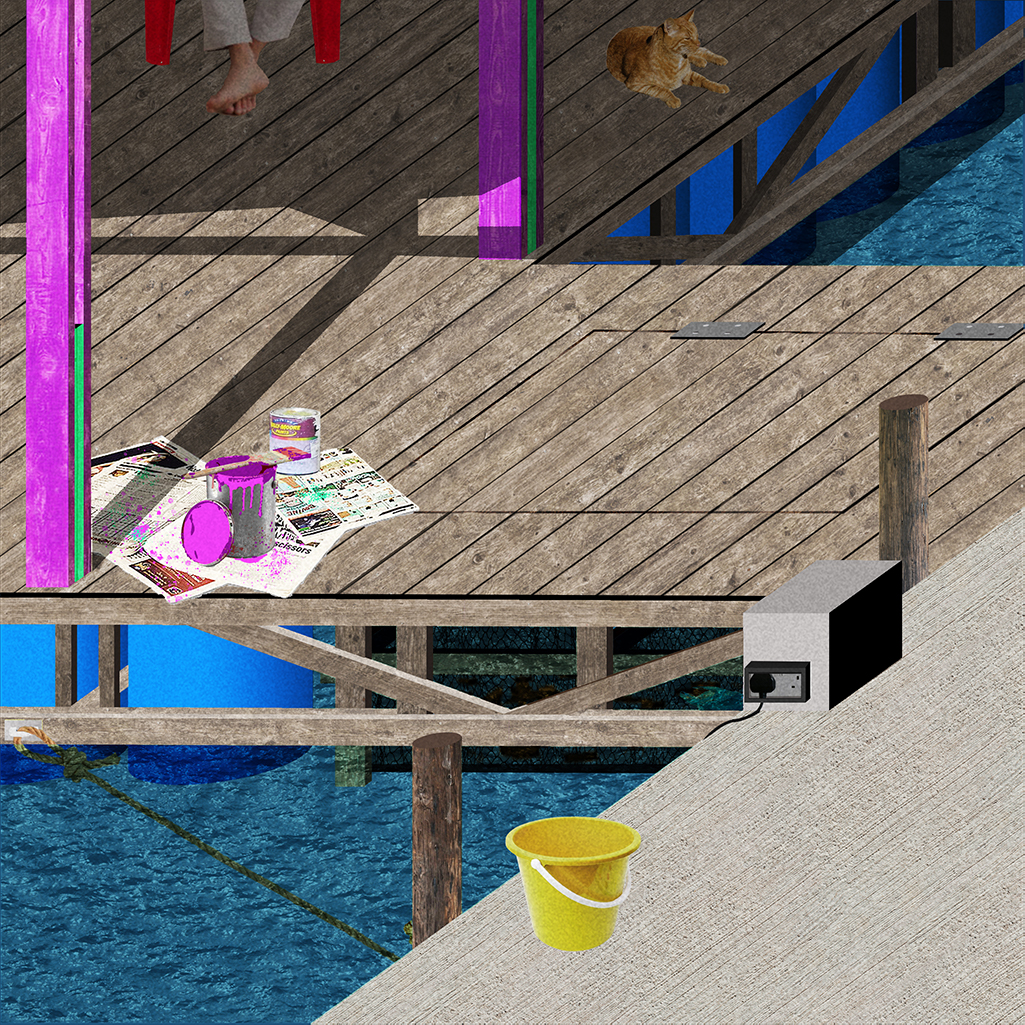
A litter technology is integrated to foster solidarity through cleaning.