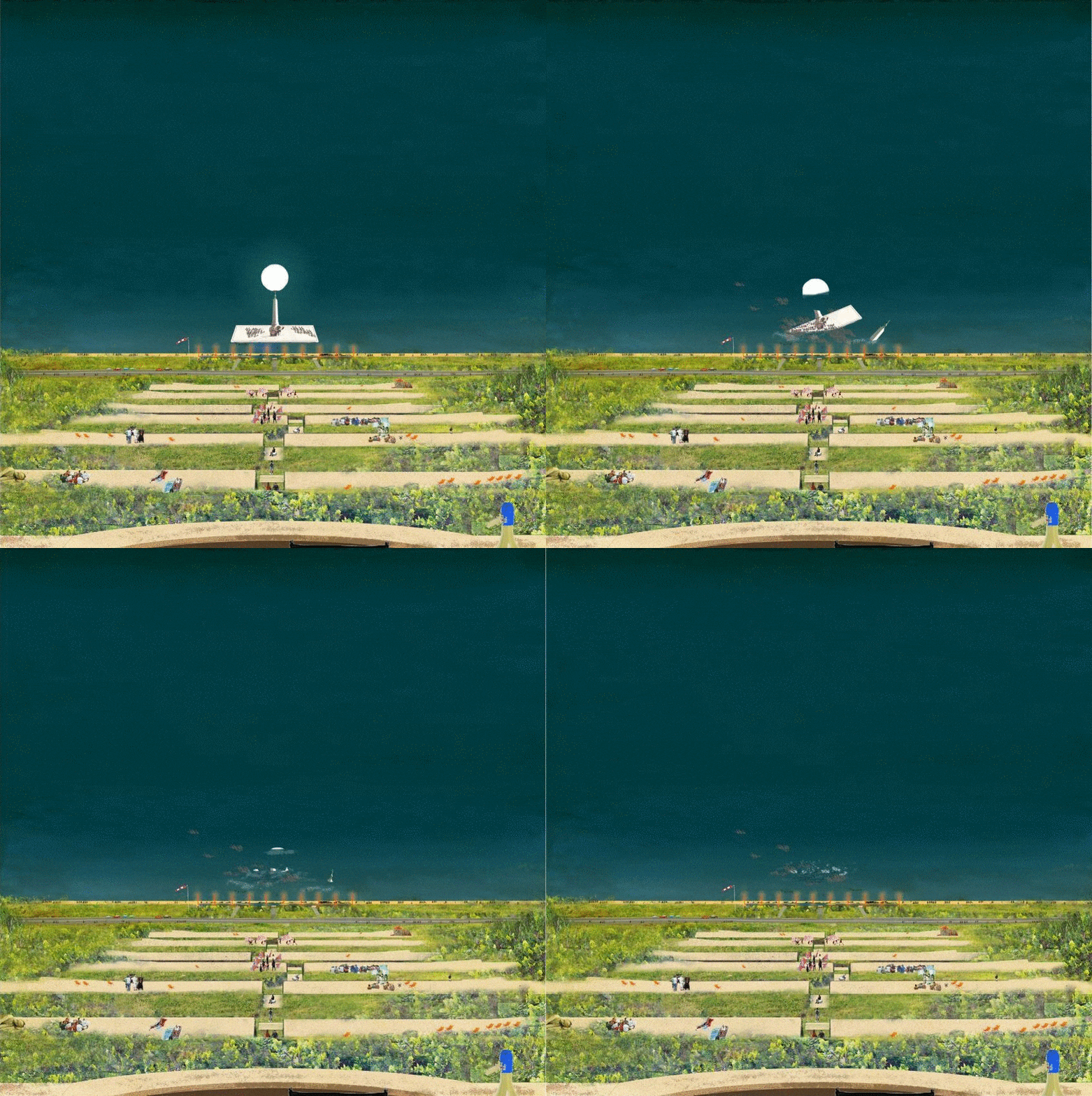
Staged: A Theater-Settlement in the Park of Lake Albano
Jacopo A Colarossi, MArch (Year: 5)
Staged reclaims the lost connection between the settlement and theatre which has characterised this area of Rome- the Alban Hills- since the Middle Ages, Renaissance and Baroque periods, by freeing theatrical spaces from buildings by returning them to open-air civic spaces.
There is a societal desire to return to performance spaces. This project’s ambition is to design new alternatives to urban theatres and to rethink the connection of the theatre with the city, rethink the theatre as a settlement and as a social practice agenda.
Staged becomes a momentary collapse of form and experience, It becomes the missing links between the theatre and the settlement that make it one and the same.
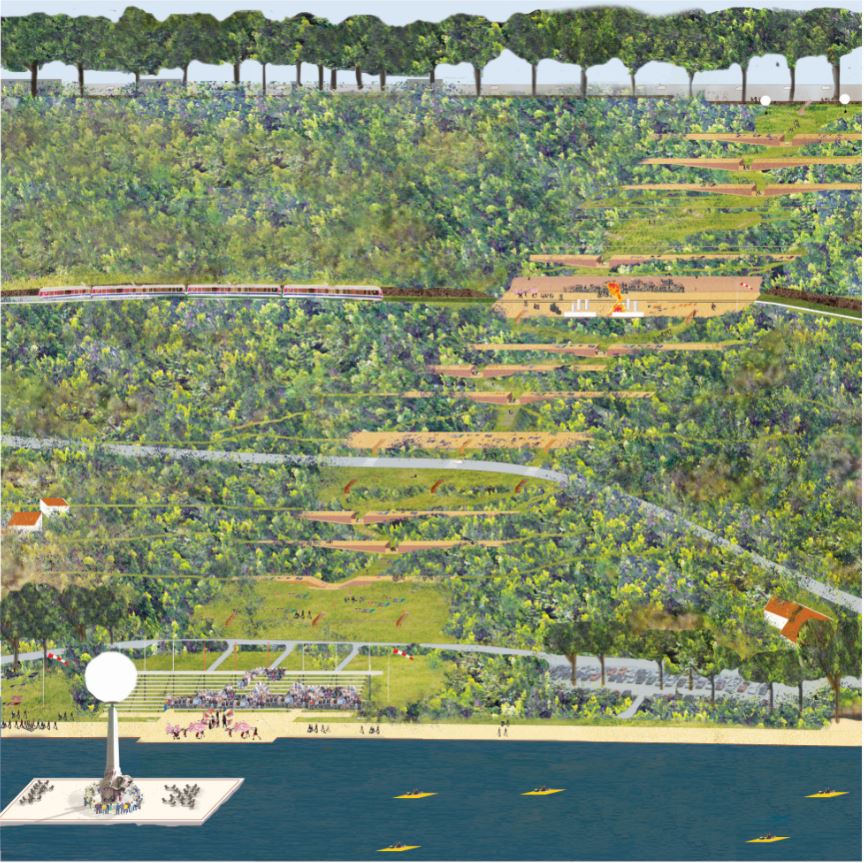
Integrating the place (the architecture) and the space (the stages) to the point in some instances where it is not possible to separate its architecture from its performances.
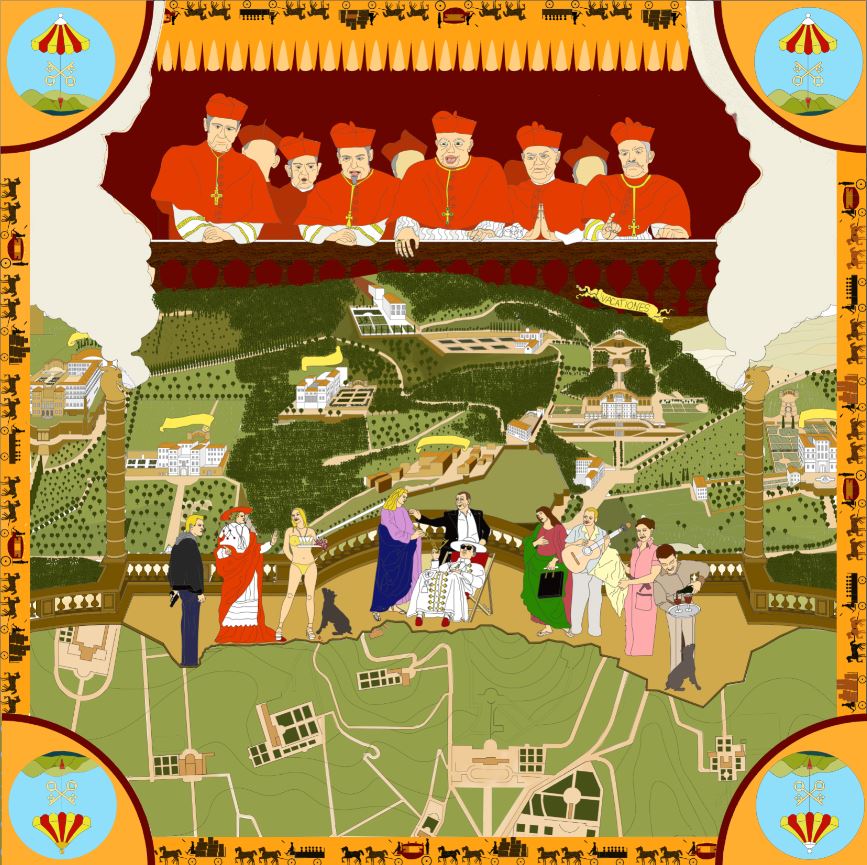
Un Bello Stato (a beautiful estate, standing and status). These “Theater States” villas, between feudalism and the nation state, superimposed theatrical tropes as a means of control on the landscape.

The design of this theatre-settlement negotiates a public pedestrian access to the lake through a sequence of platforms on the slope. Arriving by train on this platform one can descend the slope,
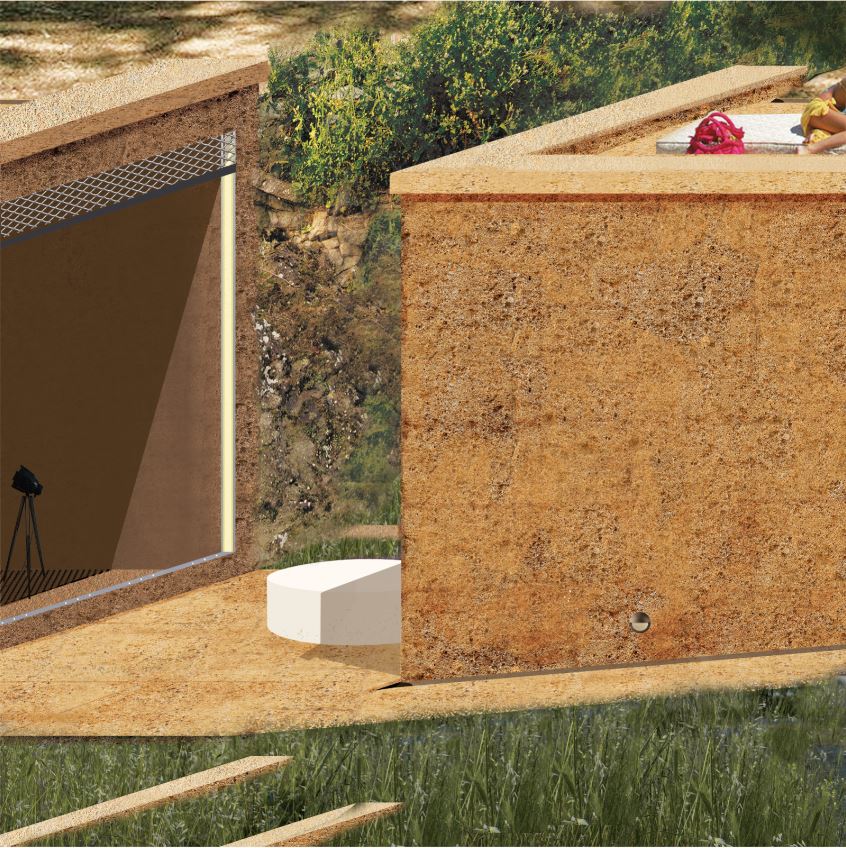
To the Rehersal Spaces constructed out of the local volcanic turf. This same platform structure diverges to your right and left from seemingly monolithic structures...
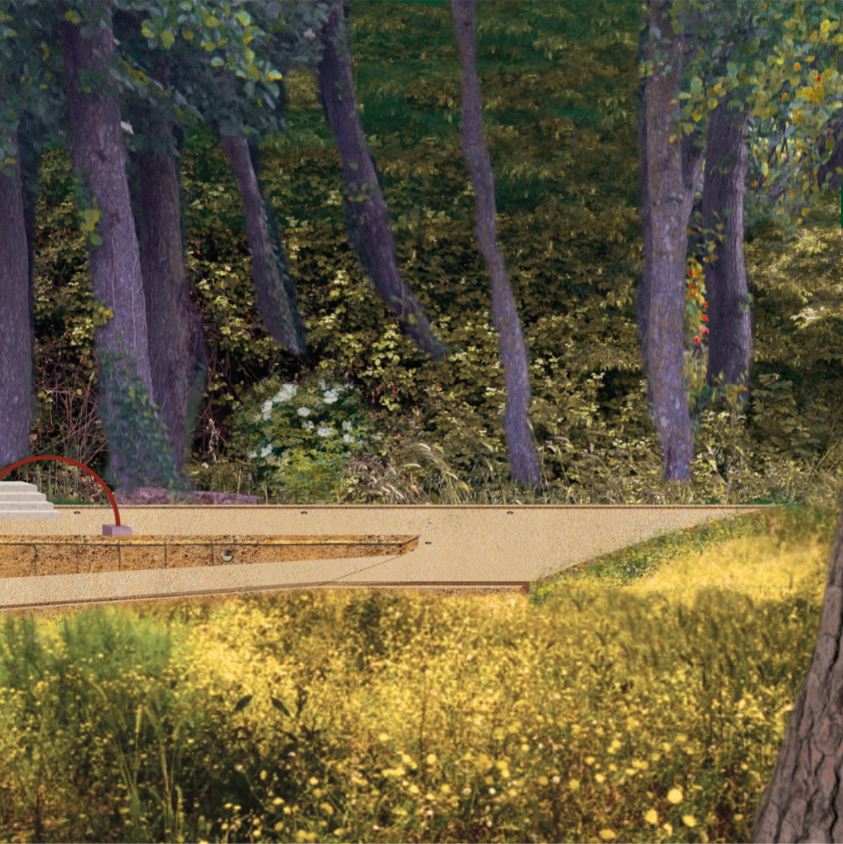
Very thin platforms blend in with the existing topography and vegetation. These platforms are designed in order to emerge and disappear within the greenery of the landscape.
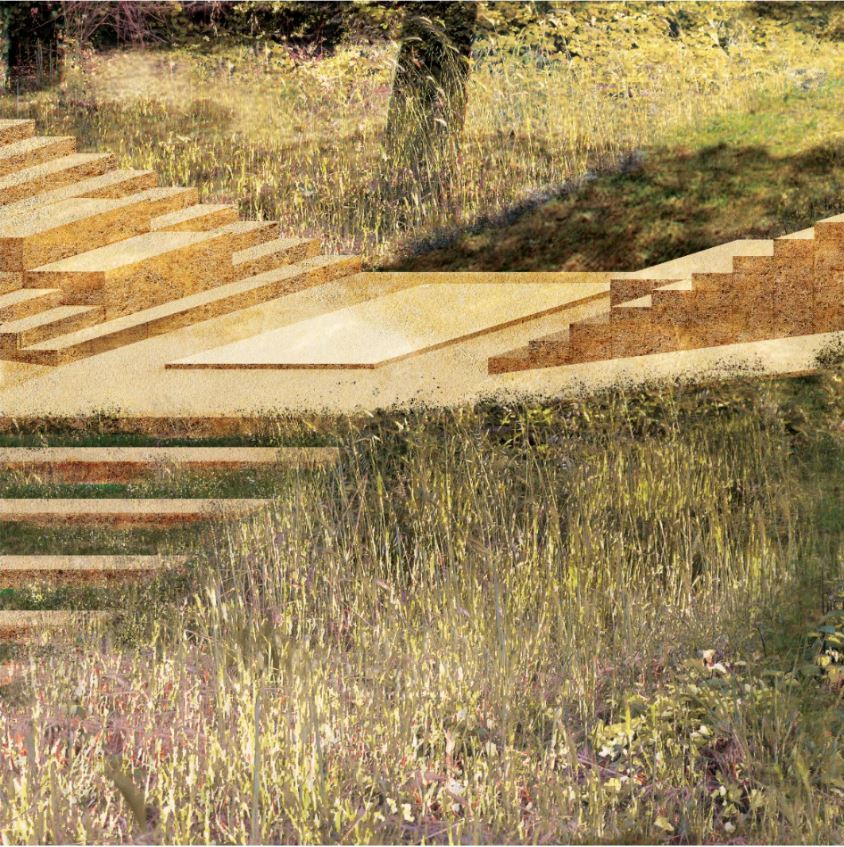
Steps and ramps offer moments of pause and shade during the day and possible impromptu sets to be used at night.
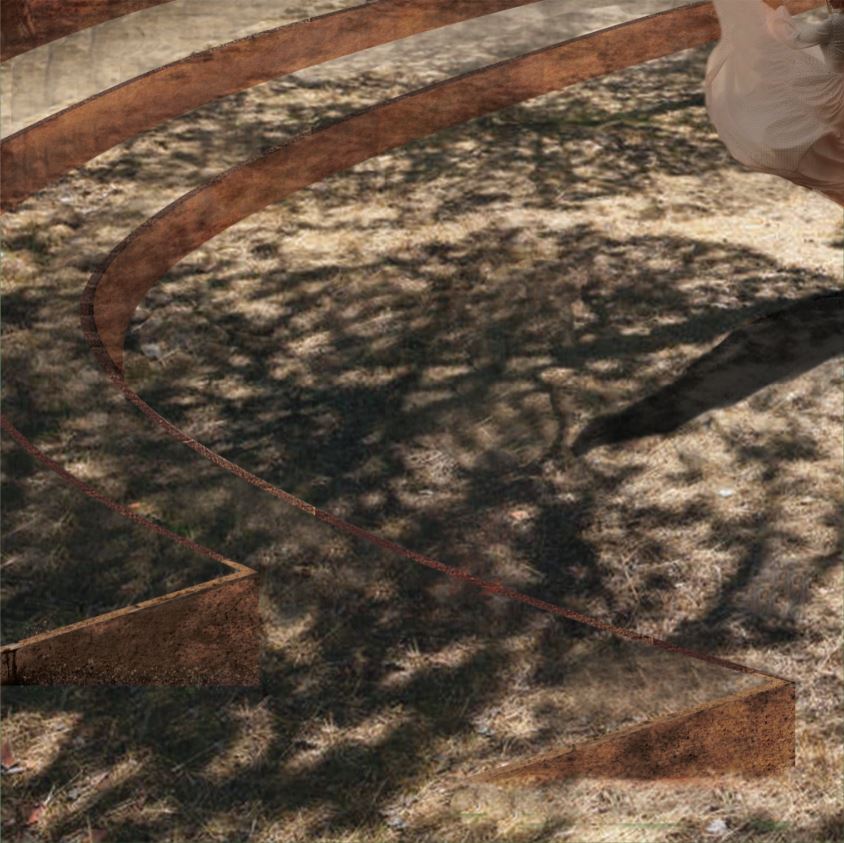
curved elements in corten steel help create exedra like spaces for performances.
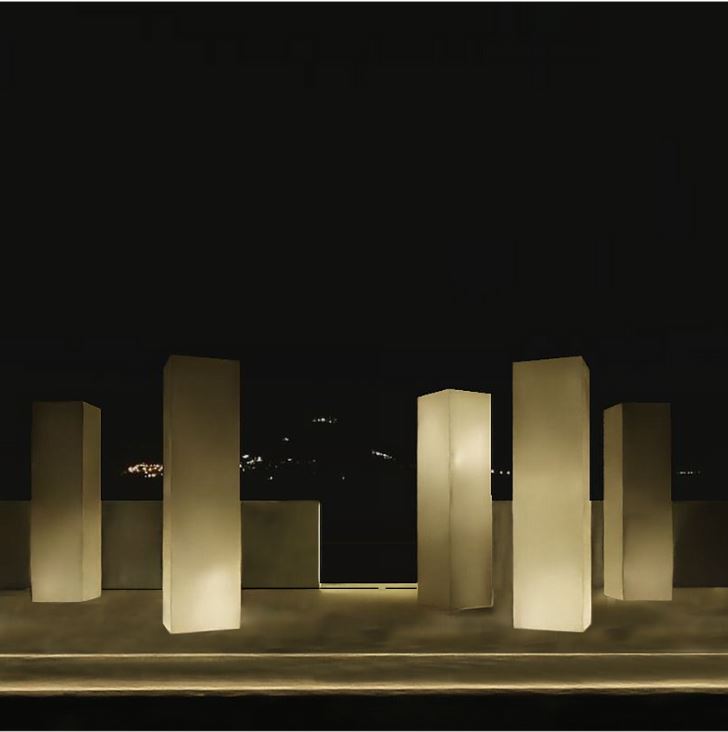
The train platform is transformed into an open air stage. Luminary configurations are suitable for experimental performances that can rearrange the platform based on the props needed.
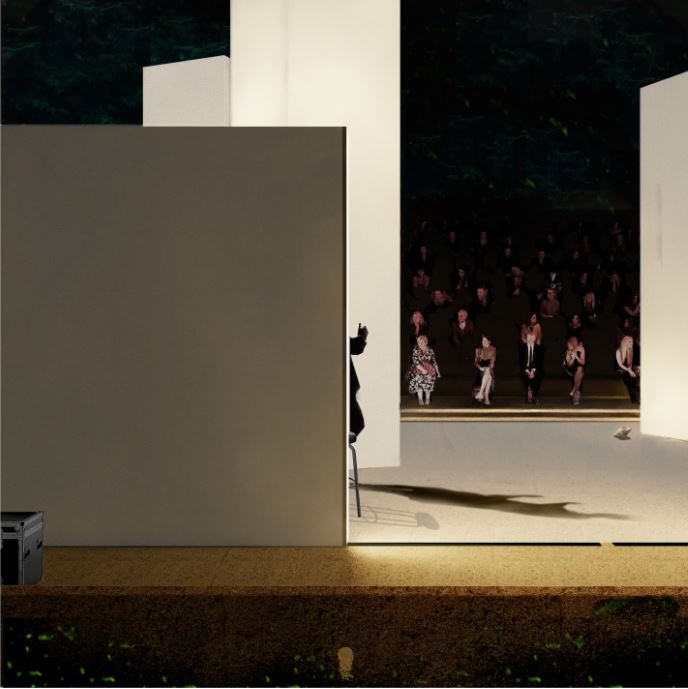
The train platform by day becomes a stage at night, and a calendar of performances on the main stage can be planned with the according sets and configurations.
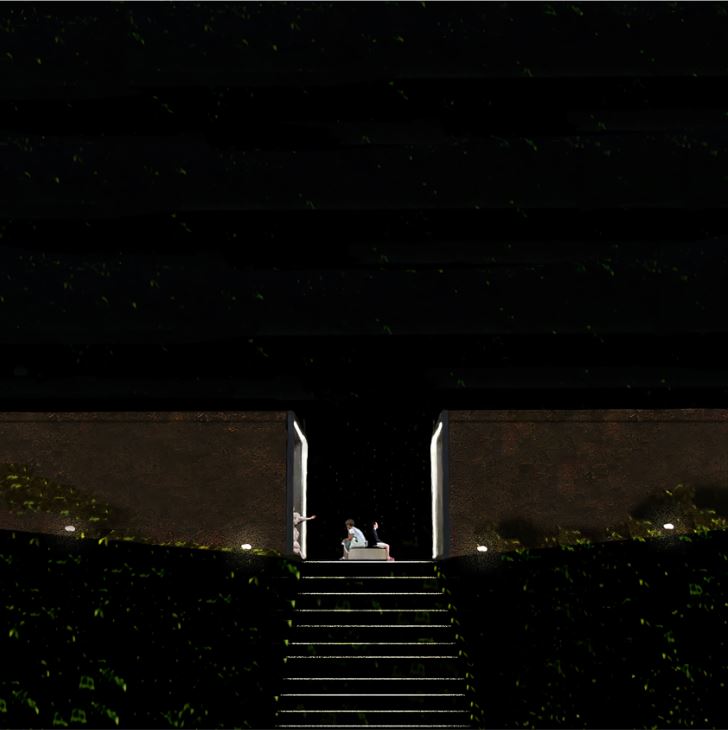
Aftersun strolls to the lake become punctured with public participation and spaces of confrontation. Two theater qualities are accentuated, and that is the actor, the public and the architecture.