Experimental 4
From Tectonics to Fusion
The Austrian art historian Alois Riegl wrote of a radical change taking place at the beginning of the 20th century – a transition from the veneration of historical value to an appreciation of newness. This reflected the shift in early modern Europe towards innovation and the belief that the creation of novel, artificial materials could trigger the creation of capital in newly industrialised countries. A century later, material innovation and production now occur at a startlingly rapid rate and in virtual environments, as opposed to the physical sites of the research lab. In effect, this is initiating a Neo-Cambrian explosion. New material hybrids are being concocted every day – virtually, theoretically and in infinite combinations.
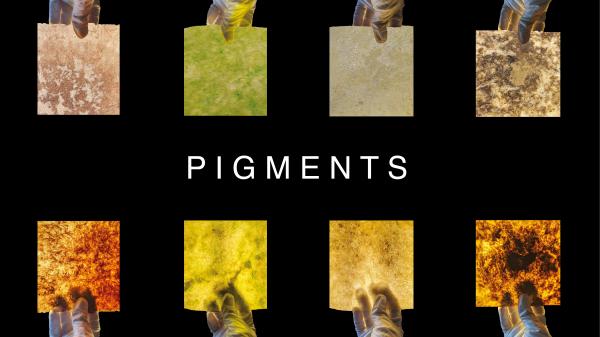
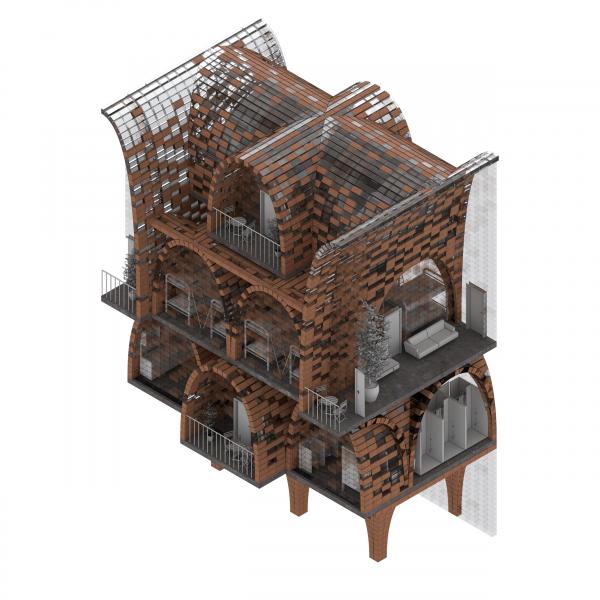
In architecture, however, Semper’s 19th-century separation of types of construction into tectonics and stereotomics (the cutting and assembly of discrete parts), remains the prevalent method of constructing buildings – it has a long way to go to catch up with today’s exponentially advancing material hybridisations. In this context, our objective will be to align with these developments and attempt to generate a new architecture in sync with contemporary material advances. More specifically, we will focus on a particular type of materials, termed fused or multi-materials, which are just beginning to make their way into architecture and design. Their radicality lies in the fact that they are continuously fused substances – they do away with parts and mechanical connections.
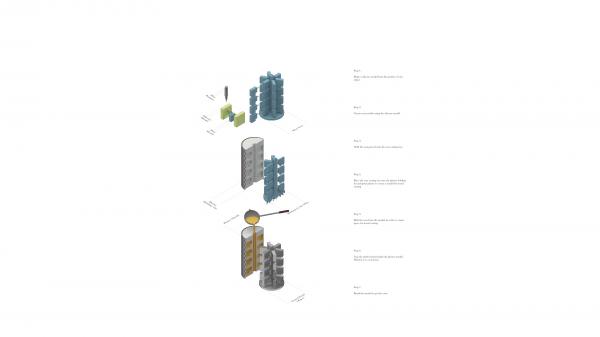
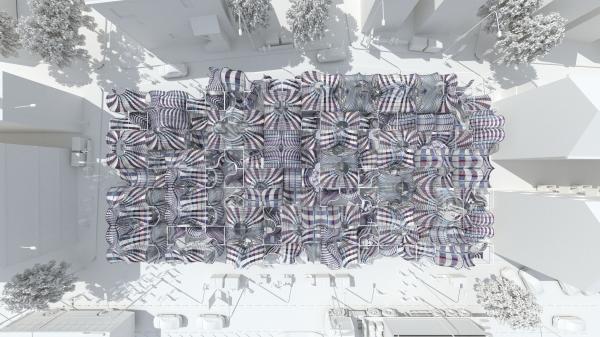
Replacing parts with continuous materials promises a much more direct, immediate and orderly way of building. It effectively by-passes capitalist modes of production, as well as generating radical cost, material, and energy savings. Our aim will be to explore new procedures for designing and building with material gradients – casting, pouring and fusing matter in its fluid, pliable form in order to generate continuous topologies and novel forms of space. The output of this process will be prototypical agglomerates of materials in the form of small to medium sized buildings – more than just a collection of individual parts, these progressive visions will signify a new type of architecture that has finally caught up with the future.