Diploma 3
Body Politic
In a strange, circuitous loop, from Vitruvius to le Corbusier, from the Frankfurt Kitchen to the International Space Station, architecture – preoccupied with the dimensions, proportions and movements of the human body – ended up not only facilitating, but also designing the very body it builds for.
If the ultimate object of design is the human body and the object of politics – as Michel Foucault’s term Biopolitics suggests – is managing human life, then architecture becomes the instrument par excellence for the governing of bodies in space. Body Politic can therefore be read in two ways: it refers to Rousseau’s (now controversial) concept of the collective body of citizens that together form a population and a state, as well as the way in which the individual body is politicised and policed while subjected to state decisions. Within the field of Forensic Architecture, DIP3 will puruse its quest at the intersection of conflict, media and architecture, with a focus on the human, non-human and more-than-human body.
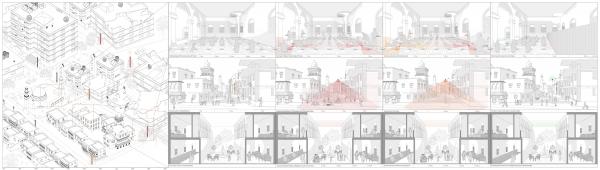
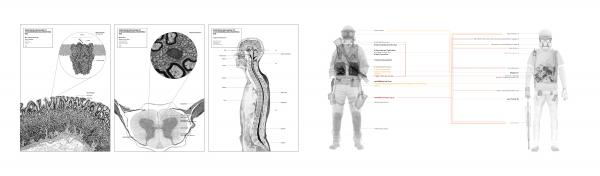
Zooming out from skin cells to satellite imagery, we will investigate all the ways that bodies are handled, controlled, measured, confined, registered, altered, medicated and mediatised, and question the aesthetics of representation of the body. We will learn from the tools of bodily investigation – X-rays, ultrasound machines and surgical cameras – transferring these ways of seeing into the built environment and performing time-based urban autopsies and against-the-grain political diagnoses.
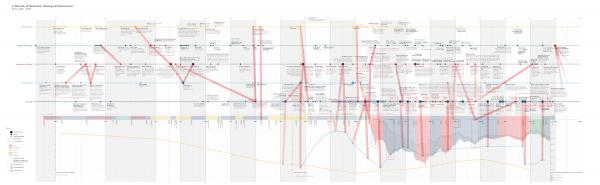
Starting the year with a group investigation into an active human rights case, we will then go on to build individual case files by collecting news clippings and medical reports, recording films and field notes. Through a series of Open Seminars, we will study the troubled history of the state as body, reveal the multiple subjectivities of le Corbusier’s Modulor and interrogate how the tension between complex forces can manifest itself in medical ailments and chronic conditions. We will unpack these moments of rupture across urban and territorial scales, and propose strategic interventions that will insert themselves into the existing political discourse and operate within the institutions and forums currently at play.