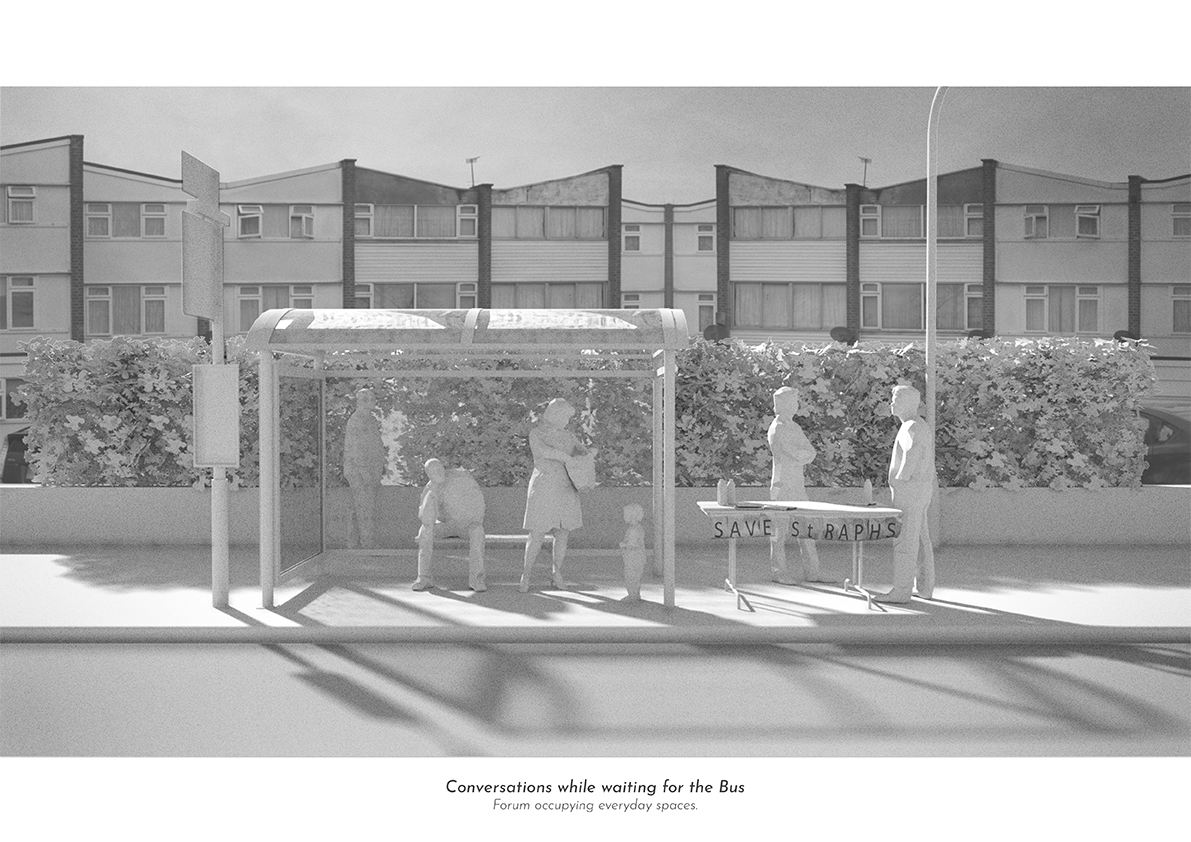
The project initiates a civic ritual that facilitates active citizen participation within London’s planning system. This will become a new site to re-engage the relationship between residents and their right to interject the existing process of state-led regeneration - resisting the slow violence of community displacement taking place across London, which has been reinforced by the weaponisation of sanitation, to benefit the hyper-commodification of space. The project maps networks of housing, public health, legislation and medical technology, to reveal an interconnected system that has built into its structure the tools to legally justify the forced removal of communities. Social rhetorics of hygiene, crime and poverty become a blueprint that has been continuously rebranded to benefit those in power and for the aim of unceasingly creating wealth and value through the cycle of creative destruction from the demolition and rebuilding of residential housing. State-lead urban regeneration is revealed as a biopolitical apparatus of governance.
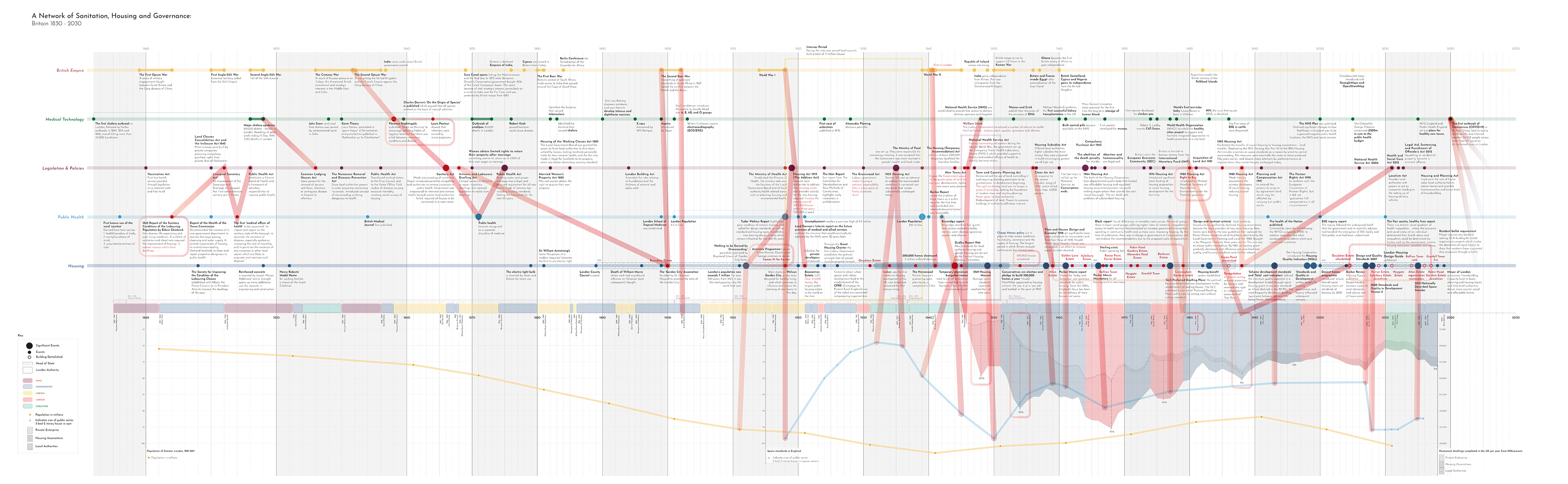
Mapping networks of housing, public health, legislation, medical advances and political conflicts, revealed an interconnected system that has structurally justified the forced removal of communities.
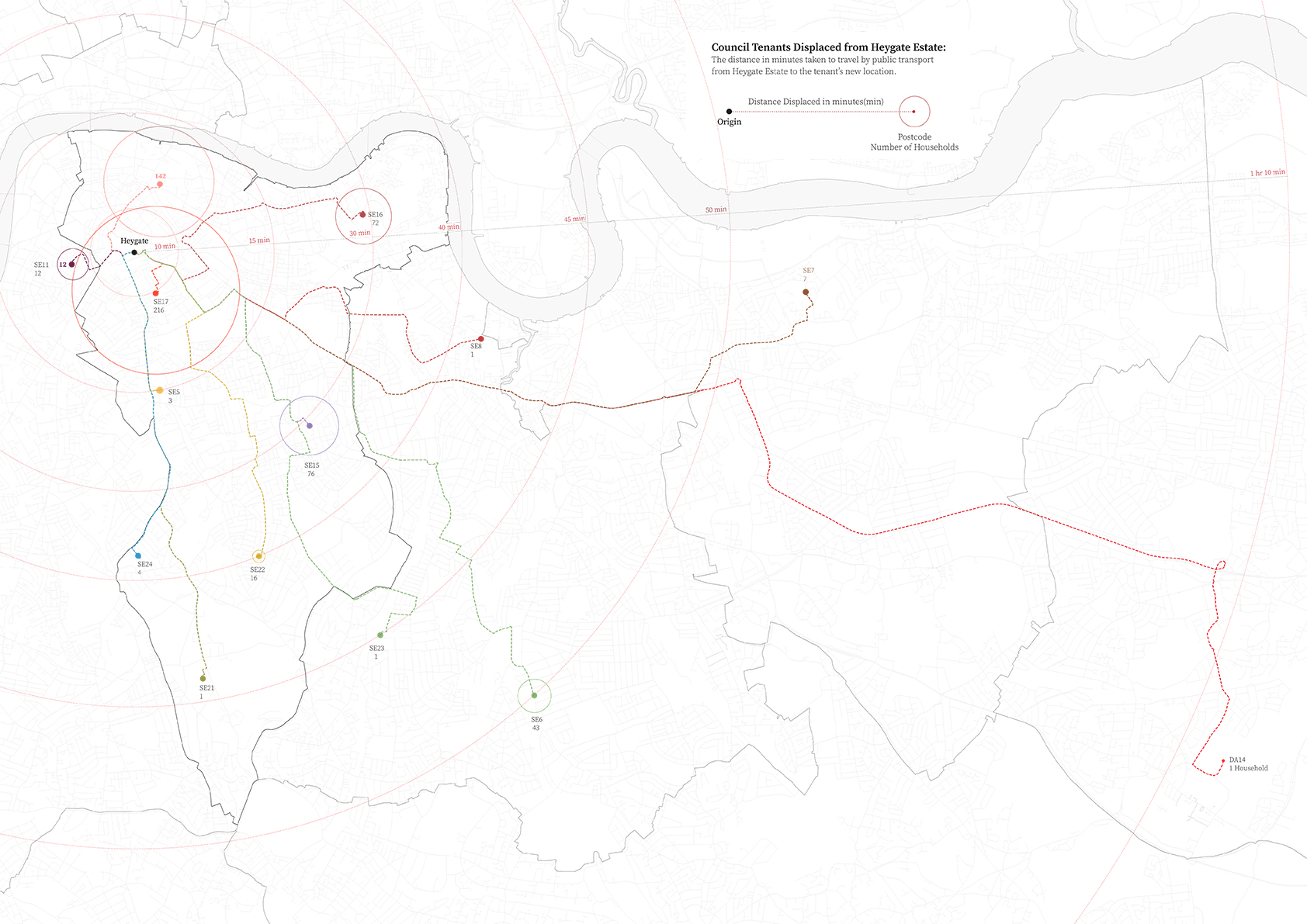
The label of austerity allows prioritising profit and increasing land value over providing secure housing to be further intensified, resulting in the hollowing out of urban centres.
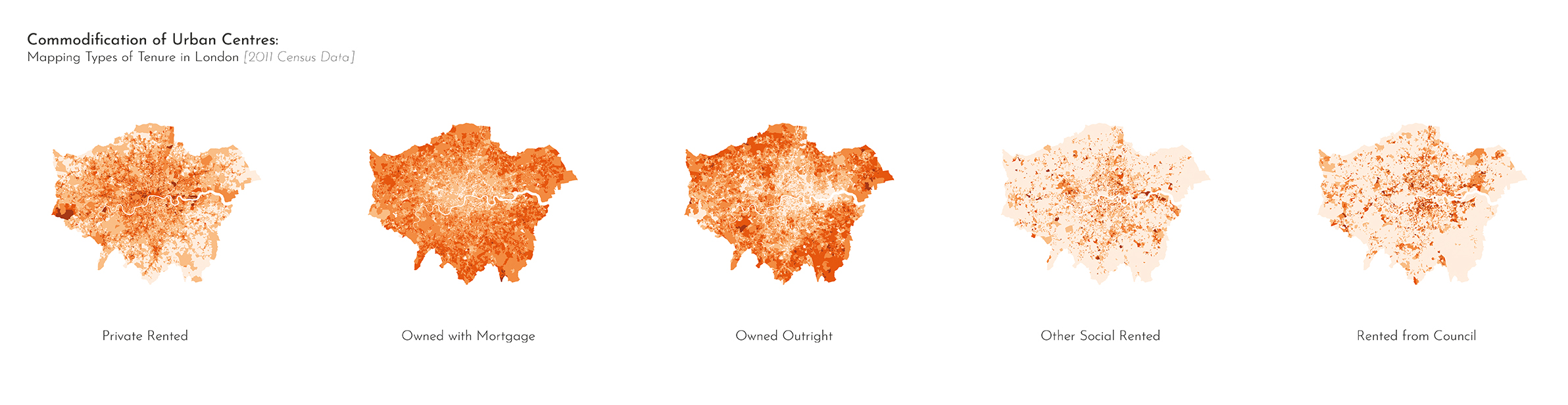
The hyper-commodification of space and the extraordinary value placed on urban land is fuelling the displacement and demolishing the network of support that communities have built up over the decades.
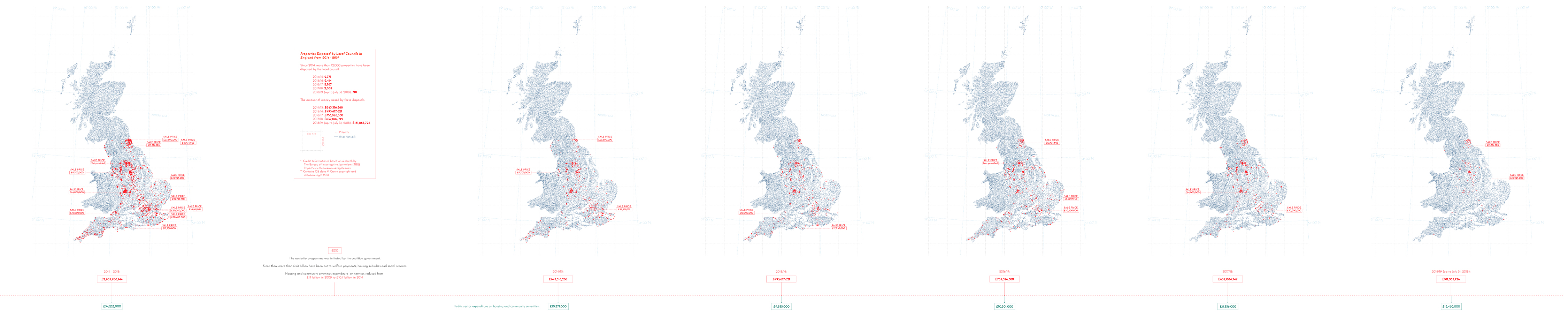
Since the austerity programme was initiated in 2010, more than 30 billion pounds have been cut to welfare funds for housing and social services; councils have had to sell public assets to raise funds.
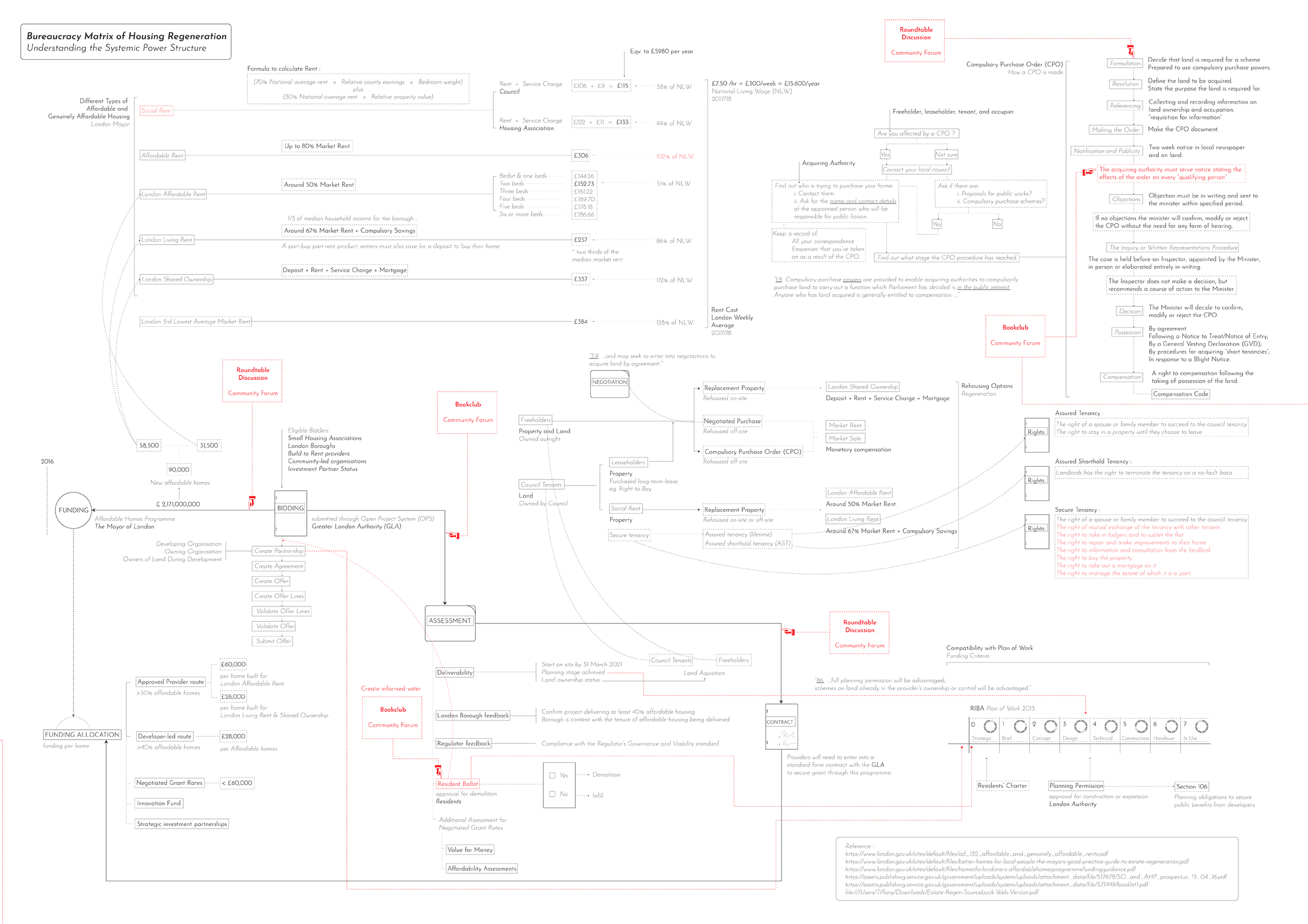
The current bureaucracy is driven by documents outlining detailed finance options. The type of funding offered reveals the dissonance hidden behind all the different labels of ‘affordable housing’.
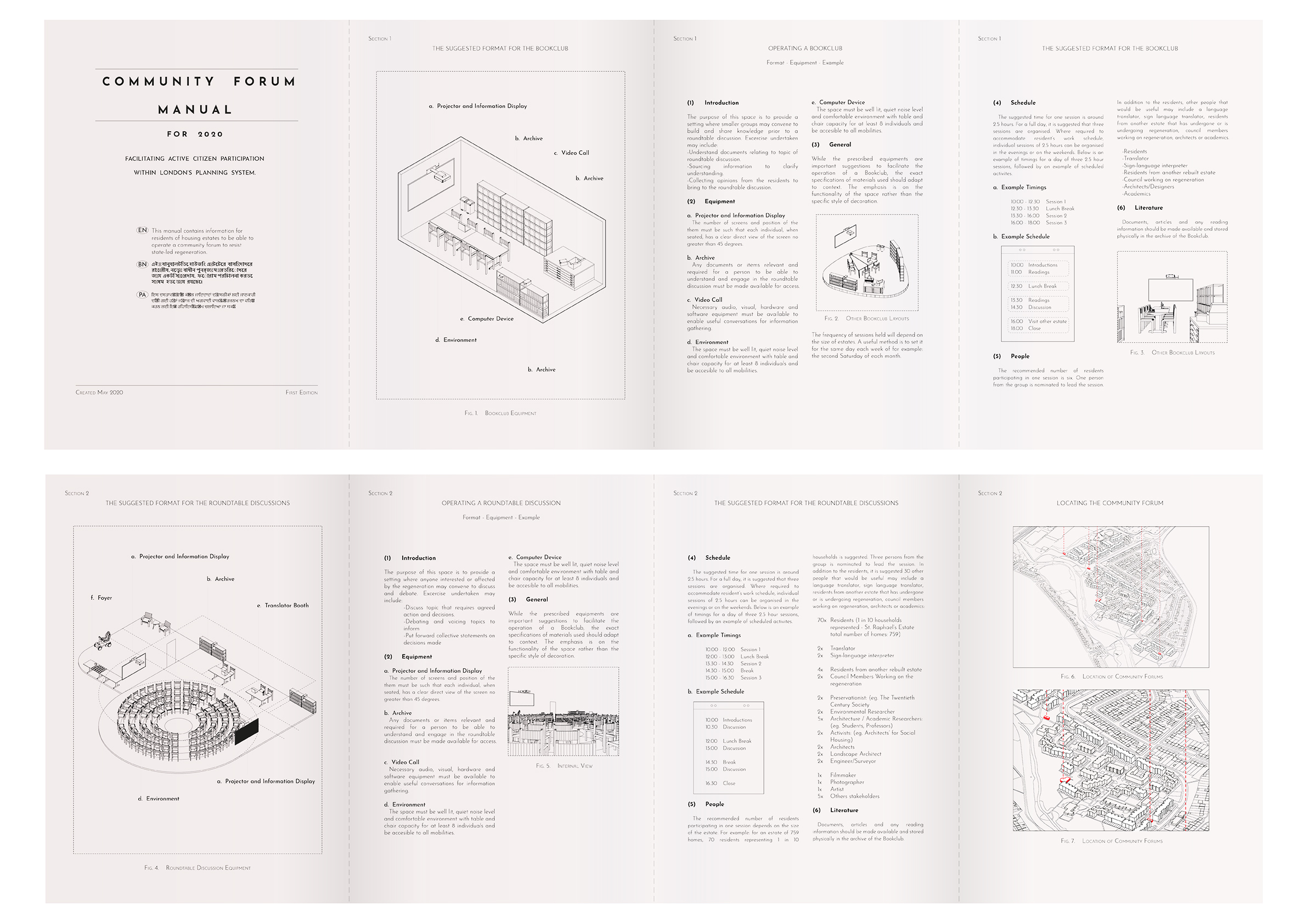
An active intervention of preserving social housing and to enable the inclusion of residents’ opinions becomes necessary; where residents are able to organise, share knowledge and resist displacement.
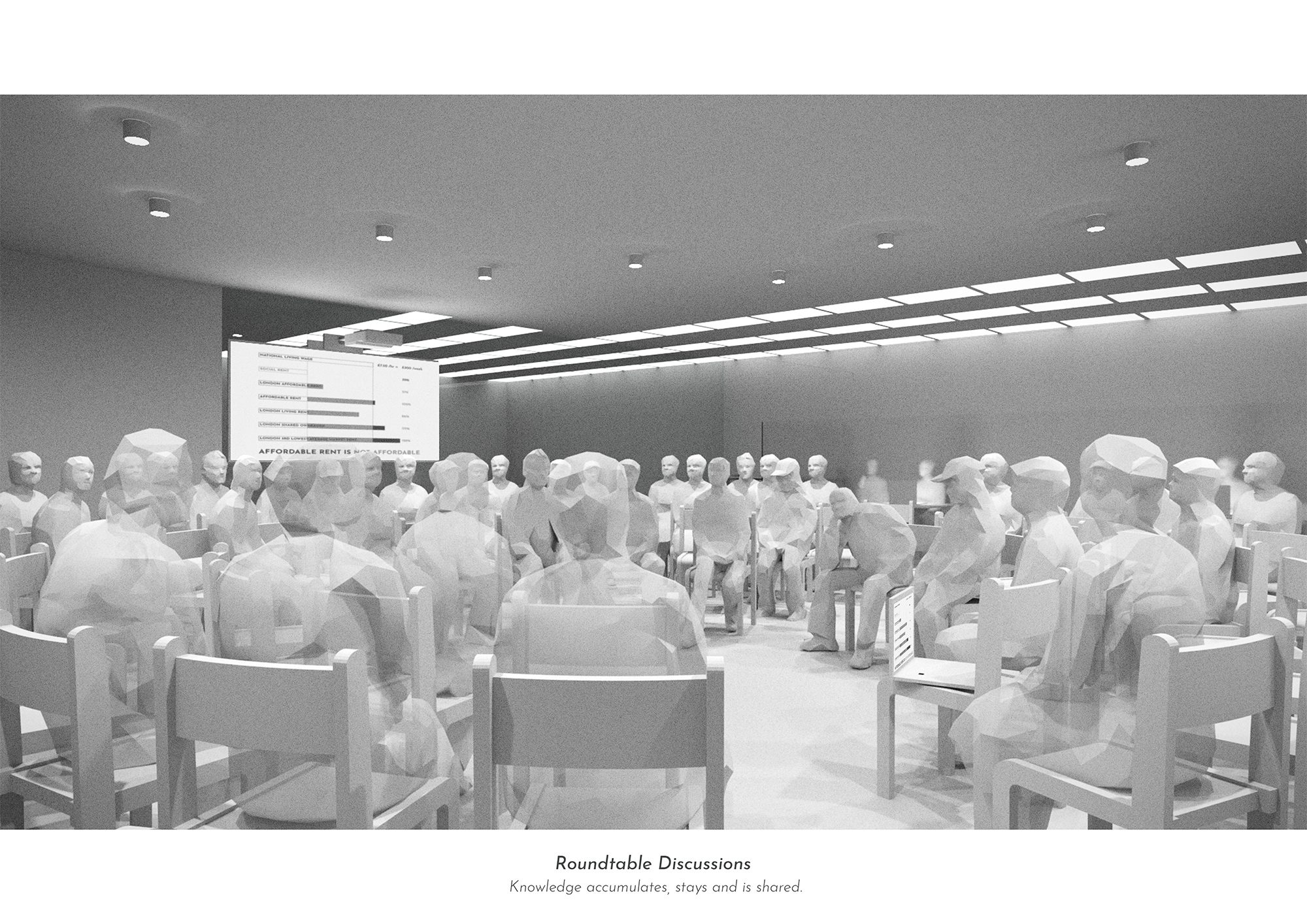
Through talking to residents of St Raphael’s Estate in Brent, what was immediately apparent was the frustration felt by residents of being spoken down to and not having a place to meet together.
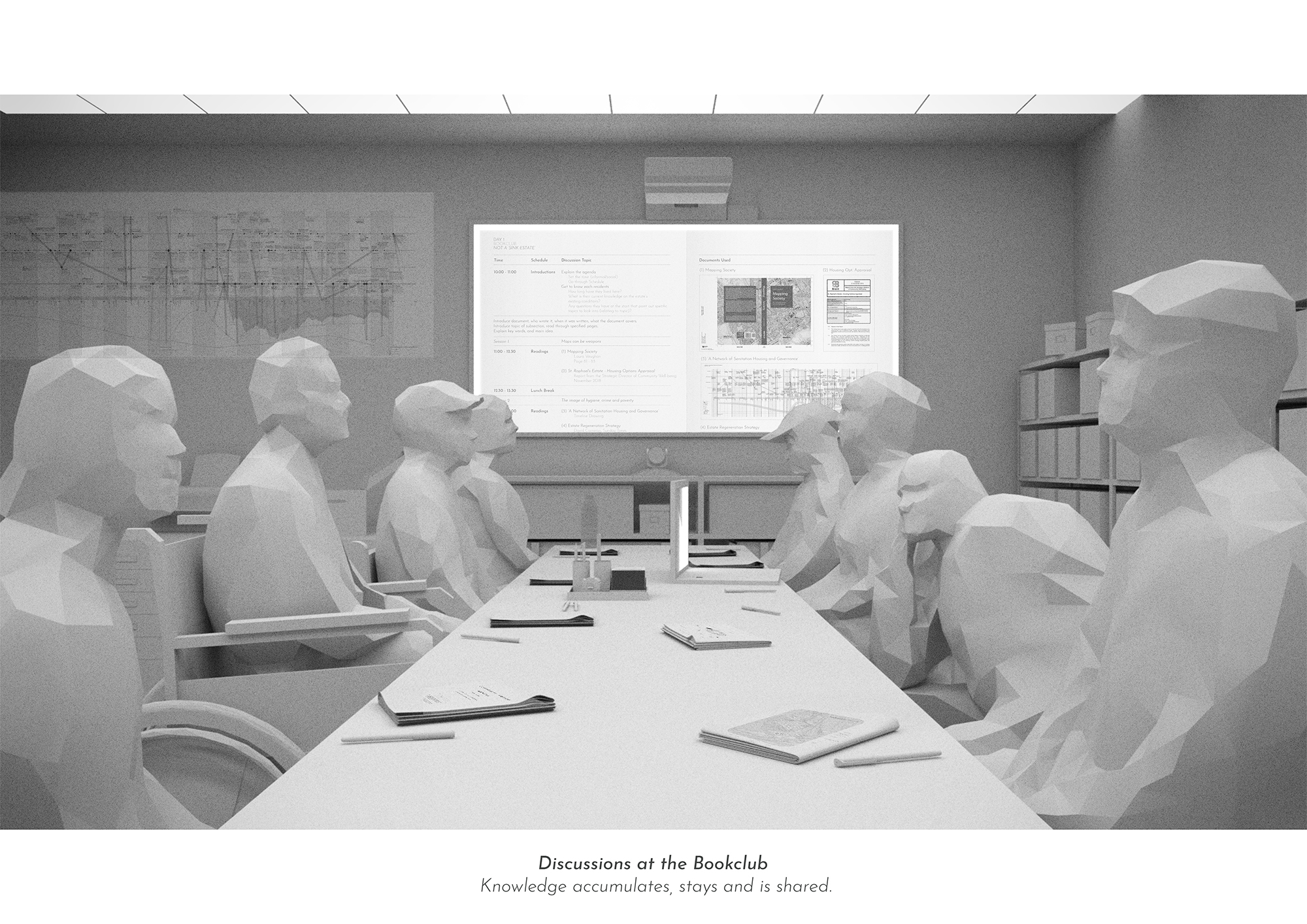
From written reports to personal stories, from sound clips to objects; knowledge accumulates, stays and is shared. The conversations exchanged empowers the whole neighbourhood.
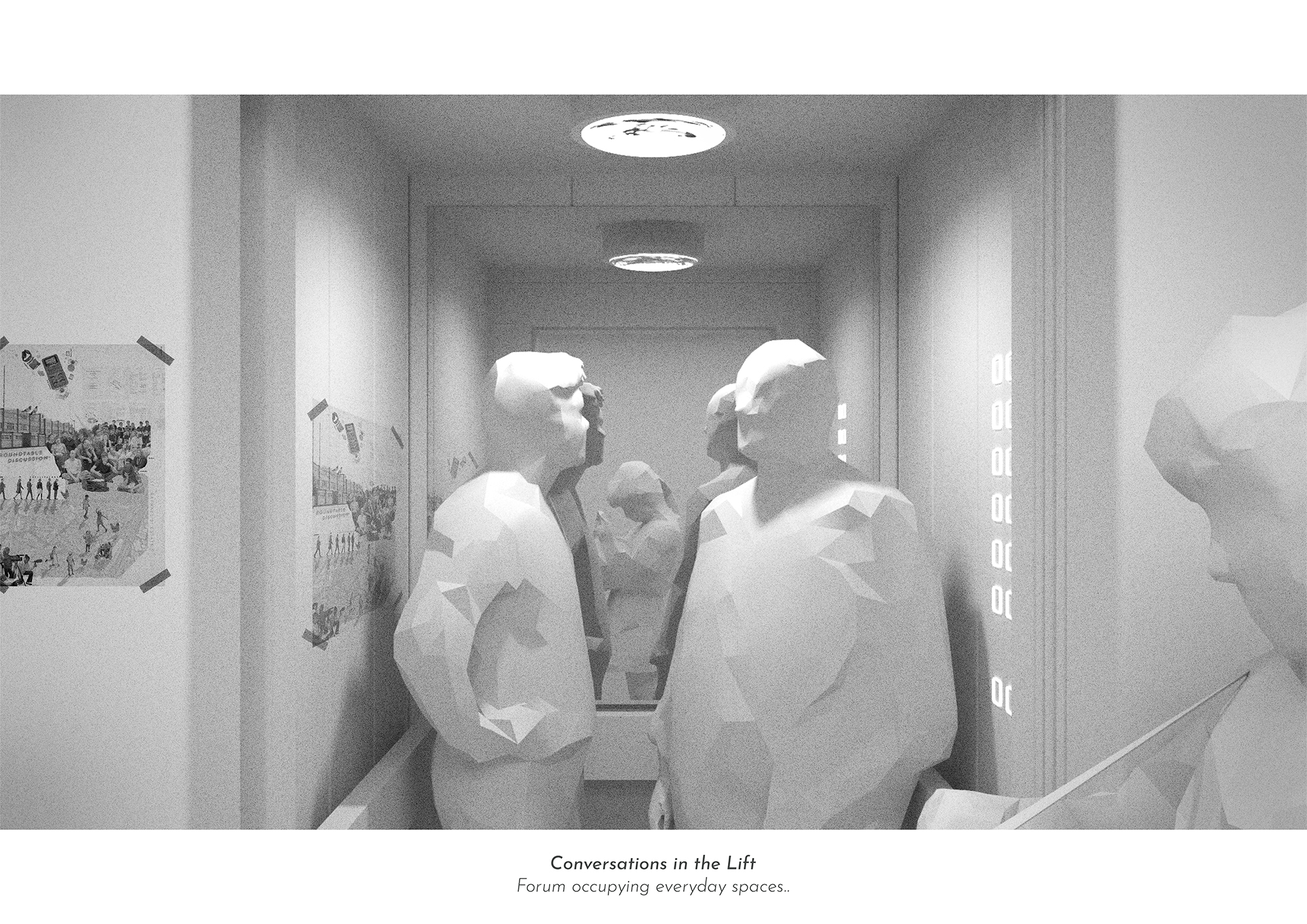
Like a fluid network knowledge dissipates across estates, boroughs and the city.