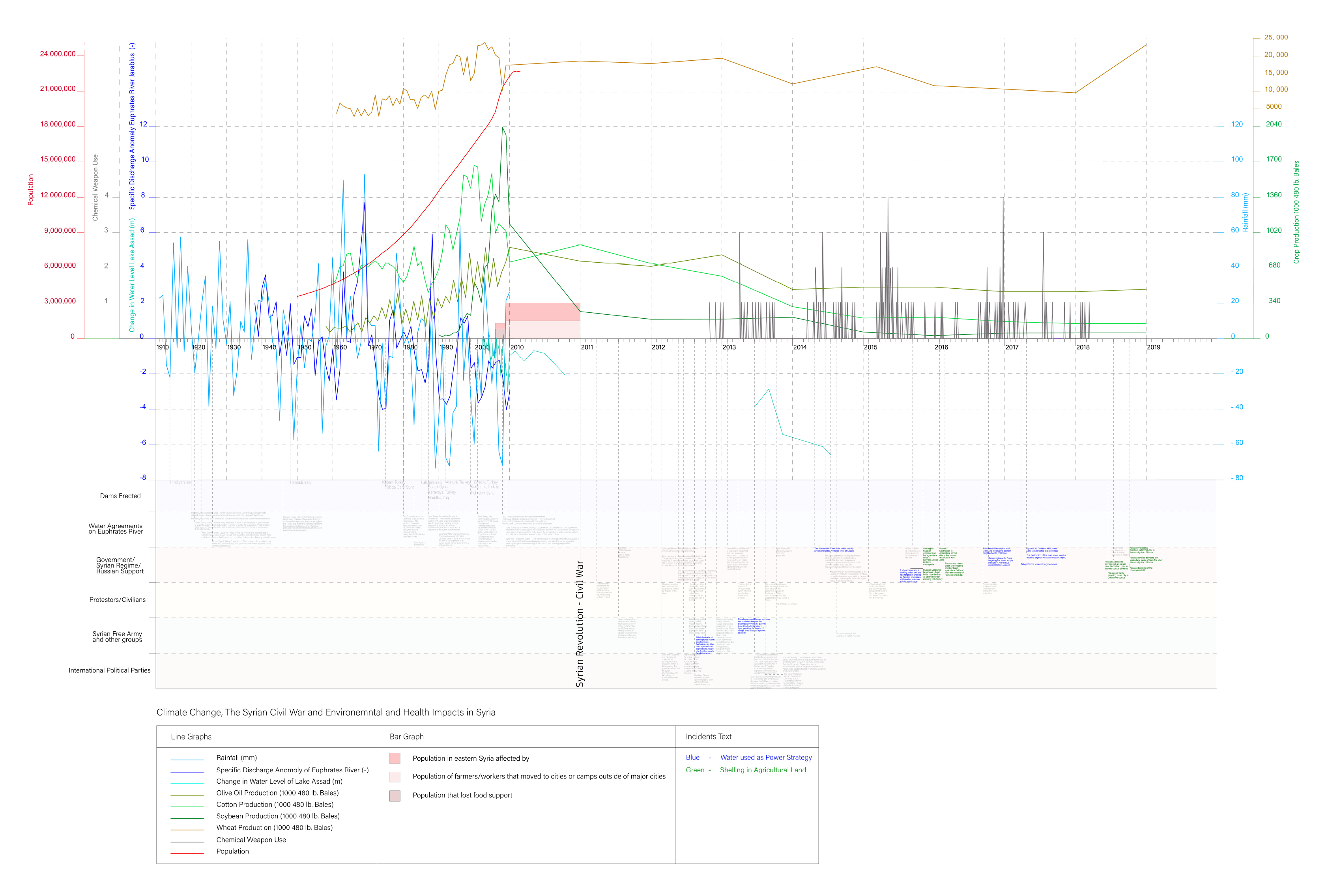
The environmental veins of Syria have been contaminated with toxic remnants of warfare. Toxic remnants include substances derived from bombing and chemical attacks that target the population, industrial facilities and agricultural fields. The investigation follows toxic chemicals as interscalar vehicles that guide us to understand the consequences of warfare, from the atomic to the urban, from immediate to long-term impacts.
The project proposes an architecture of sensors implemented across affected sites in Syria, serving different roles for their environment and communities over time. The DIY sensors scan the environment and infrastructure, recording evidence and providing citizens with data on the long-term contamination of the country. This new body of knowledge will facilitate a community of citizen participation, generating new environmental relations. A new system of technogeographies are embedded and adjusted to specific spaces. Upon deployment, sensors detect the presence of toxic chemicals. Within time, as datasets are configured, the sensors take on their secondary roles as markers within the environment, emitting colours that signal when the land is safe to return home. The sensors may then live within the urban or natural fabric for decades as memorials, the markers that once signalled the return, and guided those seeking for home.
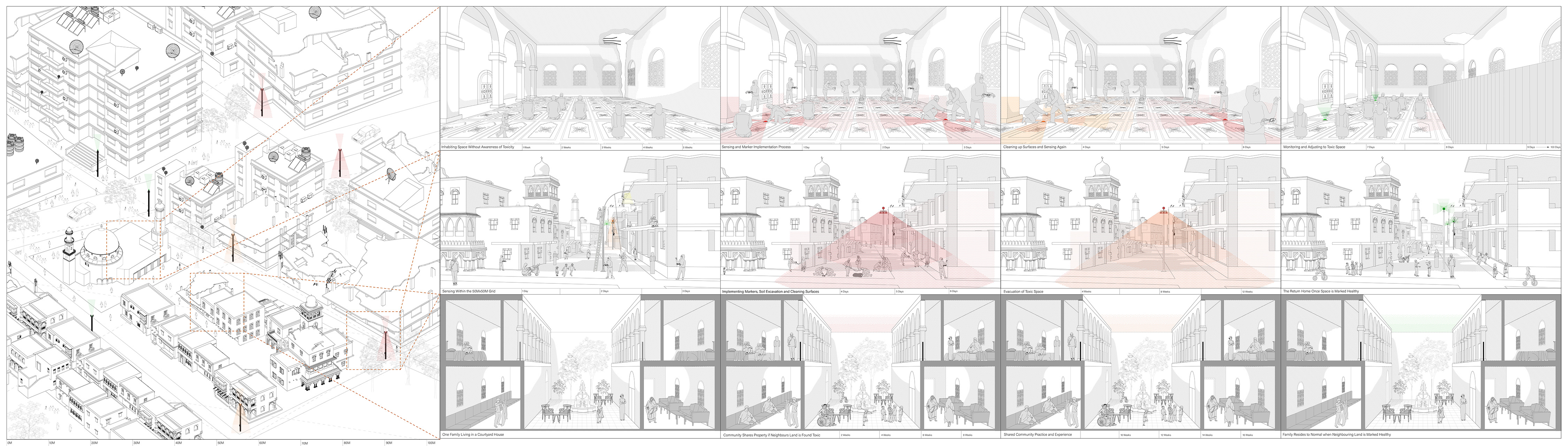
Sensing Toxicity: The Return Home Sensing the environment as a community creates shared community practice. Microscopic toxicity becomes visible through the notion of light; a sixth sense.
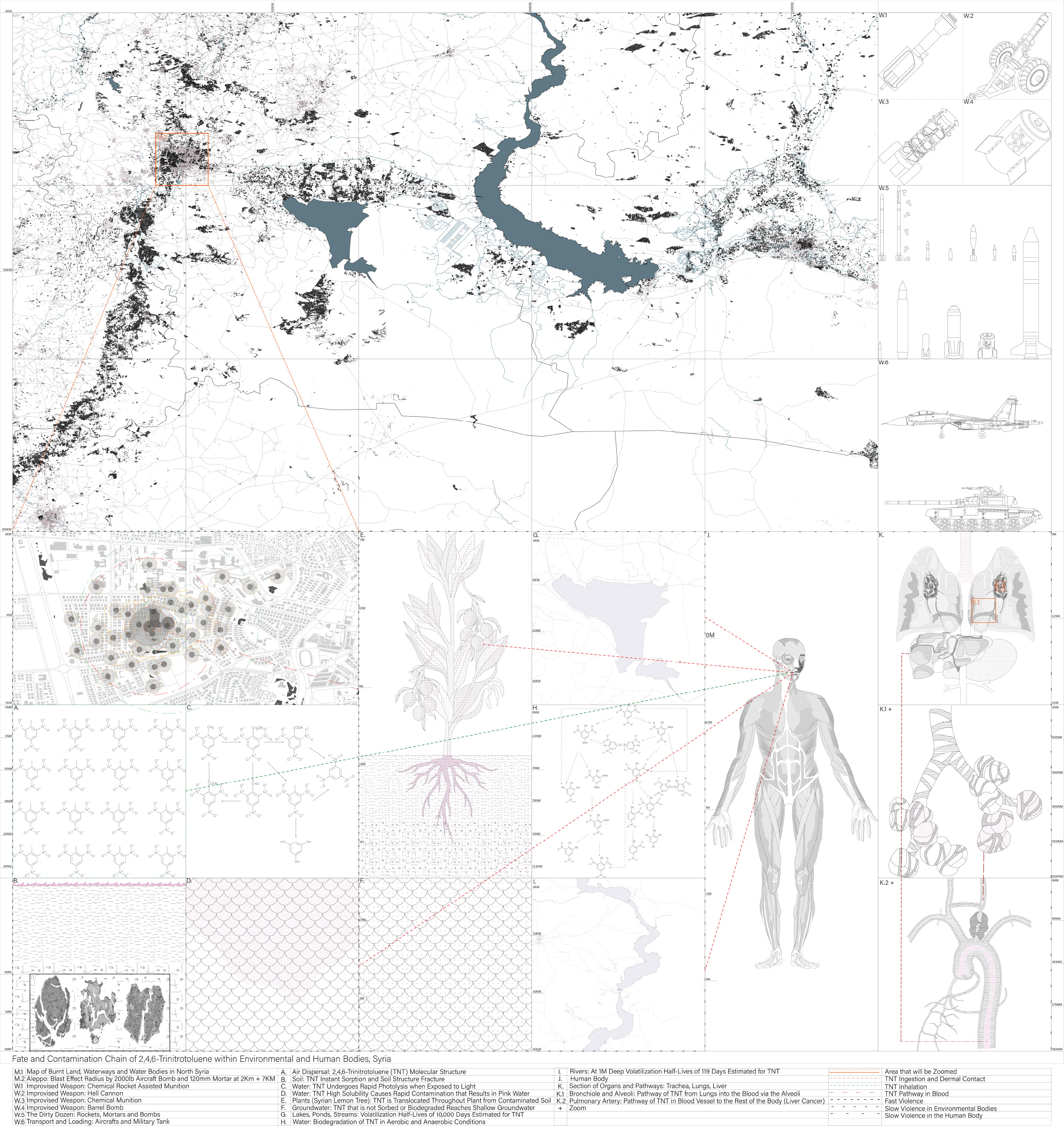
Fate and Contamination Chain of 2,4,6-Trinitrotoluene Fast and slow violence within the environmental and human body through the intersection of scales; biopolitics and geopolitics.
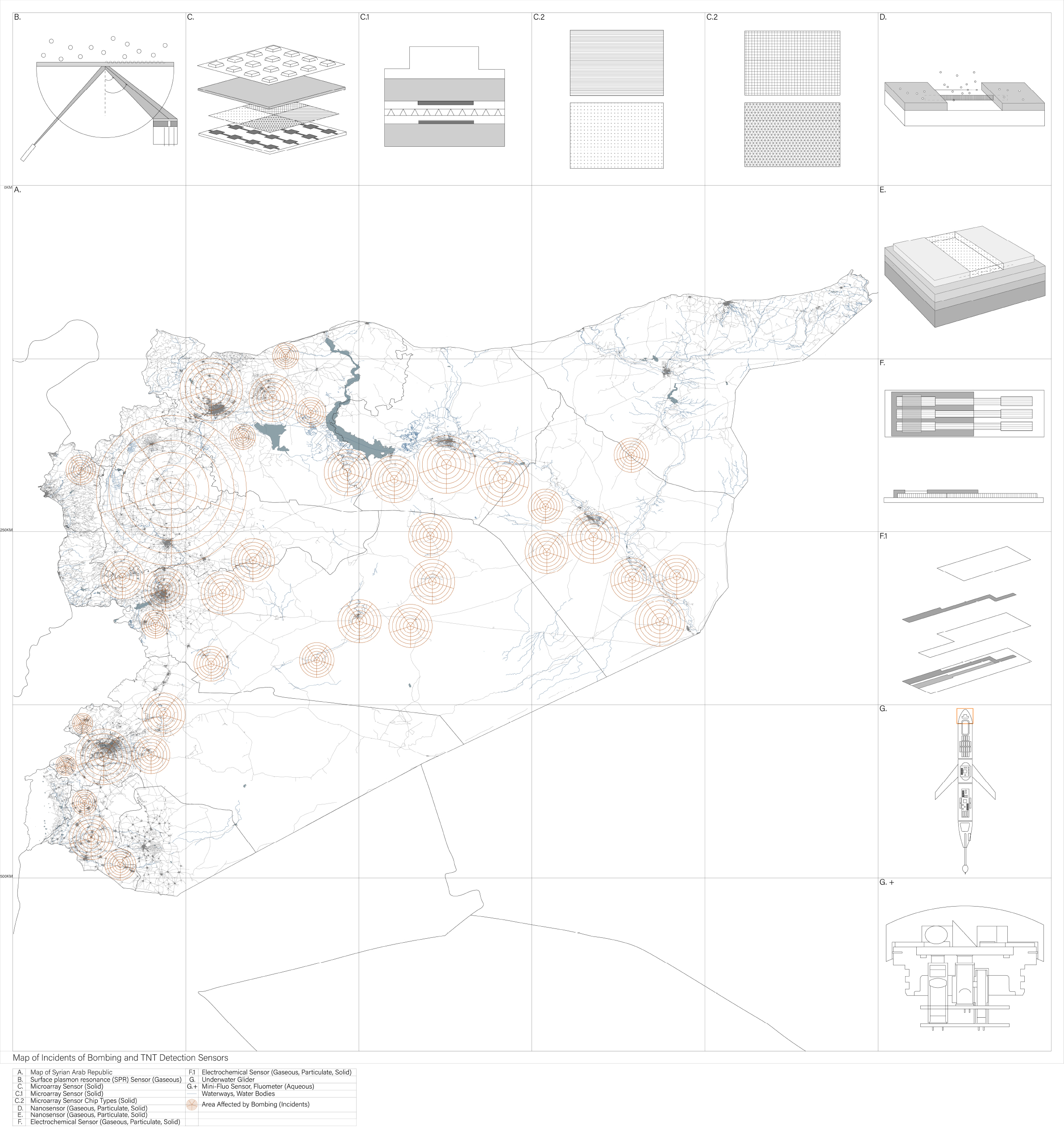
Map of Incidents and Sensors
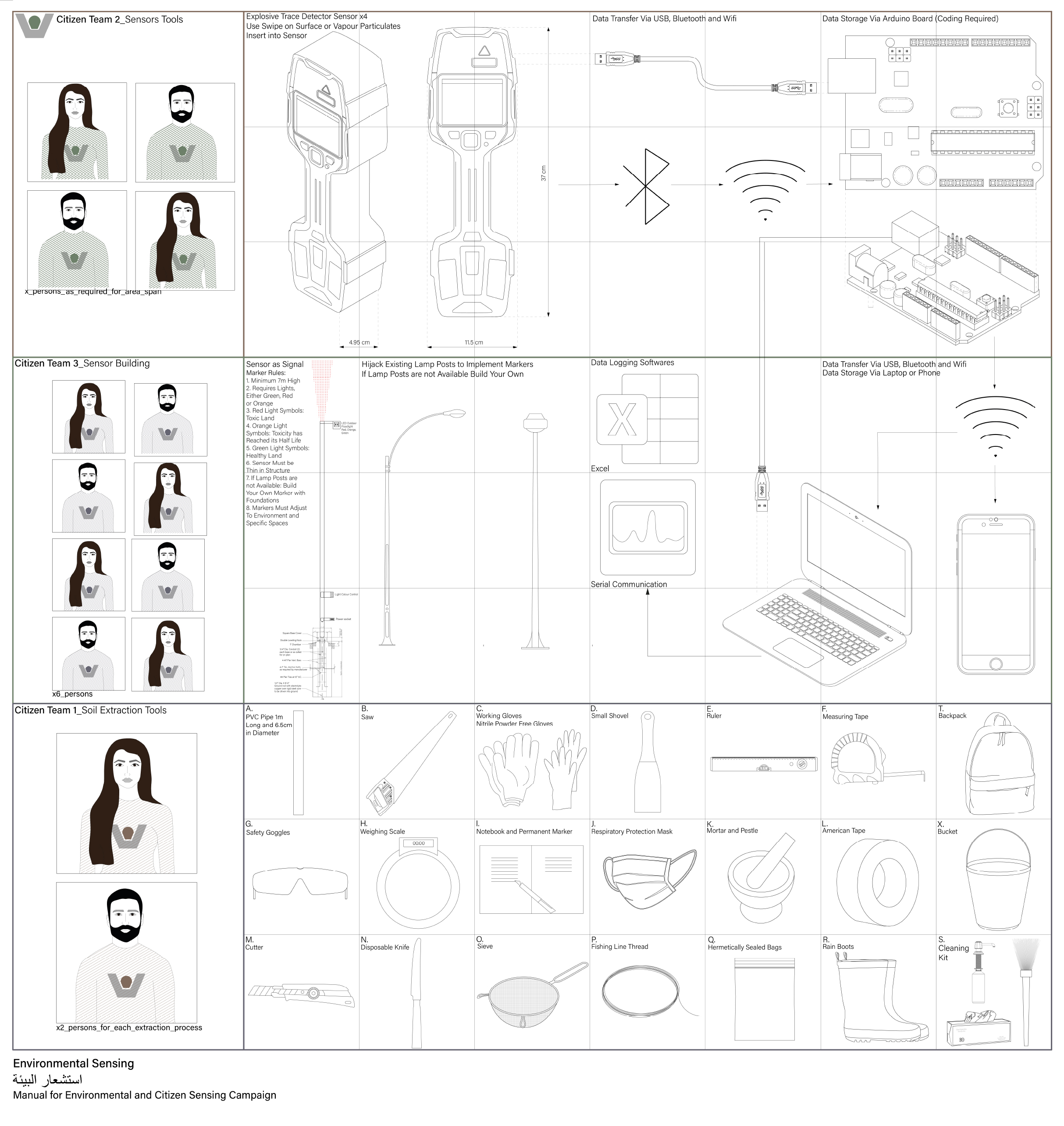
Manual for Environmental and Citizen Sensing Campaign
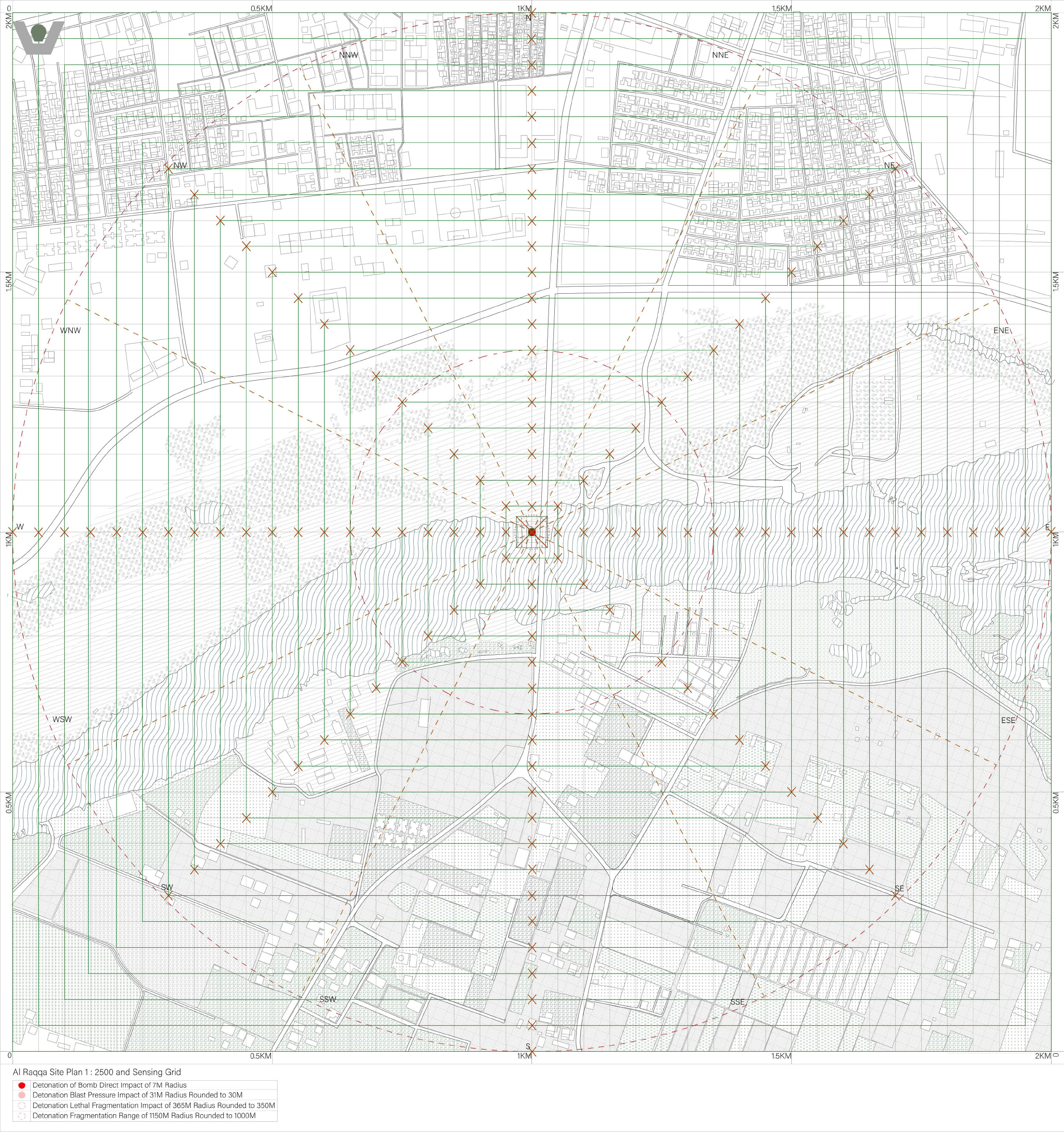
Site Plan and Sensor Grid System
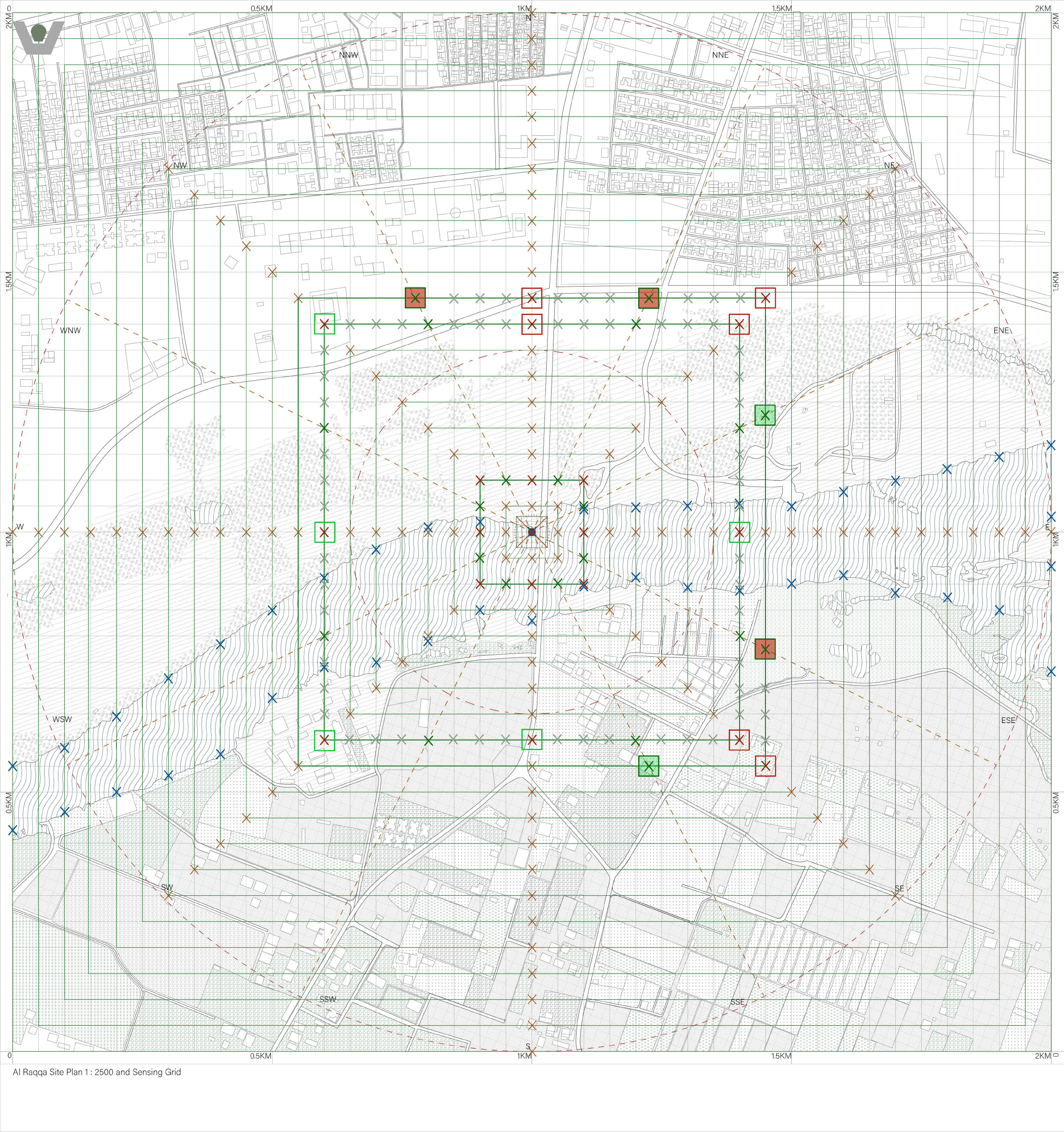
Site Plan and Sensor Grid System