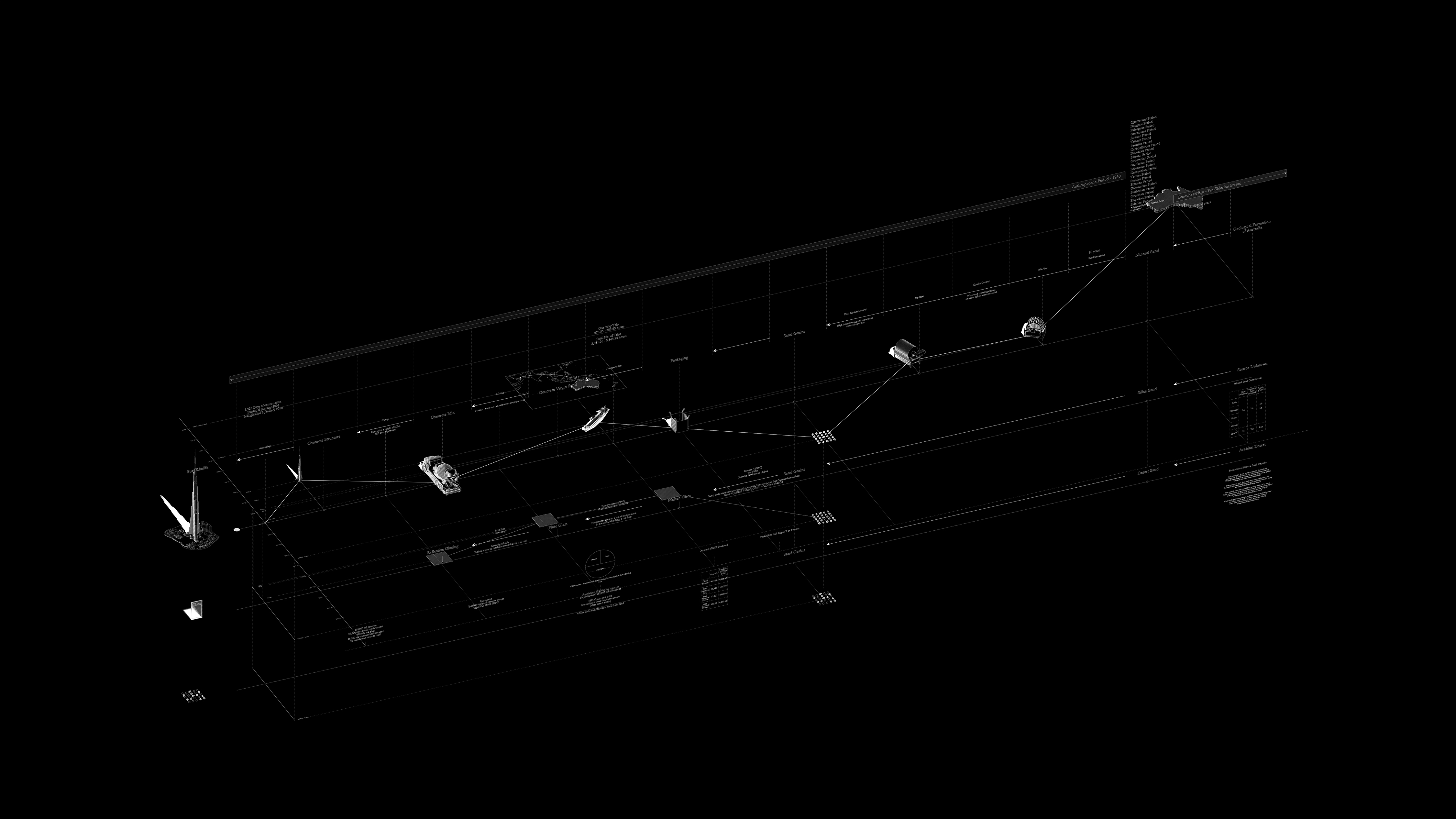
Sand is the second most traded commodity in the world. Understood as a cheap resource, a ubiquitous raw material in construction, industrial production and technology, its impacts on human labour, global trade and environment are less known.
Despite clearly defined borders of sovereignty, natural resources are not bound by political constraints. The trade of sand between countries creates a flow of capital and resource that is overlooked and under-chaperoned.
When sand flow is interrupted by human activity, the usage of anthropogenic sand generates conflicts and detrimental environment repercussions. Examining the inadequacies of current regulations pertaining to sand trade discloses a lack of cognisance of the full scope of activities from extraction to usage.
Through the reframing of sand as an interscalar vehicle, the impact of interrupted sand flow at different scales and temporalities is investigated.
Re-assessing the intricate relationships this humble material has with the environment, economy and humans; the Sentinel Protocol adds dimension and monetary consequences to highlight the importance of sustainable usage and ethical labour conditions.
The project proposes a geopolitical architecture; a protocol under which material flow is legislated by local sovereign policies and protected under a trans-boundary universal jurisdiction, allowing us to become the sentinels of sand.
Documentary of a protocol that traces the anthropocene through the lens of sand.
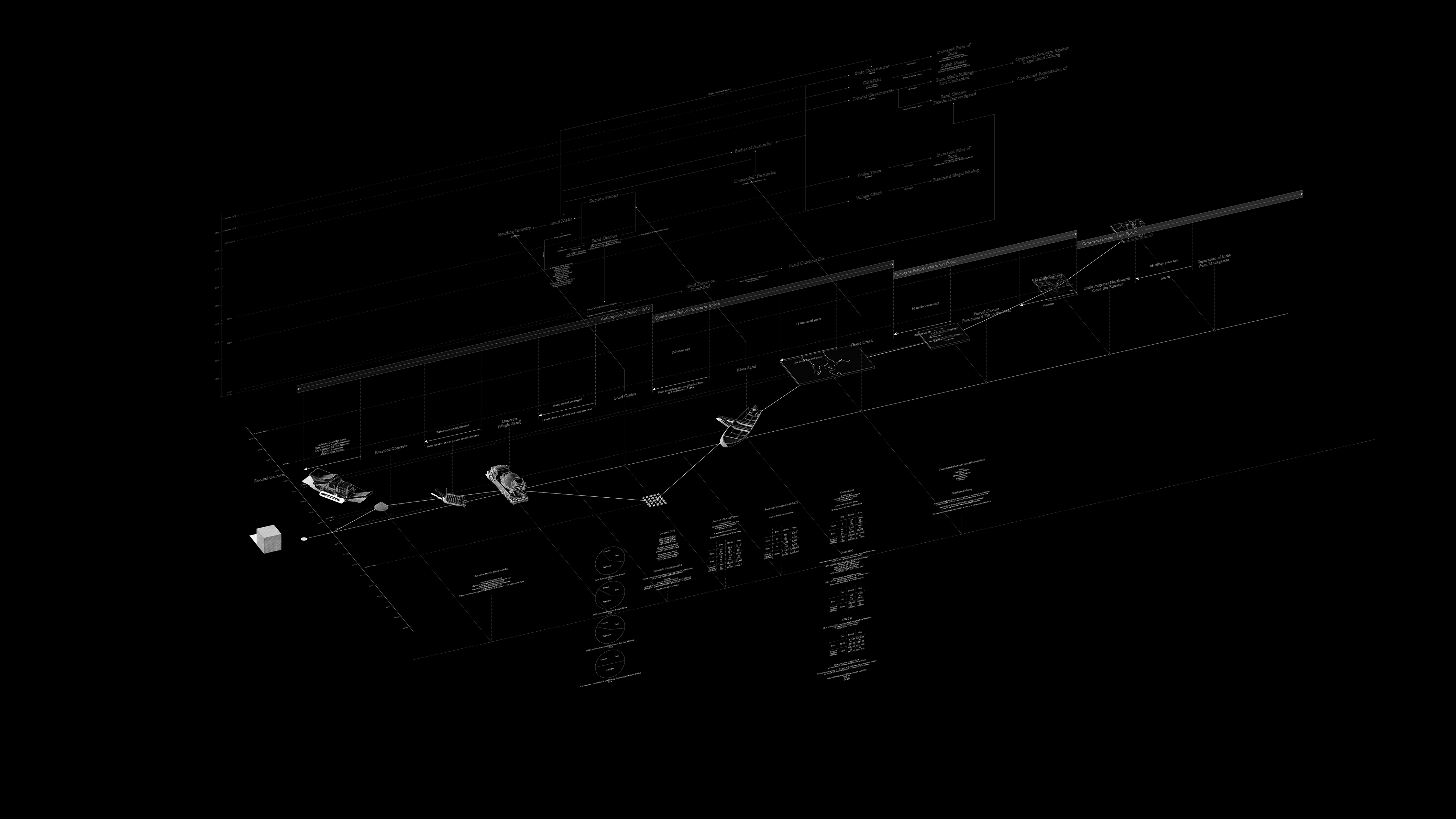
Tracing the anthropocene_sourcing sand_thane creek
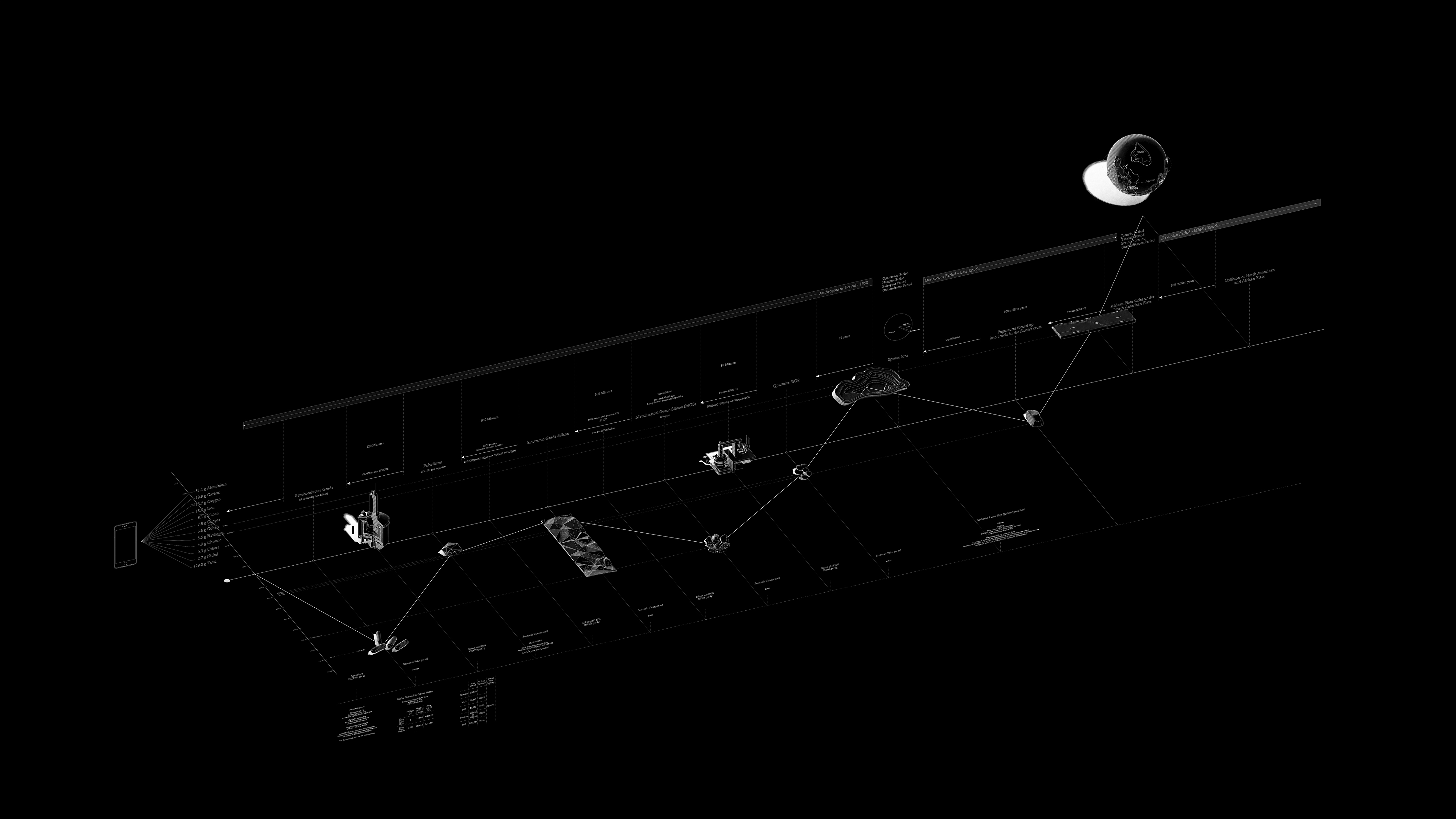
Tracing the anthropocene_processing sand_spruce pine