Experimental 15
City / Hall
‘The global is local at all points’ – Bruno Latour, We Have Never Been Modern, 1991
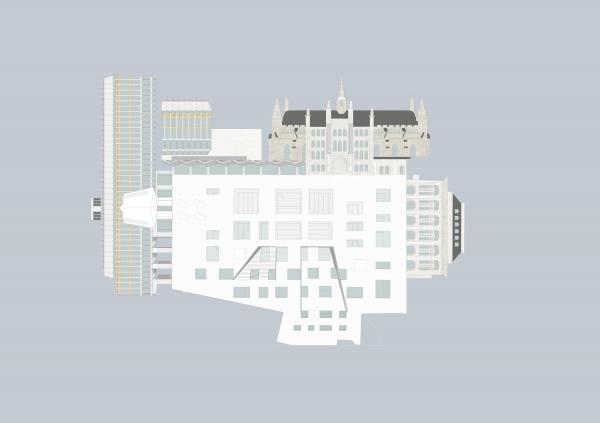
In this moment of widespread populist extremism, resurgent nationalism and precarious, transnational unions, we turn our attention to the politics of the local. We reassert the value of the city as a primary site of collective identity, citizenship and resource management, and ask how we might reinvent the forms and logics of its primary political institution – the City Hall.
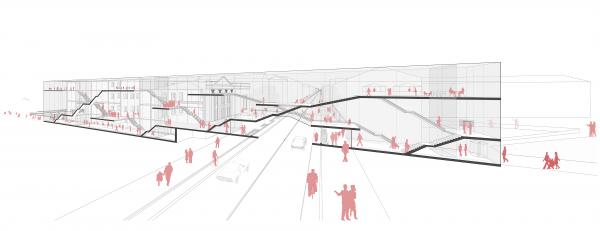
Collective identity, a shared sense of public life, emerges only when multiple perspectives engage (however provisionally) in a common space – when people see ‘sameness in utter diversity’. We instinctively travel to the centre of our cities to discover, challenge, debate and confirm our collective self. The institution of the City Hall has, as the identifiable locus of urban governance, traditionally offered us at least some sense of where that centre is located and, at best, provided a forum for collective political expression. With the increasingly federal scale of both policy and representation its function has become more and more administrative. Across much of the world today, local government is being pared-back, outsourced and privatised, with dramatic implications for our ability to locate collective identity and in turn to motivate civic participation.
In Sert, Leger, and Giedion’s famous position paper, Nine Points on Monumentality, they argue for modern architecture’s necessary role in fostering community through the design of legible civic centres. EX15 will extend this provocation, but instead of singular, monumental gestures we will seek out multiple, contingent forms of symbolic expression; a newer monumentality dependent on active interpretation and collective inhabitation.
The world we inhabit – this building, this garbage, this law, this water, this event, this fungus, this stuff – acts, agitates, and networks, just like the citizens of our cities. As we redefine the architecture of the City Hall, we will also expand the concept of ecology in order to recalibrate the constituents of our politics. To become relevant again, the City Hall must empower its citizens to actively participate in the continual remaking of the polis: its education, its healthcare, its environment, its culture – its past, present, and future. In this way, EX15 aims for nothing less than a new architecture of political space – one that reasserts our sense of a local, ecological, and collective future.