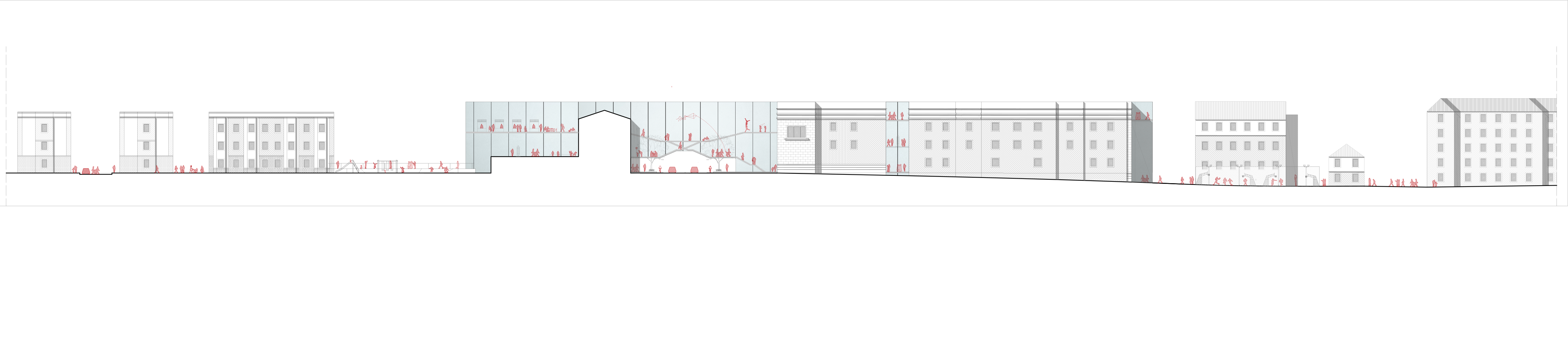
Communal Void aims at re-thinking the local institution of the Town Hall through a highly programmatic approach in order to convert it from an obsolete space for bureaucracy into a centre for exchange and debate.
Indeed, traditionally, the town hall buildings had a prestigious position in the urban fabric giving an idea of where the urban centre was located but, also, representing a centre for gatherings and discussion.
However, nowadays, the public interest into politics has shifted towards a wider national scale therefore leaving the local institutions very much considered only in relation to the basic services that they provide to their communities, which although are essential, do not motivate in any way civic participation nor interest.
Communal Void, through the implementation of services related to Arts and Culture production, aims at recreating within the walls of the existing town hall the civic space that usually sits right in front of these institutional buildings, therefore, completely eliminating the separation between the community and the council.
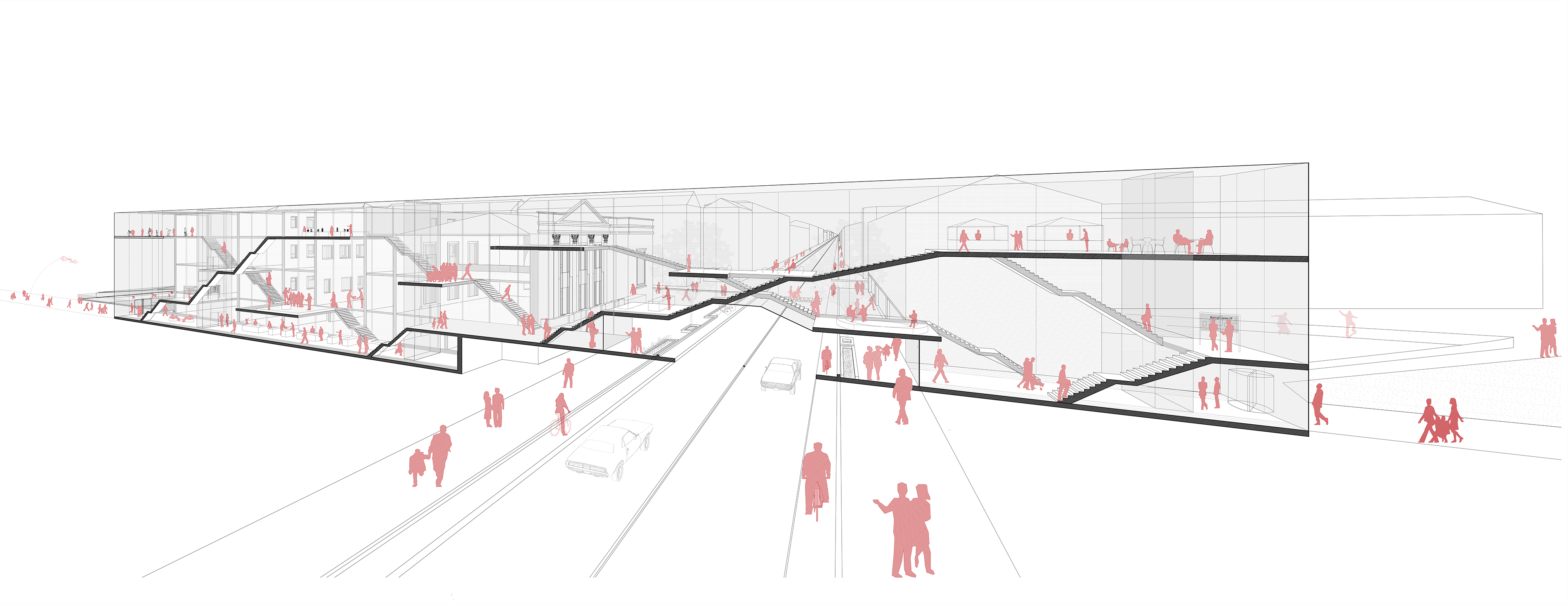
Communal Void proposes a reformed version of the Town Hall institution which from an administrative space for burocracy is converted into a buzzying reference center for the community.
The intervention focuses not only on the existing Islington Town Hall building, but, it also extends beyond its walls reaching out and engaging with the peripheral context.
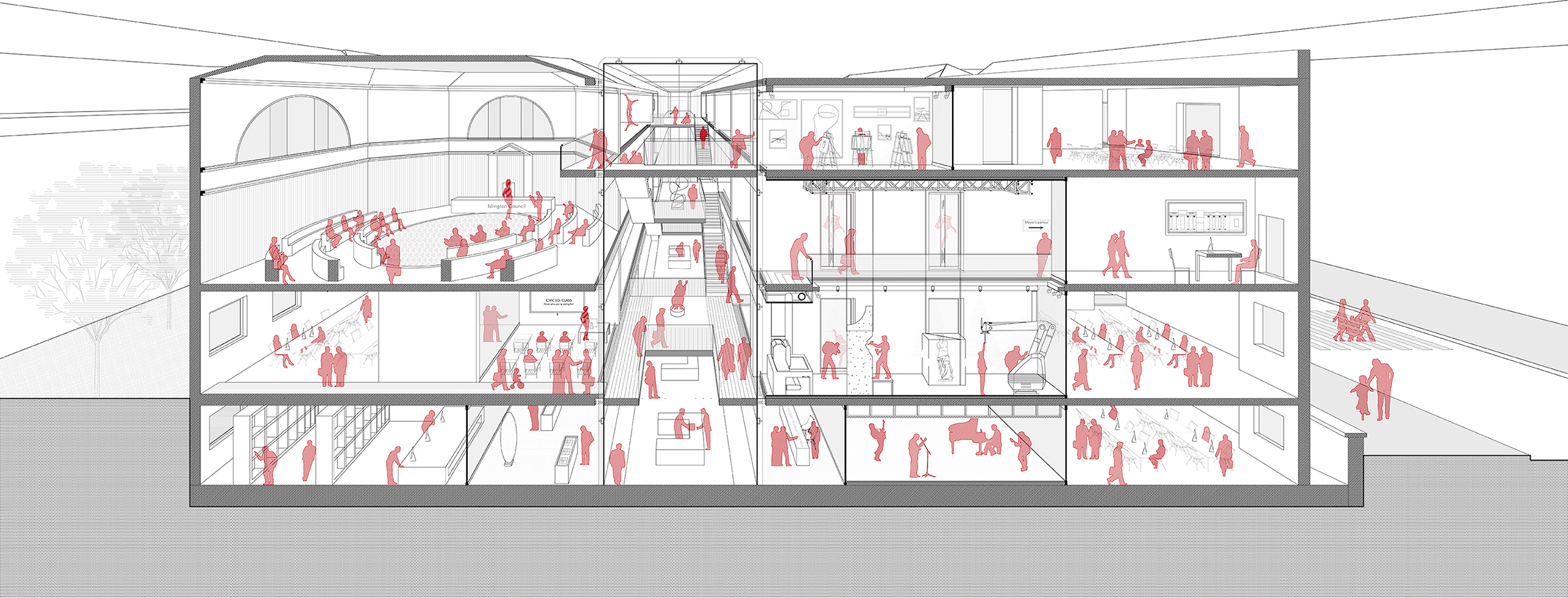
The intervention on the existing building proceeds through a process of contamination of the existing programs and, subsequently, an action of subtraction in order to open the building to the public.
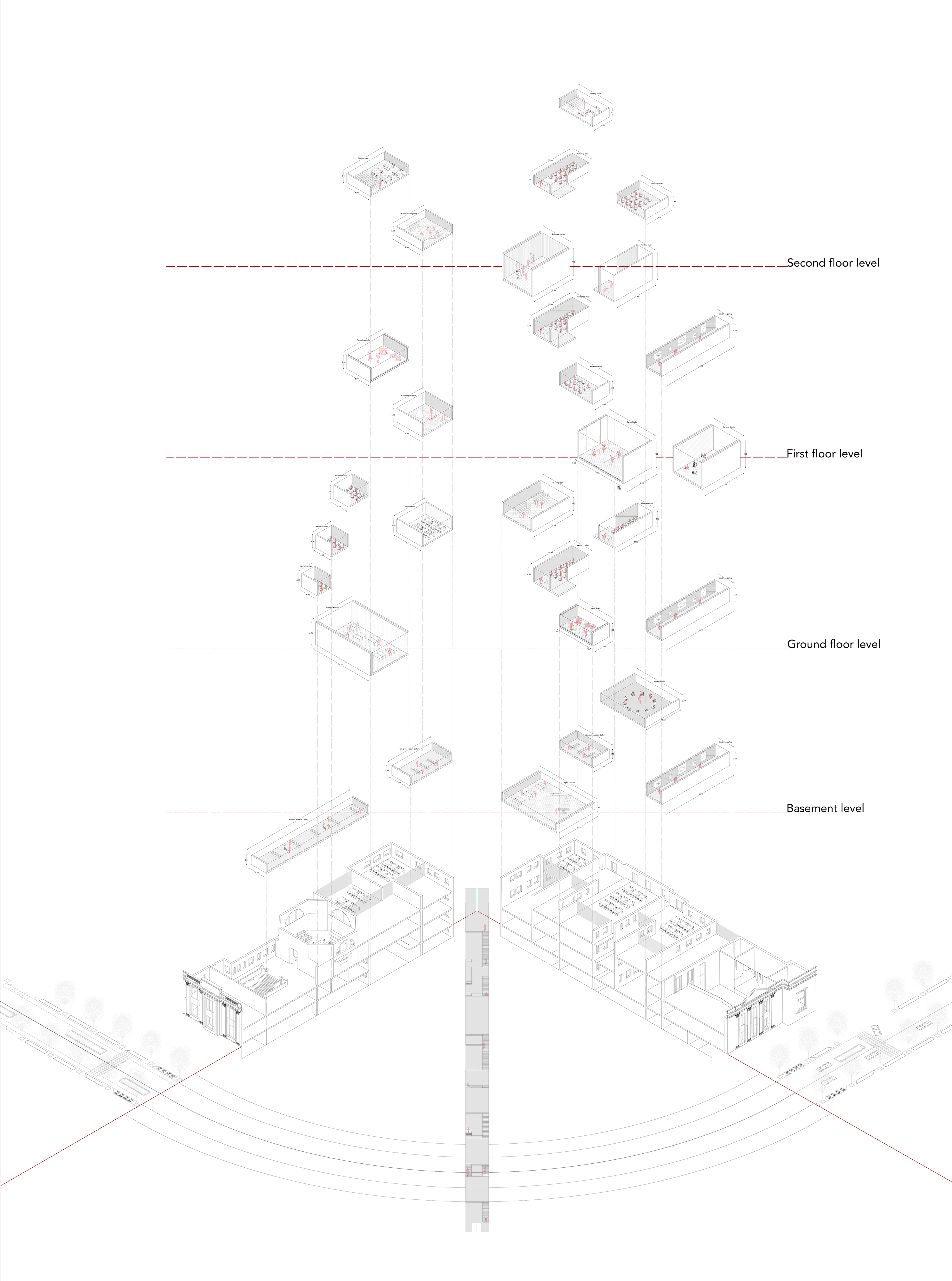
The added-in programs are treated as highly specialized spaces requiring for the existing structure to undergo a process of adaptation in order to ensure the proper performance of the activities.
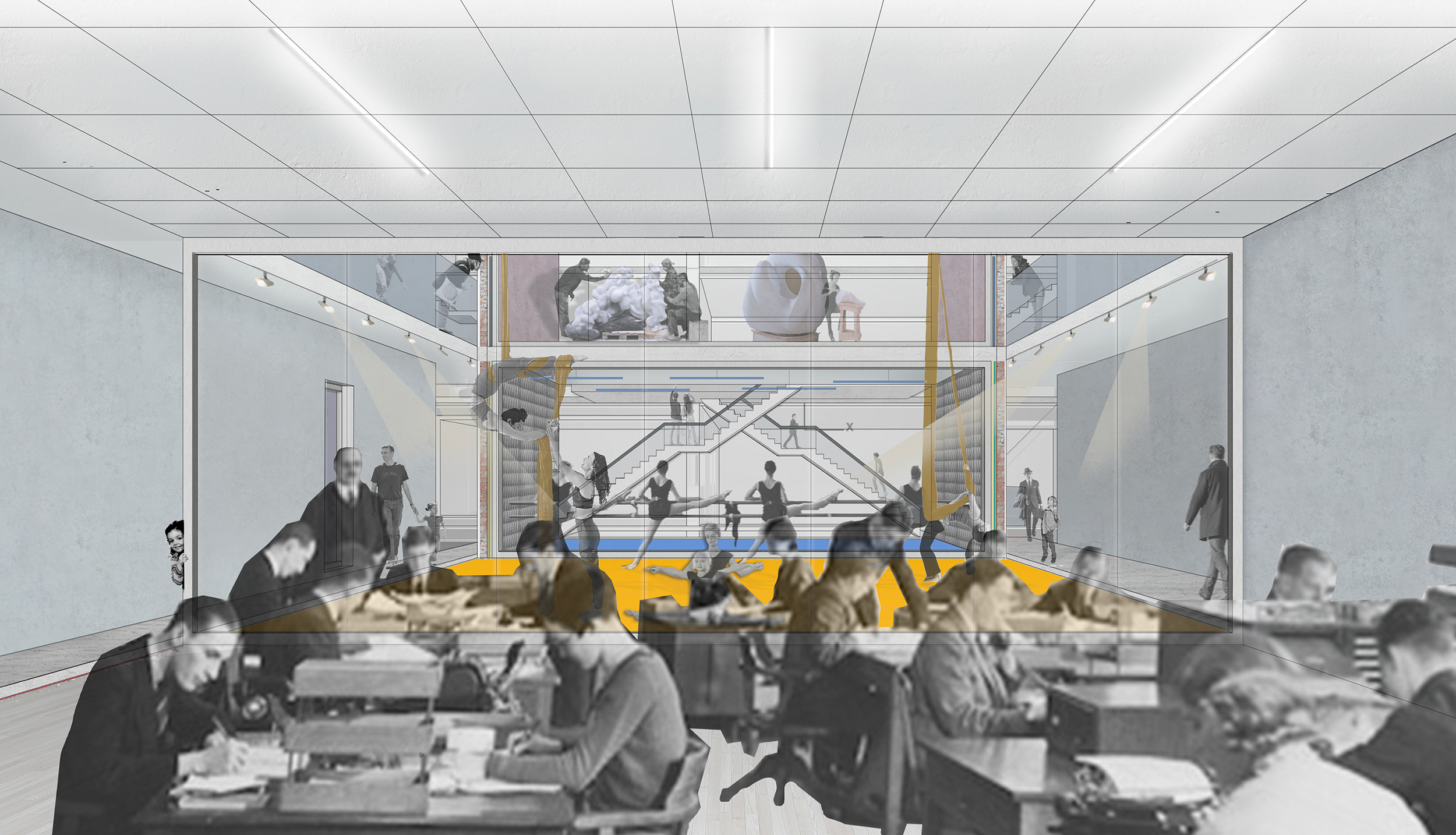
No physical nor visual barriers would obstruct the transition between the social, cultural, and political realms allowing to a productive friction and a feeling of mutual engagement to be motivated.
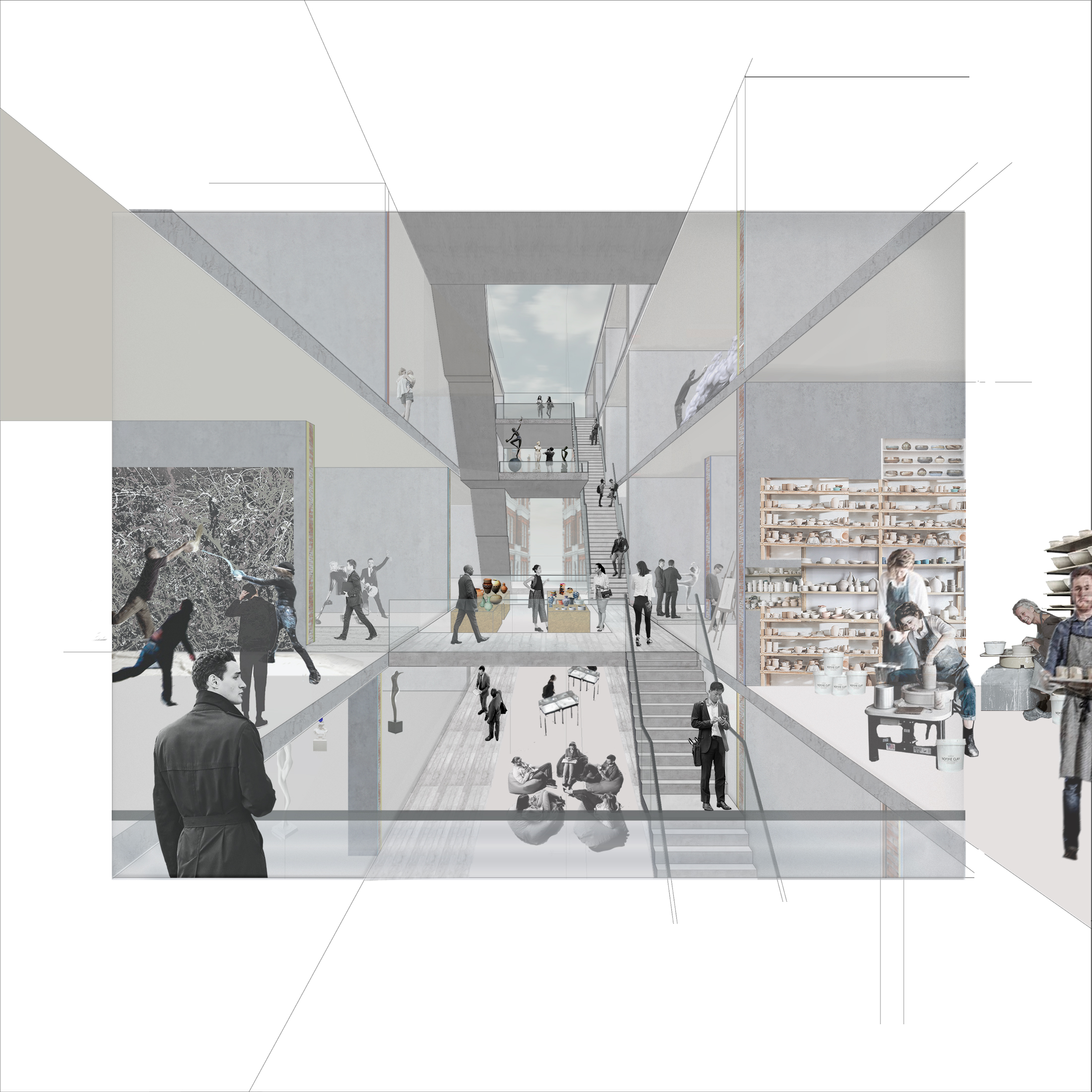
The core void would not only allow for circulation but, also, re-create the civic space that usually sits in front of these institutional buildings, right within its walls.
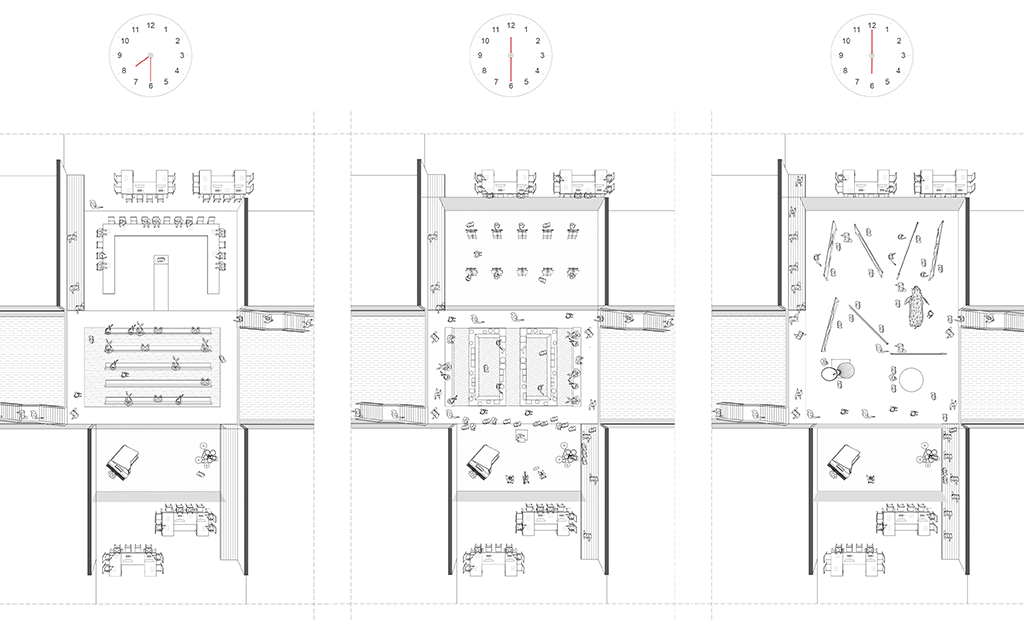
The civic platforms that lay suspended in the core void would be contaminated by the adjacent programs, changing constantly their character and offering the possibility for more informal conversations
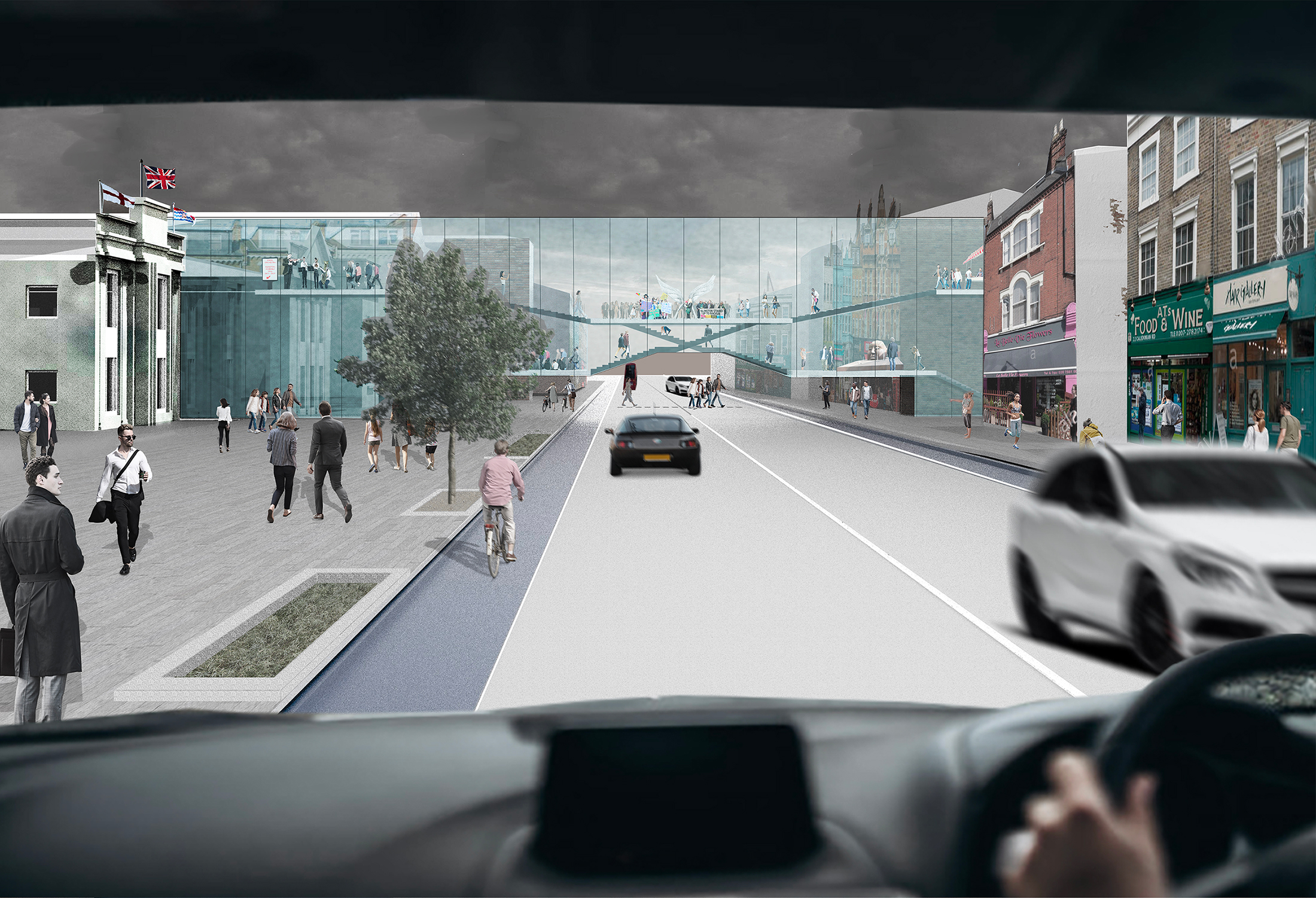
The intervention would directly engage with the Islington High street, creating a moment of explicit pause and radically exposing the daily activities of the council to the community.

The project had a double approach: on one side, it wanted to sensitively preserve the historical value of such a symbolic building, leaving its neoclassical facade untouched…