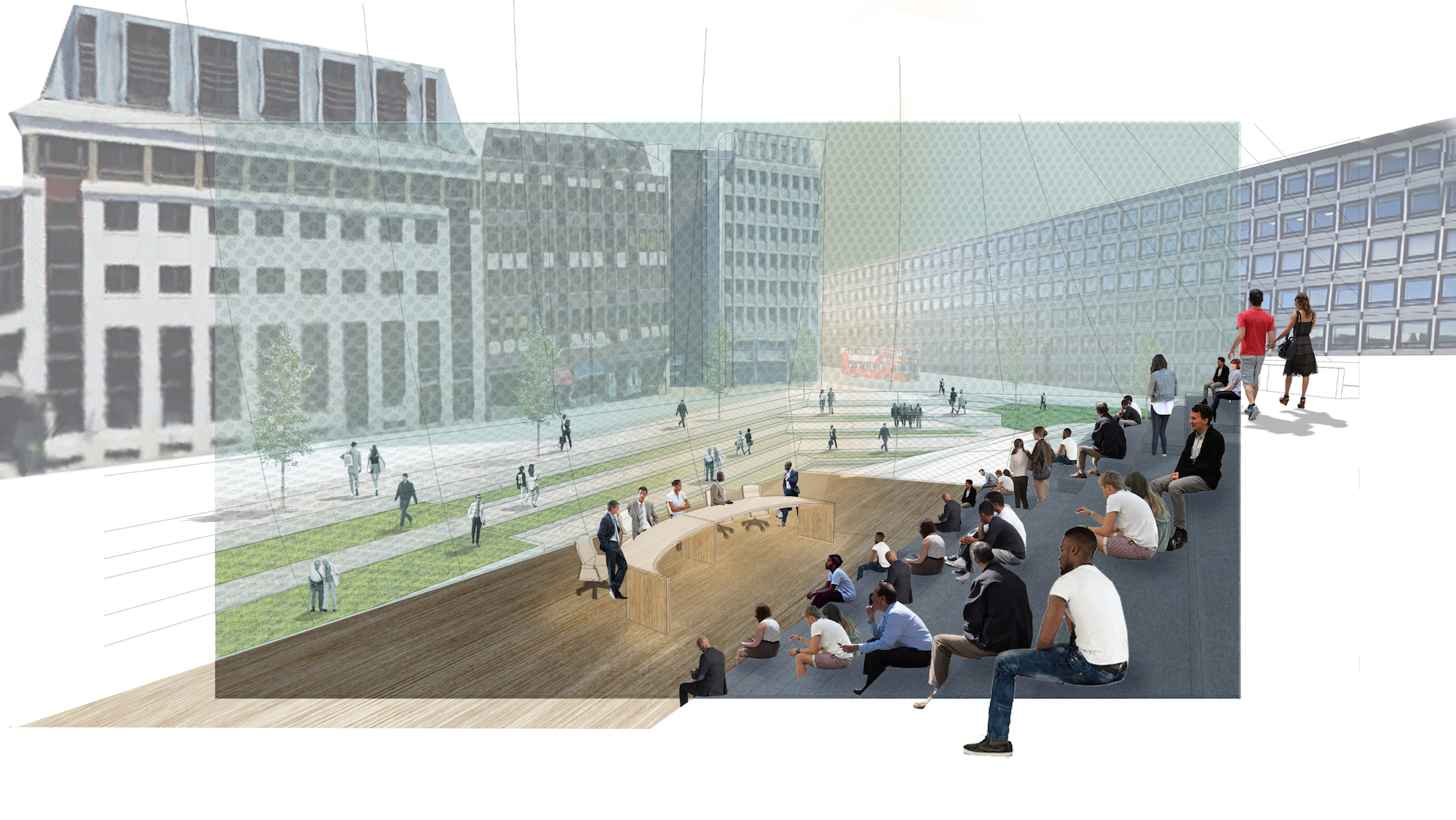
The daily influx of people into the City of Westminster has consistently raised numerous challenges for the local government in the well-being of the city. To most residents, the City Hall is irrelevant, even to engage in local politics is difficult as there is very limited public access to the Westminster City Halls.
The new Civic theatre attempts to re-install the discussion of local and national politics at the heart of city life by providing a shared civic stage. In order to bring about political participation, it is vital to introduce civic engagement first.
The merging of a cultural program with politics, such as the art of theatre, at a central space is crucial to the future of city halls in combating its redundancy. Theatricality is not only evident in Westminster’s politics but through its culture as well.
The stage could transform into various modes of theatre, from one theatre-in-the-round, to three individual proscenium theatres. The whole structure will be held by a simple structure of a thin fabric being suspended to create a feeling of lightness as well as different expression to the building by shifting floor plates.

The Civic theatre is not only a political space but a cultural one as well. Theatricality is not only evident in Westminster’s politics but through its culture as well.
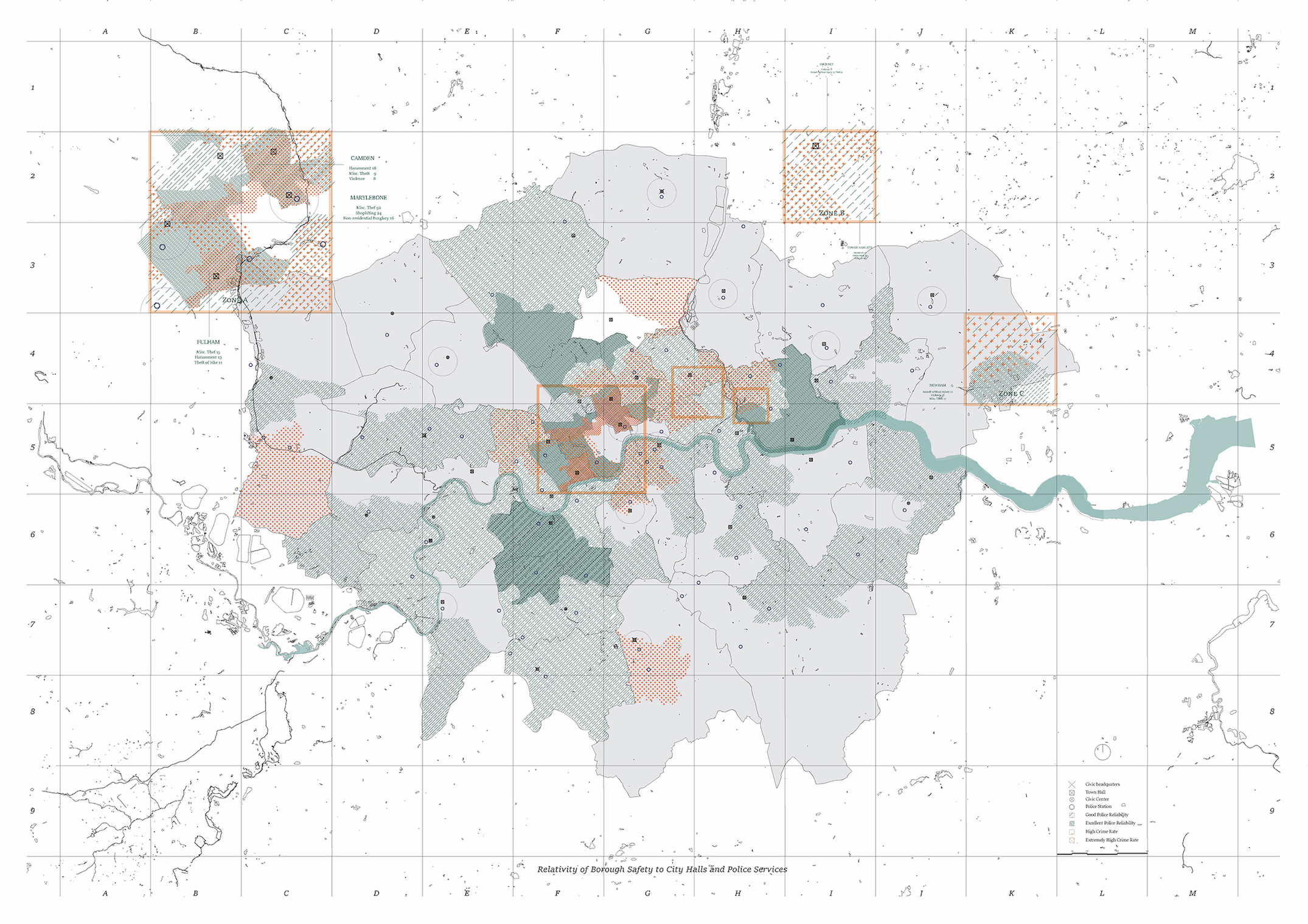
Due to the high number of visitors and residents in Westminster, it is important that everyone - for work, study or travel - should be aware of their role as inhabitants of the city as well.
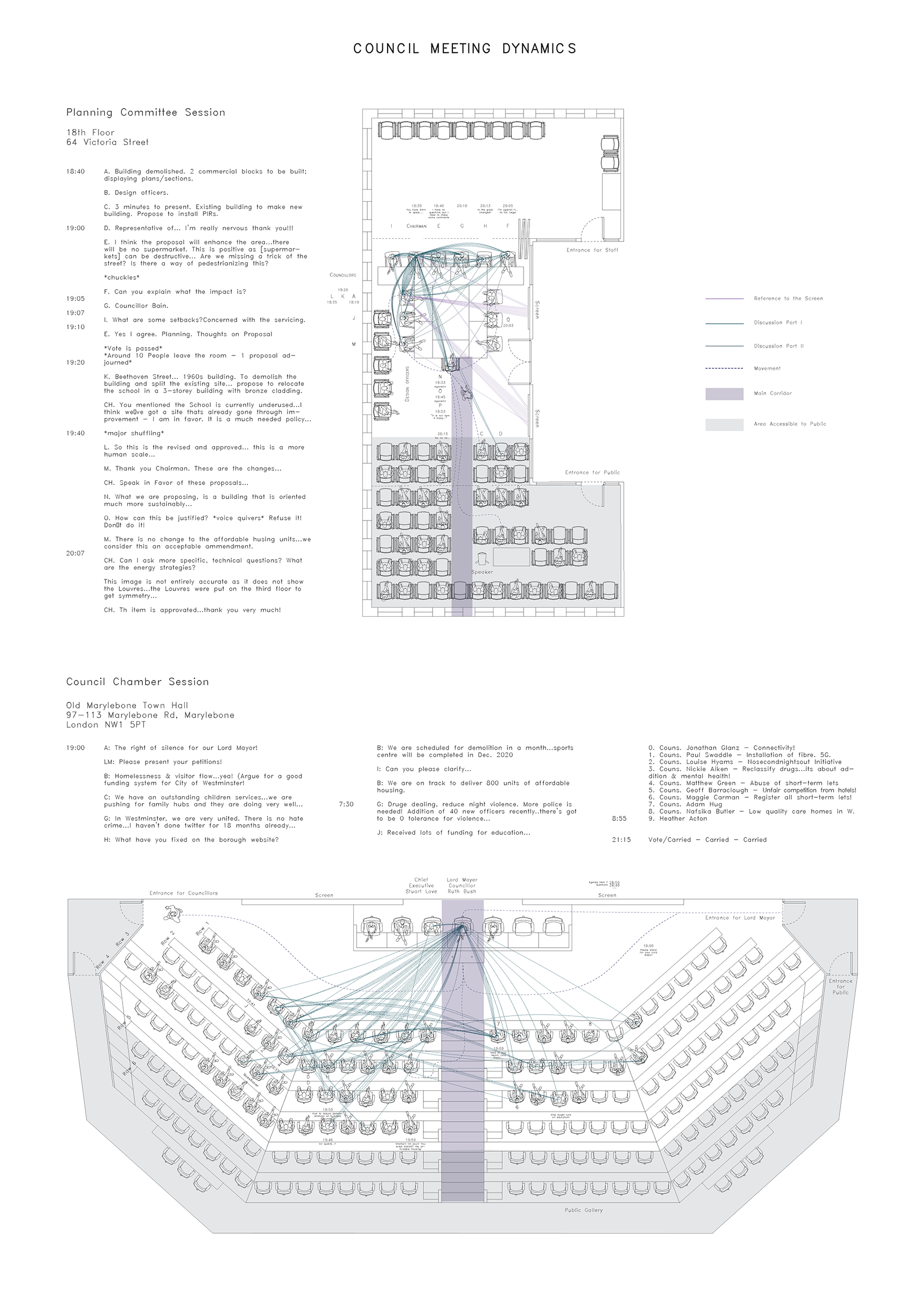
Mapping the conversation in local council meeting rooms reveals difficulty in communication between members.
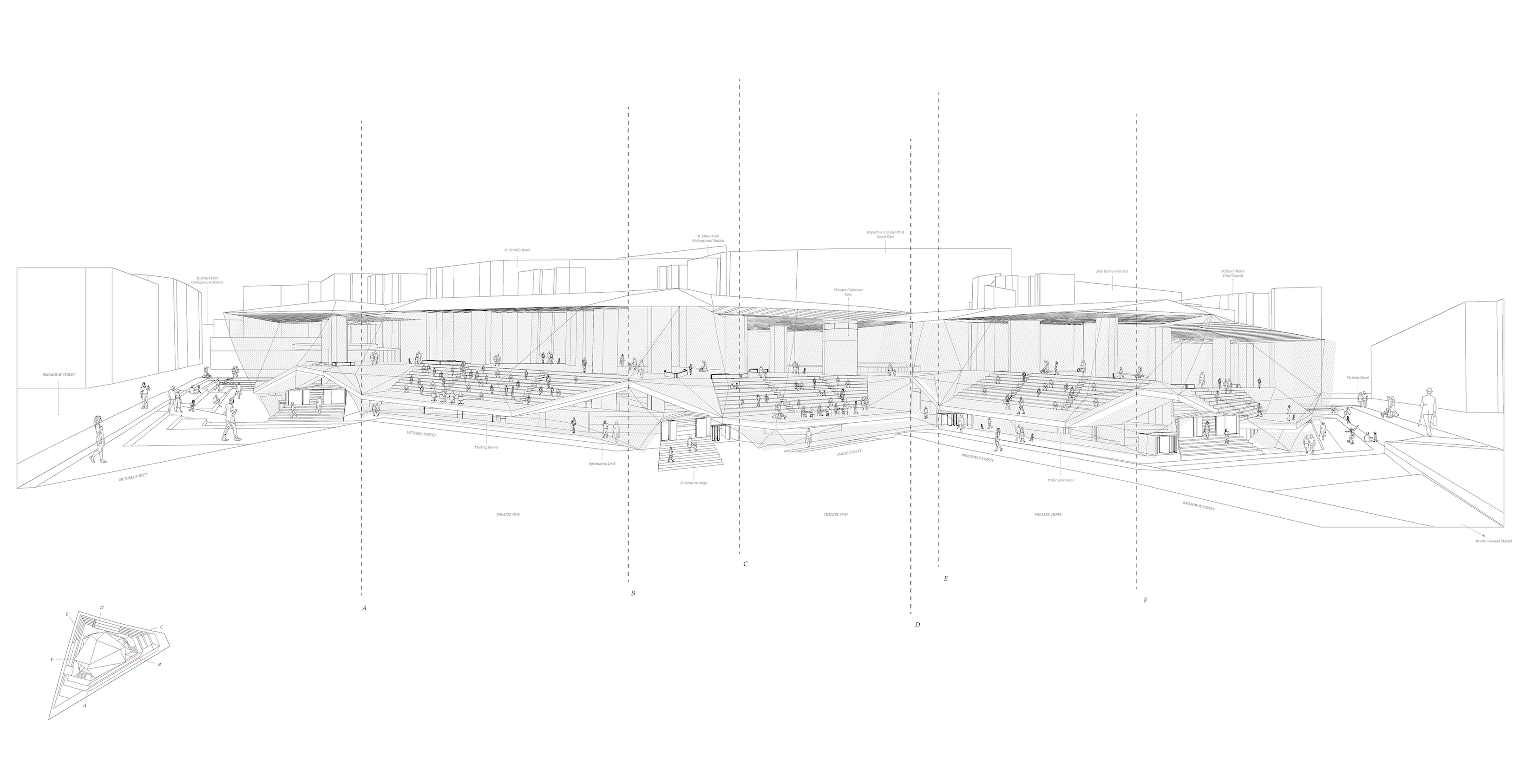
Thin fabric will be suspended to create a feeling of lightness as well as different expression to the building by shifting floor plates.
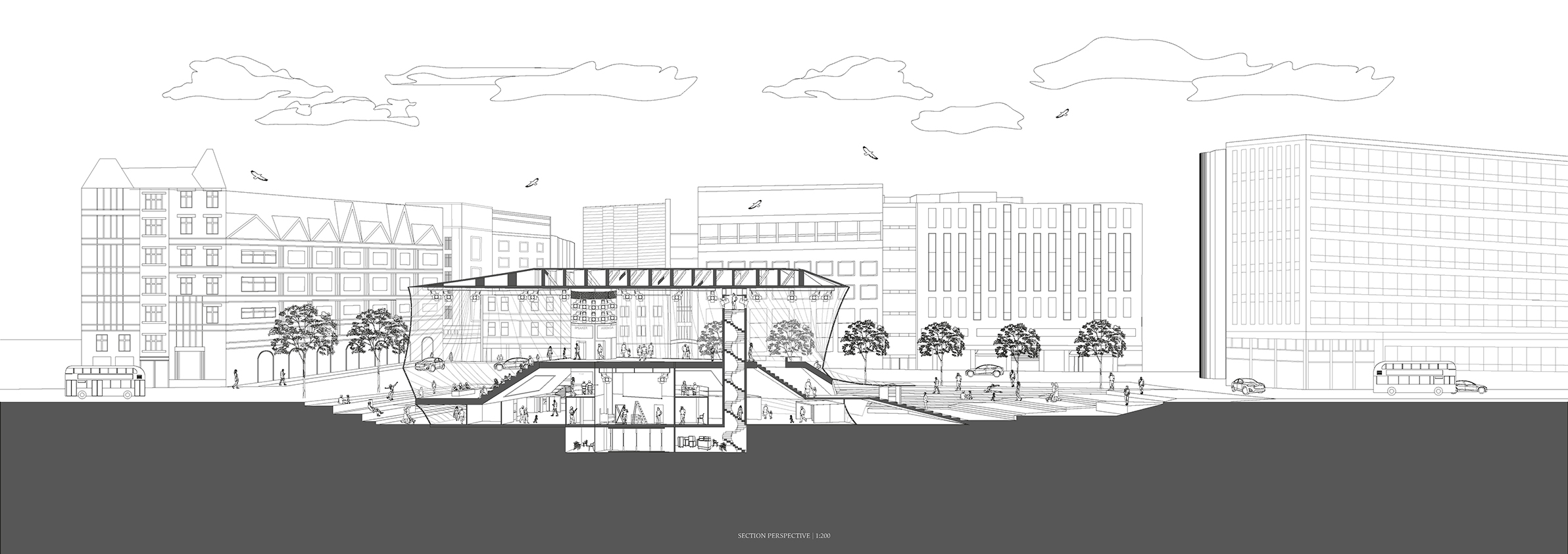
Most of the programs in the new civic theatre will be meetings, public events, performances and theatre workshops.
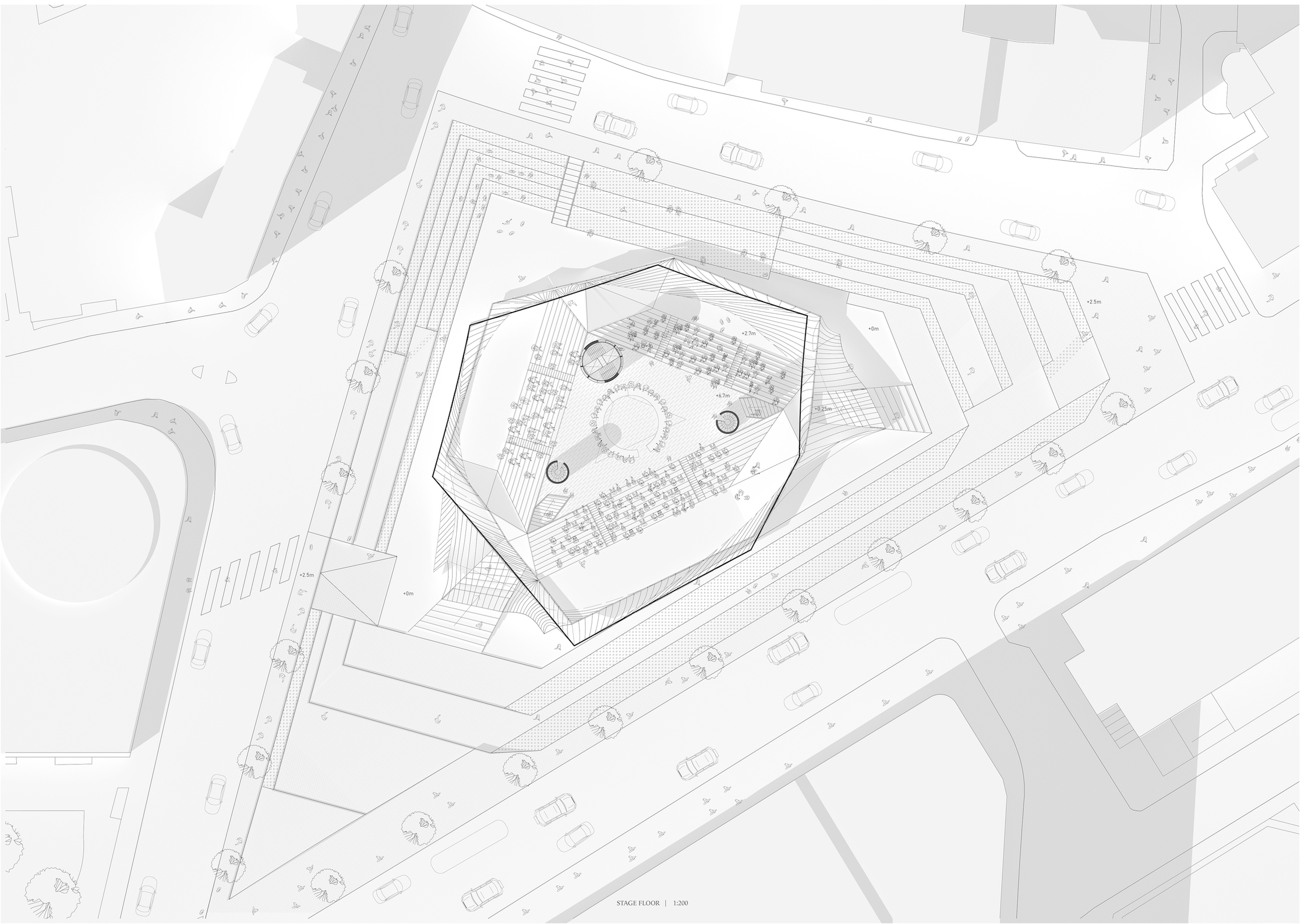
The stage could transform into various modes of theatre, from one theatre-in-the-round, to three individual proscenium theatres.
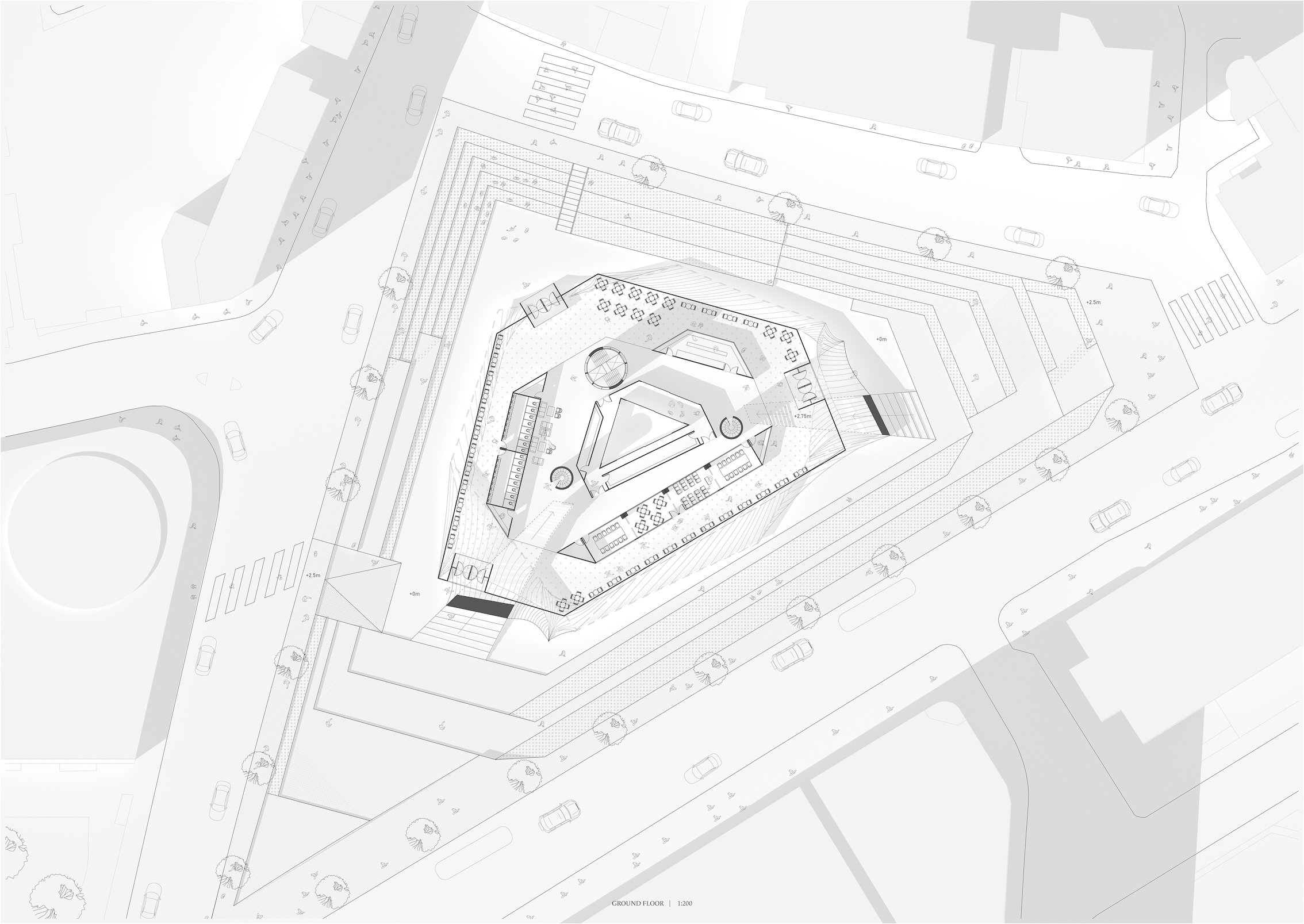
Meeting rooms, a bar and back of house facilities will occupy the ground floor.
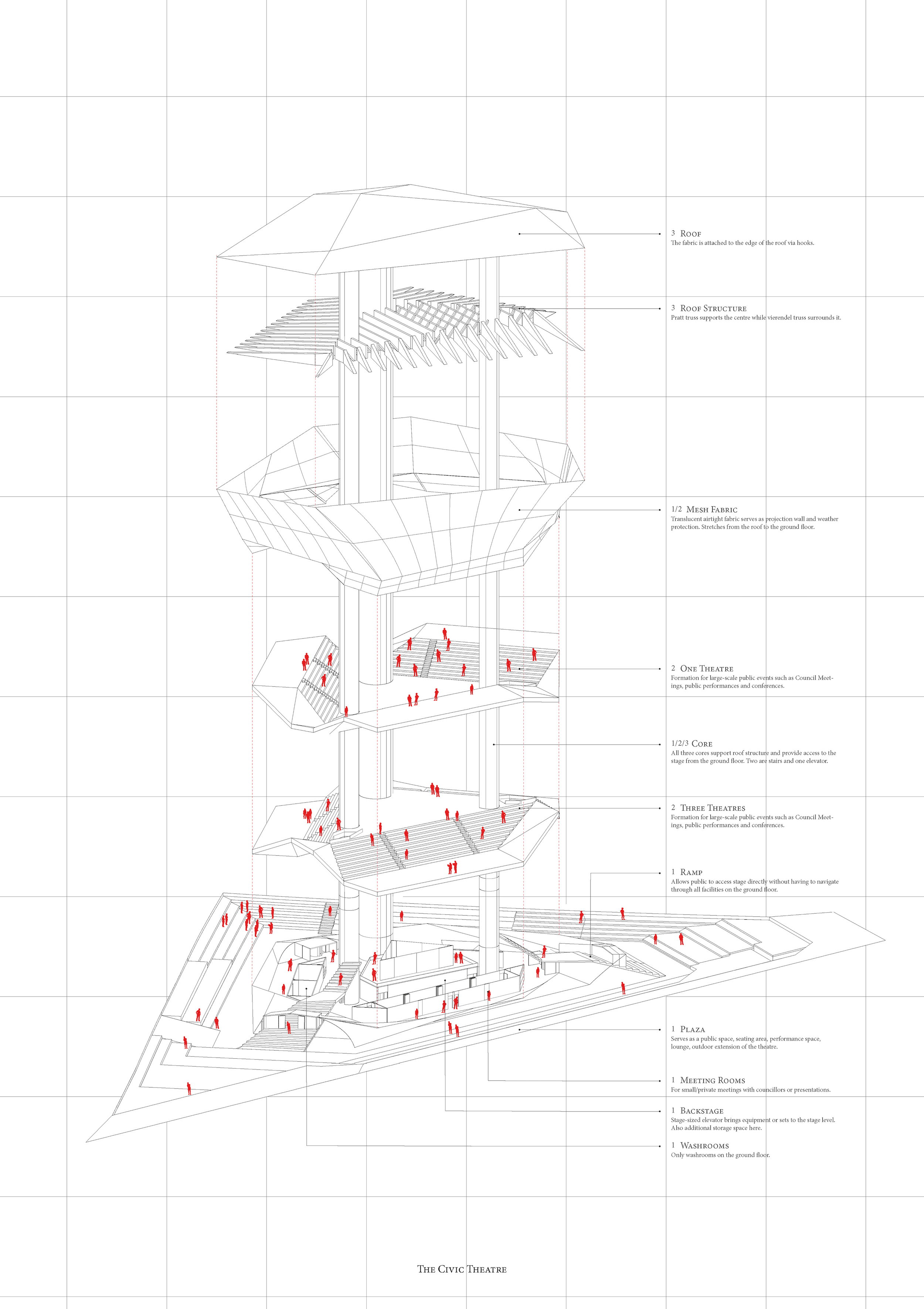
The Civic theatre will serve as a public stage to raise awareness of both local and national matters by making politics accessible in order to encourage participation.
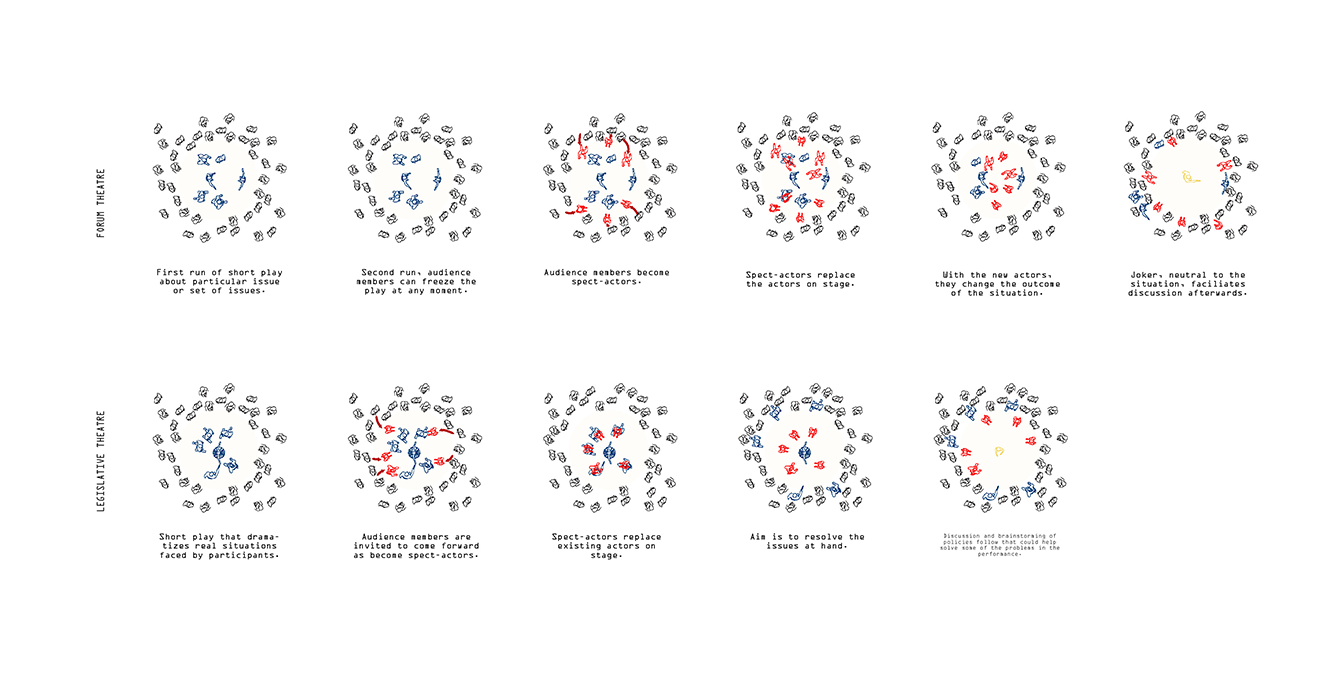
Theatre practices will also be employed as an educational tool, such as the Theatre of the Oppressed developed by theatre practitioner Augusto Boal in the 1970s.