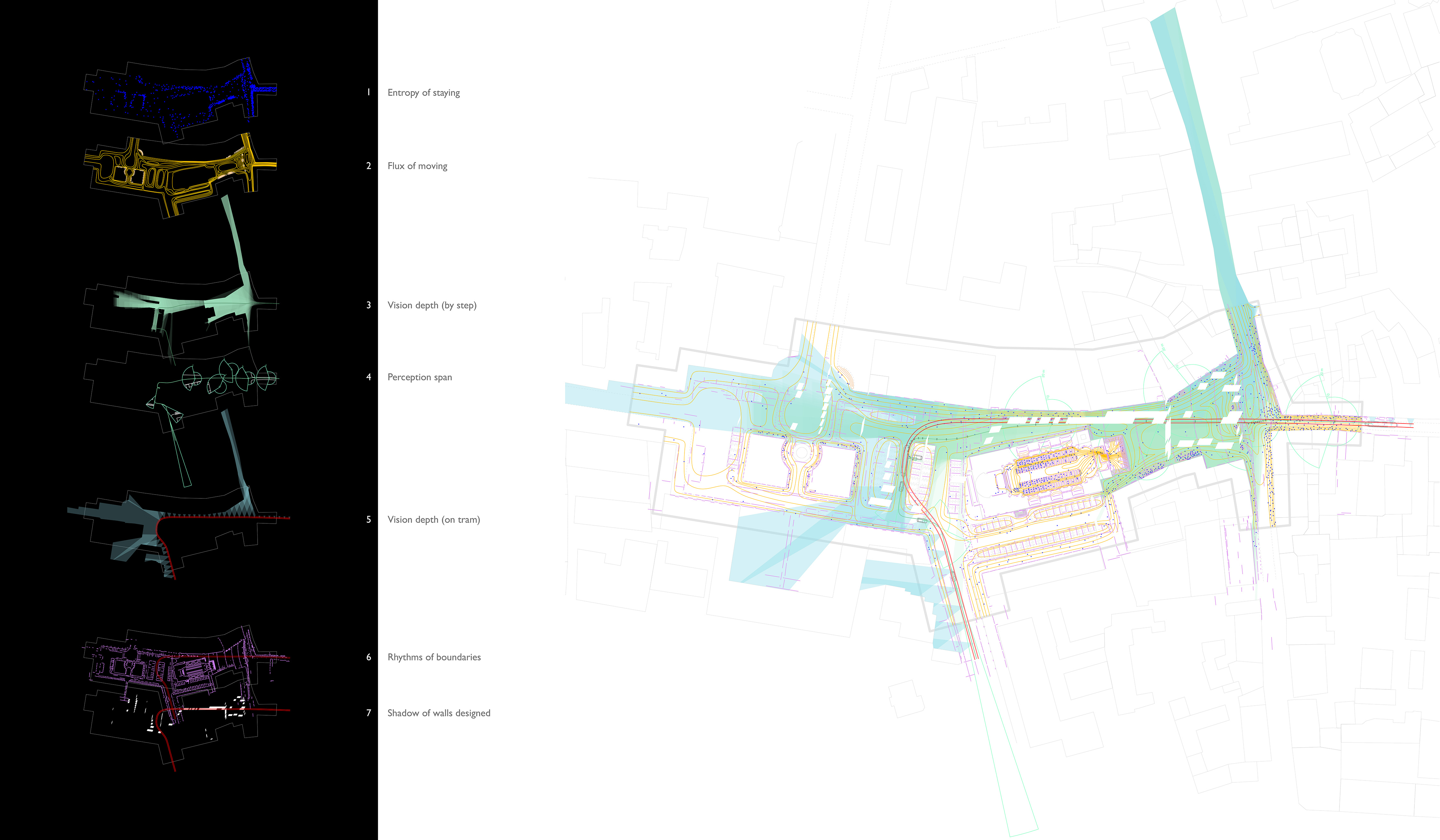
There is a dual sight to observe the city of Milan: in moving or stay still; and we observers are living in this lingering duality: space and building. Therefore, Milan’s problematic suburbia can be understood in two: moving on super-infrastructure or living still in mega-buildings. Milan’s suburbia see the problem of splitting of these two structures, and fragmentation between local-less towns, factories, cemeteries and superstores. A design method is proposed as well as an example in both local and urban scale to solve the problem.
Extension of tram network, a slow but local-friendly transport of Milan, towards farther suburban areas is proposed to sew up together these suburban fragments, in purpose to rival and complement the over-development of a car-only, speed-oriented infrastructure, the highway. Tram terminal piazza, a structure for returning, is the local interim space that I design to re-integrate the splitting duality of moving and still (subjectively), of space and building (objectively). In the example piazza in Rho, a town at Milan’s margin, local rhythm of the intermittent duality is analysed and new interval walls are inserted accordingly as pretreatment prior to tram introduction to town centre, to avoid extra splitting of the dual and to sustain locality.
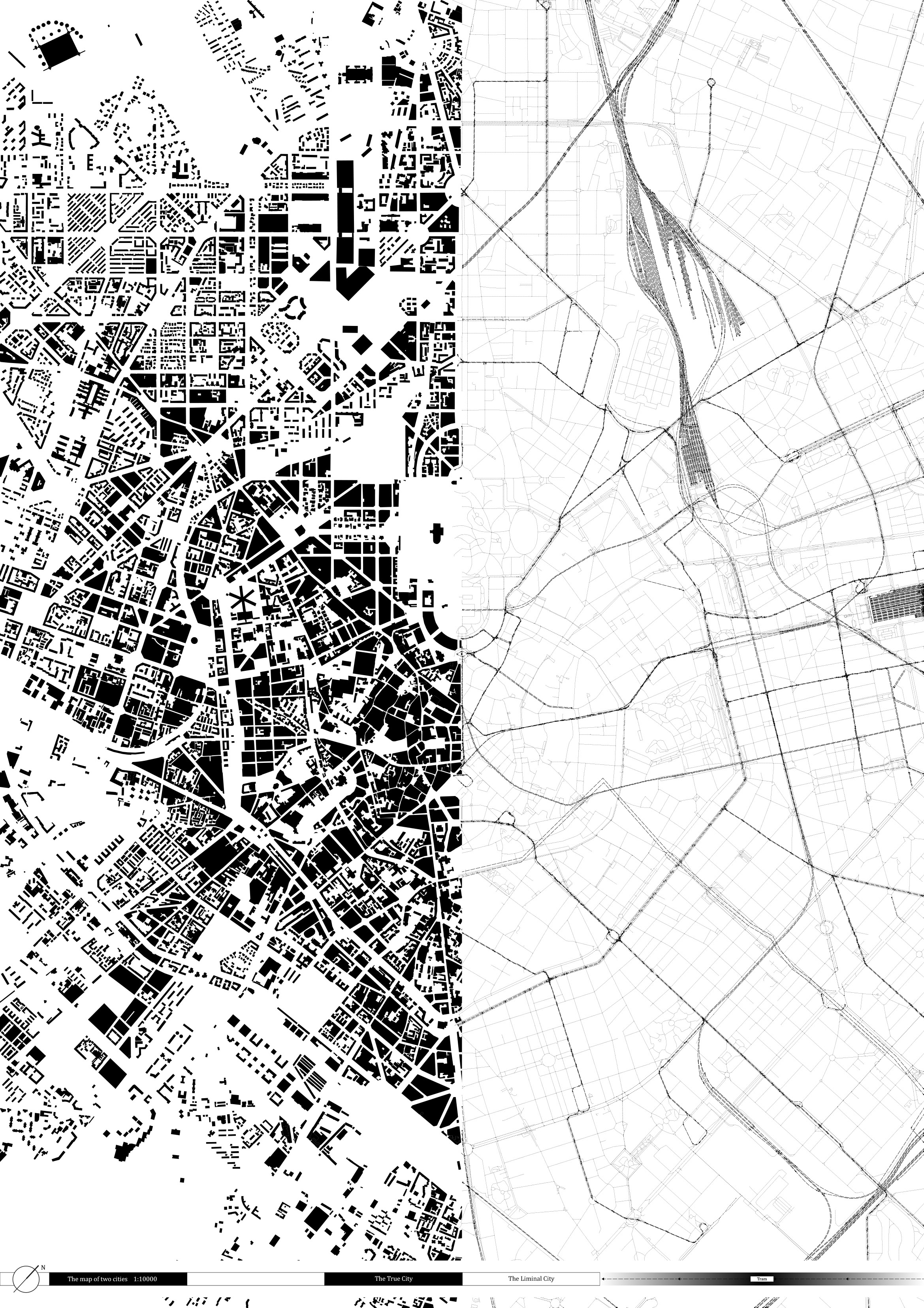
The map of Two Cities
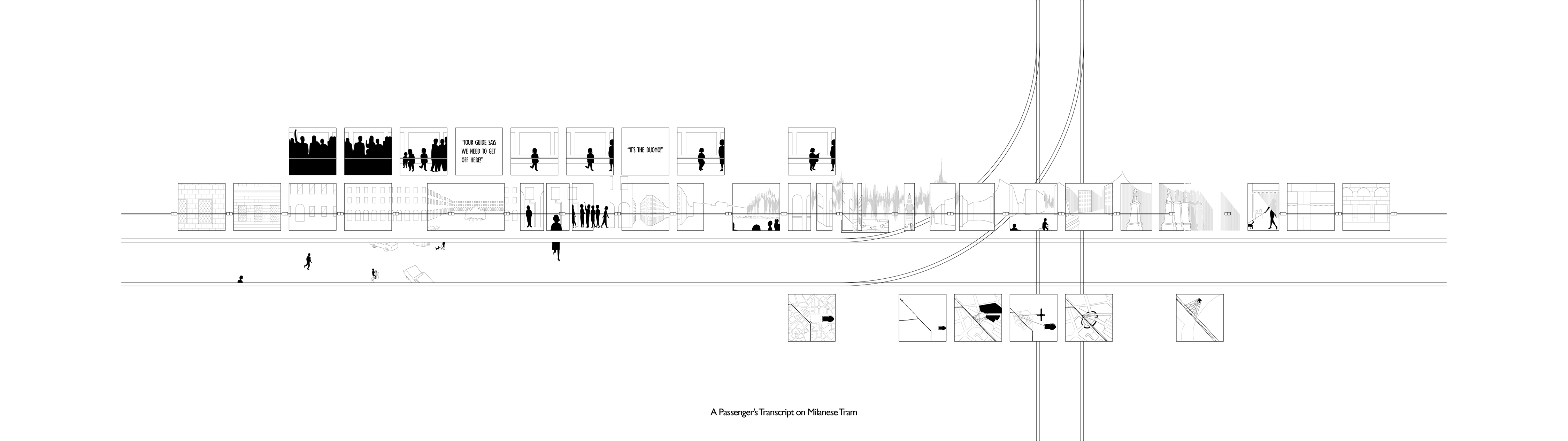
1 A passenger's transcript on Milanese tram
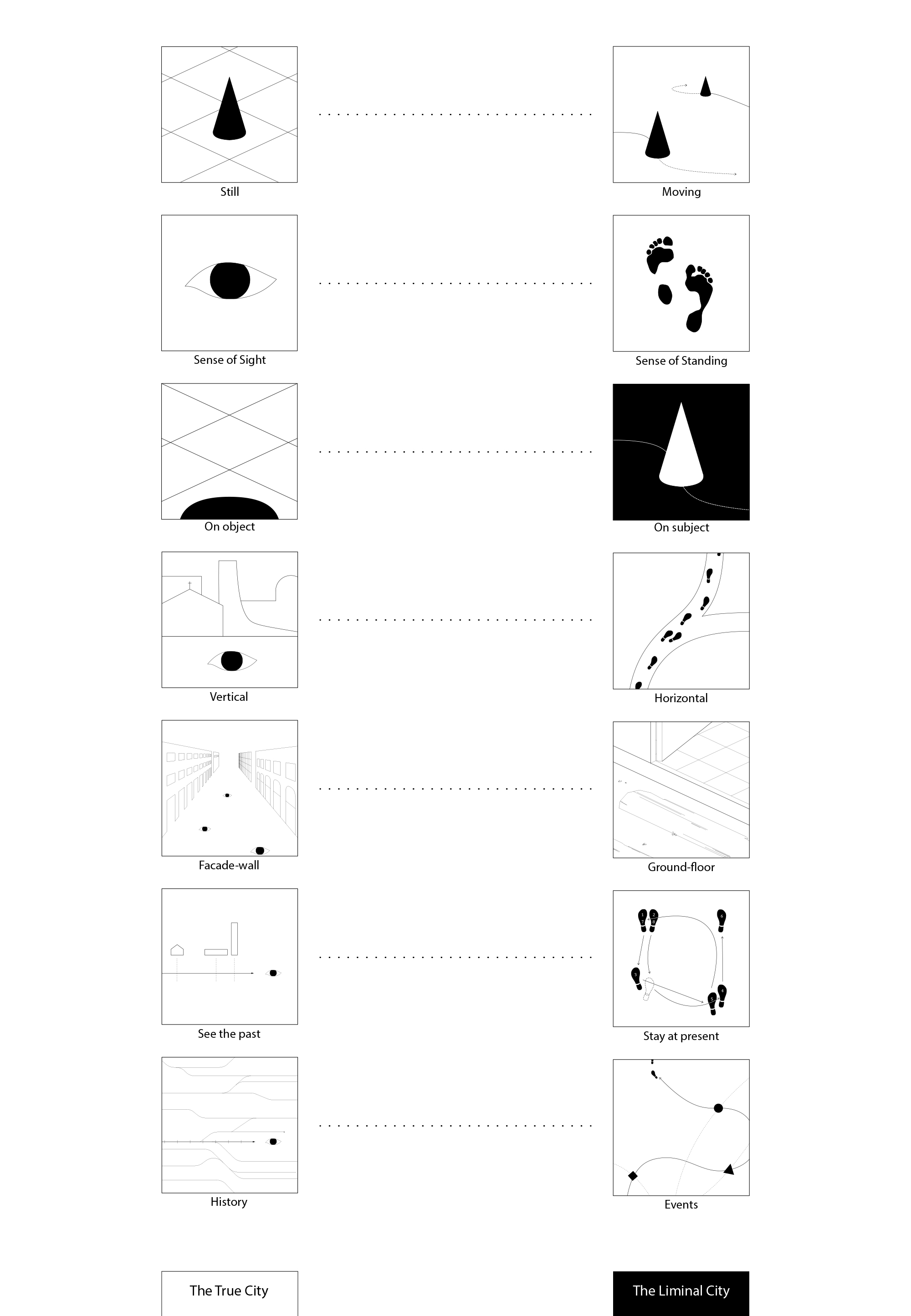
2 Properties of the Two Cities (and their Citizens)
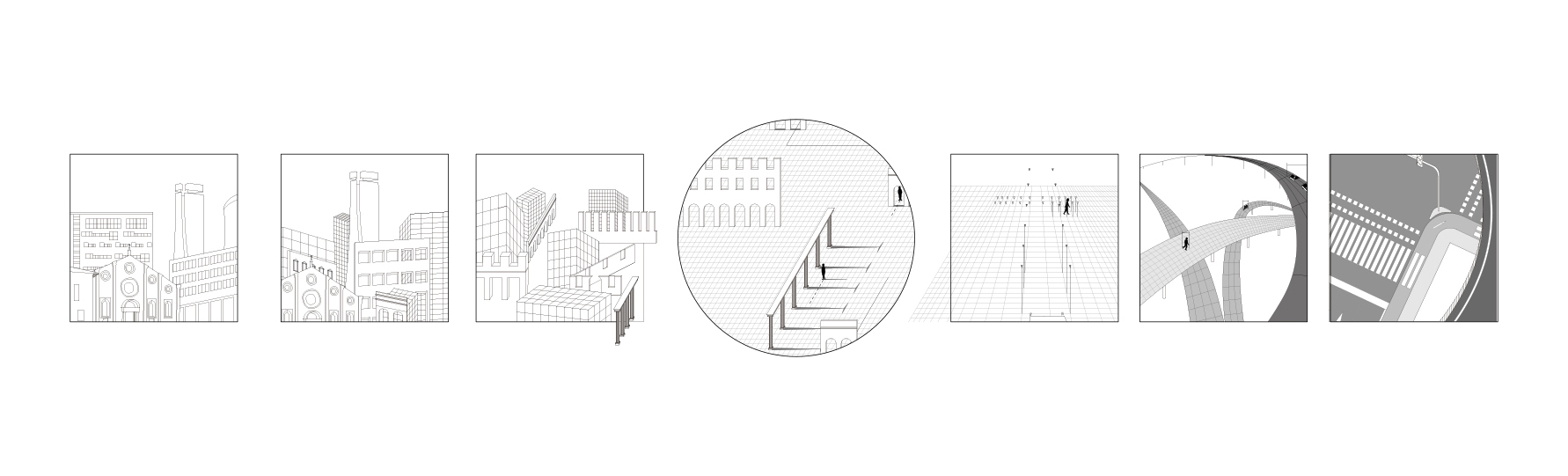
3 Space to design is the interim place for the two Citizens
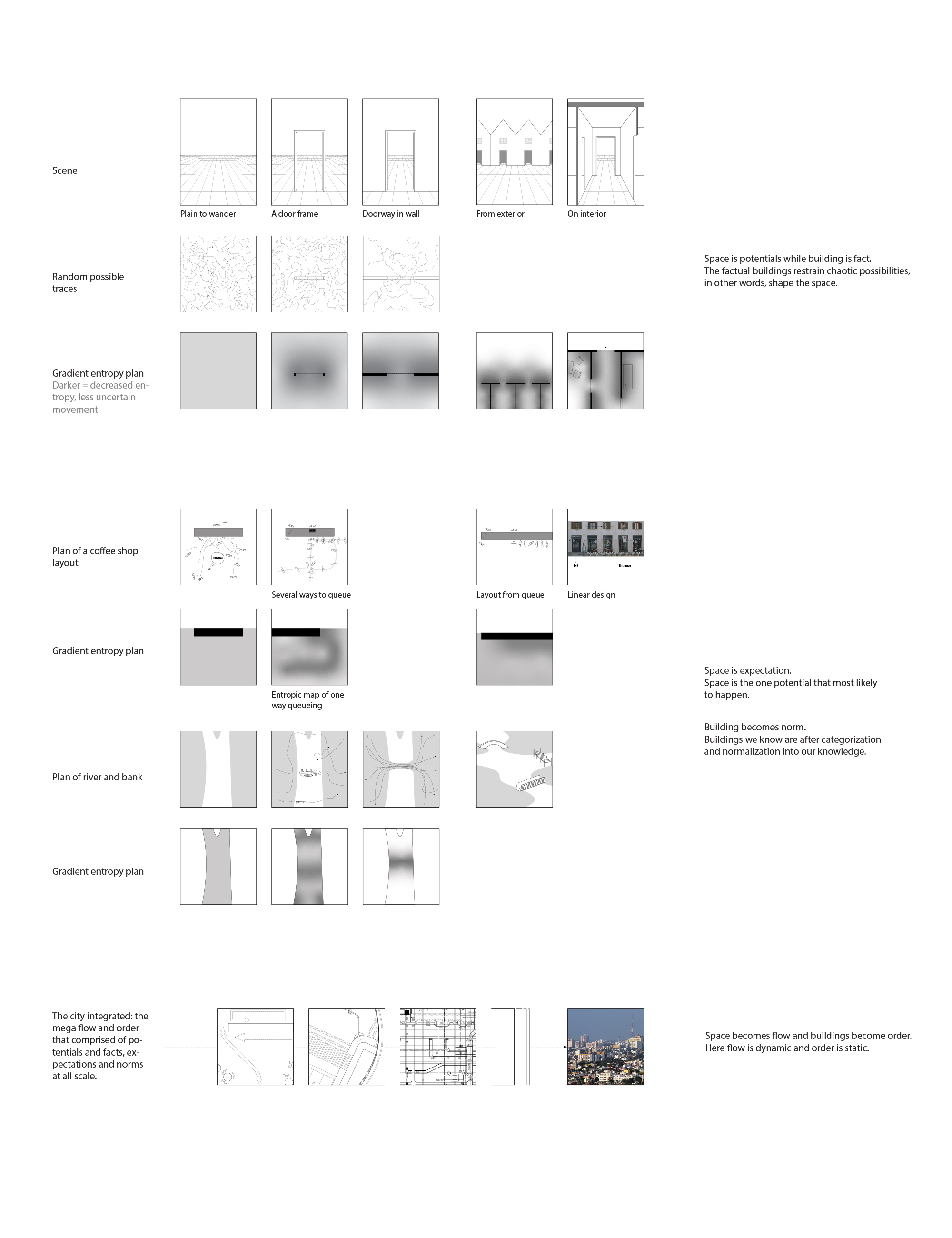
4 Duality of space and building (illustration of my essay)
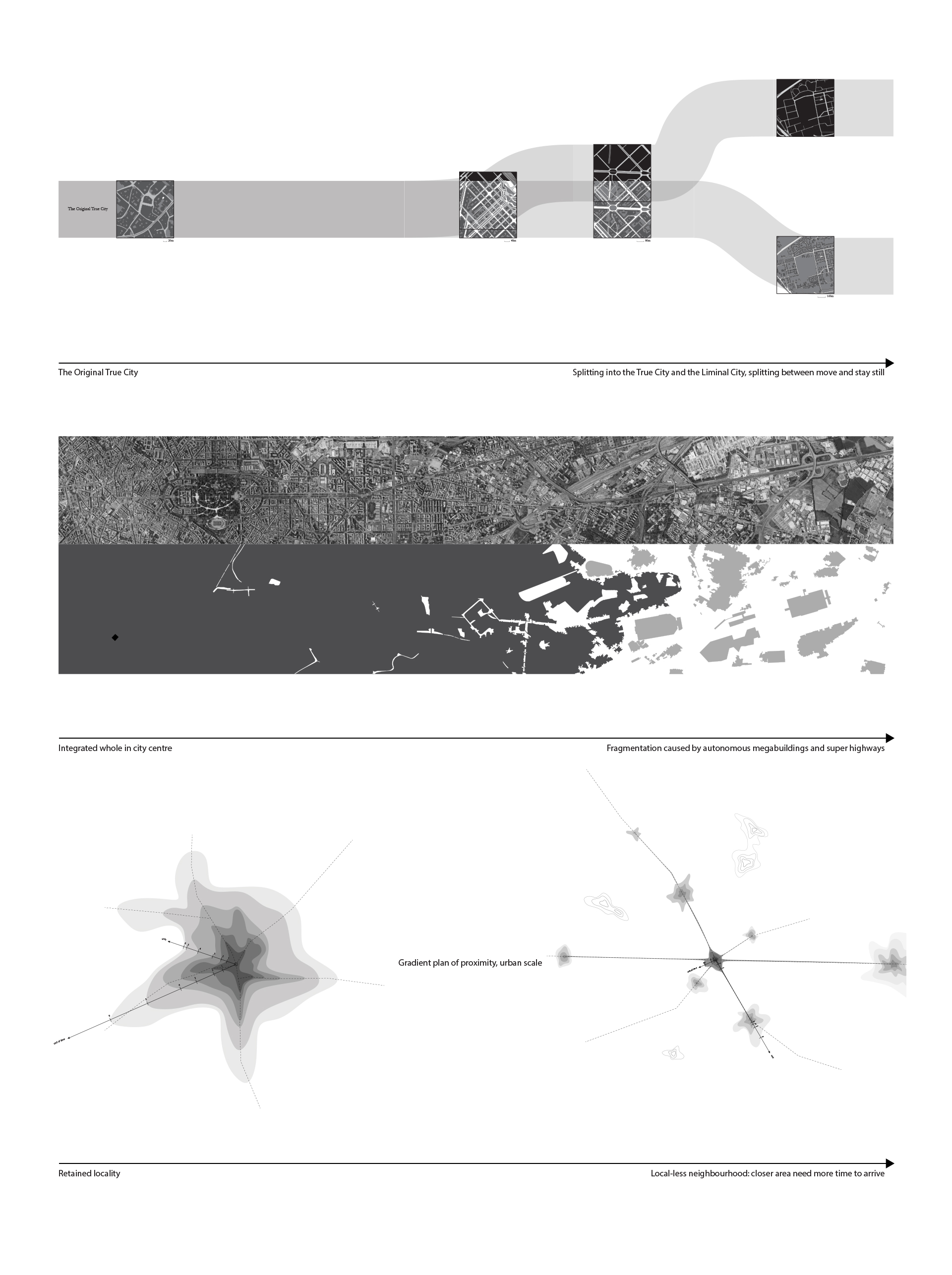
5 Spiltting, fragmentation and local-lessness at Milanese suburbia
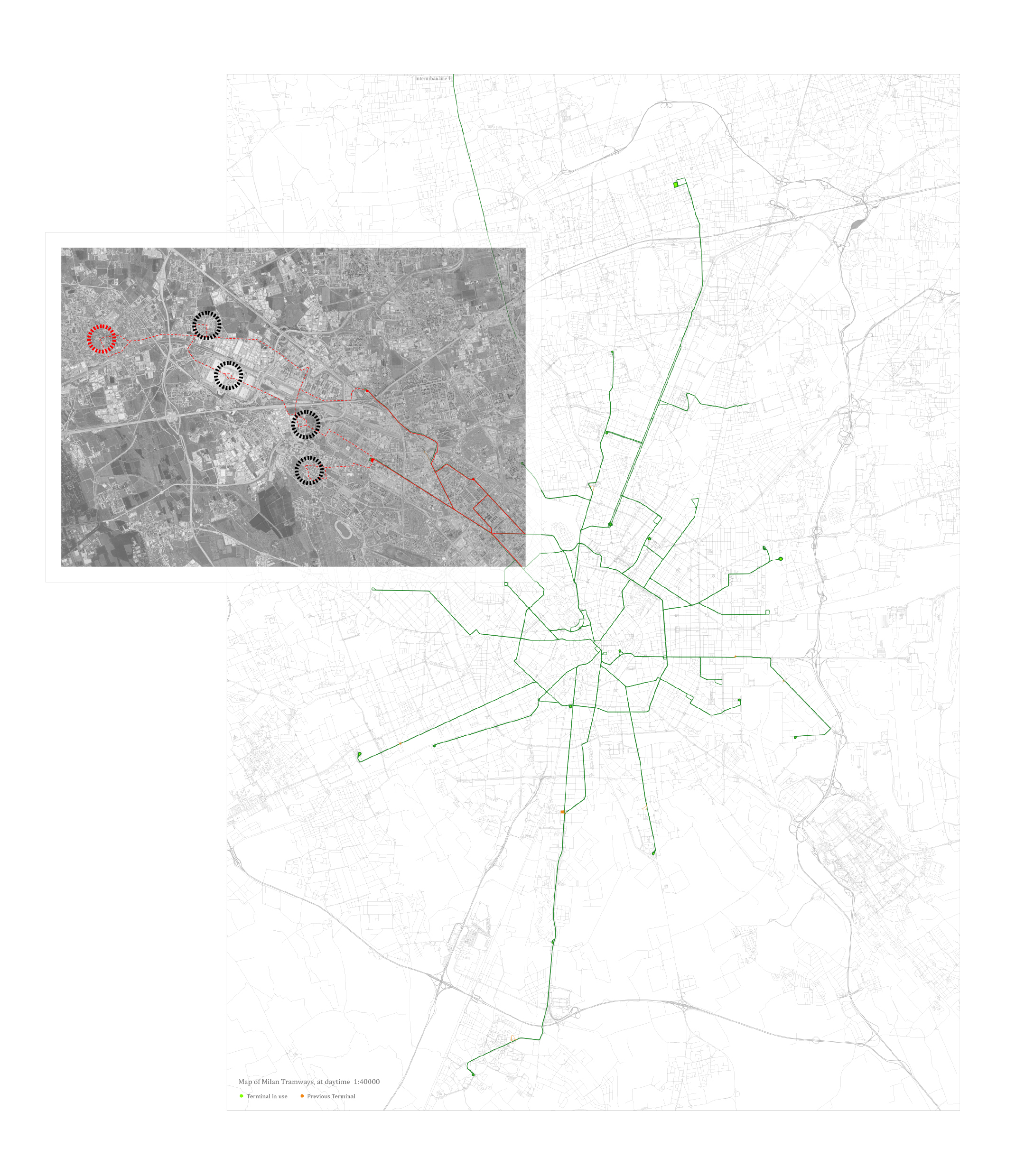
6 Proposing lines of tram extention
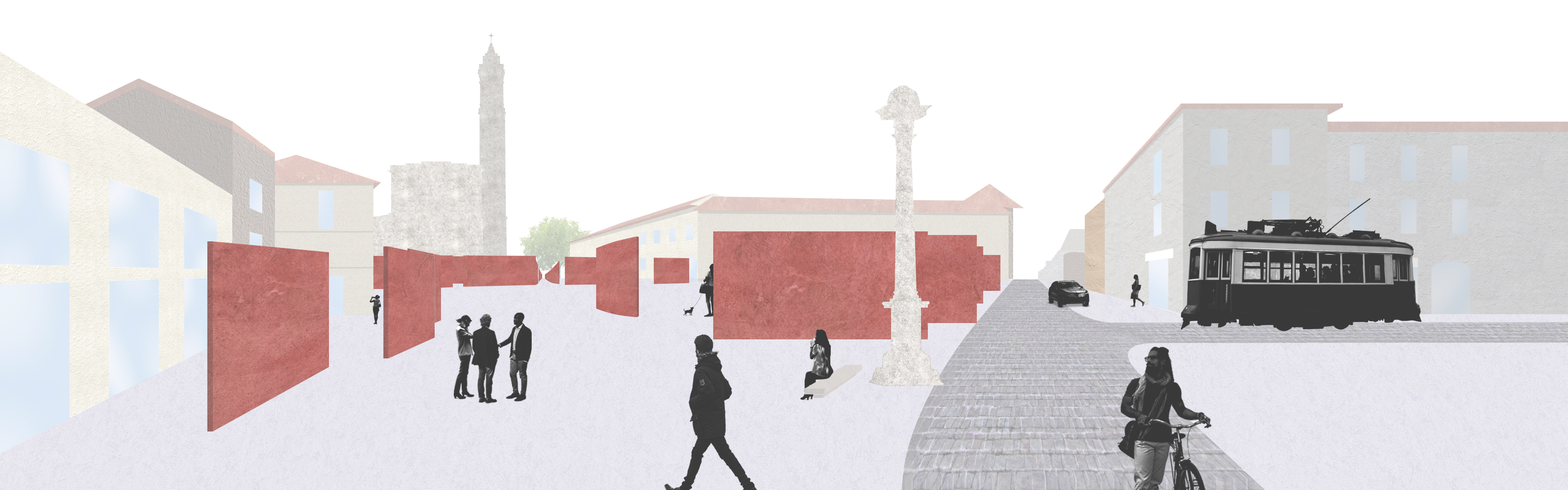
7 Walls are added to form new local intervals