Along the coasts of the Yellow Sea, where dry and moist, human and non-human, logistical and agrarian spaces coexist, a major transformation has decimated wetlands and reclaimed vast expanses of intertidal mudflats. A new system of clear-cut separations has emerged, driven by the infrastructural works of massive business conglomerates known as ‘chaebols’.
The ecotone is where different biological communities meet and integrate, it is a metamorphosis zone connecting the sea and the dry land. It is a space threatened by the expansion of technology in the Yellow Sea, and is the most sensitive component of its complex dynamic systems. The ecotone is where this project redraws the dynamics of the Yellow Sea, connecting the multiple polities surrounding its waters in a transient zone of engagement with the rapidly changing and uncertain environments of the Anthropocene.

Remote sensing analysis of the west coast of South Korea in 1974. (White indicates more presence of liquid water over a year, dark blue indicates solid ground.)

Remote sensing analysis of the west coast of South Korea in 2019. (White indicates more presence of liquid water over a year, dark blue indicates solid ground.)
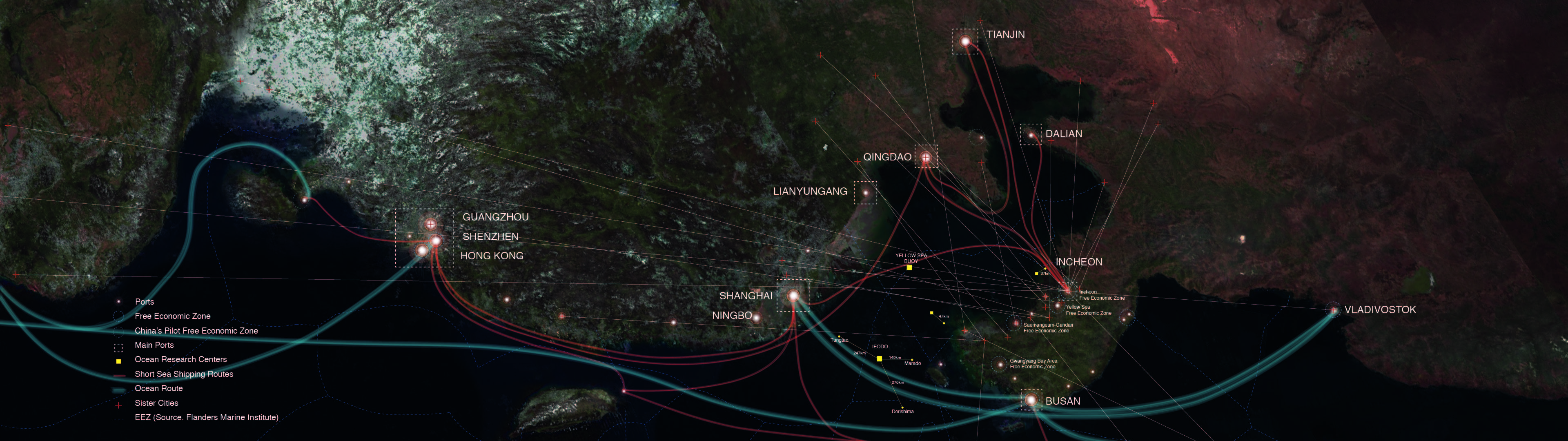
Turning mudflats of the Yellow Sea into gateways of trans-oceanic connections, these hierarchical infrastructural projects have allowed the large corporations to grow internationally.
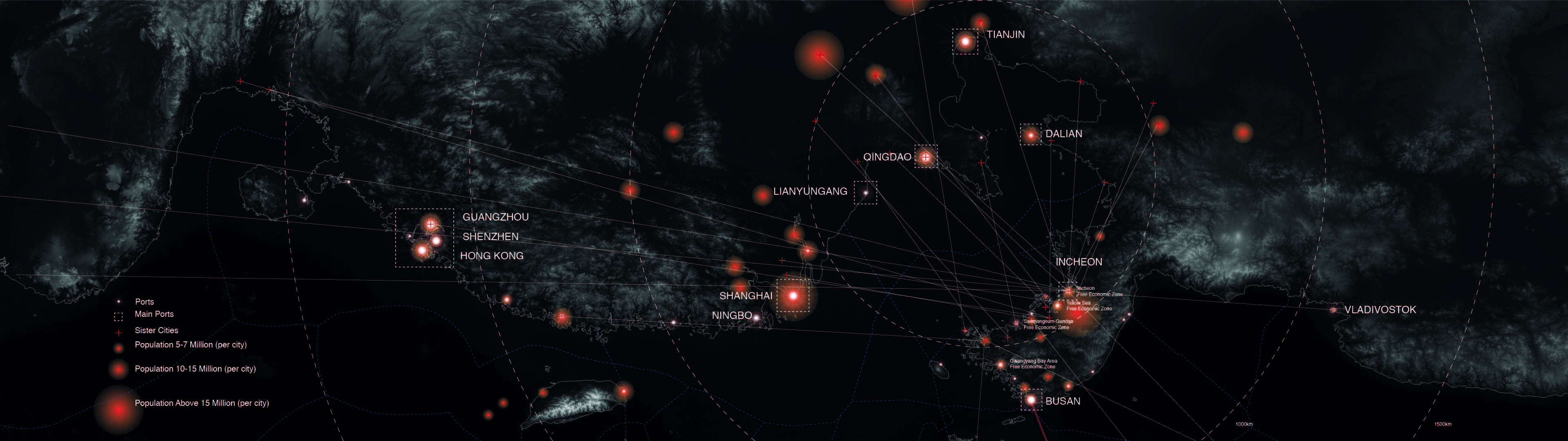
Population around the Yellow Sea at risk of sea-level rise.
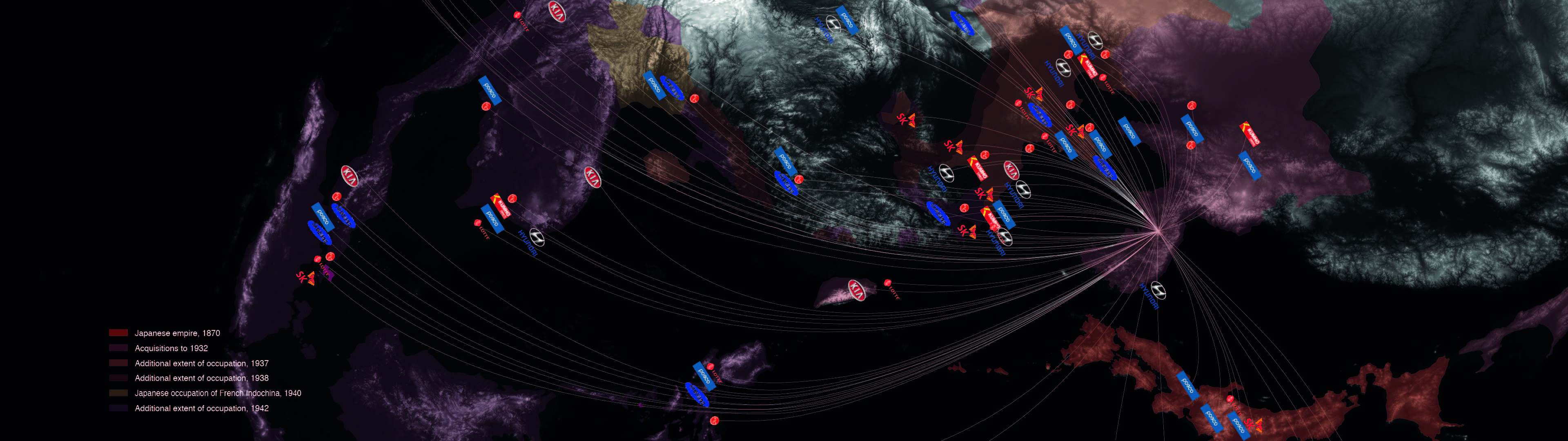
The legacy of the 20th century Imperialism of Japan through expansion of contemporary corporate practices (chaebols).
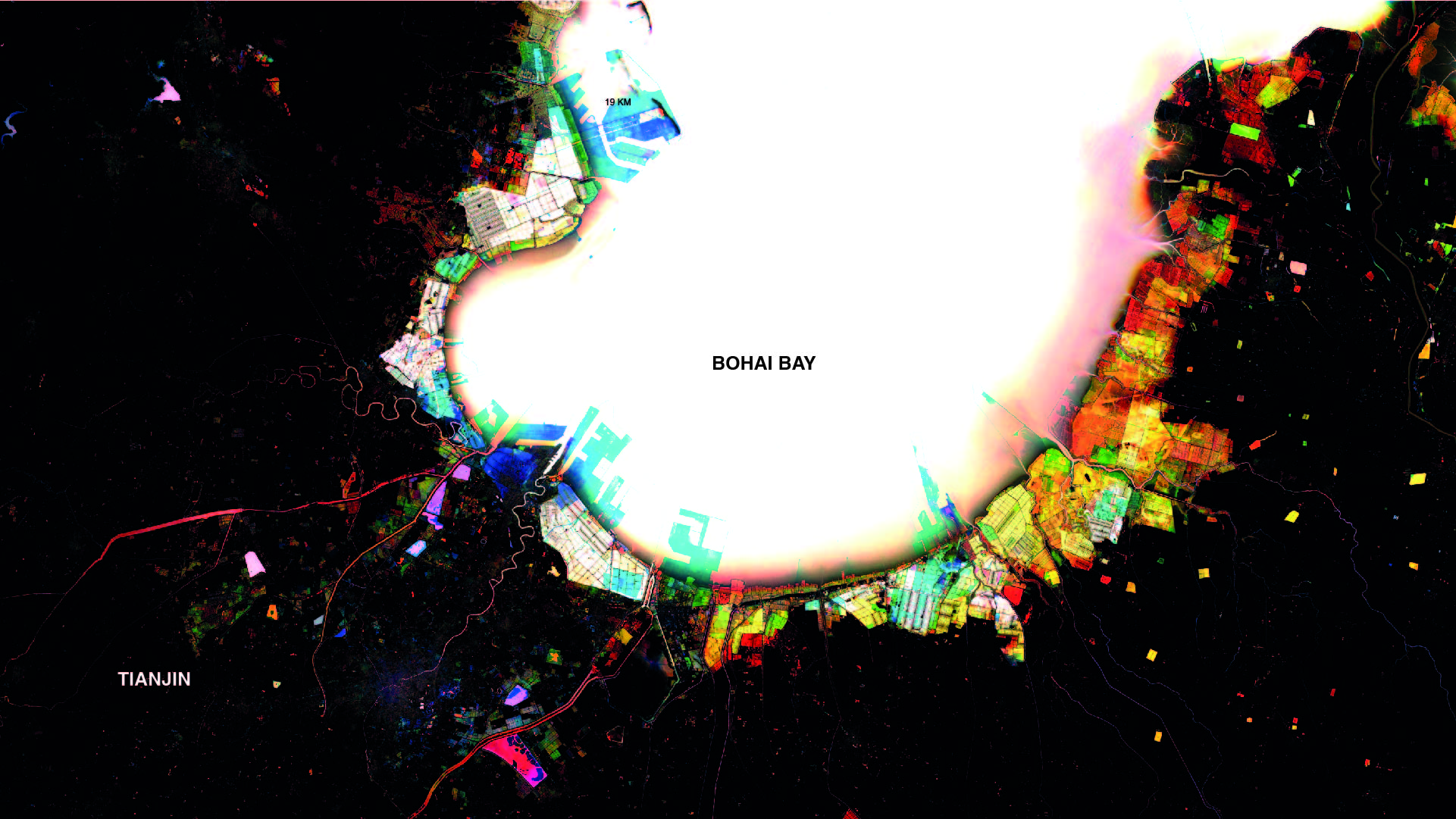
Multi-temporal remote sensing data of Bohai Bay, China. Changes in water indicated as red (late 1970's), green (1990's), and blue (late 2010's).
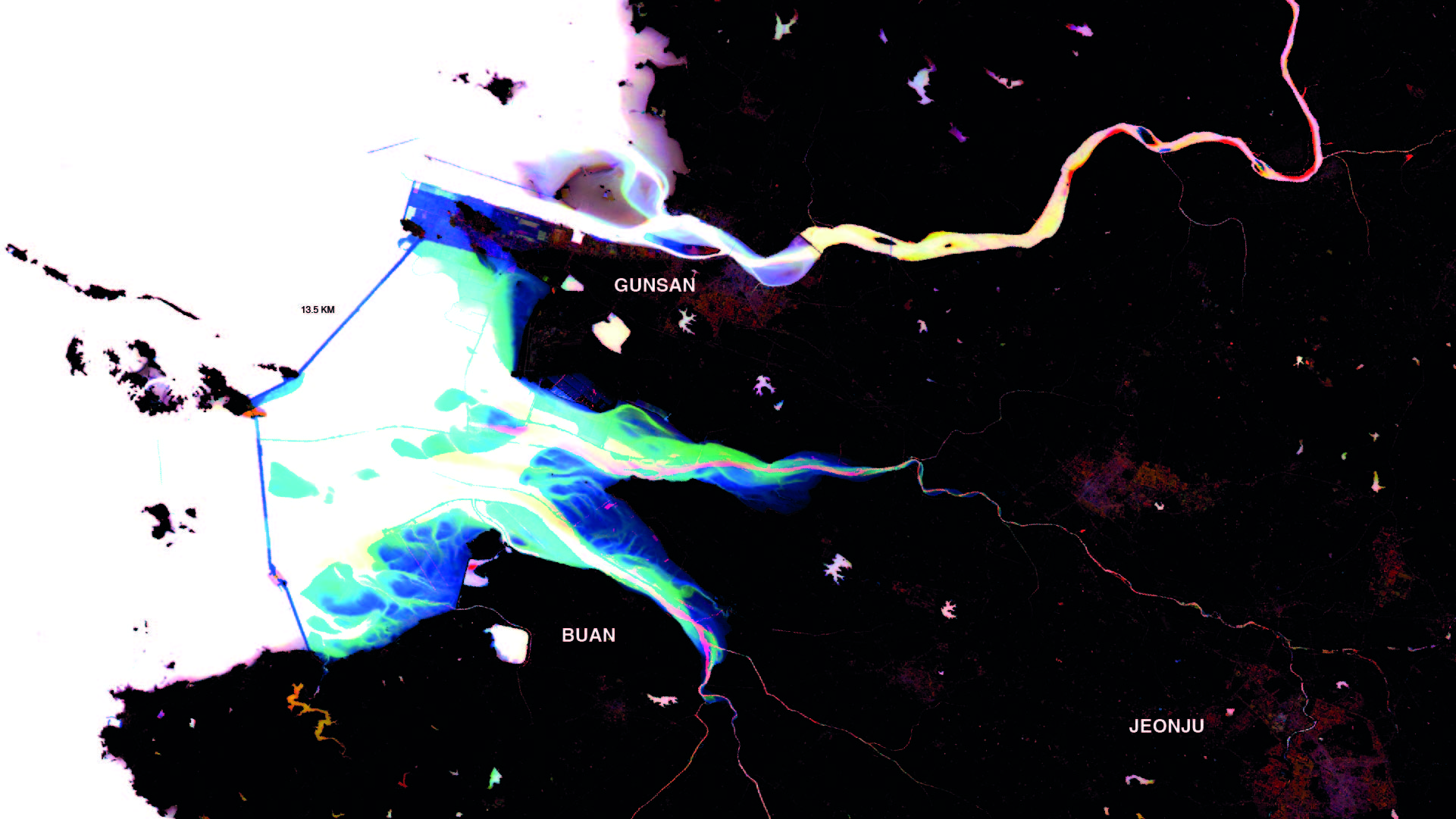
Multi-temporal remote sensing data of Saemangeum, South Korea. Changes in water indicated as red (late 1970's), green (1990's), and blue (late 2010's).
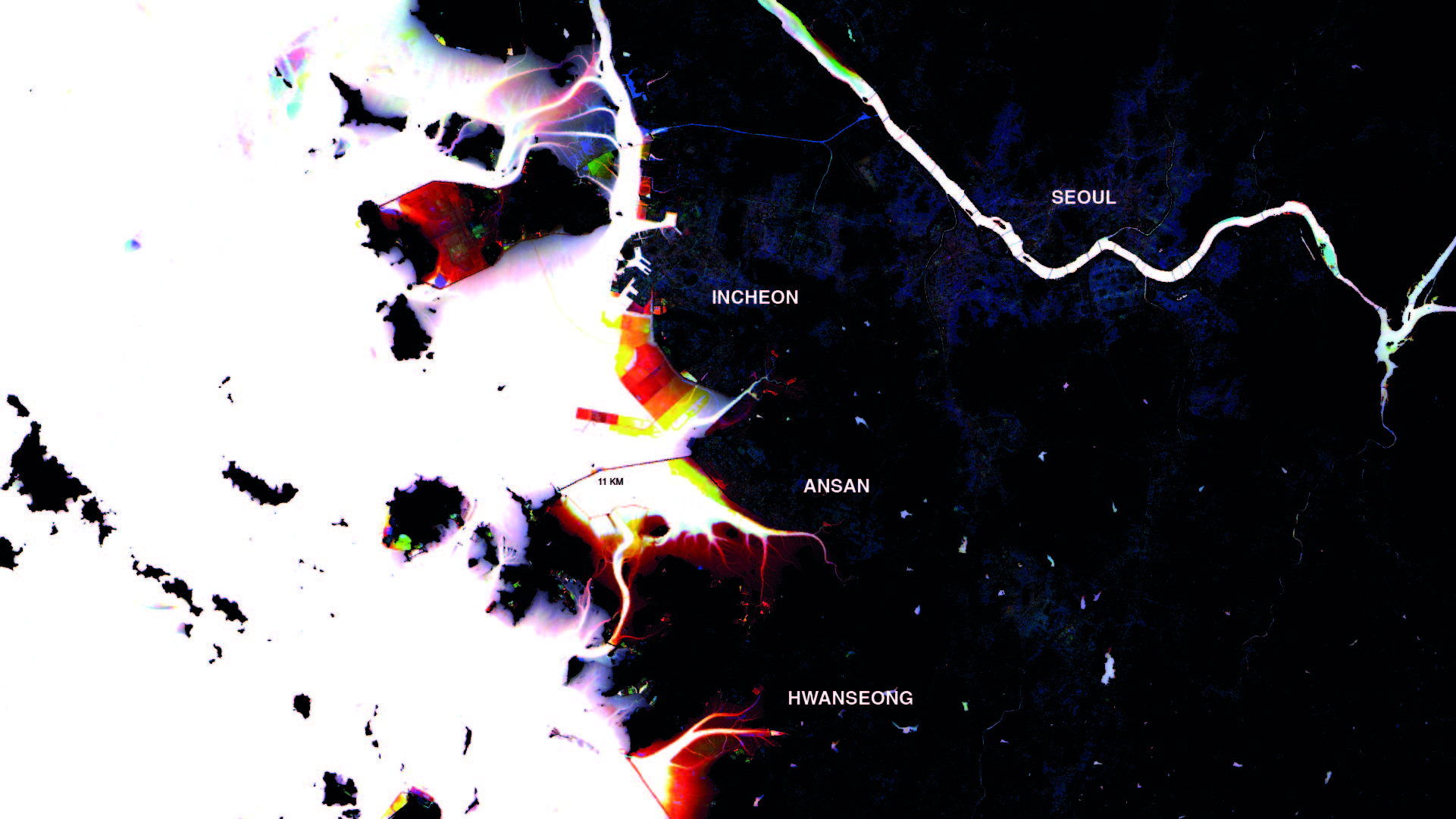
Multi-temporal remote sensing data of Incheon, South Korea. Changes in water indicated as red (late 1980's), green (late 1990's), blue (2019).