title is still in progress, but we're working on electricity in Lebanon
Rawan El-Hariri, MArch (Year: 5)
The unstable availability of electricity, with daily blackouts and interruptions reveals the complex dependencies of infrastructure from nationalisms, corruption, regional politics, colonial legacies, finance, criminality, monopolies, national debt, and factions. Electricity in Lebanon is politics, it is the making of cohabitation. The failure of the grid epitomises the failure of the national system at large. The ongoing political upheaval of the so-called WhatsApp revolution is seen as a condition to invert the dependencies from the centralised electric- ity supply, and institute a series of renewable energy networks, each transforming the heavily segmented political spaces. Renewable power is a way of redefining and recapturing power, to re-empower Lebanon during a tumultuous and electrifying national transition.
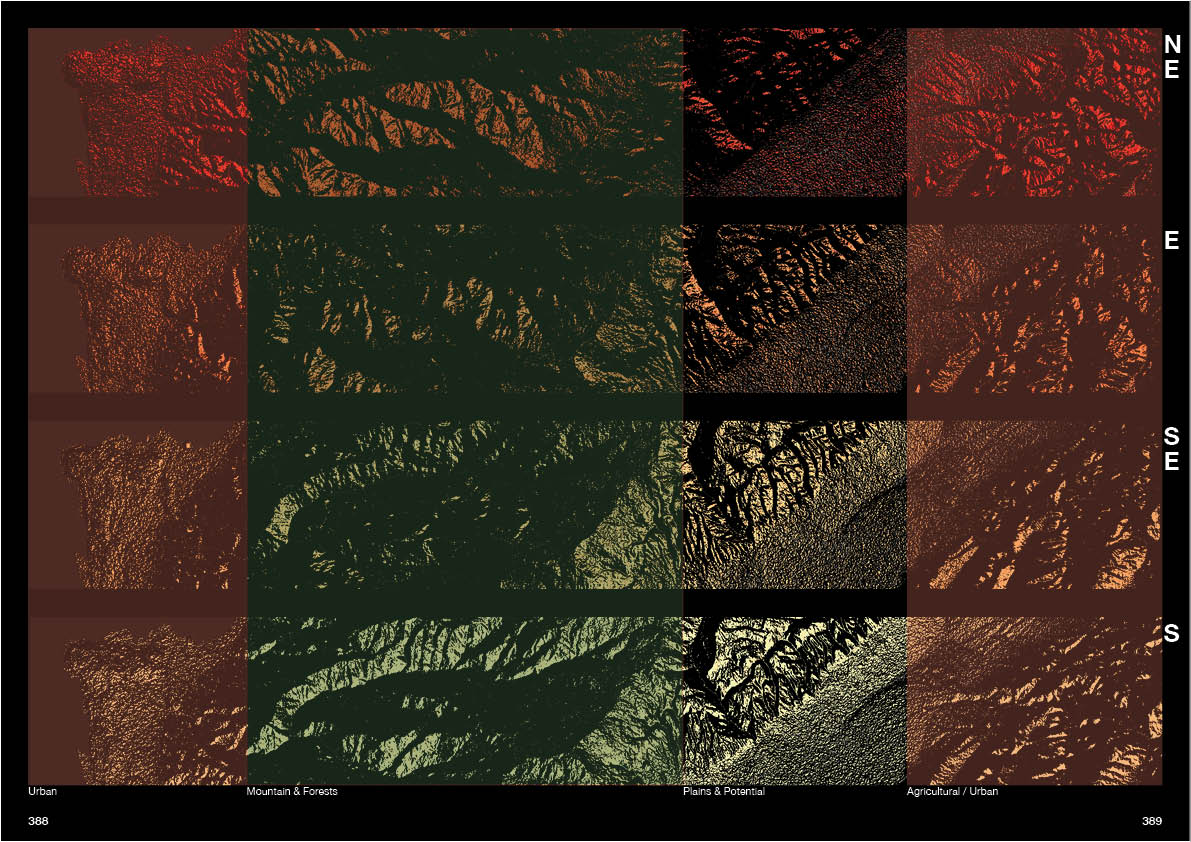
Remote Sensing: A strip across the Lebanese topography was sampled, highlighting the south-facing surfaces where solar PV panels can be placed.
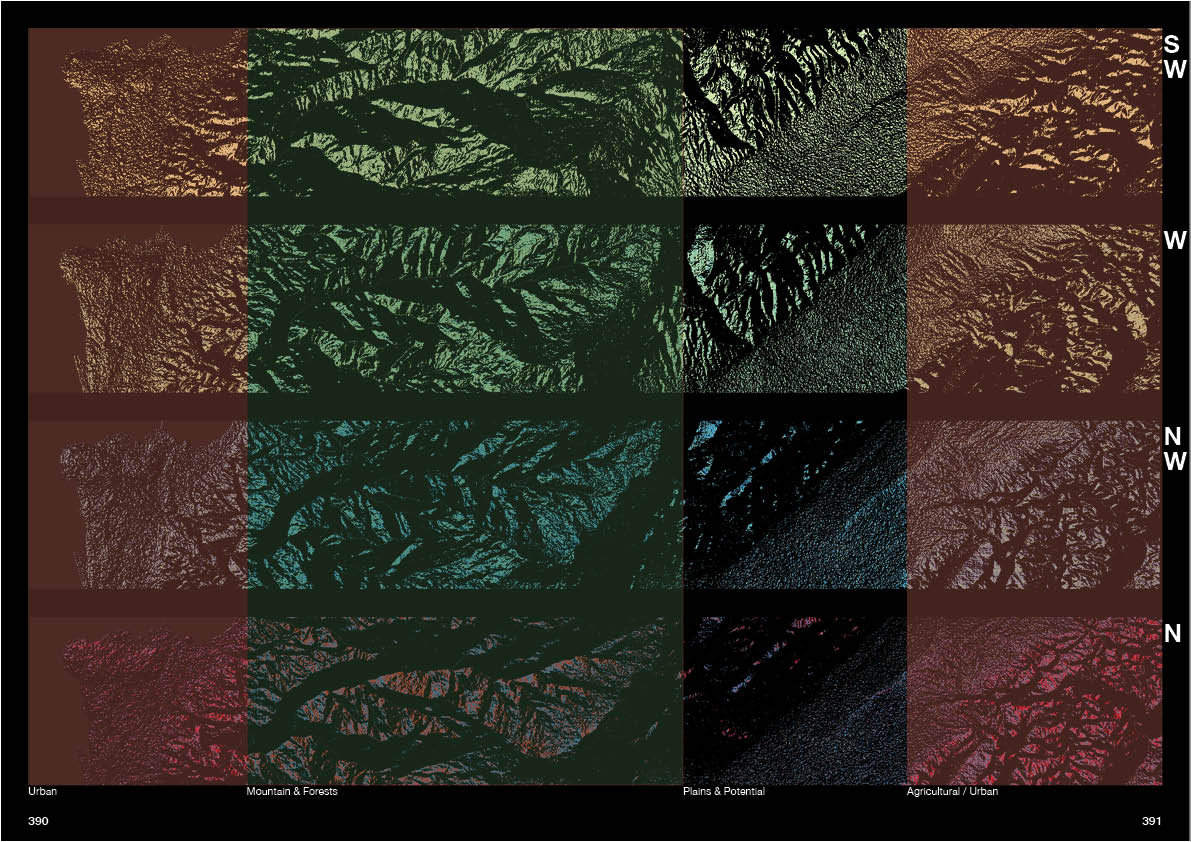
Remote Sensing: A strip across the Lebanese topography was sampled, highlighting the south-facing surfaces where solar PV panels can be placed.
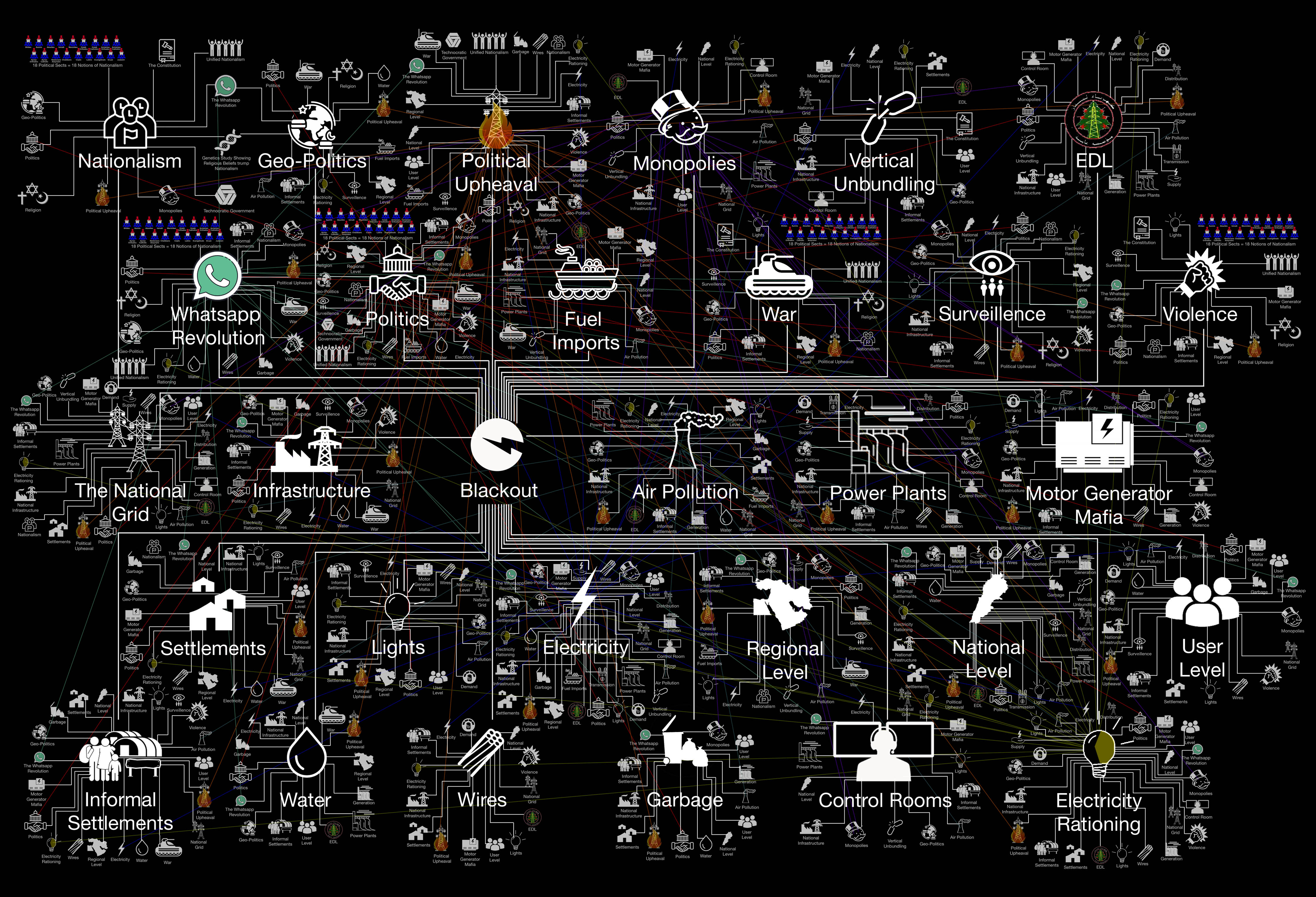
The blackout diagram highlights the relationship between blackouts and politics, infrastructure, geo-politics, monopolies, and etc, highlighting instrumental interconnections.
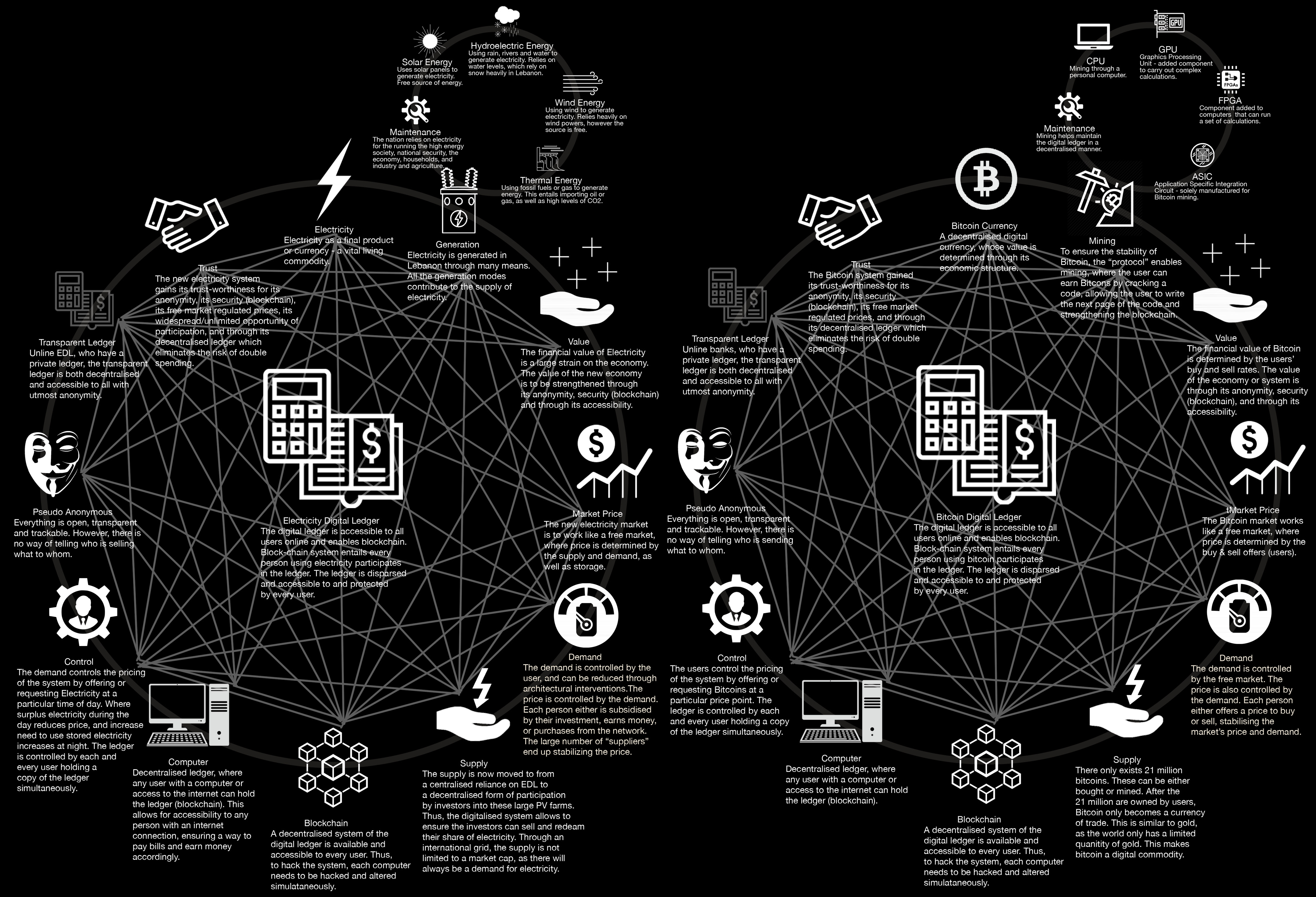
Utilising the model of Bitcoin, the new electricity network commodifies this model, enabling a corruption-free, anonymous investment system, that bas both physical and political elements.
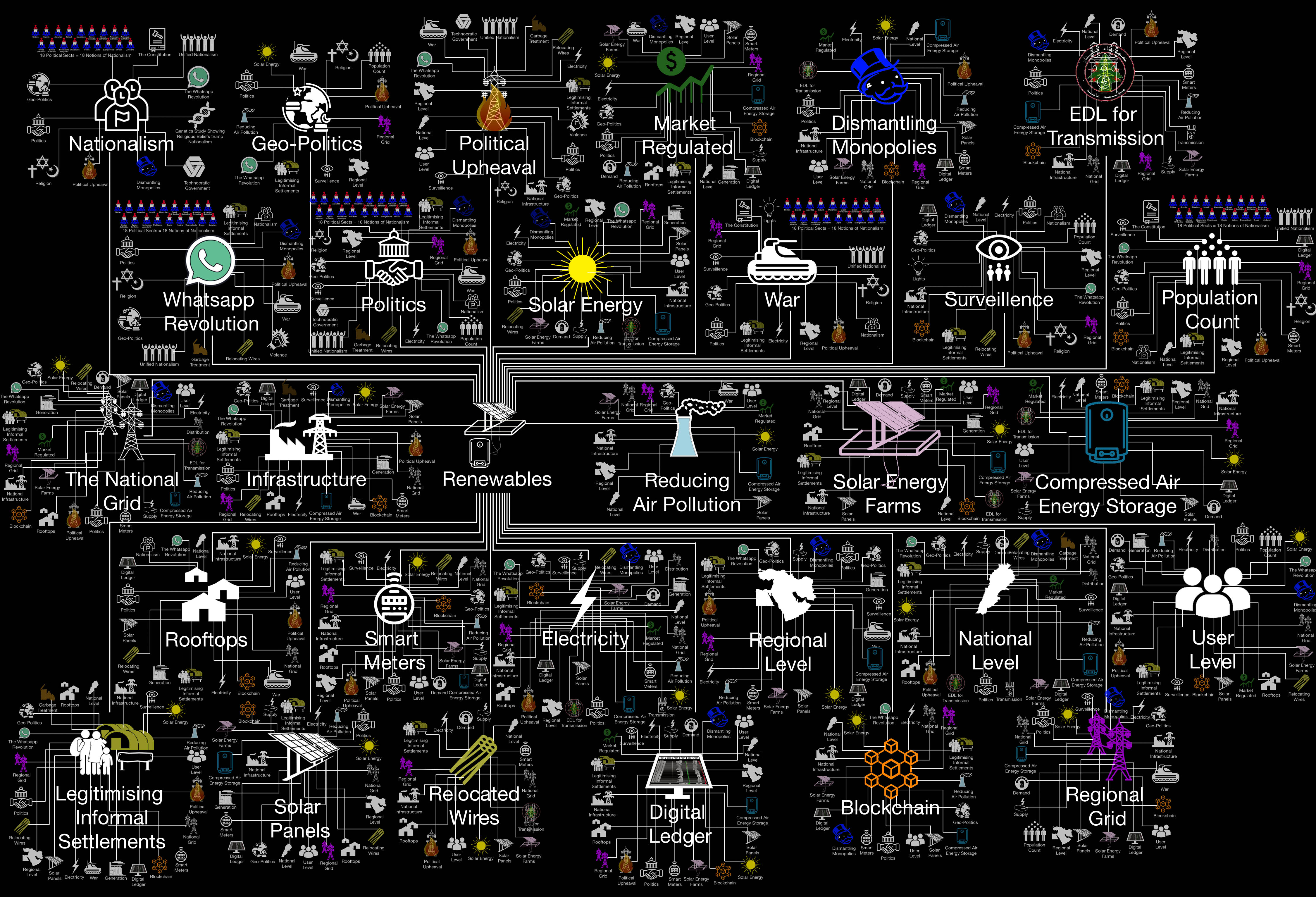
The renewables diagram highlights the relationship between renewables and politics, infrastructure, geo-politics, monopolies, and etc, highlighting the new instrumental interconnections.
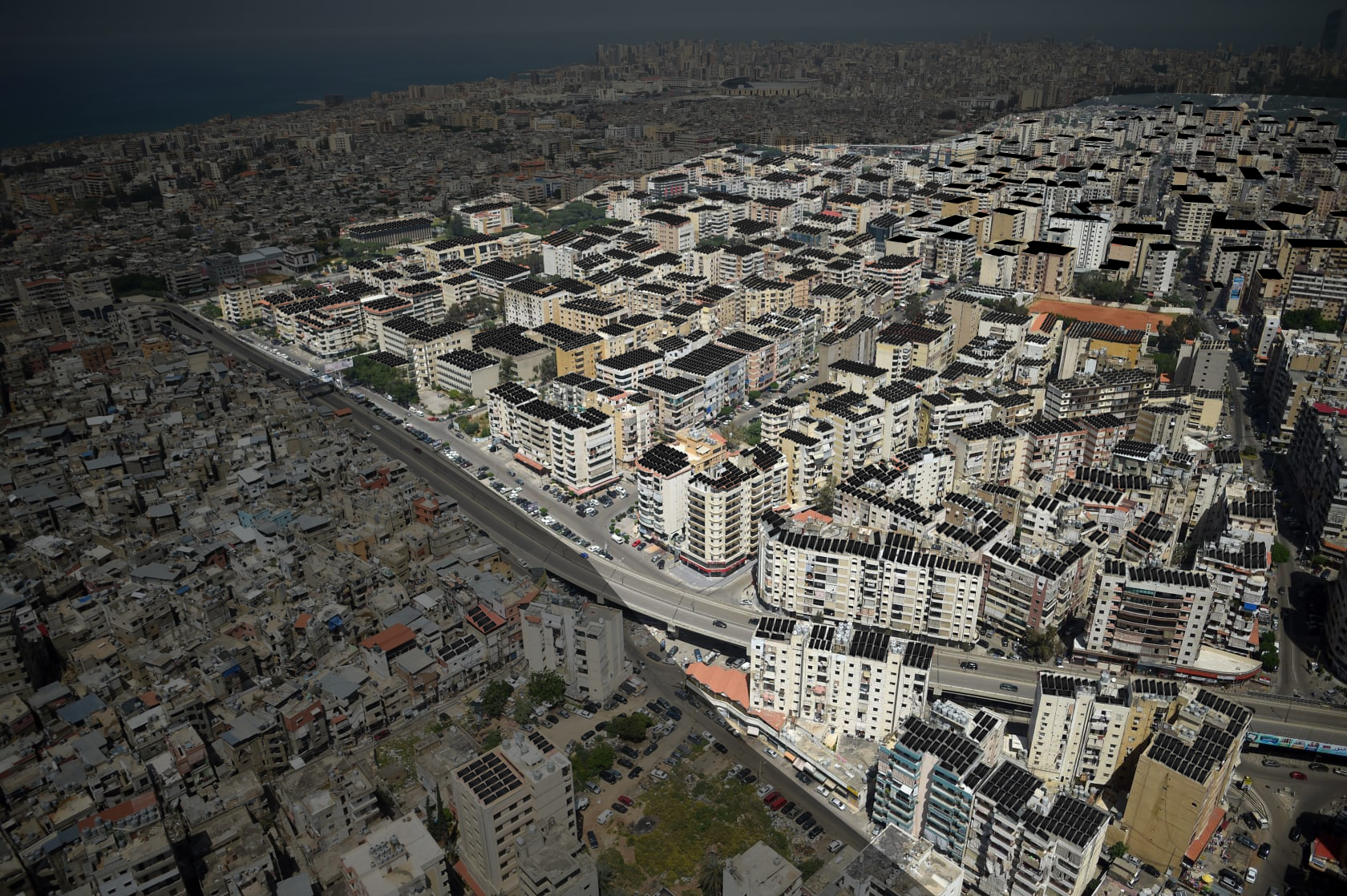
Re-imagining the urban topography with integrated energy generating roof spaces, which reform the urban landscape and enable new inhabitable spaces.
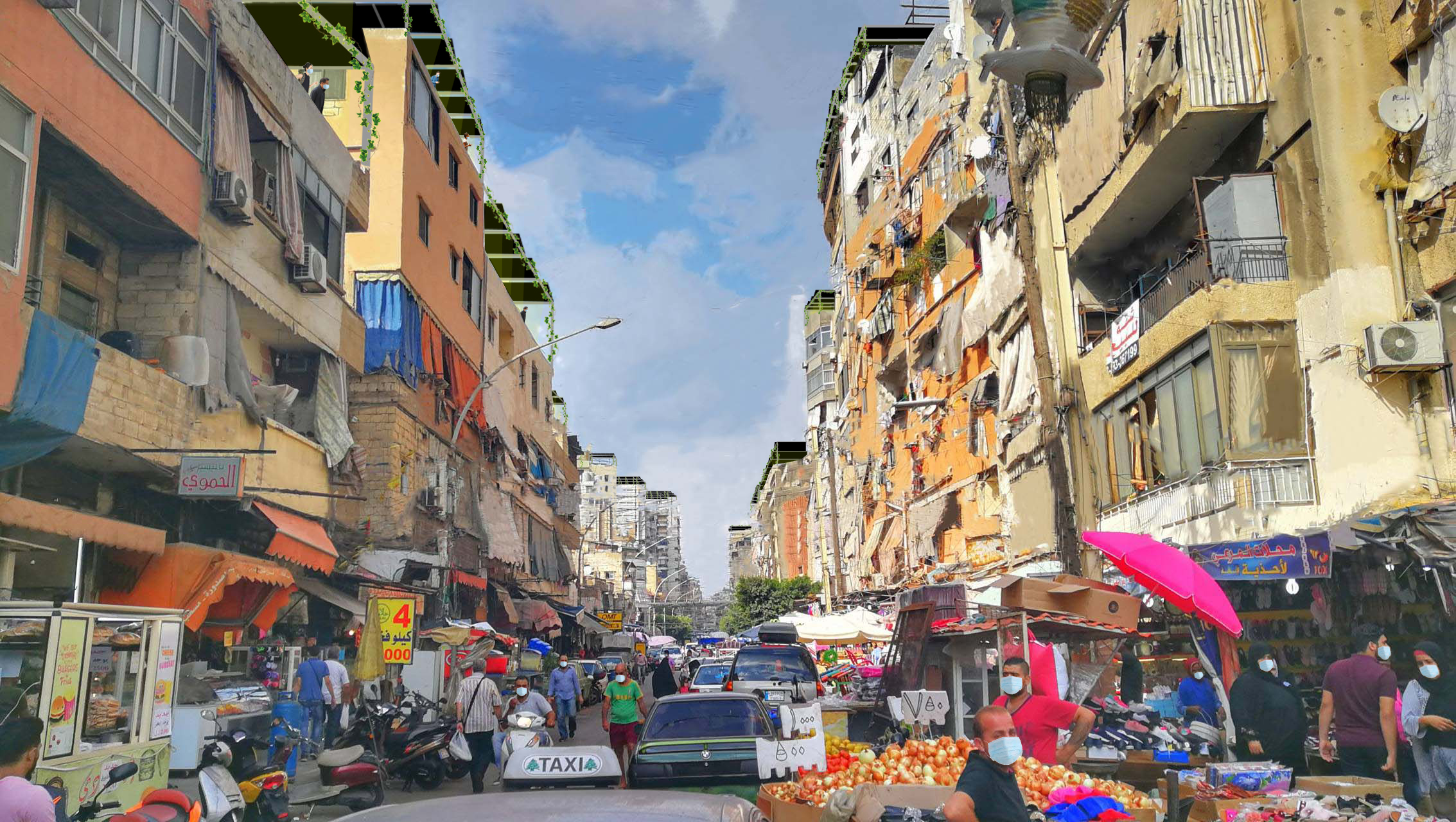
Re-imagining the urban street, with rooftops transformed into habitable, energy-generating spaces. The street looses the wires, re-imagining the order and disorder within the urban fabric.
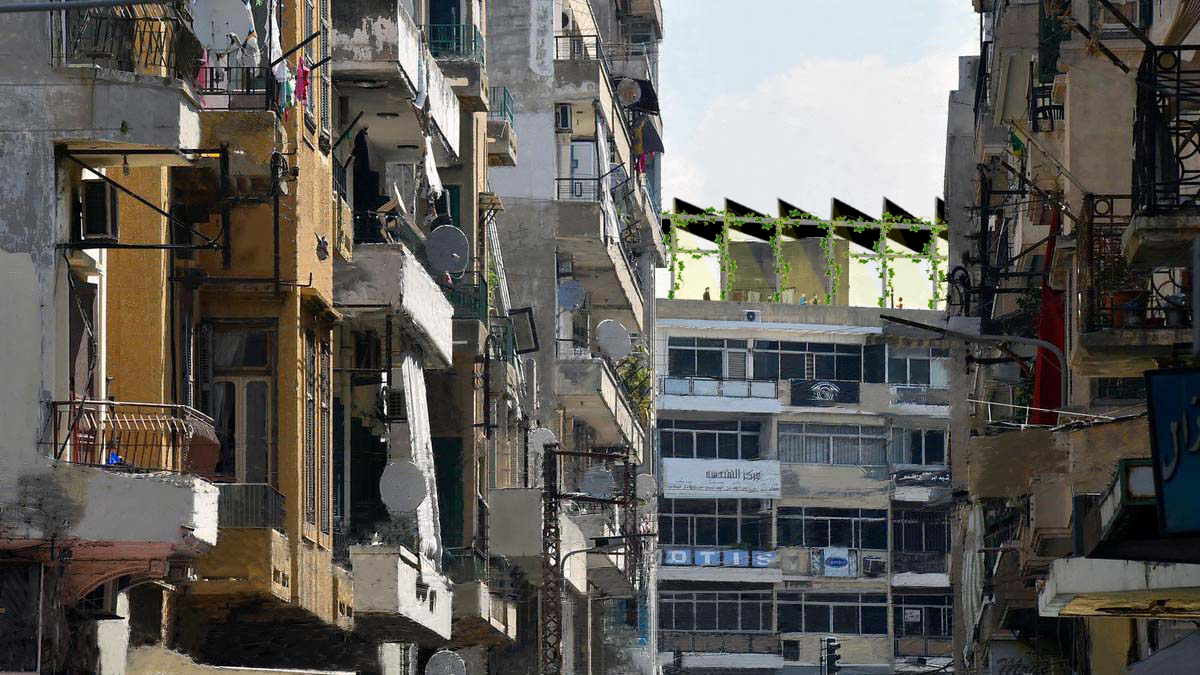
Re-imagining the urban street, with rooftops transformed into habitable, energy-generating spaces. The street looses the wires, re-imagining the order and disorder within the urban fabric.
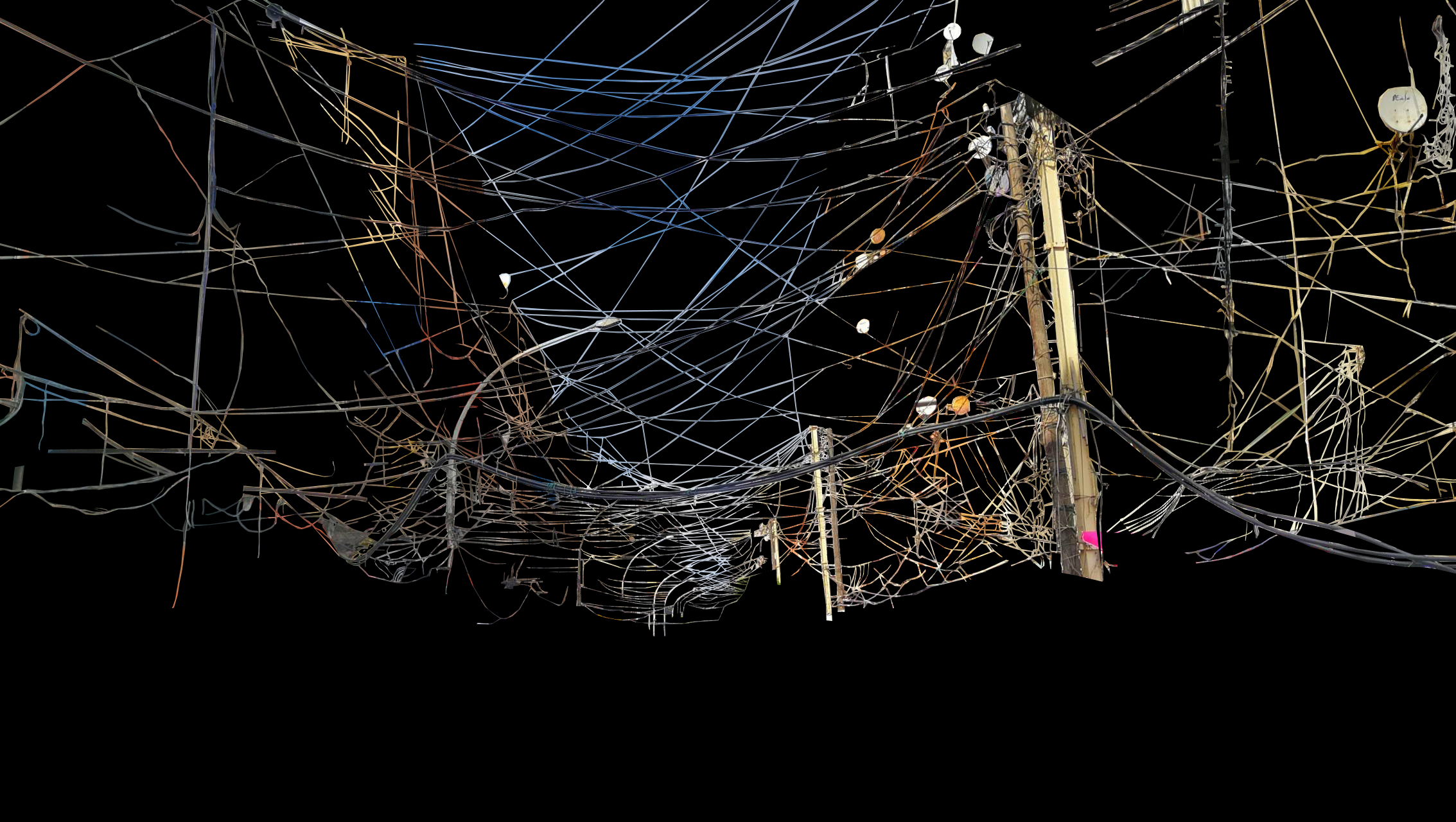
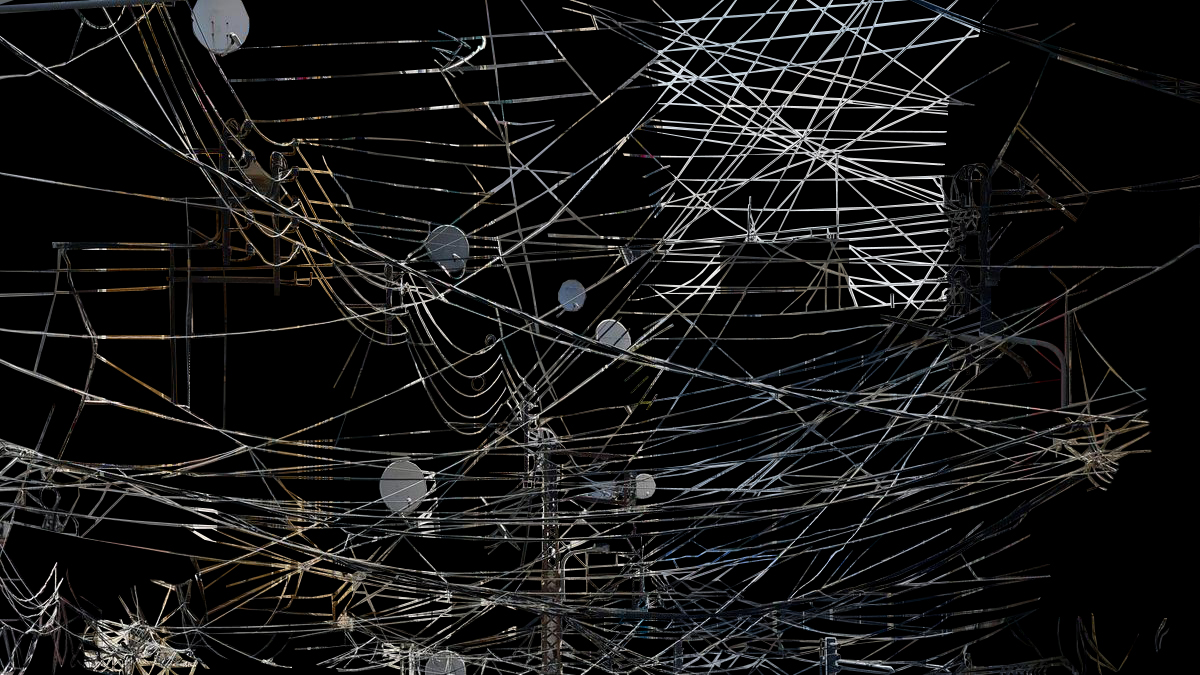
These wires represent the physical infrastructures of the national grid. Beyond the aesthetics, these wires represent the interconnections between politics and infrastructure, people and the nation.