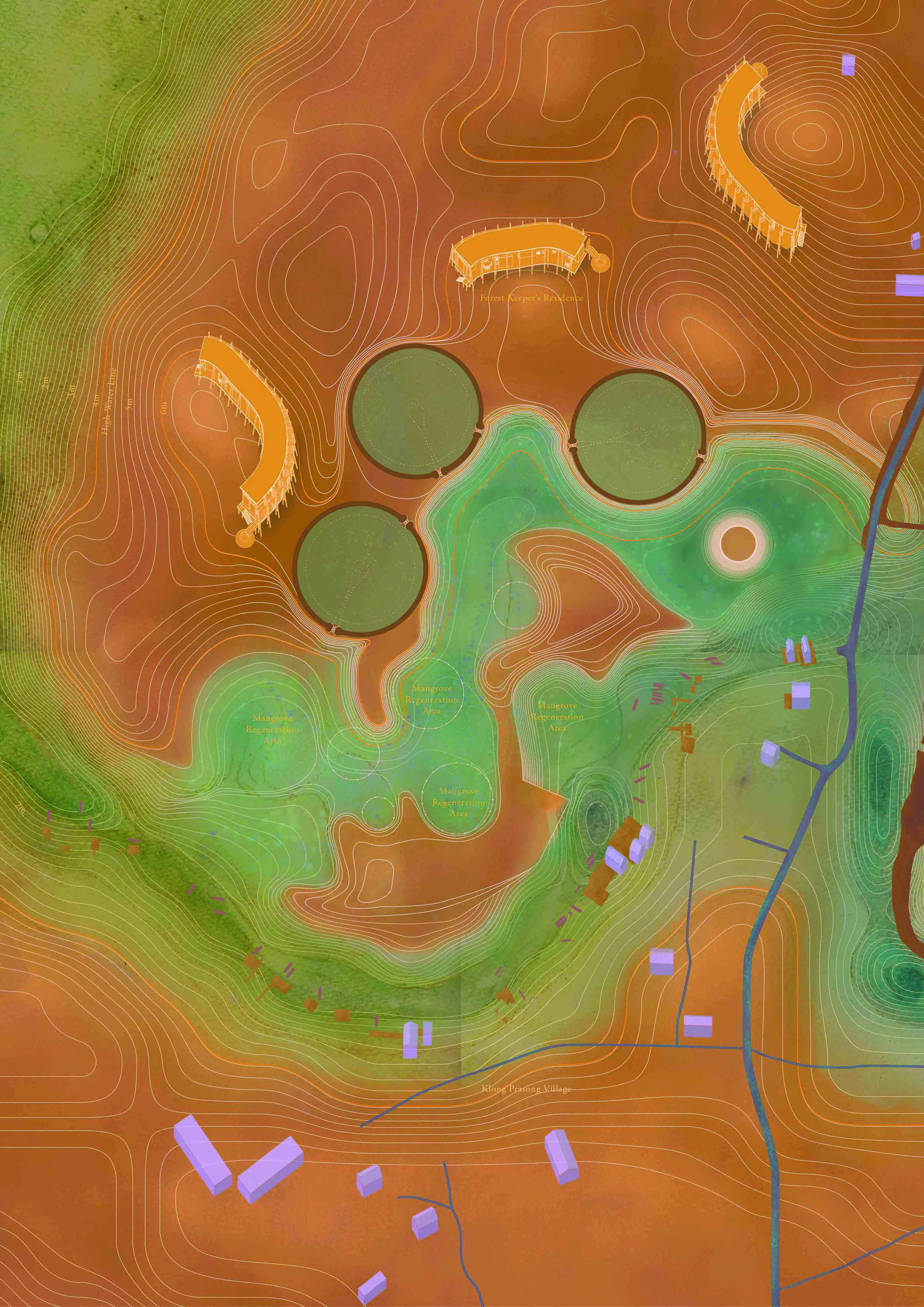
Forest of the People - A Manuscript of Care for the Estuary Community
Oratai Taechamahaphant, MArch (Year: 5)
The project seeks to provide a trans-generational guideline for the estuary area in order to help sustain a symbiotic relationship between state rights, rights of a person, and rights of nature in the blurred land edges of Krabi. Due to the loss of ownership and access to shrimp farms, villagers experience threats to their living conditions. To be able to protect their rights to reside, the role of a forest keeper is introduced to mend conflicting interests. Where the act of caring for the land could be transactional to the commoning of resources within the forest. The proposal aims to create a system of community-led resource management to efficiently reactivate areas of productivity with respect to forest reserve areas.
Patterns of dry and wetlands are carved out within the transient tidal mudflats. Where various types of land edges are used to choreograph different bodies of water. This new type of landscape blurs and fuses spaces of settlement, production, and forest together, forming the ‘Forest of the People’. This form of stewardship to care and maintain land is shared and monitored through a digital manuscript for future generations as a tool to resist the dispossessions of minorities’ lands by centralized forestry schemes.
Uncovering the spaces of production of Giant Tiger Prawns.
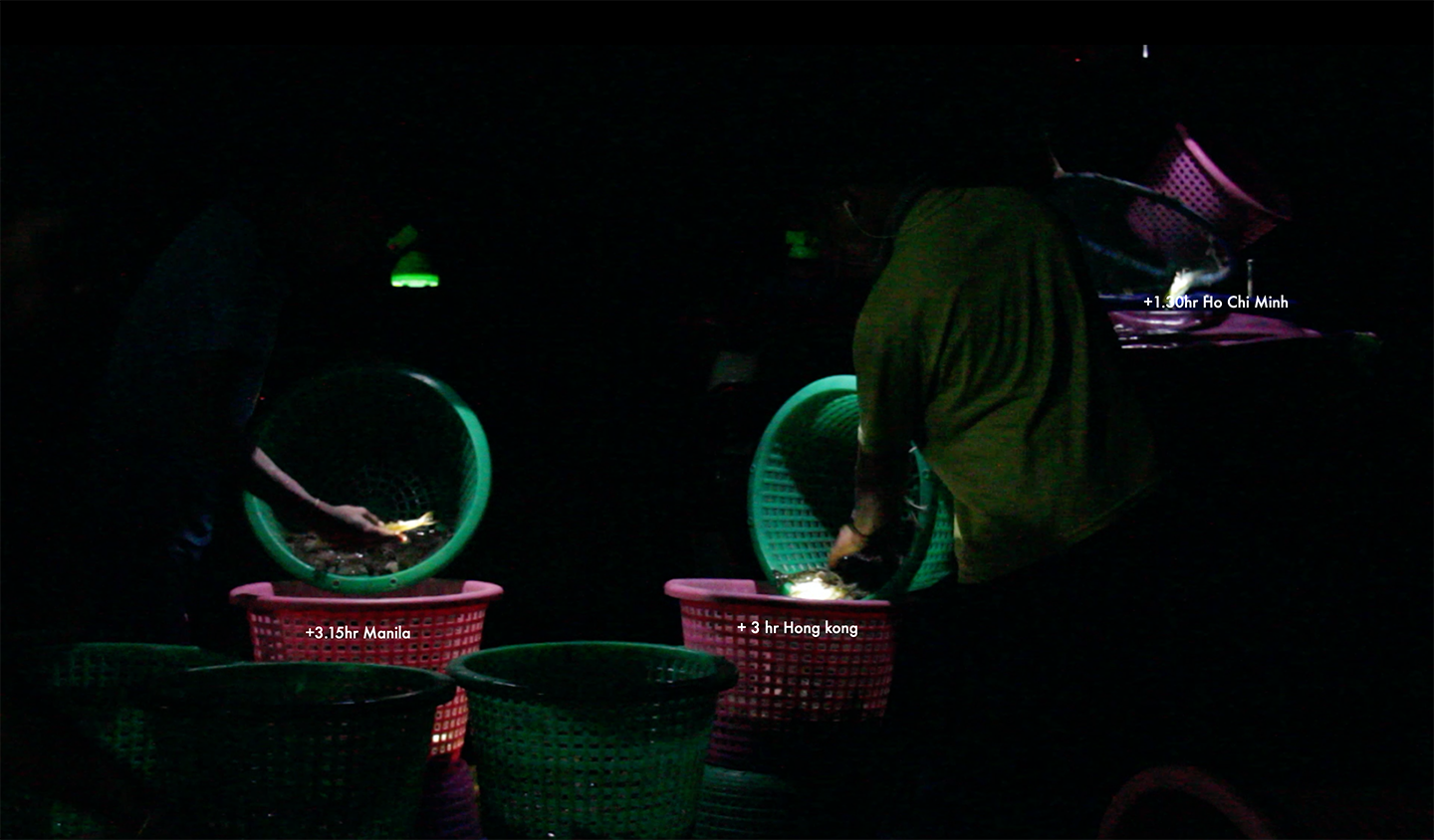
The life cycle of shrimp is defined through profit margins. Where its due date to death is a timely matter according to flight schedules.
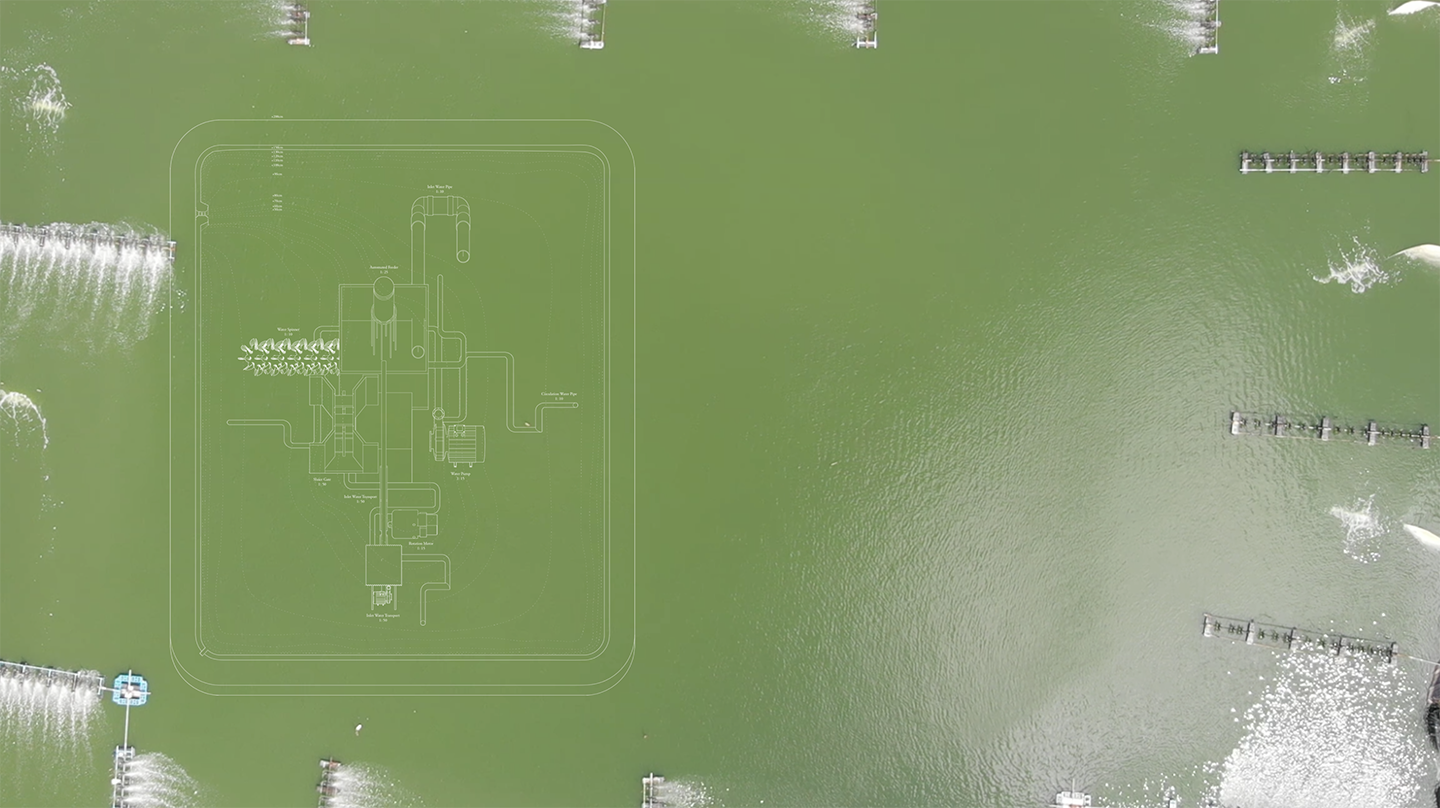
This 8000 Sqm pool is home to 1 tonne of Giant Tiger Prawns. The architecture of the pond is built to sustain a brackish water salinity.
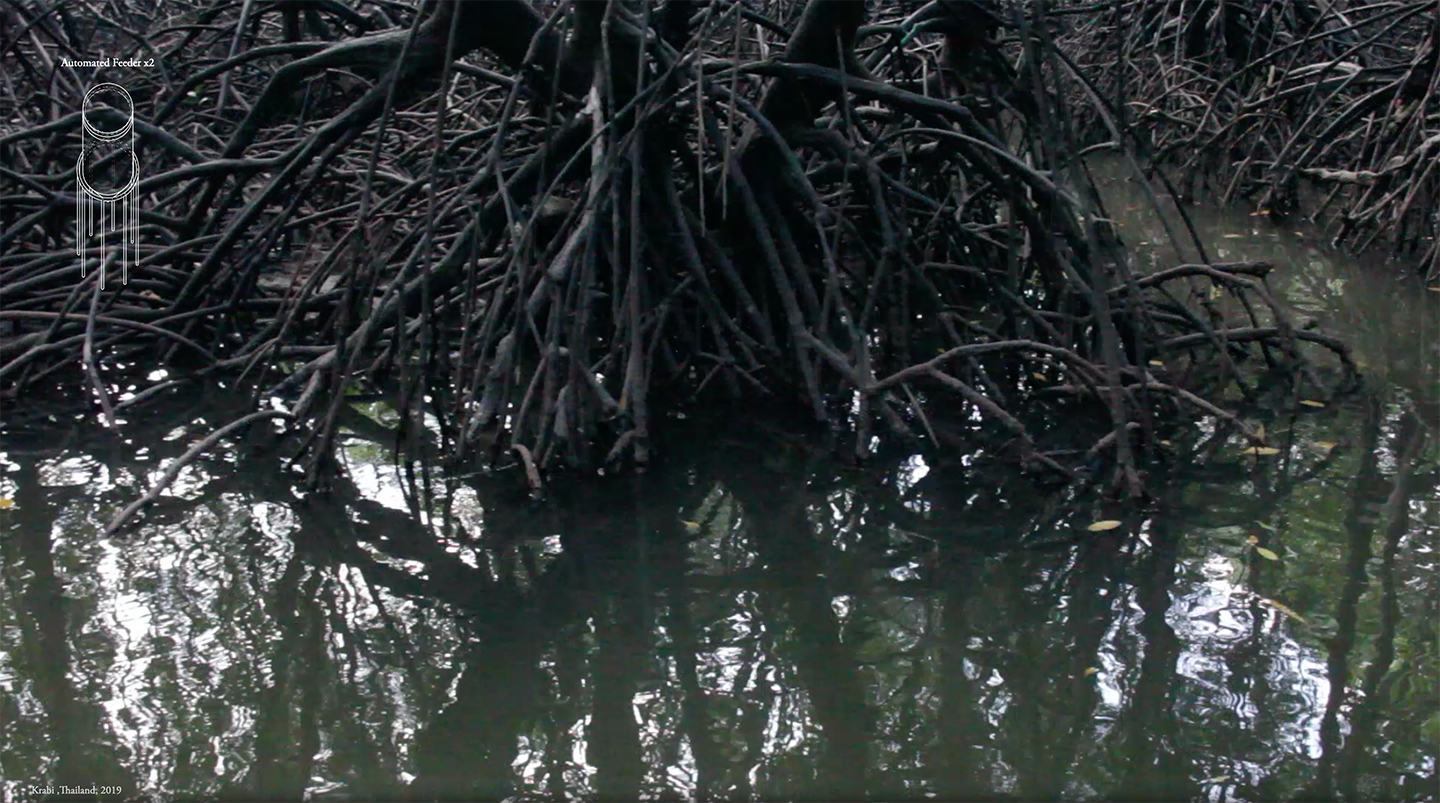
Each component of a shrimp farm mimics the ecology of the mangrove forest.
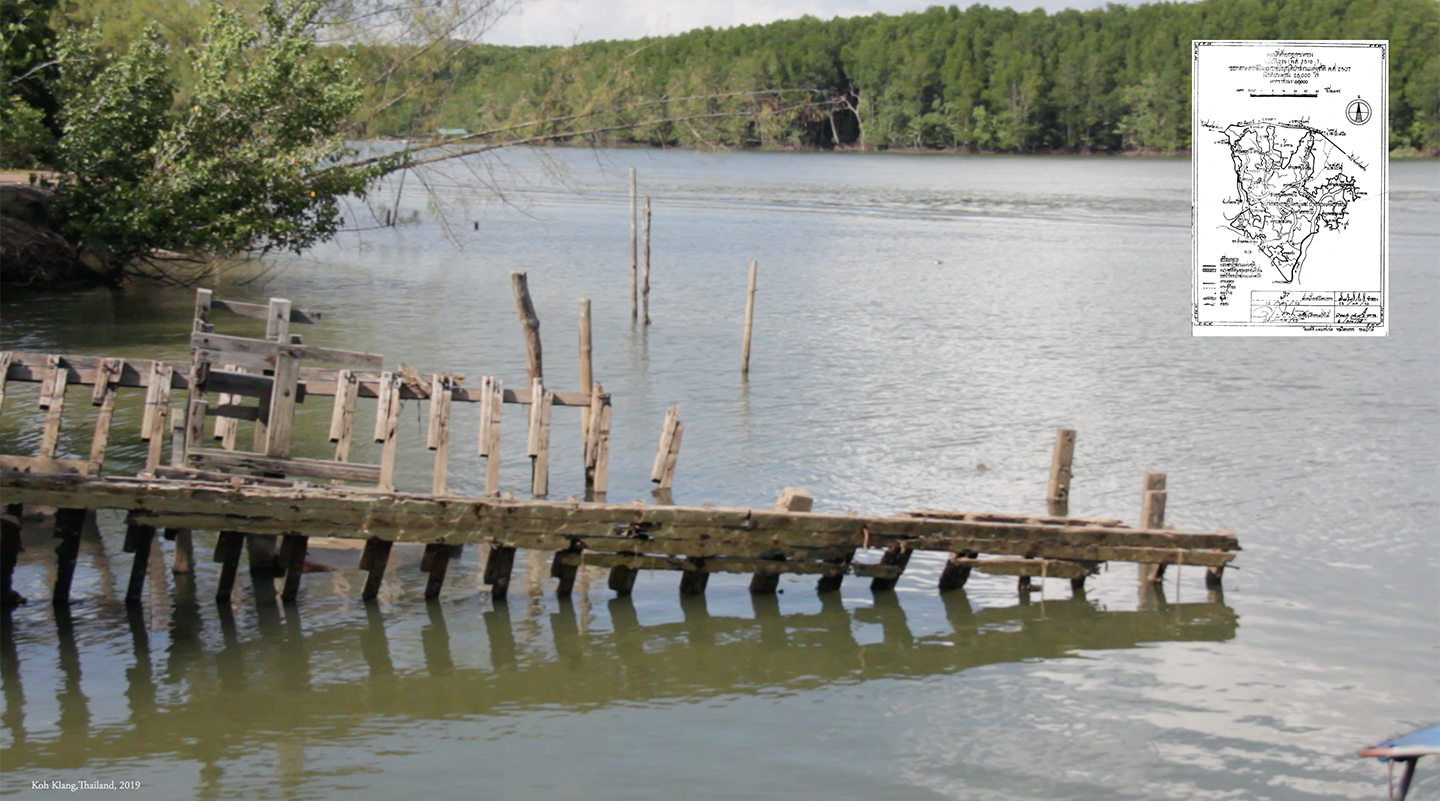
Local forest conservation scheme, fueled by EU fishing regulations, has caused a loss of ownership and access to shrimp farms.
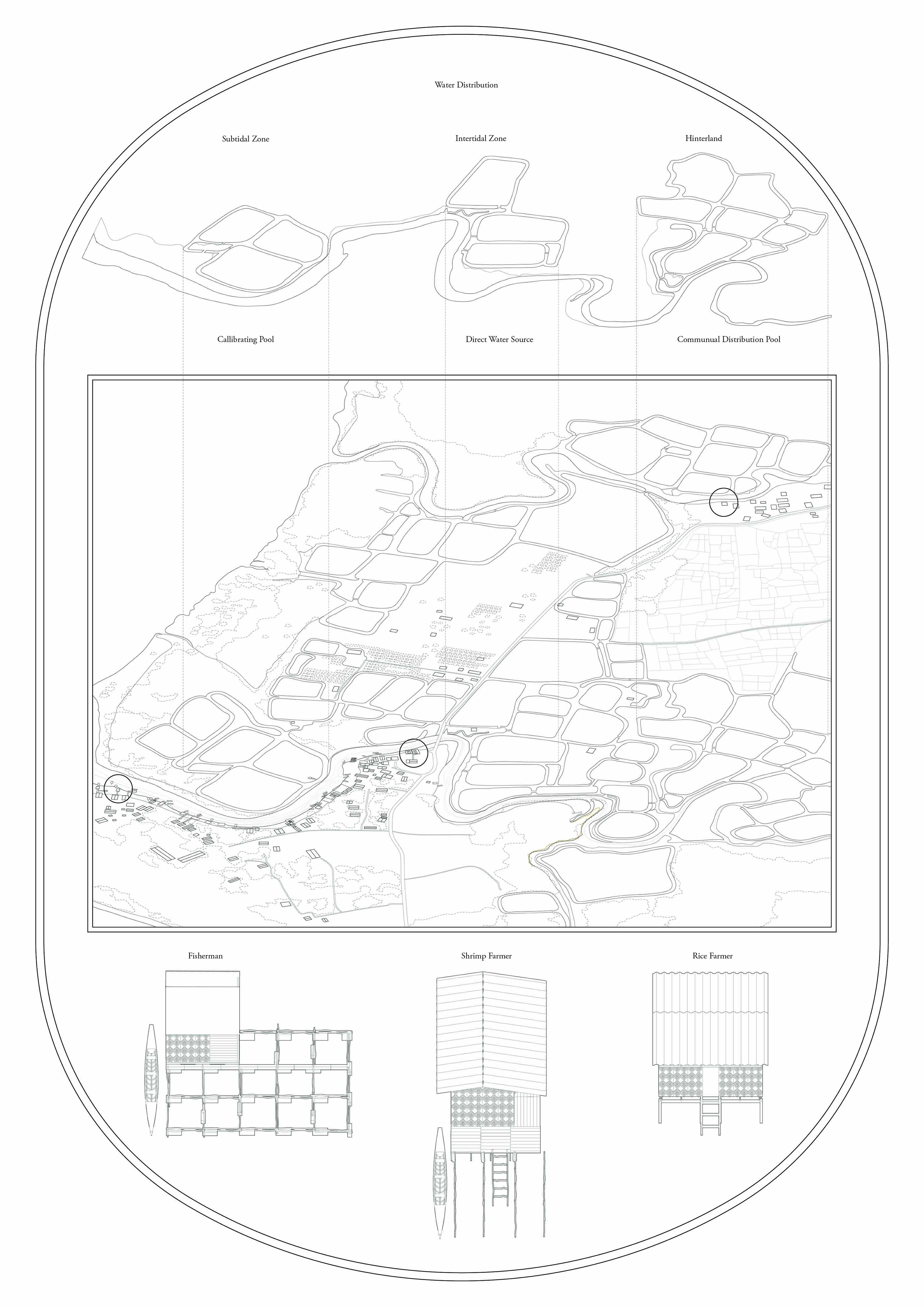
Violence is imported to Krabi estuary area. Where Malay migrants formed settlements and economies following salinity, types of soil, and reaches of tides; an ecological interdependency.
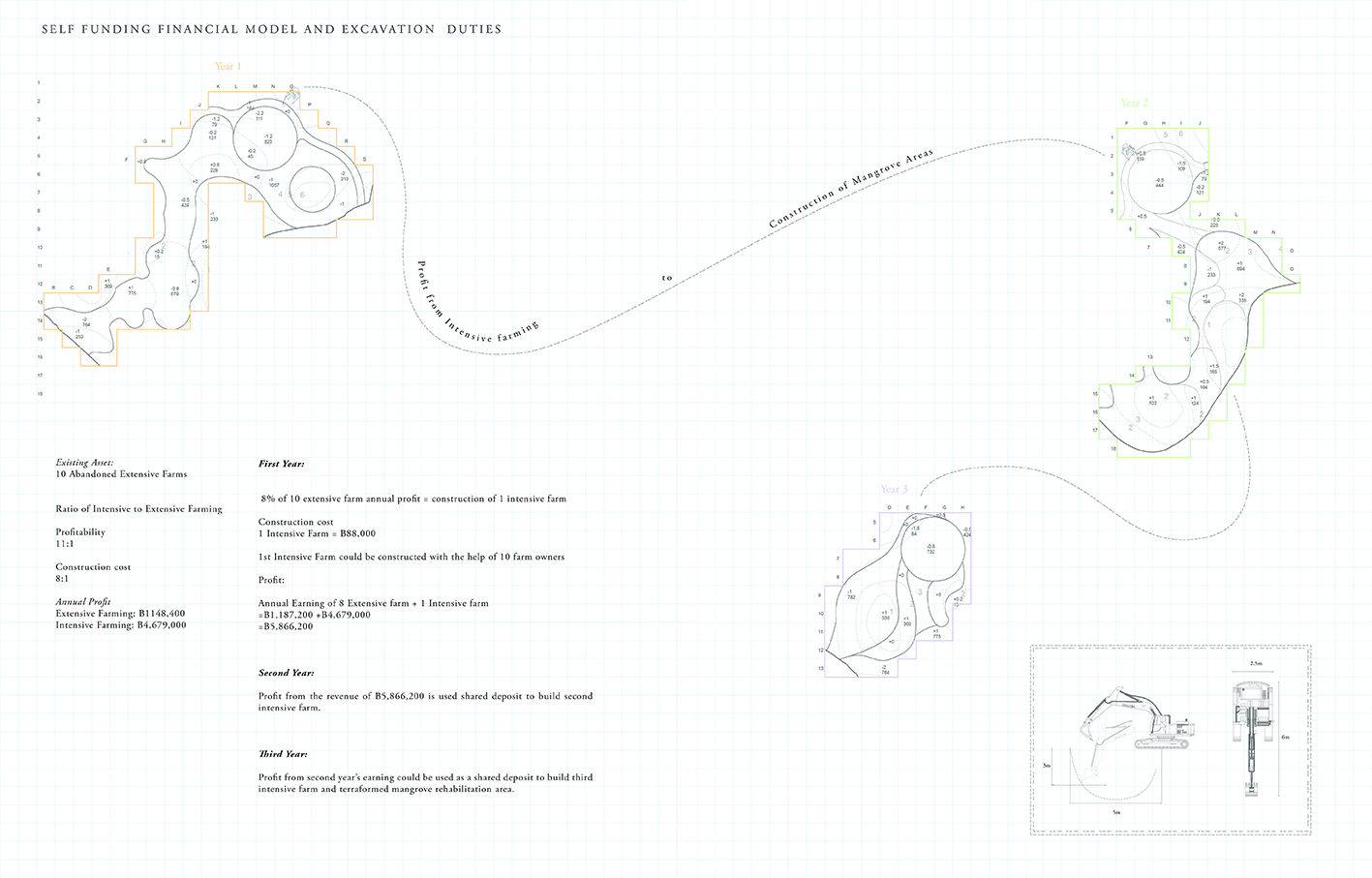
The proposal aims to create a system of community-led resource management, reactivating areas productivity in balance with forest reserve areas.