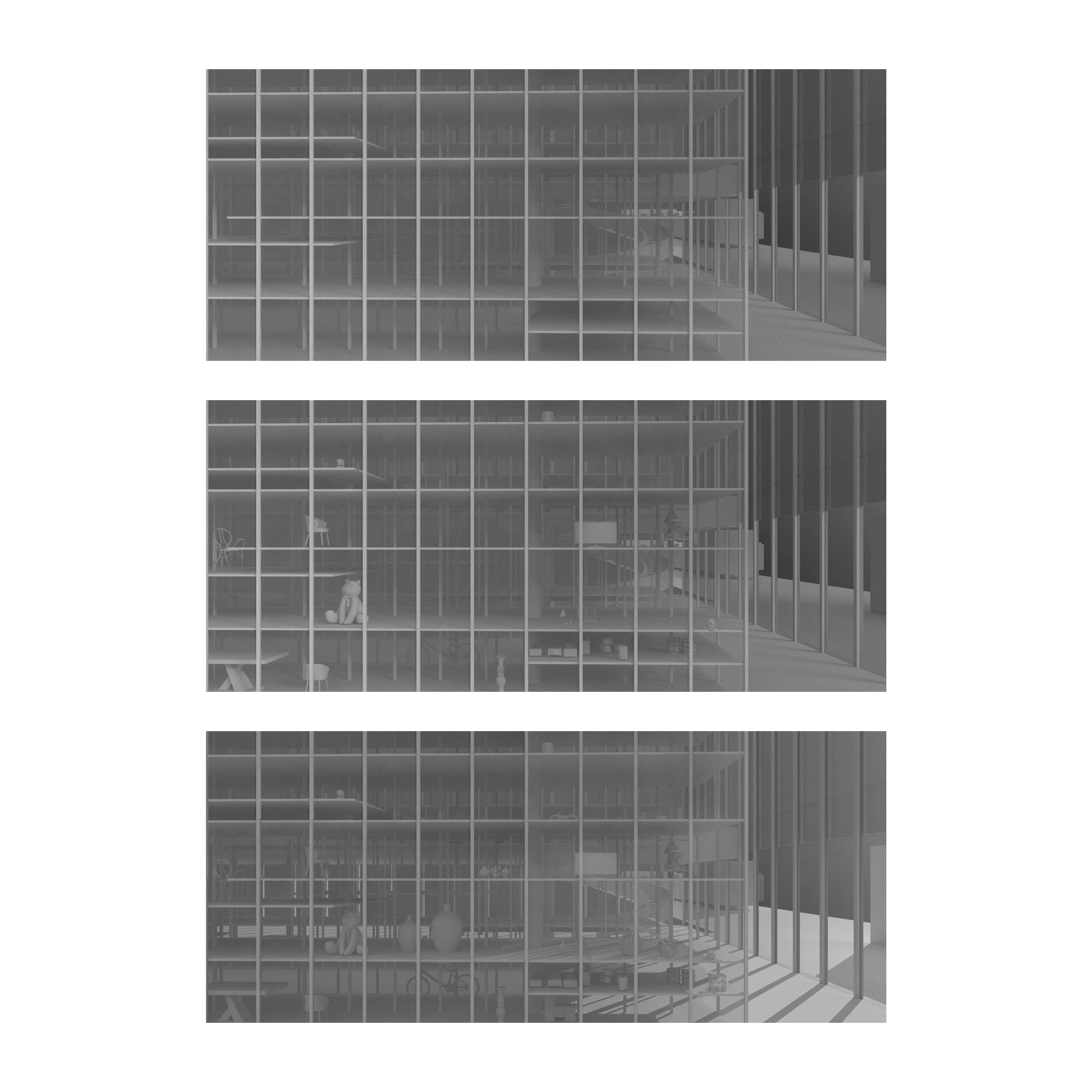
Ownership: the act, state, or right of possessing something.
Consumption: the act of buying goods.
Our consumeristic approach to ownership has led us to collect objects and accumulate them as archival elements. If the distribution centre acts as the main storage facility, the house then becomes a ‘shed’ as part of that collective storage; ultimately, the house is the archival storage of our desires - a support unit. The projects rejects the notion of a particular site as the global impacts of logistics and consumerism have overtaken the mass of cities. The standard urban block of sixty units is taken as the general measurement of intervention, where the spaces in between those units hold as the sites of intervention.
The new method of consumption is that of sharing objects. Our archival elements becomes needs for different uses and different times. The inhabitants of those urban blocks are then amalgamated; alongside the notion of ownership of consumption. It entails a sort of collective distribution centre in the communal space - a communal archive. Partition and boundary walls are diminished and replaced with a continuous system and the block is envisioned as a large area of different spaces, functions and subjects.
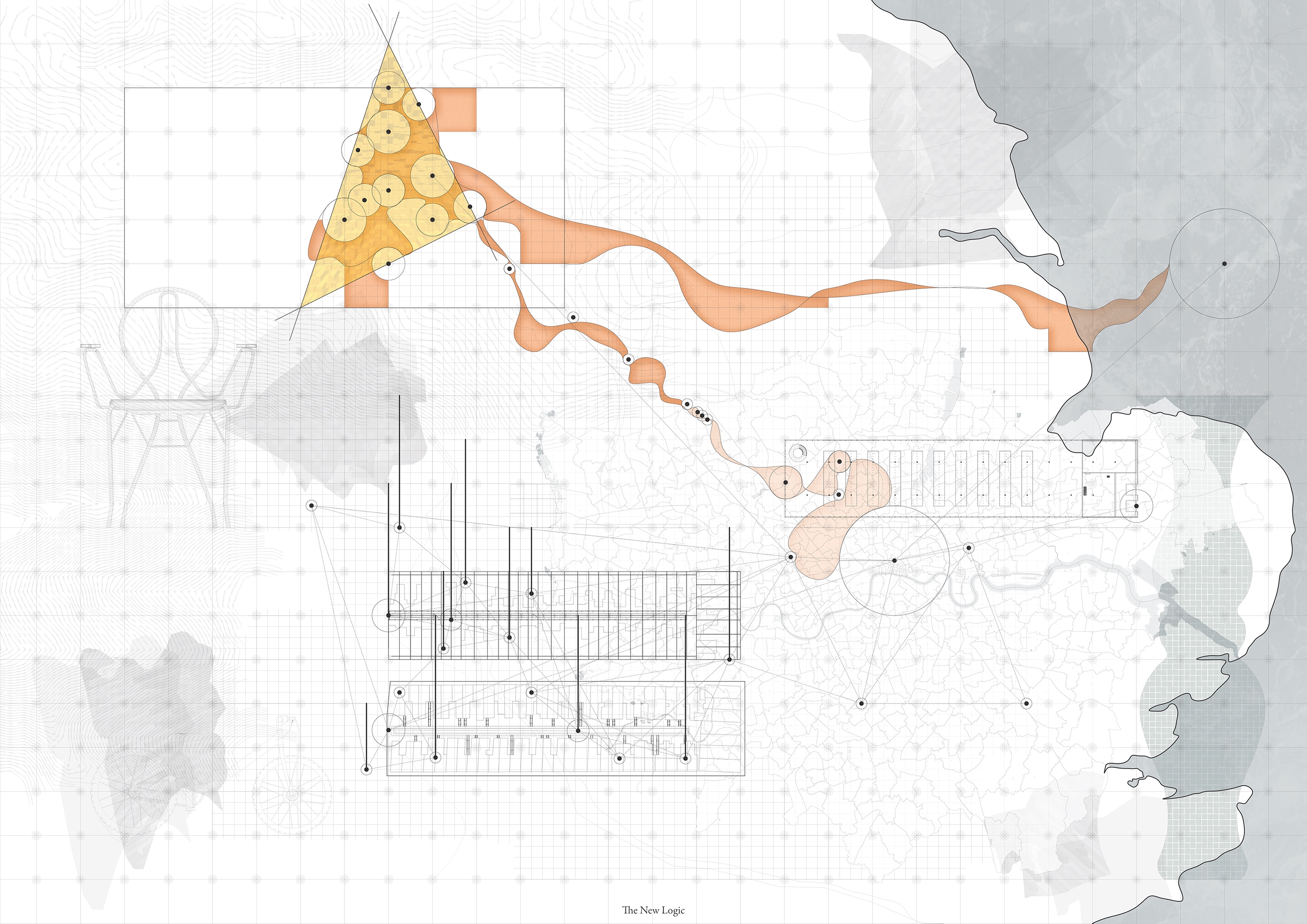
The multi-scalar system operates and controls the object from the transport and movement of goods to consumption and archive. Challenging our over-consumption.
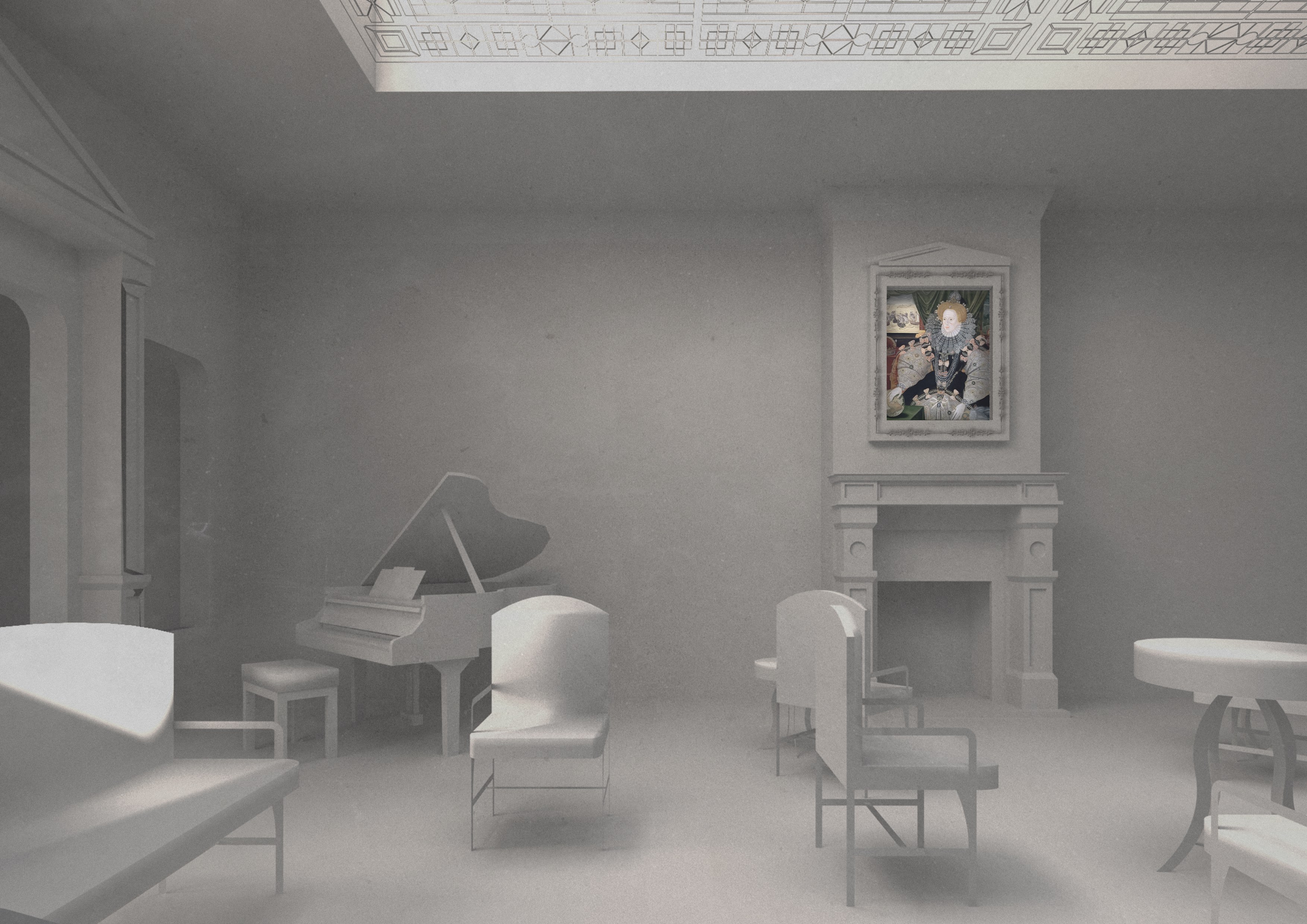
Historically, the North sea was a mediator that allowed the different lands surrounding it to be connected via colonisation, migration and trade.
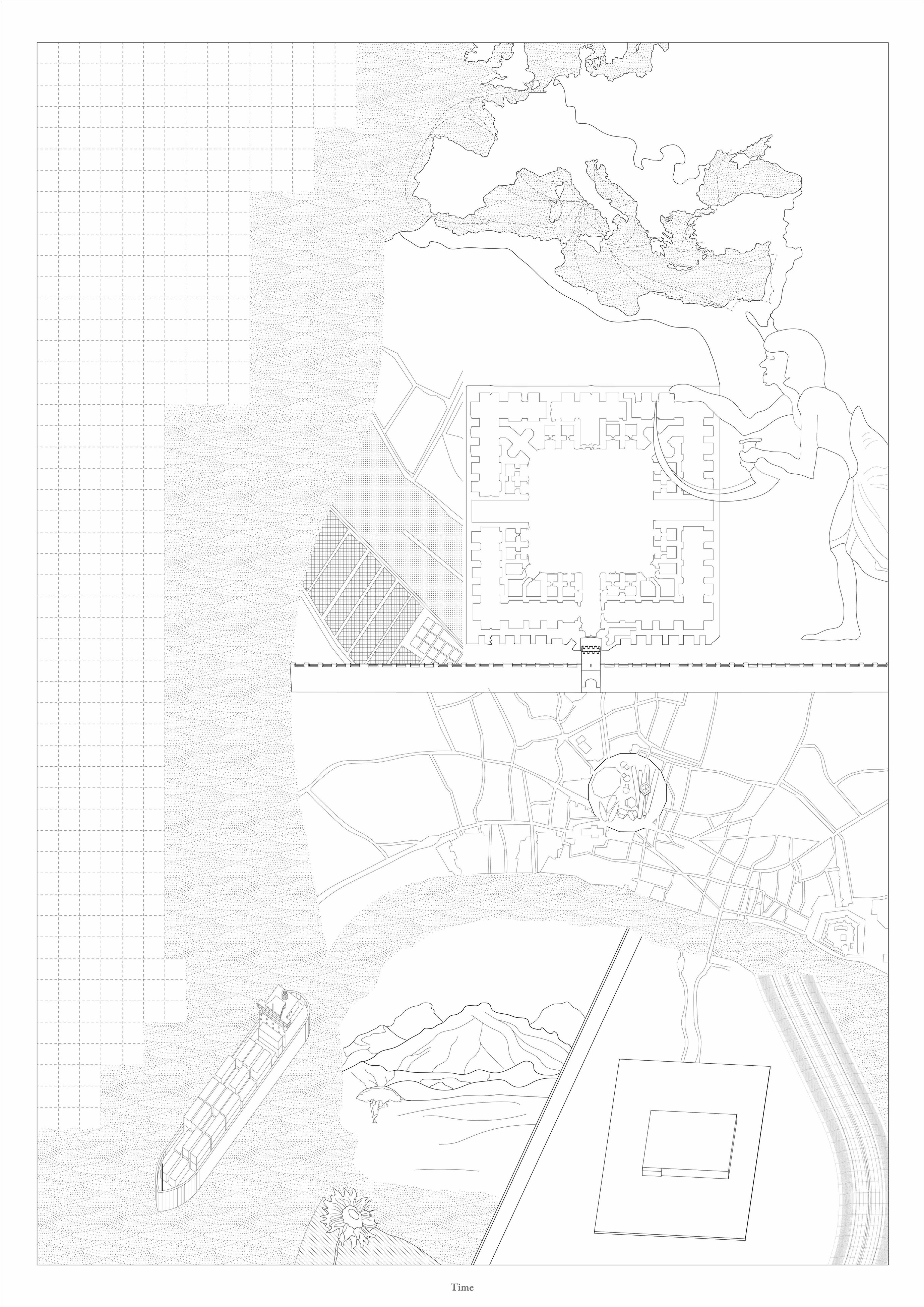
The sea was the facilitator in creating these territories of logistics.
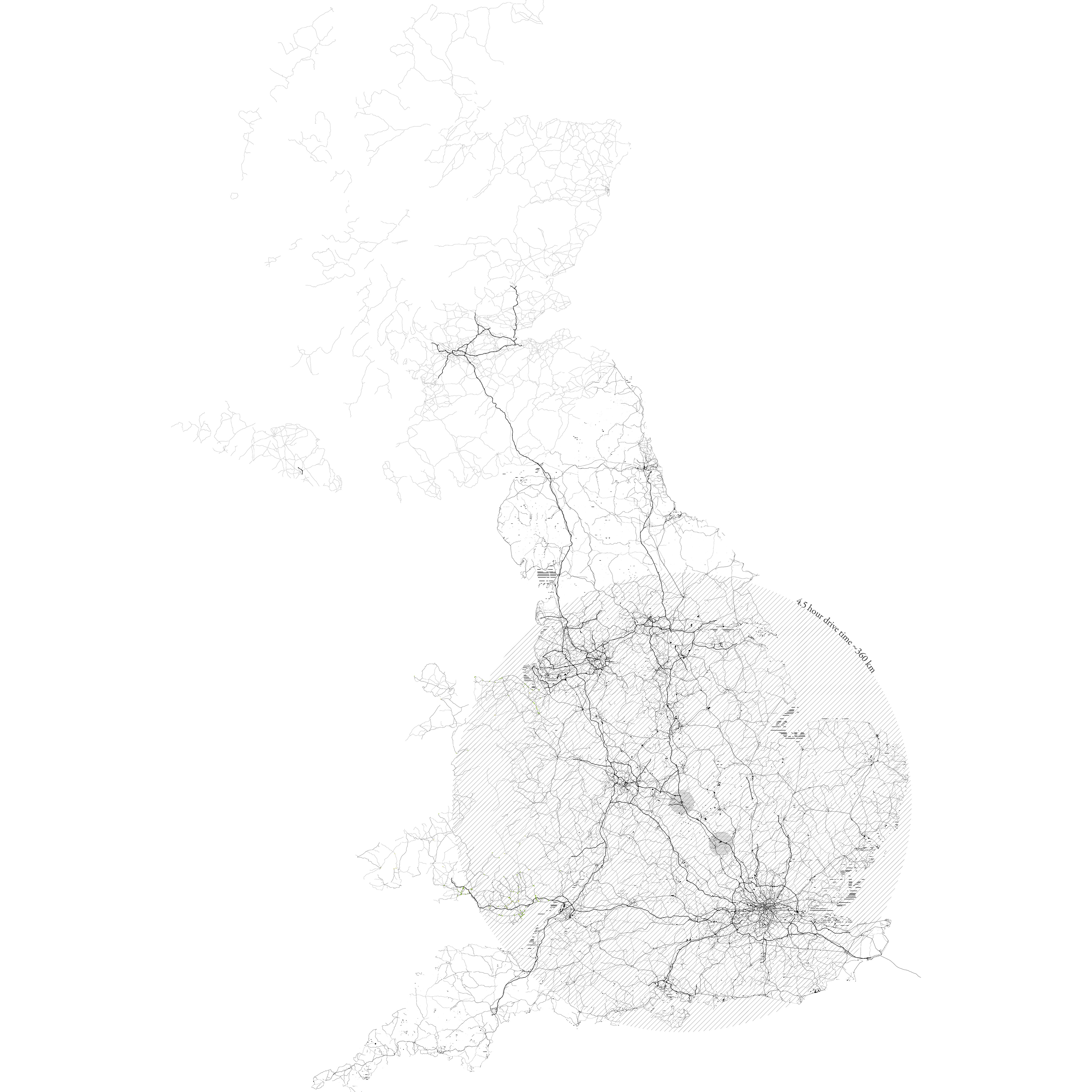
1500 warehouse units and distribution centres, mainly located within what is referenced as the “Golden Triangle.” With this location, 85% of the UK population is reachable within 4 and a half hours.
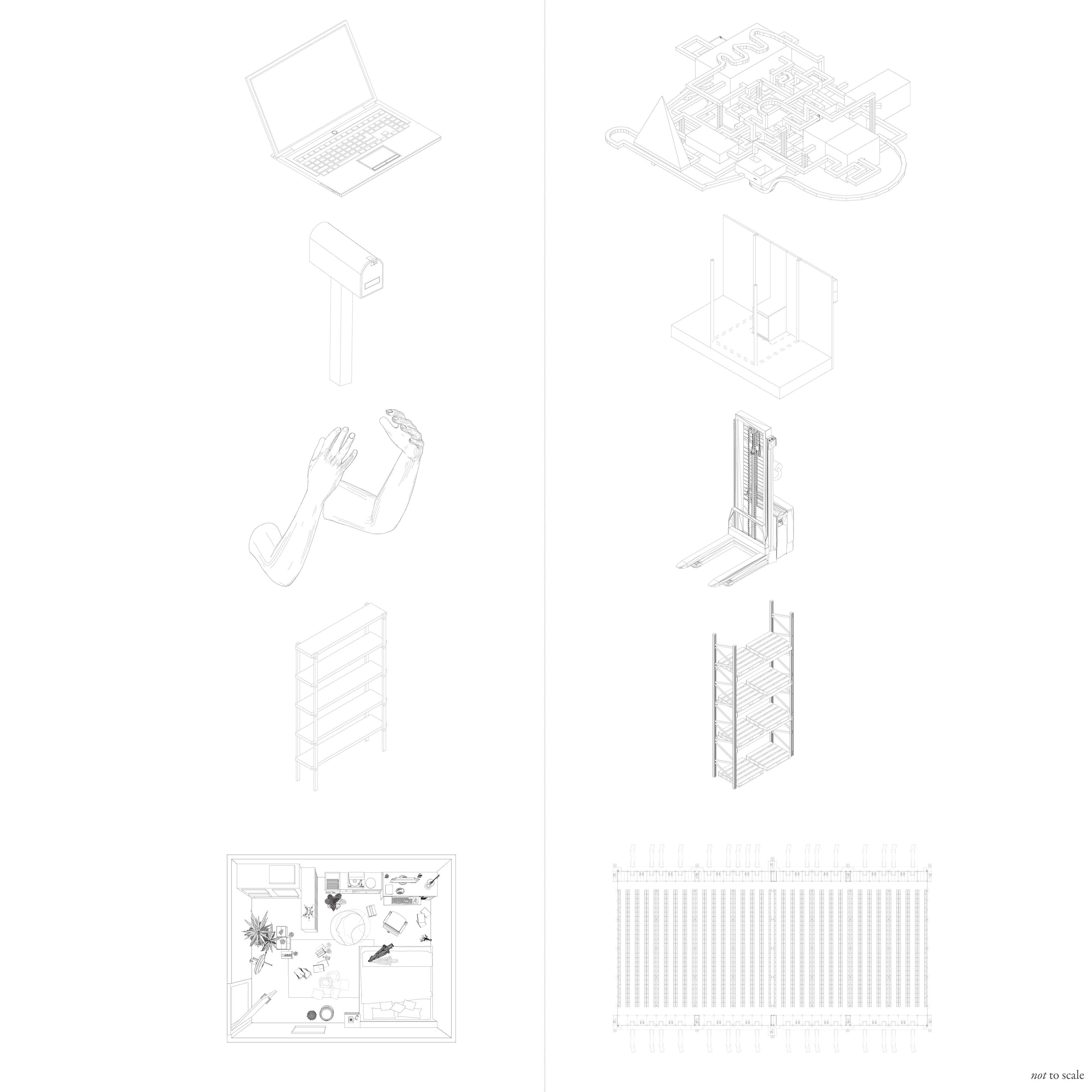
The acts of desire and fulfilment convey mutual processes, the scales of the domestic and the industrial follow similar activities.
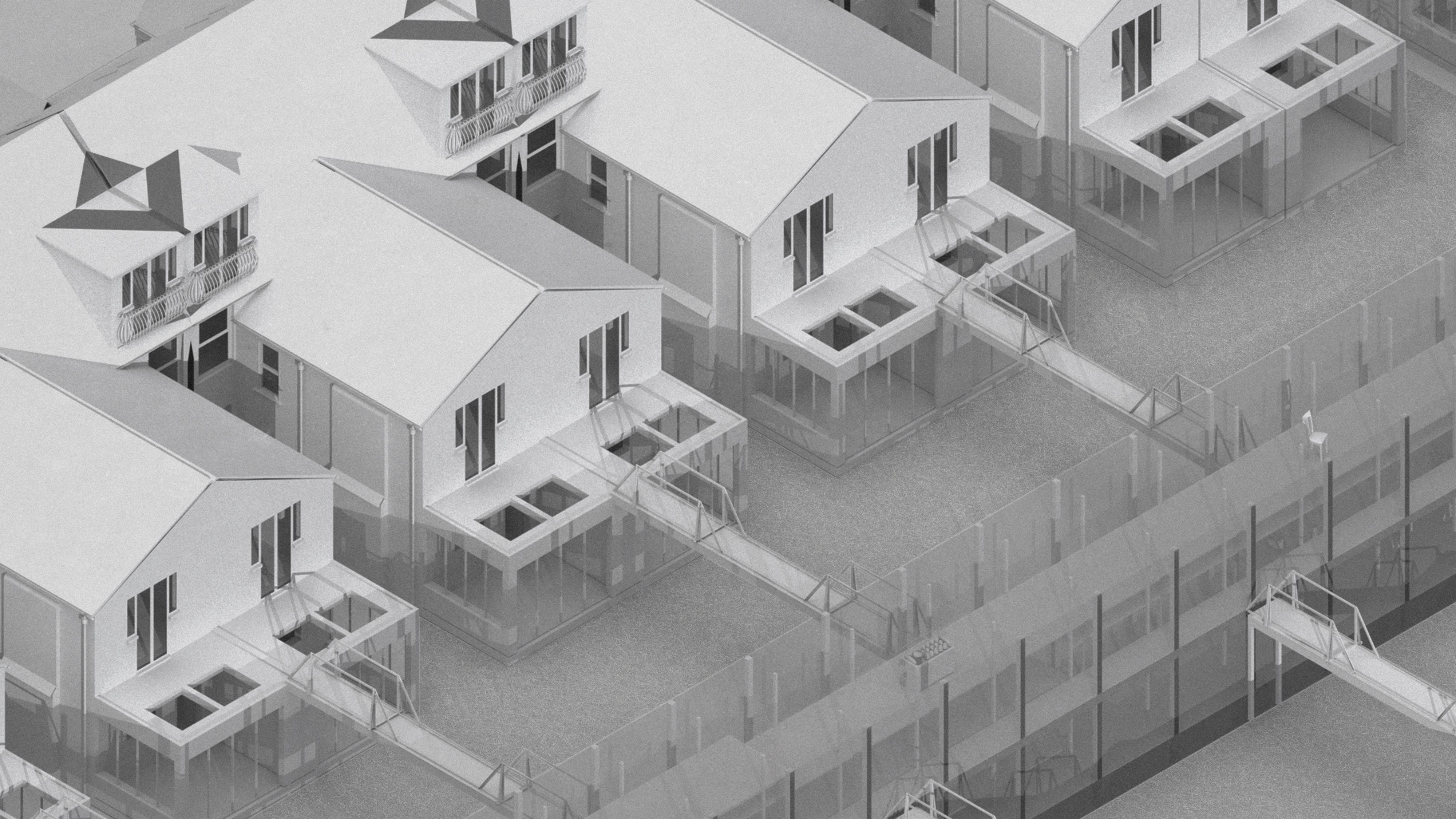
Partition and boundary walls are diminished and replaced with a continuous system and the block is envisioned as a functional communal archive.
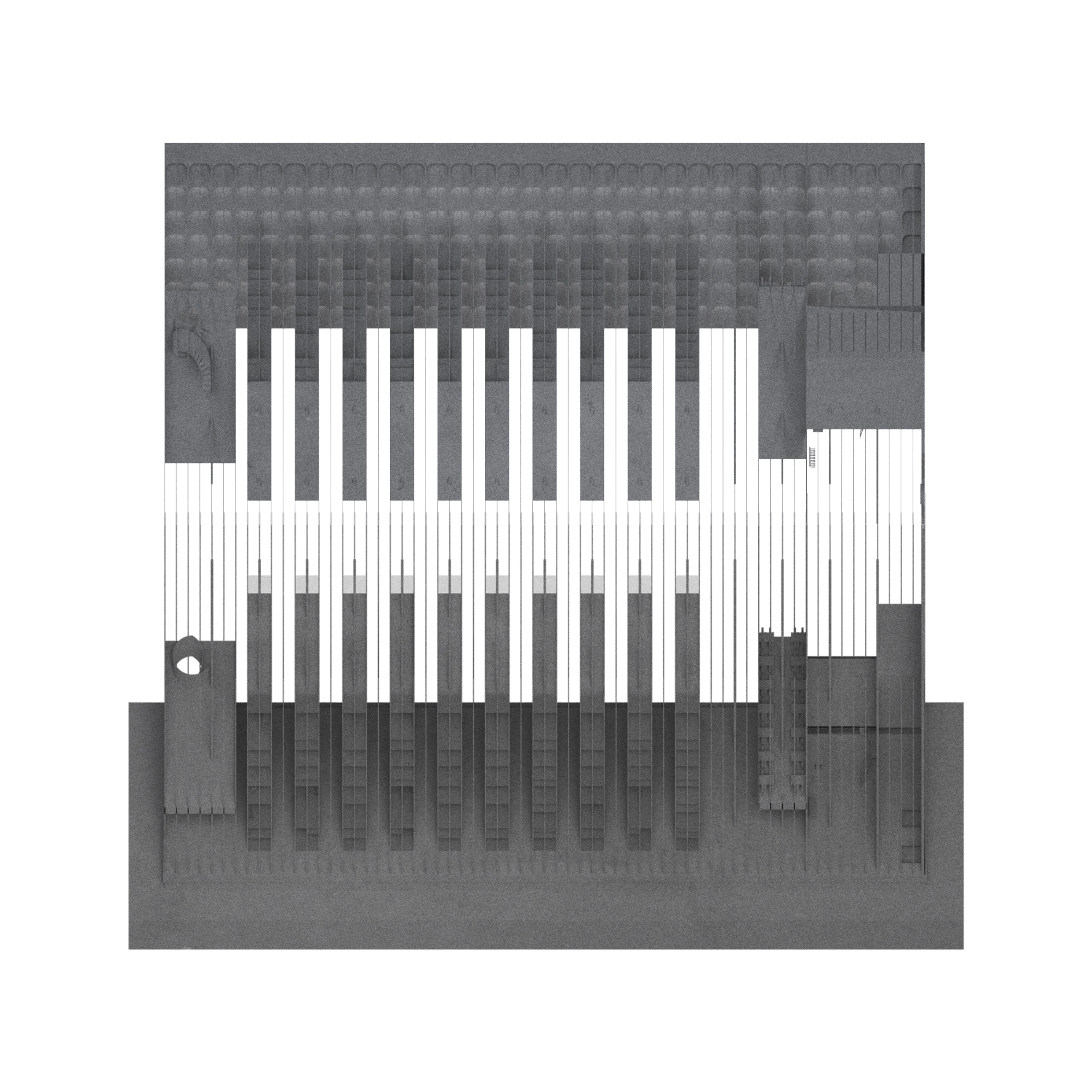
The local fulfilment exploits the use the grid in order to create an algorithmic storage system that allows the products to be placed in order of use, demographic and functionality.
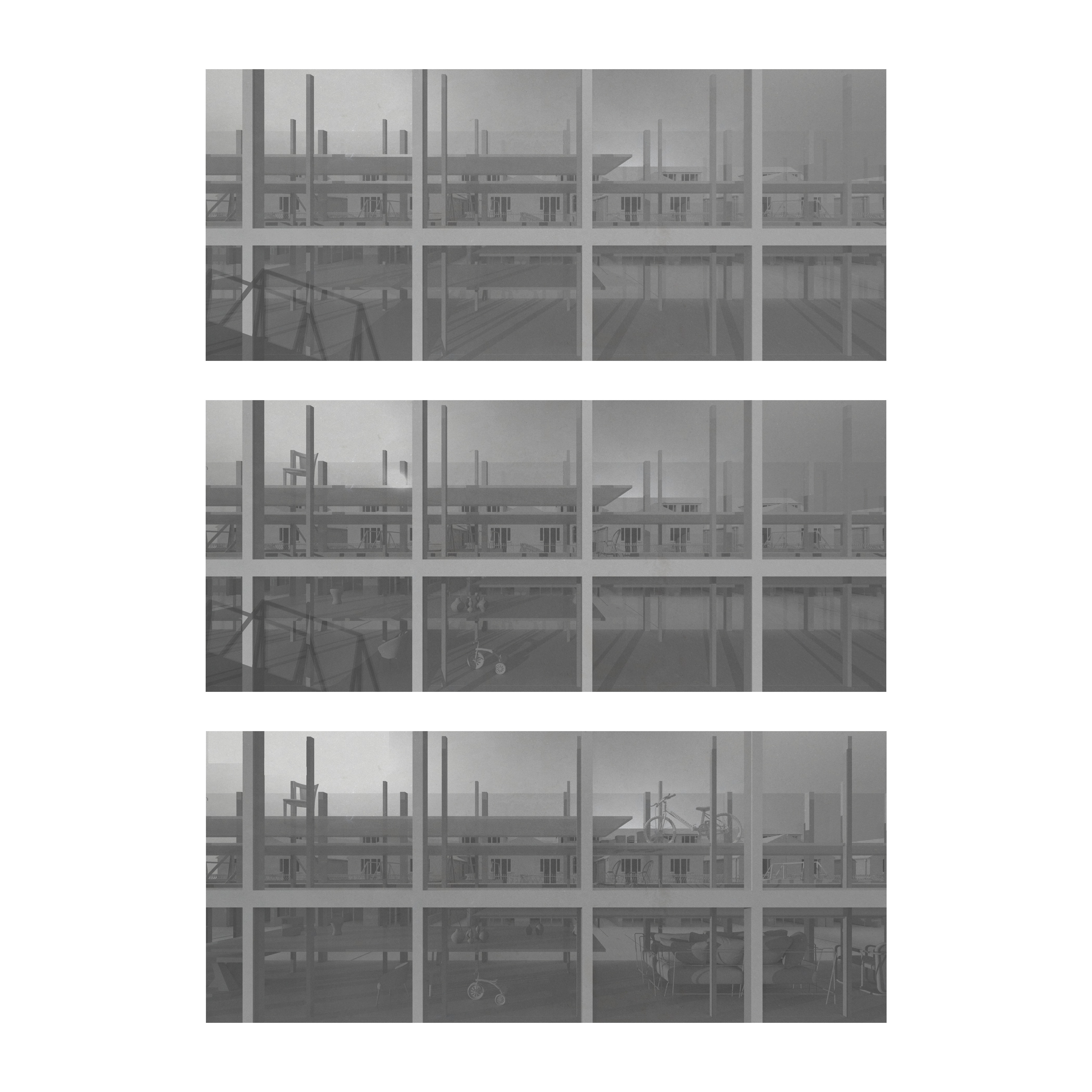
Film Stills: A continuous strip along the garden, sitting on spaces of dual ownership, creates a progressive space of storage, division, rationality and interaction.