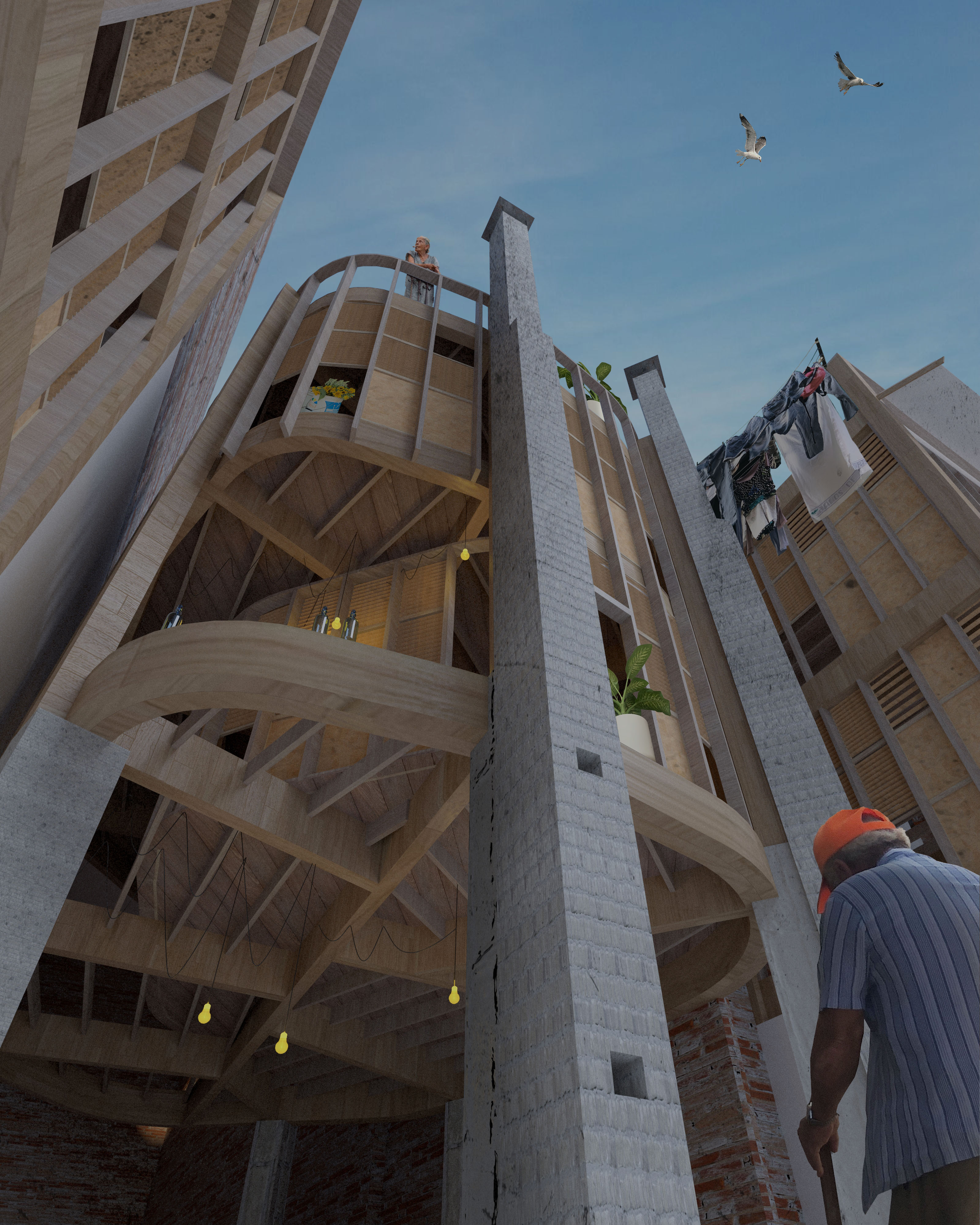
"No Para Venta"
Nikitas Papadopoulos, BA (Year: 3)
Since the mid-90s Cuba has been experiencing a transitionary period in its constitutional policies. Arguably, its biggest change came with the re-formulation of the real-estate market with Raul Castro’s reformation of Ownership Laws, allowing every Cuban the right of ownership over their homes, along with the right to sell and buy property. As a result, rise in economic activity had a direct correlation with a growing appetite for personalisation within the Cuban household.
Simultaneously however, the increased financial activity, has caused dramatic increases in economic pressures applied to local citizens further intensifying a population exodus from Havana’s most central districts.
Cooperative structures mark a possible solution for local population to combat these ever increasing market pressures. The increased bargaining power acquired by collective ownership could allow them the possibility of retaining their position within the city. However, the collectivity entailed in such a cooperative goes against newly introduced appetites of self-expression found in the Cuban society.
With the two concepts acting in conflict, but both remaining necessary in the current context, the proposal’s aim is to become a mediator in the negotiations of the individual for choice and personalisation and the necessity for the formulation of cooperative structures.
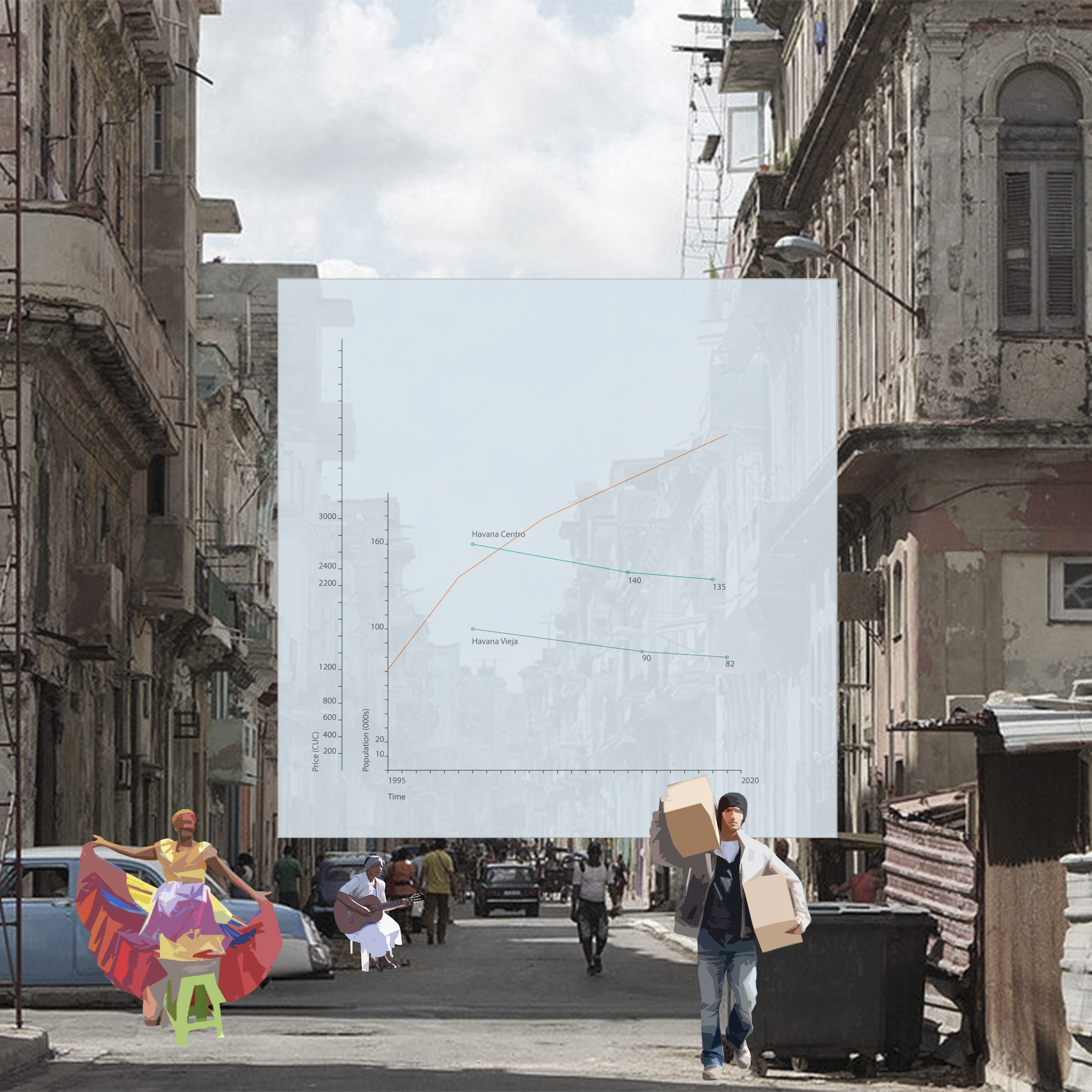
Price-Population Analysis Increases property prices have been an increasing factor of local population displacements from the most central areas such as Havana Vieja and Havana Centro.
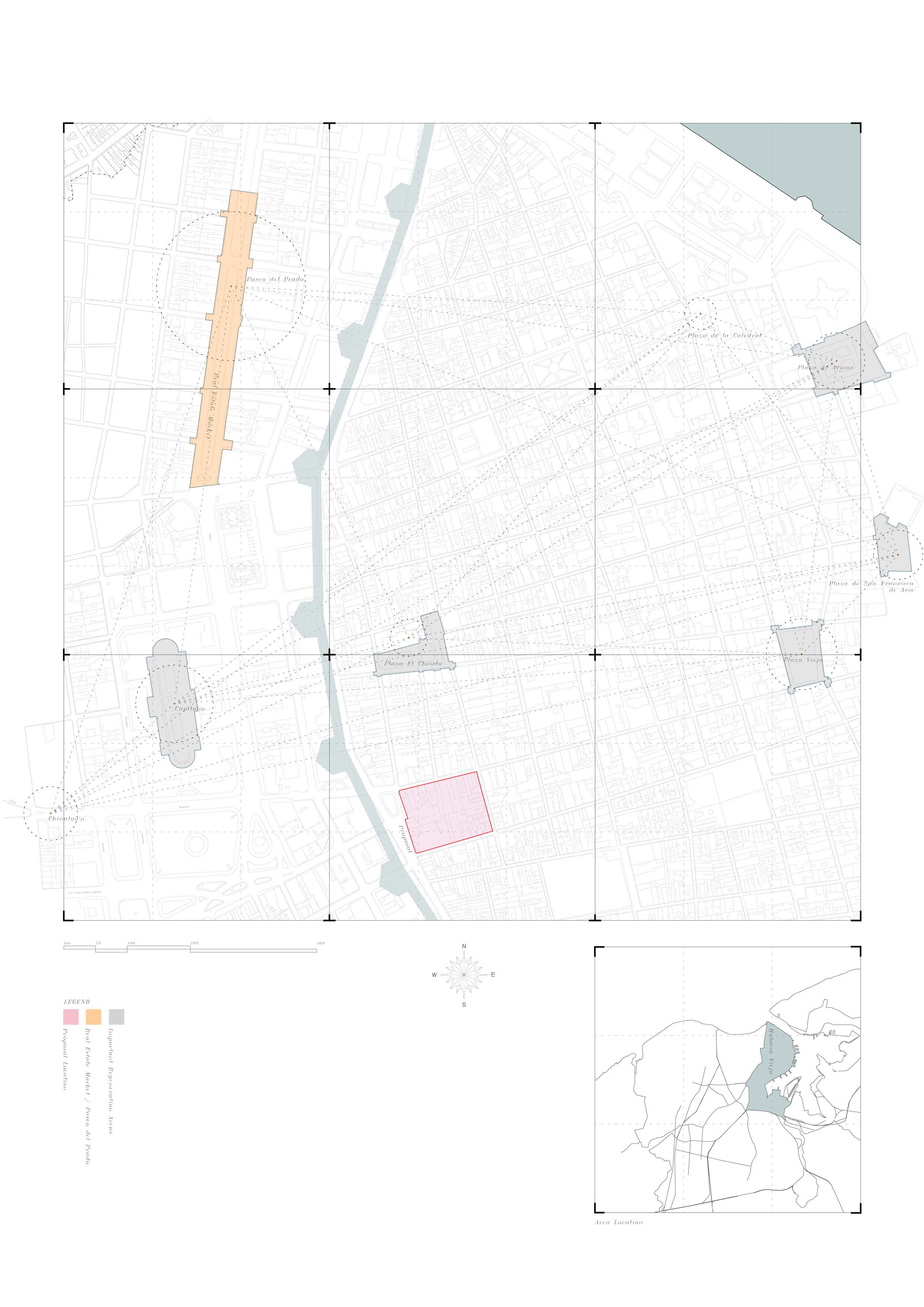
Location Plan 1-3000 Havana Vieja and its proximity to recent regeneration projects leading to further price increases in the property market.
-01-01.jpg)
Construction Process The process of construction first entails the identification of the existing structure's condition, before a laminated timber frame is erected to support and extend it.
Sequence of Construction
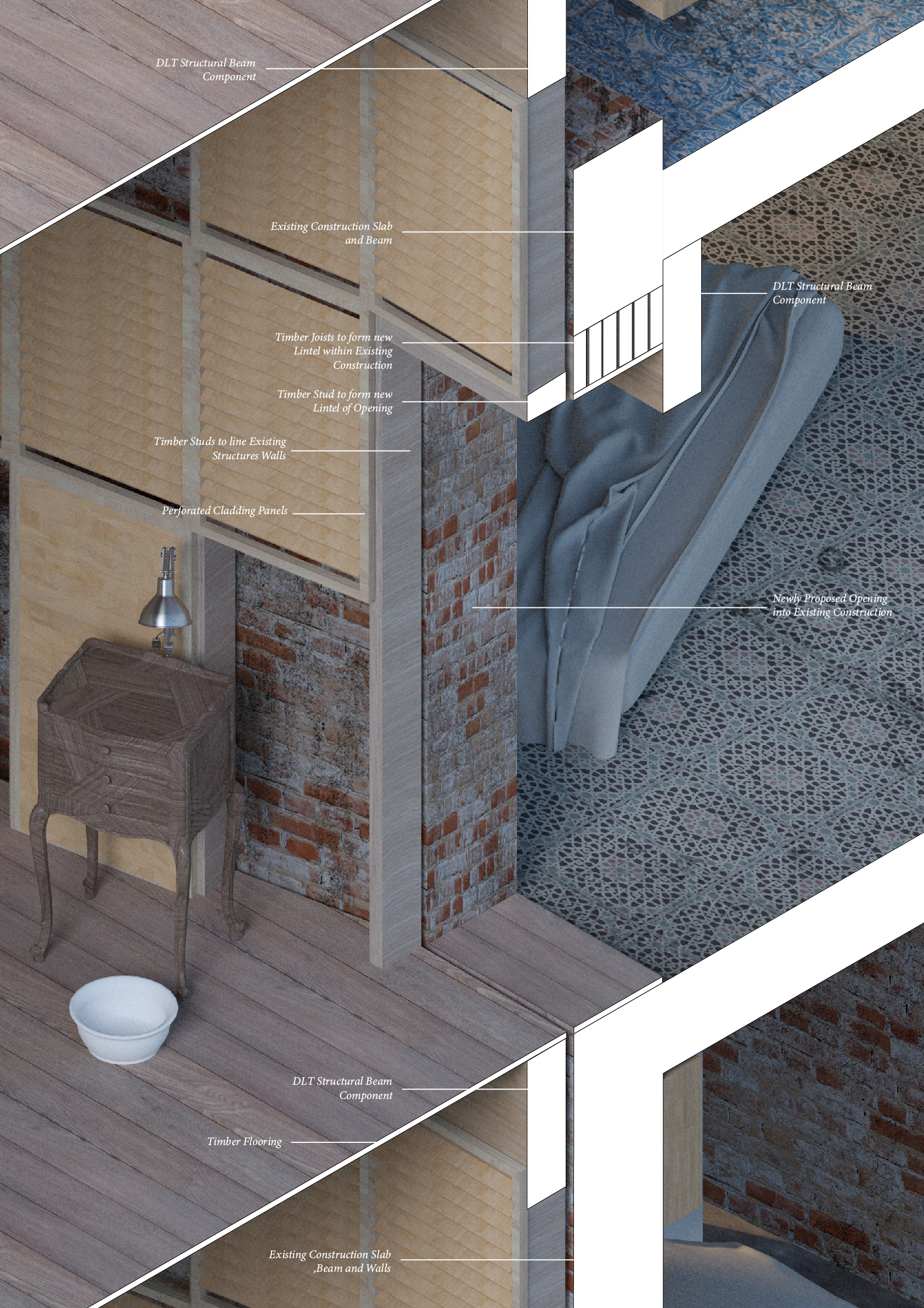
Construction Process Intersections between existing constructions and newly proposed extensions.
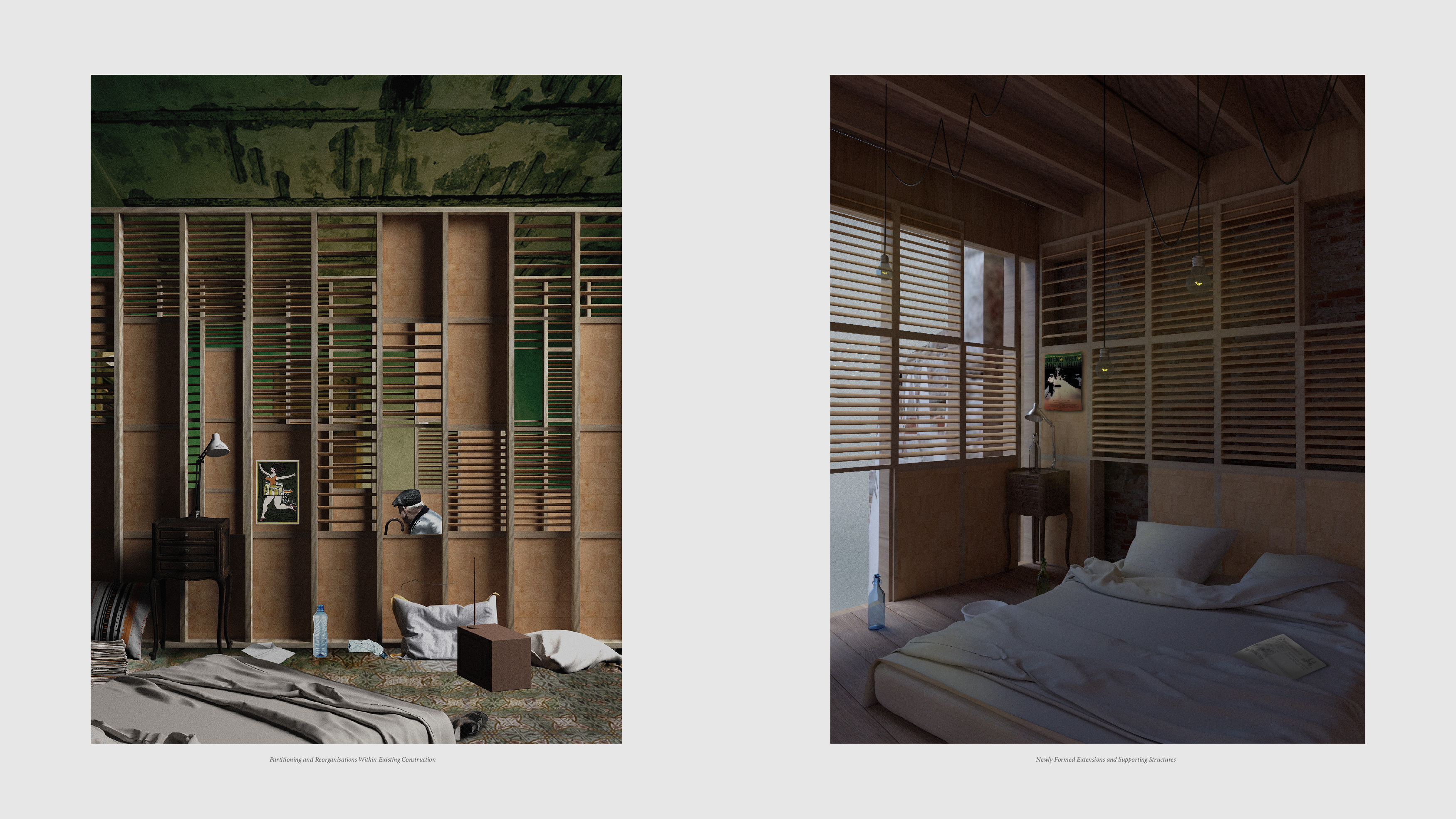
Interior Re-organisations of Private Areas Private household areas generated from re-organisations of existing constructions or the addition of new stabilizing and extension structures.
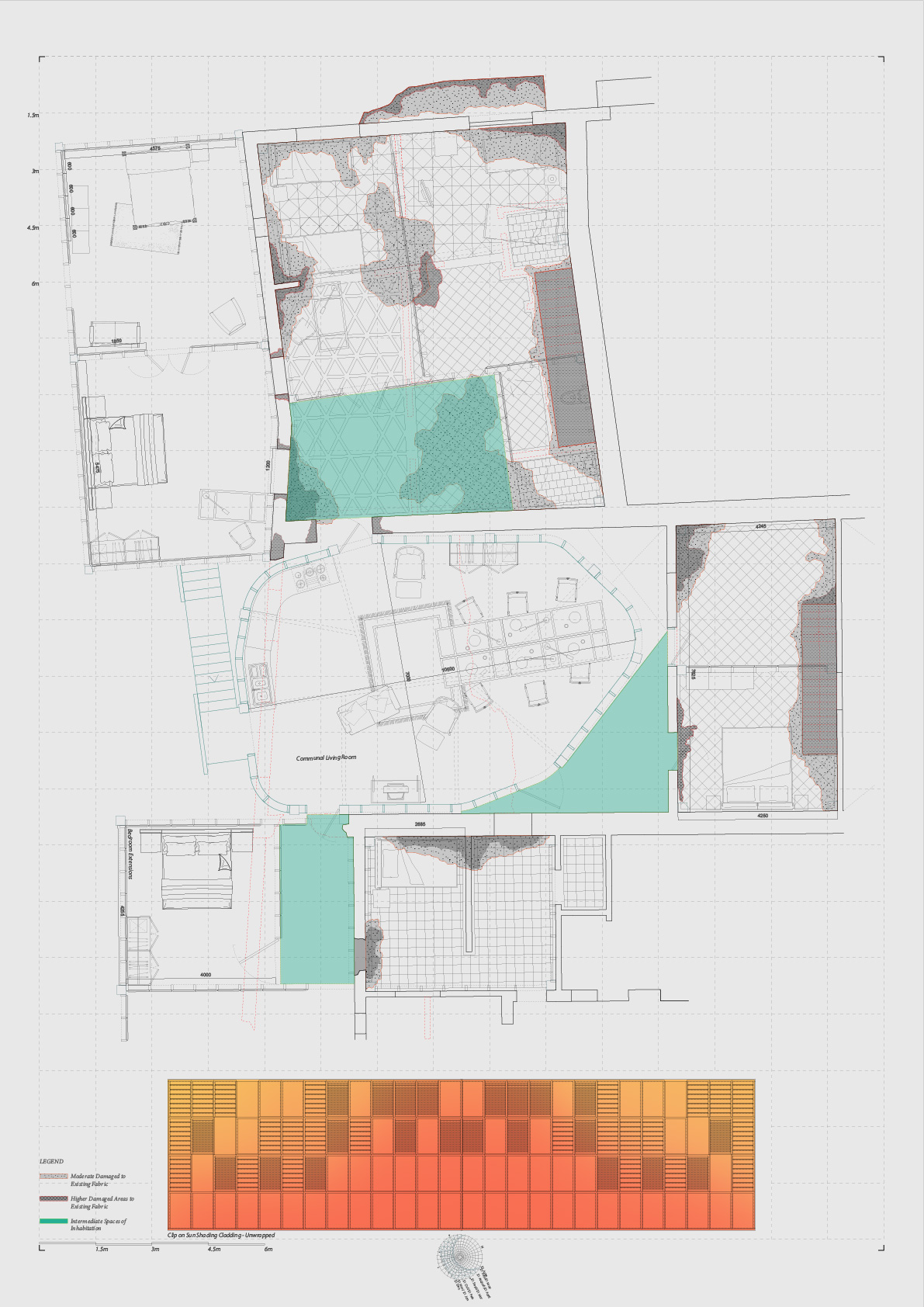
Re-appropriated Block Segment Three members belonging to the same block decide to form a cooperative and connect their homes. The designed system is then deployed into the existing gap sites.
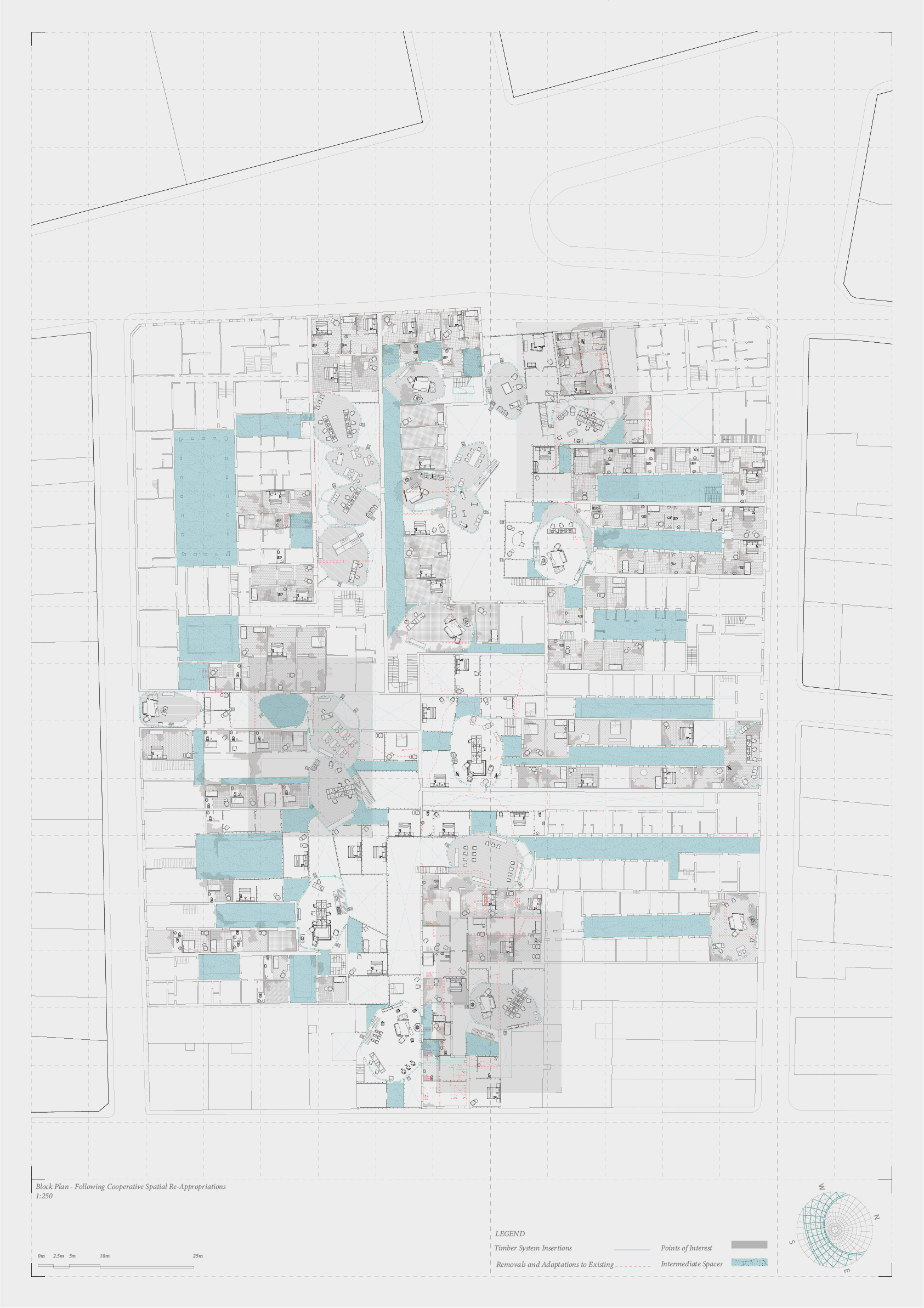
Site Plan - Appropriated Block The series of negotiations are presented as a physical log of the choices made by the inhabitants themselves, in the resulting forms of the plan.
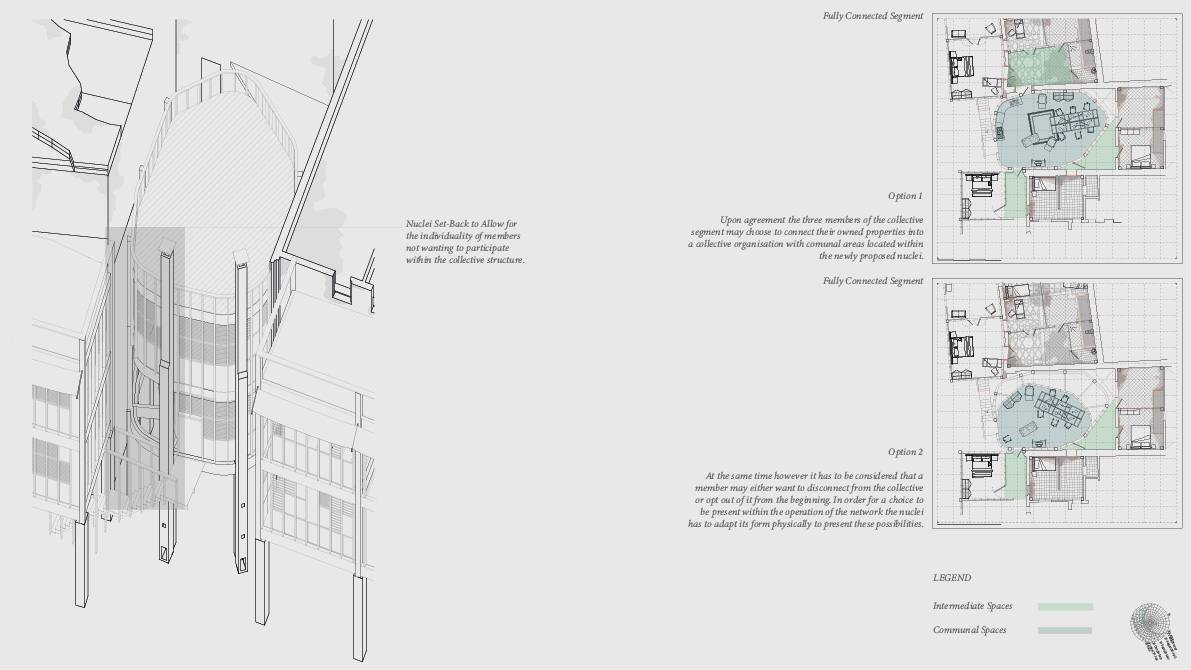
Nuclei Configurations As the connectivity into the system remains a choice, the physical volumes of the communal nuclei, shift forms in order to reflect the choices of the individuals.