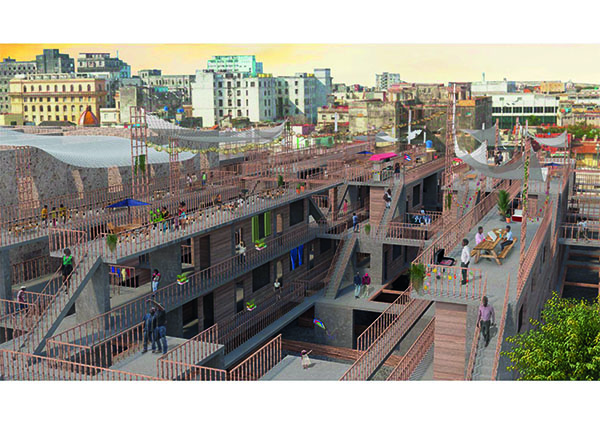
Flexibility in a Static Environment
Kamal El-kharrat, BA (Year: 3)
The project proposes an alternative way of living for 600 Cubans by readapting the prefabricated concrete panel’s use and introducing it to a flexible wooden panel which enables the idea of adaptability in a static environment and also directs towards a circular economy. Through the use of prefabricated concrete panels, the rigid structure provides sustainability, affordability, long term use and efficiency. This responds to the urgency of housing people in Havana. Through its diverse layering, spacing and the introduction of the wooden flexible panel, the proposal breaks the rigidity of the prefabricated concrete panel and provides flexible and diverse possibilities and combinations of units which adapts to change. Therefore, the prefabricated panel acts as a source of possibilities instead of a source of limitations. The use of movable and mechanical elements such as curtains, separations, flexible walls and furniture enables the transformation of the building through the needs of its residents. Spaces can be adapted in terms of size, program, lighting and ventilation enabling a certain range of activities to happen through the static and rational structure.
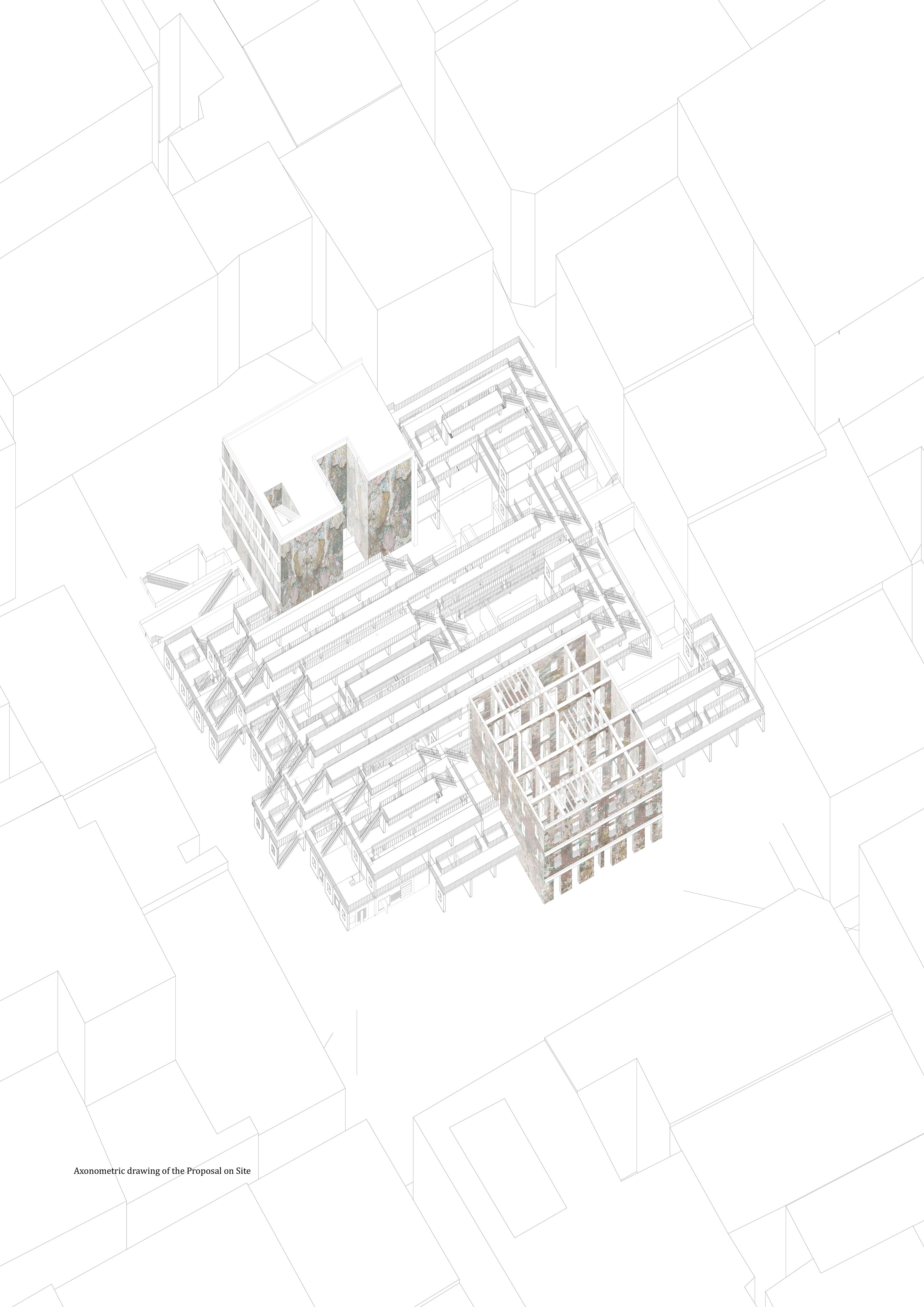
Proposal surrounding and adapting to the buildings on site.
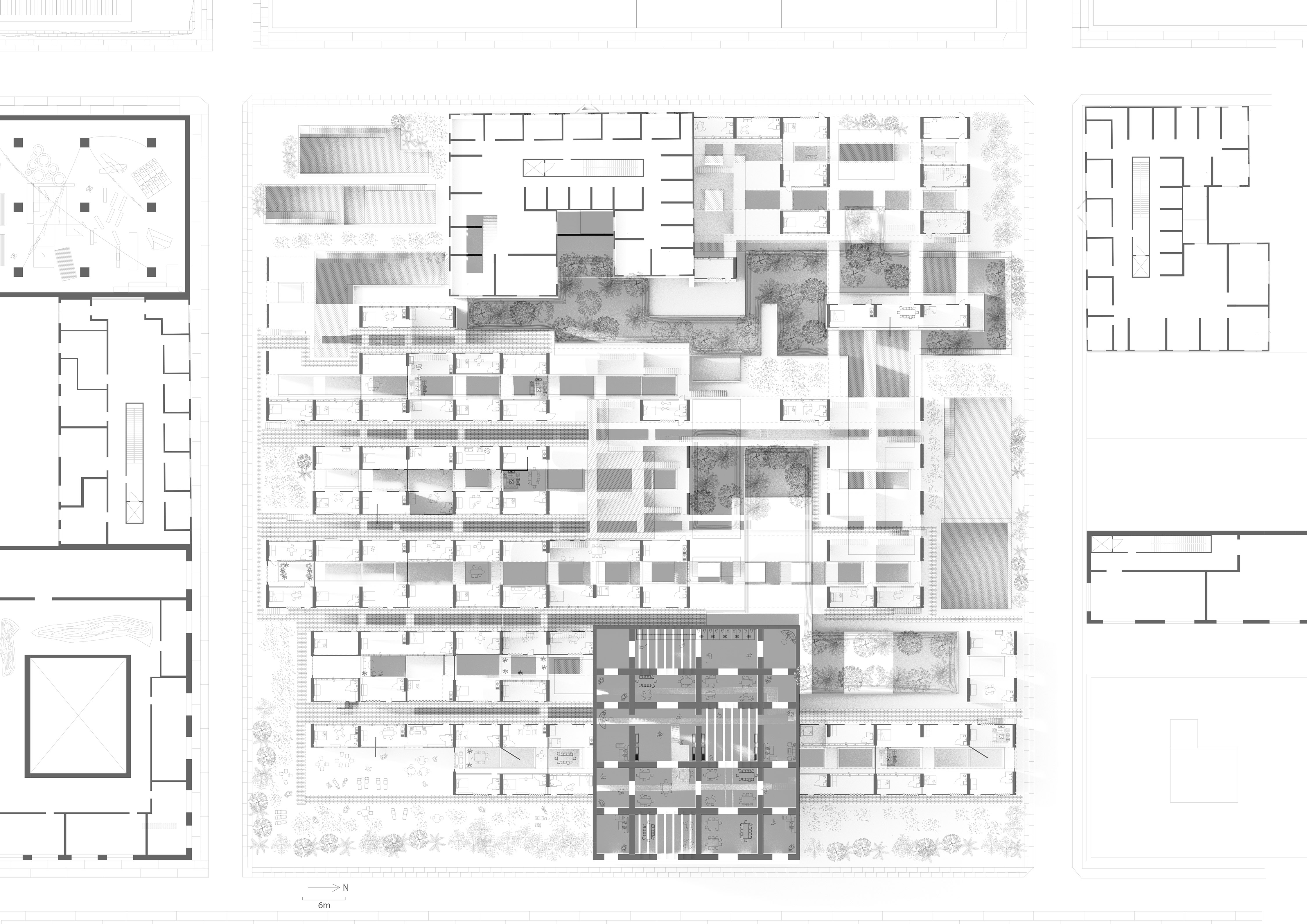
The plan shows the different spatial condition the proposal provides, its relation to the underground and to the buildings on site.
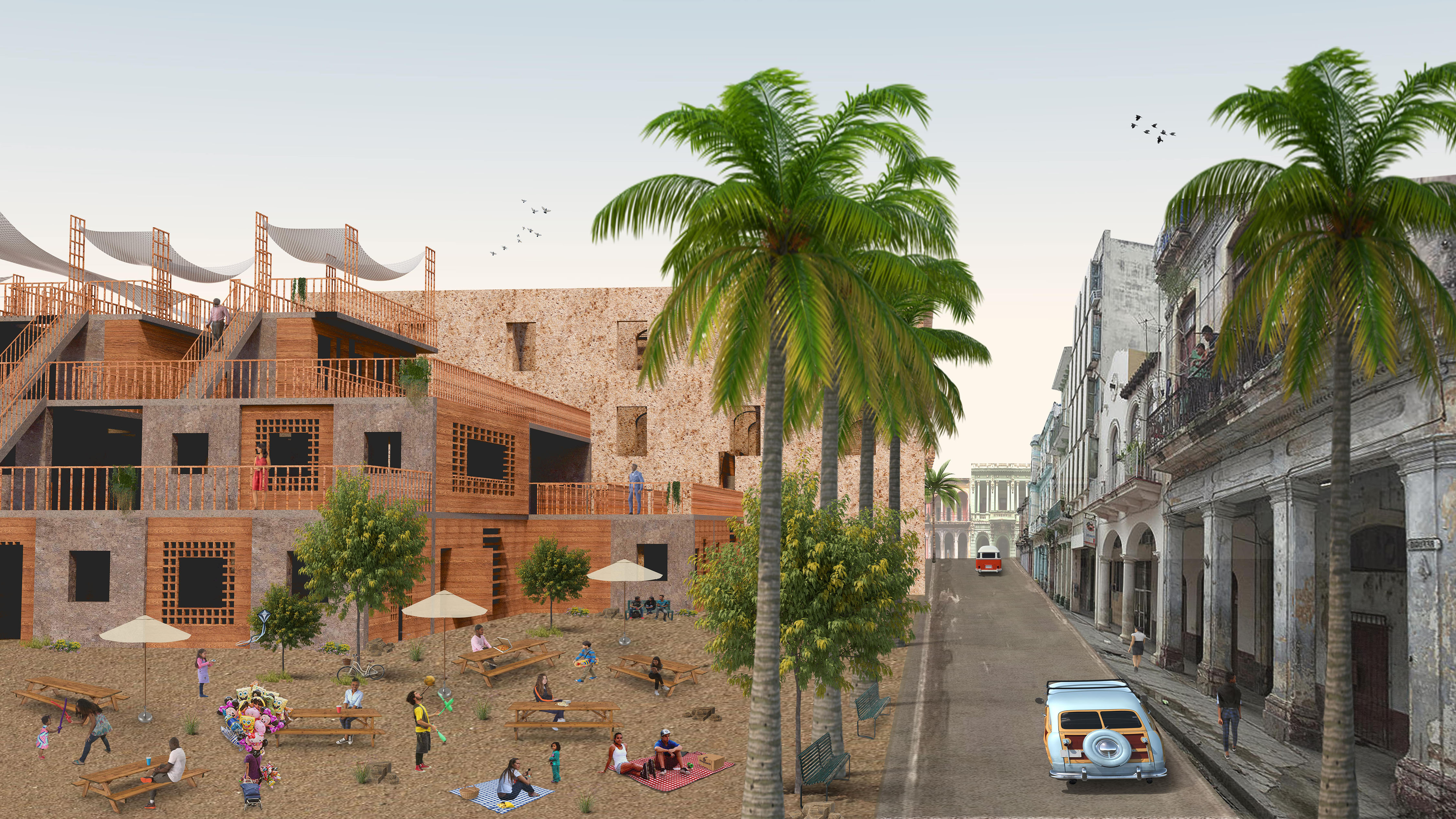
Proposal's relation to the street.
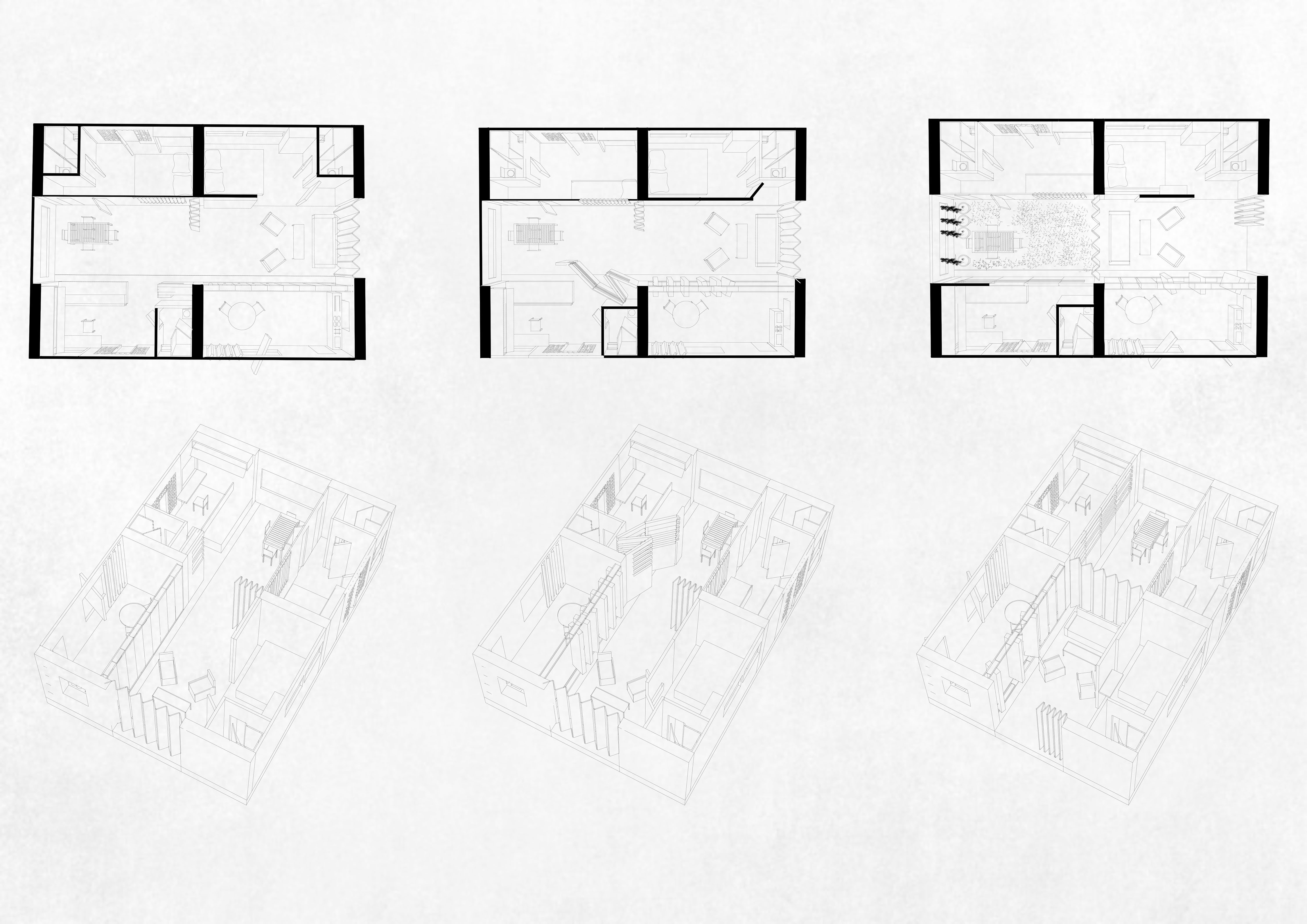
variety of combinaions of units through flexible wooden panels.
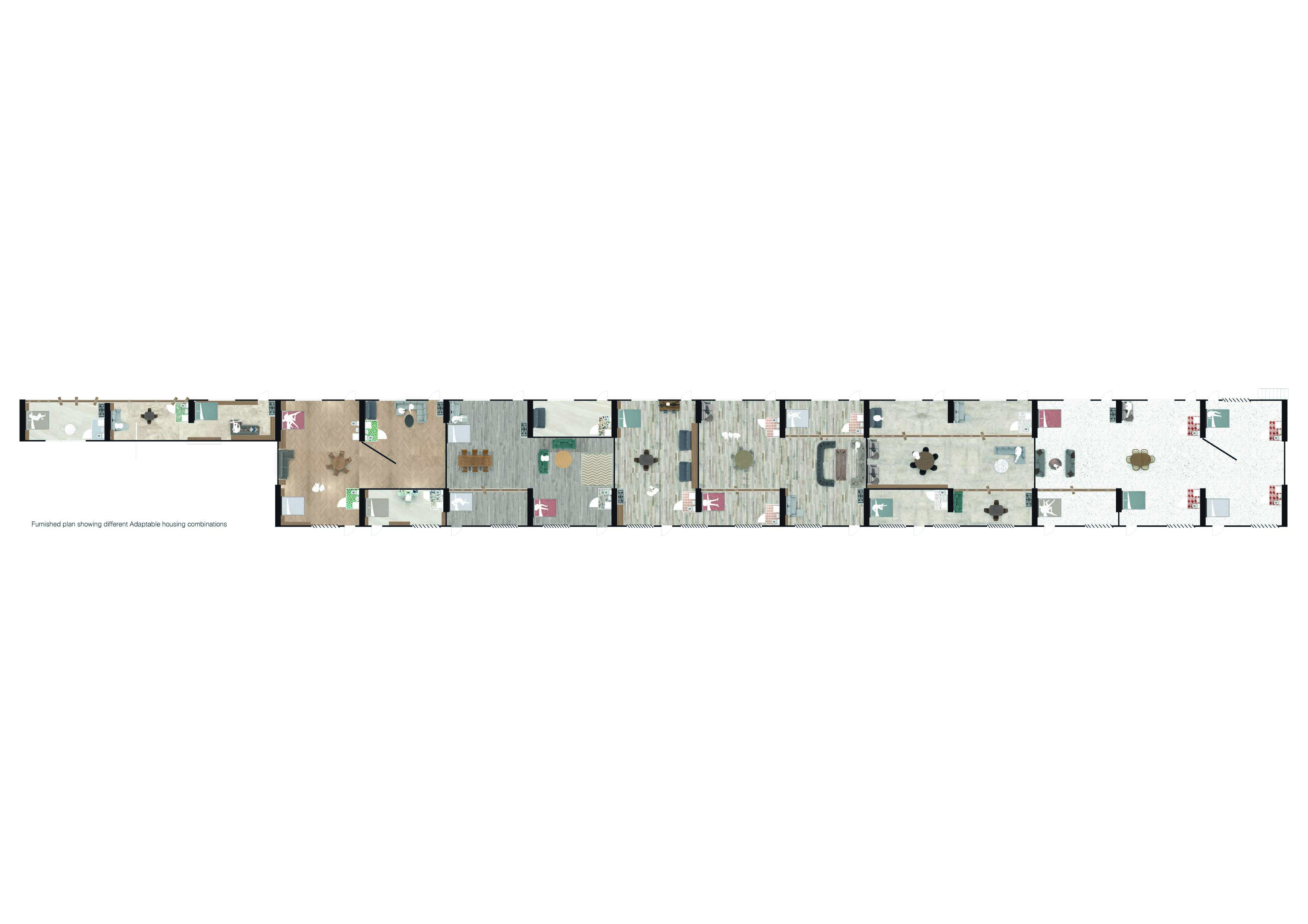
zoomed in plan showing different combinations of units creating different shapes and sizes of domestic space.
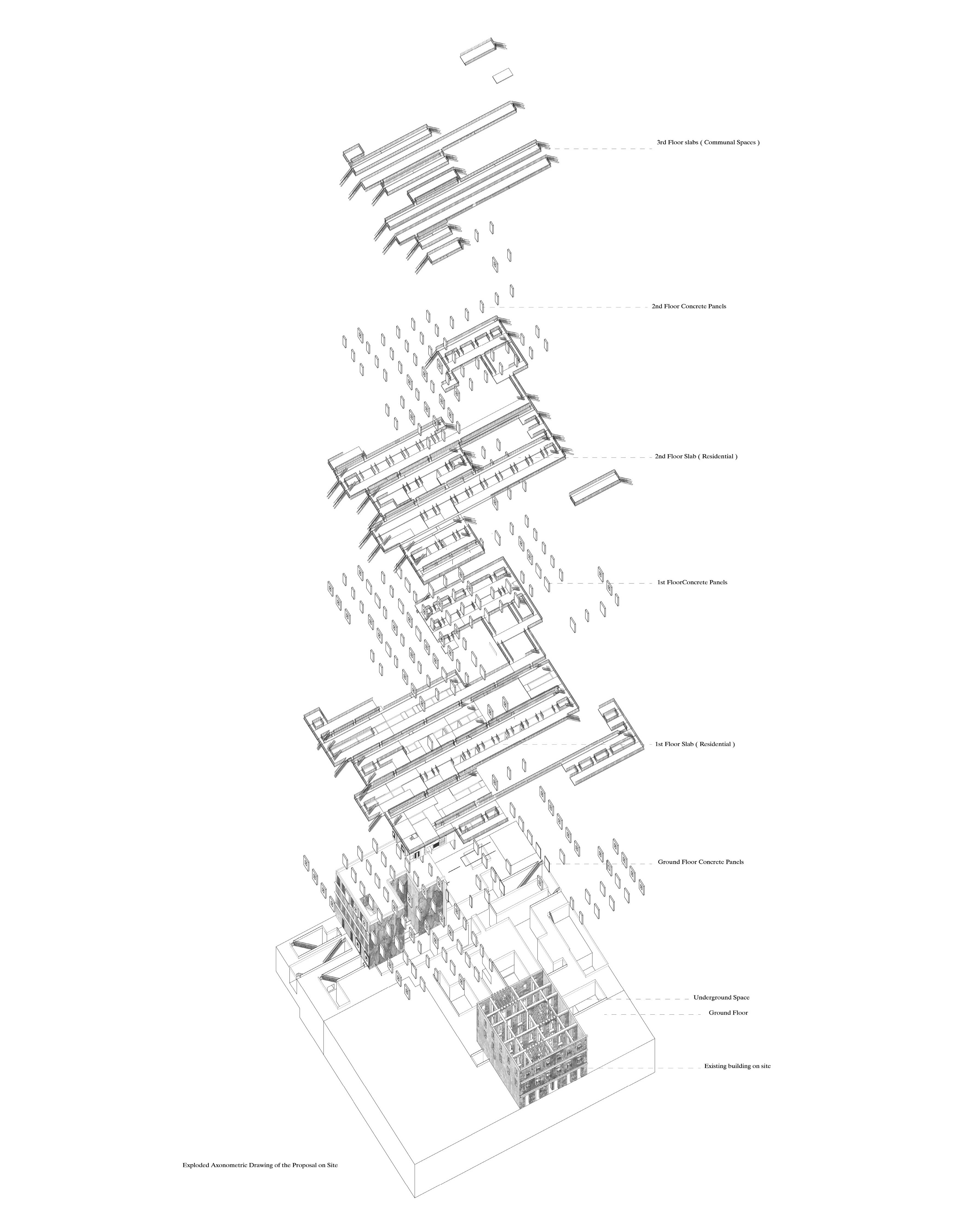
exploded axonometric showing the structural elements composing the proposal.