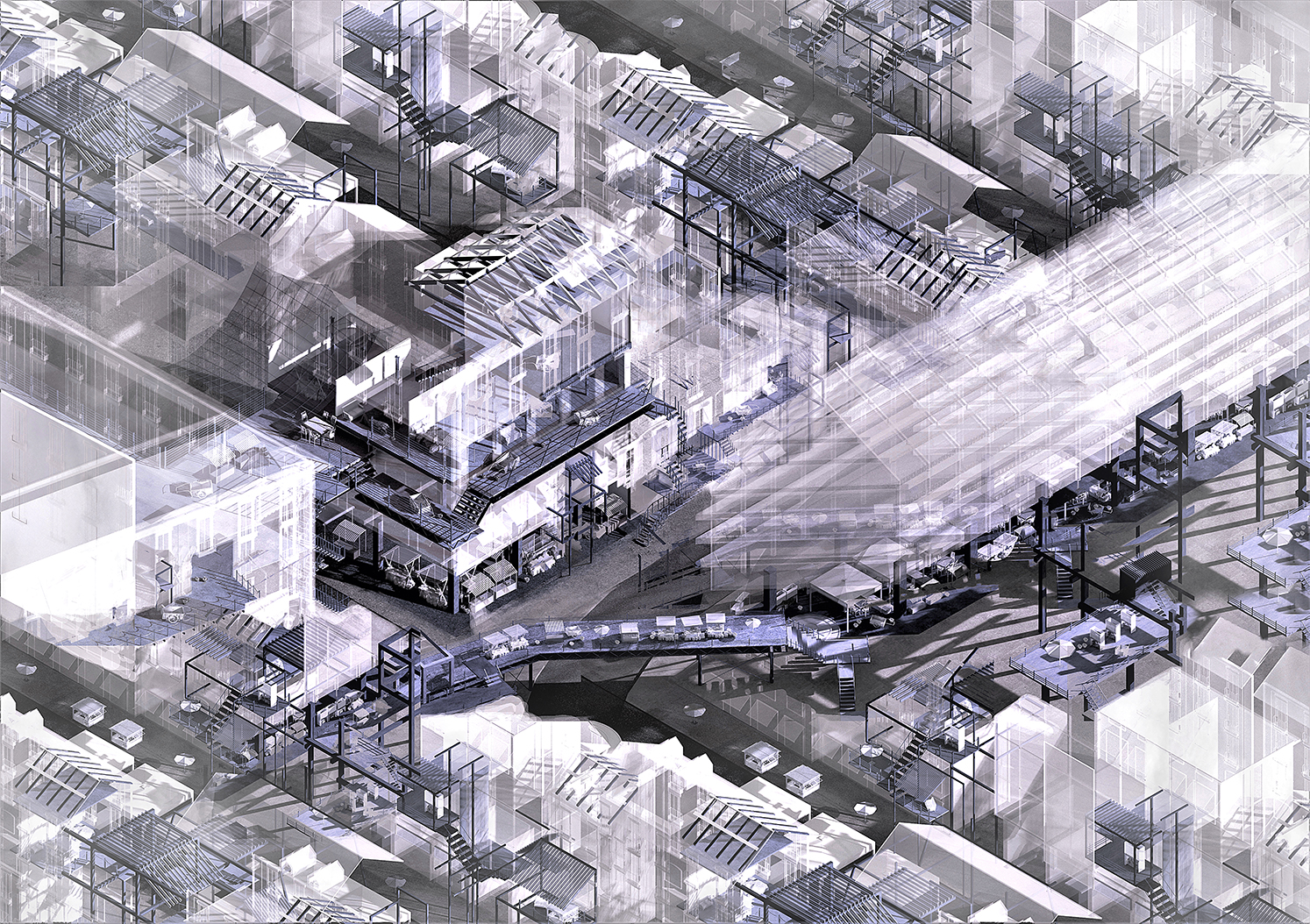
A Manual for Urban Surgery
Jeff Yu-Fu Huang, BA (Year: 3)
A Manual for Urban Surgery proposes a new way of city planning. Emphasizes the idea of smaller decentralized actions, inserting a new typology to the everyday routine shuttle through the city - A line for liberation. A new connectivity in the fast-changing society. The continuous surgery performed on the city attempt to treat the pathological condition, transforming from the state of disconnected to connected. The surgical procedure pulls forces towards the sub-centers in the city, while introducing the elements of lighter programs. To use existing and ignored spots in the city, new social spaces are reconstructed. The act of performing surgery brings the notion of connectivity to another level.
Through a series of surgeries such as elevating, extending, and penetrating; the project argues that smaller operations rather than a total reconstruction of the city could be more effective in building a more complex and diverse city. And can thus challenge the outdated idea of connectivity through redefining and blurring of the once rigid division between social groups and programs.
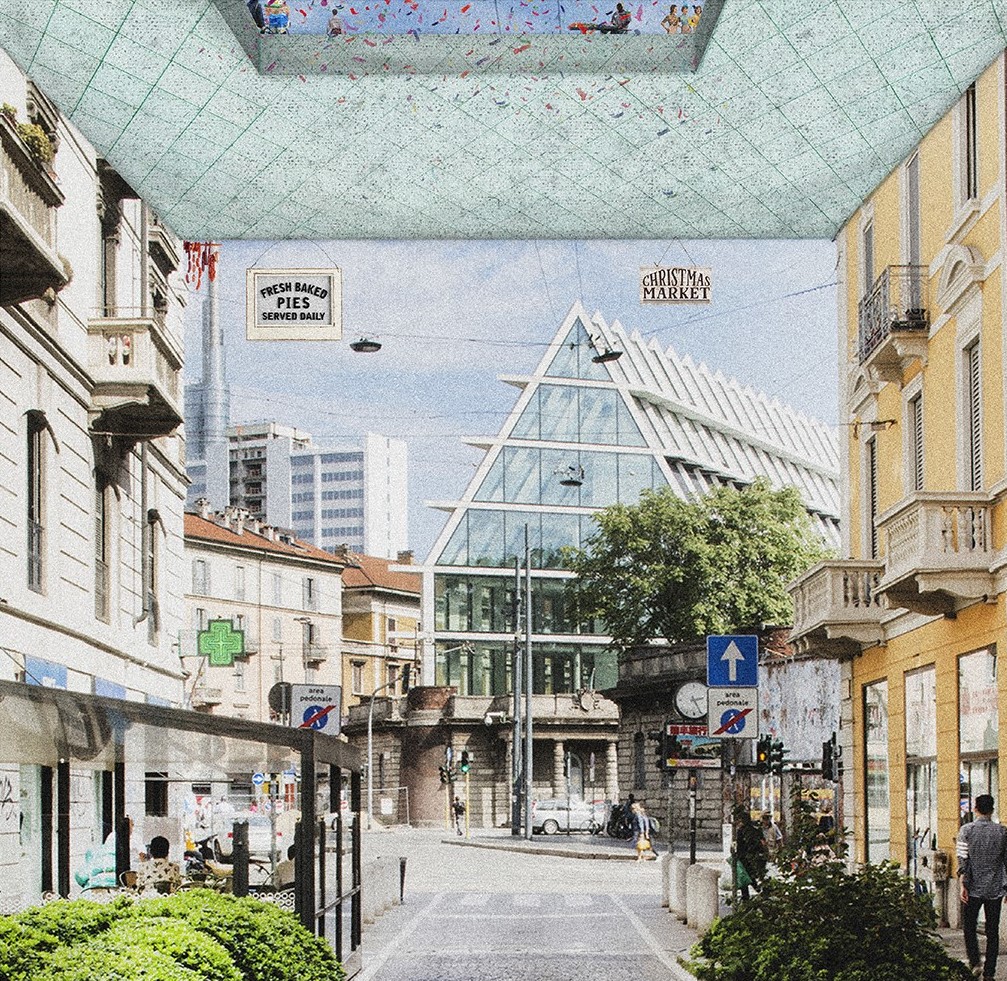
In order to activate the reconnection process, five architectural surgeries are proposed to not erase the entire city, but to operate modifications on the existing buildings.
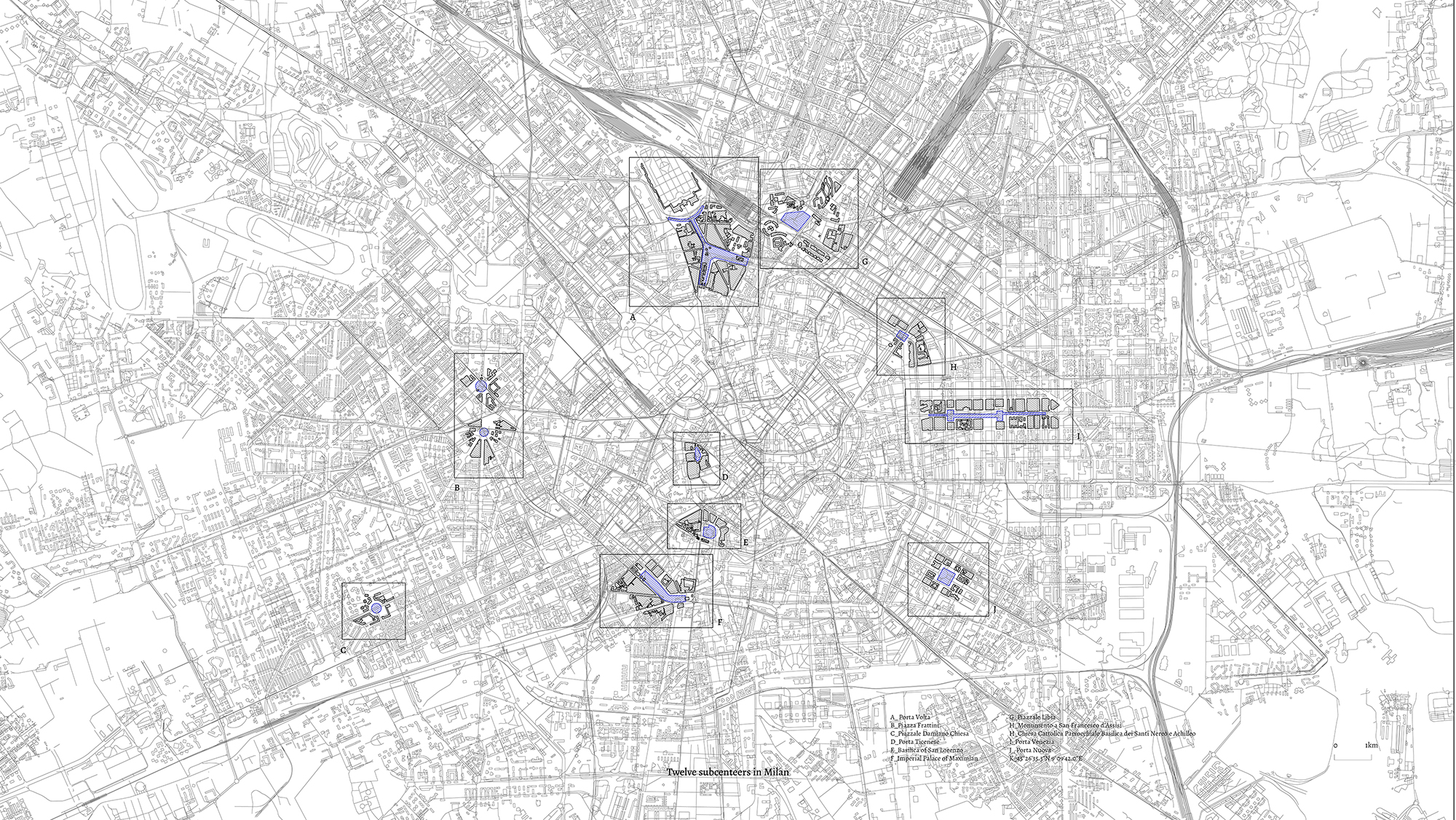
The development of Milan city continues to expand radially, one can begin to notice an alternative phenomenon of expansion: The inner expansion of constantly infilling the sub-centers.
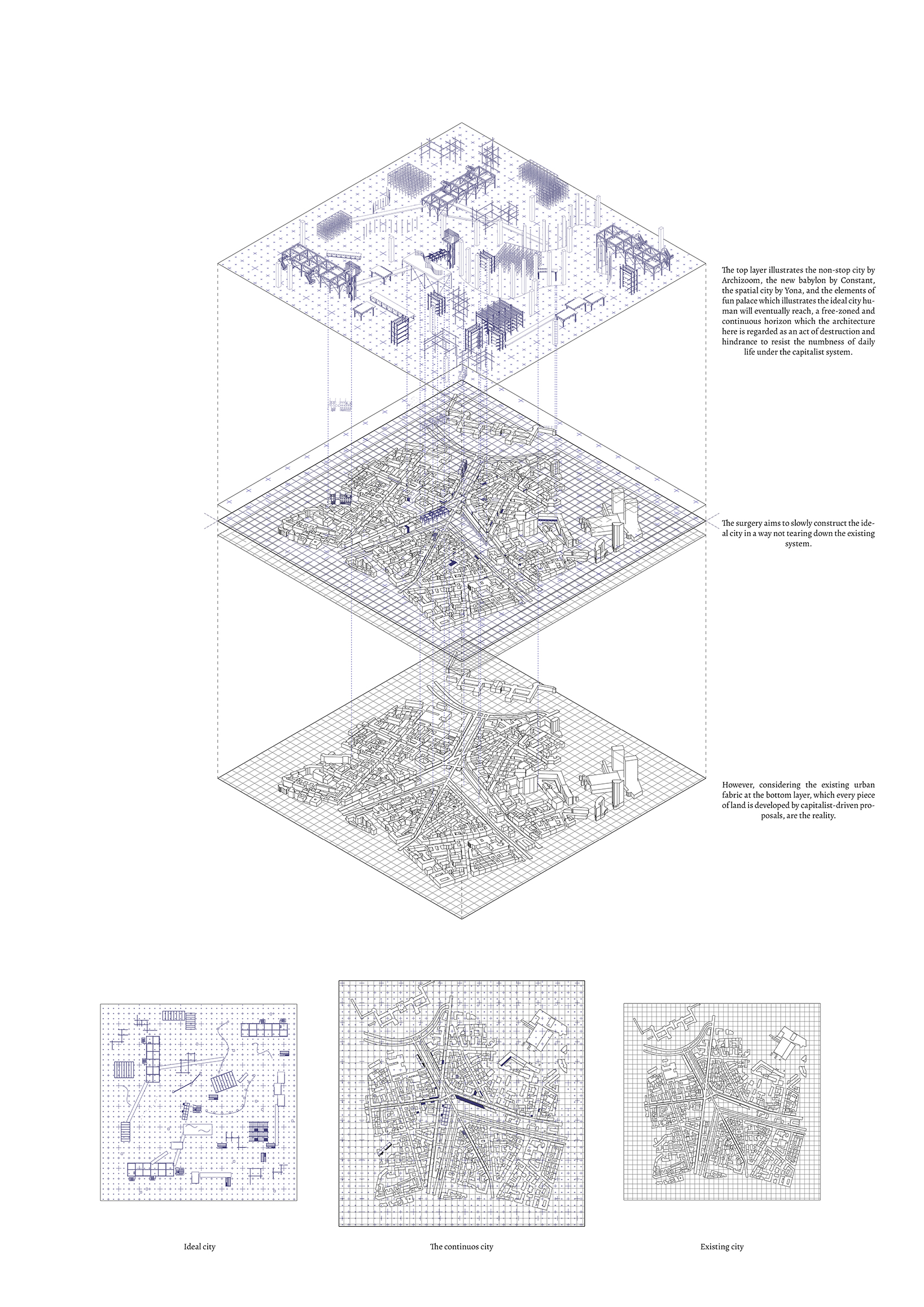
With the top layer illustrating the city resisting capitalist structures and the bottom layer illustrating the capitalist-driven city. The proposed city is located in the middle.
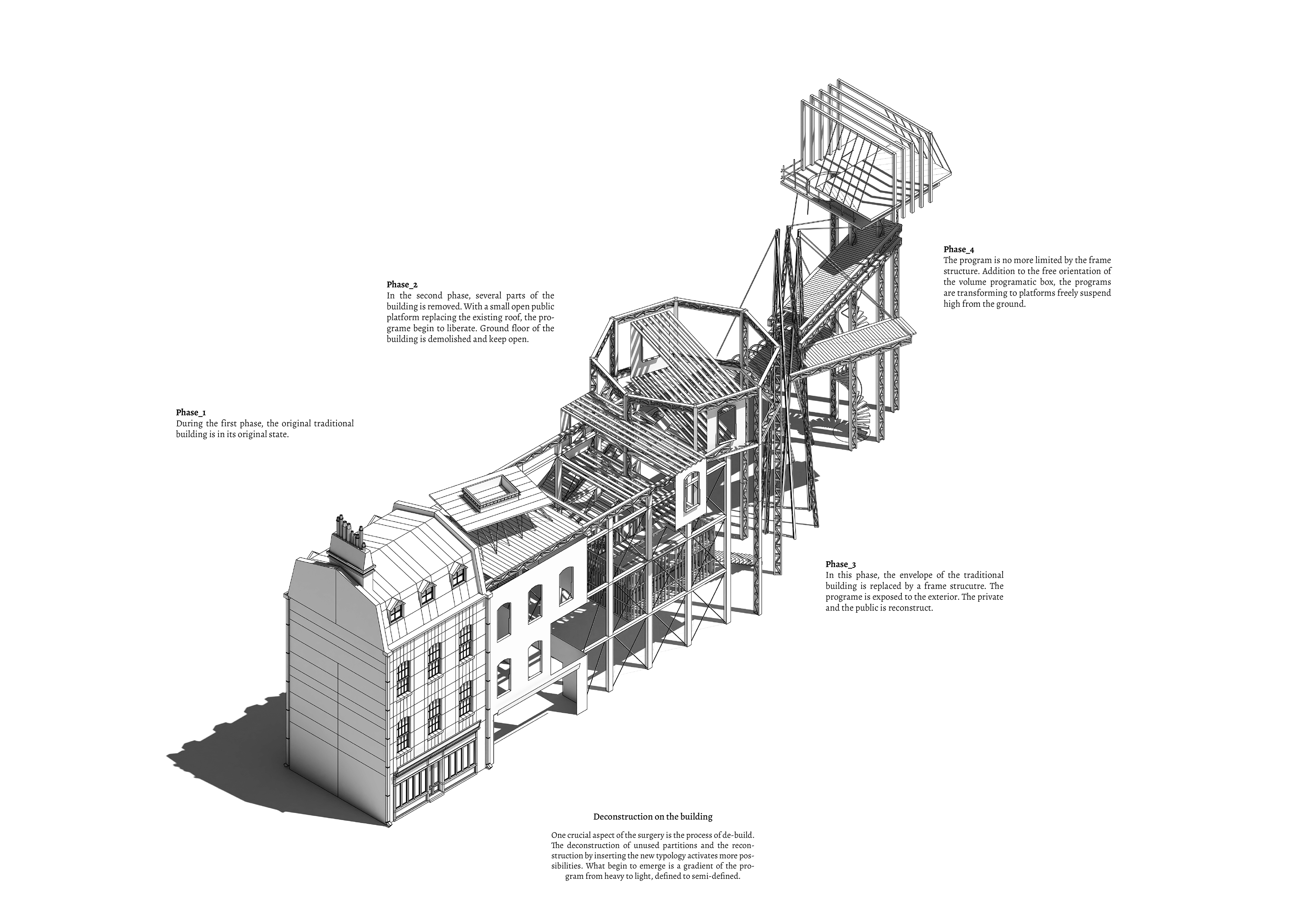
One crucial aspect of the surgery is the process of de-build. With the deconstruction on the building, what begin to emerge is a gradient of programs from heavy to light, defined to semi-defined.
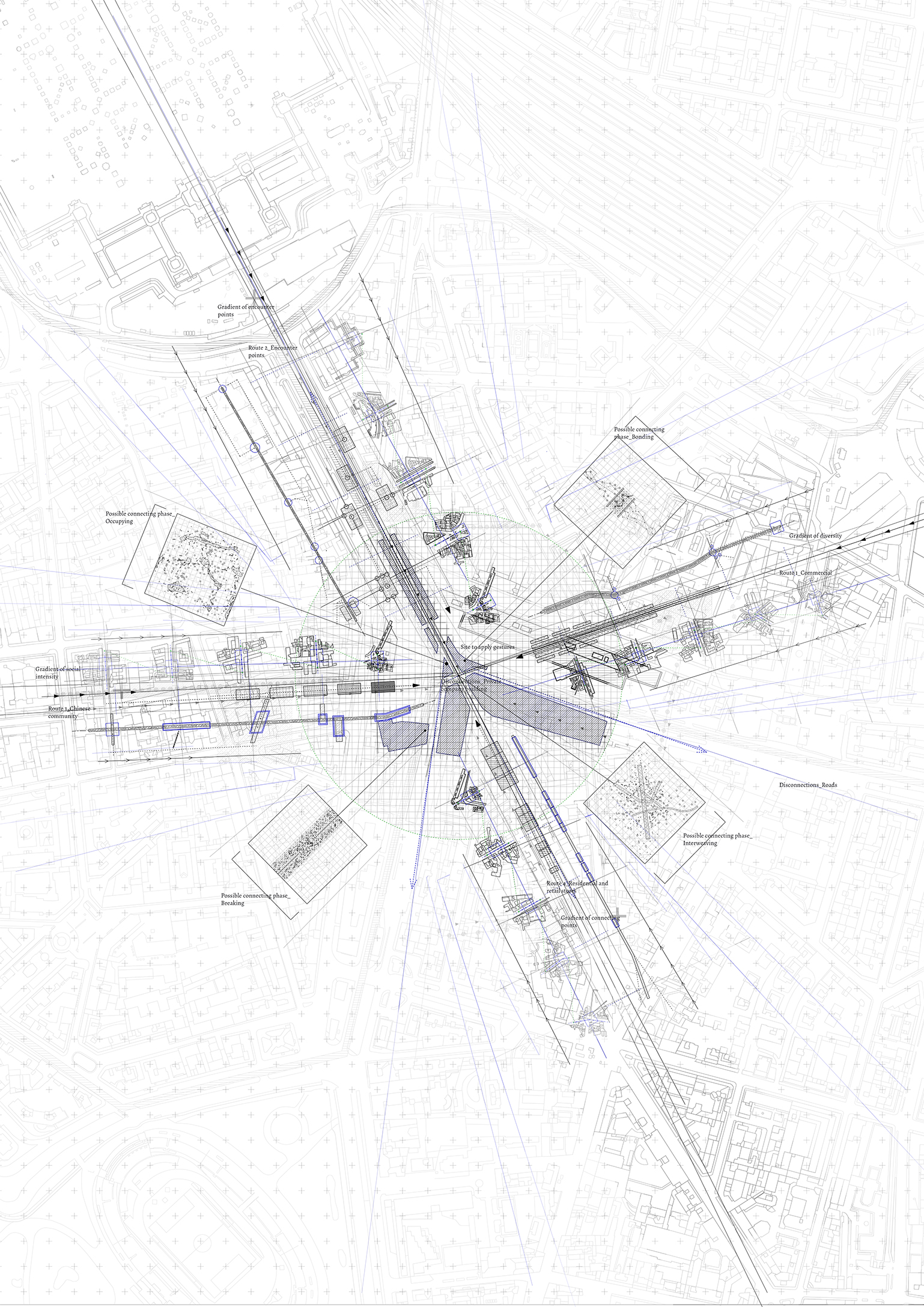
The urban surgery is an ongoing process that go beyond the previous city planning methodology. Slowly construct multiple hubs scattered in the city, which reorganize and stimulate urban fabric.
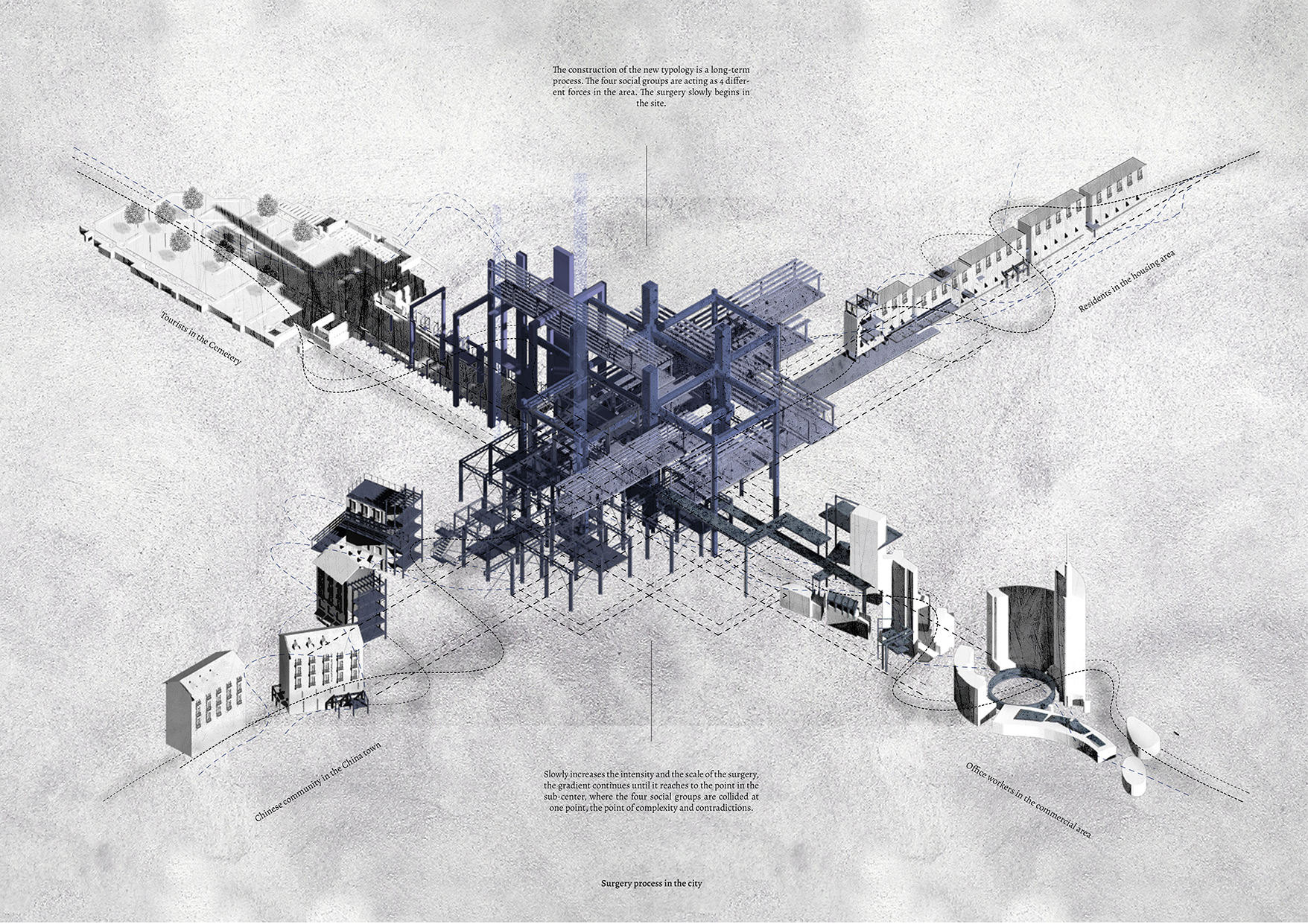
The intensity of the surgery increases until it reaches the sub-center, it becomes the point for heterogeneous desires to collide.
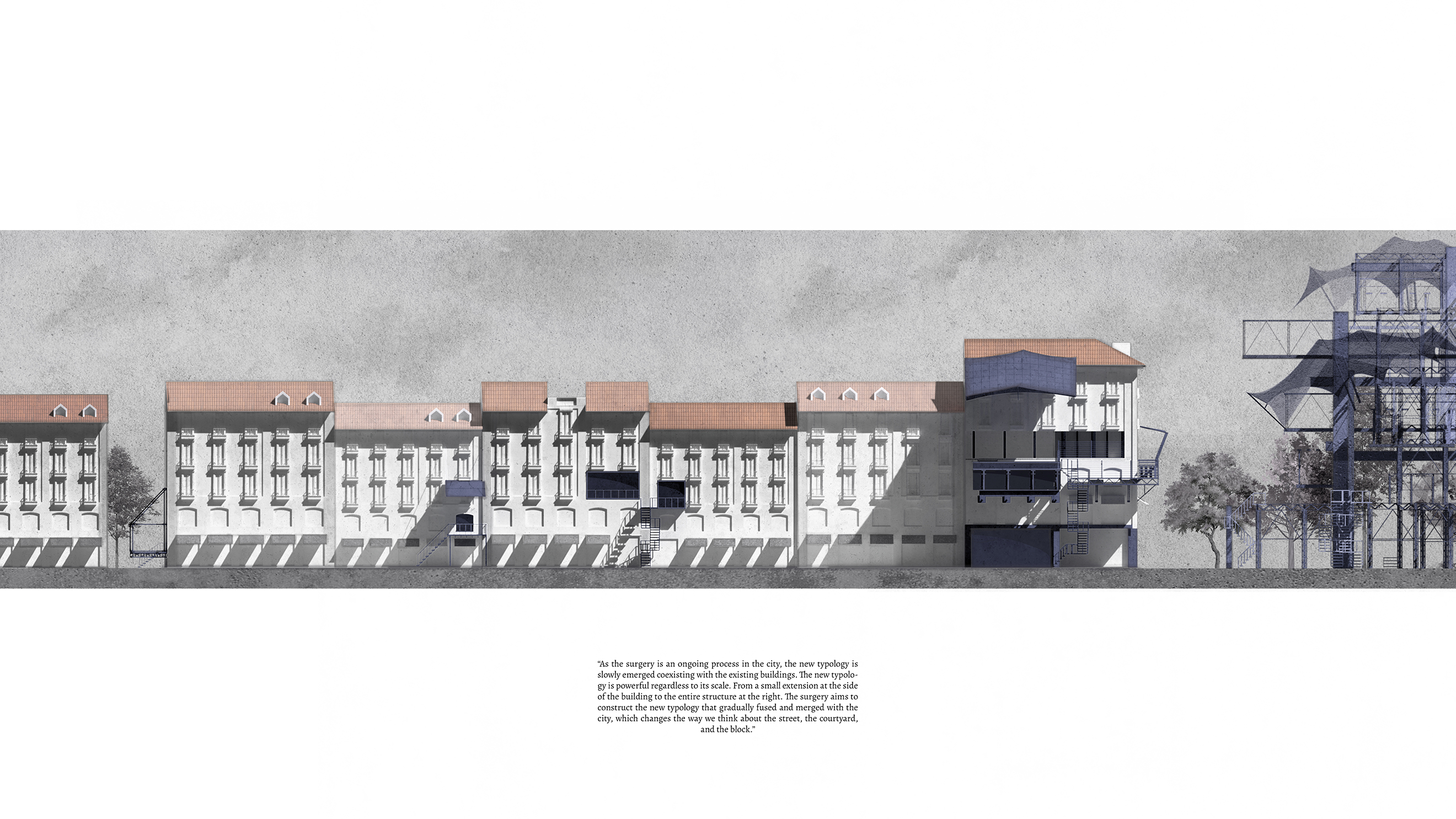
The surgery aims to construct the new typology that gradually fused and merged with the city, which changes the way we think about the street, the courtyard, and the block.
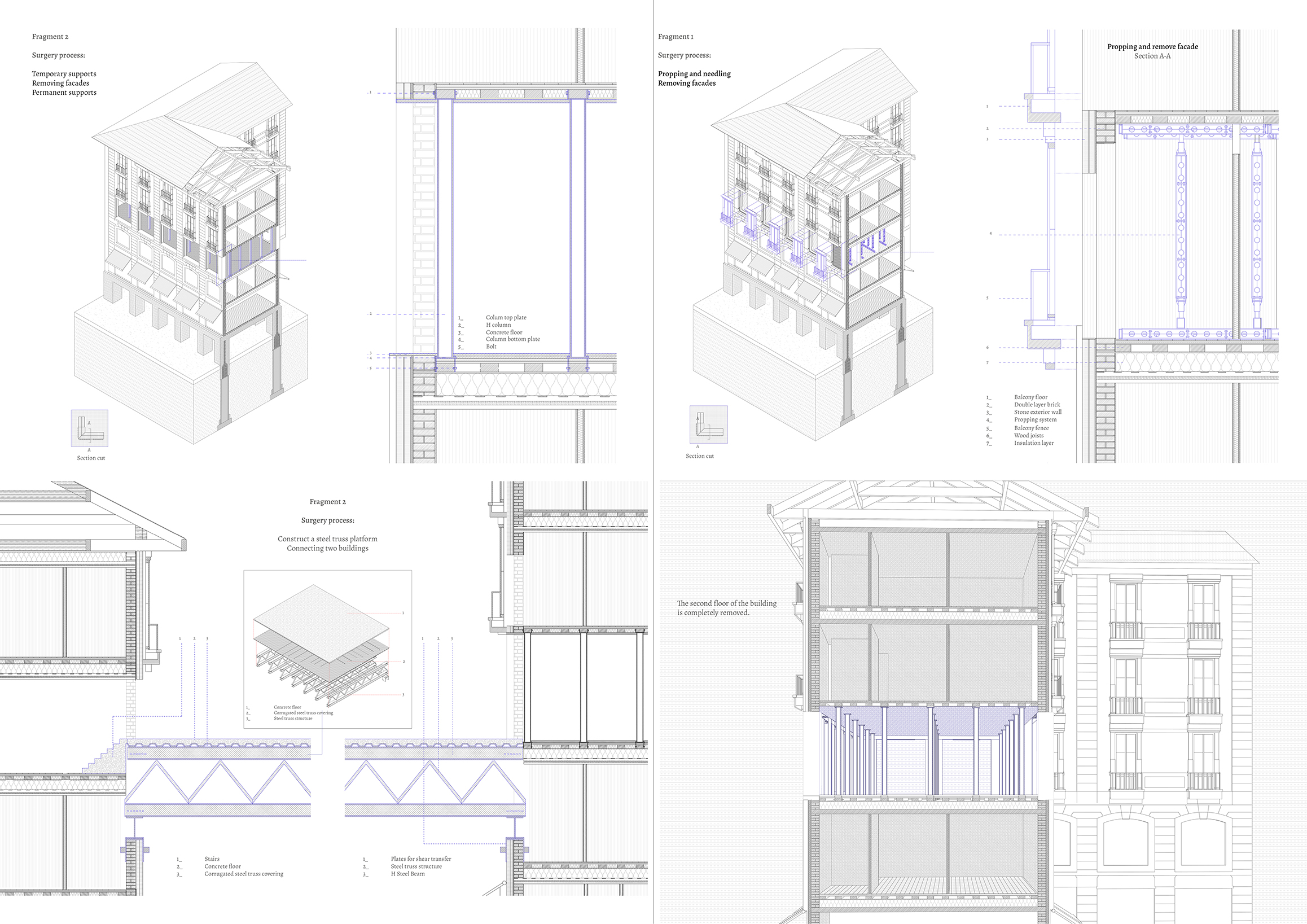
Research into the technical aspect of the operation, propping and needling, can be used as a technique for the temporary support to help to remove the facades.