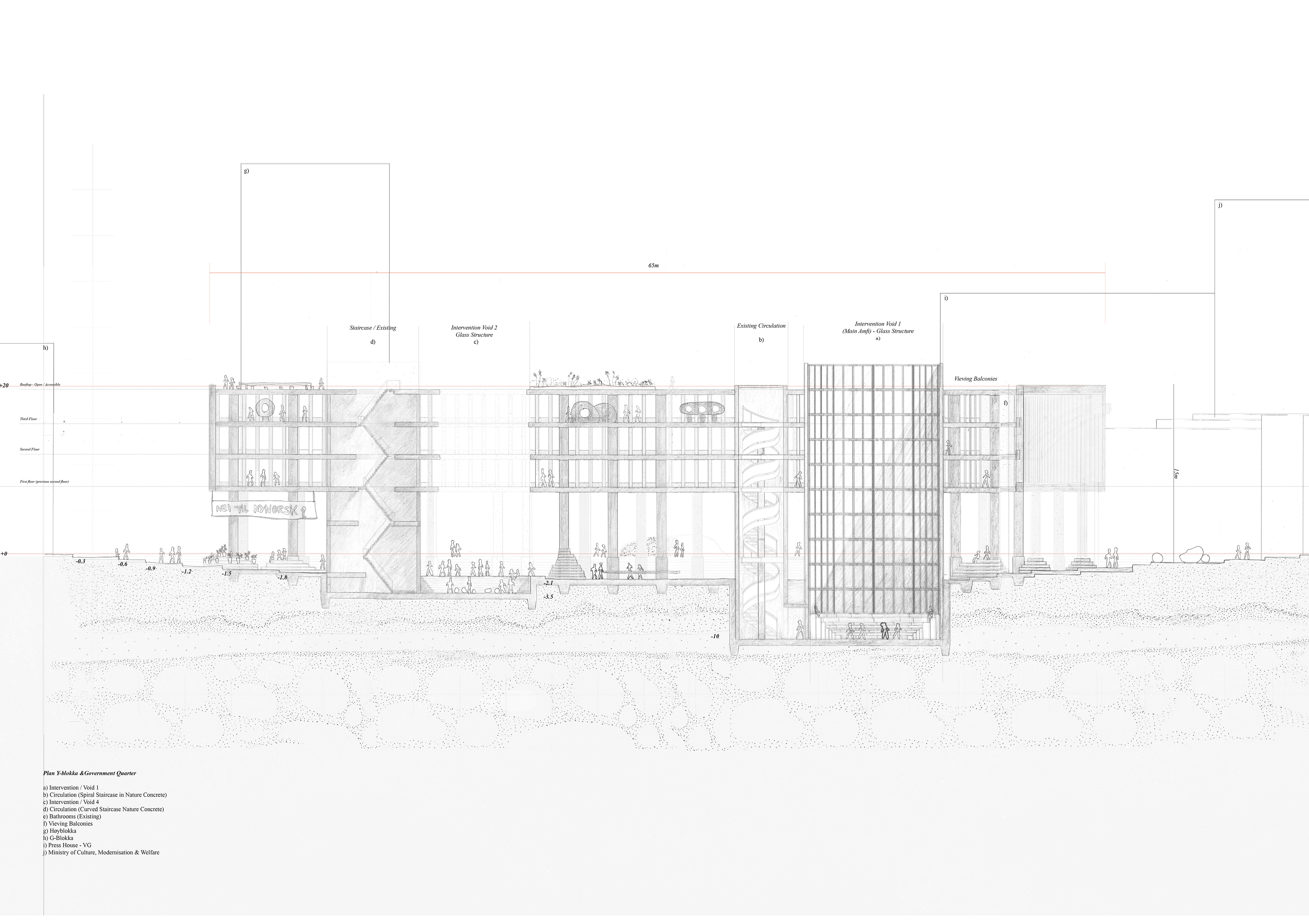
The landscape can be seen as the pivotal existence of public space in the Norwegian culture, Alþingi-Mono is set in the political capital of Oslo in Norway.
The object for the project is the massively debated government building Y-Blokka, in which after a series of mischievous events, is tragically facing demolition.
The proposal involves an alternative reality for this architectural icon, focusing on transformation in contrast to demolition.
The project is built on the notion of the Icelandic Althing (930AD), which reveals reference to public representation in the geological setting.
Derived from the art movement Mono-Ha (1960), the transformation tool becomes to reduc the building back to its base materiality.
In between poetics and politics, governors and the people, the building will be transformed to a piece of urban landscape. forever open, forever free, forever there.
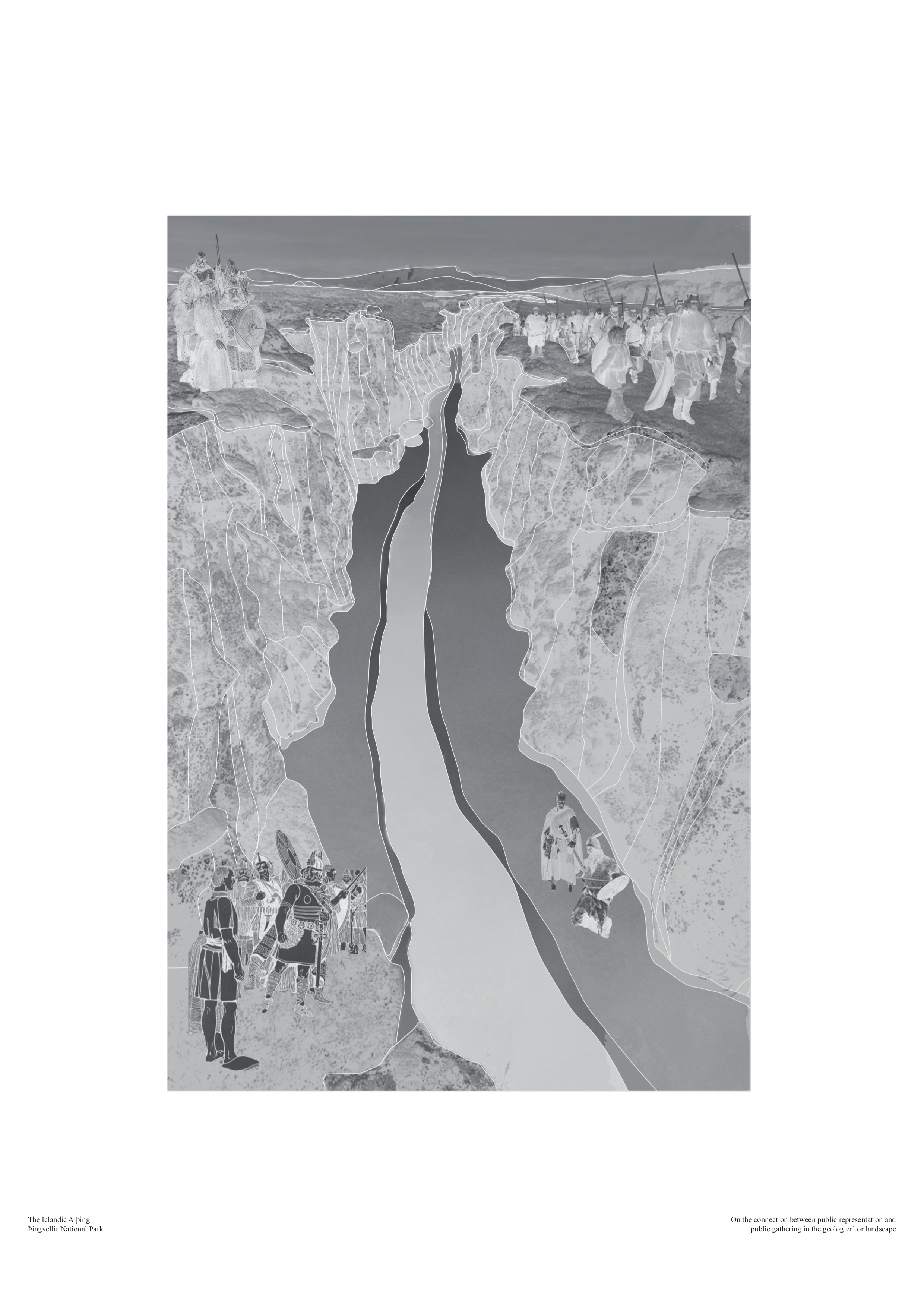
Derived from the Icelandic Althing/Alþingi, the project shows interest in the connection between public representation and gathering in the geological setting.
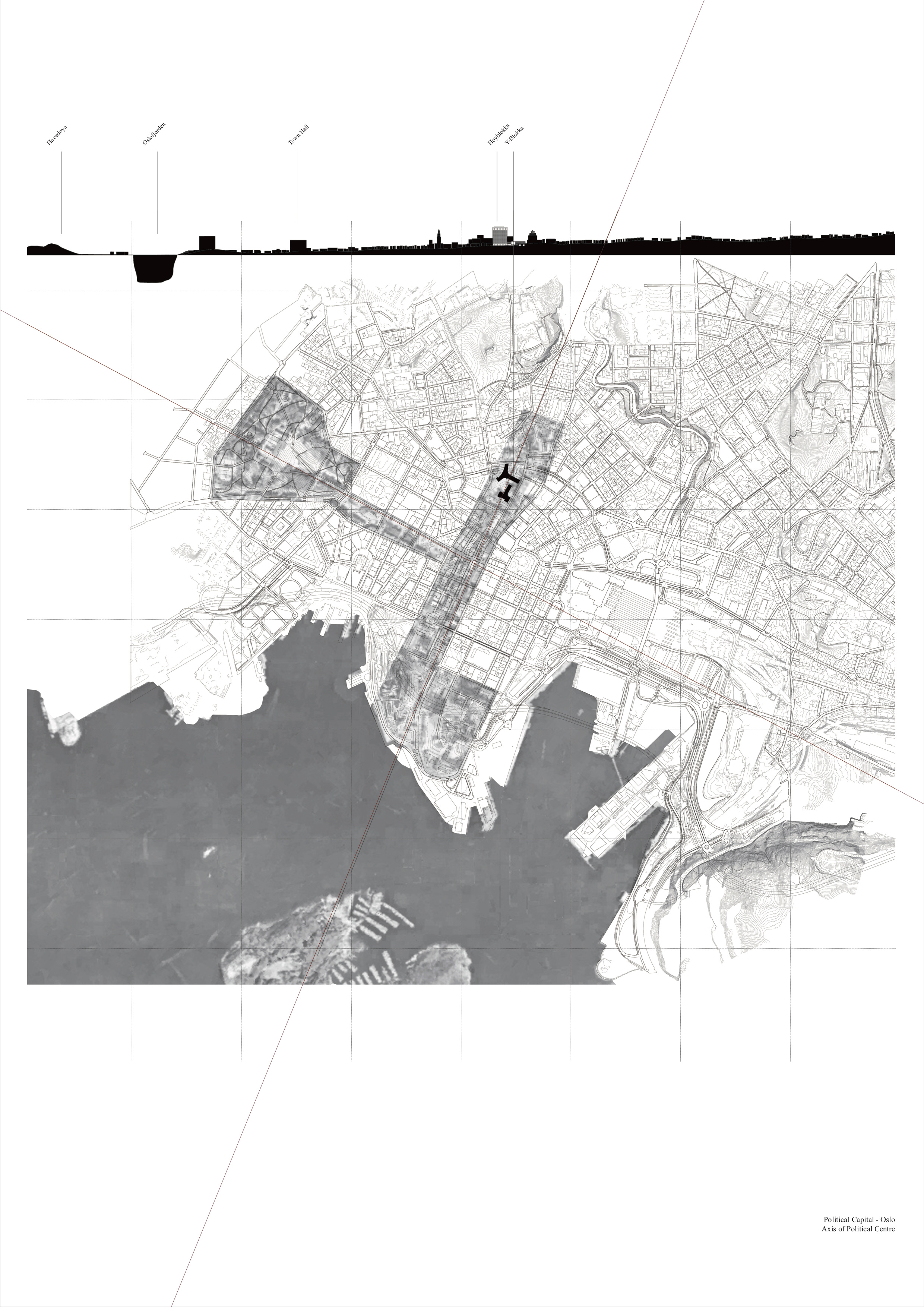
Governing institutions has a centralised part of Oslo, where the 1960´s government quarter is situated on an axis running down to the port meeting several significant public/political institutions.
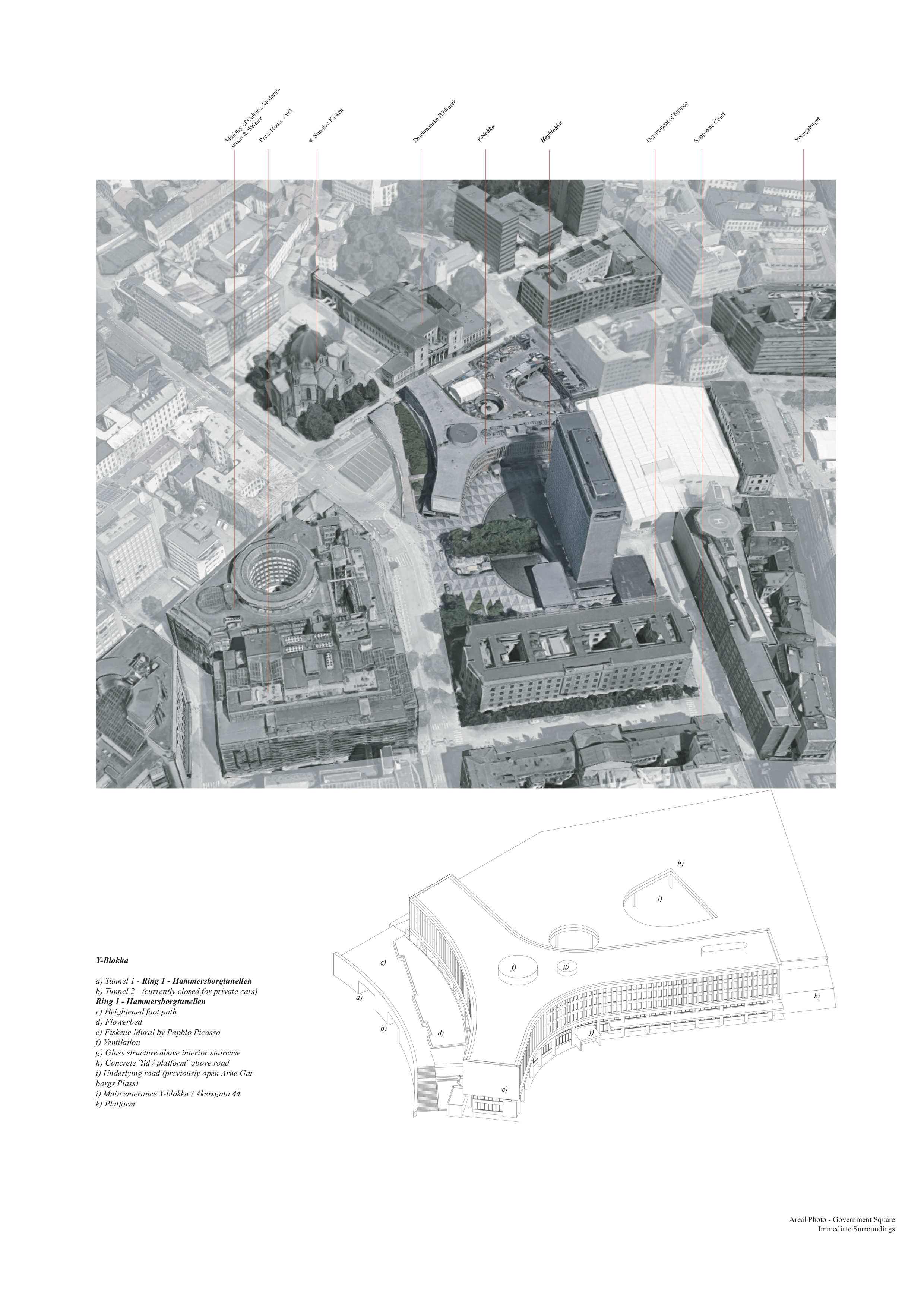
Y-blokka - immediate surroundings
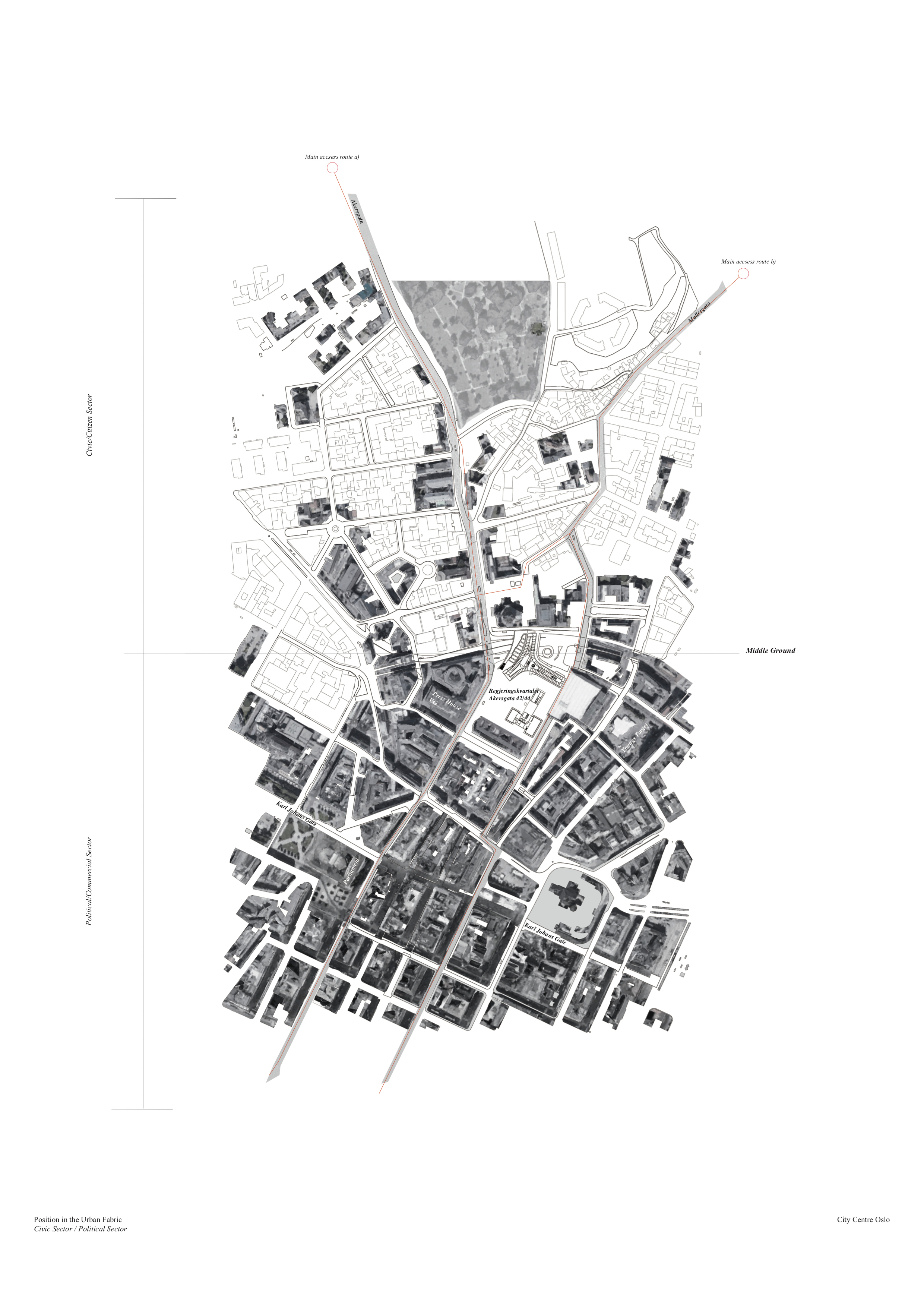
Buildings position in the city lies on a border between the civic to the north and the political and commercial centre to the south.
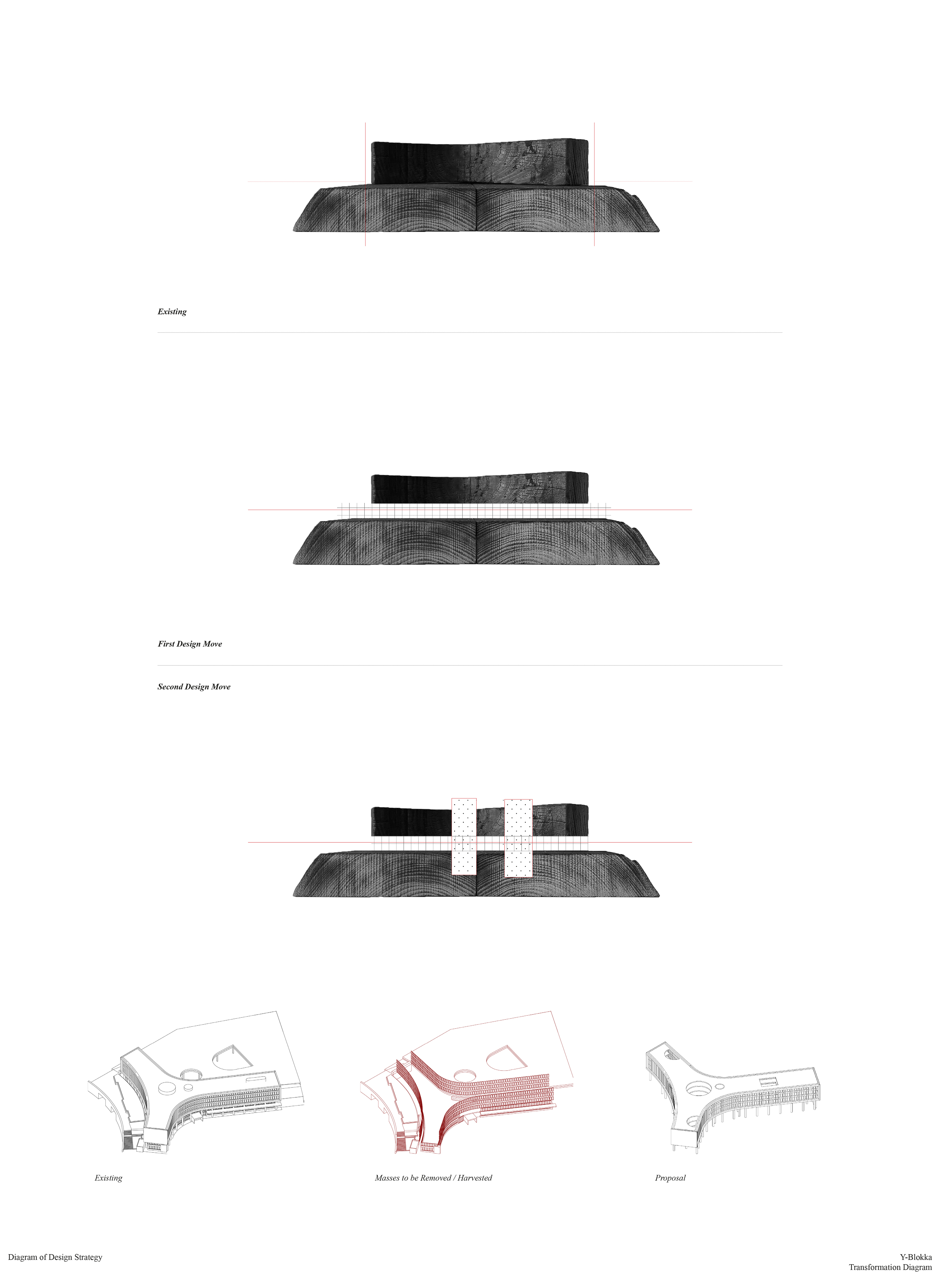
The first design move is to open up the square by removing the ground floor, the platform and closing the road. The second move cuts the building and introduces underground assembly spaces.
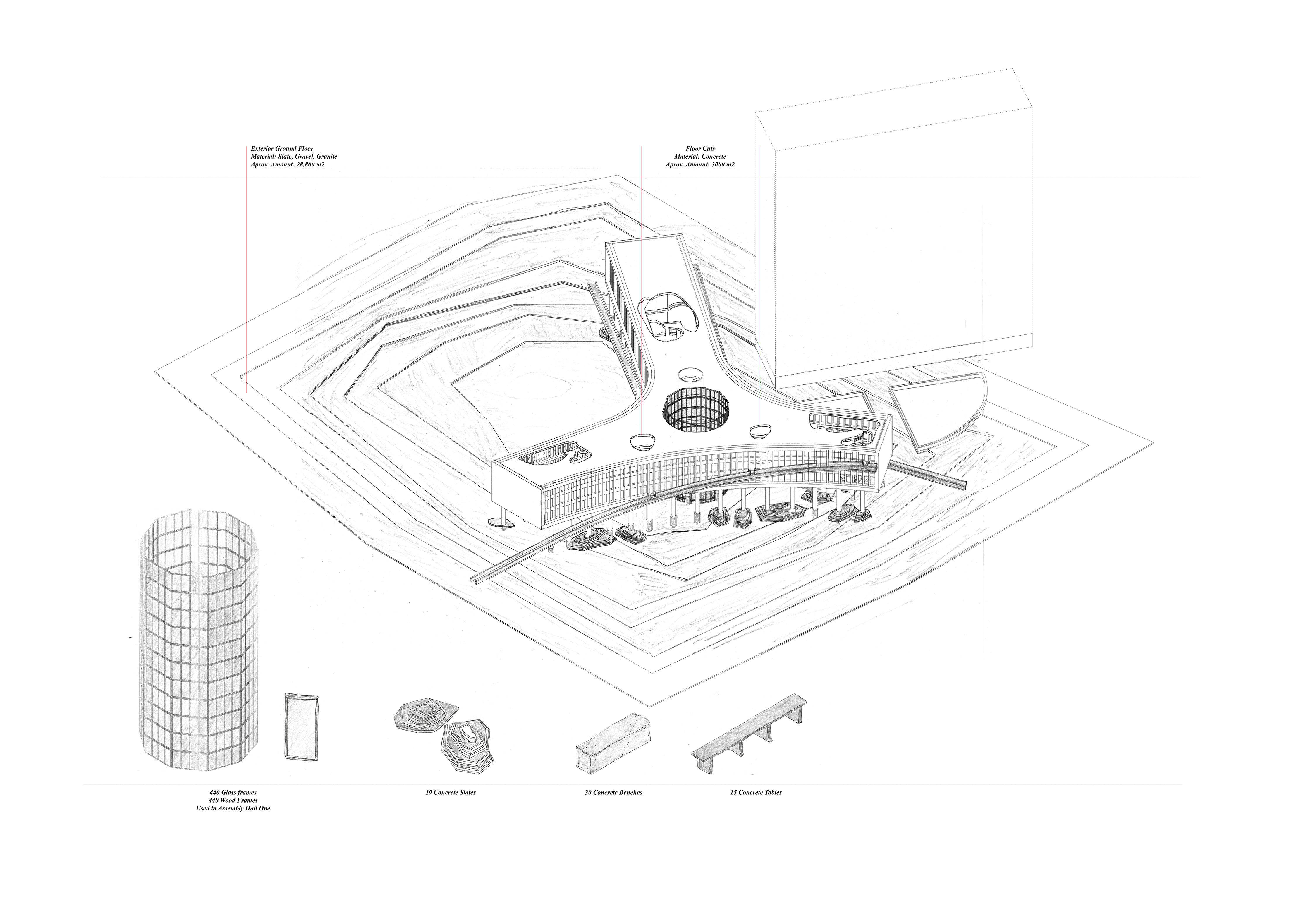
All other parts of the building, like windows, doors, furniture and textile are removed, and harvested for reuse. The harvested matter is transformed fixed or free objects of all scales.
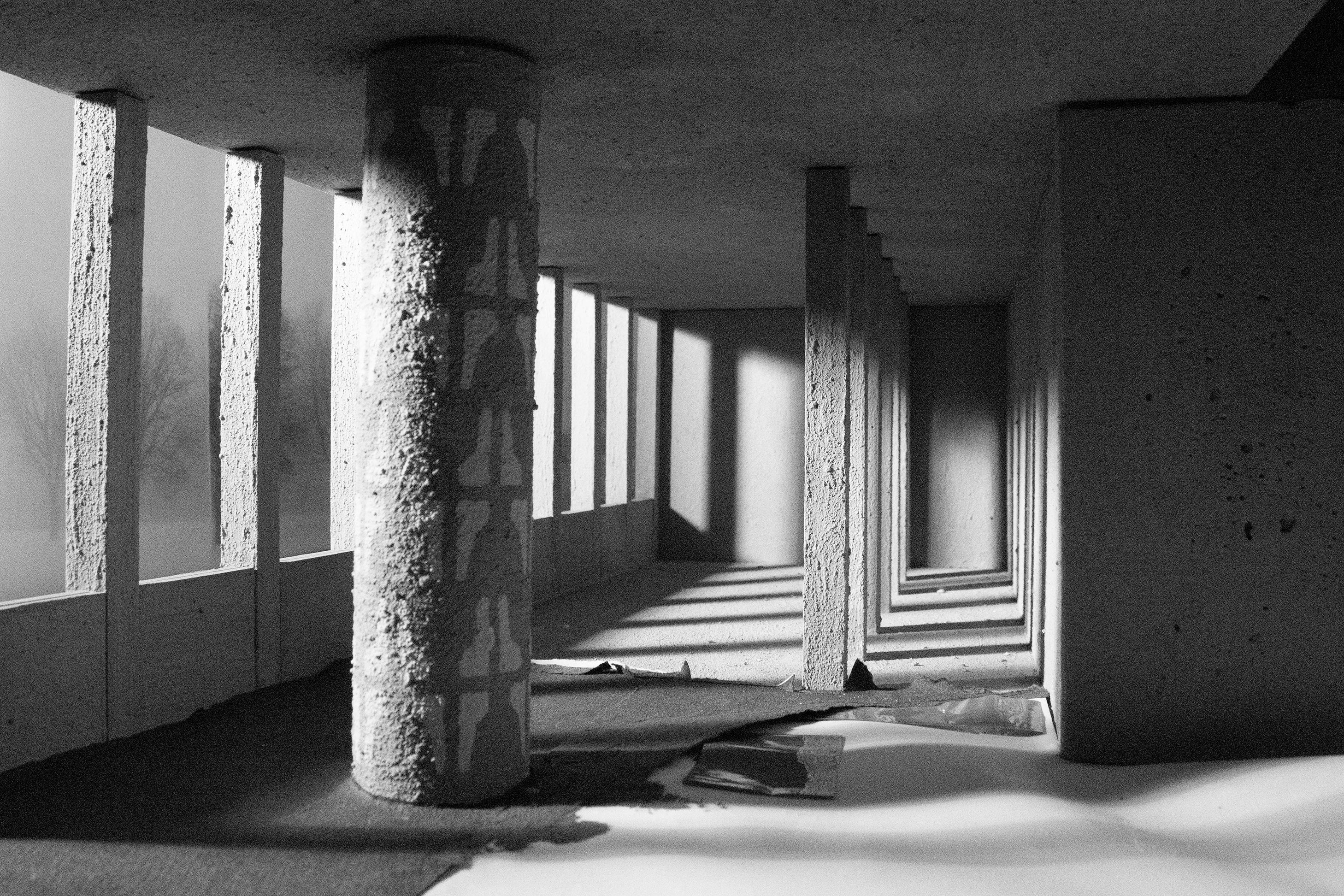
This means that the building is now completely open, and works more as a pice landscape as it becomes a part of the outside environment.
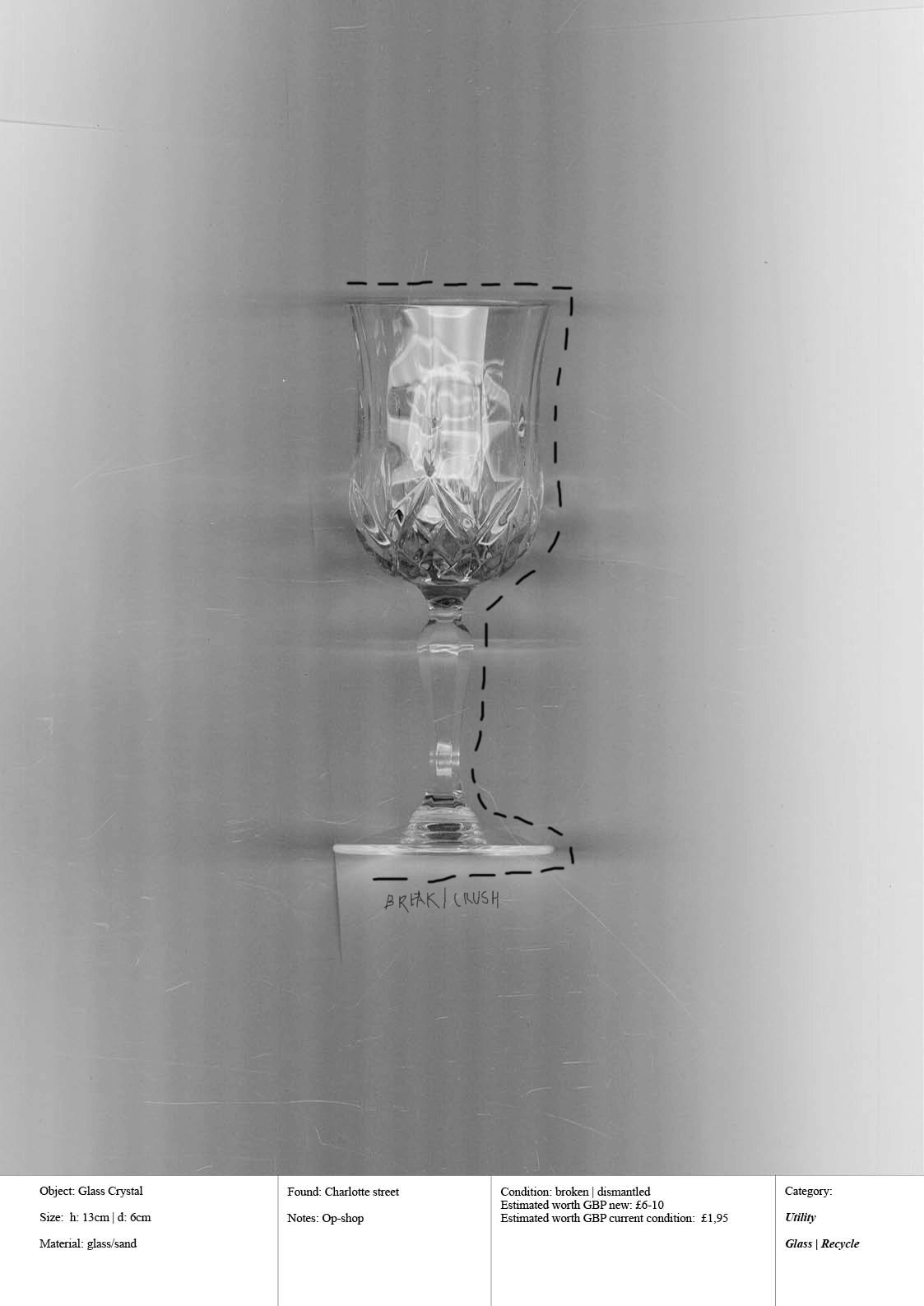
Materia study of base materiality. Experiments derives from a study of the art movement Mono-ha.
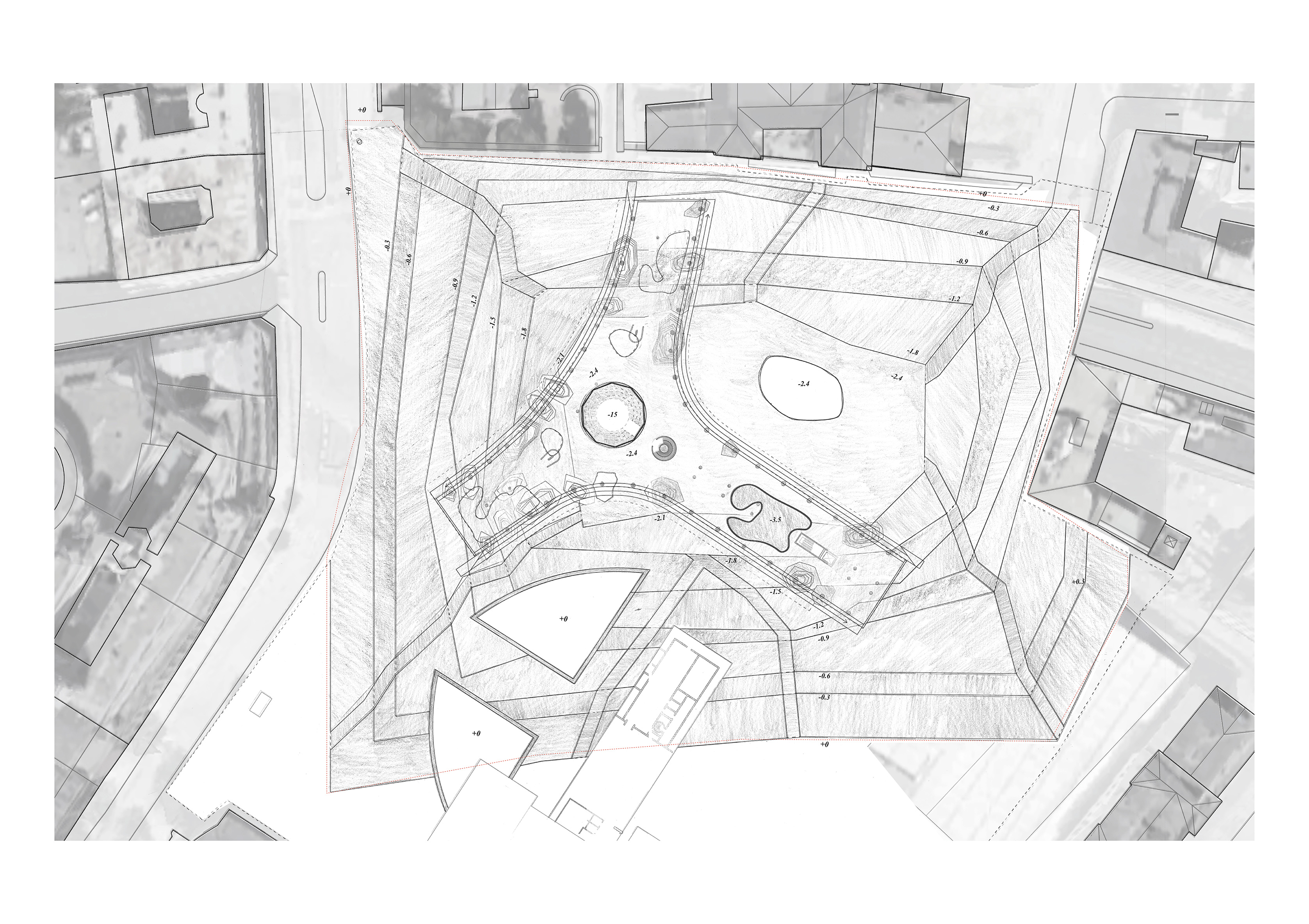
The new public square is cut down in a quarry like manner, portraying geological imperfections and including multiple elevations.