Diploma 1
Nothing is lost, nothing is created, everything is transformed
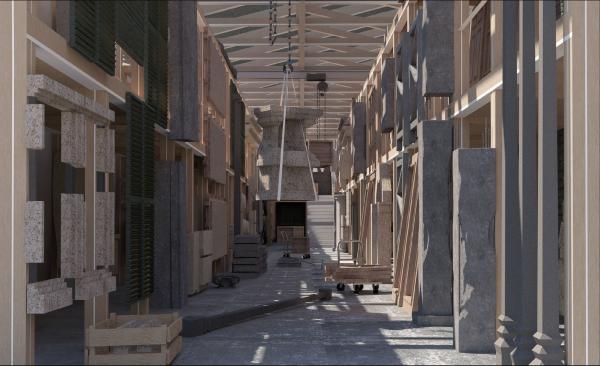
‘One day something appeared in the studio which looked like a cross between a cylinder or wooden barrel and a table-high stump with the bark run wild. It had evolved from a chaotic heap of various materials: wood, cardboard, scraps of iron, broken furniture, and picture frames. Soon, however, the object lost all relationship to anything made by man or nature. Kurt called it a column.’ – Kate Steinitz describes the development of the Merzbau at Kurt Schwitters’ studio, Kurt Schwitters: A Portrait From Life, 1968
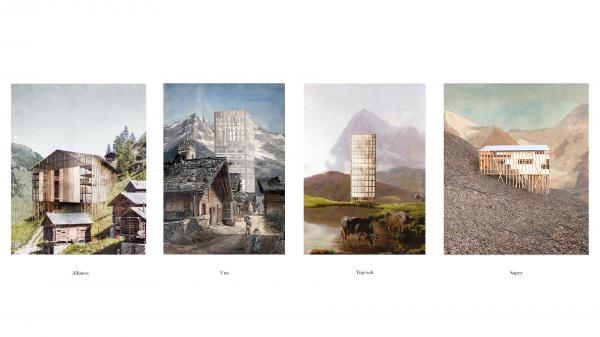
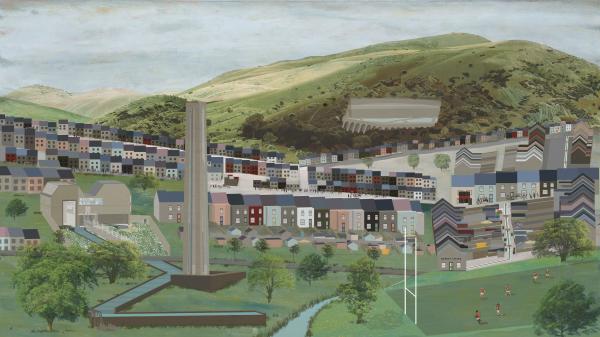
At the end of the 18th century, French chemist Antoine Lavoisier coined the law of conservation: that mass can neither be created nor destroyed, rather it is constantly re-organised and transformed within space. We propose that this principle applies equally to the world of creative ideas. Artistic endeavour, including architecture, is a process of transformation and evolution. One could even argue that the complete set of architectural ideas, forms and narratives already exist (nothing is lost) – our job is to understand and adapt this inheritance. This implies that excessive emphasis on the cult of the ‘new’ is rarely productive; rather, we should focus entirely on adaptation. In the most pragmatic sense we can think about adaptation as applied to a particular building or a building type. But it can also be considered in the sense of cultural evolution – the idea that architecture can be developed through transformation from other art forms, or might itself morph into something else – in the way a book might be adapted into a movie.
It is against this background that we ask the open question: how might our architectural response to the urgent economic and environmental pressures of today be informed by processes of transformation. Our ‘muse’ as we address this question will be the German artist Kurt Schwitters and his merz – a process of collage and adaptation of found objects. His Merzbau, an architectural exploration that started in 1919 and continued for many decades, was Schwitters’ emotional response to the political tensions of the time, most obviously the rise of fascism. We will seek out similar compulsive processes that address the crises of today.