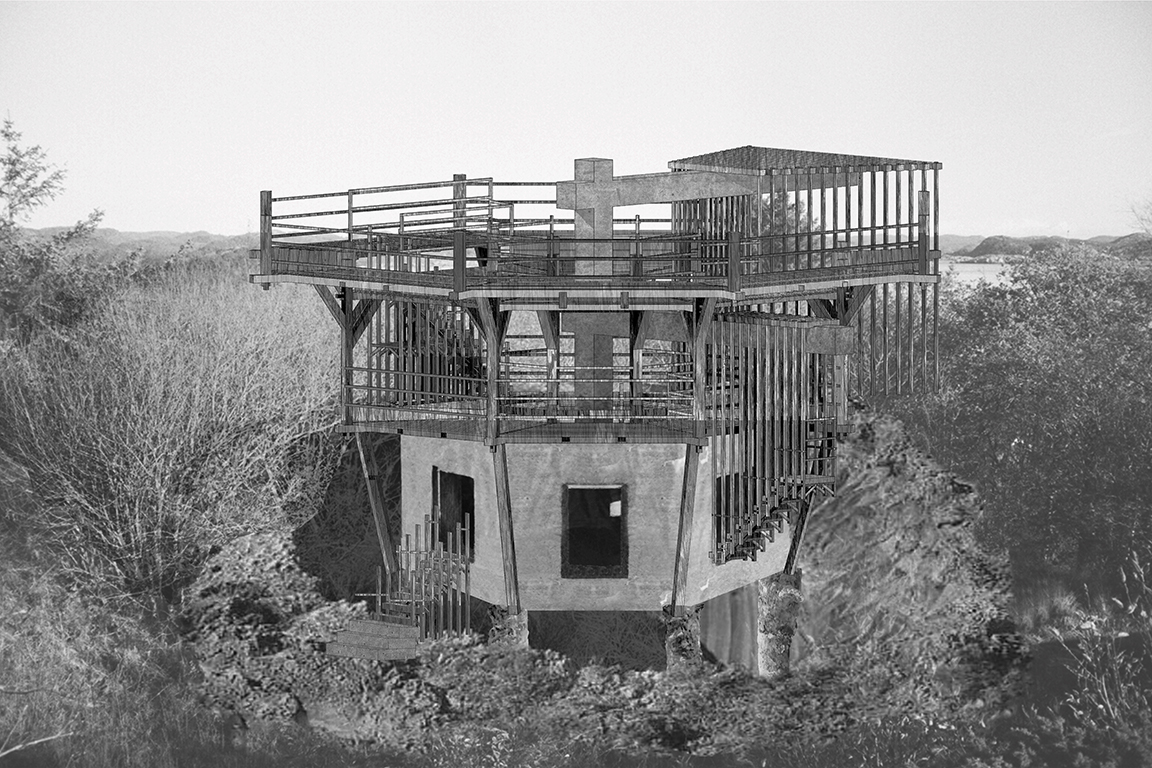
Landscape of Archeology
The project proposes a set of interventions on German Bunkers thats protects the heritage and exposes the historical context of the site.
All along the Norwegian Coast, resides silently remnants of European warfare built by the Nazi occupation during 1940-44. In contrast to Norwegian architecture of timber building traditions, and without qualities of flexibility and adaptability, these bunkers don't only sit on the ground, but become part of the ground; and thus, they become part of the landscape.
In the southern coast of Norway, there are a set of bunkers that have been built over burial mounds dating from the Iron Age. Alike the bunkers, the burial mounds have been built within specific locations in relations to the sea.
My project intends to start a dialog with these two time frame historic periods; to carefully reveal its past and educate visitors. The new construction will enable visitors to relate fragments of the past to an updated sense of historical narrative. It will reorientate the network of bunkers, by its connected field of vision, but not of war anymore. - But of place. Visitors will circulate and experience the different layers of memory, addressing the site as a time condense.
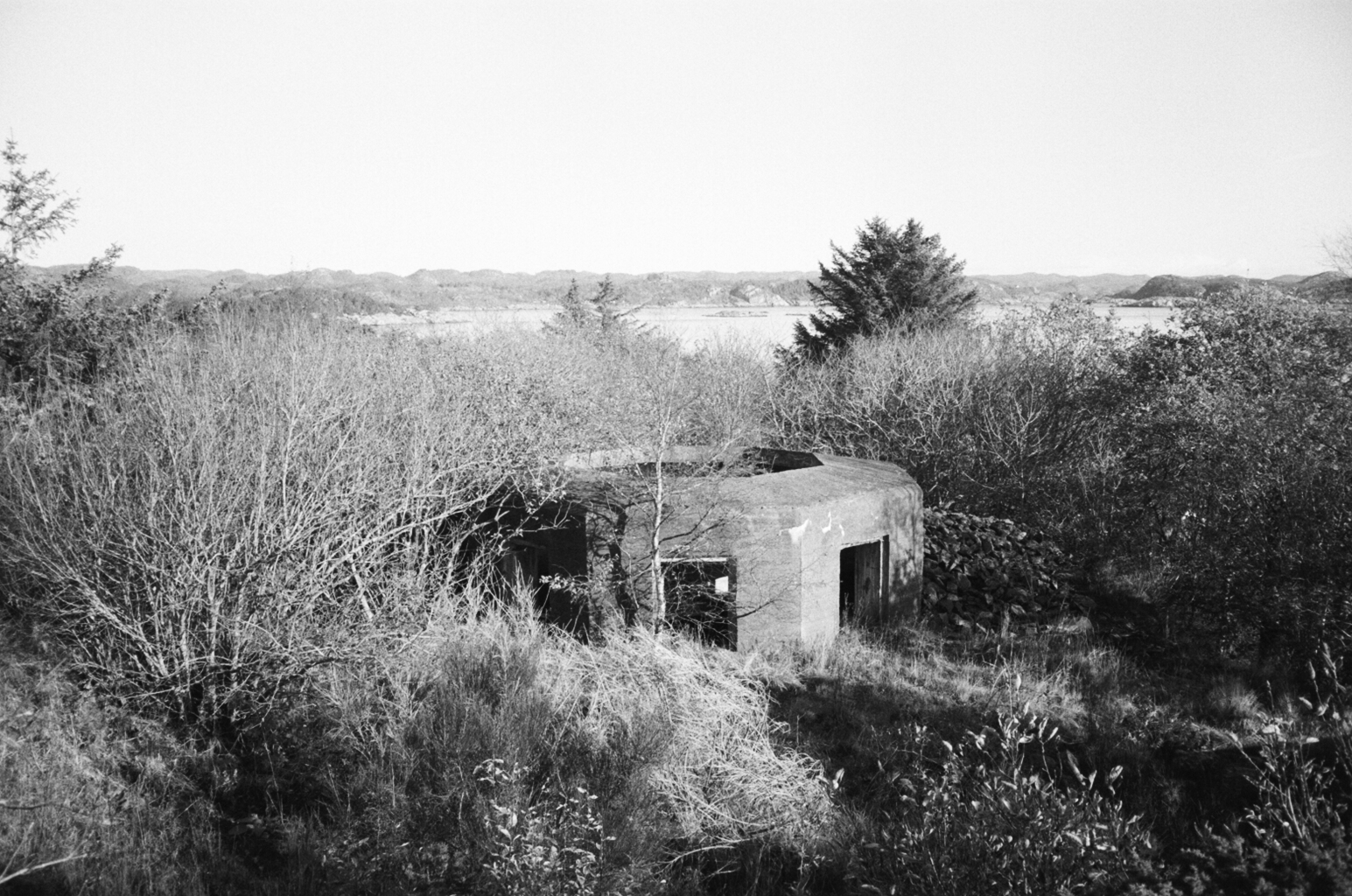
Warfare remnants built by the Nazi occupation during 1940-44 resides silently all along the Norwegian coast. Due to their historical value, Atlantic Wall artefacts, had become heritage ruins in decay.
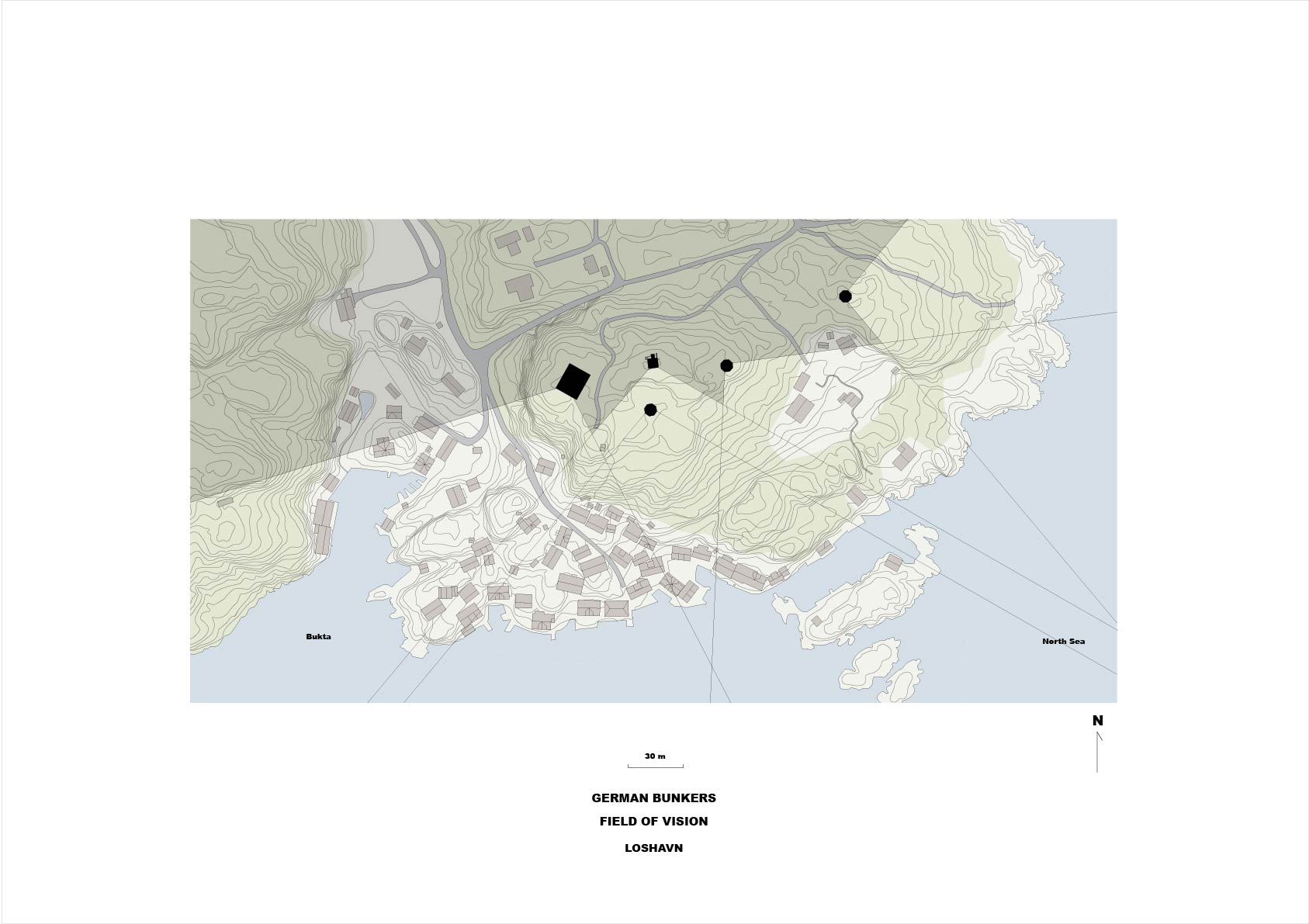
Bunkers located in Loshavn peninsula, Norwegian southern coast, had been built within specific locations in the topography. In conjunction, they had full vision and firing range towards the sea.
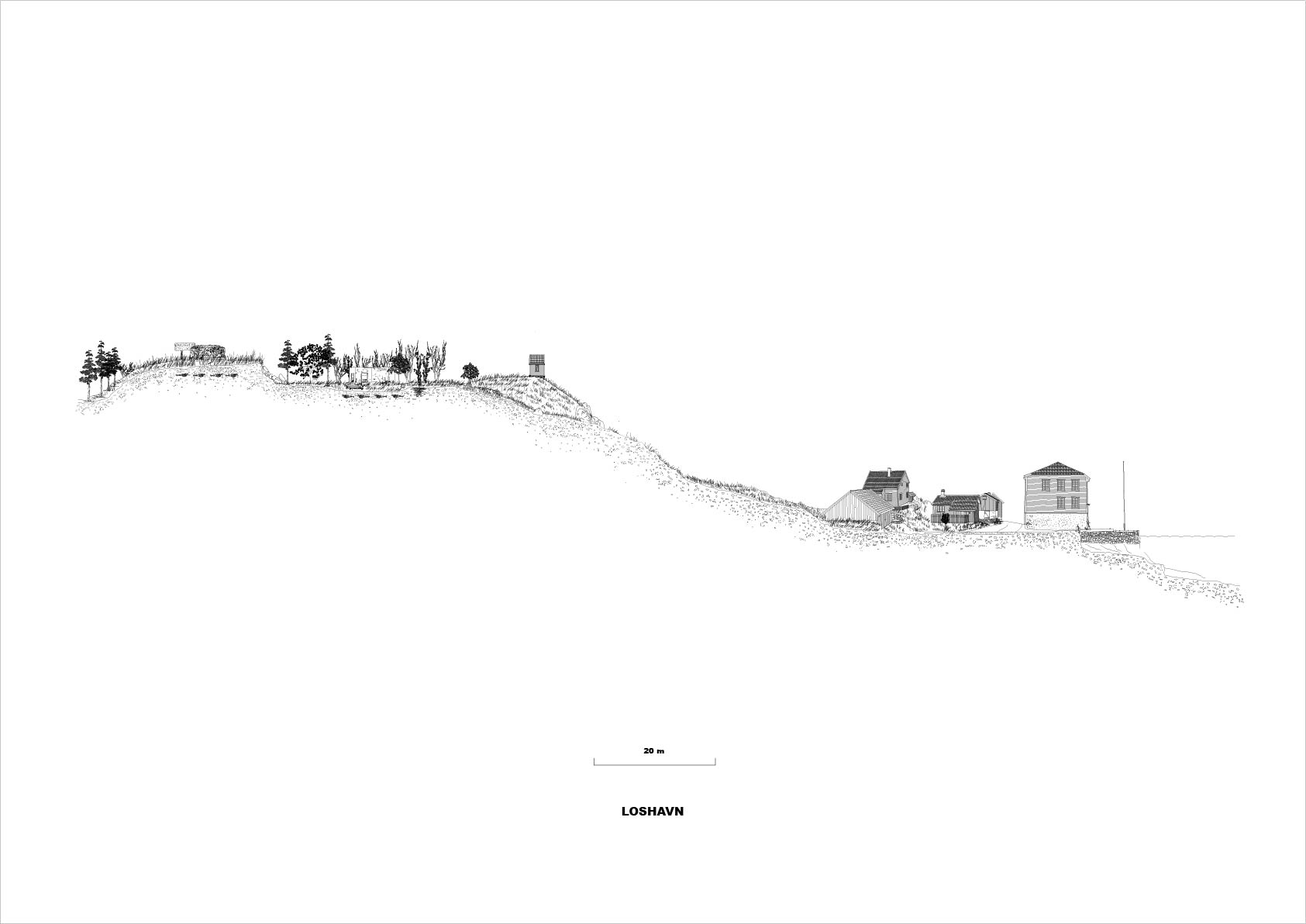
The set of bunkers in Loshavn had been built over burial mounds dating from the Iron Age.
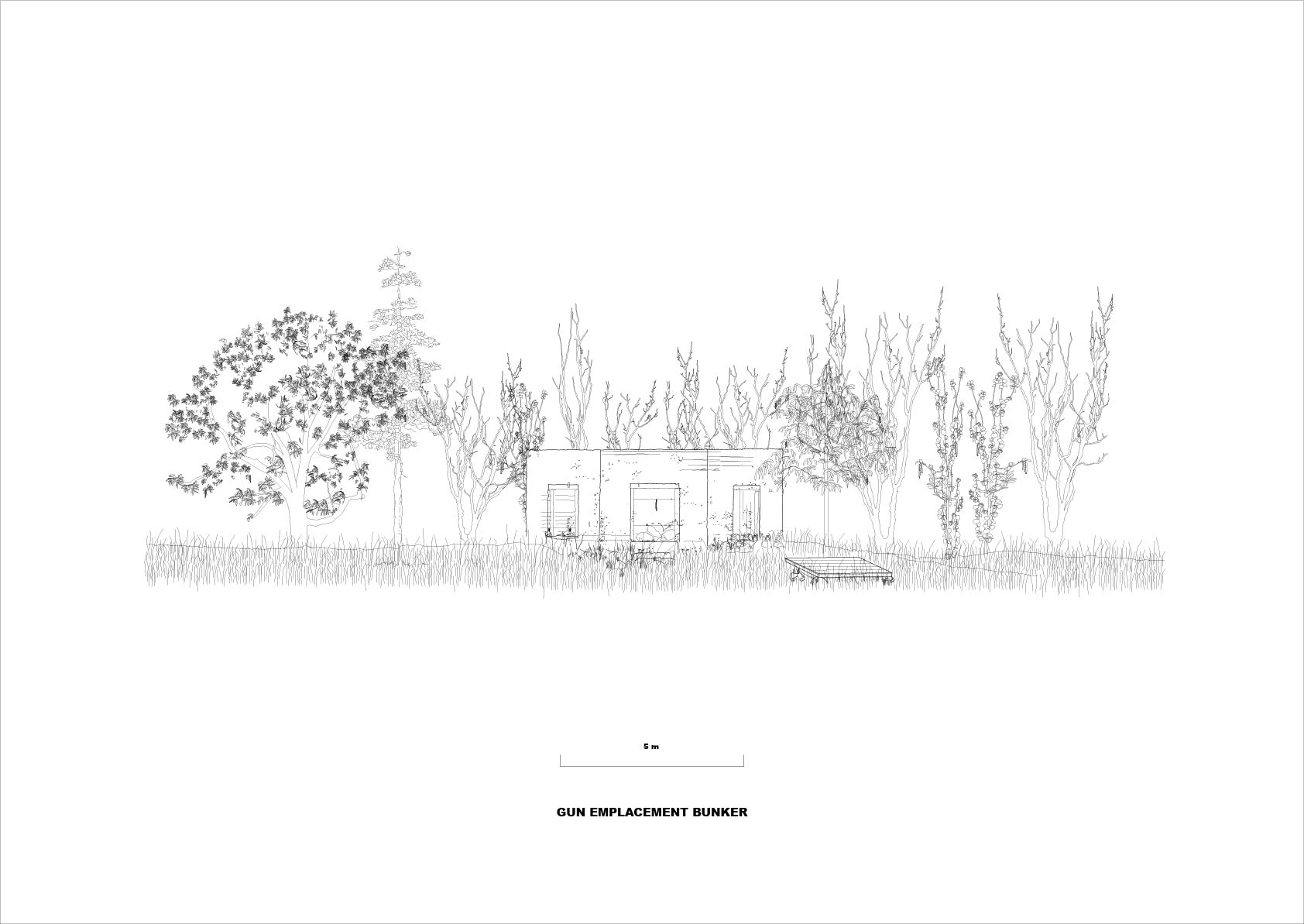
This casemate was a gun emplacement bunker.
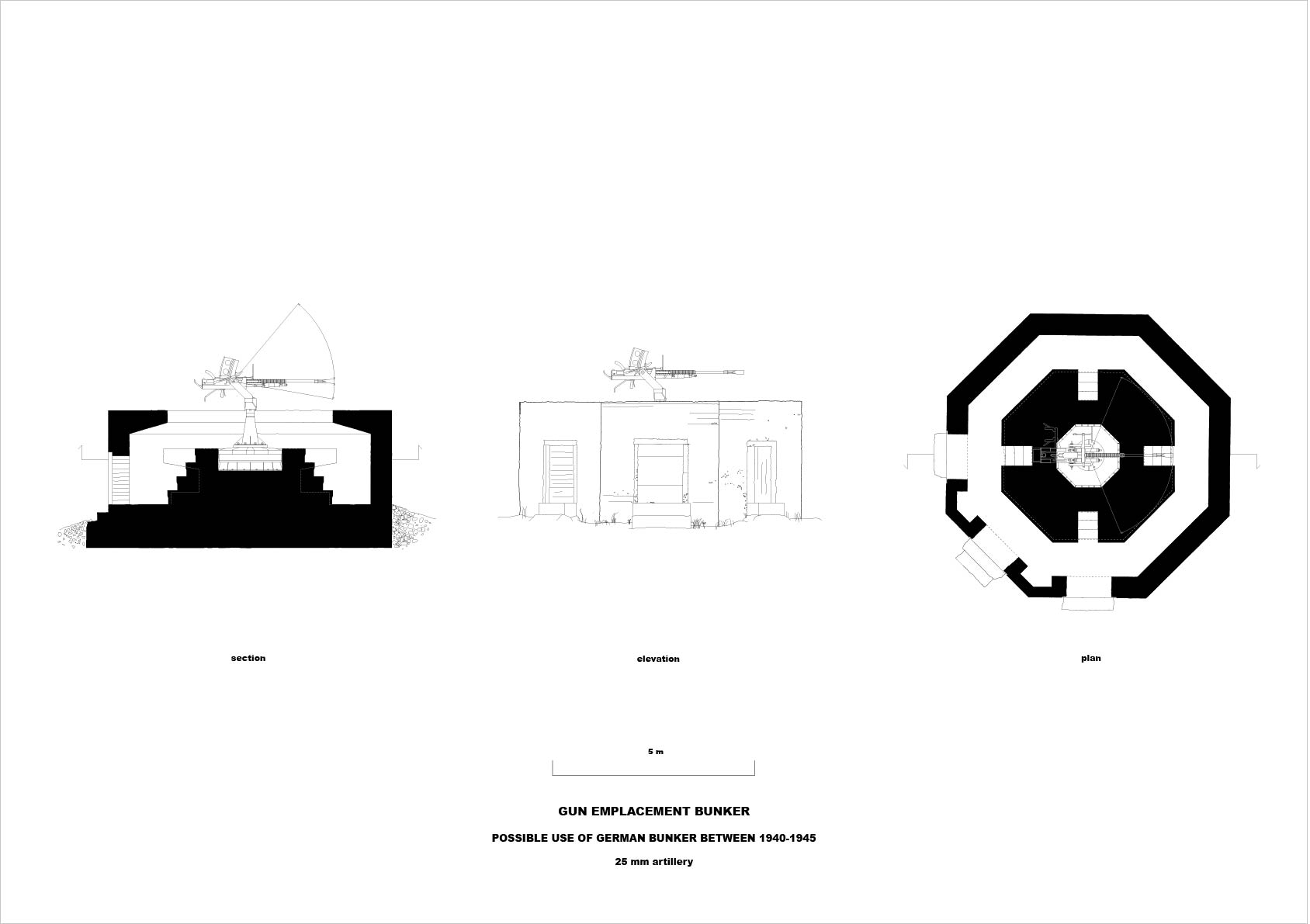
Possible use of a 25 mm gun, that sat in the centre of the bunker. With a metal base that attached it to the monolith and allowed for rotary motion and full field of vision and action.
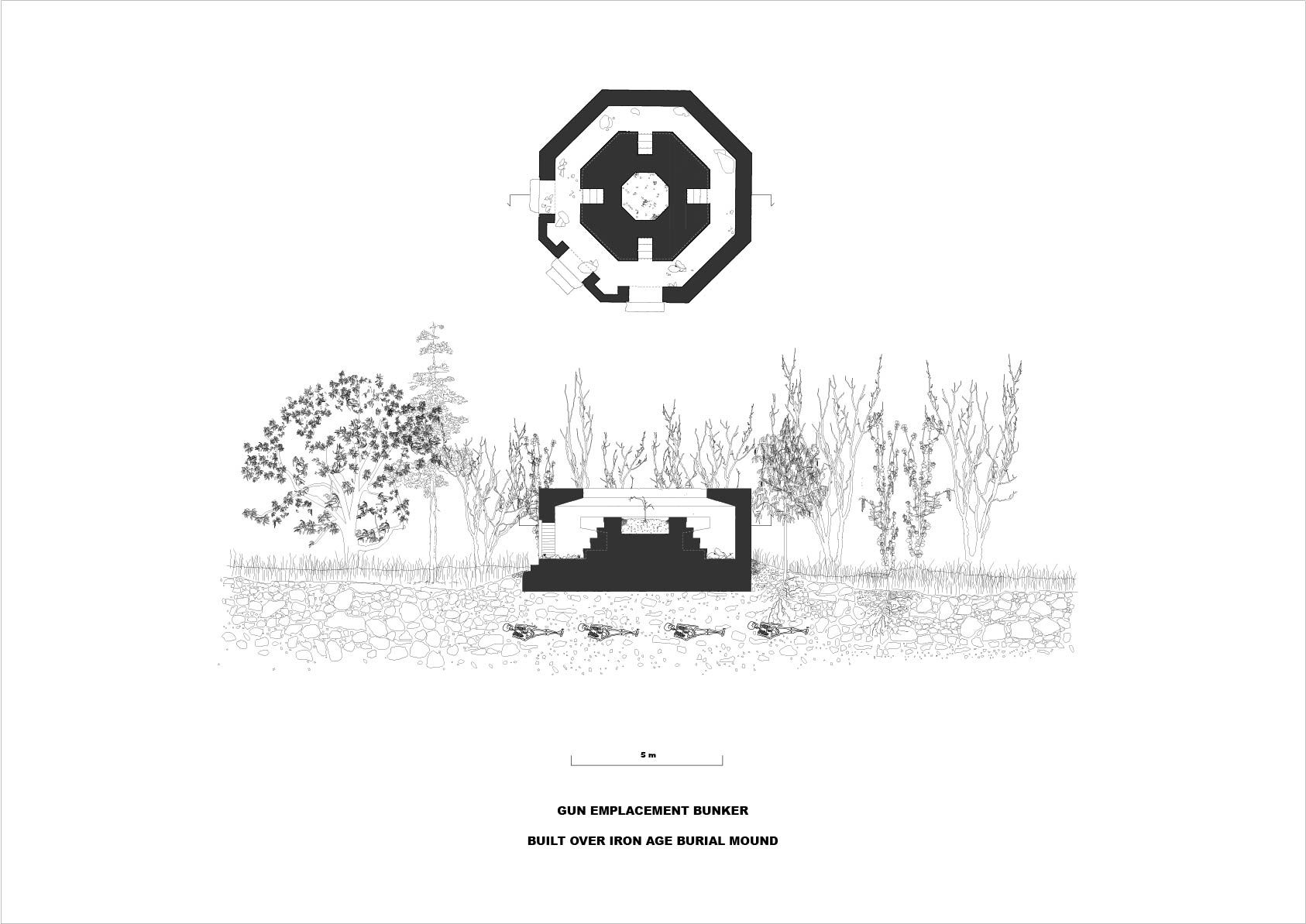
Local archeologists have confirmed that the area has plenty of burial mounds. Some of the largest ones are still intact and have not been researched by the time of the German invasion in 1940.
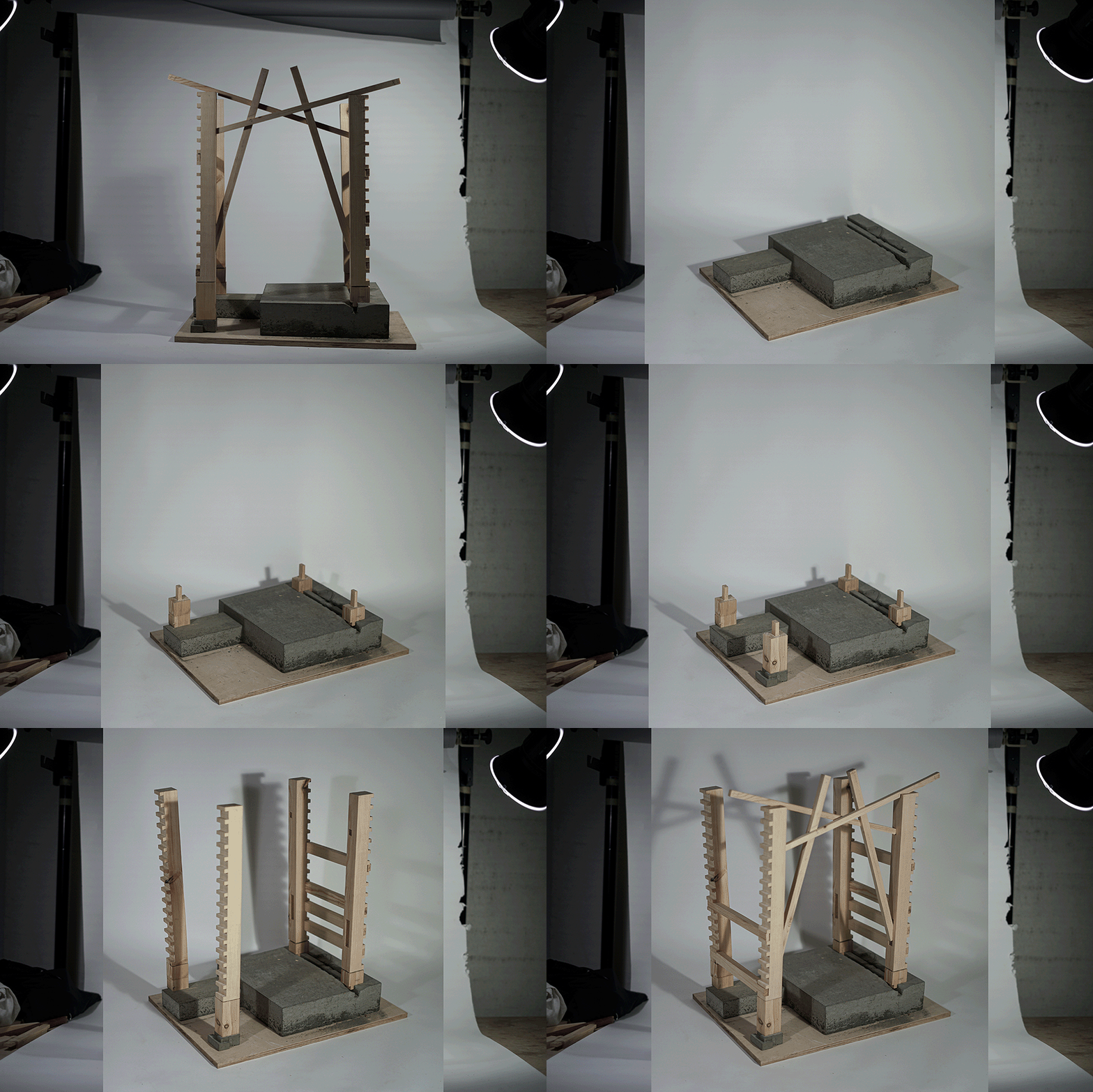
Concept of addition of flexible structures to start a dialog with the past. An architecture that aims to be respectful to the pre-existence by its intentions of reversibility.
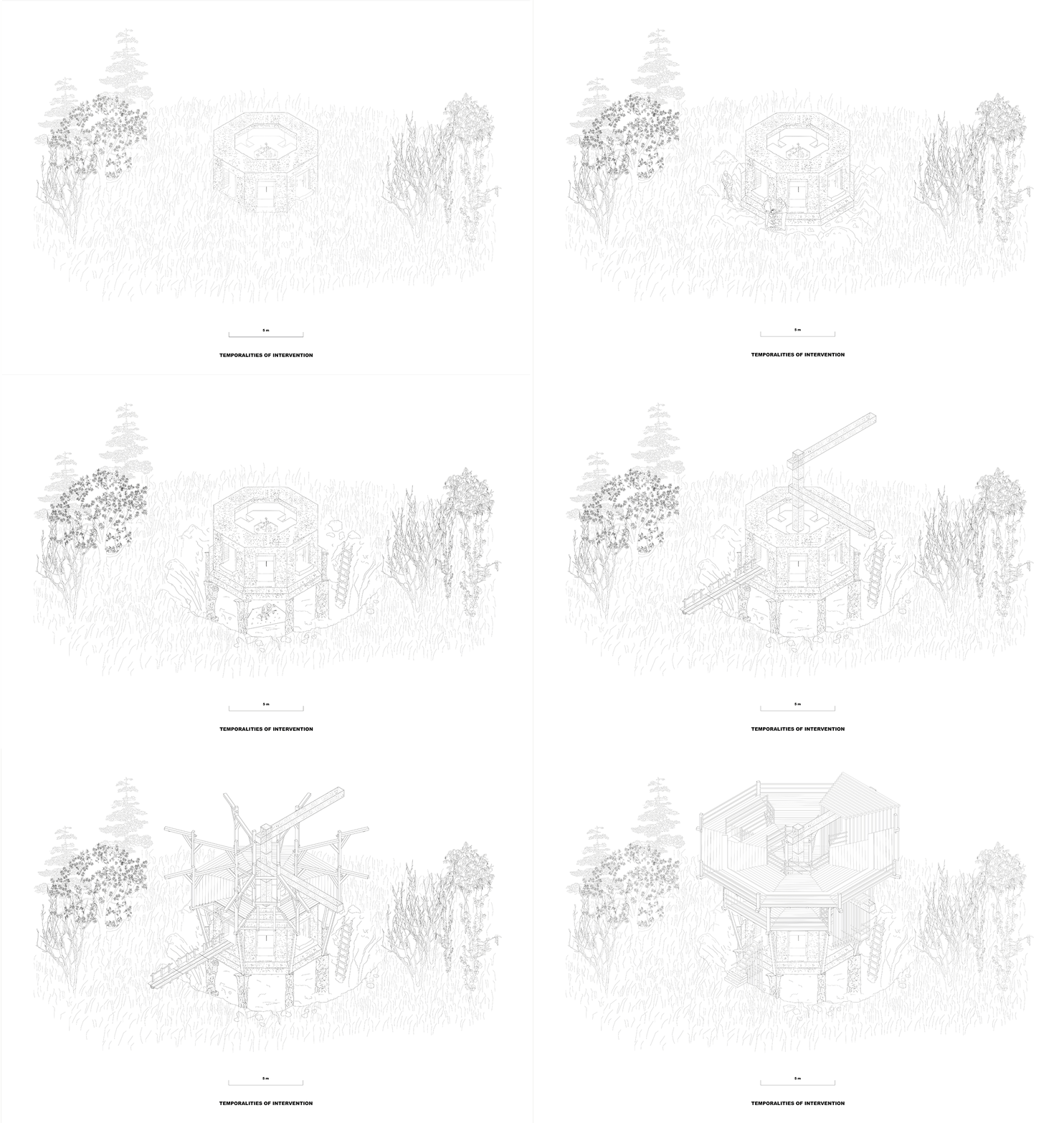
Interventions: digging, casting, archeological research, collecting and cutting local wood, assembling with a technology of joineries onto the concrete structures, exhibiting excavations and site.
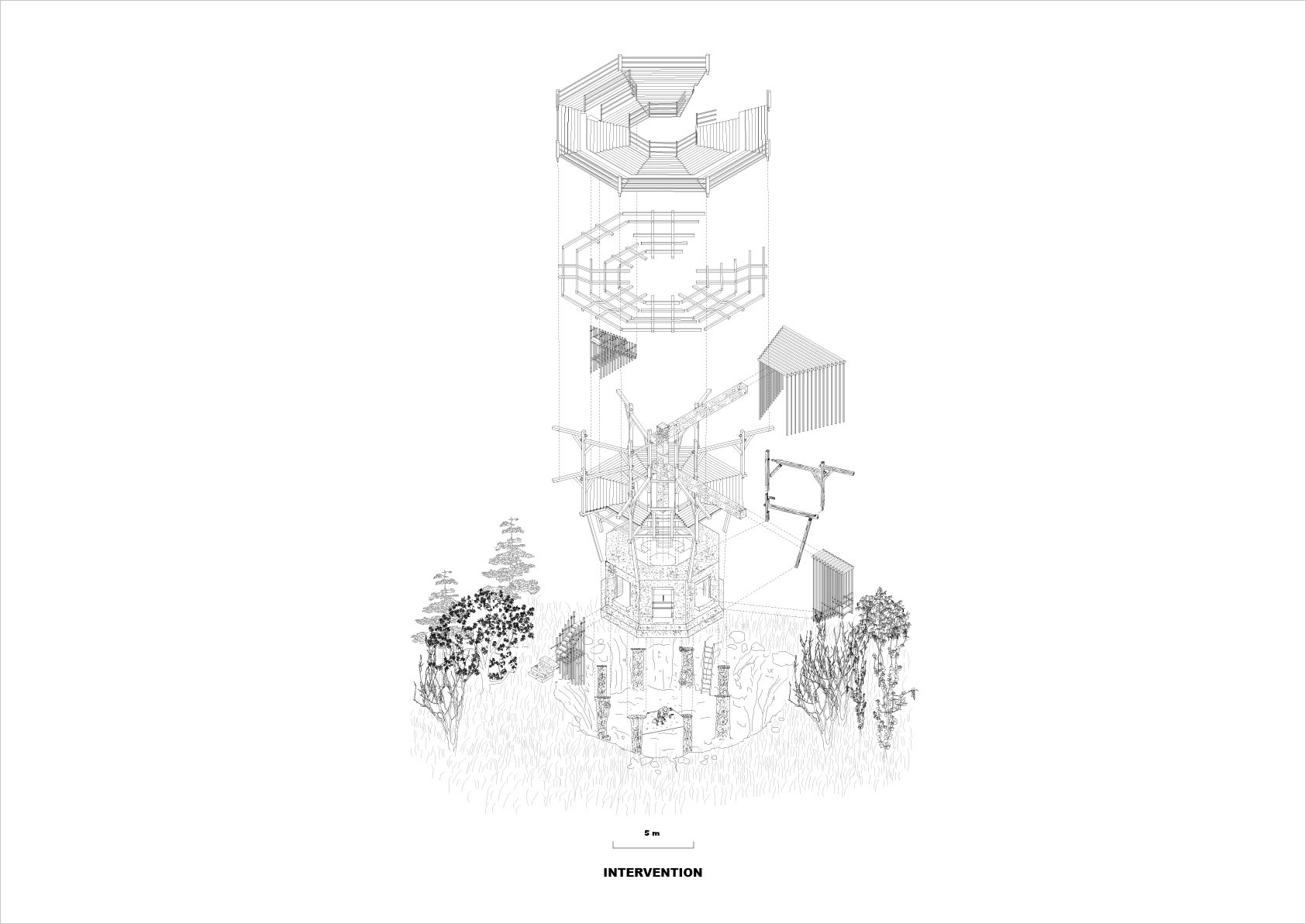
Layers of interventions.