Towards Passivity (Thermodynamic Transformations of the Urban Fabrics)
Erika Stadnik (Year: 4)
This project negotiates the elimination of the utterly and inherently unnecessary energy expenses – space heating and cooling – making up the 9.4% of global CO2 emissions. Passivity of the built environment is instrumental in the pacification of the climate, while the thermodynamic and aerodynamic fluxes are tightly interwoven within the build-up of cities. The human health is being threatened, through the air pollution and other dangerous air-inhabiting entities, such as viruses. The modernist model of transparency and porosity is no longer viable to the extent of the 20th century visions, through the growing disparity between the needs of inhabitation and the exterior. The human activity is threatening the ecosystem, while the environment is starting to threaten back. Passivhaus standard, although imperfect, is the state of the art in ultra-low energy consumption. It also tackles the increasing issue of the air safety through its airtightness, filtering the dangerous particles through the mechanical ventilation heat recovery system. This barrier may act as the peaceful retraction into a safe mode of operation, while ensuring health for all parties within the hostility of the Anthropocene. This reform looks at systems of scaling up of such condition, through the technological intervention into the housing production.
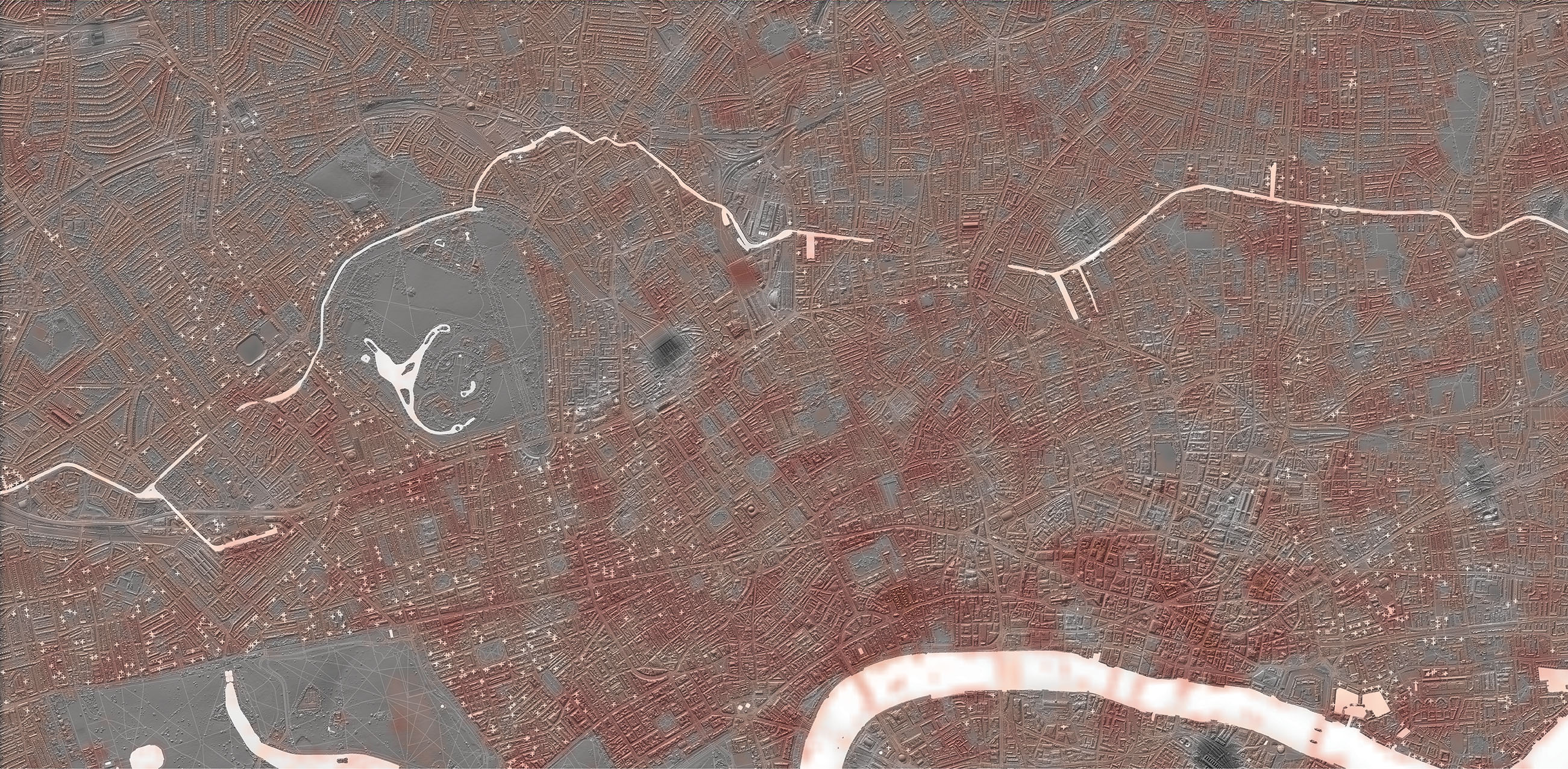
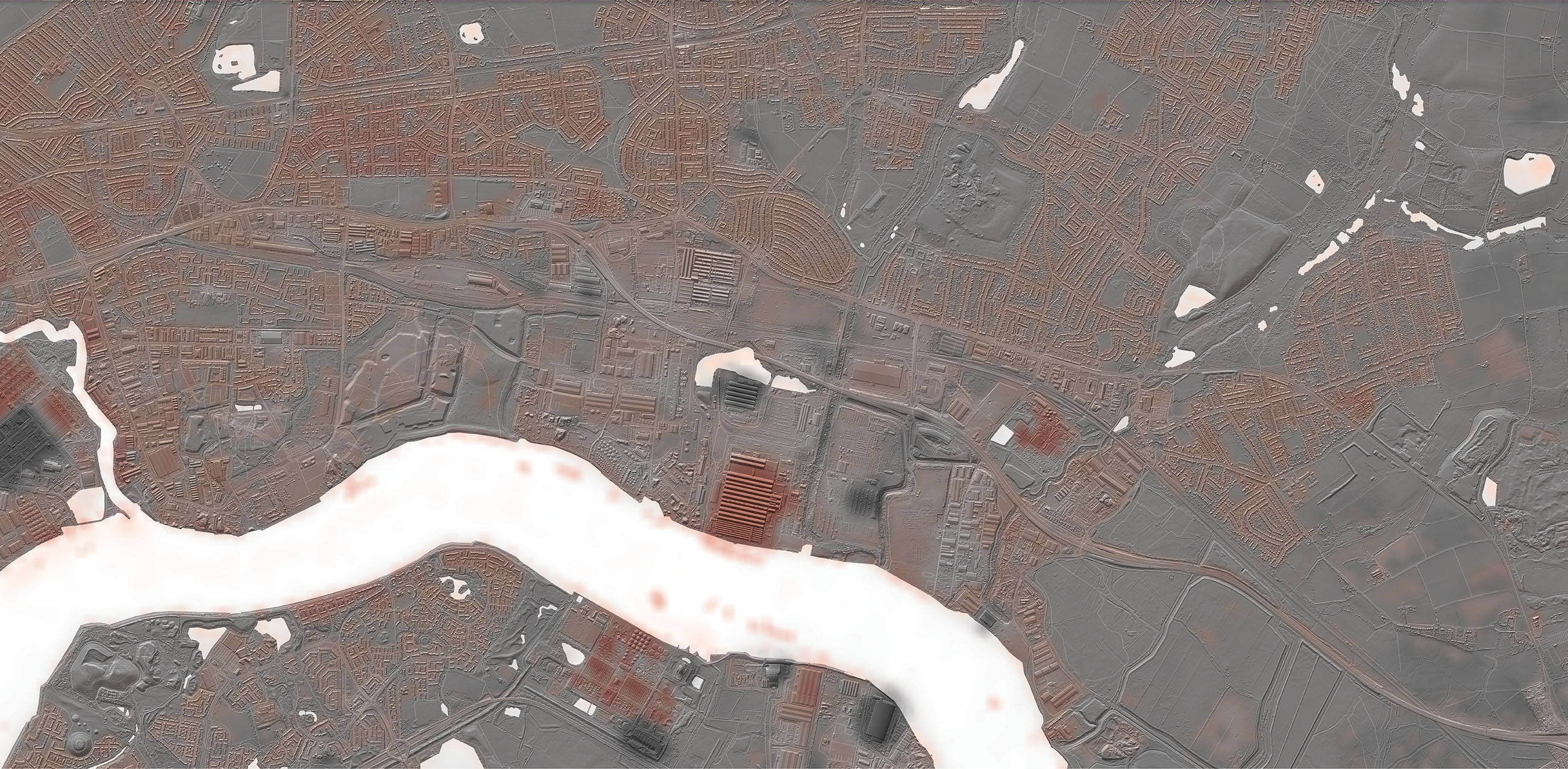
The sample was taken from the Central-East London, demonstrating the Anthropogenic heat flux of the city on the 25th of December 2019, a cold and non-windy winter day.
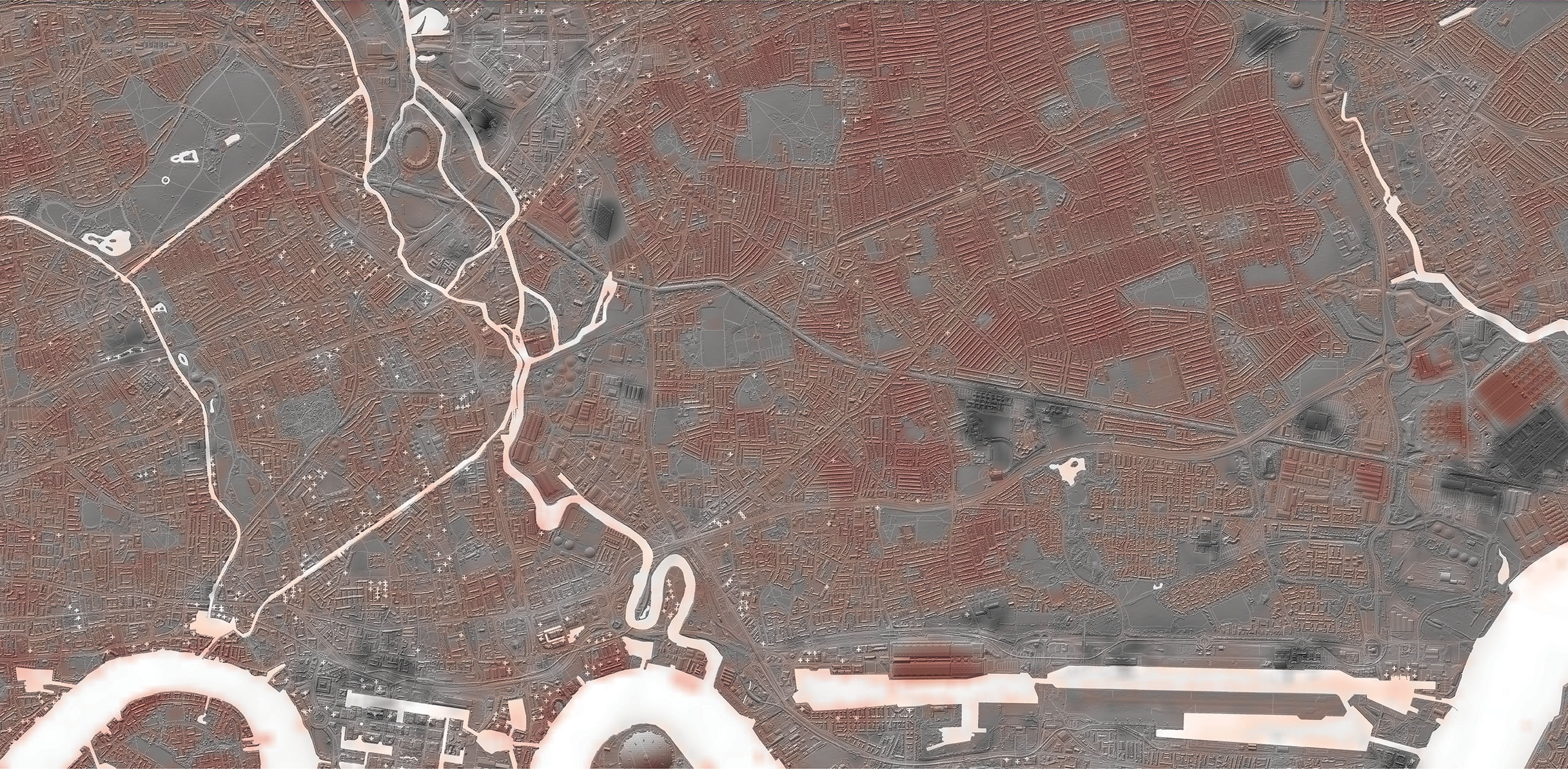
Produced with the data collected by the Landsat 8 Satellite and the LiDAR scans, the temperatures range from 2°C (dark grey) to 10°C (red), primarily visualising the heat loss of buildings.