The project attempts to recover London by switching to a different appreciation of time, as rapid redevelopment threatens to leave behind slow spaces. This is the result of our search for short-sighted financial returns, there is little time for long term commitments: from education and care to the maturing of a communal garden.
When we have a ‘slower’ appreciation of time, we can appreciate the built environment differently. As material ages, it transforms from a building block to the artwork of the city. The buildup of marks, wear and colour changes are manifestations of time and create an abstract expression of the past.
So how can we slow down the city? The opportunity already exists in the form of bats, archaeological finds, and contamination. Crucially these not only cause a delay in construction, but they can also be used to safeguard space...
In this case, taking the contamination leftover from London’s industrial past and using the delay created by the need to remediate the soil to insert a slow program in the form of a service dedicated to recovery - replacing the ENT Hospital on Grays inn Road which is due to be redeveloped.
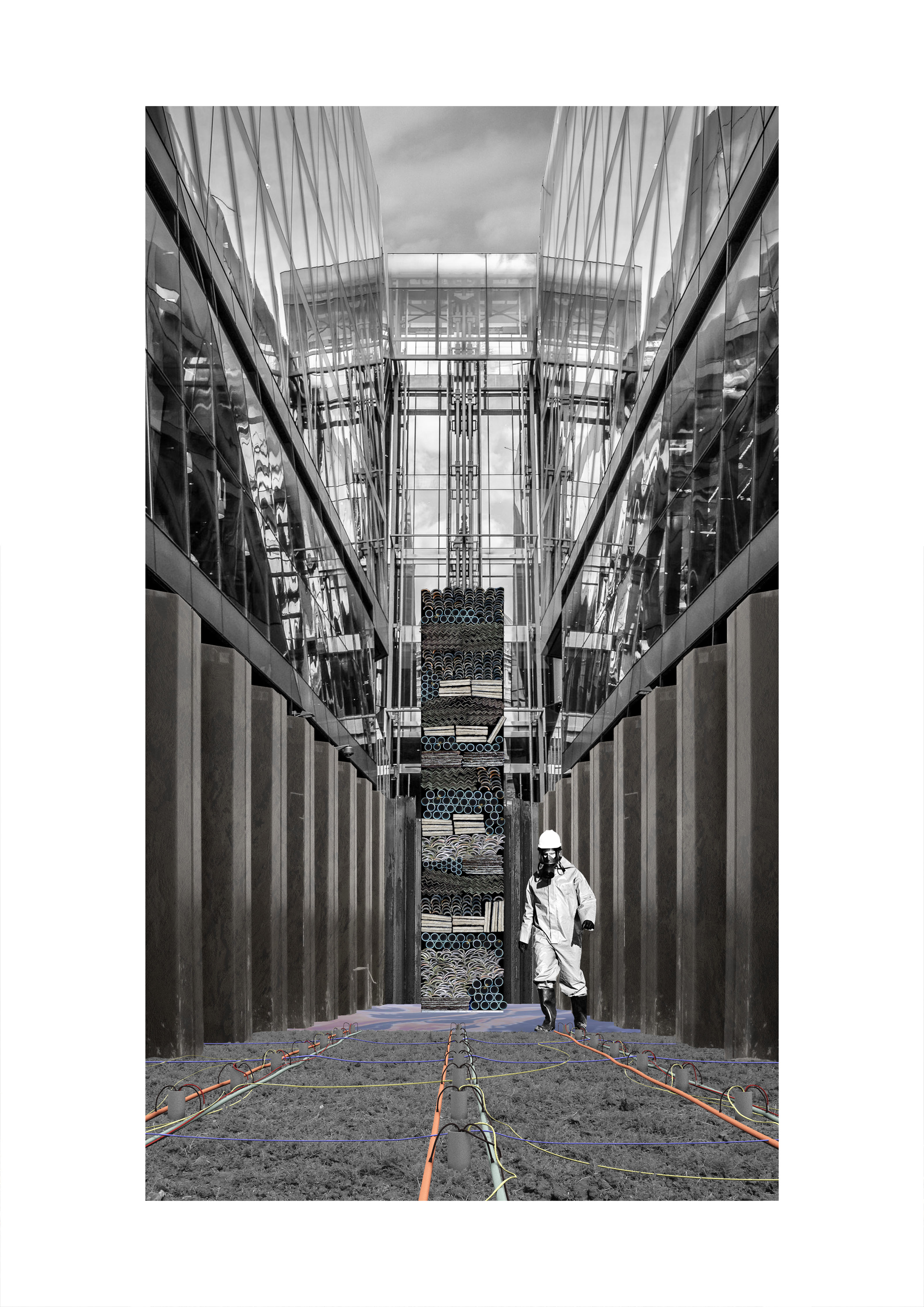
Electrokinetic remediation involves inserting a grid of electrodes which then induces a movement of water between them and draw out the toxic impurities, the contaminated water will remain on the site
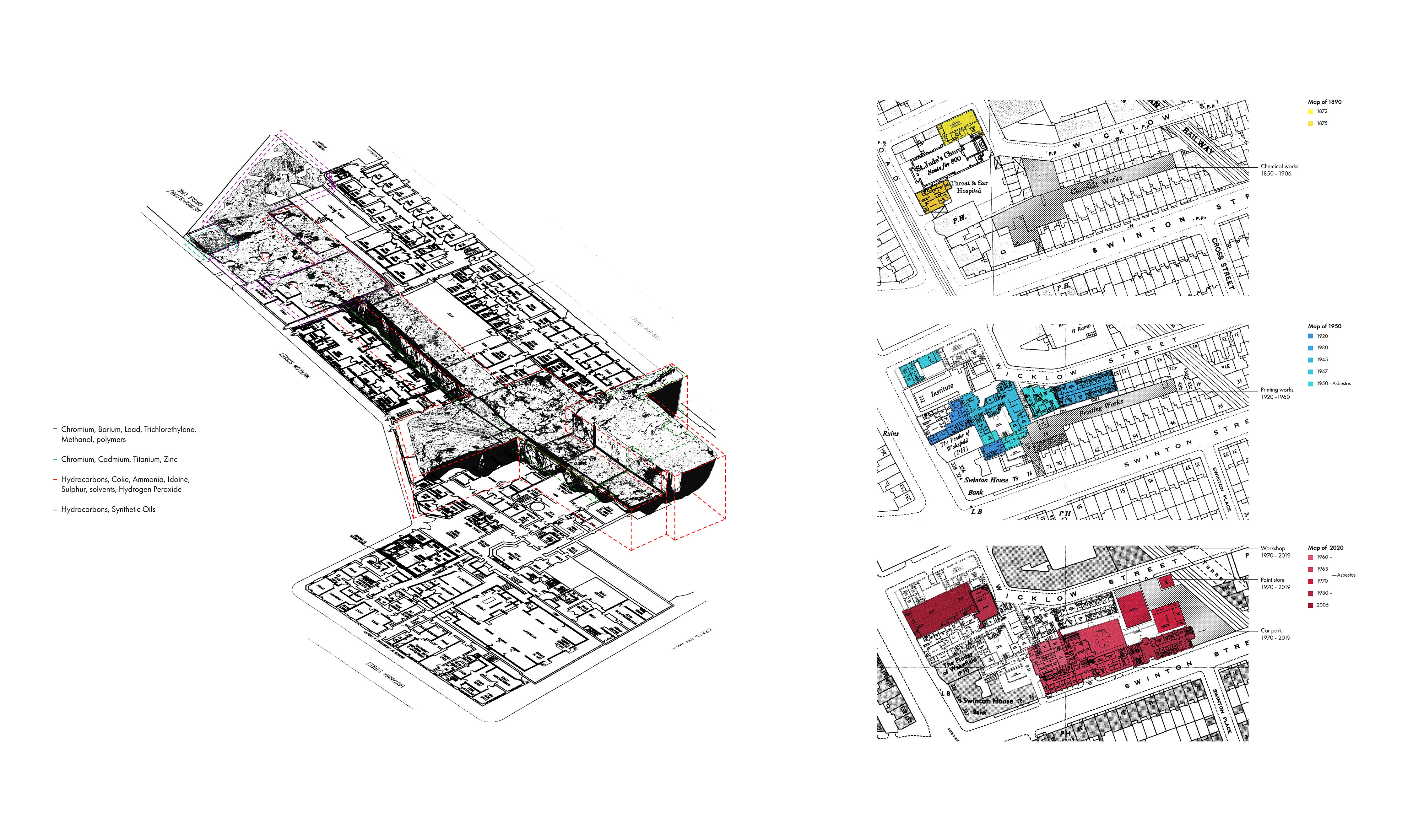
The isometric shows the volume, footprint and categories of contamination on the site created by a century of heavy industry.
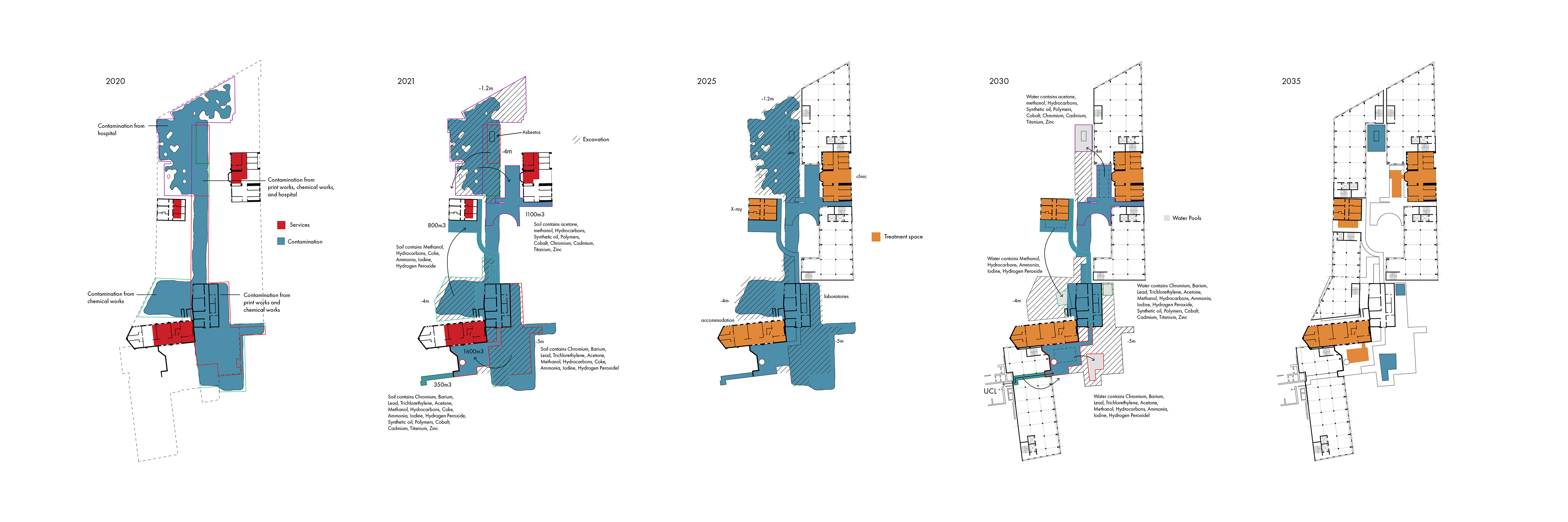
The site will be partially excavated to move the most contaminated earth closer to the existing services required for the remediation, commercial space wraps around the spaces for healthcare
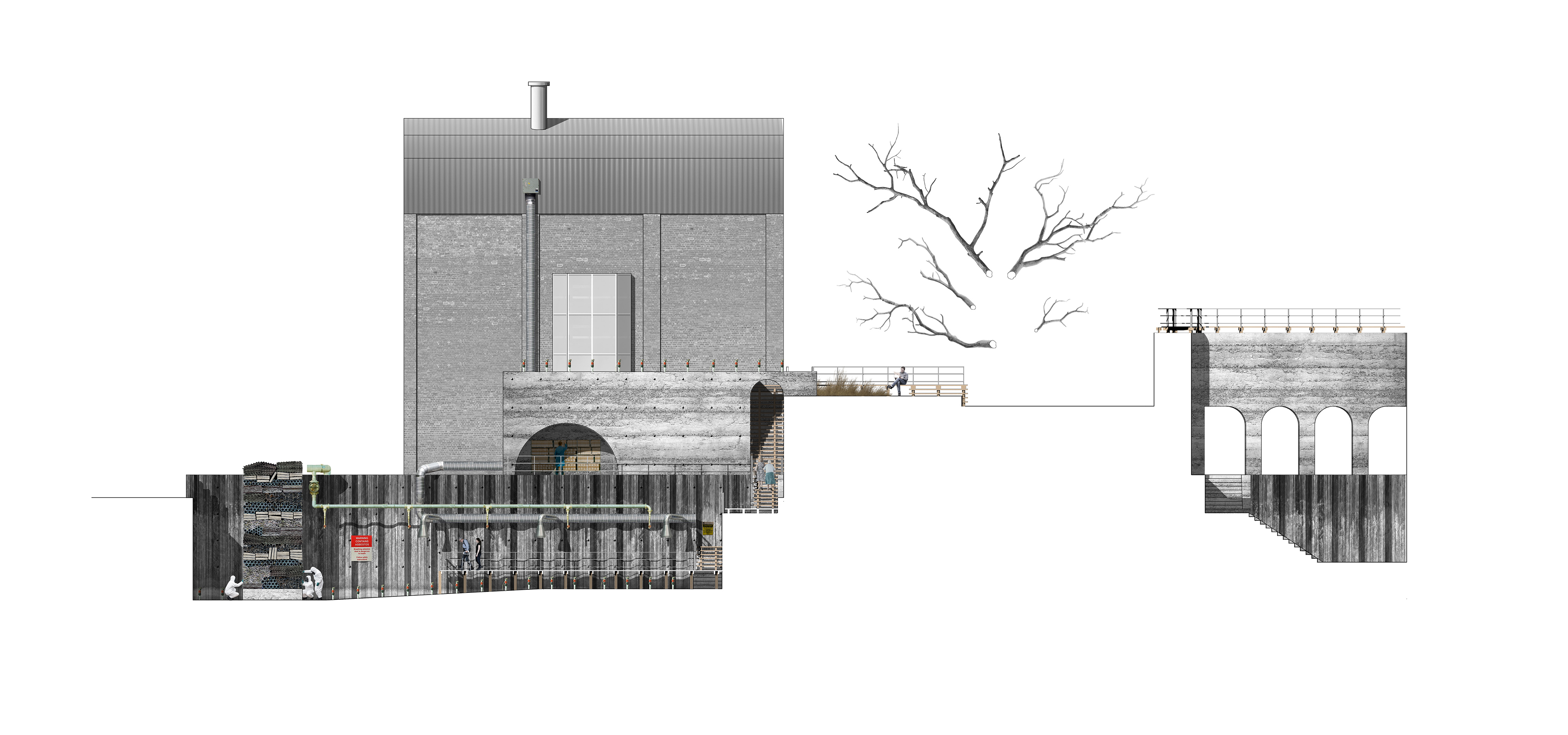
The earth is formed to create interior treatment spaces - the contamination becomes the material of the architecture. Asbestos is also collected from the demolition - it is stacked and left exposed.
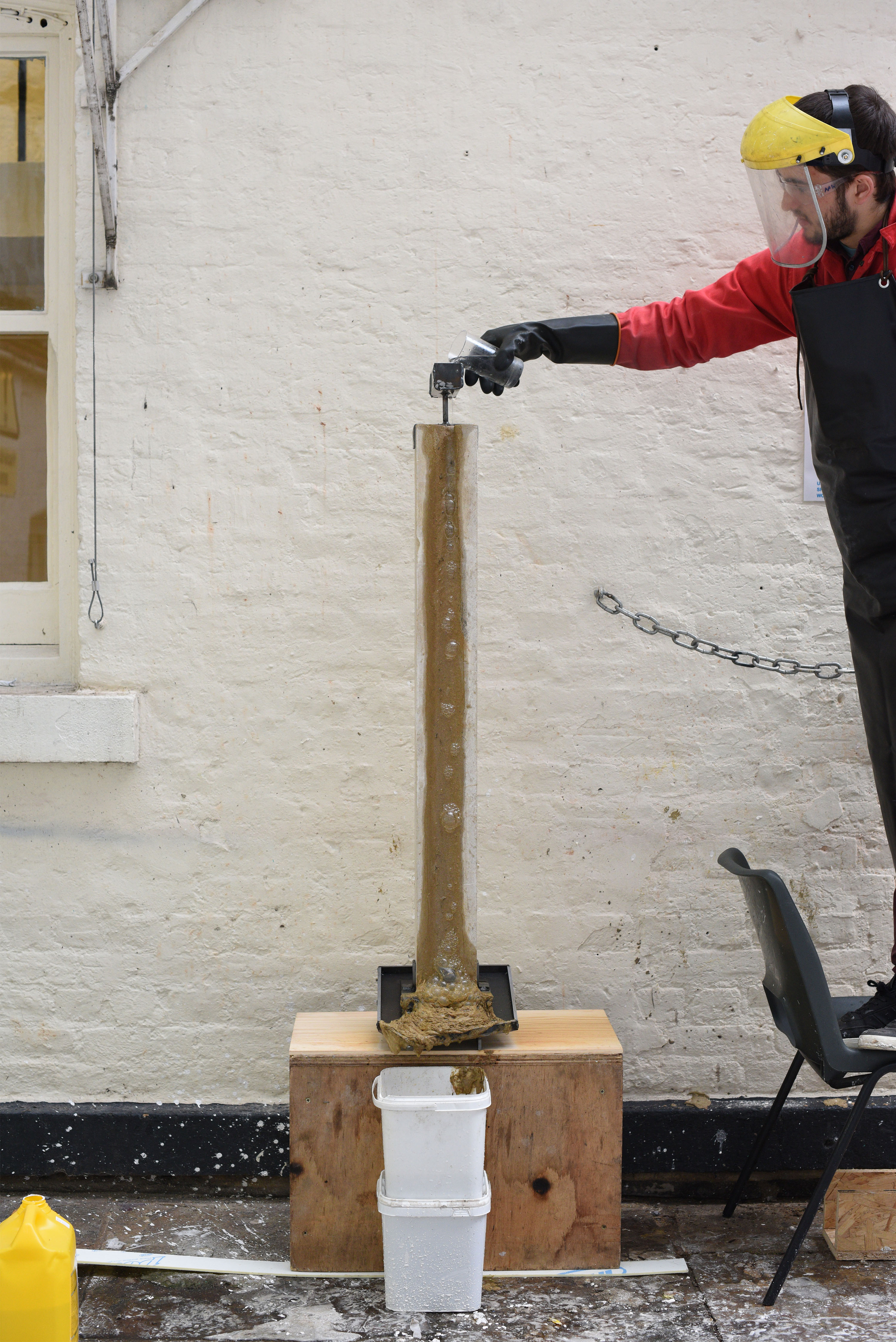
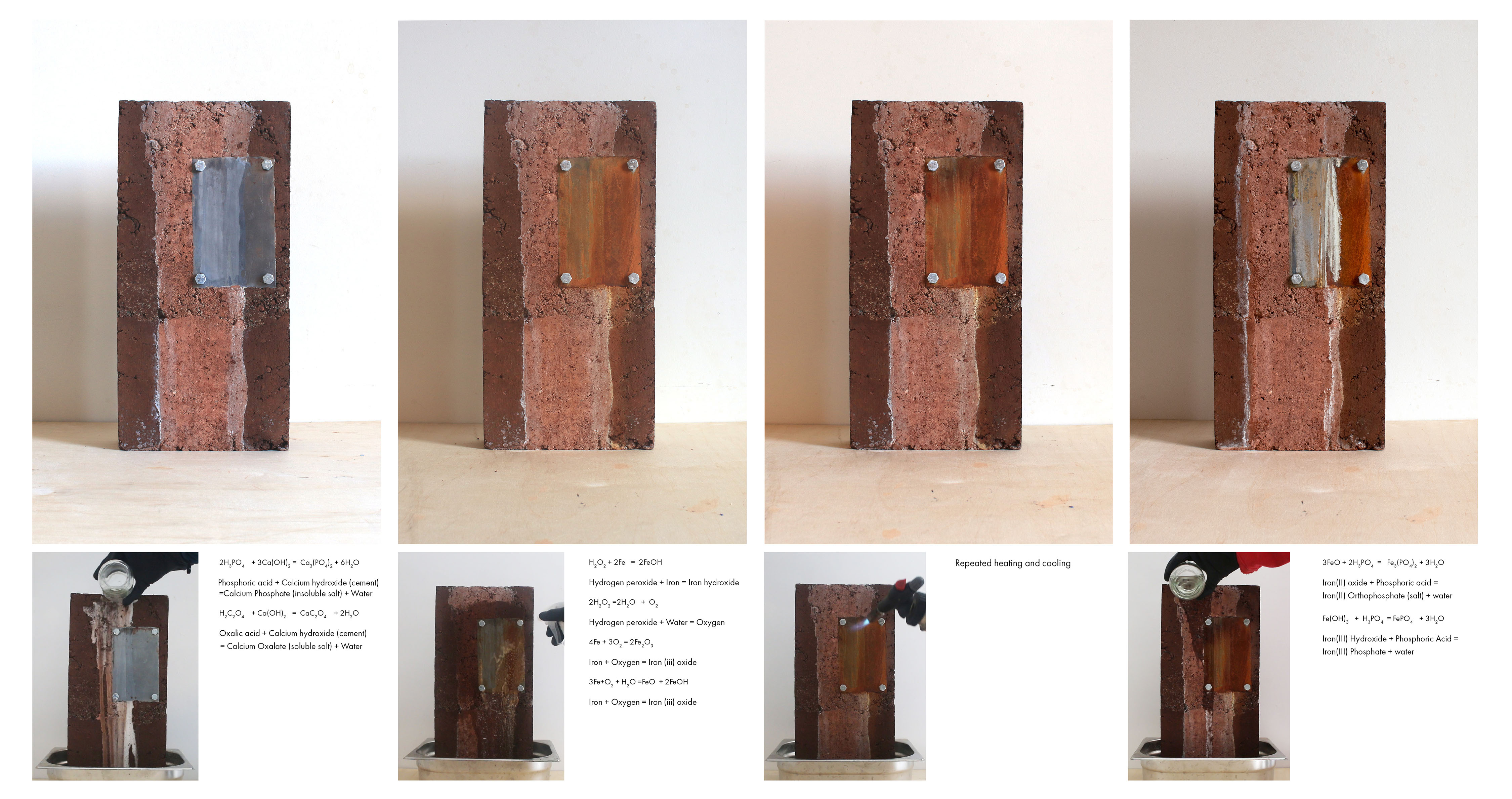
The use of highly concentrated acid allows us to experience centuries of weathering in minutes.
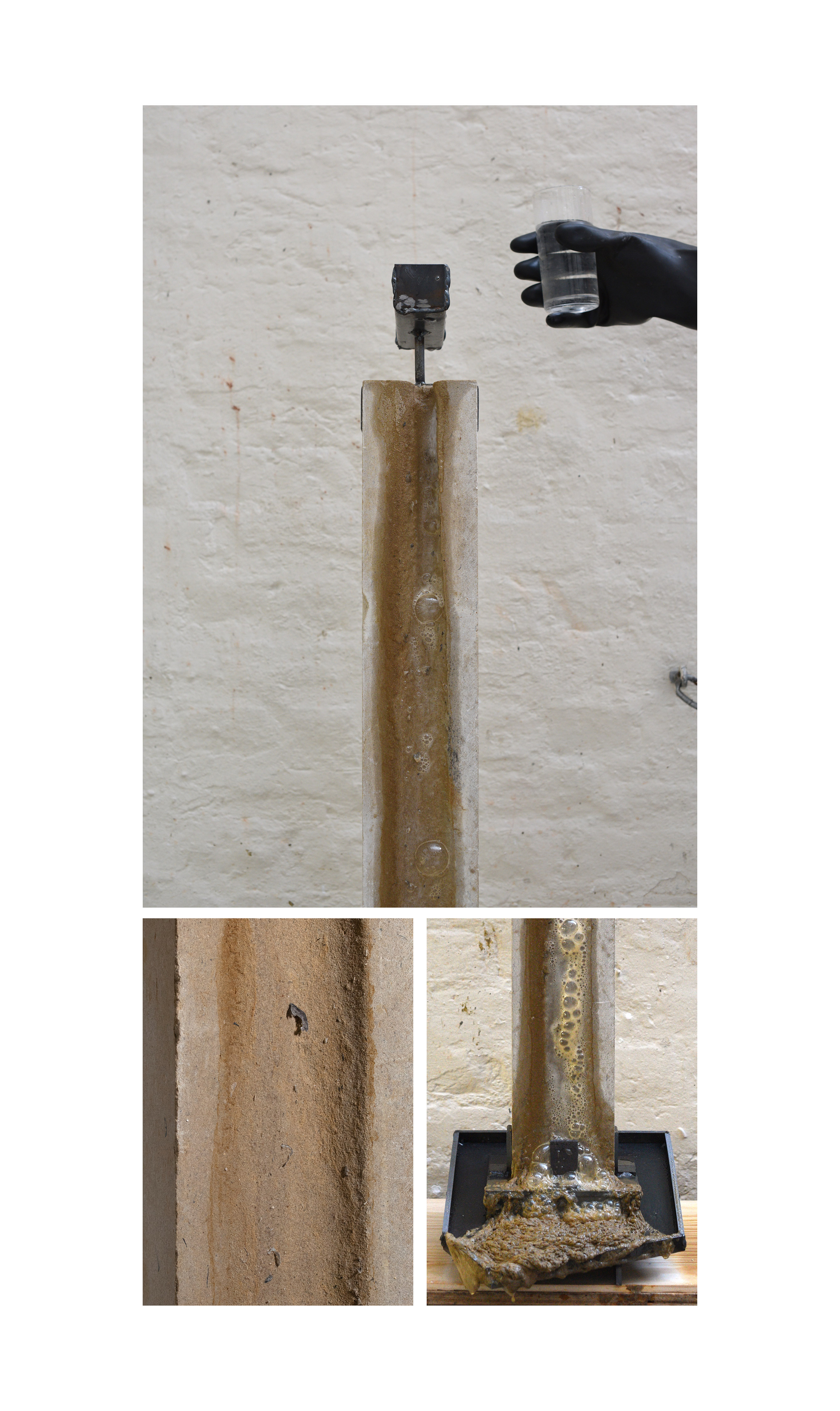
Portland stone is especially significant since we associate it with the architecture of the institution, an architecture built to last.
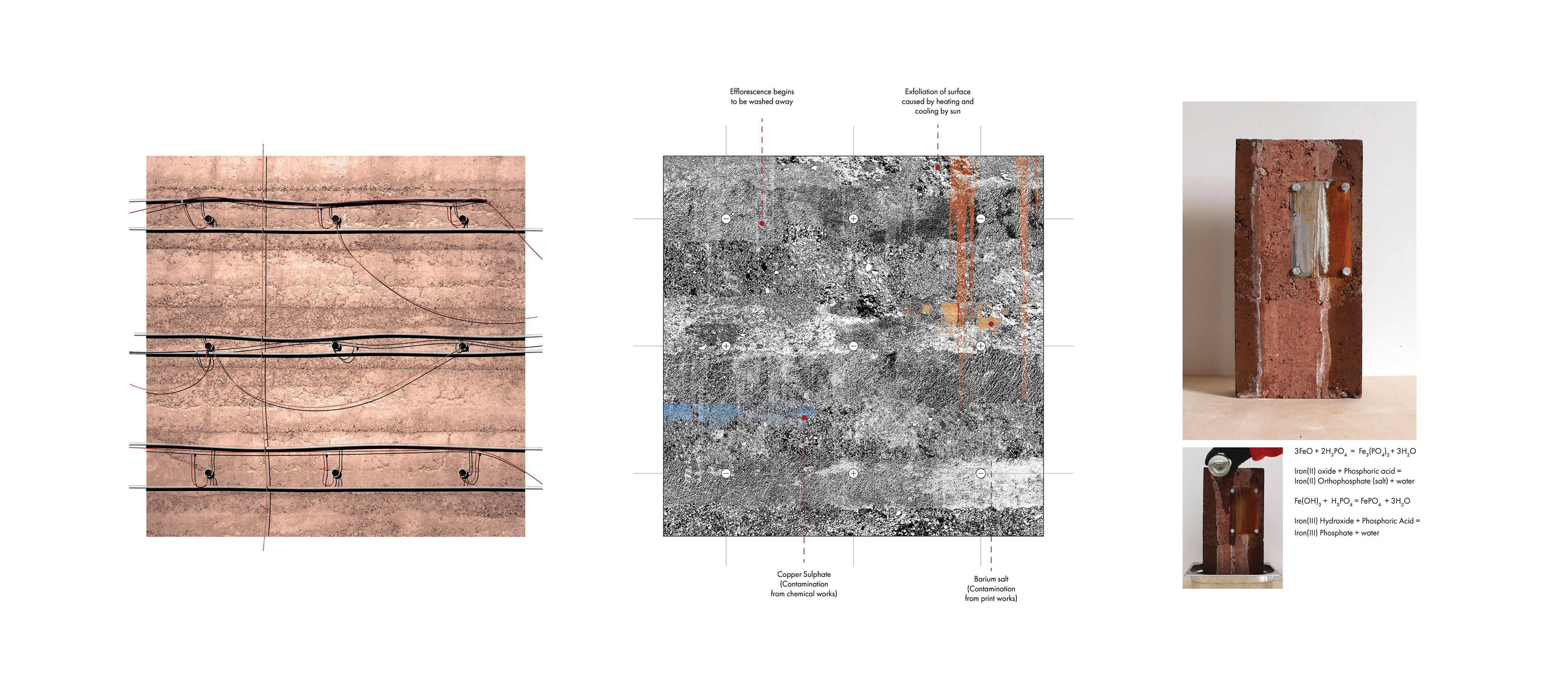
The surfaces will express both the decontamination process and that particular location, as a result of contaminants appearing as colour, the surface distorting and particles accumulating.