Diploma 19
Play for Today: The Performance of Architecture
Performance has consistently occupied a pivotal position at the crossroads of architecture, art and public life. Spaces for perfomance are where an ethics of being together can be enacted and rethought; a process through which individuals rehearse the rituals of sociality, whilst also being a metaphor for the city and its capacity to sustain politics and public life.
As an archetype, the playhouse has shaped interiors and landscapes alike: from markets to streets; from living rooms to clubs. Like architecture, performances are often the product of vast collaborations and intended to be received by an ever-changing cast of participants. Playhouses, hippodromes and theatres are spaces for translating between cultures and receiving the architectures of others. Understanding performance as a process can also be a tool to understand how we act out our daily roles at home, at work and at play. Consideration of the theatricality of architecture raises the question of how explicitly our environment is in on the act. To what extent do cityscapes condition feelings and produce atmospheres? When is the city an active participant in the drama? And can buildings and the spaces between them have characters? What is the minimum requirement for performative, public space and what are the extremes of architectural theatricality?
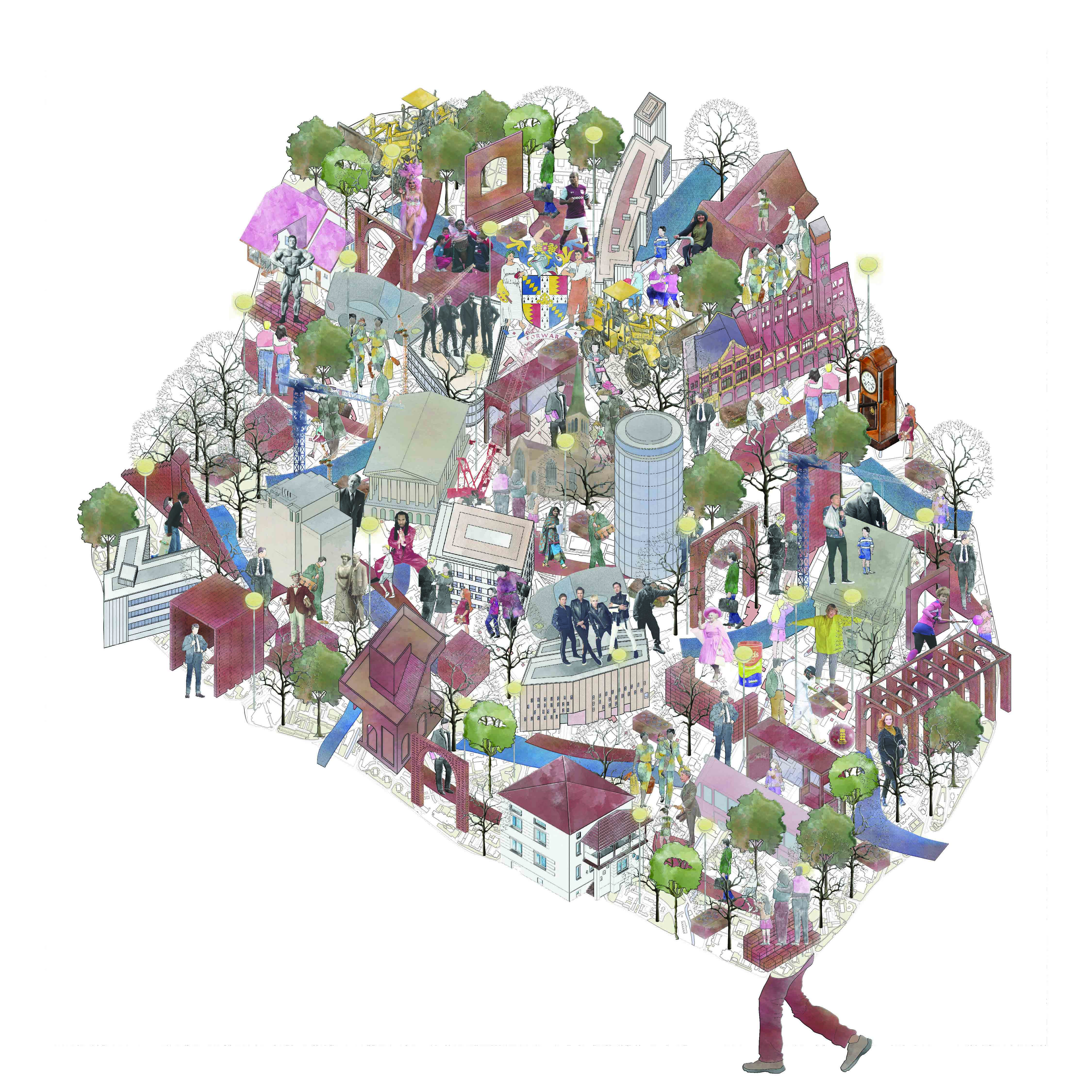
DIP19 will consider the rapidly changing demands of contemporary cities, from energy consumption and transport to food supply and housing. We will consider what role theatricality can play in making cities better able to adapt to and critically participate in change. We will work in central Birmingham, a city currently undergoing massive transformation, in collaboration with a local, artist-run multiverse, Eastside Projects. We will design at both the scale of strategic urban planning and at the scale of the detail, expecting construction to play its role in the performance. As a team, we will write scripts and conceive performances that equip us to intervene in ongoing processes of urban change and leverage the theatrical in support of the city.