Diploma 5
Primary City Elements: The Theatre
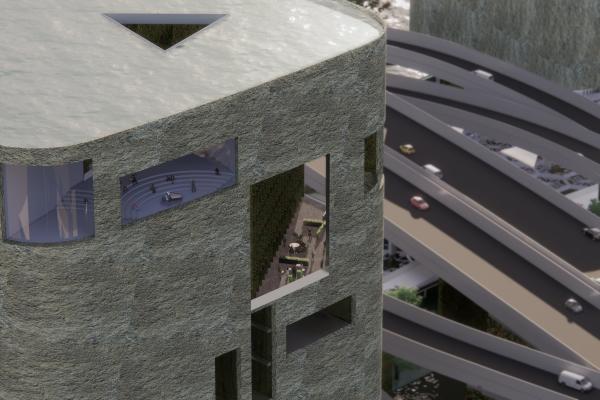
DIP5 investigates the relationship between architecture and the city, using the primary elements of urbanity as its input. The focus of our research will be the theatre.
The theatre is an architectural object with a triple essence. Firstly, the theatre plays a fundamental role in the foundation and understanding of the city. From the Greek Agora to the Roman Forum in the cities of the East and the Middle East, theatres have always had a significant presence (both symbolic and physical), establishing a dialectical, multifaceted and rarely neutral relationship with the urban environment. Secondly, it is conceived of as a functional space, designed to accommodate a larger or smaller audience while optimising the performance of a show by actors. It has a height proportionate to the spectators, advanced technological and mechanical systems, complex lighting rigs and sophisticated structures to ensure an excellent view of the show; no different to a school, a post office or a tearoom – its function meets its form, qualified by an aesthetic and experimental point of view. The third soul of the theatre is that which defines it as a metaspazio: the tacit pact signed between spectators and actors. Once past the theatre door and sitting a seat, the lights go out, ‘the architecture ends and the world of imagination begins’.
DIP5 will study the theatre as an architectural and urban typology, and a place of expression for an art that has always been able to precisely reflect the world and its mutations. It is an opportunity to understand the evolution of society through that of the theatre. Investigations at the urban and architectural scales will help us to understand the central role of theatre in the city and its ability to activate the periphery. Social and cultural research will enable us to understand the aggregative nature of the theatrical world and (especially in the case of contemporary theatre) its ability to act on humanity in a revealing way.
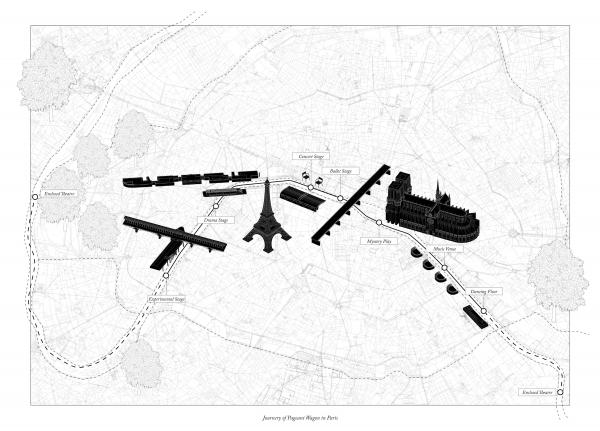
The aim is to prepare students to undertake a contemporary theatre project in Paris. In this project, architecture will not be the end goal, but rather a means through which to question the present and to build the future, addressing much broader themes such as symbolism, identity and the economic, ethical, social and spatial values of cultural practices in 2020.