The Family Room
Carlos Uribe, BA (Year: 3)
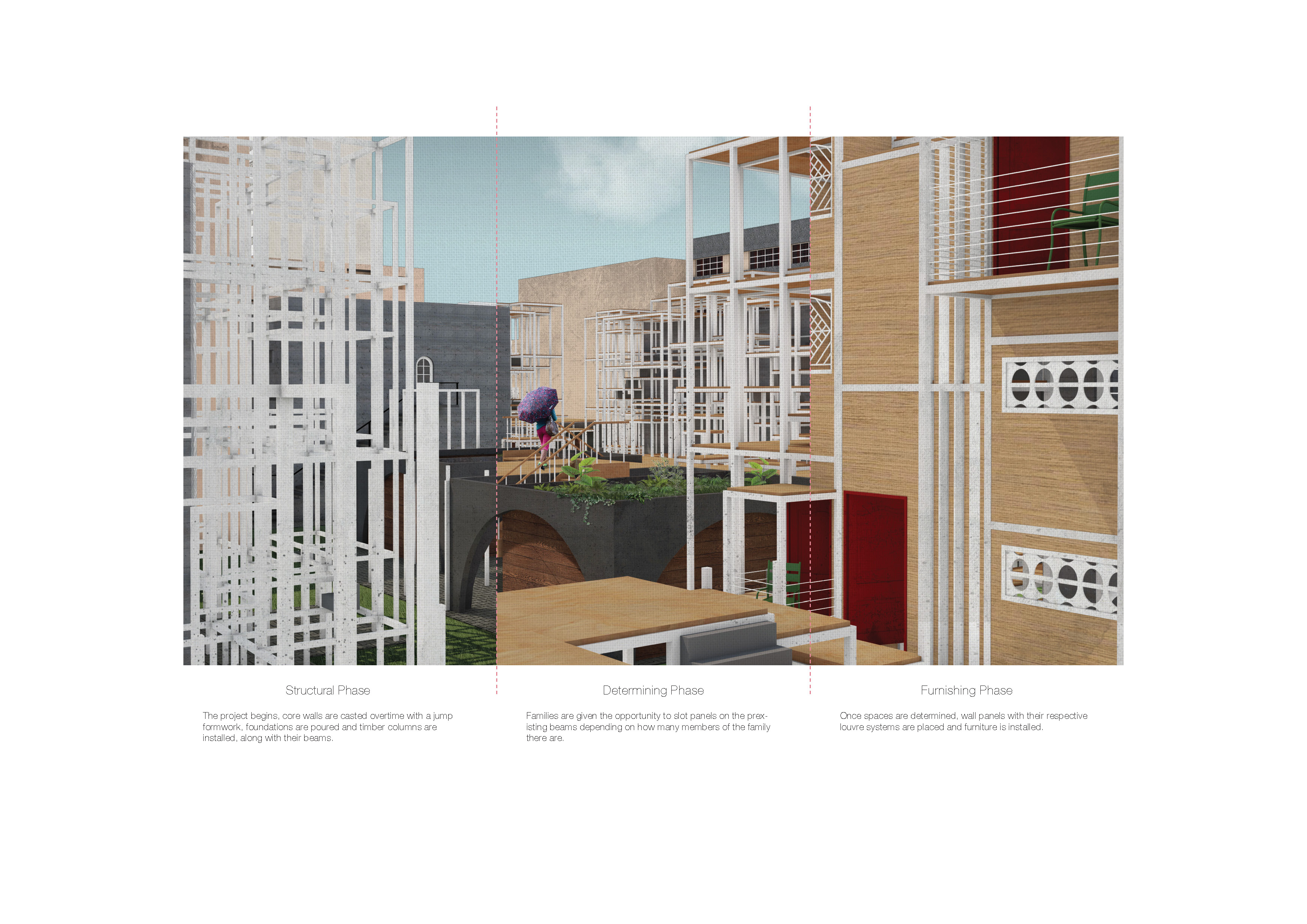
This project looks at the concept of community and privacy, its unique interpretation in the Cuban family, and how all of that is at risk. visiting Cuba, what I noticed was communes of hyper-extended families living in one home, and a communal space called the family room where the domestic labour occurs. It is defined by objects such as trophies and portraits that tell stories of long lineages. The more western model supports the exportation of this labour outside the family. While the Latin model gives the family the responsibility of nurturing and educating. These types of interactions tend to happen in the common family room, so that became both the structural and metaphorical core of the home. A system was designed to reflect the temporality that comes with the size of what is considered family with paneled bedrooms meant to be built and brought down, but also a grand room that encompasses a large courtyard, a room that stays no matter the time. This large family room will hold the objects that tell the families stories in its walls and create pockets for the labour to take place, an architecture intended to solidify the importance of the Cuban family.
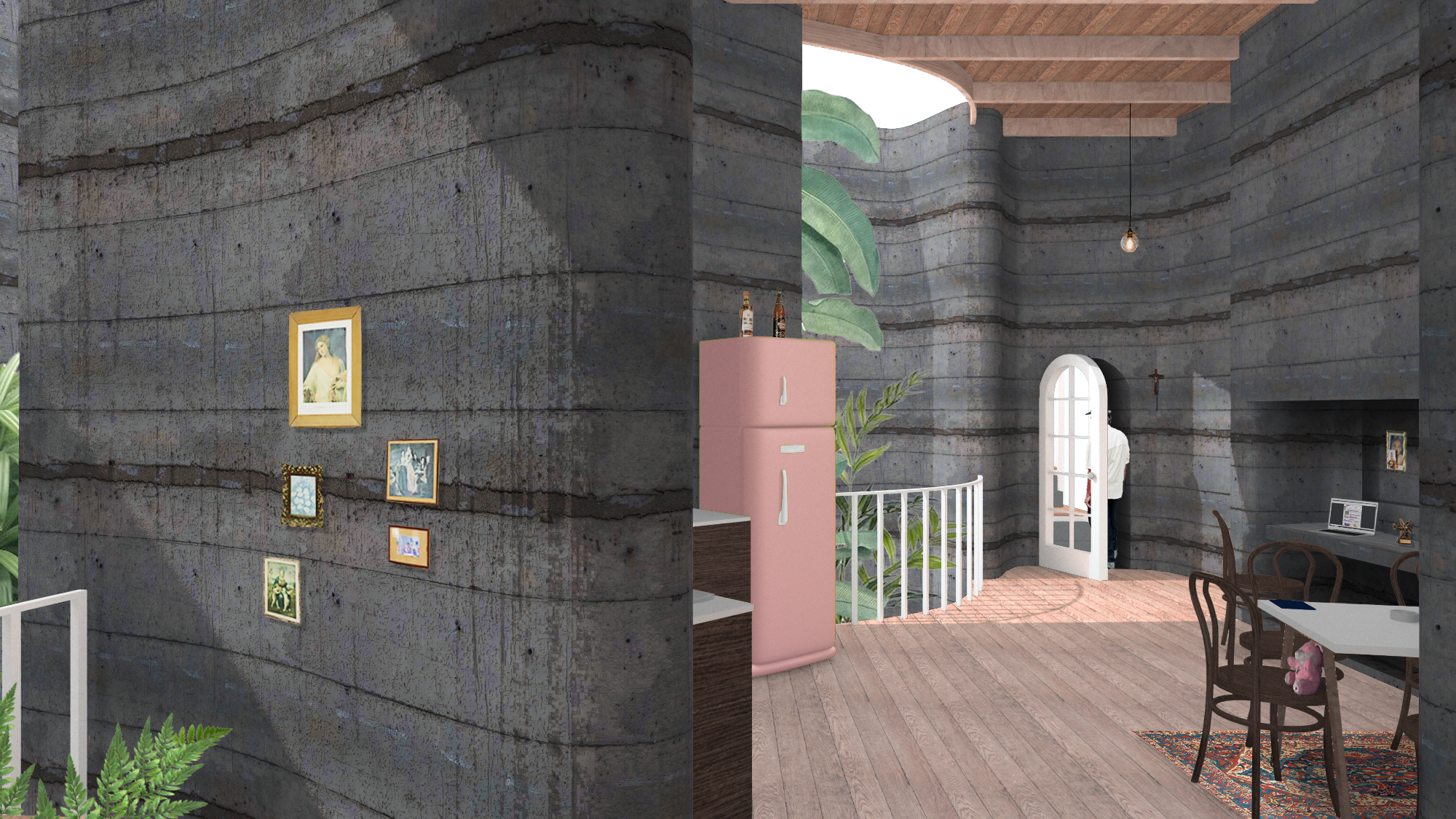
The thickness of the walls allows for the furniture to be integrated, spaces to be dictated, and for the items that tell of the story of the family to be held.
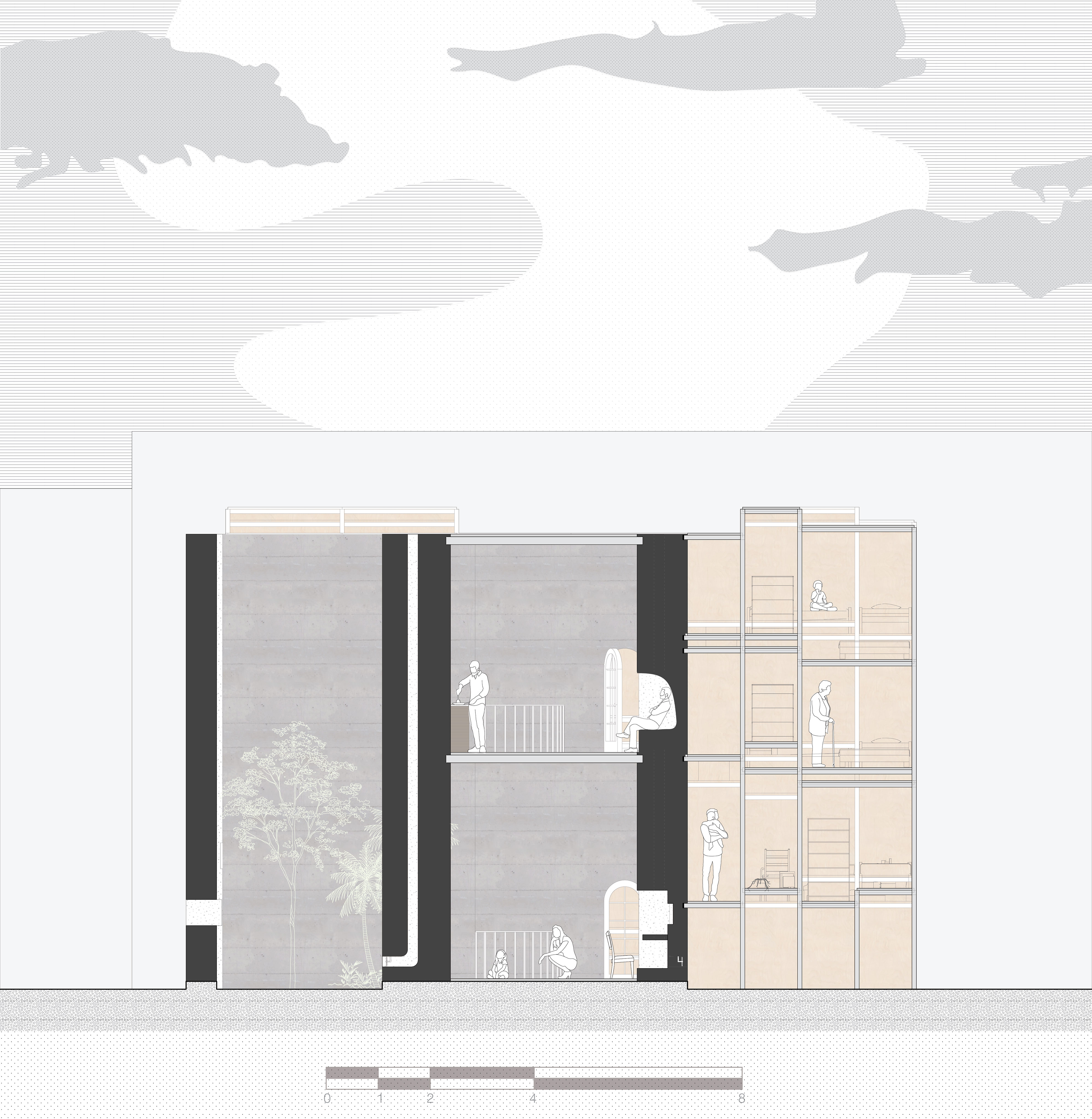
the family room becomes both the metaphorical stabilizer of the extended family as it offers the communal family room to congregate, and a literal stabilizer for the temporary paneled bedrooms
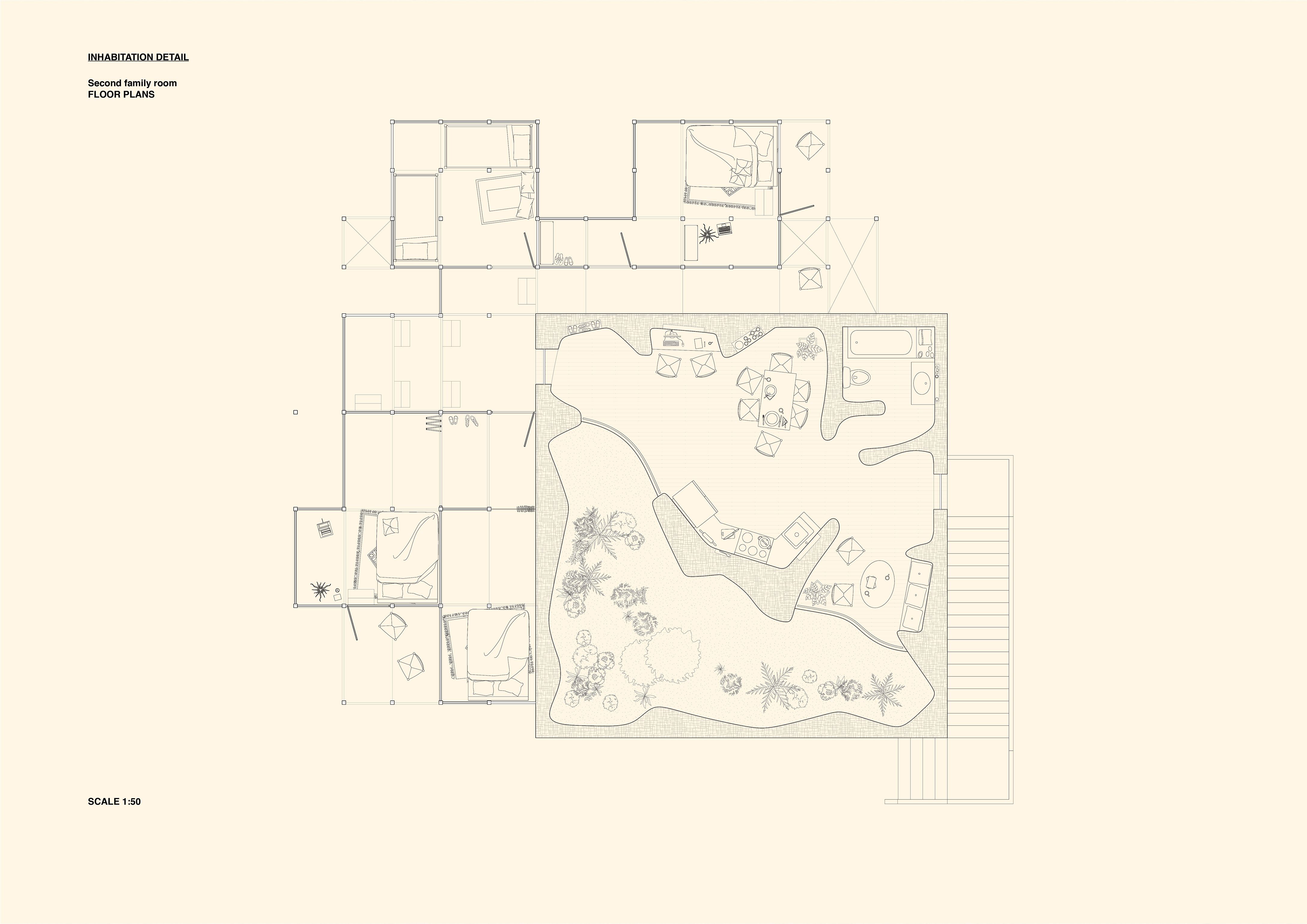
1st floor plan
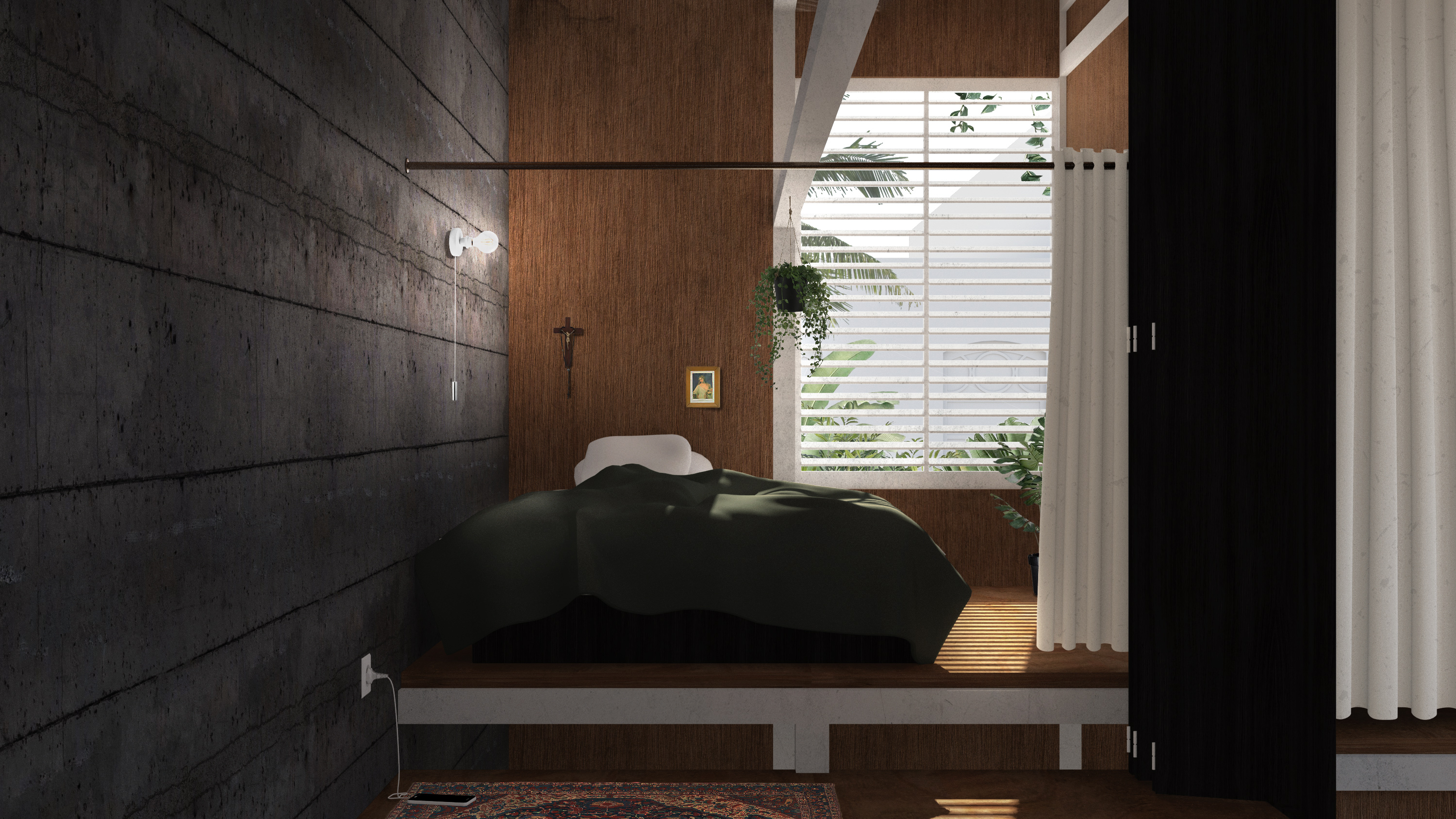
This render shows the reliance of the bedrooms to the core, from all the amenities to providing power for light and outlets.
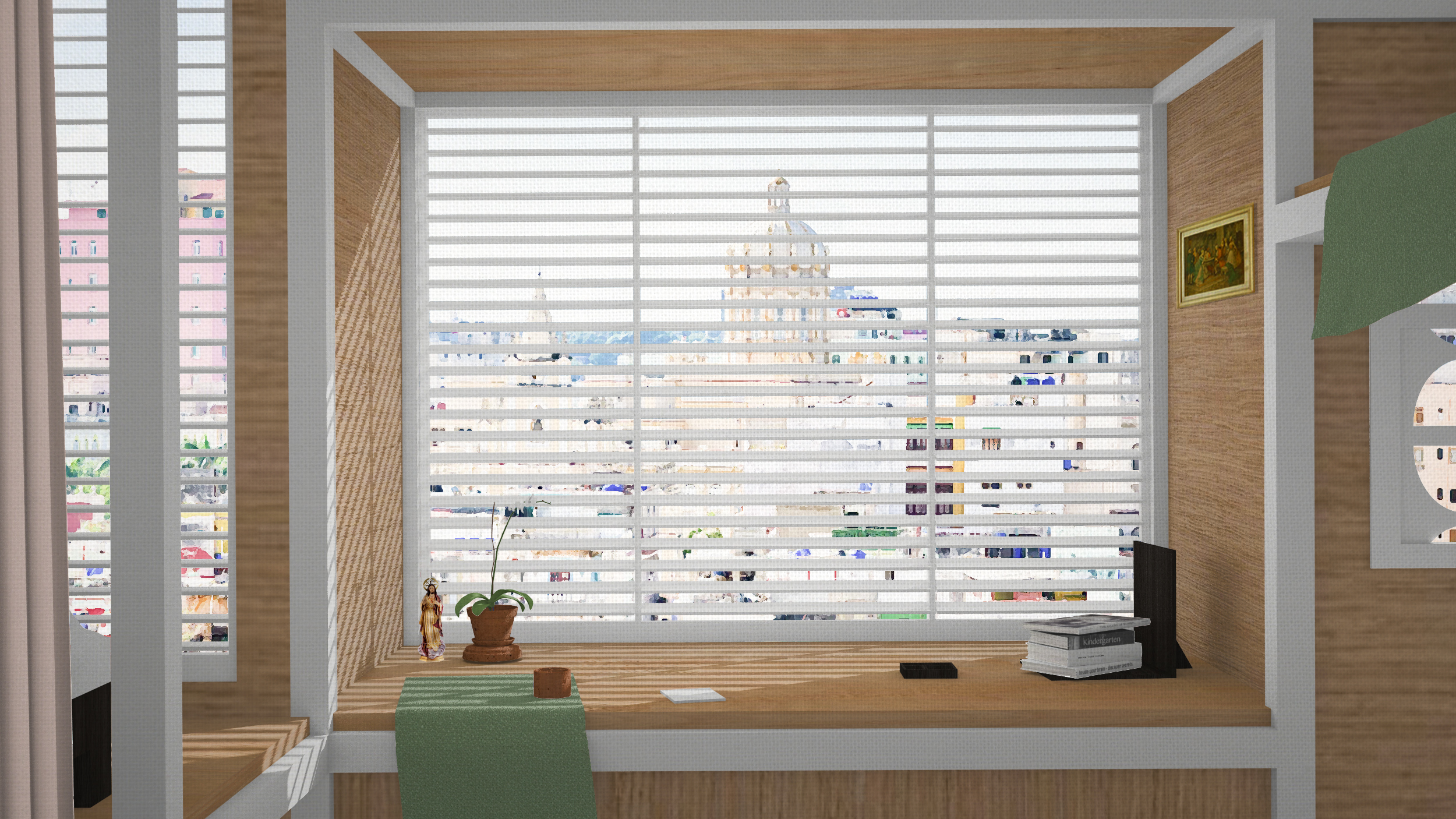
Different forms of breeze blocks are placed on the walls of the bedrooms to allow for air circulation and to dictate distinct levels of privacy.
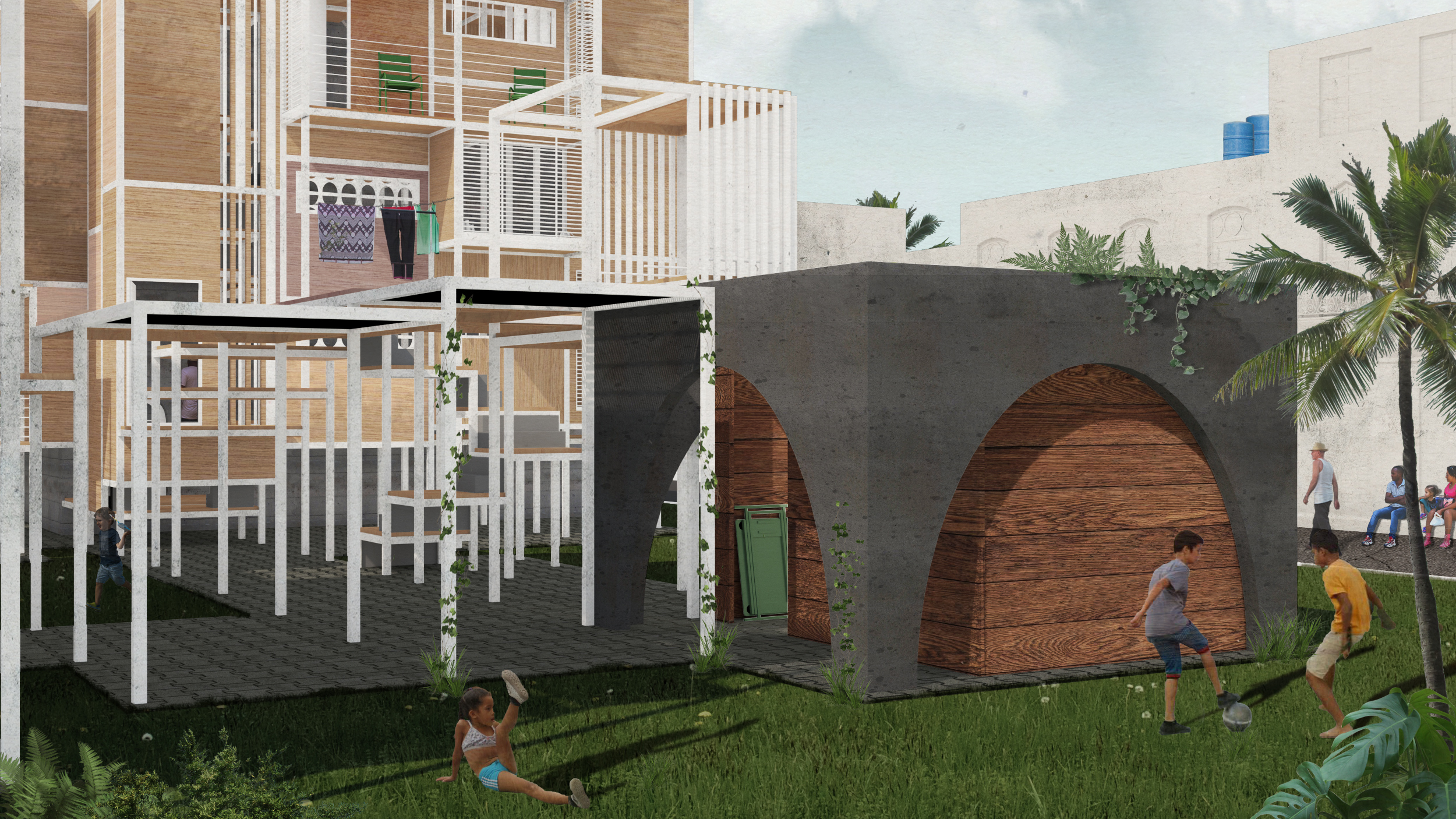
Buffer zone on ground level between inside communities and outside ones around a panel storage core.
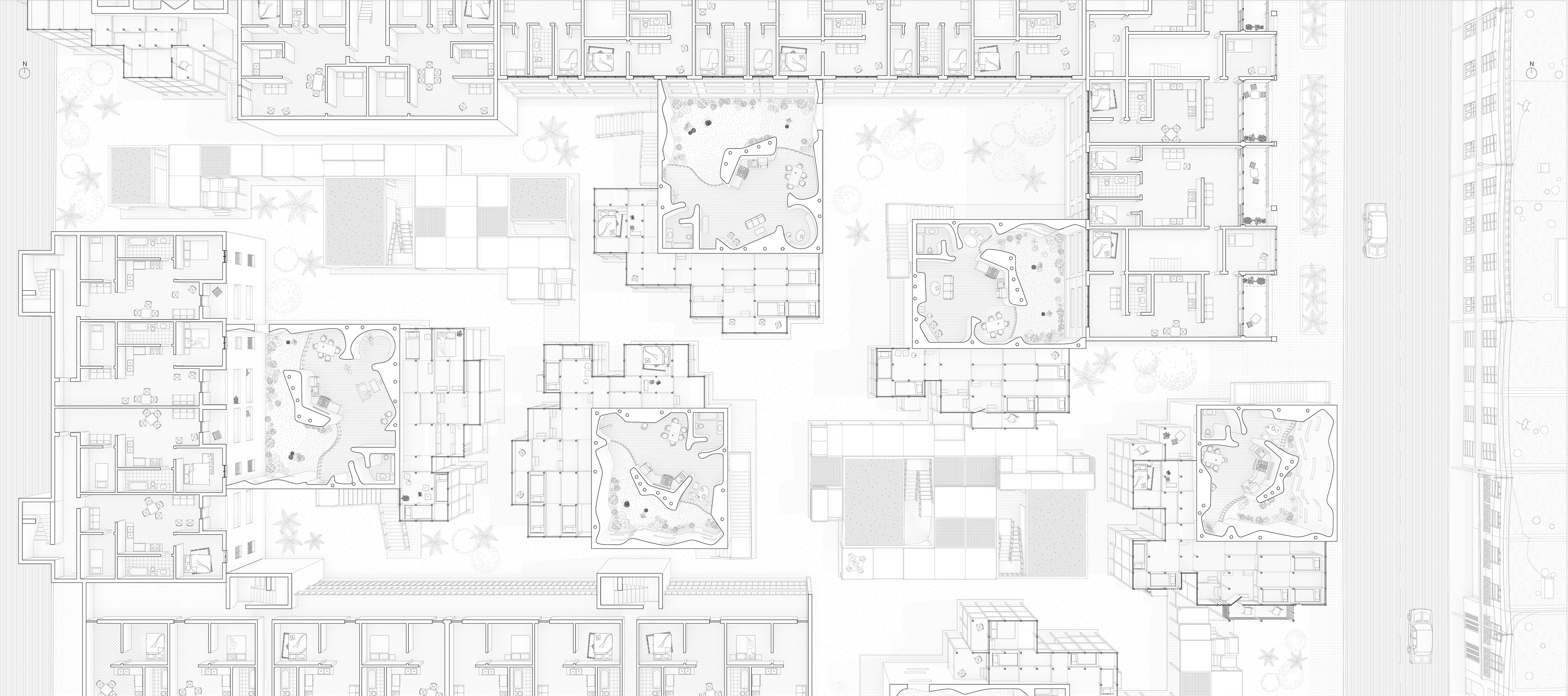
An overall view like this shows a model of trust, a system of communal living centered around the family room. Some cores are independent and others enhance the existing buildings.
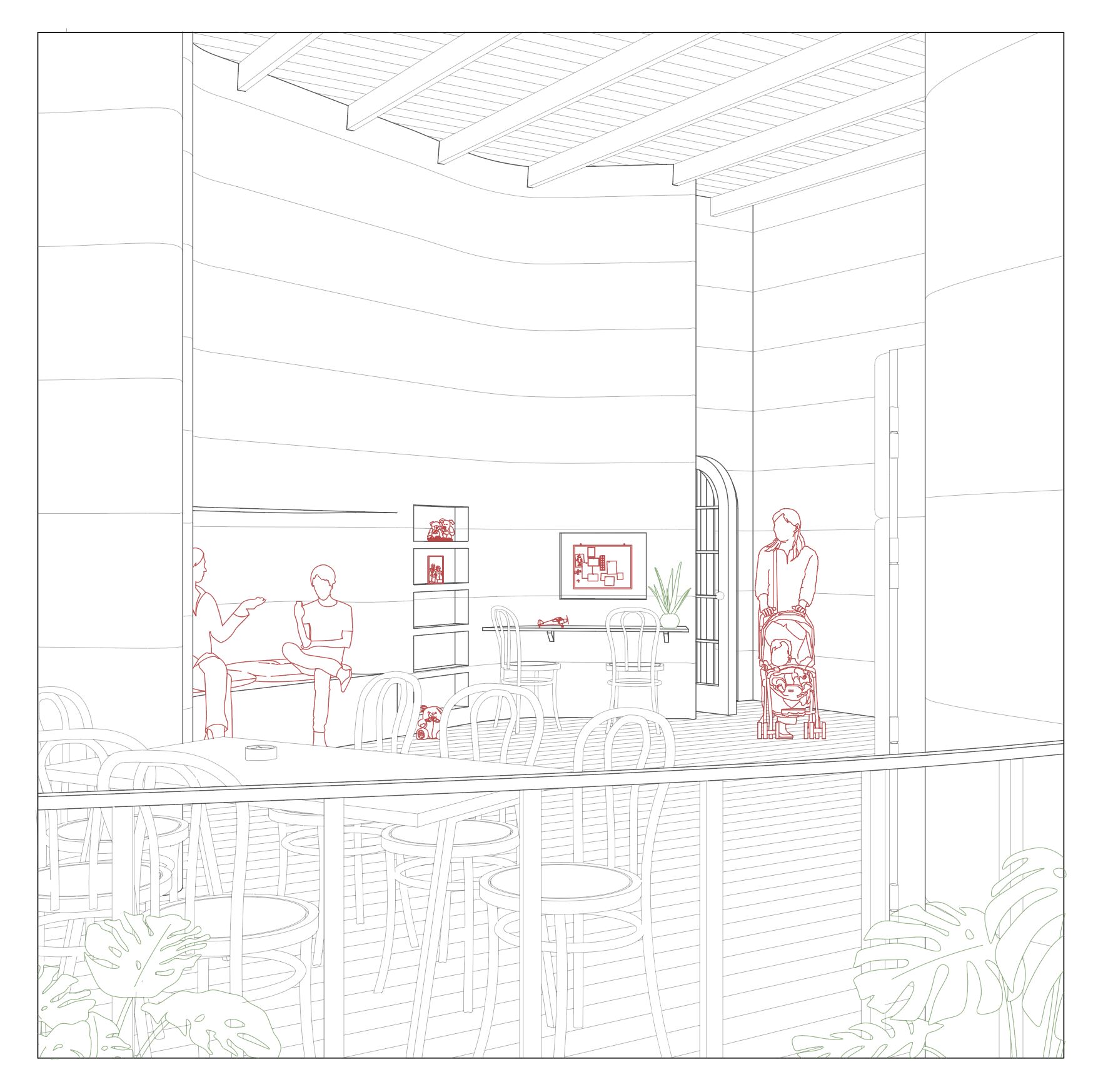
Two sisters are taking care of one's children. The aunt walks into the communal space with her baby niece and sees the mother sitting in one of the cutouts with her son.
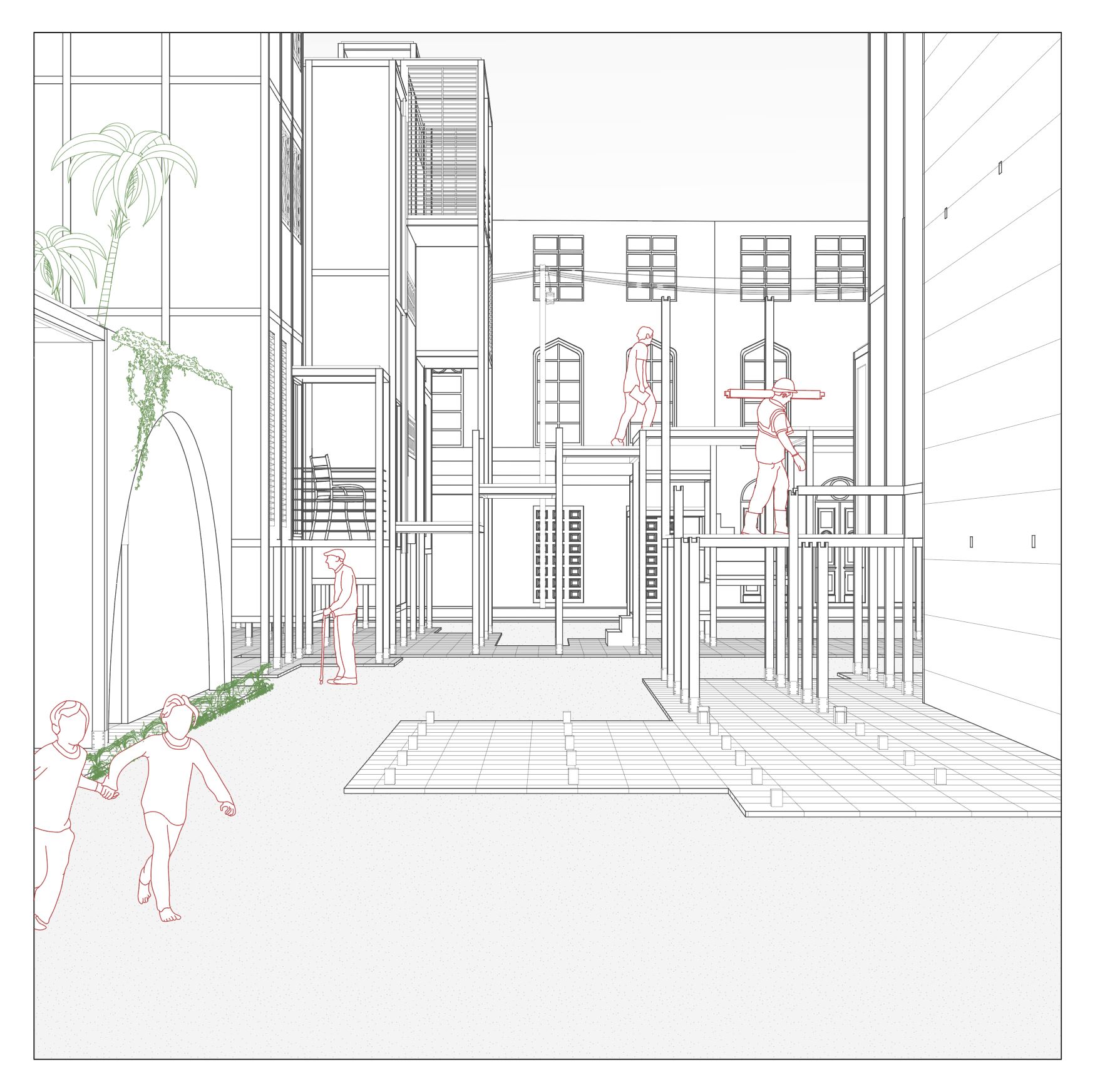
a man is disassembling a room his brother's girlfriend lived in. They are no longer on "good terms" so no need for an extra bedroom.