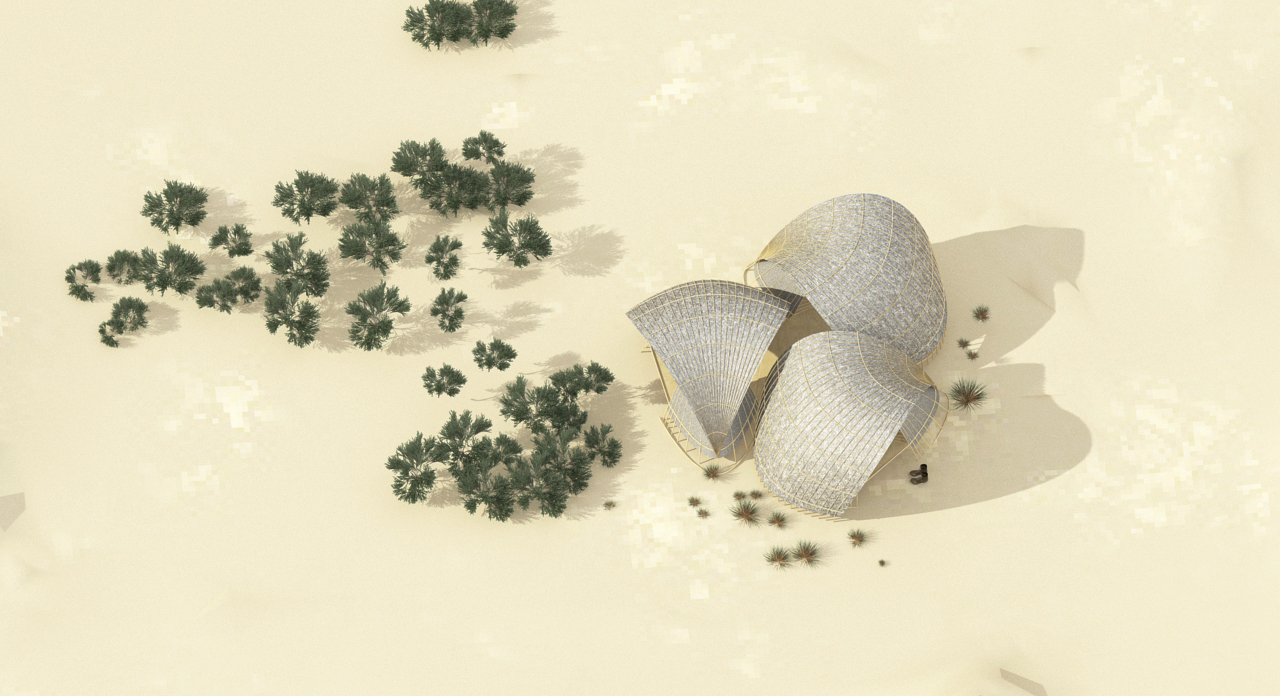
Anthropogenic landscape as a tool for inhabitation on the Aral Sea
Alina Alimzhanova (Year: 4)
The research question of the project gravitates around the processes of desertification due to water overexploitation.It focuses on one of the most extreme examples of overexploitation in the world: the conversion of the Aral Sea into the Aralkum desert due to the diversion of the rivers to feed the Western cotton demands.
Desertification of the Aral Sea is more than just the extinction of the water with its moving shore, but also shift of the existing social formations: expalsion of the fish production has led to unemployment and eventual abandonment of entire villages.My prediction is based on the case studies, where the intensive planting programme can potentially stop the moving sand and trigger the re-population of the adjacent cities.
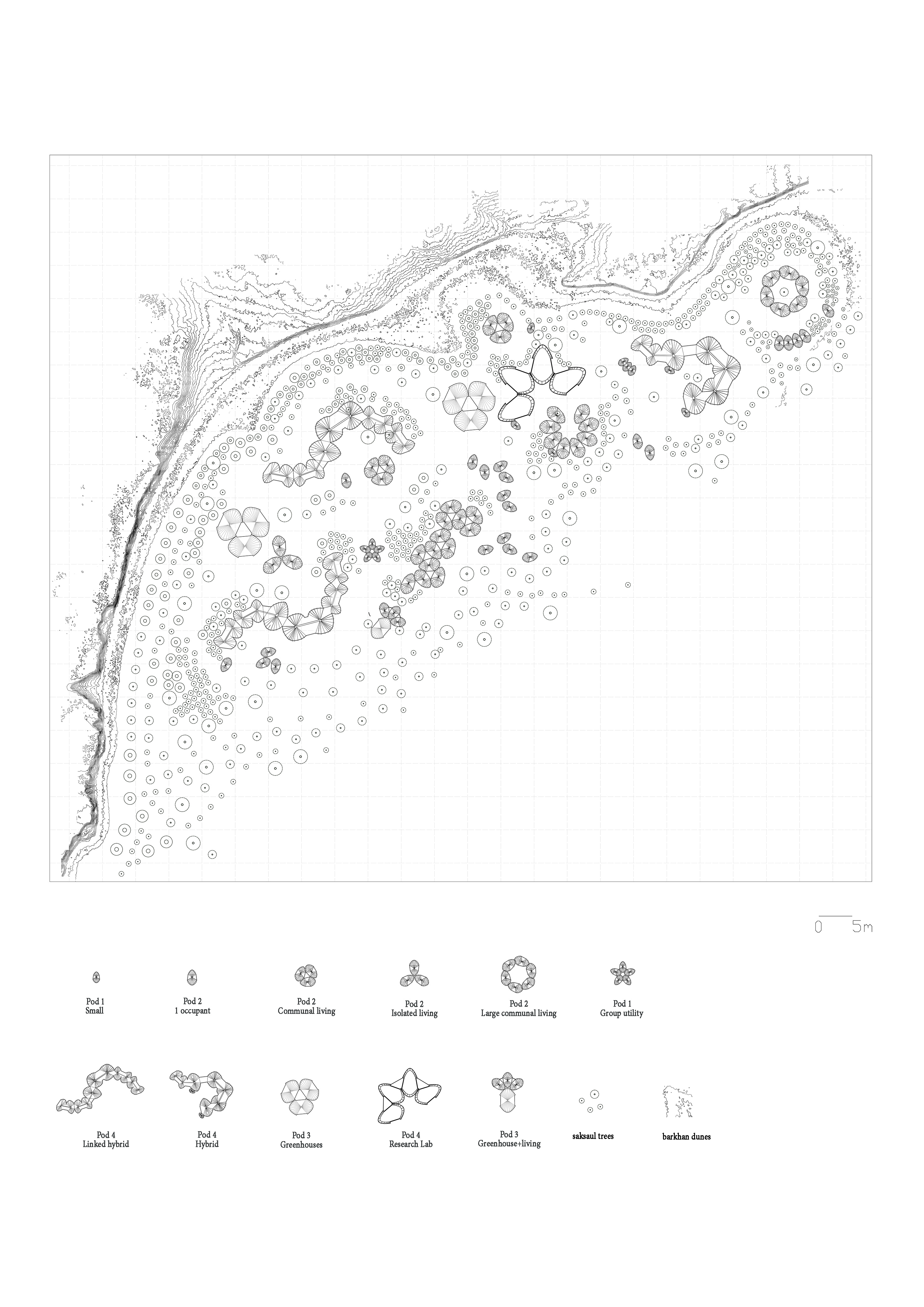
The proposal attempts to design a series of policies to generate the natural barriers that hold the dunes in place, producing alternating spaces with various degree of temporality for tourism infrastructure, forestry industry, scientific research areas and settlements.
Leaving an ecological permanent or temporary footprint behind in form of the forestry as well as inhabitable infrastructure would challenge the mentalities behind fixed notion of the land, infrastructure and use of vegetation as a «mental» heal to the landscape.
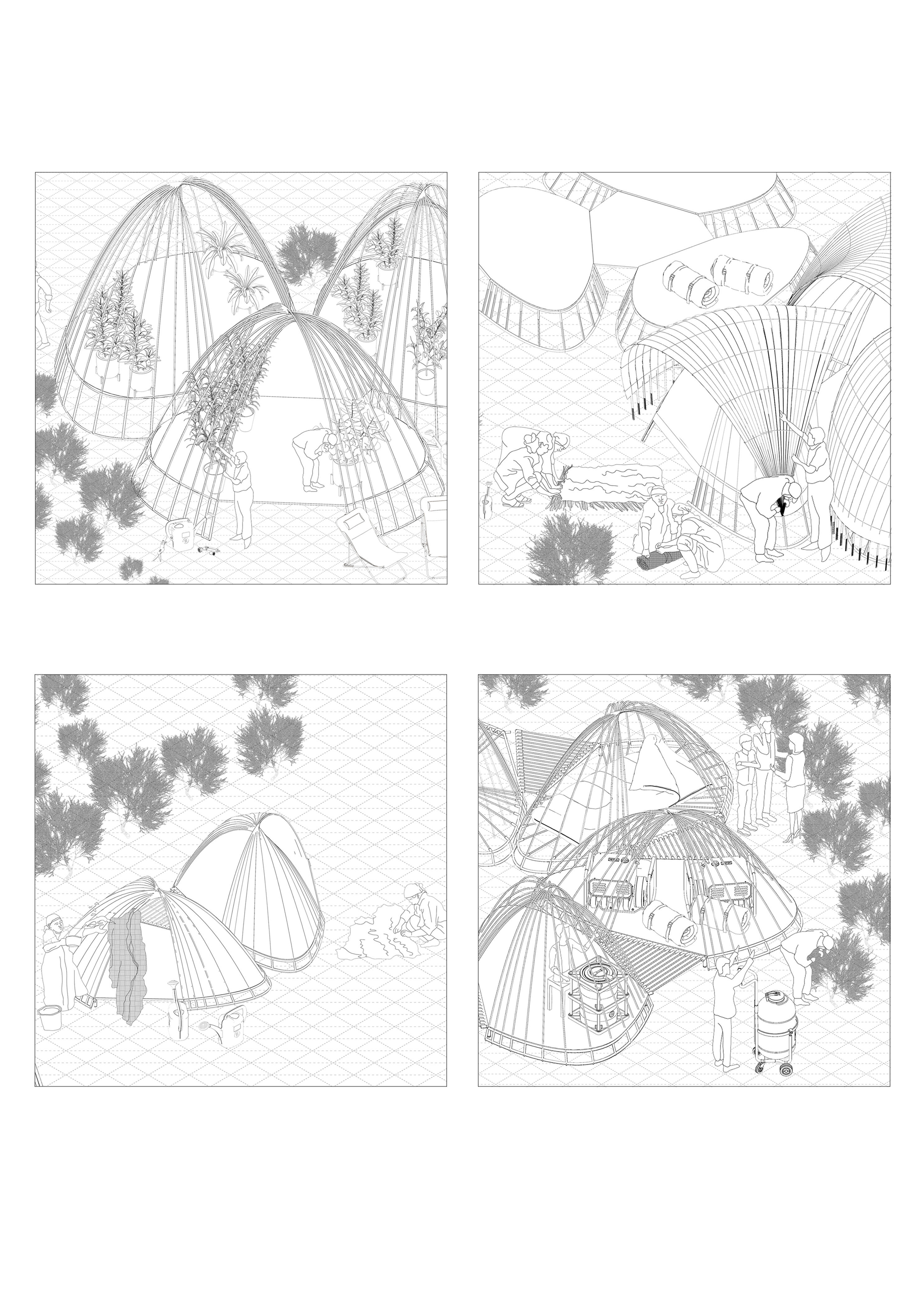
The inhabitation camp would move according to the changing landscape, that is still unplanted, always reacting to the moving territory.
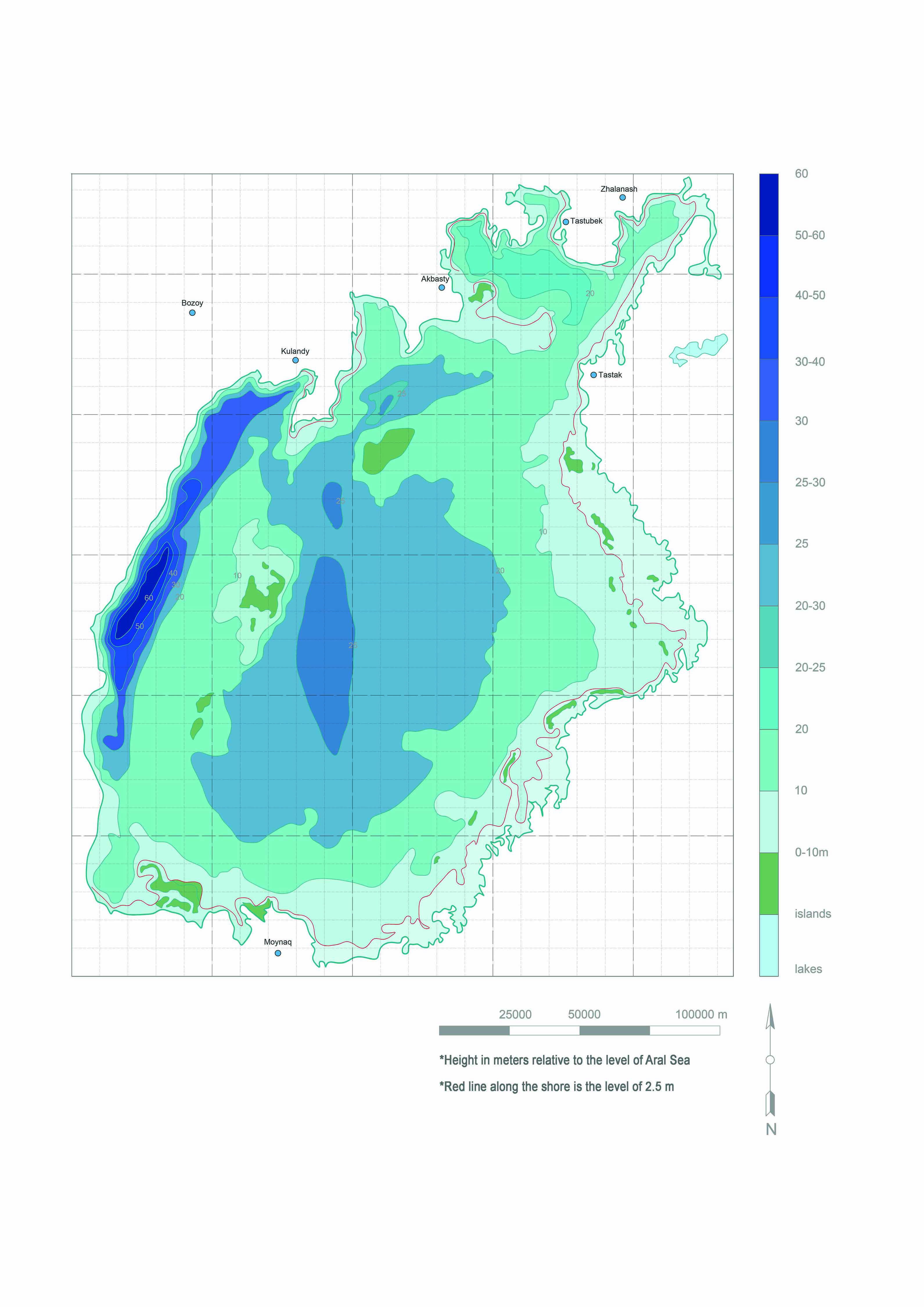
The methods of irrigation led to water wastage and disappearance of the entire Aral sea, its surface level dropped by about 20 metres exposing the bottom of the lake’s 68,000 km2 area.
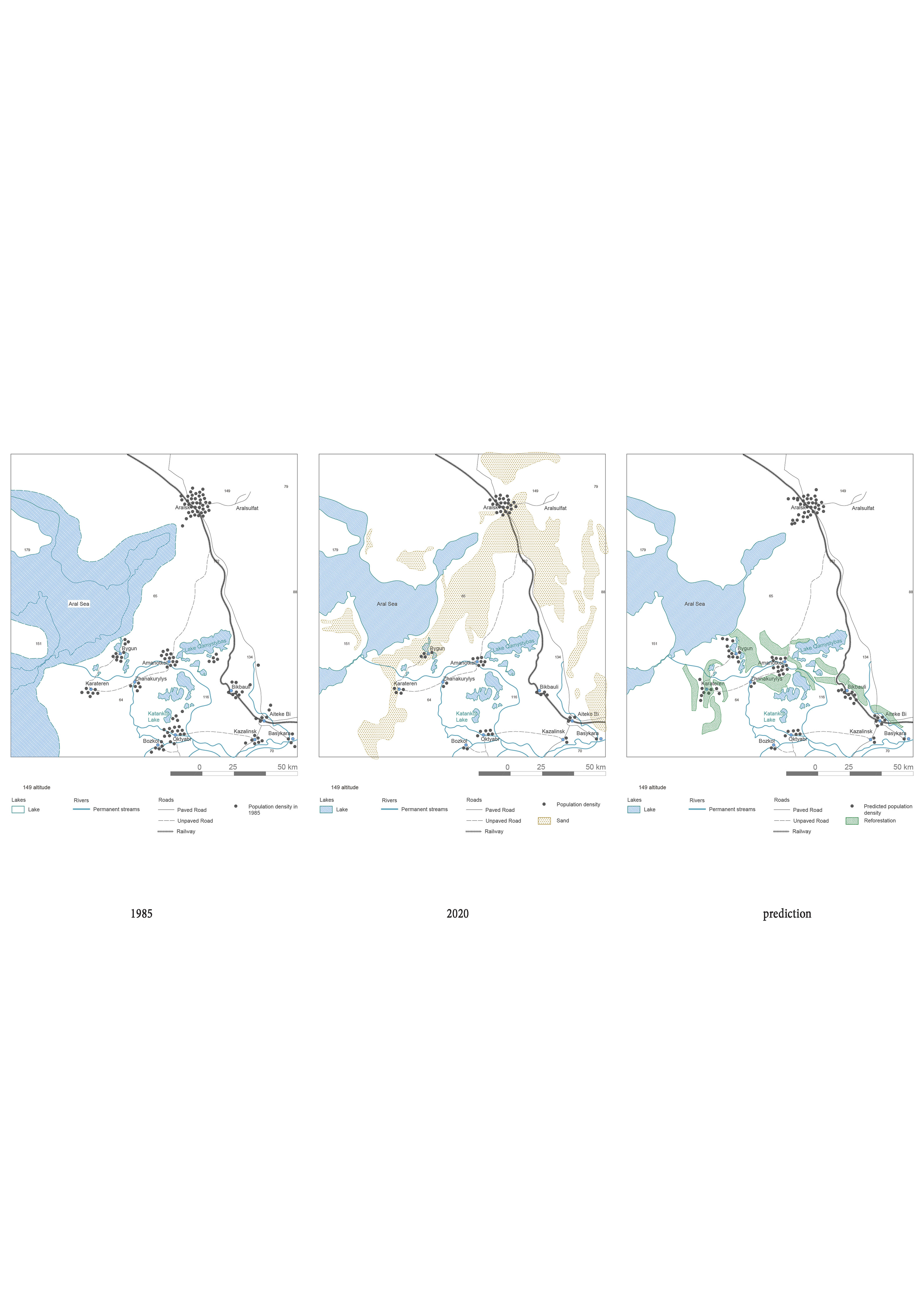
Analysis of the migration pattern from 1985 to 2020 and a prediction scenario that can potentially stop the moving sand and trigger the re-population of the adjacent citie.
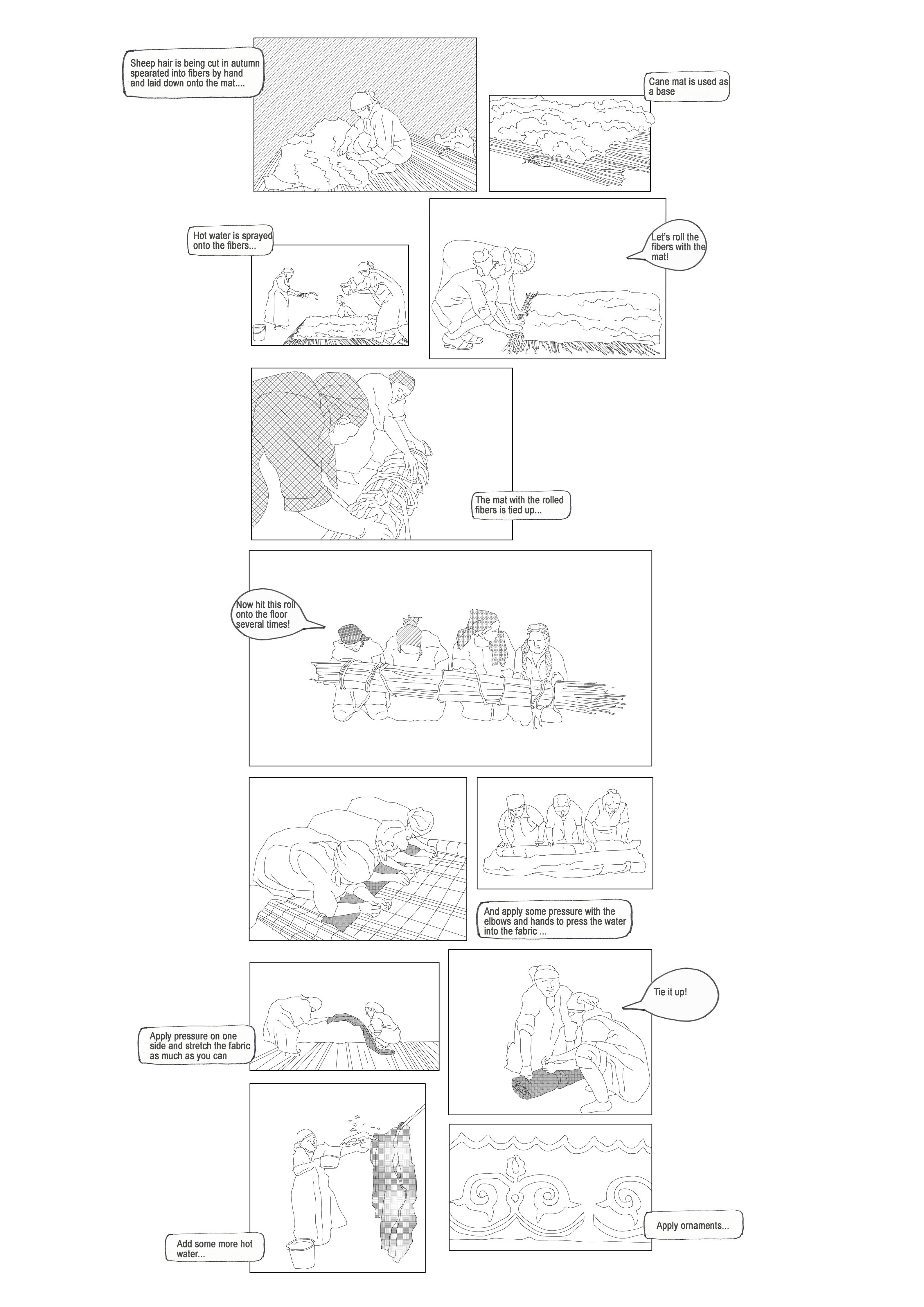
The process of traditional felt making is kept in the region, where felt production resides in most of the households, creating a socio-economic model of the locally sourced and produced materials.
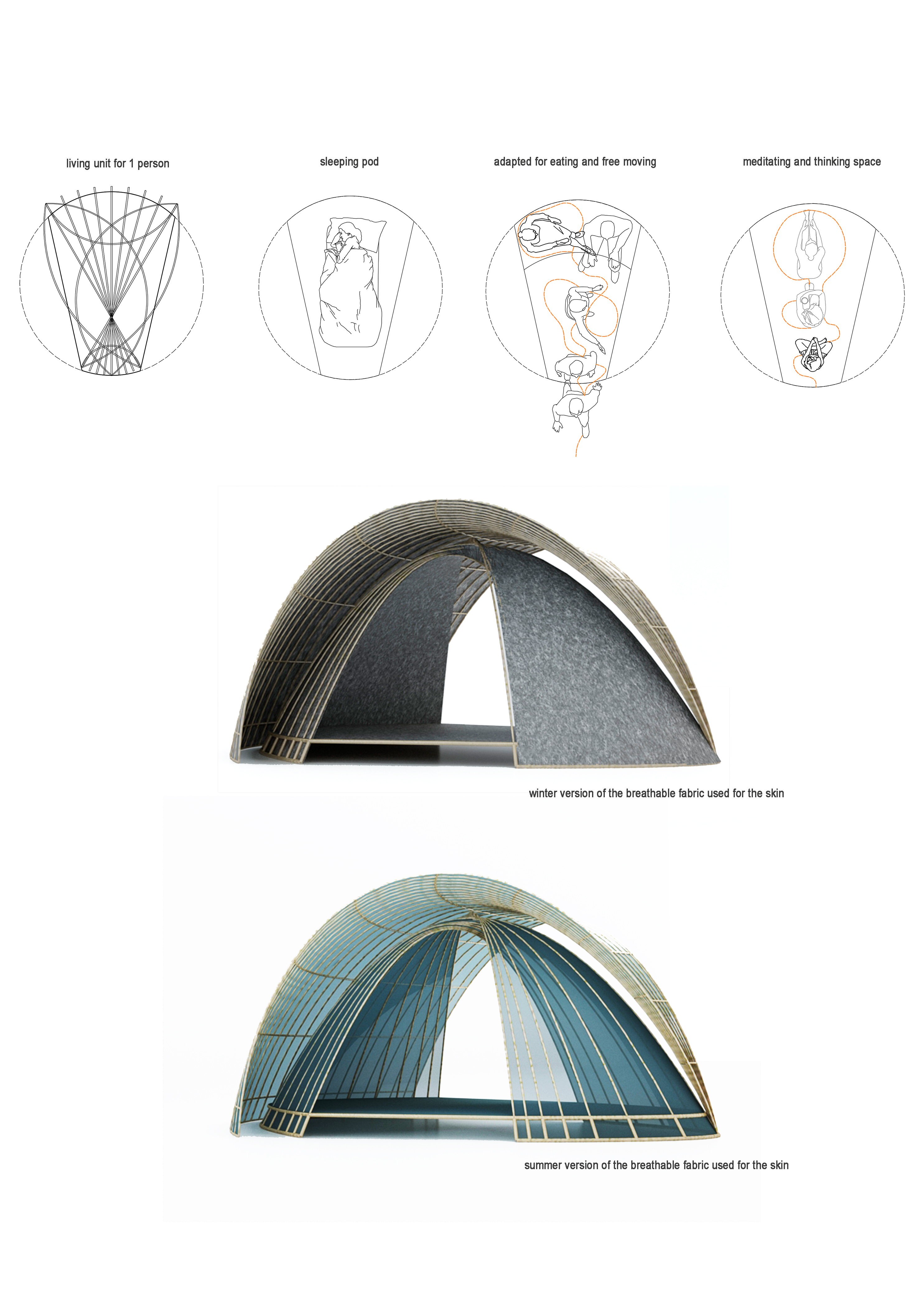
The advantage of the alternative use of textiles can offer a yearlong or seasonal habitation which is essential due to the frequent movement of the nomads determined by geography and climate.
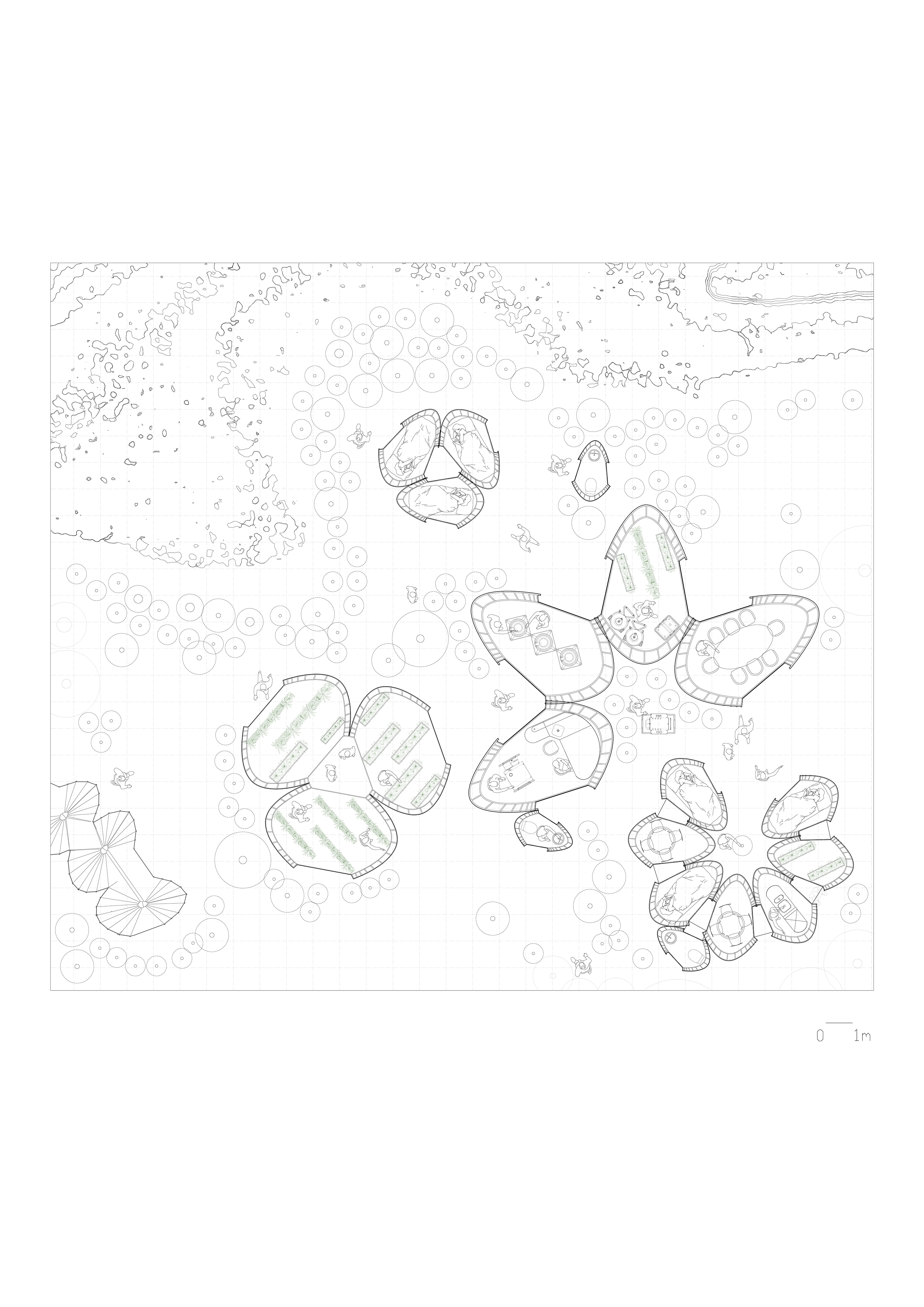
The typology reflects the criteria outlined in a scenario, where aggregations act as a design tool to introduce bigger, wider, connected spaces.
The proposal attempts to design a series of policies to generate the natural barriers that hold the dunes in place,producing alternating spaces with various degree of temporality.
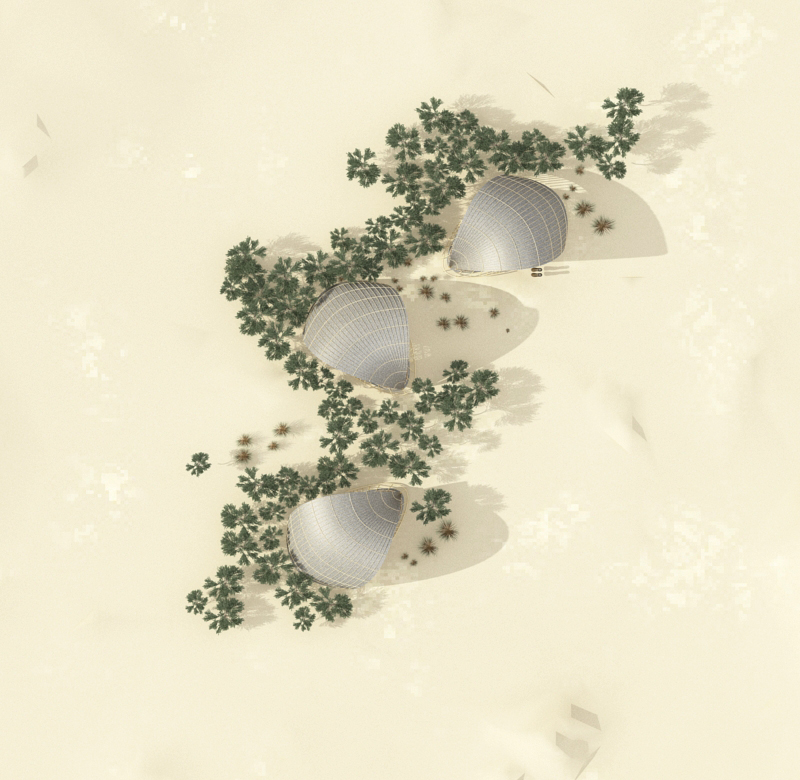
Leaving an ecological permanent or temporary footprint behind in form of the forestry as well as inhabitable infrastructure would challenge the mentalities behind fixed notion of the land.
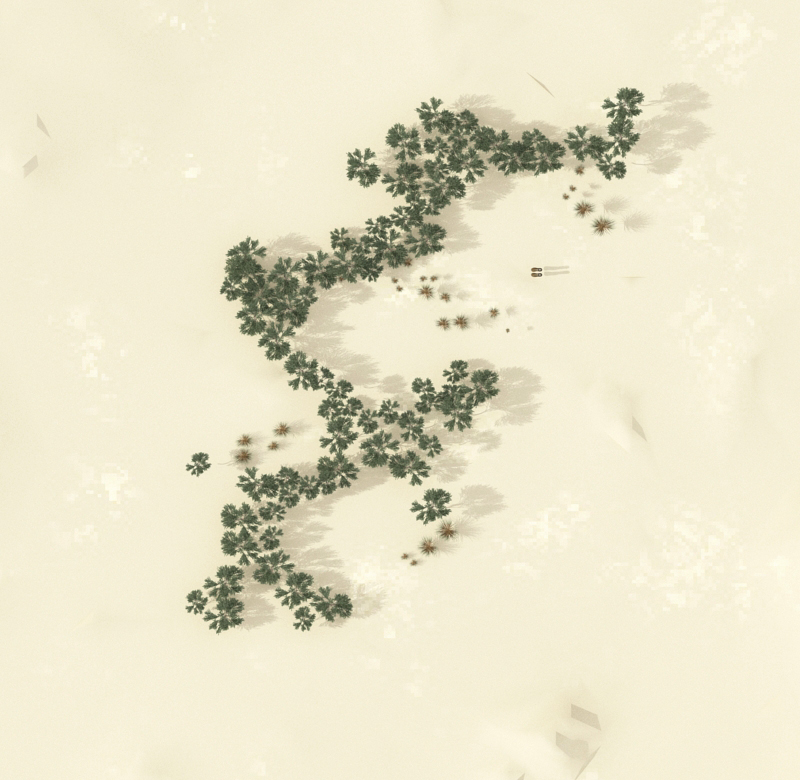
The land art that is created as a result would re-examine the freedom of movement, both of human and landscape, whilst questioning on how we can heal the disrupted planet’s ecosystem.