Refurbishing the City - Churchill Gardens
Aliana Beatriz Bautista, Apurv Aggarwal, Sudnapha Jaratjarungkiat, Yang Li Ying (Year: other)
The project aims at evaluating and developing analytical-based approaches to resolve the unique issue for the post-war estate, Churchill Gardens.
The study started with addressing existing conditions and problems; from outdoor micro climate to indoor thermal and day-lighting. Predominant in older buildings is heat loss in winter due to lack of insulation, thermal bridge and poor window quality and infiltration. Another would be wind tunnels created by the tall buildings alongside shallow plans and narrow floor plates.
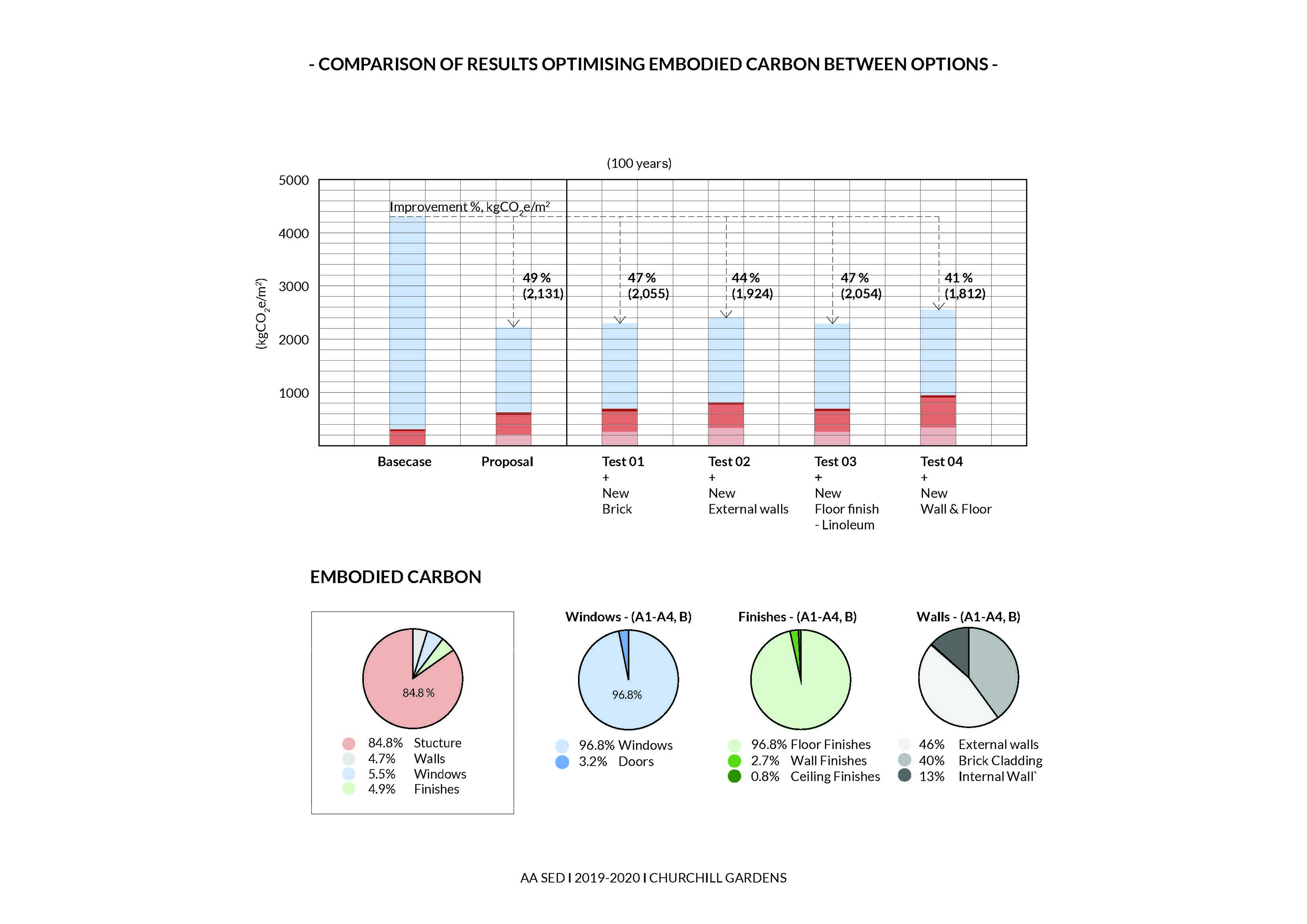
The team proposed seasonal strategies to improve building performance to achieve thermal comfort in free running condition, while reducing the operational energy. Adaptive solutions for hotter summers forecasting climate change in the future. Embodied carbon emission study provided supports for the decision of preserving the existing structure. The team looked at potentials of renewable energy and technologies aiming to achieve zero carbon emission.
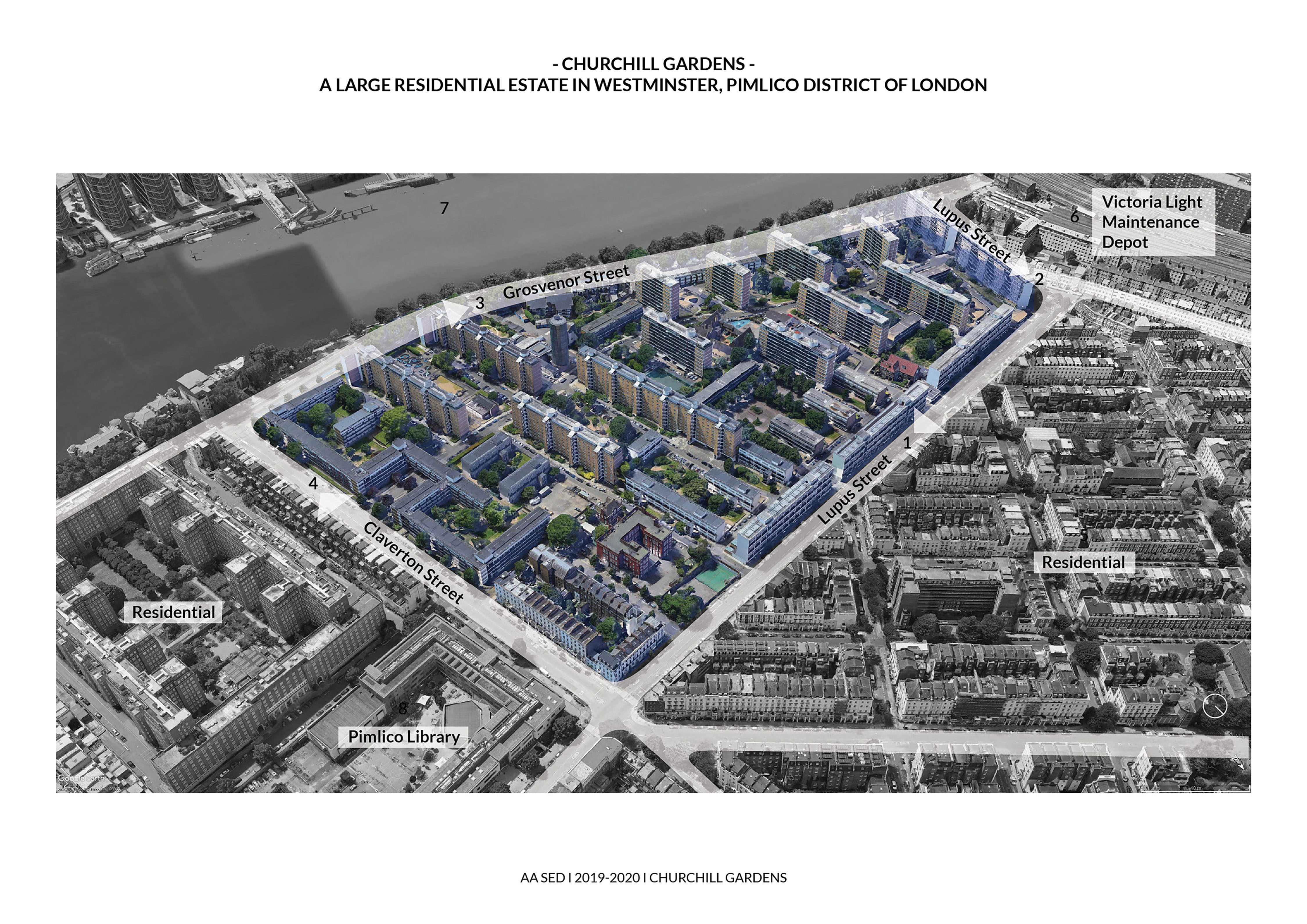
A large residential estate in Westminster, Pimlico District of London
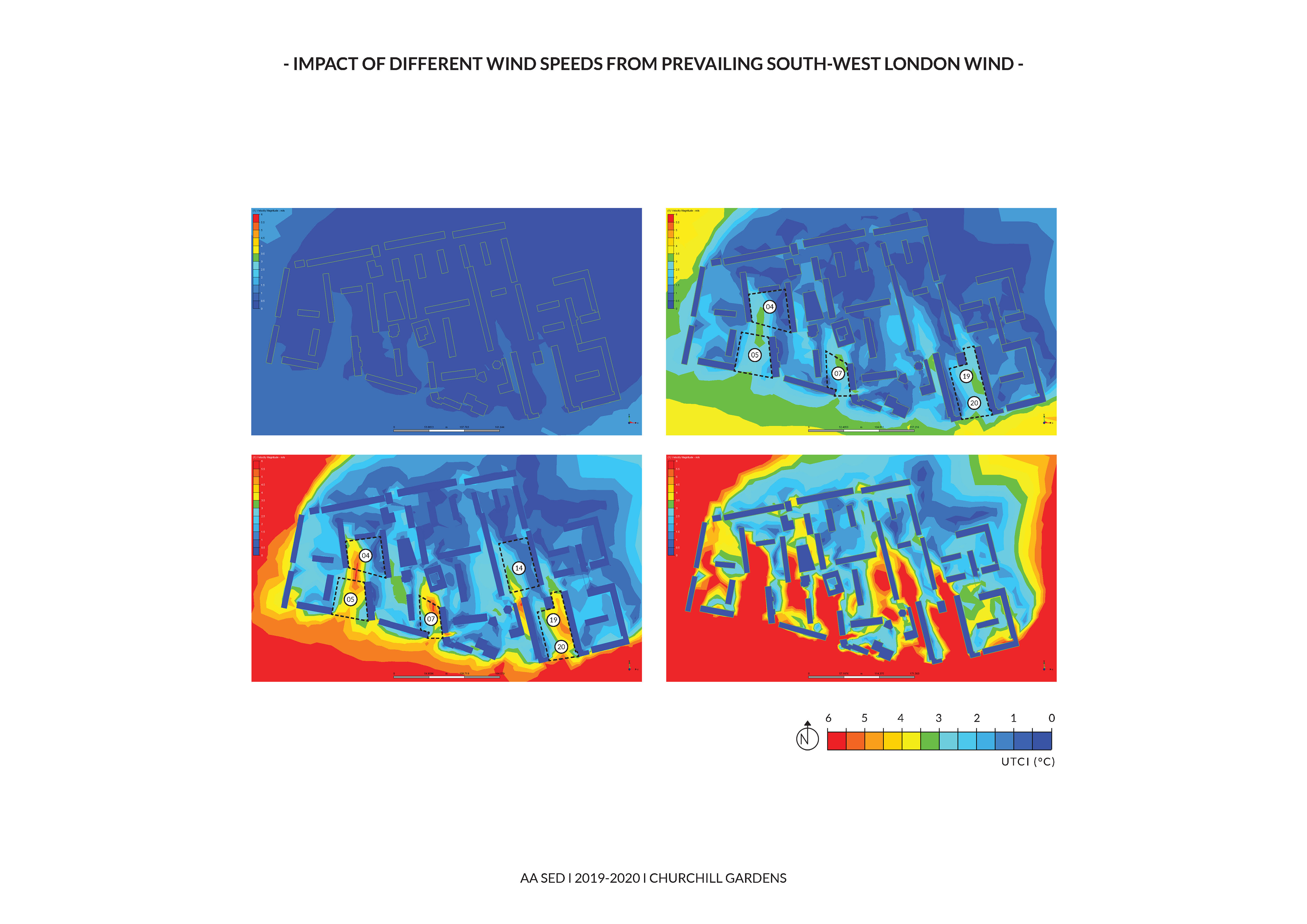
Impact of different wind speeds from prevailing south-west London wind
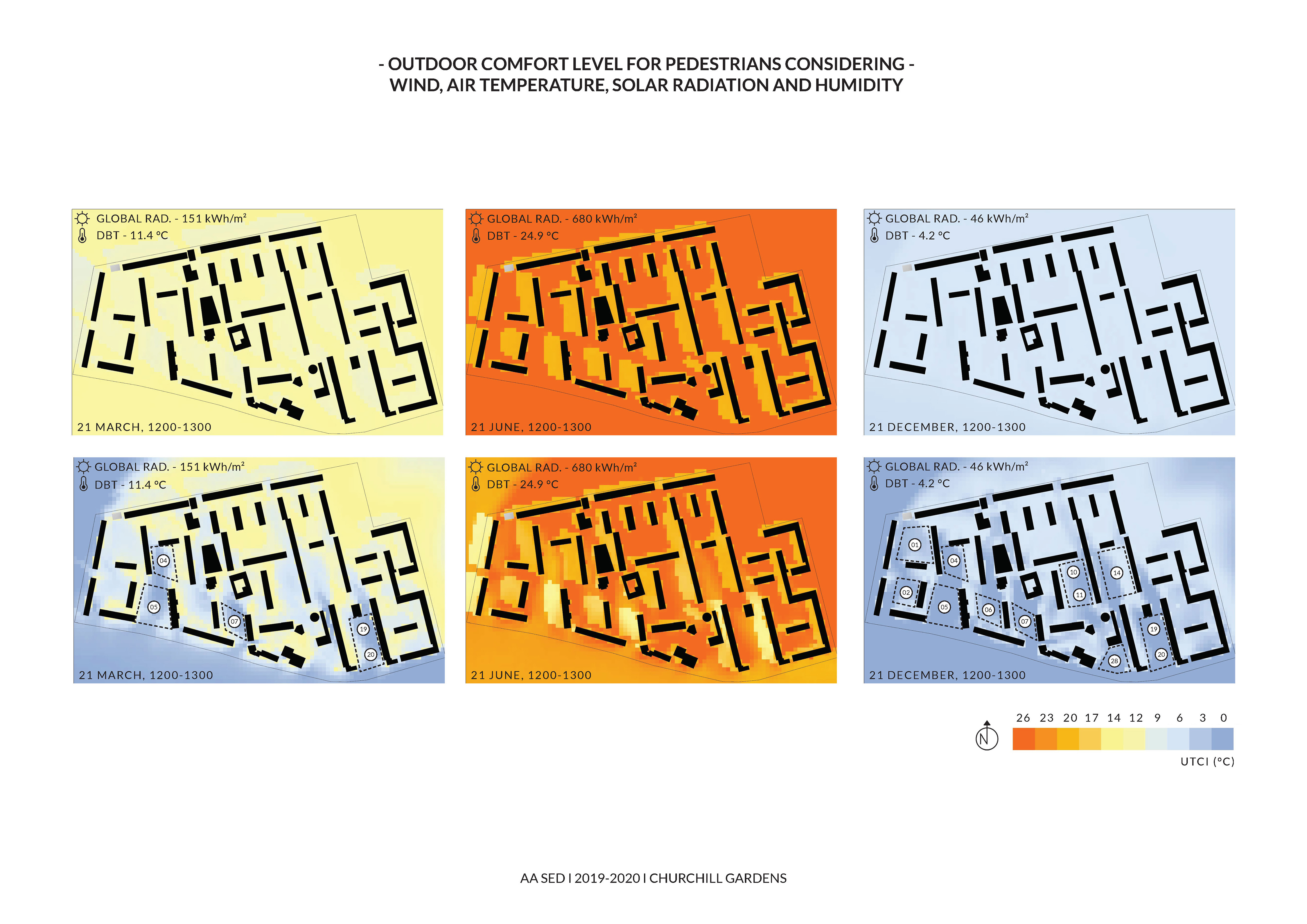
Outdoor comfort level for pedestrians considering wind, air temperature, solar radiation and humidity
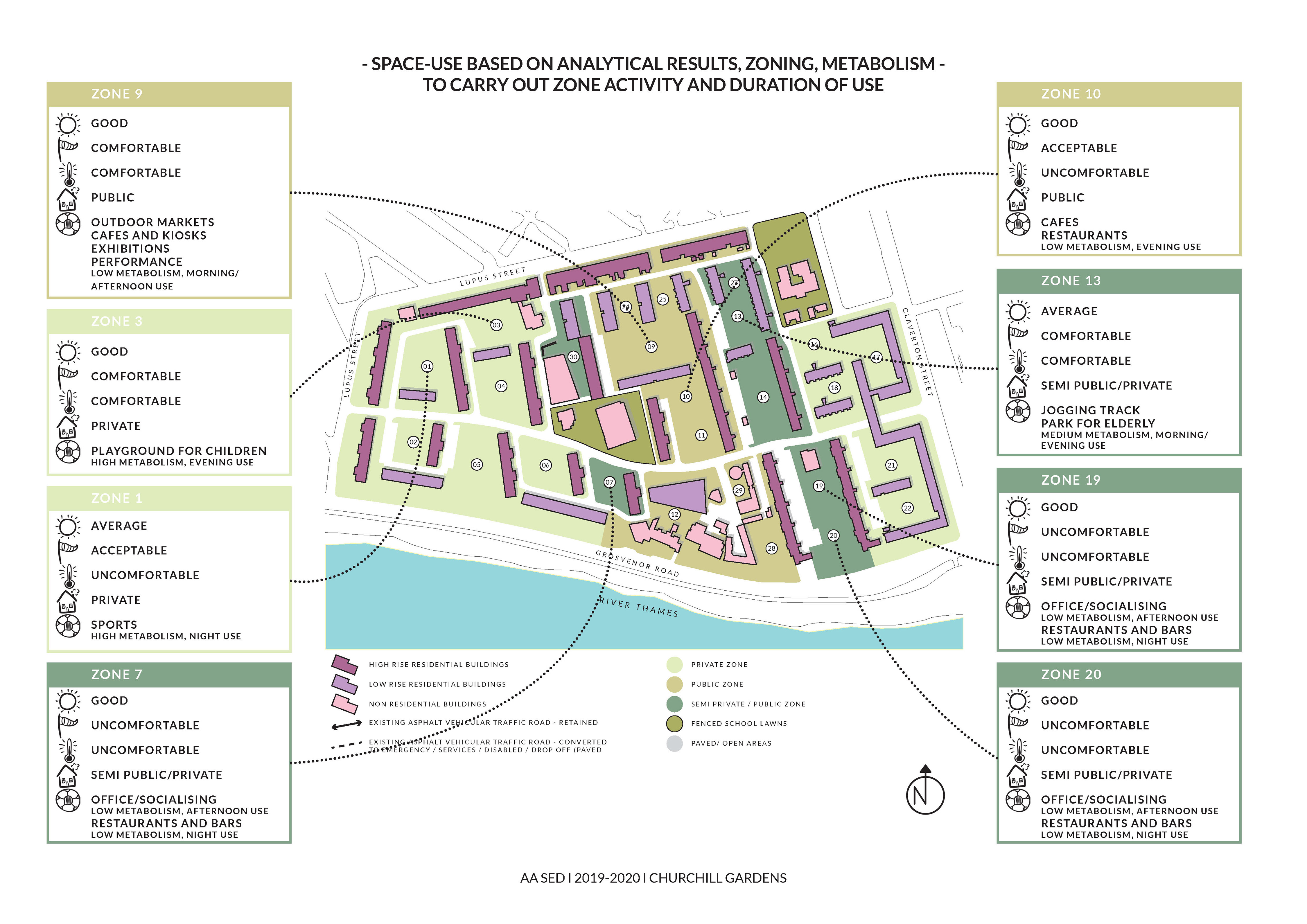
Space-use based on analytical results, zoning, metabolism to carry out zone activity and duration of use
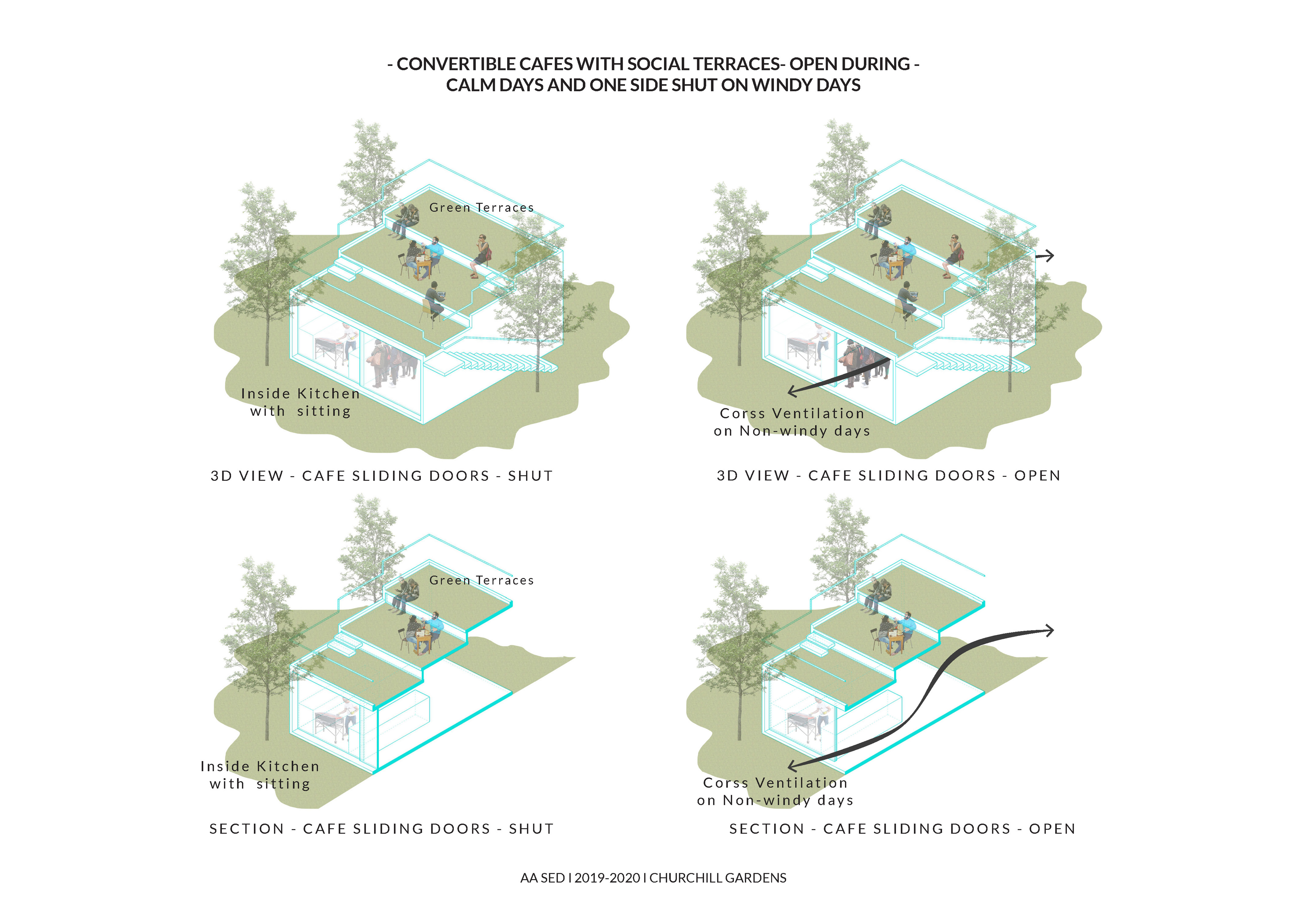
Convertible Cafes with social terraces- open during calm days and one side shut on windy days
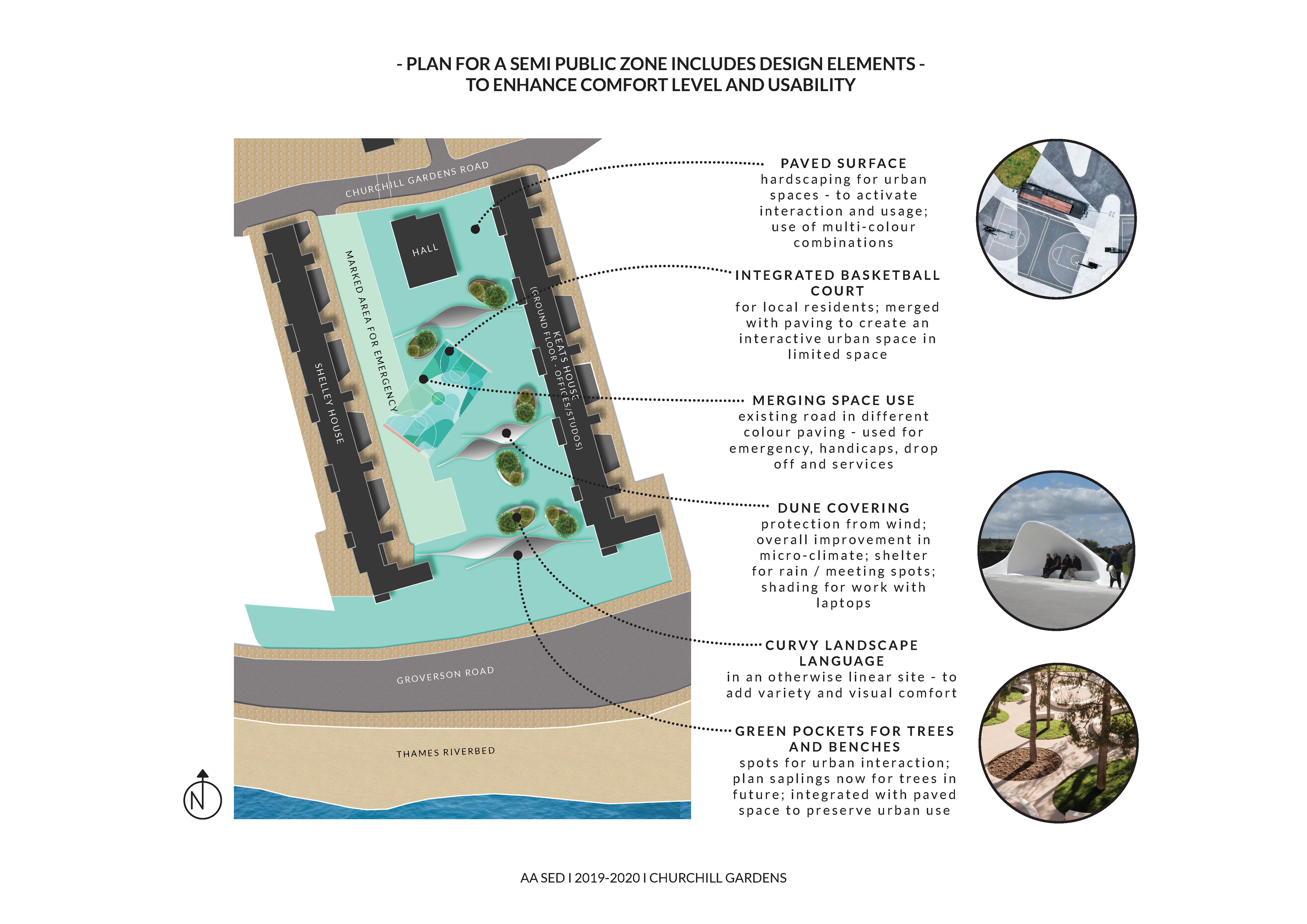
Plan for a semi public zone includes design elements to enhance comfort level and usability
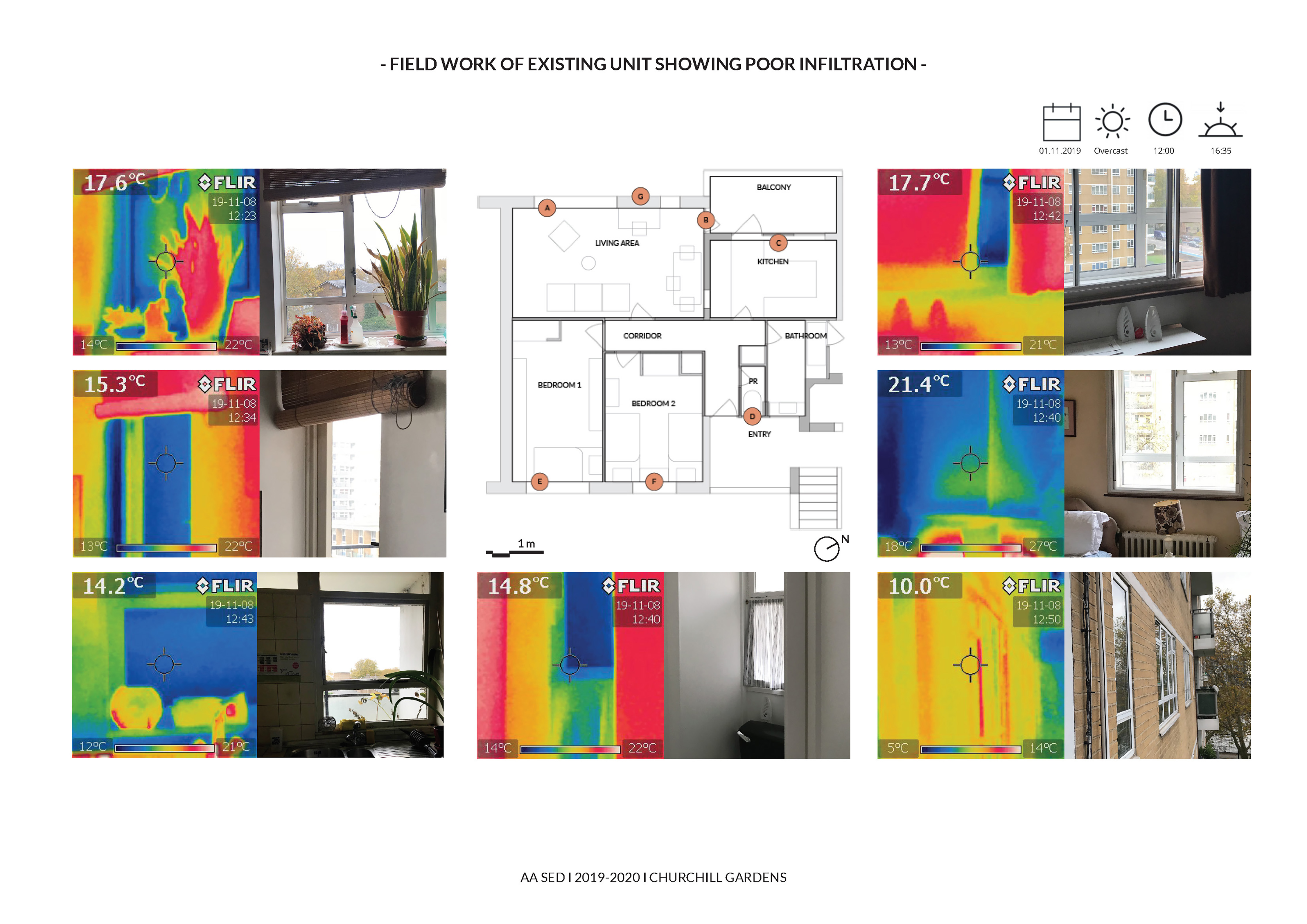
Field work of existing unit showing poor infiltration
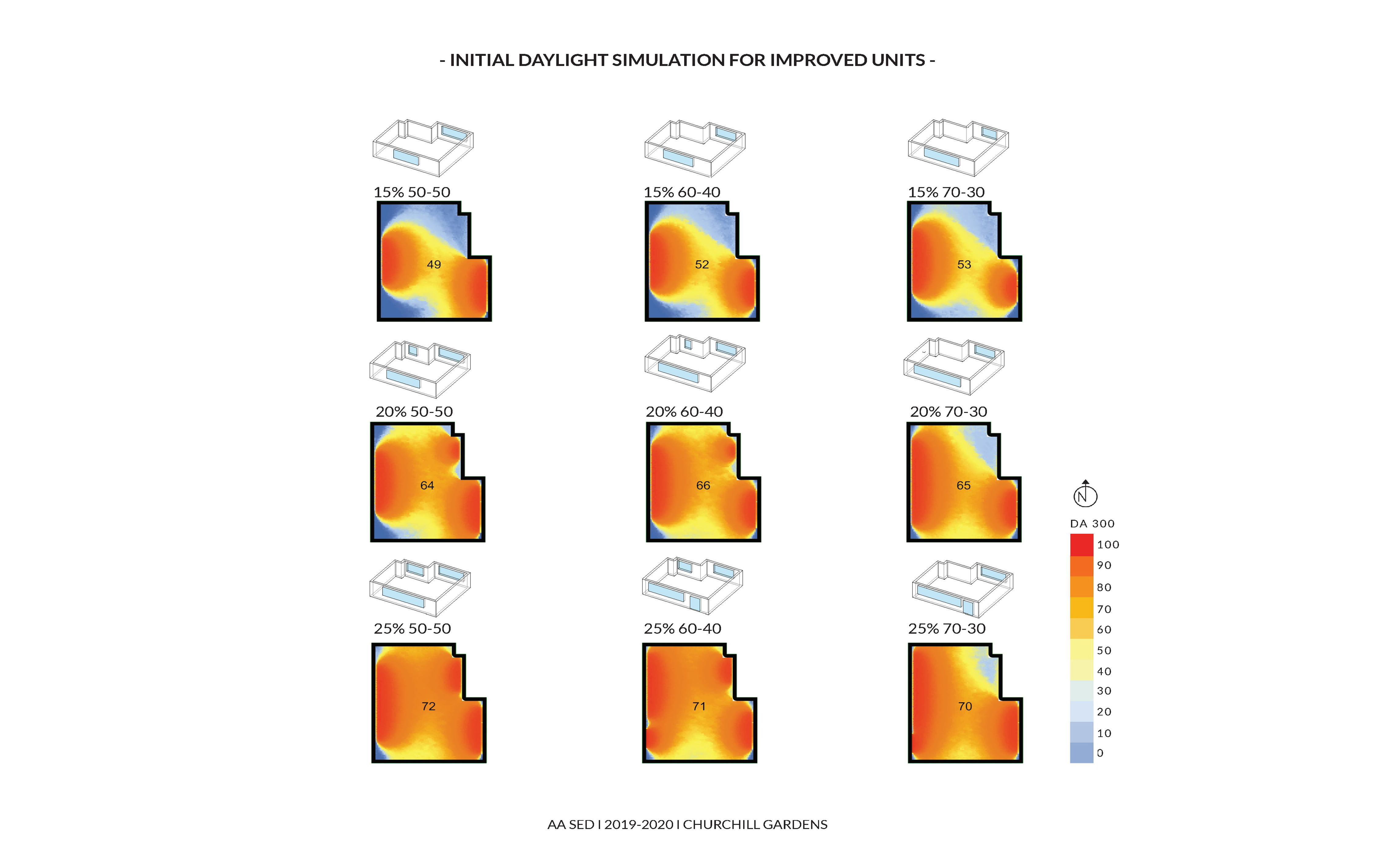
Initial Daylight simulation for improved units
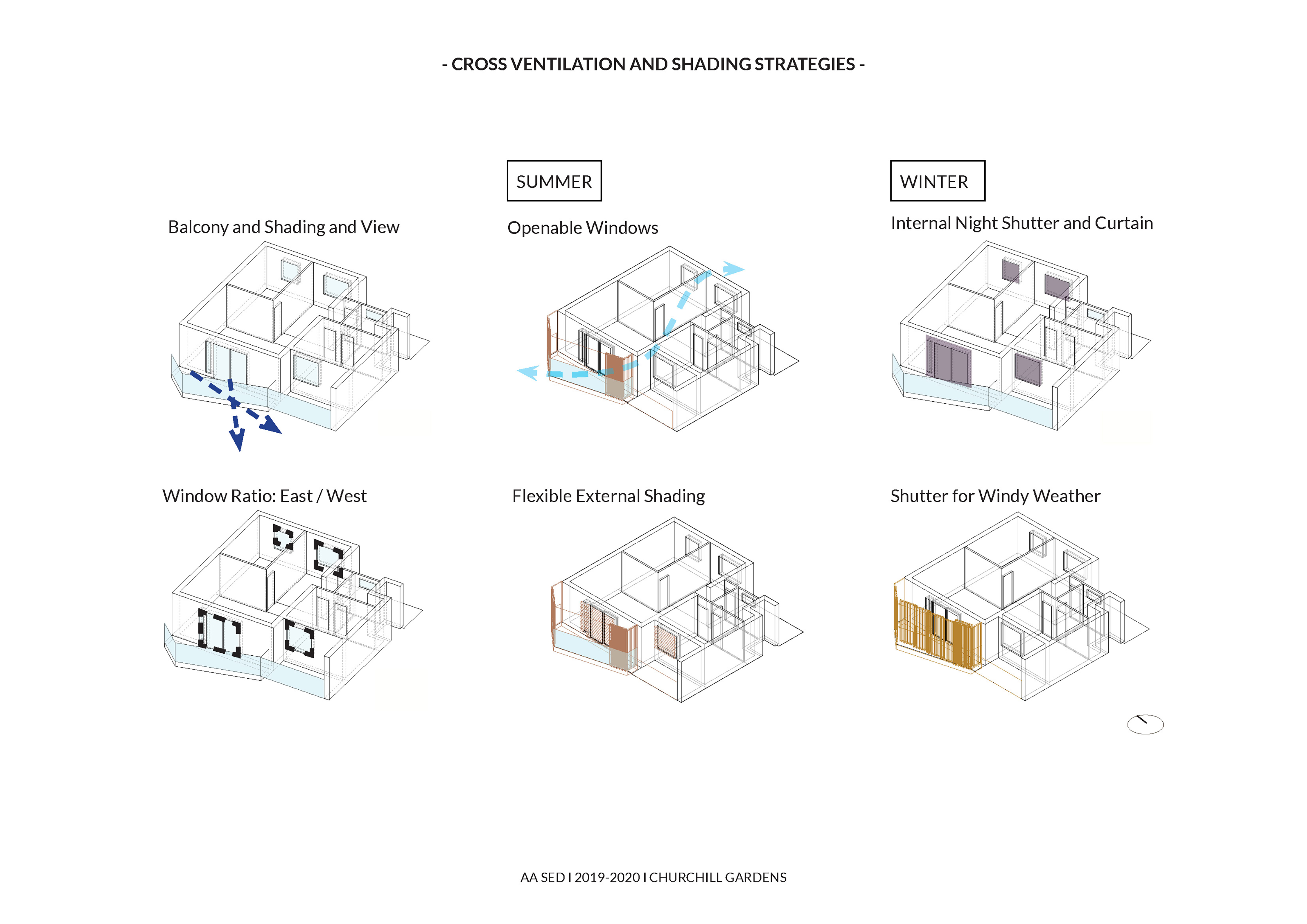
Cross Ventilation and Shading strategies
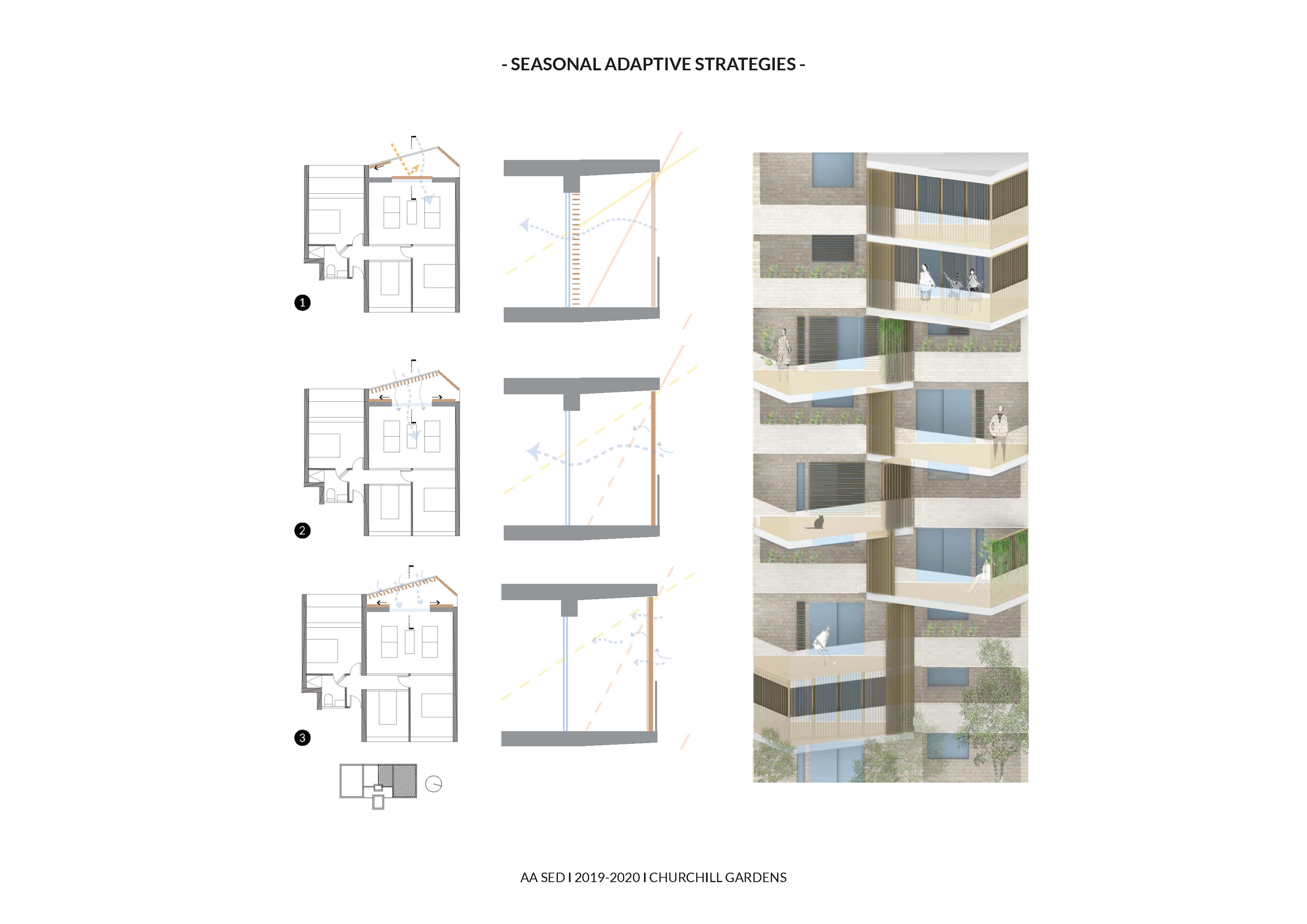
Seasonal Adaptive strategies
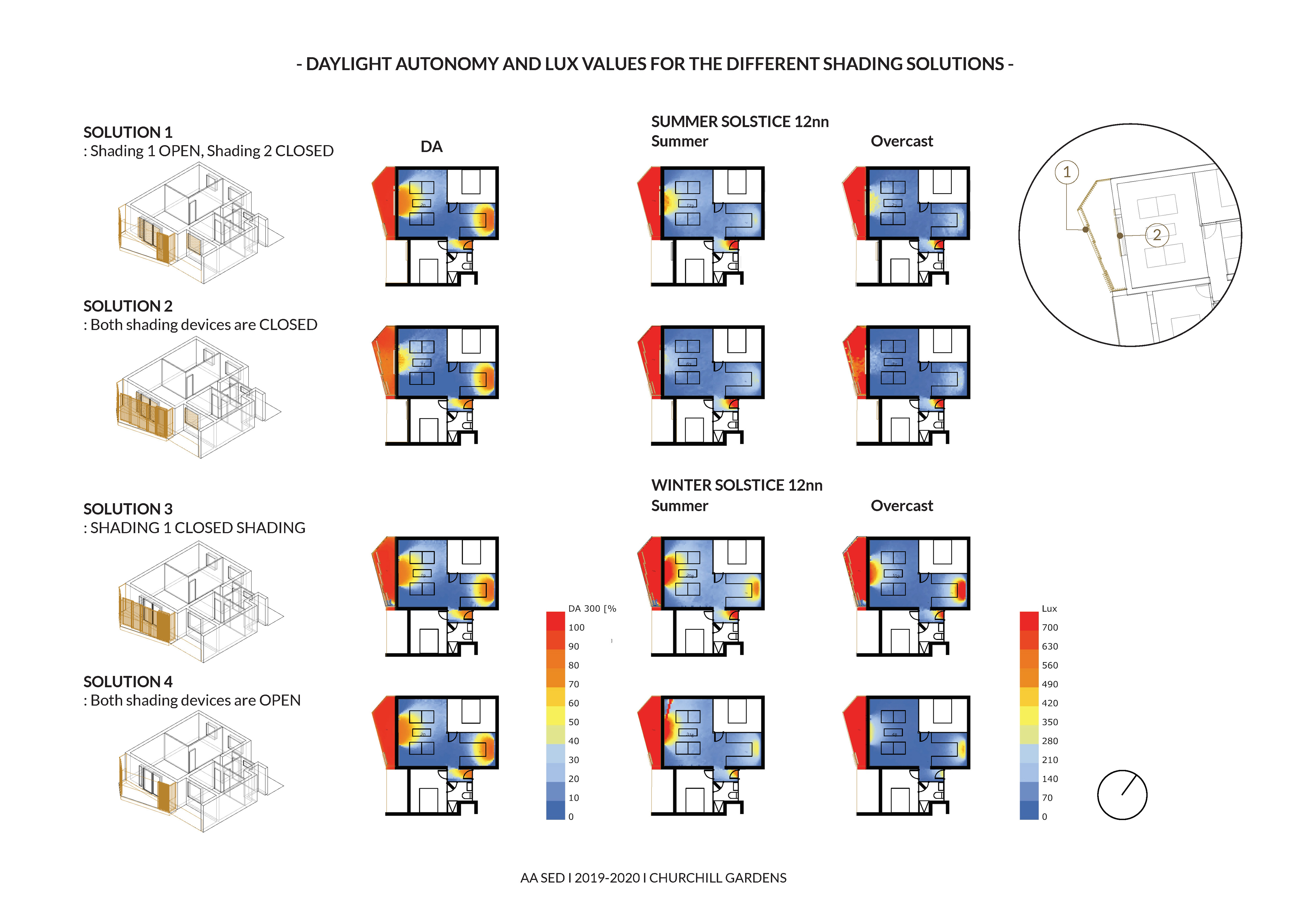
Daylight autonomy and lux values for the different shading solutions
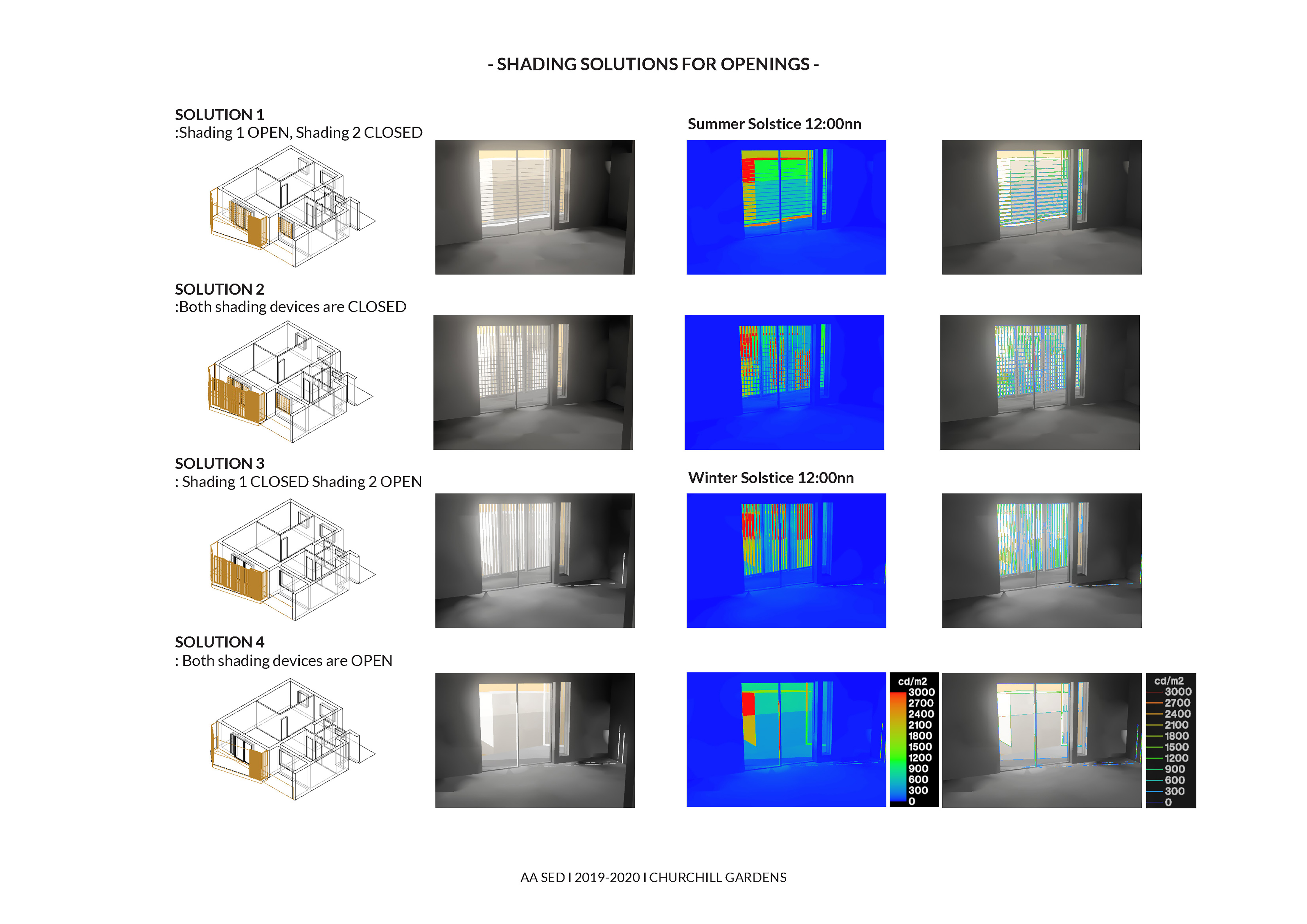
Shading Solutions for openings
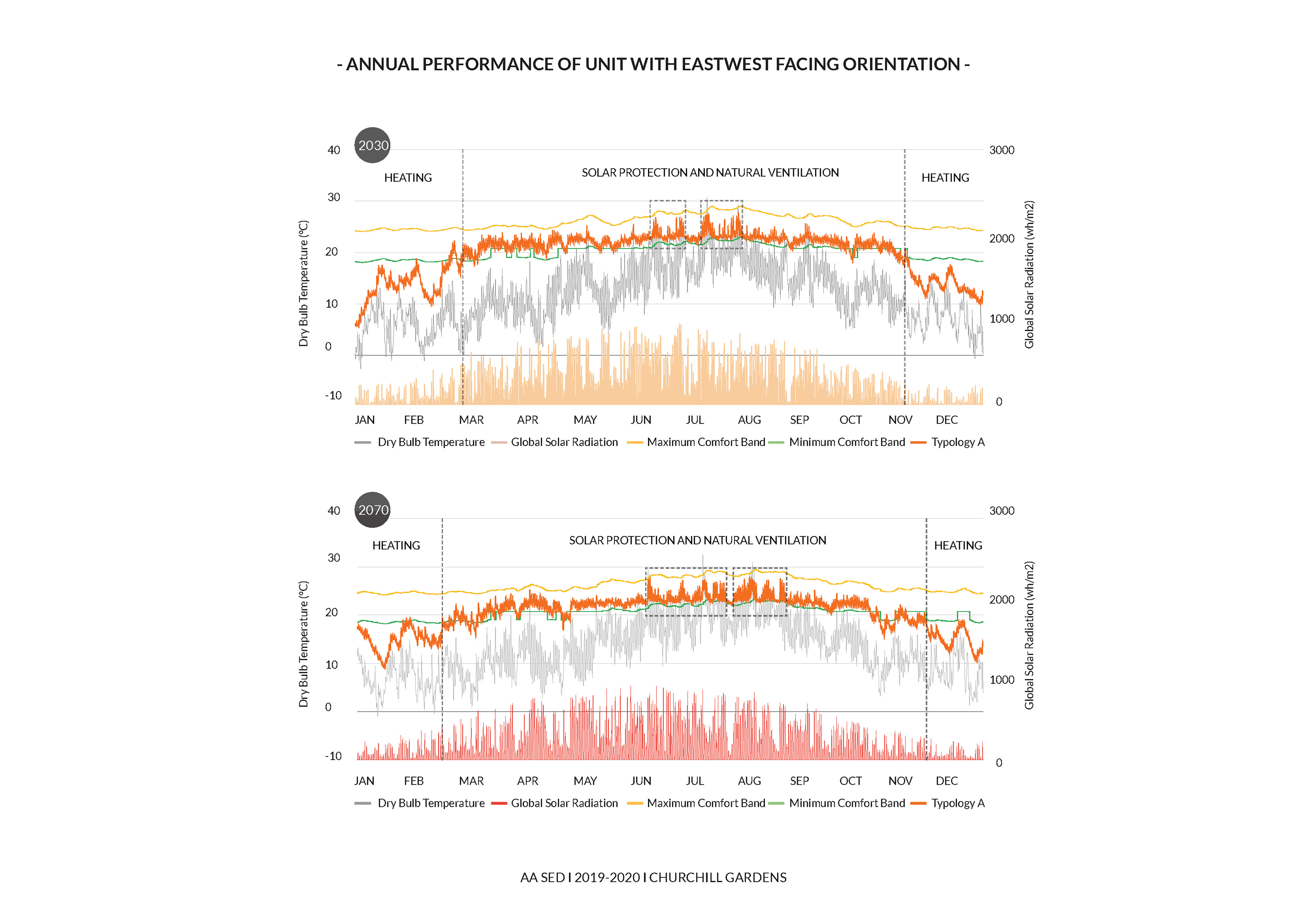
Annual performance of unit with east-west facing orientation
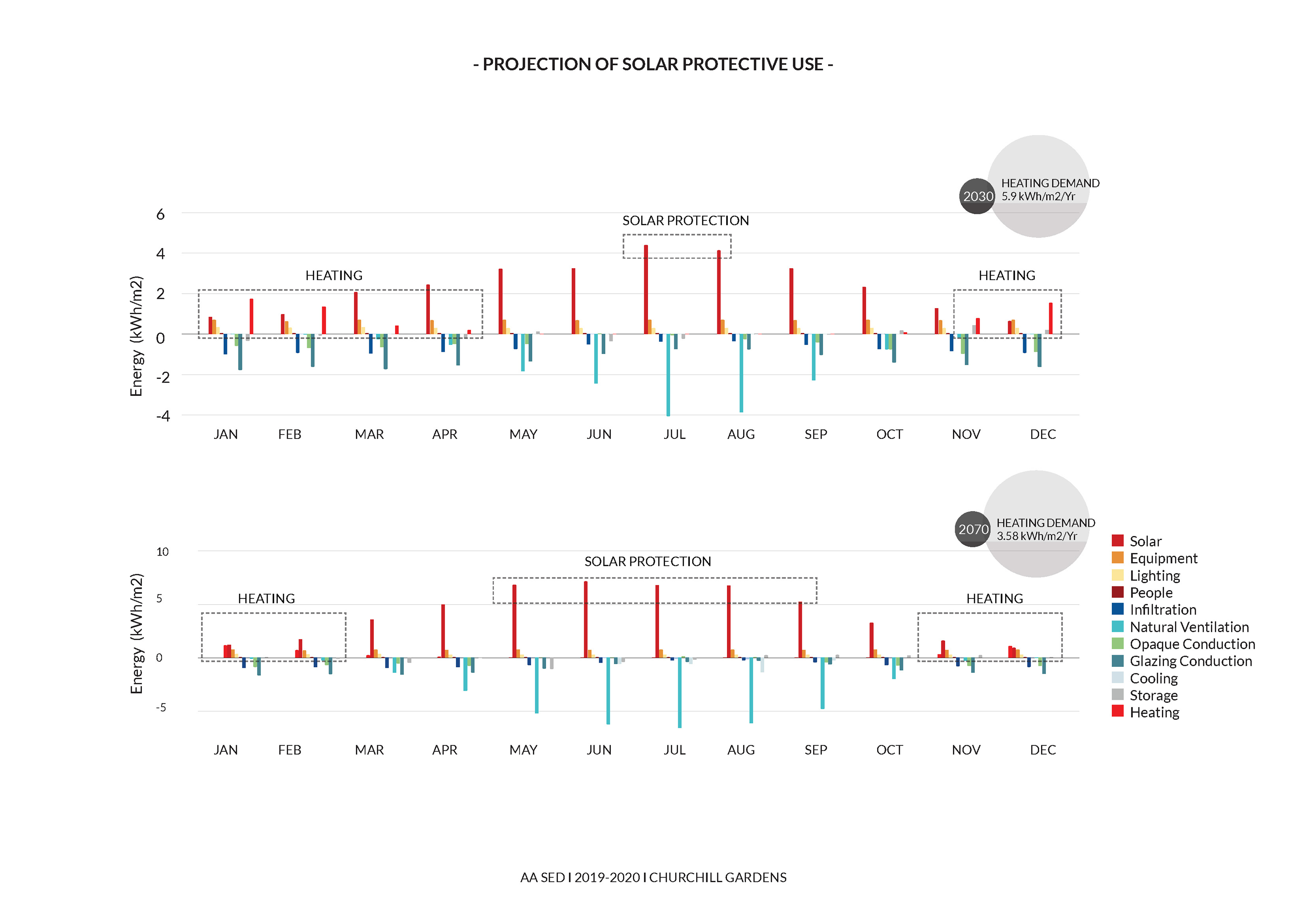
Projection of solar protective use
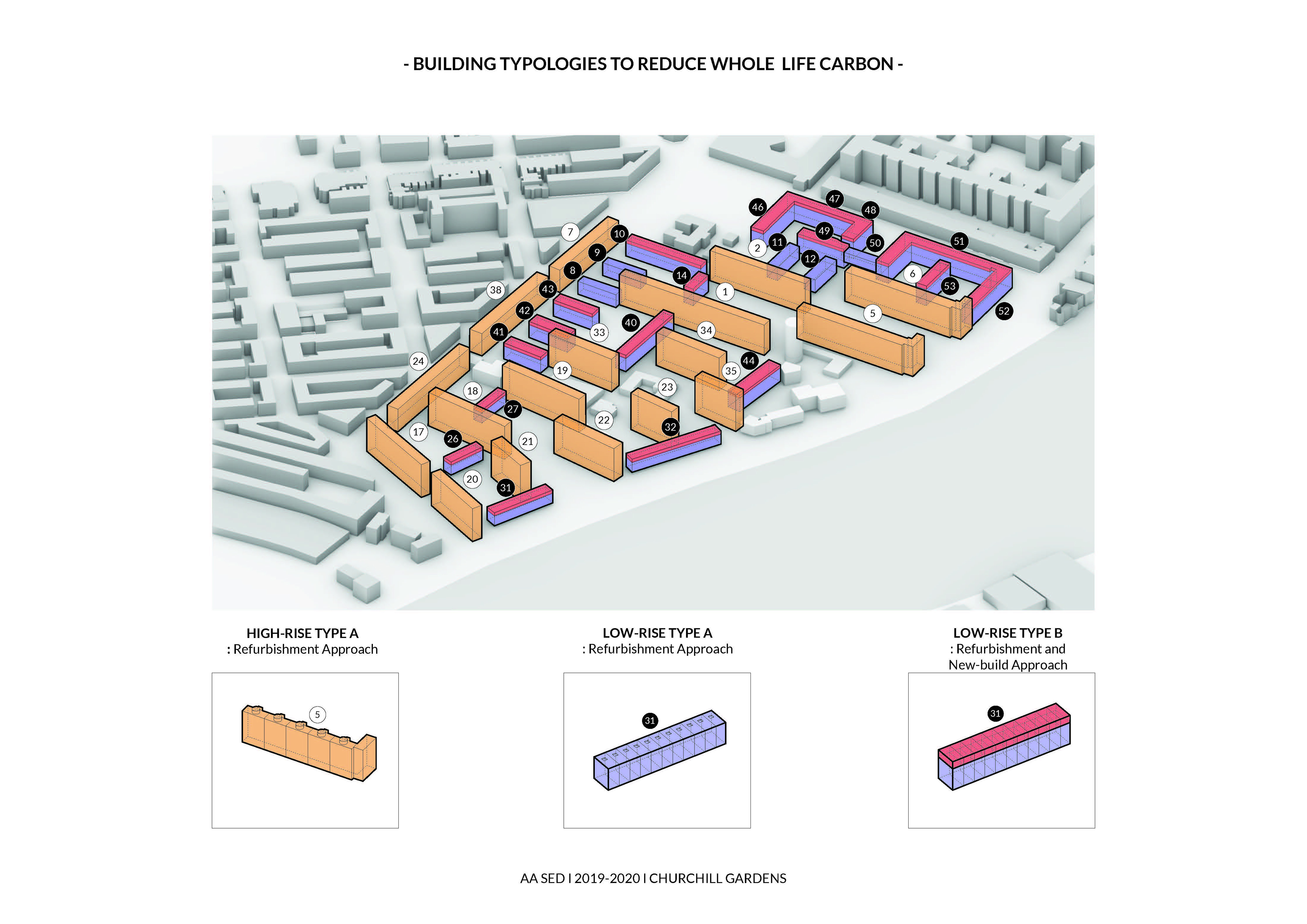
Building Typologies to Reduce Whole Life Carbon