Collective Land: Community-driven Housing in Bangkok
Witthawat Prabhasawat
The thesis examines community housing-driven programmes in the context of Bangkok, which offers cooperative housing development within the extreme conditions of privatisation. With the collective ownership, it redefines the concept of ownership, which significantly affects a range of factors concerning housing development, from investment models, land uses, programme requirements, to management, etc. Also, the cooperative housing programme in Bangkok redefines the relationship between property and housing development, since housing development can take place through negotiation between stakeholders. Considering a specific cooperative housing programme, the study in this thesis presents a strategy of collaborative development with a different framework of ownership for a cooperative programme in wider contexts.
A focus of this thesis is the development process for the community-driven housing programme, as it offers forms of negotiation between communities and landowners. It proposes the community-driven housing process to benefit low-income people in Bangkok. As such, the emerging conditions of mixed ownership from cooperative programmes impact different aspects of the development process, such as investment model, programme requirements, management.
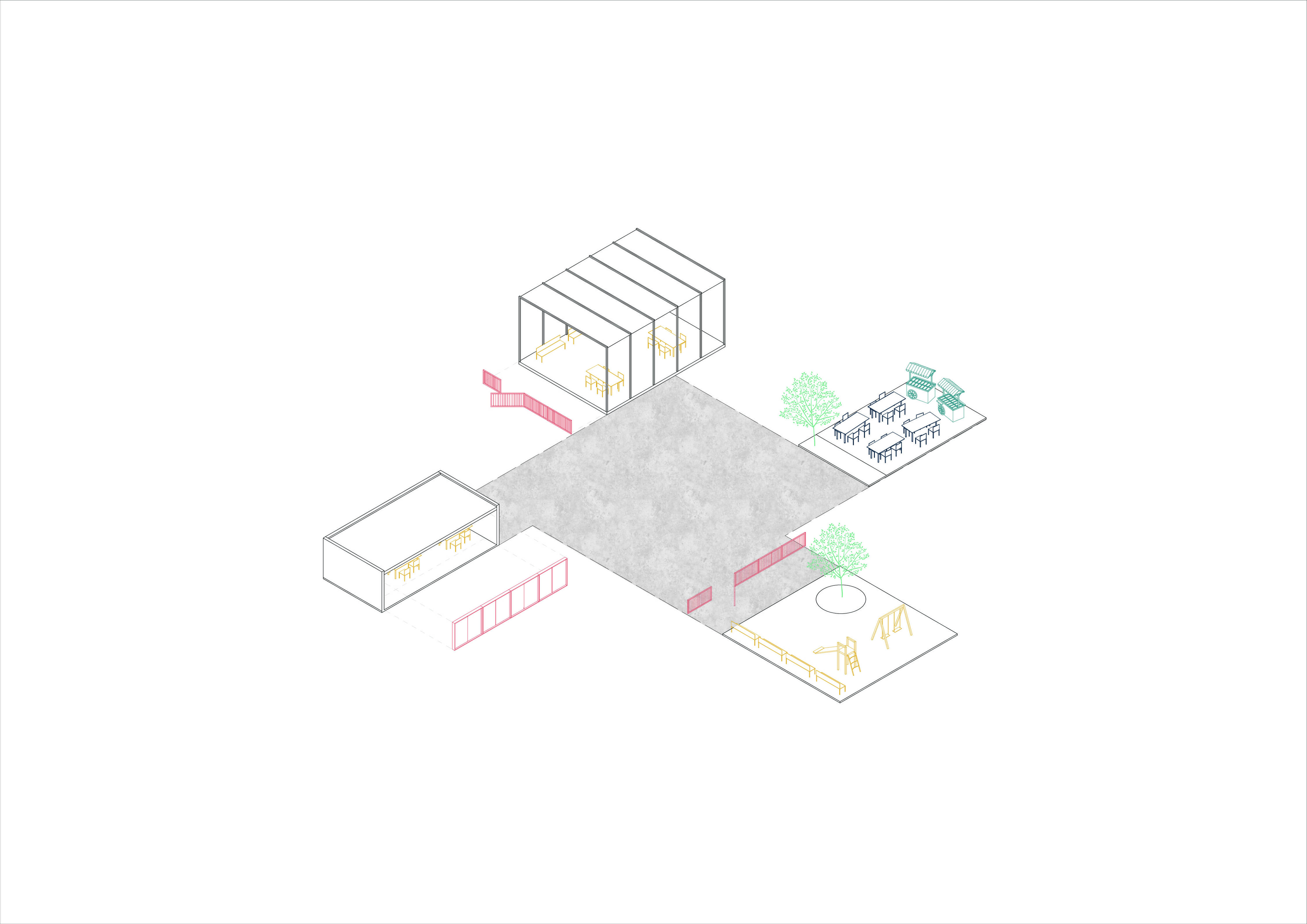
Relationship between Thresholds and common facilities

Transparent wall as Threshold

Mesh wall as Threshold

Solid Wall as Threshold
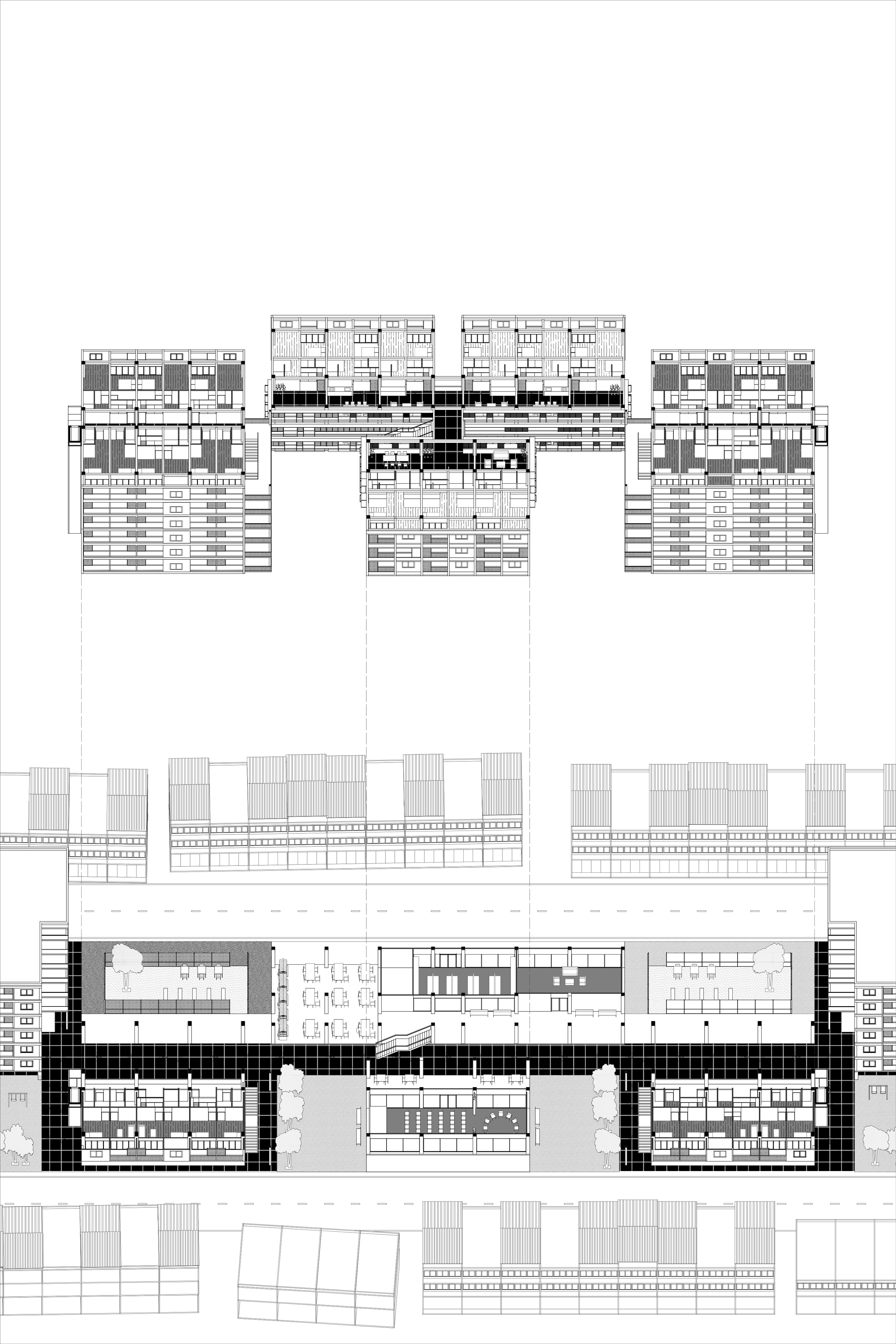
1st proposed site - Public housing and cooperative development on public land
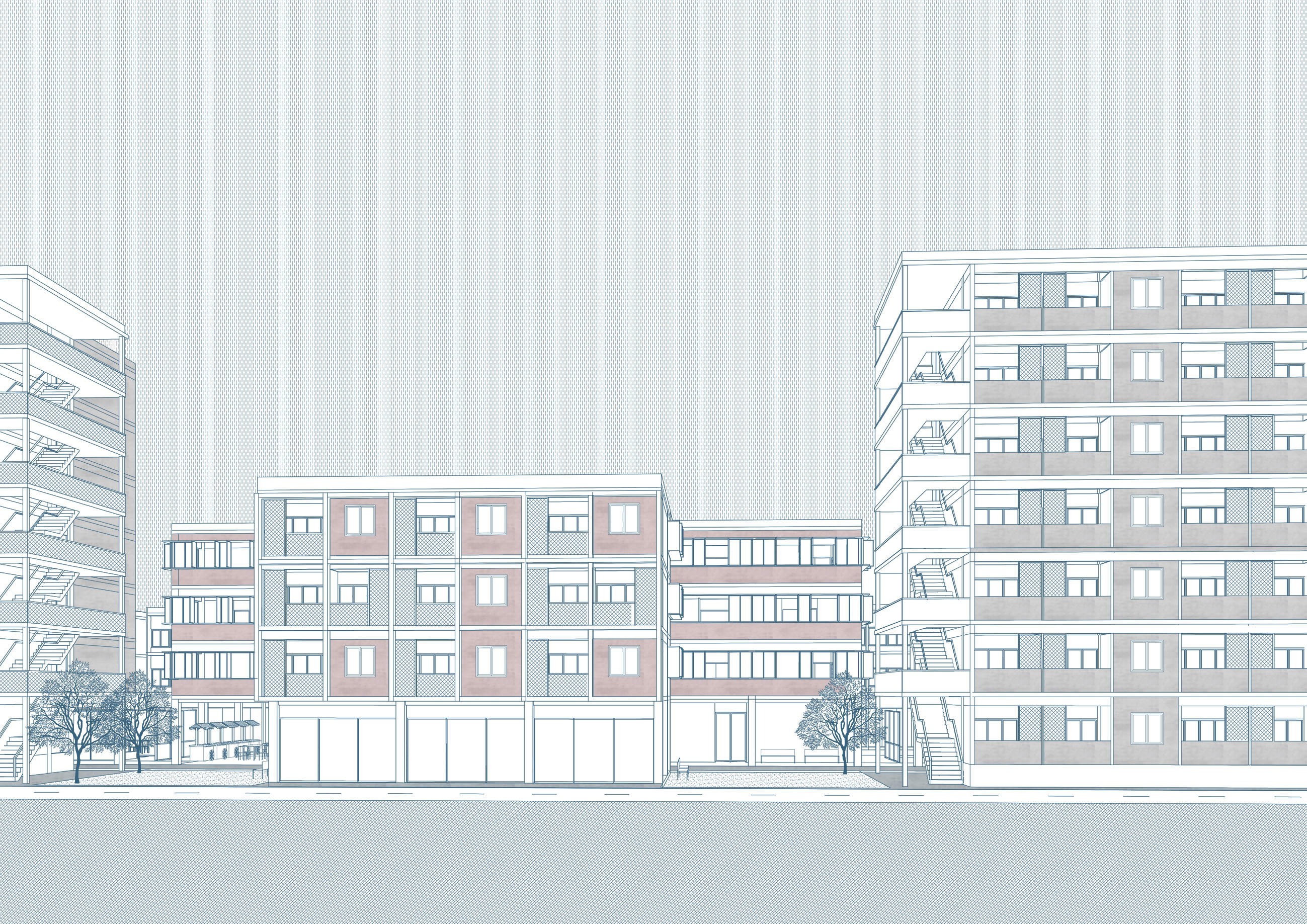
Perspective of the collaborative development between public housing and cooperative
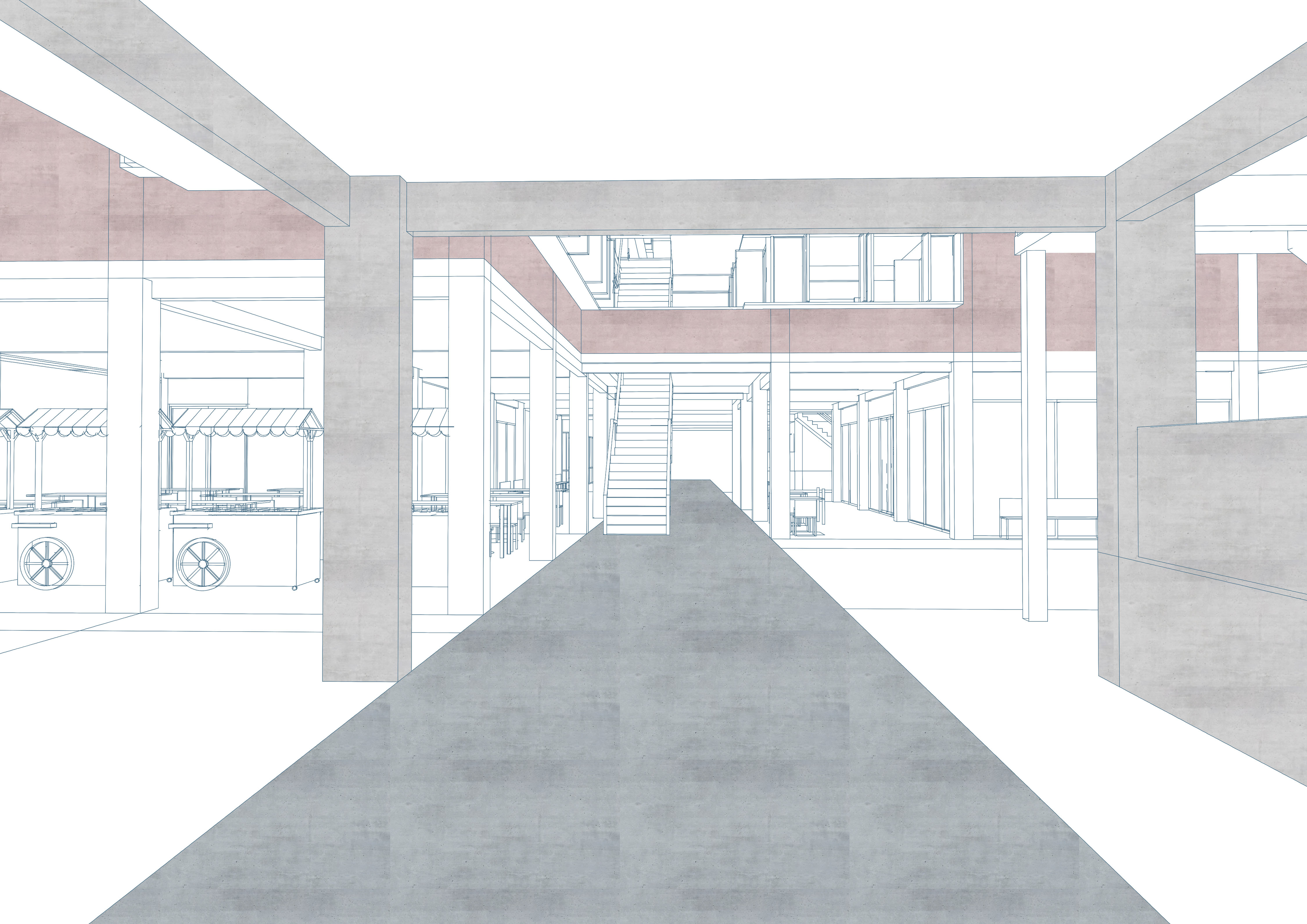
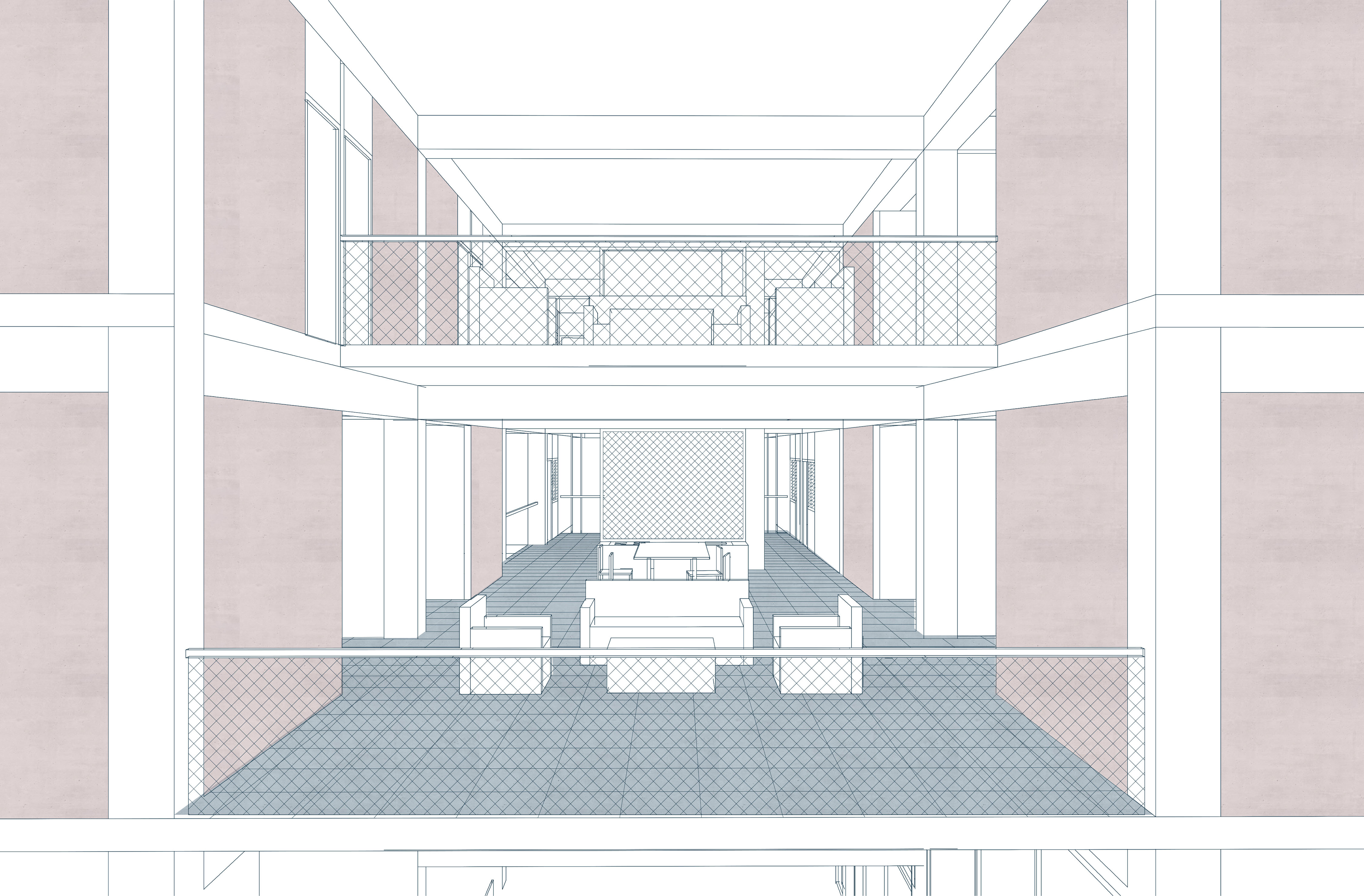
Perspective of ground floor facilities for public housing and cooperative
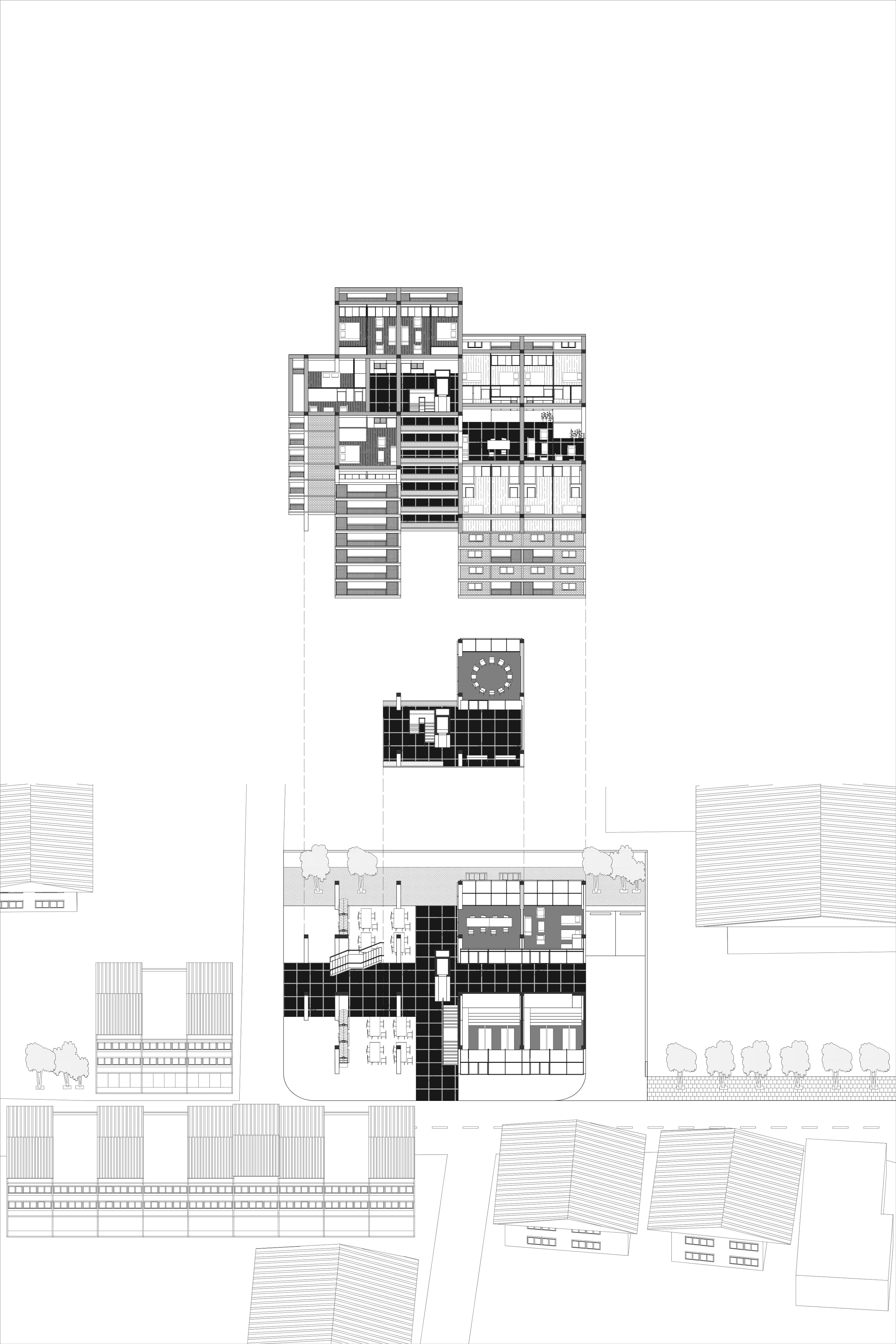
1st proposed site - Private and cooperative development on Private
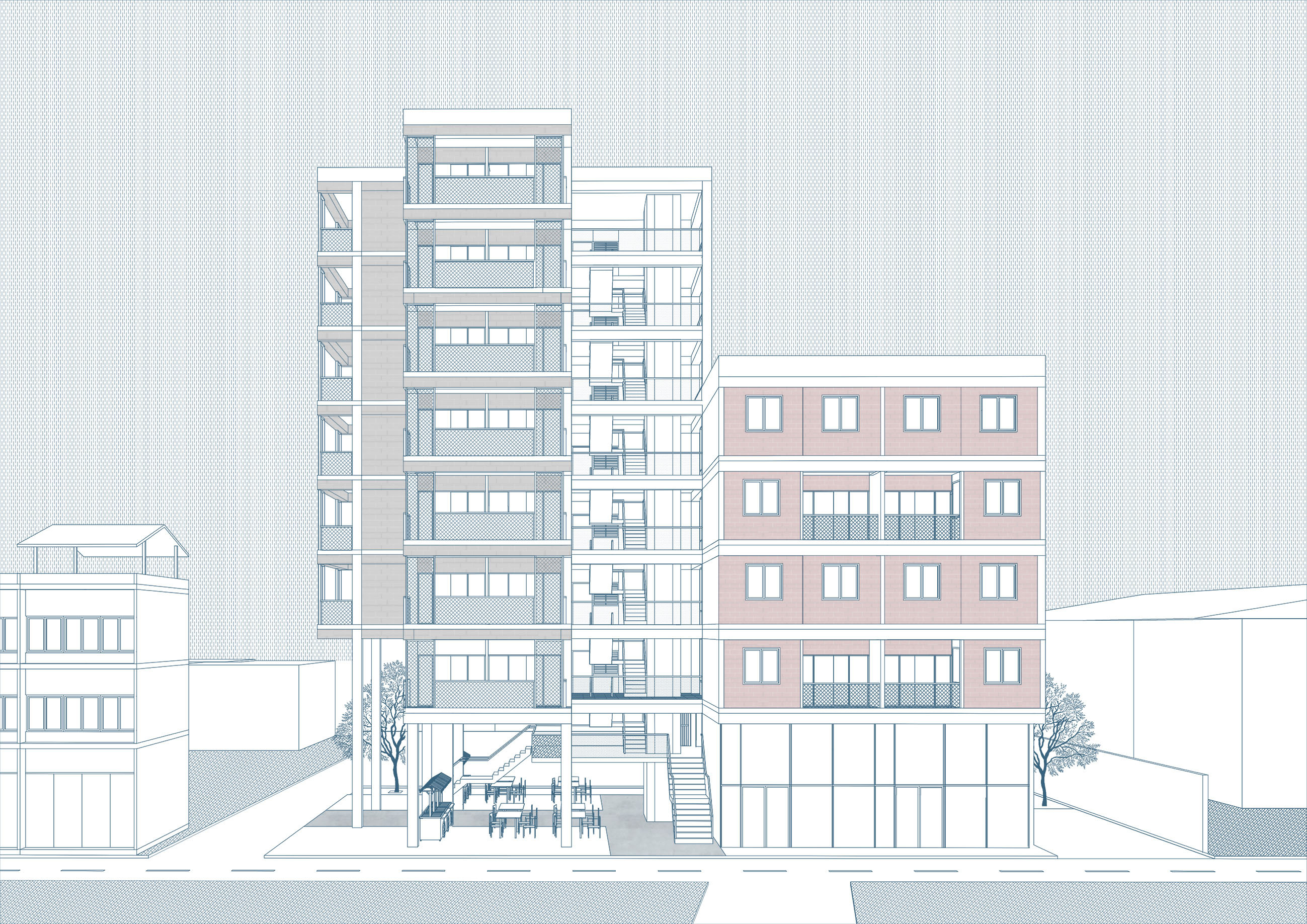
Perspective of the collaborative development between private housing and cooperative