The project stems from understanding the deep-rooted social caste structure in India. Using this as a key foundation for my research the project questions these imposed ideals (inter-caste living and inter-caste weddings) for a less prescriptive way of life through the construction of temporary bamboo structures called pandals.
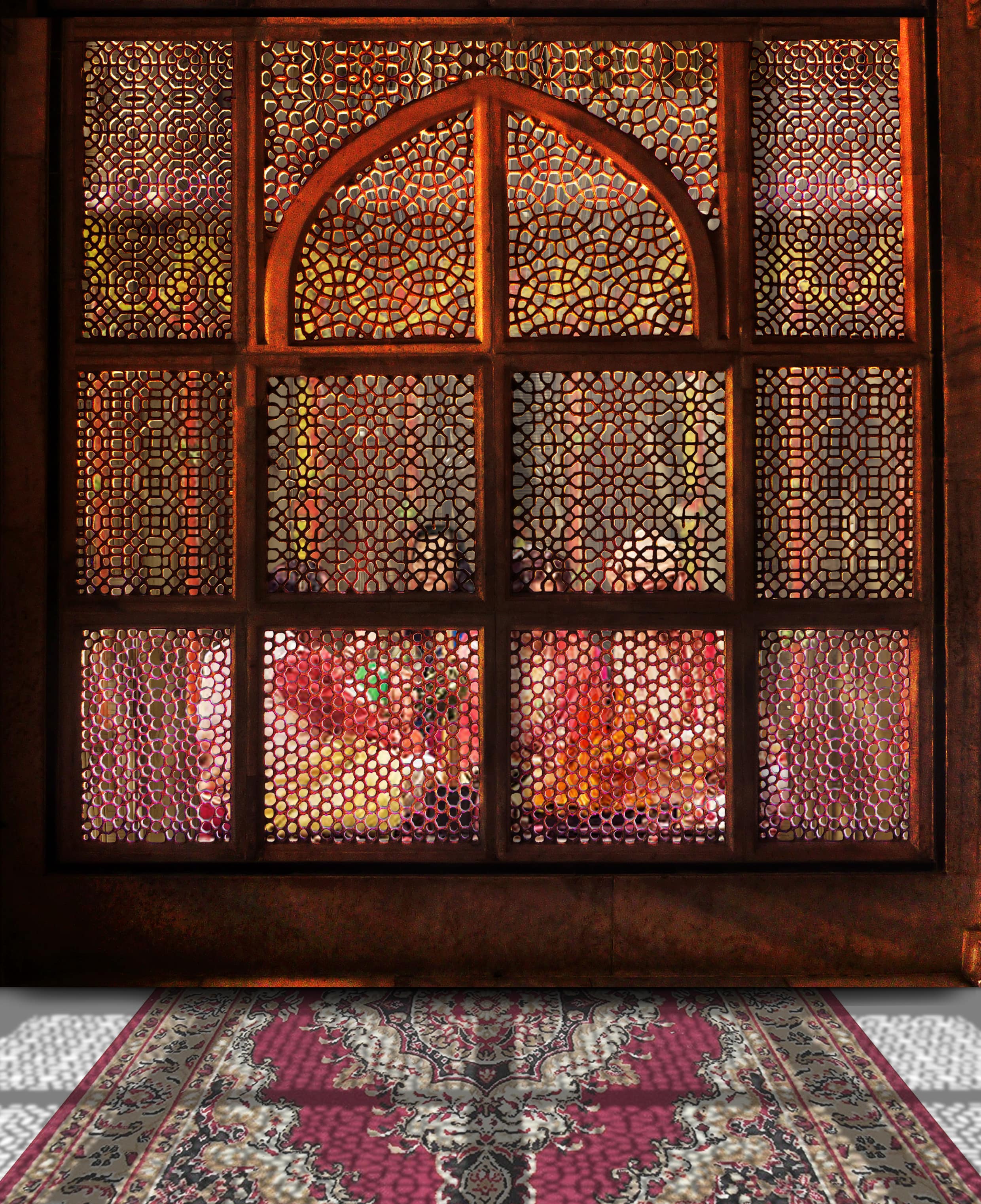
These traditional symbols are vital for the institution of marriage to use the pandal as a transitionary period.The relationship between the wedding, the domestic, and the public experience is vital.
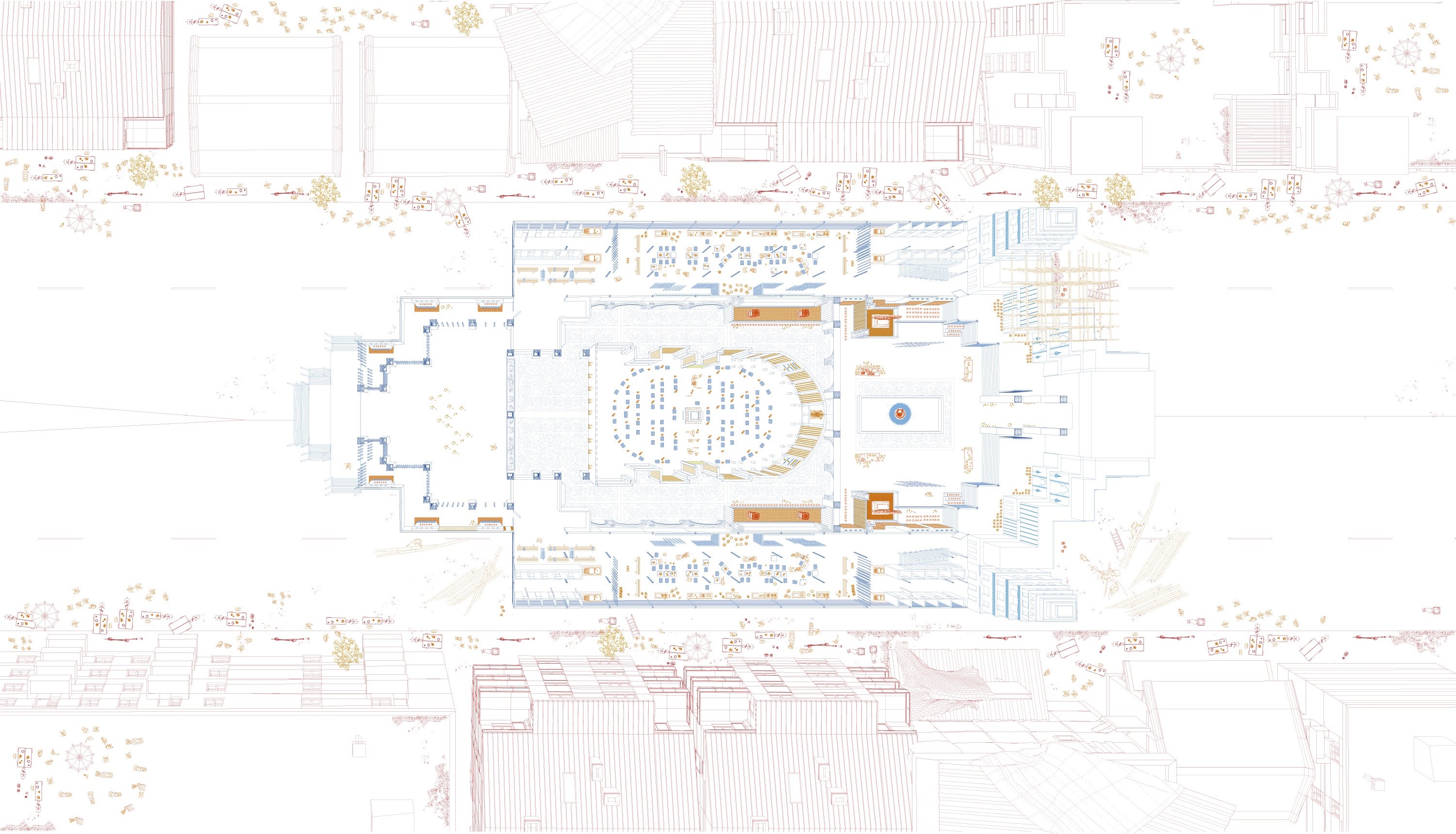
The enclosed are the familiar spaces - the facade, the gate, the decorations, and the whole ‘public experience’ and the unfamiliar spaces - the domesticated and wedding spaces.
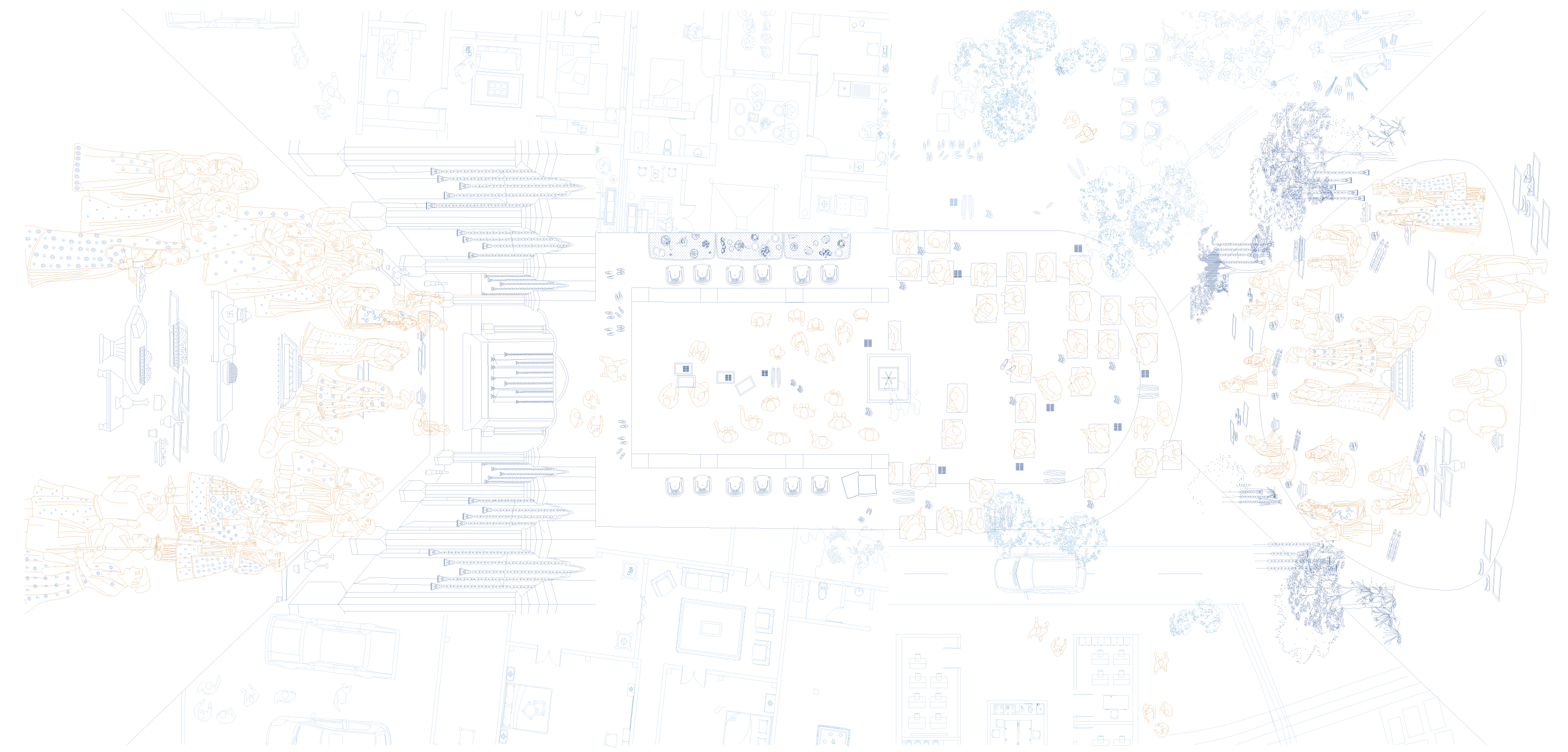
The Axis Mundi explores the wedding as a sacrilegious event. In both the typical and the inter-caste weddings they both maintain the ceremonial symbols of the wedding.
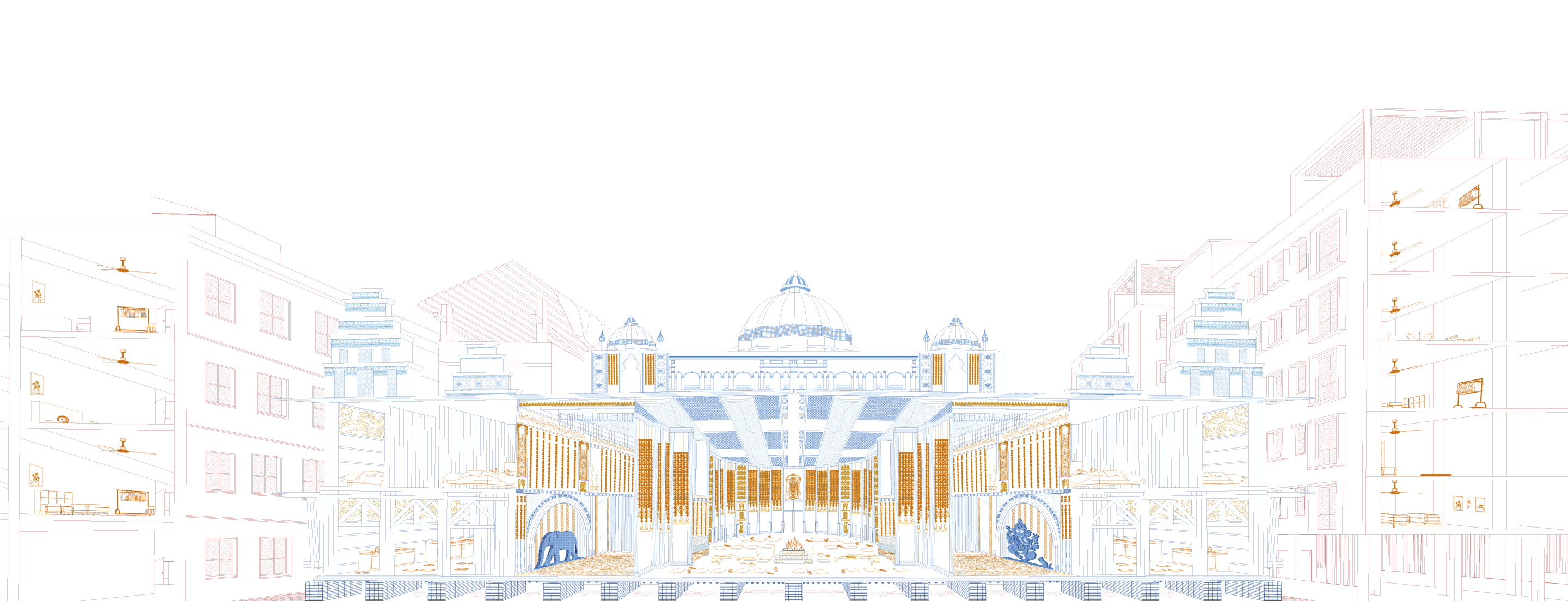
The wedding is in the center of the pandal, the place in Hindu architecture with the most positive energies combined. The objects are centralized with the mandap, the fire element.
.jpg)