K-Pop Incubator House: A House for 50 Permanent Idols
Shanna Chung (Year: 2)
Stage-Garden-Park
Acting as a subversive scheme to the mainstream K-Pop industry, the project democratises the structured idol-production mechanism by enabling the construction and negotiation of the inhabitant’s own living condition. The project is introverted, shifting the focus from the hierarchical idol-fan relationship to, instead, the collective of individuals that are living together on their own terms. Departing from the cultural spectacle of K-Pop, the inhabitants are able to diverge from the symbolism of the industry’s structured spatial typology to adopt an emancipated lifestyle.
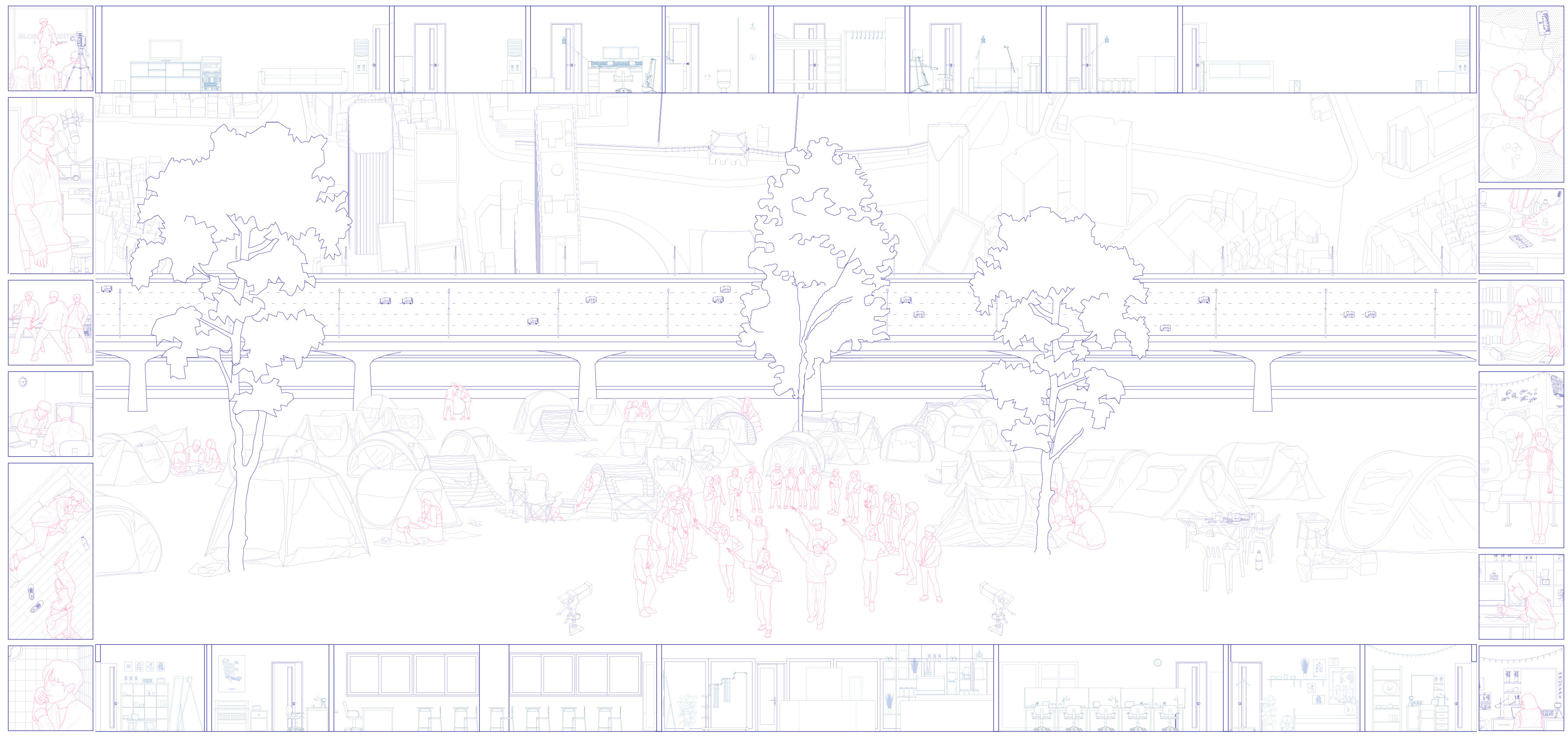
As a vector of normalisation, the stage is a paradigm for the soft power economy, acting as a defining apparatus in the idol’s self-validation. Redefining the spatial organisation of the stage, the performer-observer relationship is fluidified through Random Play Dance, a public dance performance event. In the K-Pop Incubator House, the enclosure of a park with the house establishes a garden that serves as a stage. By domesticating the stage as a living room, the exclusive and precarious sphere of performing is made permanently available as a garden-park; thus, the materialisation of their dreams into life-long projects shifts their status from temporary figures to become permanent idols.
Ordinariness - The Subverted Reflection.jpg)
In the K-Pop industry, the mirror is used to monitor one's appearance to strive towards ‘idol status'; however, it is not the complete reflection of their actual or desired living conditions.

By domestically inhabiting the stage as part of the house, the performative space of the courtyard garden serves as both the stage and a living space for socialising, dining and living.
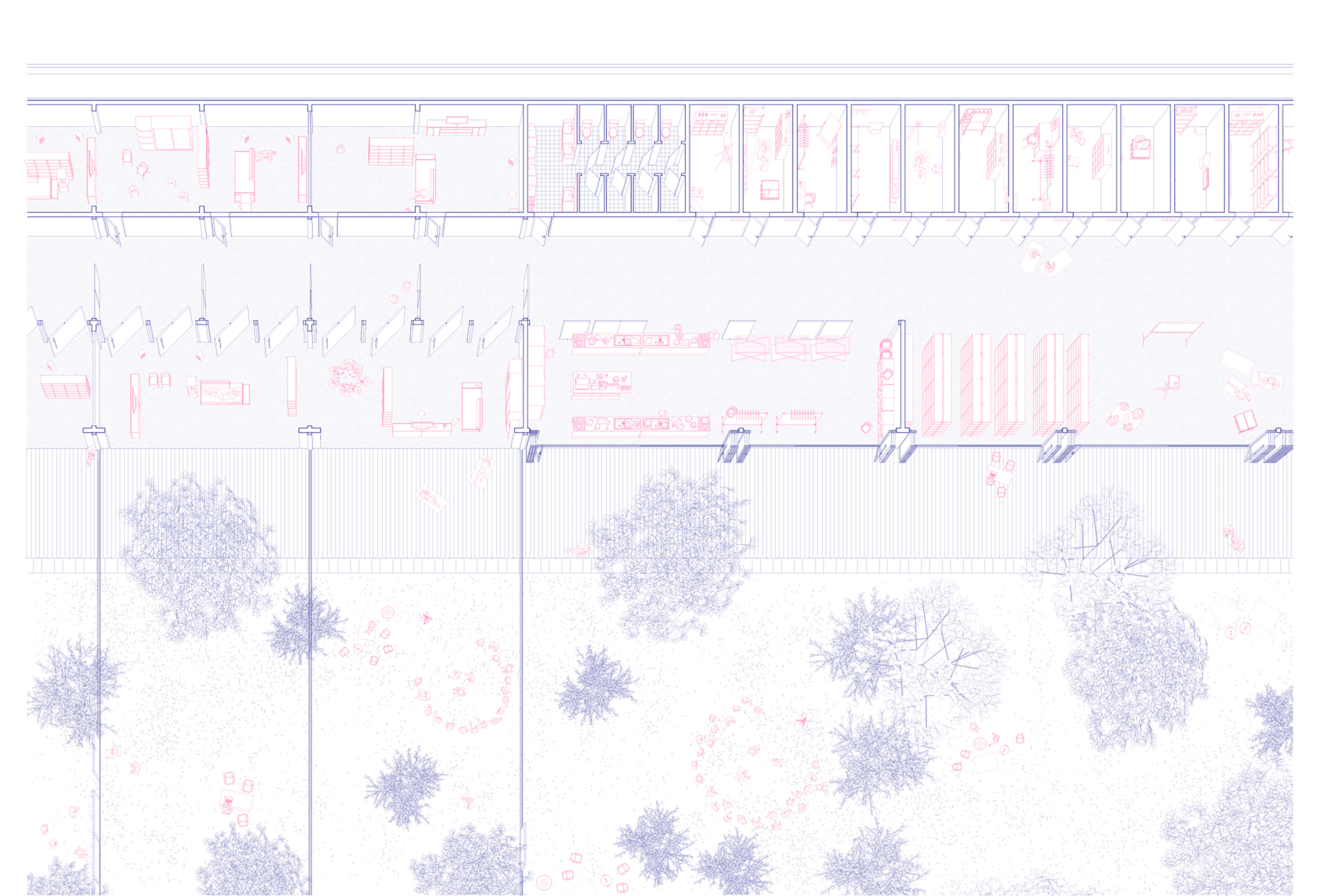
The use of portable furniture and equipment does not define a singular spatial program to the space and, thus, does not choreograph or impose a specific routine on the inhabitants' life.
Use - The Living-Room Stage.jpg)
While the mirror symbolises the idol industry as the locality of practice and performance, it is infused with moments of domestic intermission in the context of the courtyard garden.
Productive Space - Fluid Boundaries - Collectivised Kitchen.jpg)
Departing from the cultural spectacle of K-Pop, the project blurs the structured typology of the productive spaces and non-productive spaces to instigate spatial ambiguity.
Productive Space - Fluid Boundaries - Practice Room.jpg)
Folding and overhead doors completely open into the courtyard to incur spatial continuity; thus, the distinct boundaries of the practice, performance and domestic space become less prescribed.
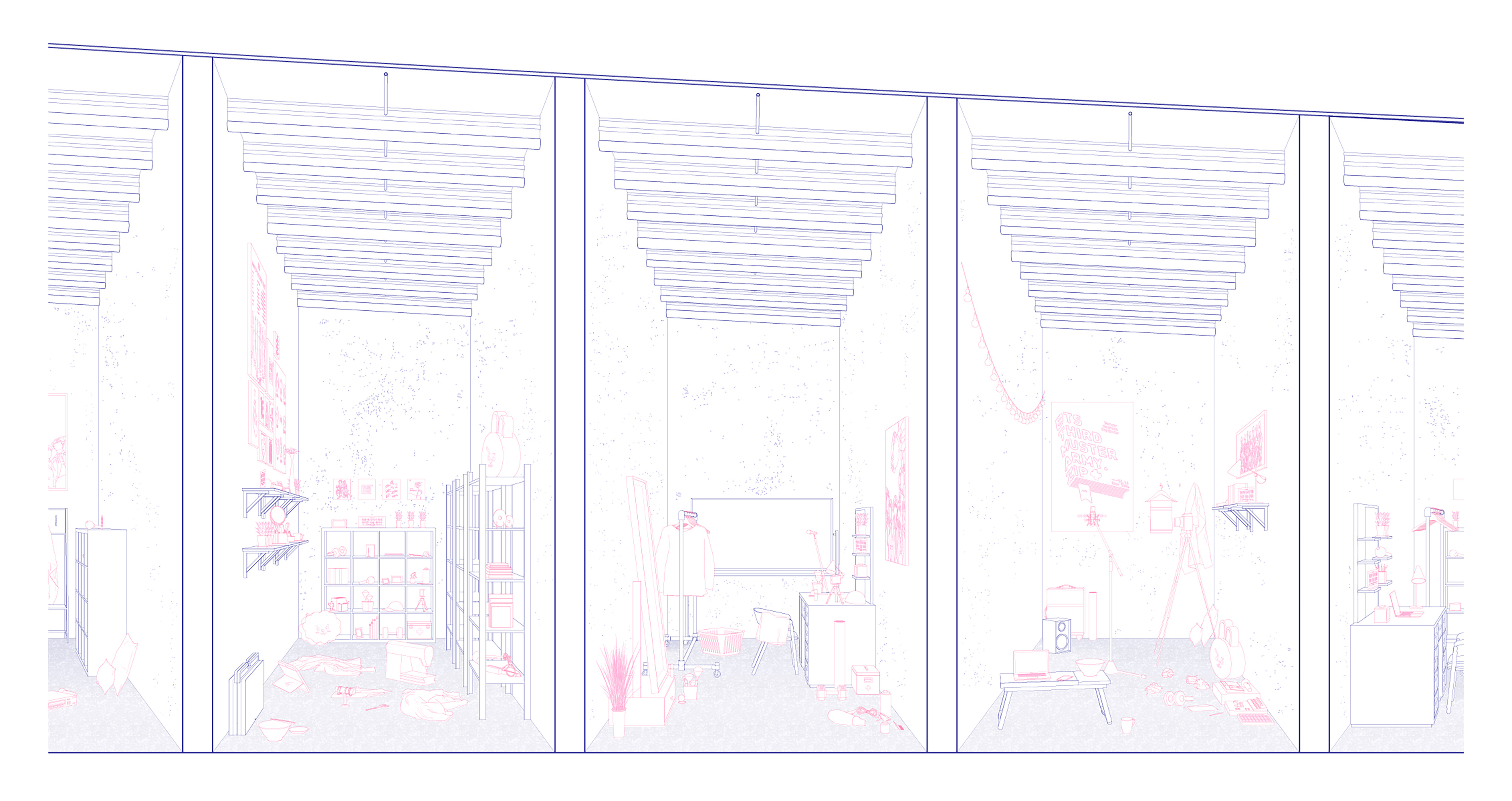
Left open to contingency, these cells facilitate the inhabitant’s first experience of privacy, unhinging them from the external pressure of the idolisation process for a self-determined lifestyle.
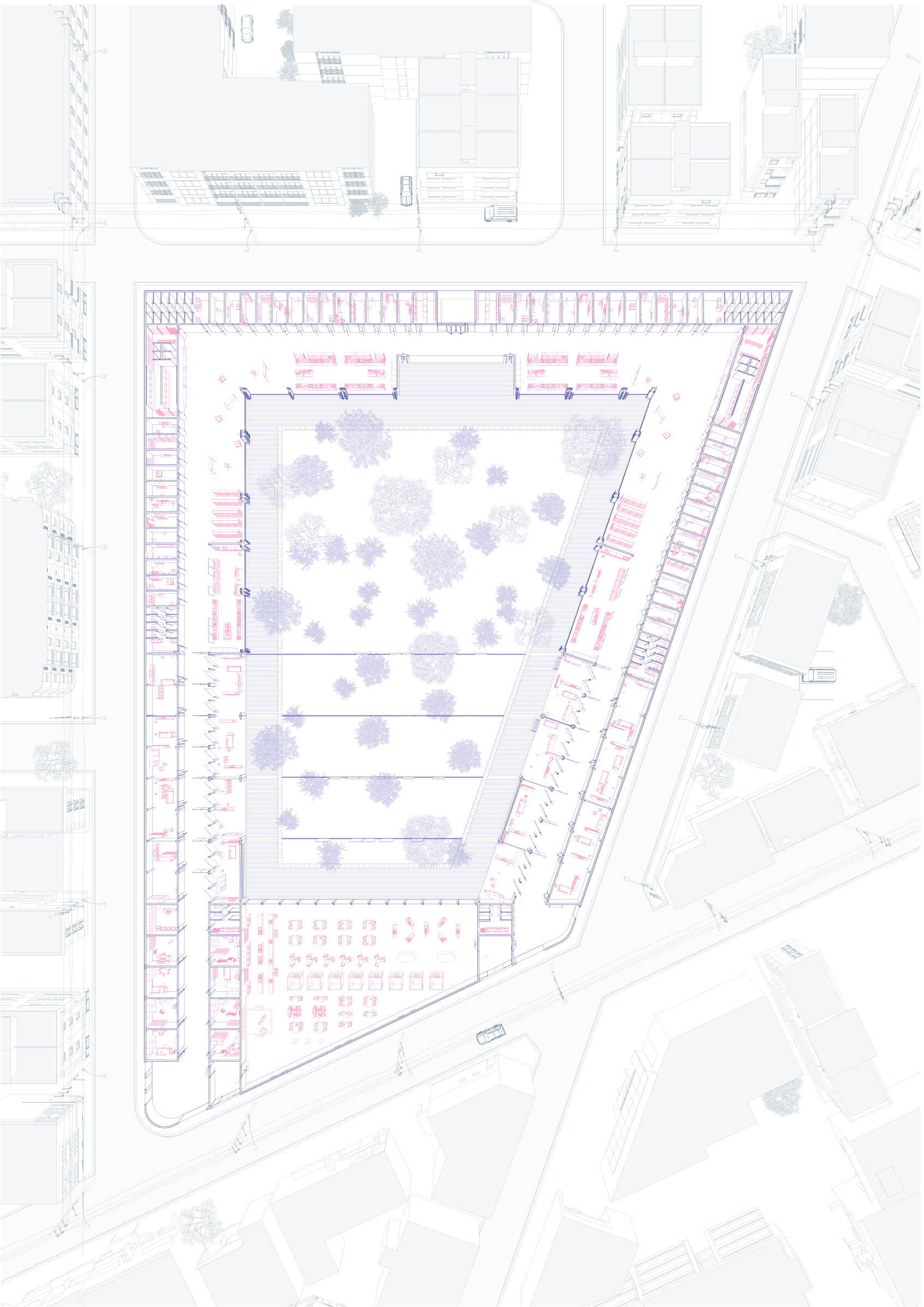
With large billboards acting as the House’s media facade, the exterior projects the image of the K-Pop Incubator to mask the project's subversive interior scheme.