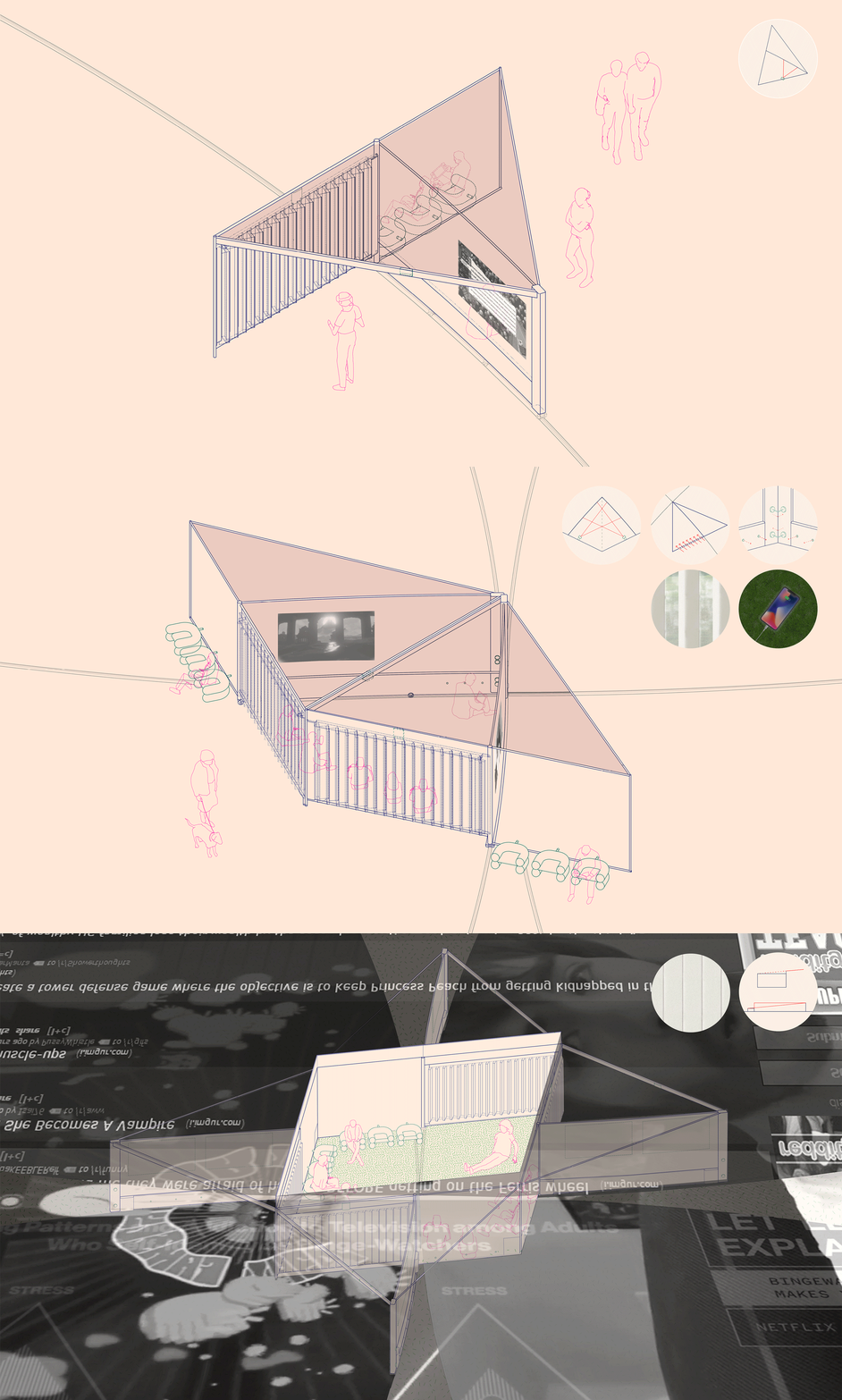
Beambo is an alternative wireless network that emphasises on physical locality and social interactions in communities, as opposed to the current globalised and individualised network with ubiquitous connection as the ideal. What would be the architecture generated from this new network?
The project magnifies the material aspect of the wireless network, explores internet connection as a design parameter for space, and ultimately creates spatial experiences based on a limited level of signal, in the context of an increasingly digital world.
(The story of Beambo and architecture is presented through film which is to be updated on sabrinahclee.com)

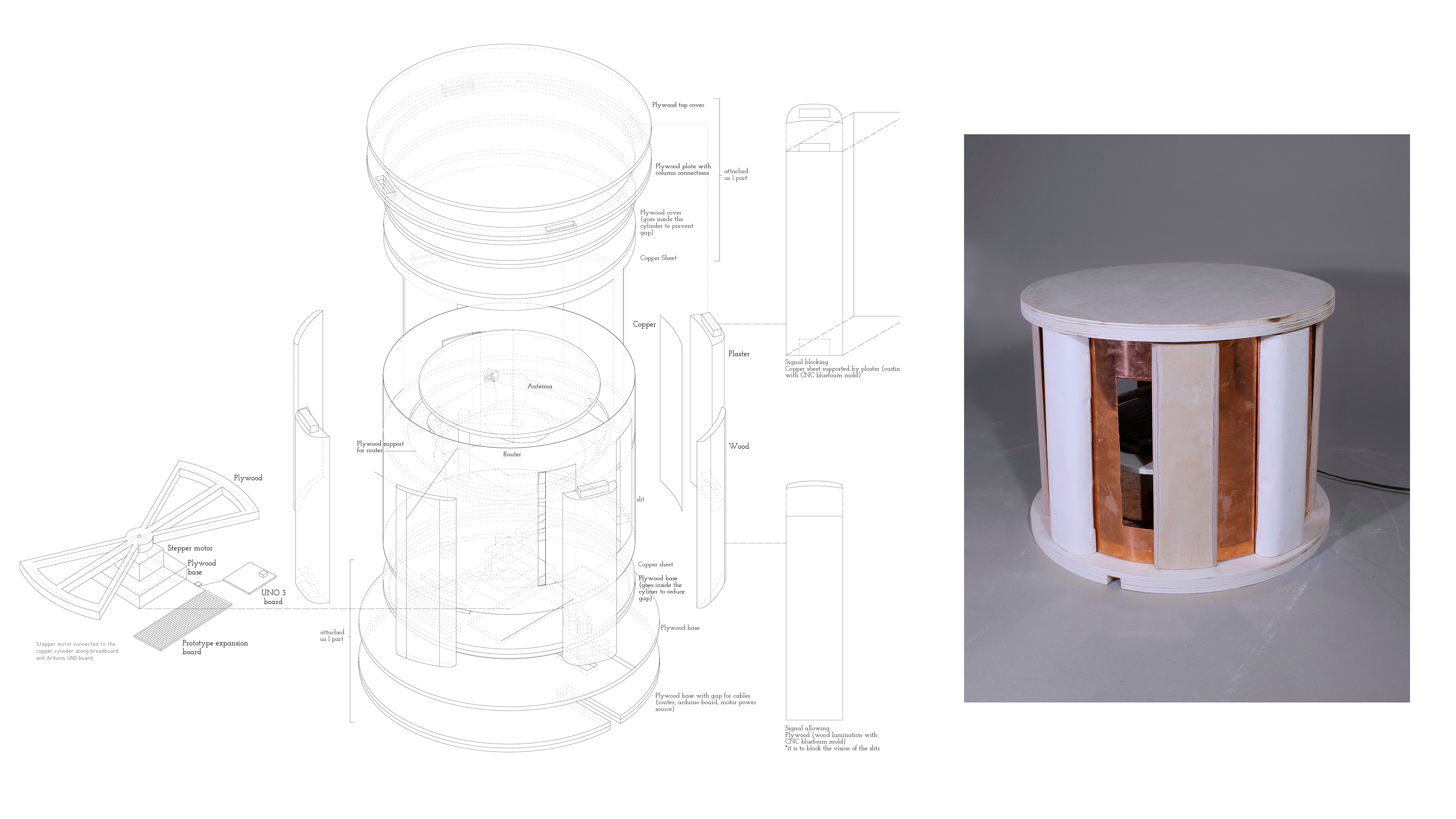
The origin of Beambo started with an experiment on a Wi-Fi router. The founder built a device which can create various configurations of Wi-Fi signal patterns for different social situations.
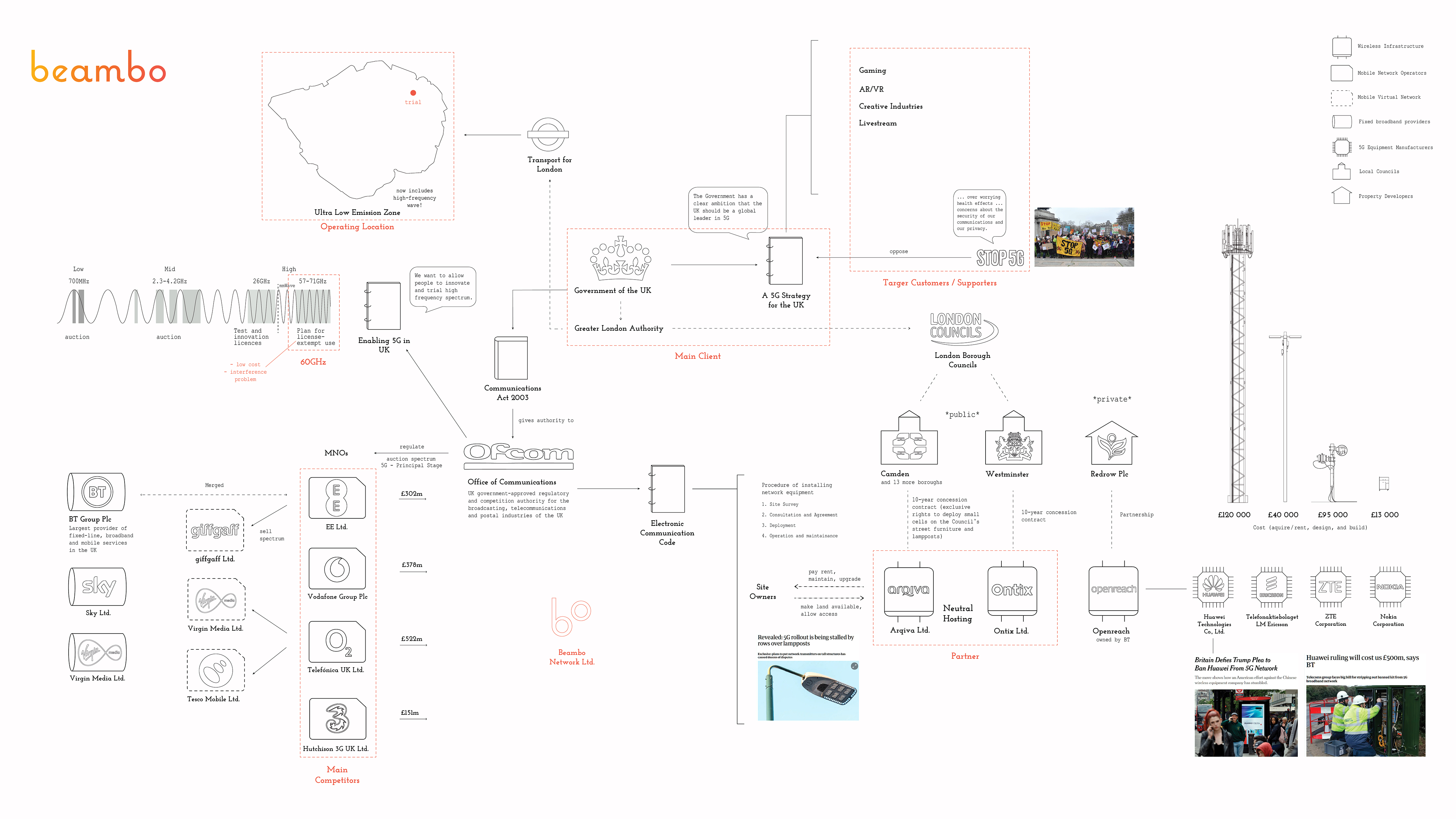
The U.K. has made plans to be a leader in 5G, but it is challenging to implement the network not only because of technical constraint but also the current policies.

The new network is imposed on the city regardless of the urban settings and land ownerships. Everyone within each circle would have to rely on that one cell site for free high-speed wireless network.
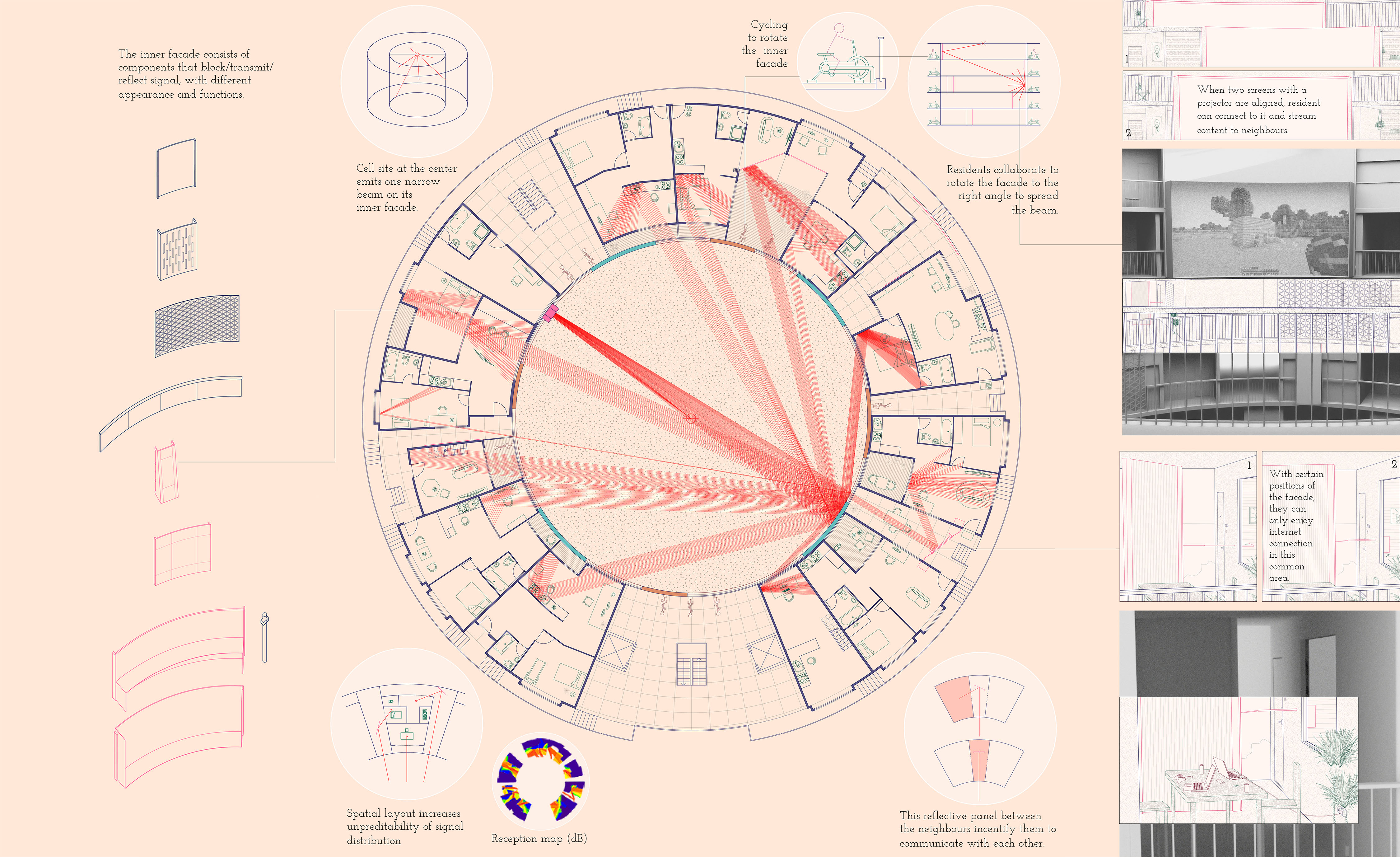
Architecture that facilitates alternative ideas of signal distribution is built, such as this residential building for those who wish to avoid becoming digital world addicts.