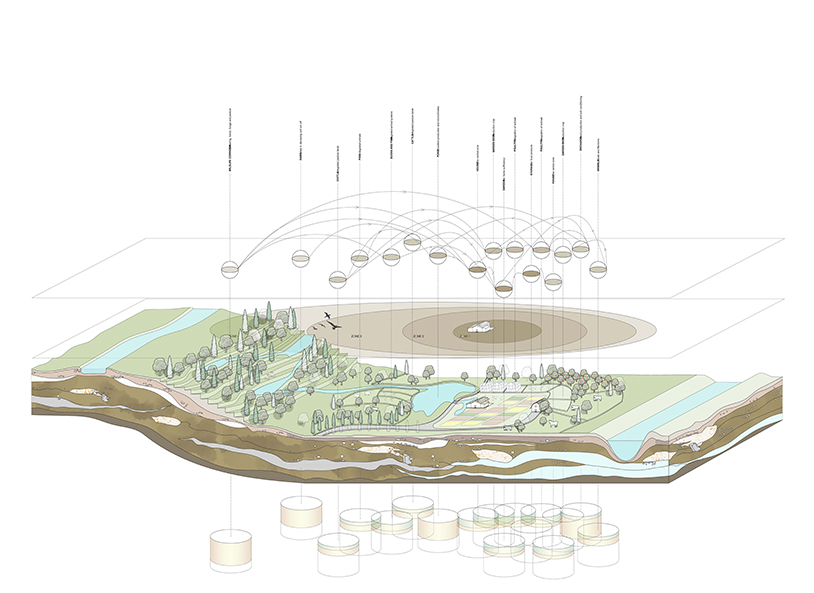
Transitioning from Agriculture to Agronomy
Rani Chamseddine And Nandita Rana
Today, the world population uses approximately 50 percent of the total habitable land for agriculture. Agricultural practices degrade fertile soil, releasing extensive amounts of carbon stored in the soils over millions of years (Over 60% of the world's soils have been degraded in just the past 100 years). Around the world, we see soils as carbon stores in the form of peatlands. Peatlands store (.37gt) more carbon in them than the combined amount stored in the vegetation and atmosphere of the Earth. Our thesis revolves around the transition from cultivating fields (Agriculture) to creating permanent solutions to food production by switching to the principles of Agronomy.
We will analyze this by creating a model for ‘Public goods for Public money’ based on soil to combat climate change through a reformed way of food production that mimics natural conditions. This will be done to further decrease the need for external inputs required in an extensive agriculture system. We will analyze this system for the productive peatlands of East Anglia (Fens and the Broads).
AGRICULTURE >> AGRONOMY
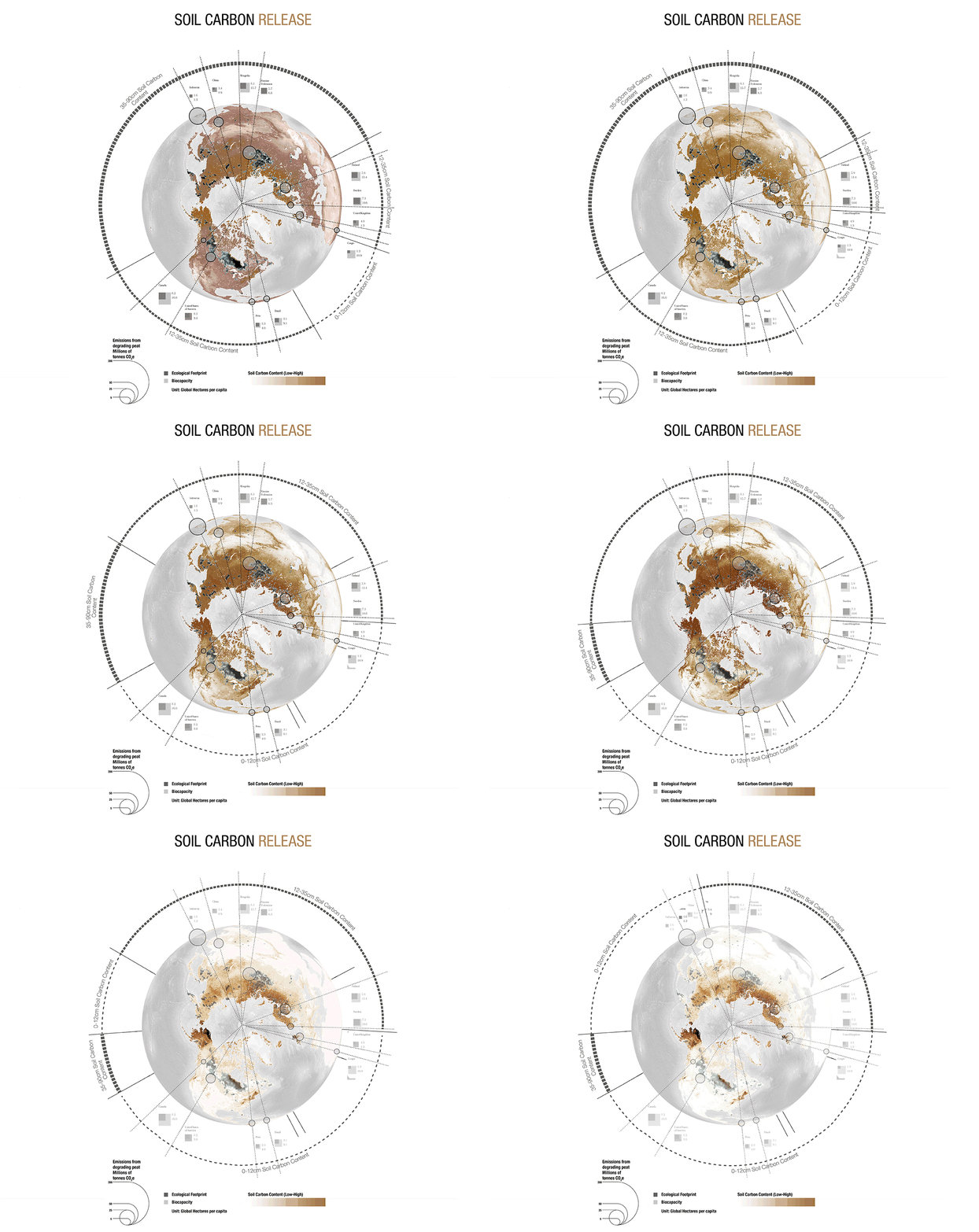
Soil erosion and carbon emission due to peatland degradation
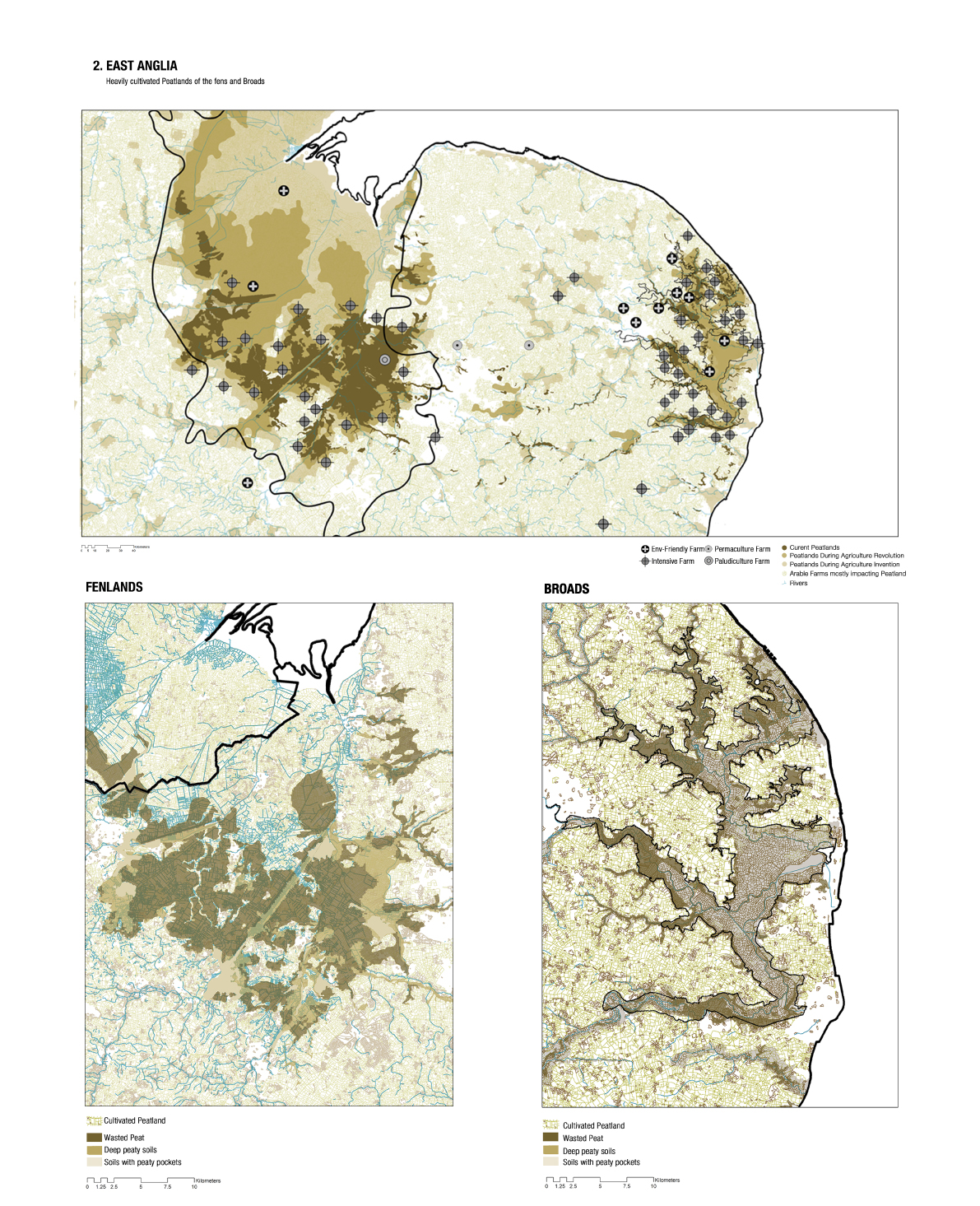
Peatlands of East Anglia
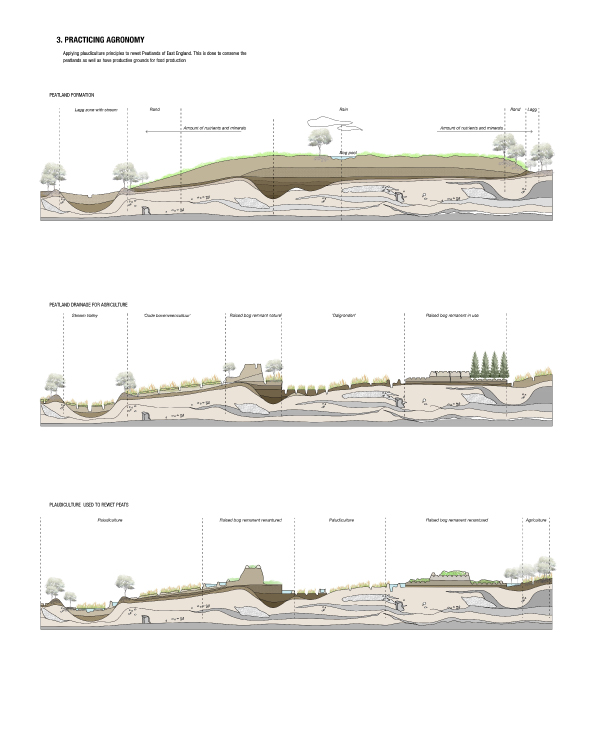
Production and Conservation - Paludiculture for wetland farming in the peatlands of the East Anglia