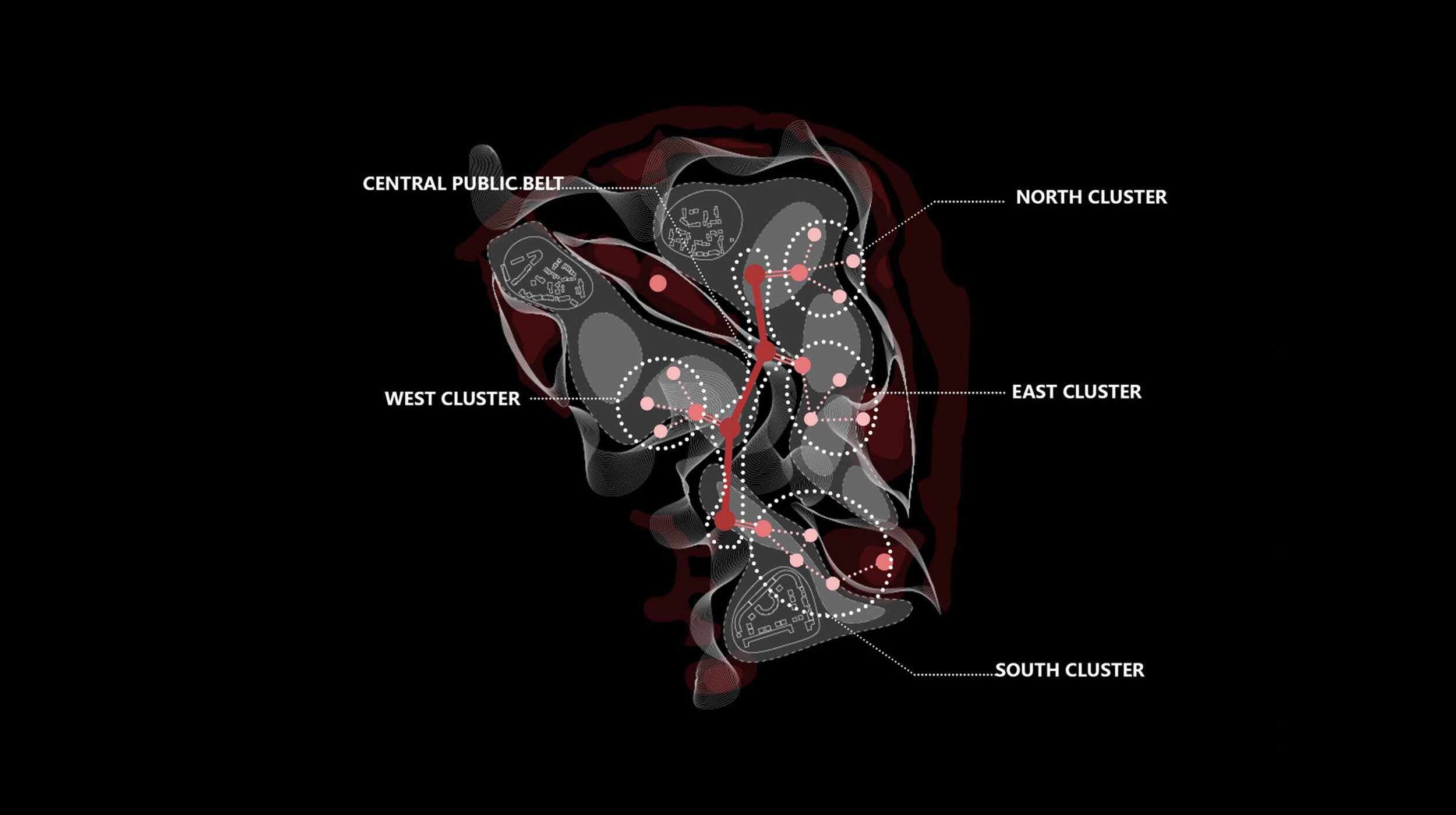
PHASE 1_[Symbios]City
Pengcheng Gu, Hao Wen, Yuchao Zhang, Shuai Zou
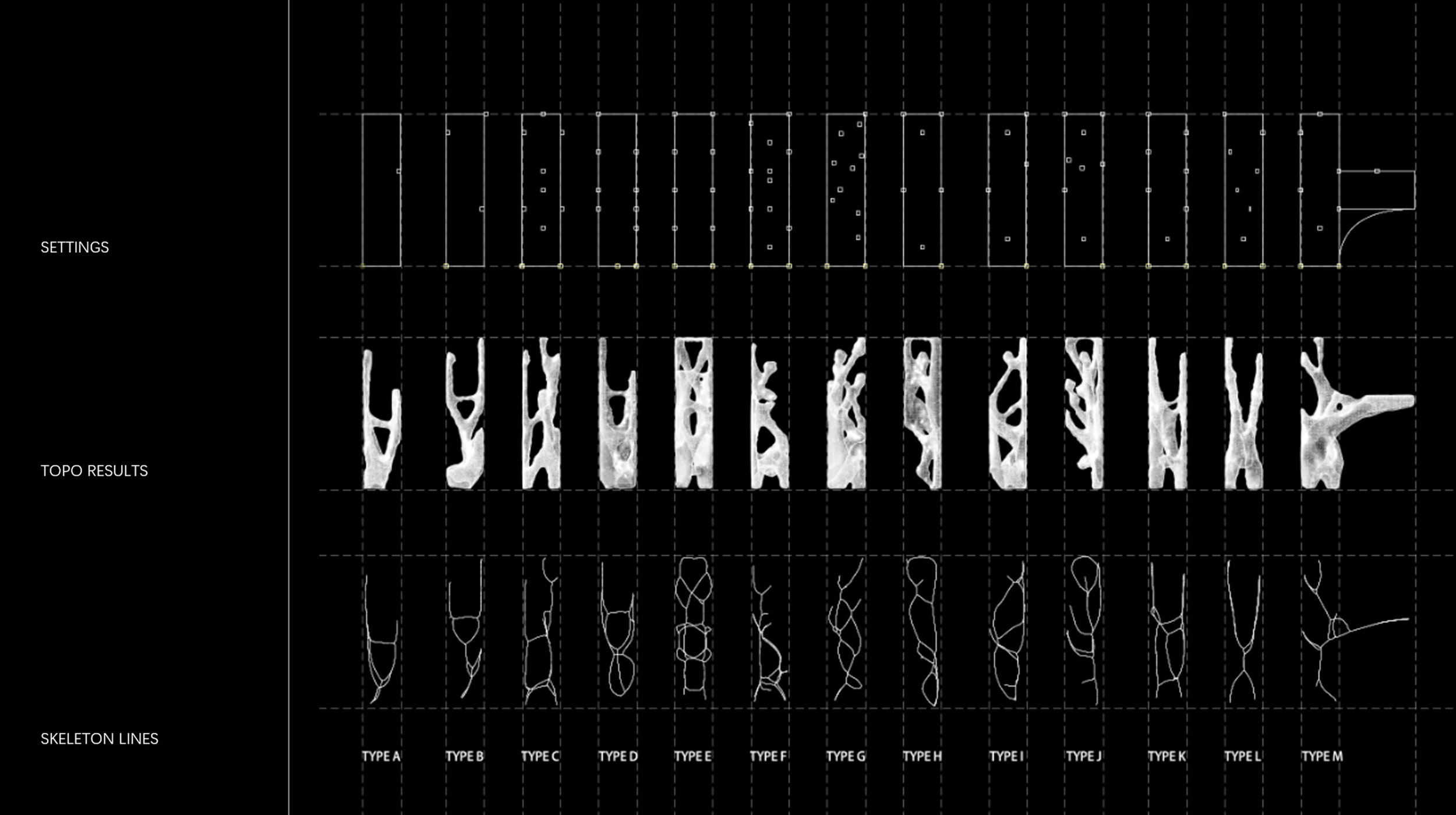
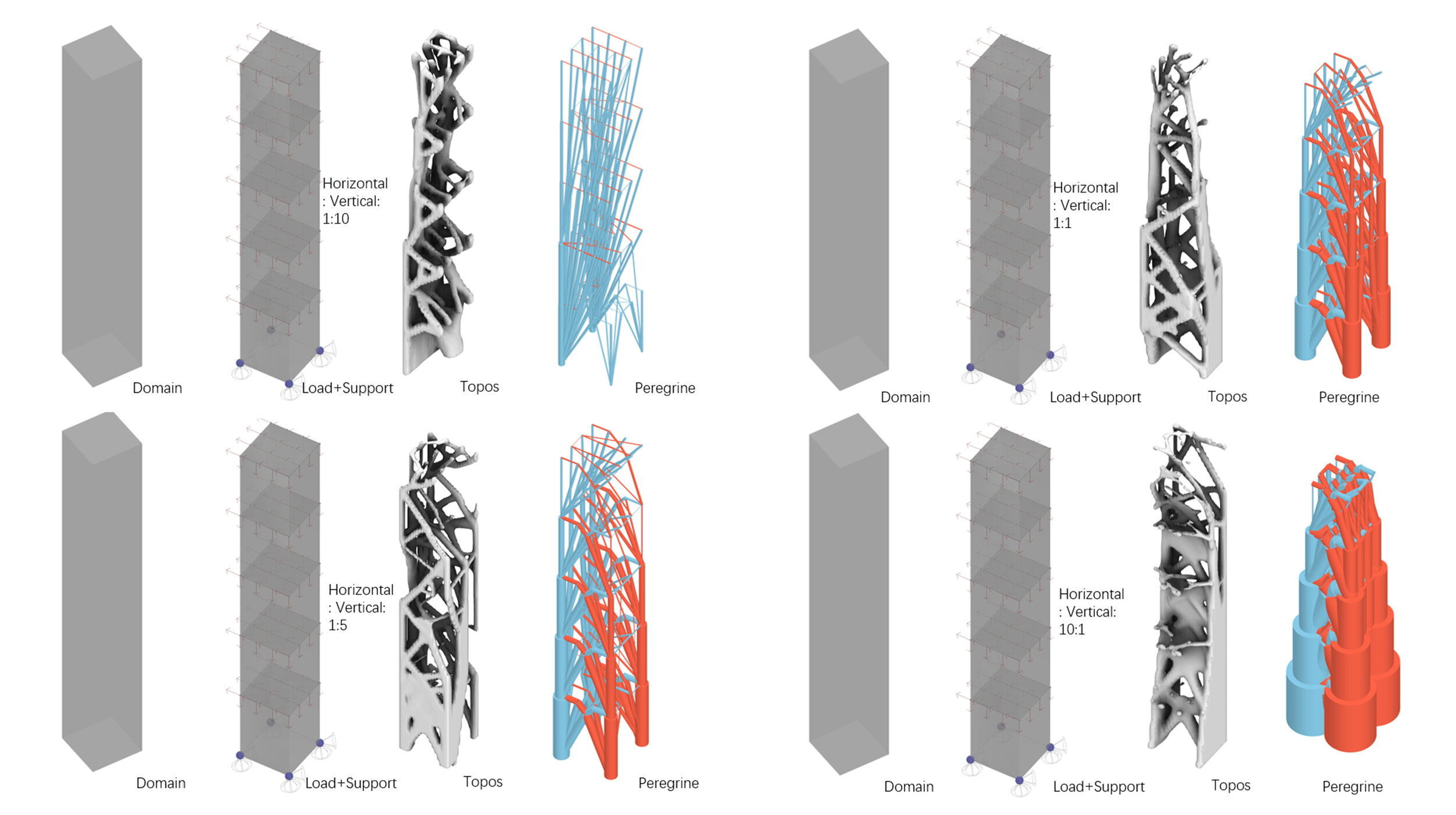
Our attempt of understanding topological optimisation tools follows two methodologies. The first visualises the input geometry, assigning density value to each voxel and computes the result with marching cube algorithms; while the other calculates the load path within the input domain, as well as the tension and compression in each path. The second and more important research trajectory of our group concerns the building’s ecological performance.
The study of ecology is categorized into the following parts: sunlight, wind, flood, and phenomenology. Weather conditions like the raising of water levels, sunlight, and wind create potentially hazardous conditions and therefore call for some level of design challenge. On the other hand, we study the effects of semiology and phenomenology to construct visual connections that can stimulate the level of connectivity between different towers as well as between the tower and the ground.
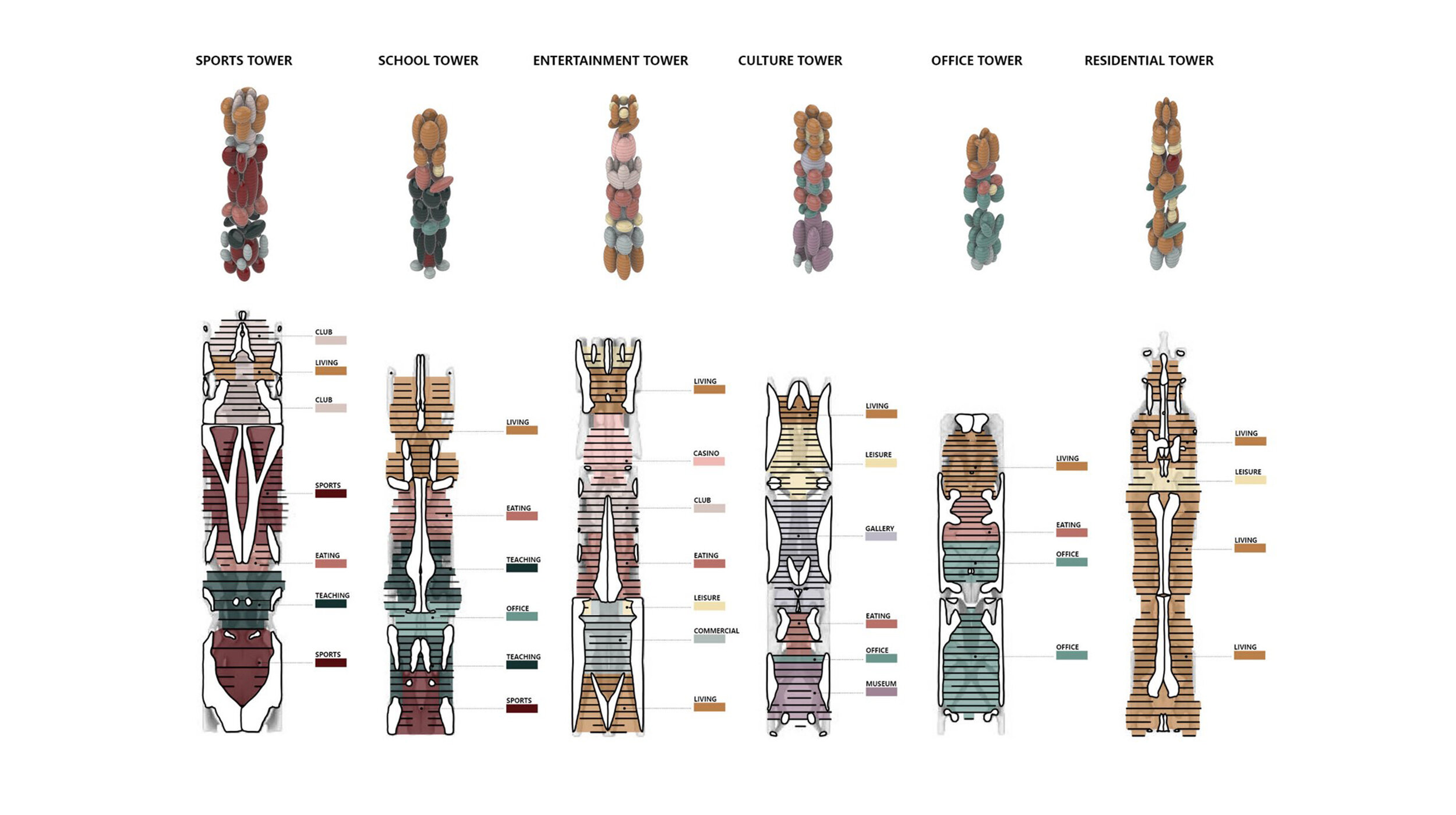
Yet our understanding of the concept of ecology – as a living network of information exchange – dictates that whatever strategies we employ are not merely for the preservation/protection of these weather conditions, but instead for taking advantage of them; namely translating this multiplicity of weather conditions into a spatial, and programmatic versatility.
1
2
3
4