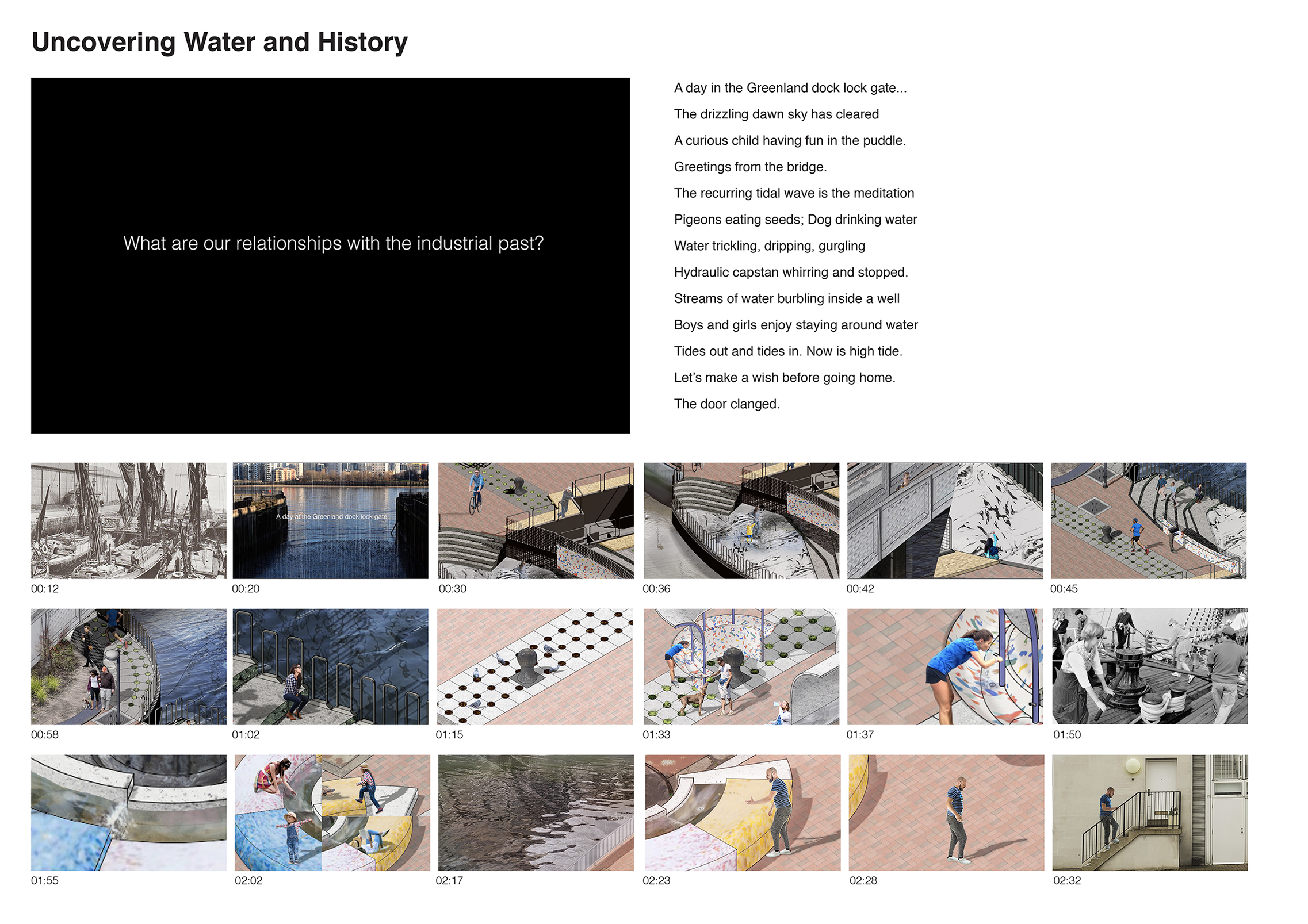
There is a rising global concern to the scarcity of water. The impact of our behaviours to the Earth are becoming more obvious in the age of Anthropocene.
Countries that used to go through the period of industrialisation continue to develop. Yet, our relationships with these kind of histories are gradually forgotten. The equipments that used to help us thrive are left behind and become obsolete industrial relics. The progression of the world turned remnants of the recent past into monuments. Although they also have high archaeological values, very often we do not treat them the way as we do to the other ancient monuments.
The focus of my project is to transform these kind of residual spaces into communal spaces. The interventions I am making will become nodes, which in the long run, people will treat them as a kind of informal place of gathering. In other words, I imagine the promenade to become a thread along the Thames, in which a sequence of industrial episode unfolds. These relics, either appear as an individual element, or in groups, will become places celebrating water and history, and at the same time, their interactions with the users can liven up the neighbourhoods.
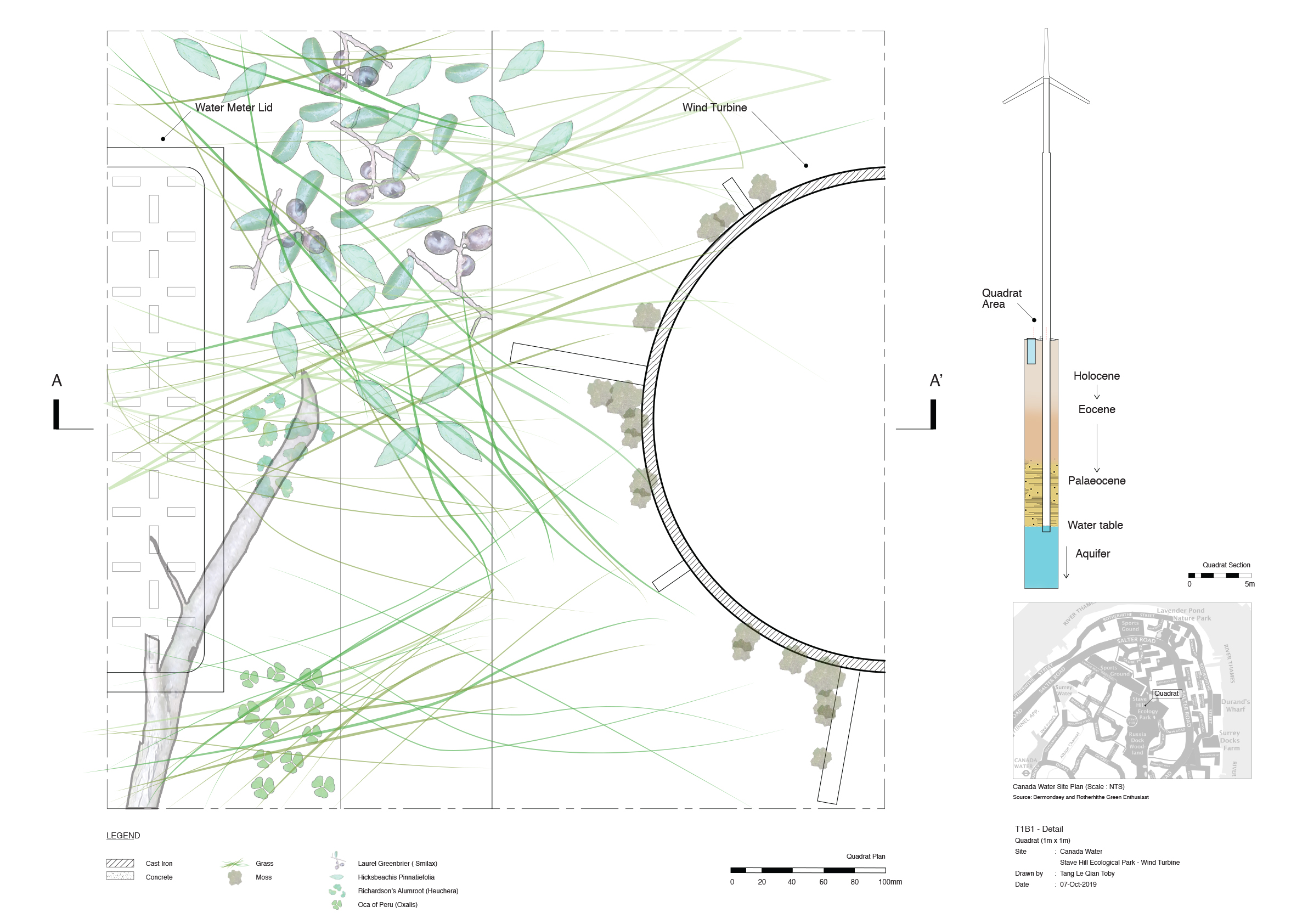
A scientific method called quadrat (1m x 1m) is used to study Canada Water . The windmill in the ecological park does not only generate electricity, but also suck up water from the aquifer.
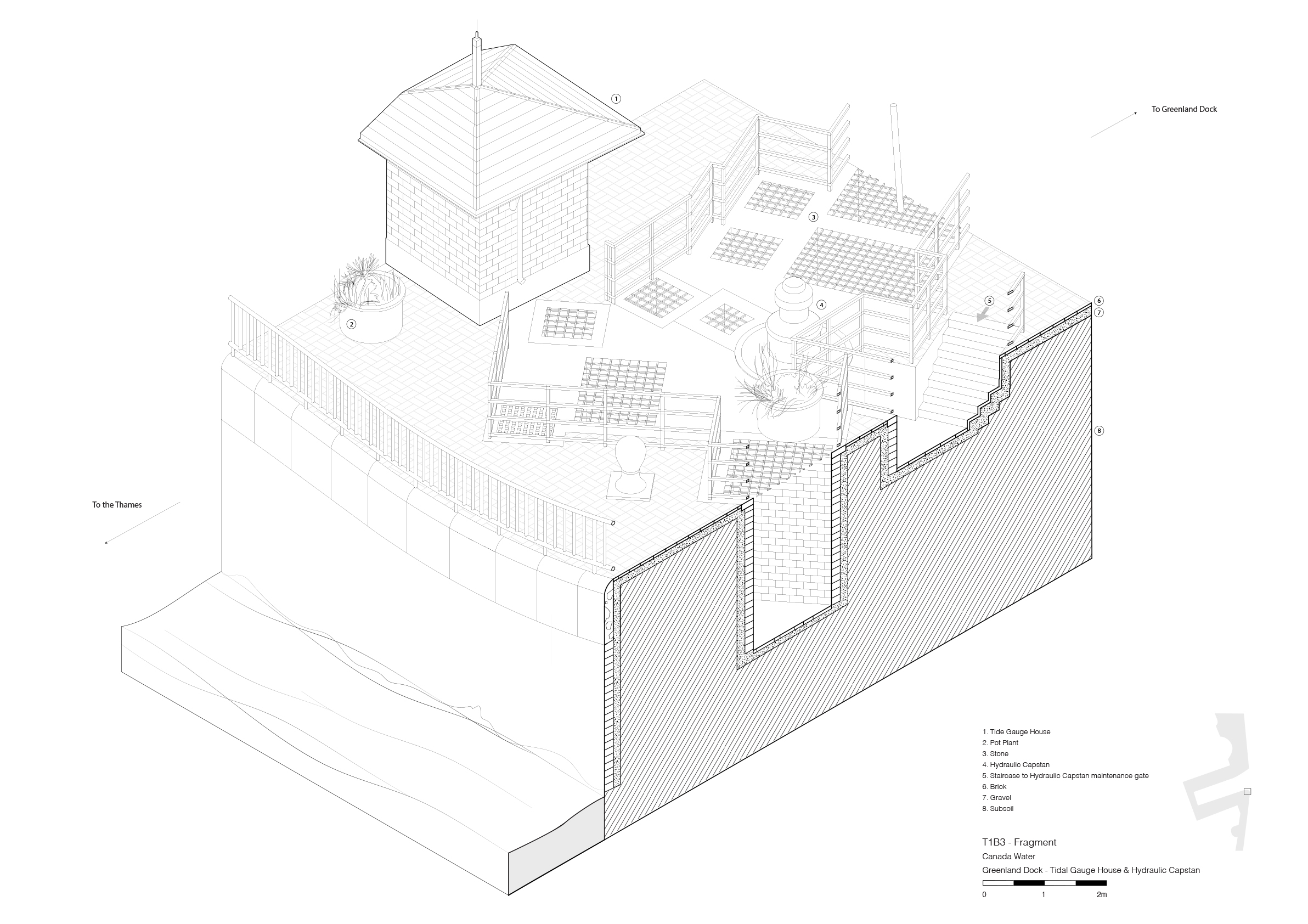
This tide gauge house is located by the Thames as part of the gate mechanism to keep track of the sea levels. It is useful to understand the equal importance of above ground and underground devices.
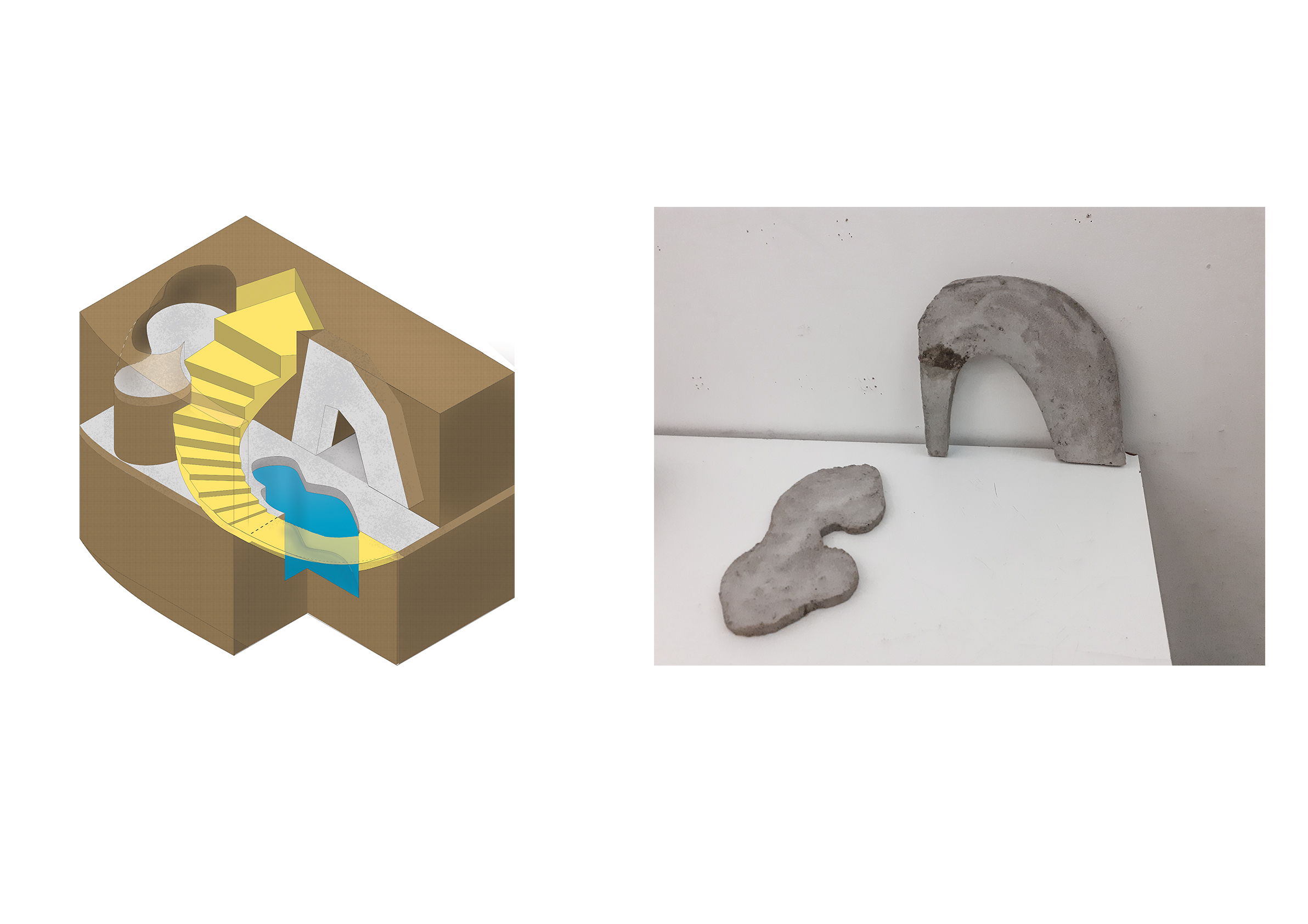
Excavated Promenade Around the tide gauge house, I add components such as a landing, a portal and a staircase to bring people down and let them explore the history in the same way they do in museums.
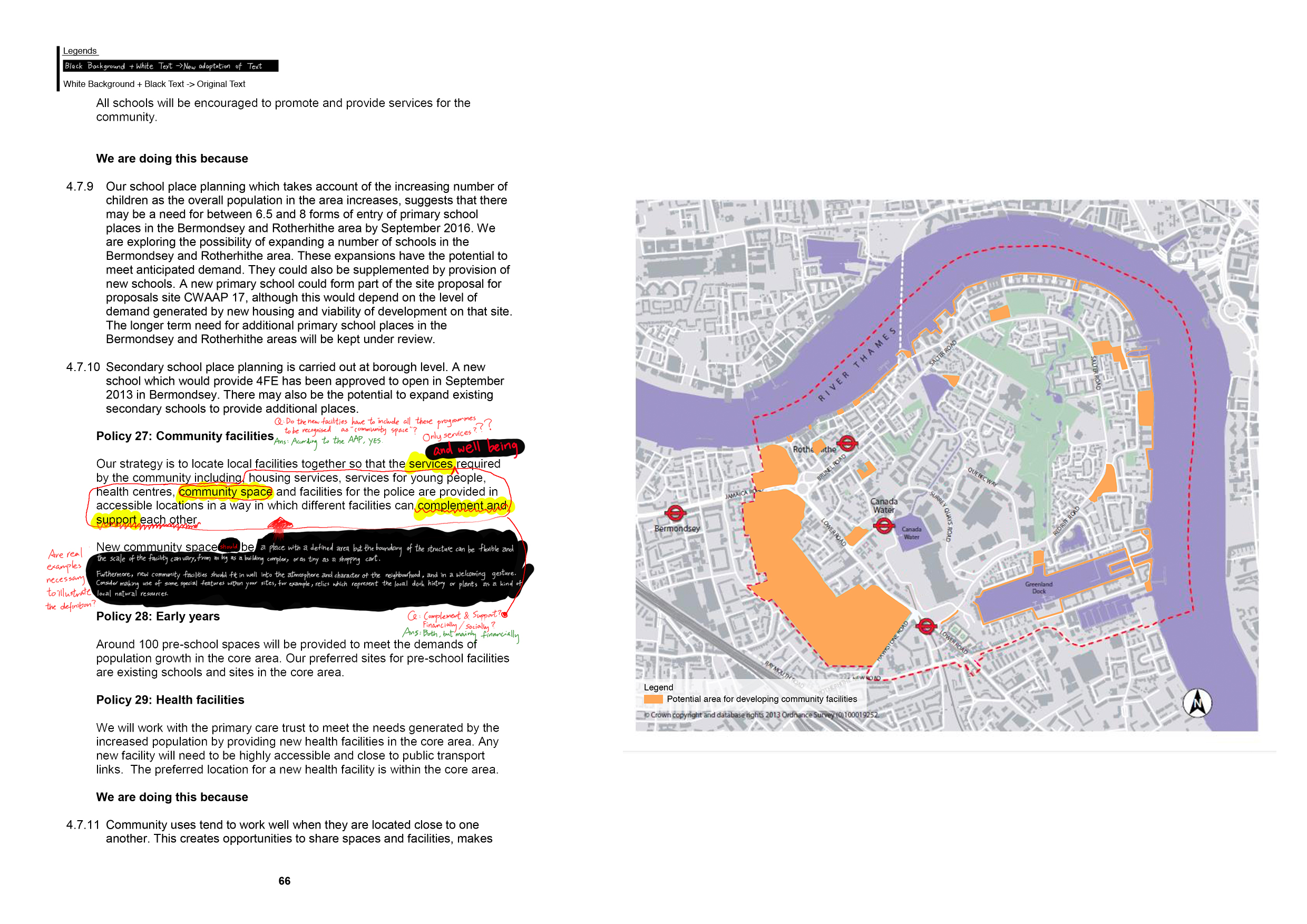
New Community Facilities The Southwark Area Action Plan is one of the main focus in our unit. Here, I am proposing to modify the definition of community facilities in one of the sections in the AAP.
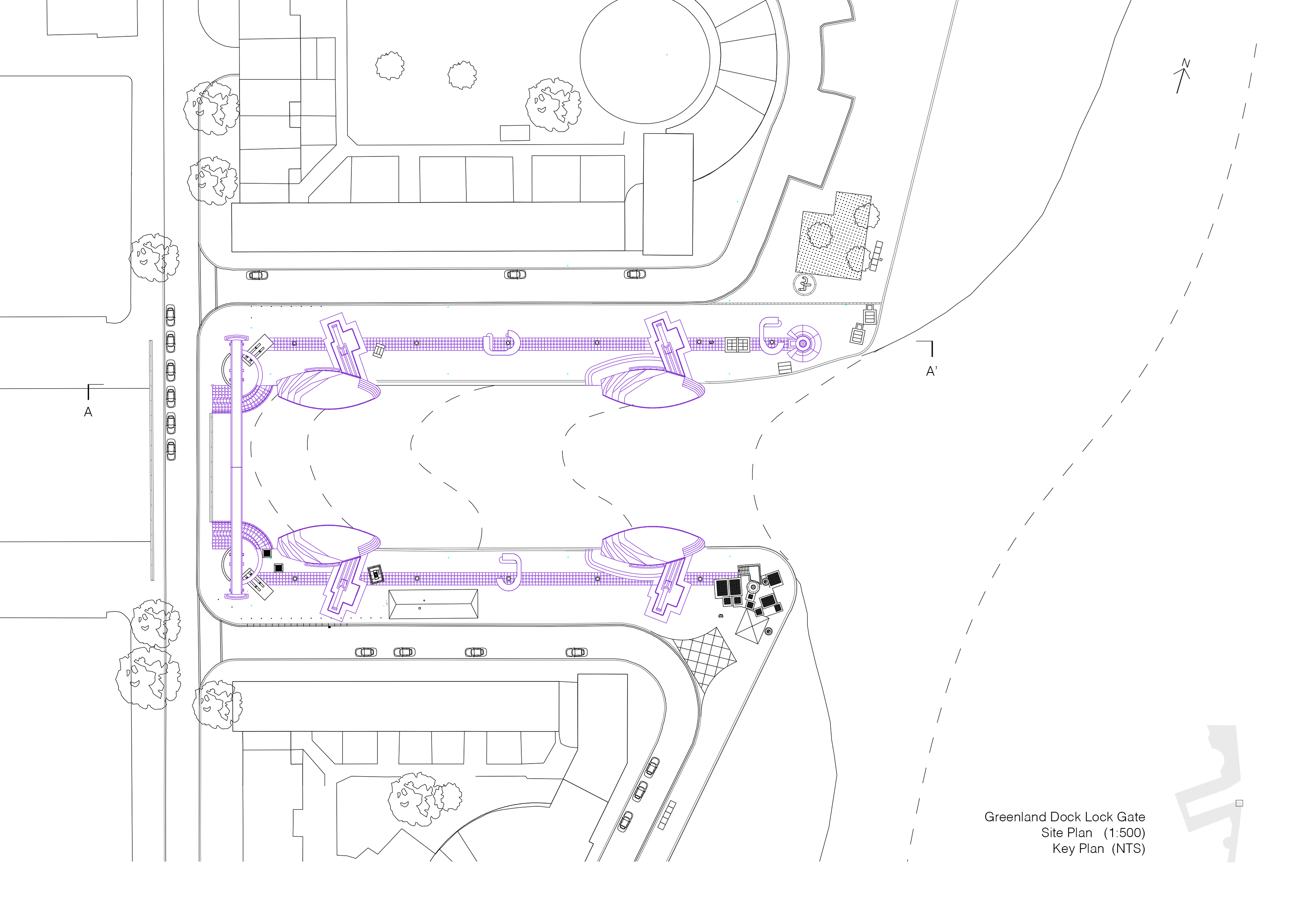
Greenland Dock Lock Gate Site Plan Around each industrial relic, a new relationship with water is established, either being rainwater for the permeable pavements, or Thames water, or potable water.
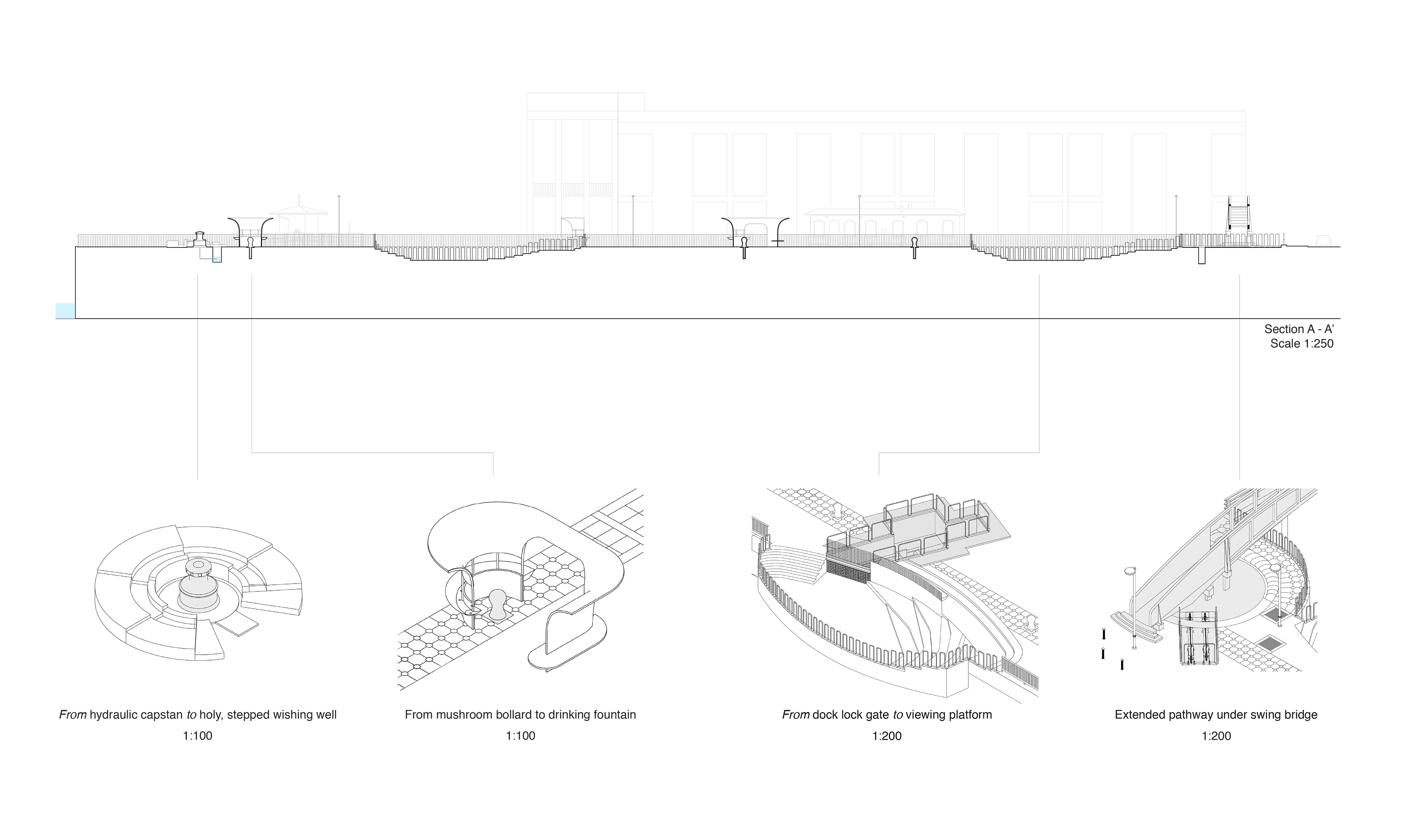
Section A-A' A longitudinal section dissecting all street furnitures, including a stepped wishing well, a drinking fountain, a viewing platform and an extended pathway under the swing bridge.
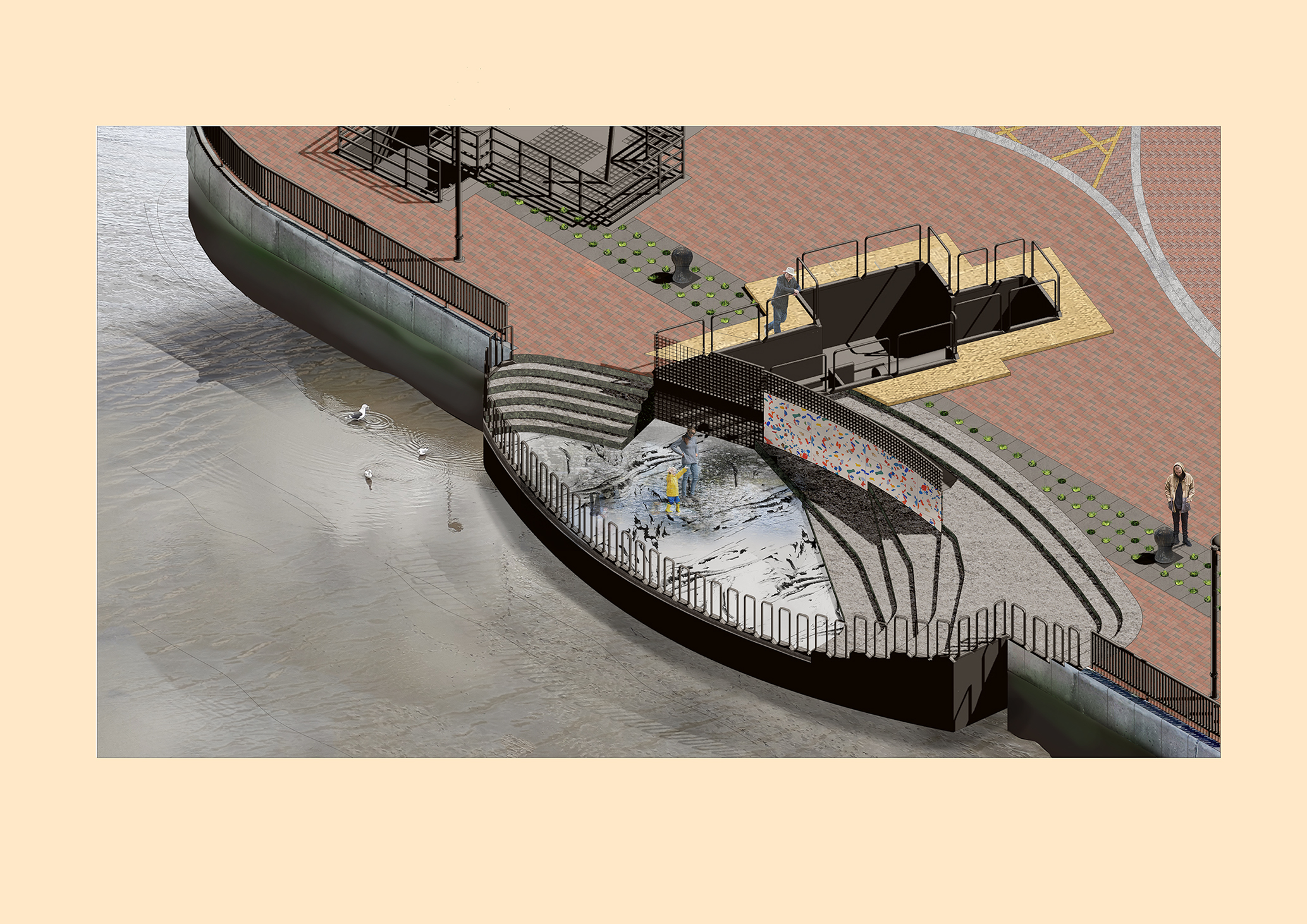
In terms of choice of material, recycled plastic is heavily used, because of the robust, versatile, environmentally-friendly attributes it has.
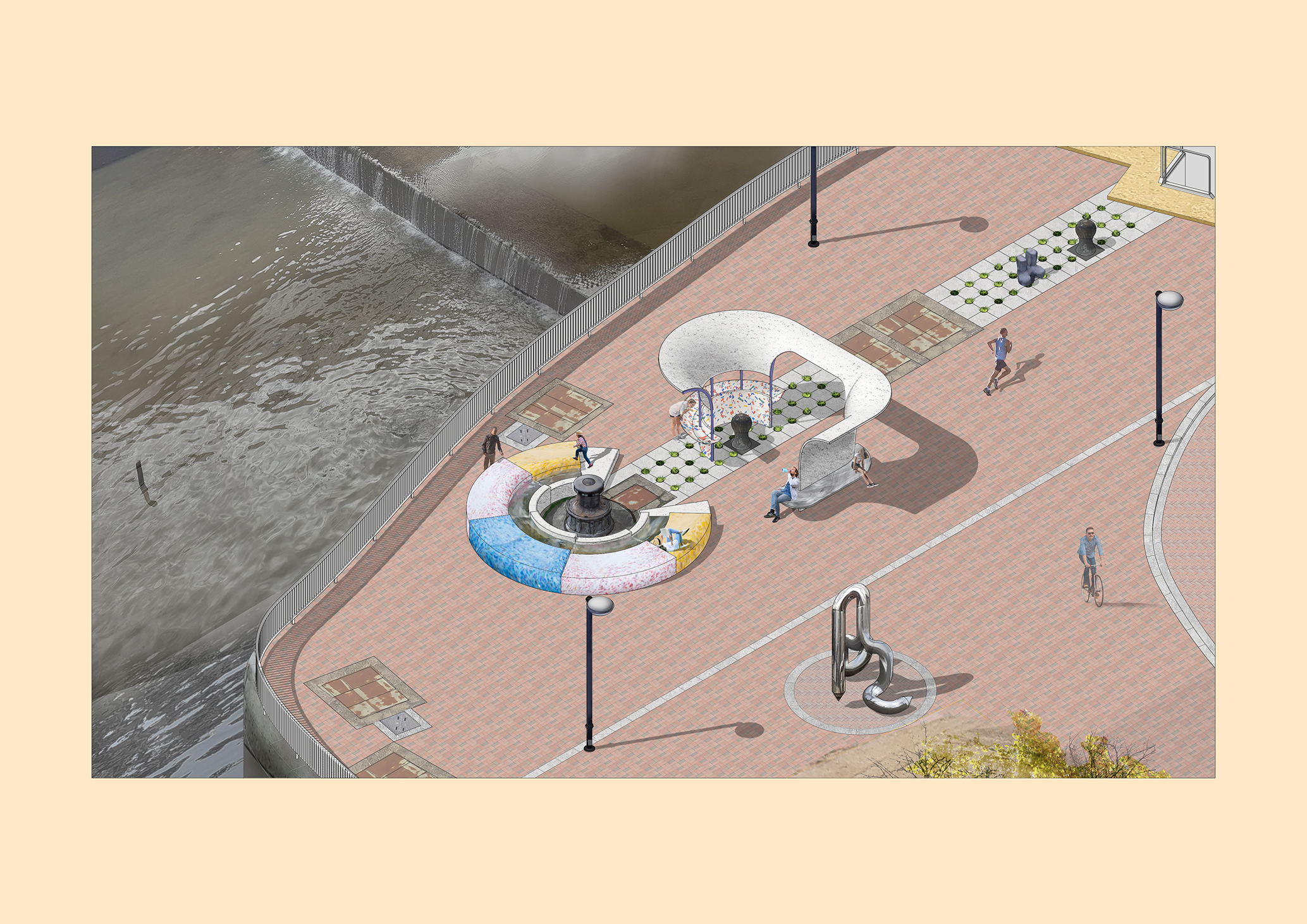
Visualisation of the drinking fountain and the stepped wishing well These two elements are meant to bring people closer to water, introducing a type of new ritual to our everyday lives.
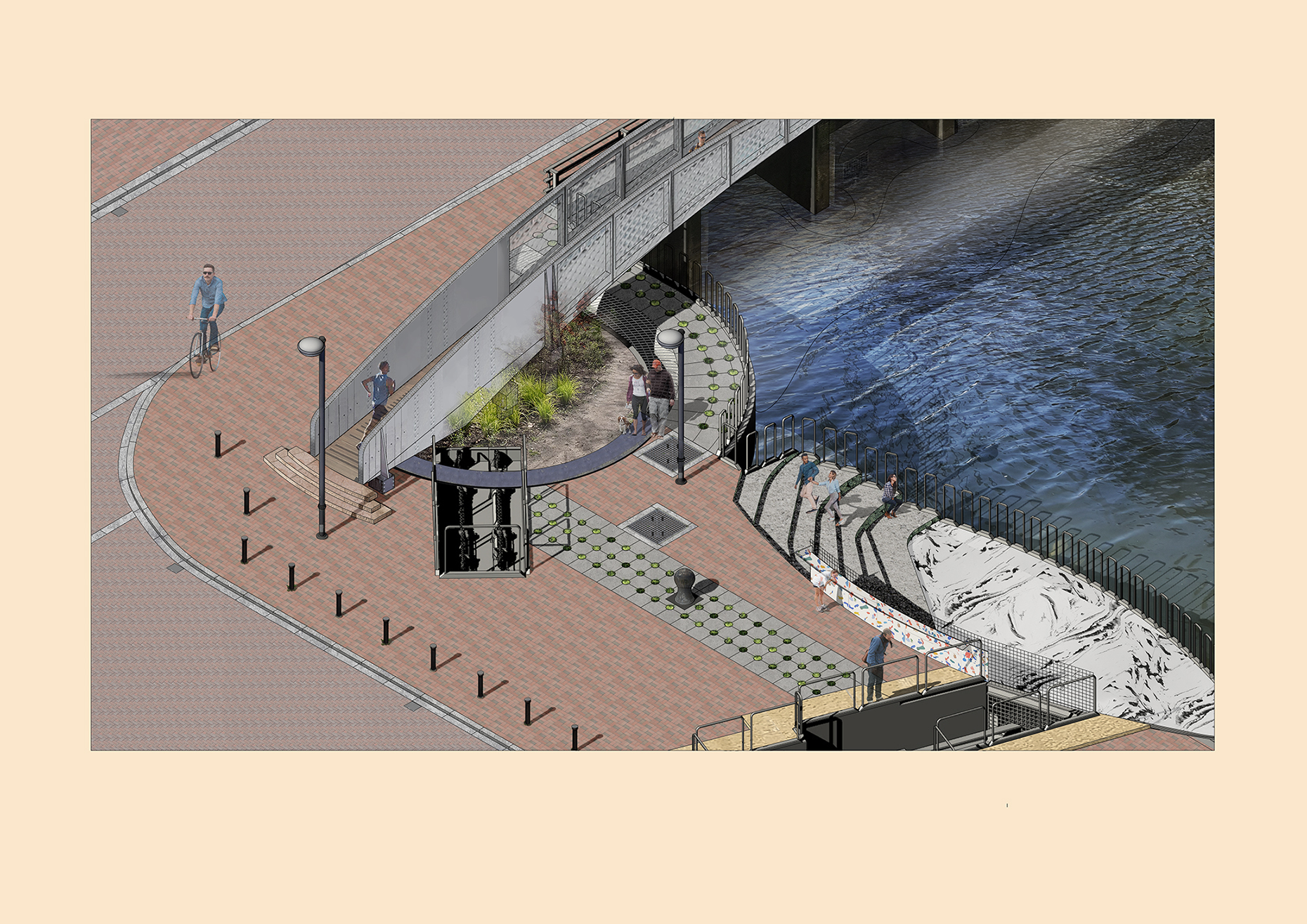
Visualisation of extended pathway under the swing bridge and viewing platform Permeable pavement is introduced all along the promenade to feed rainwater back to the existing water mains.