Hooke Park SoundTrail: Heard and (un)Seen
Ke Yang, MArch (Year: 5)
Hooke Park has many roles and the human-focused roles have been explored much further than the ecological ones.
In this project, I propose a monthly pedagogical event, Hooke Park SoundTrail, to study and understand the woods by hearing rather than seeing. Volunteers will participate in collecting acoustical information of the ecosystem and establish a literacy in all kinds of natural sounds.
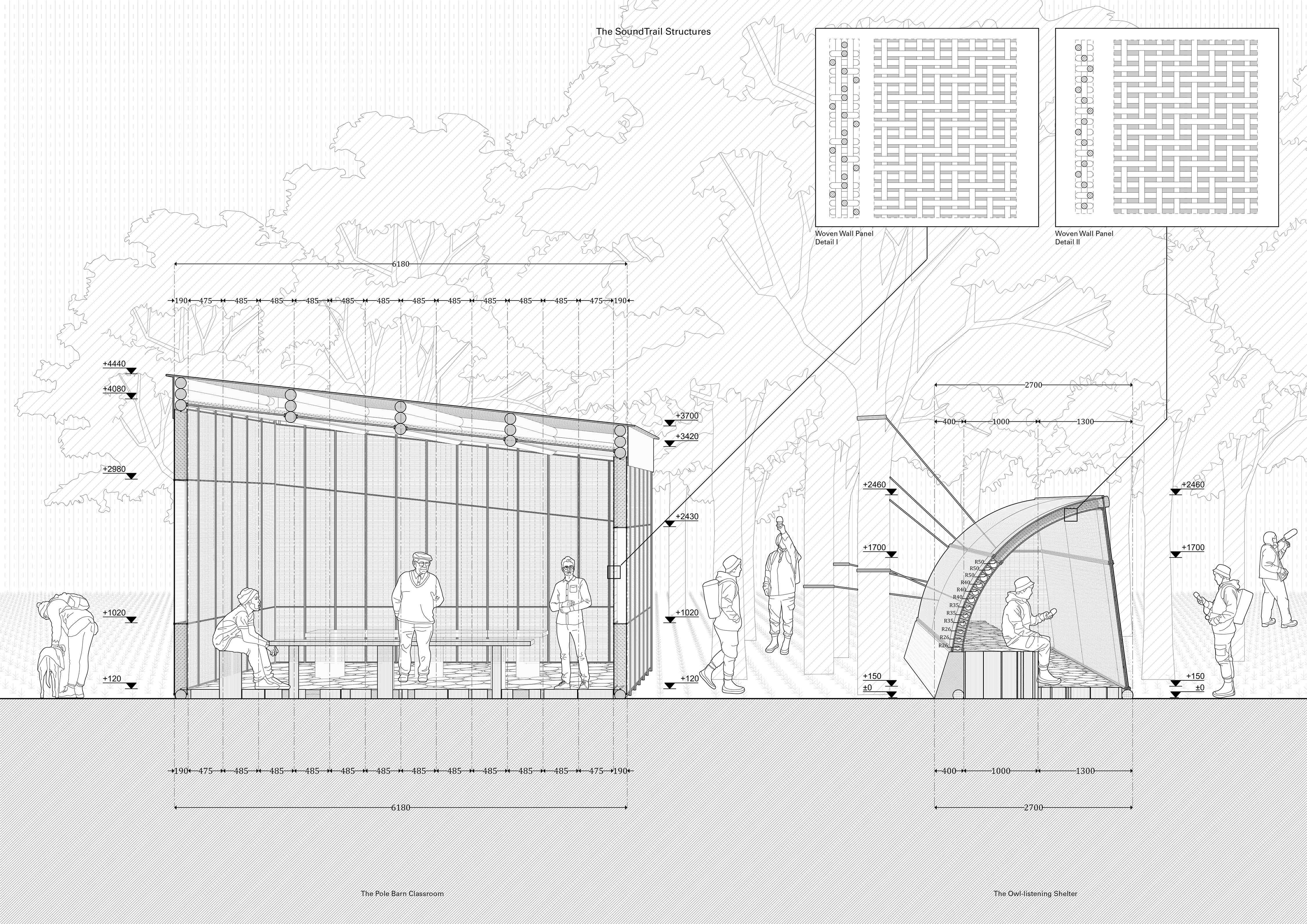
To support this event, the pole barn, the largest abandoned structure in the woods, will be transformed into a classroom for listening to recordings procured. Shelters for overnight stays and for listening to the calls of tawny owls is proposed as well. The design of the two spaces will construct the required acoustic environments for different listening activities with bracken-based architectural component.
Many natural habitats in the UK are in a similar situation to Hooke Park. They have not been studied due to the same reasons. Bracken, as a plant widely distributed across different habitats in the UK, provides a new alternative for building semi-temporary structures in rural areas. It could potentially help to facilitate the establishment of monitoring programmes like Hooke Park SoundTrail, to encourage the public to study and to understand nature in a different light.
Hooke Park SoundTrail is a pedagogical event for wildlife monitoring. Participants will engage in collecting acoustic information, experience the sonic environments and learn to understand our nature.
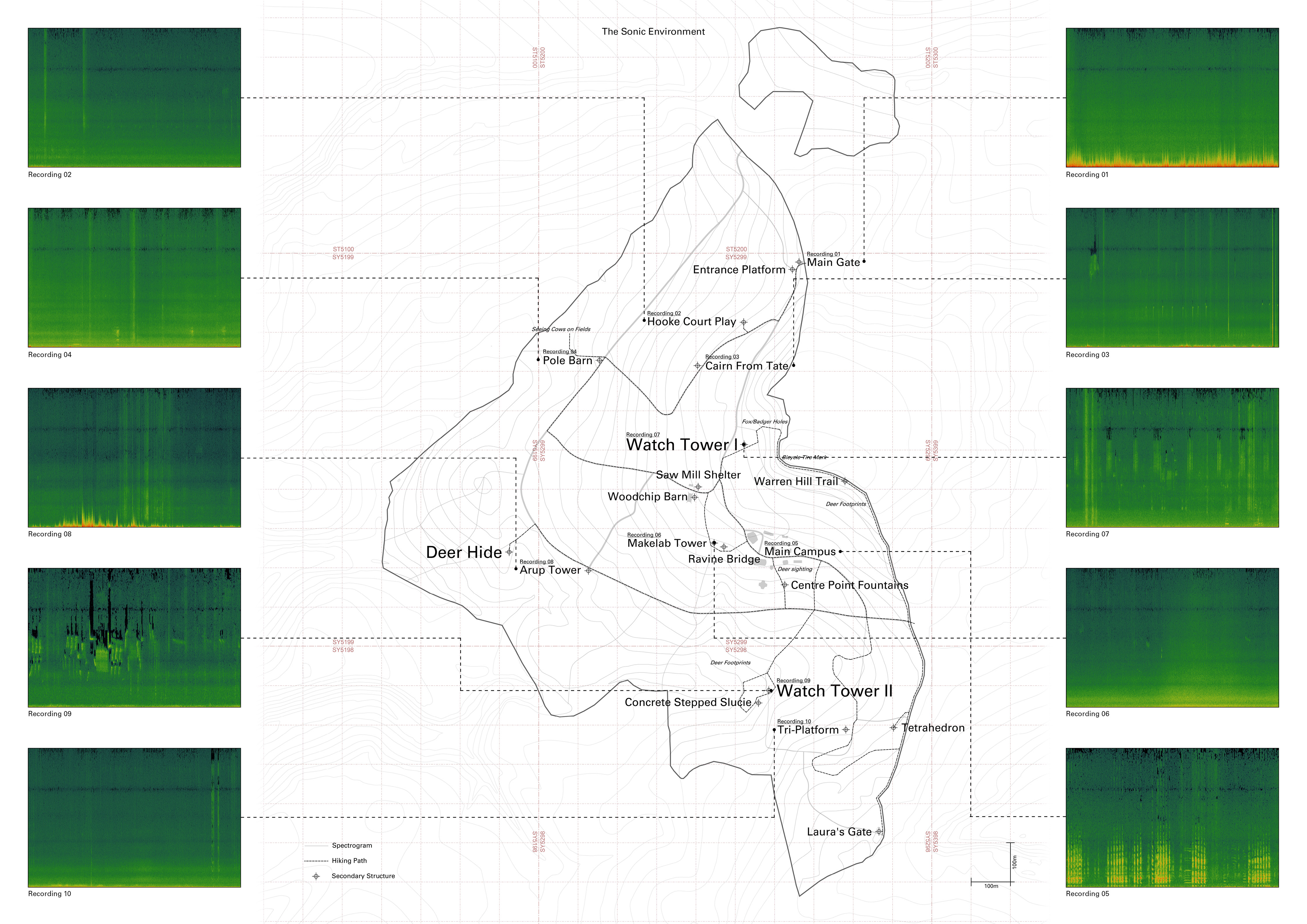
The project started with an exploration of the woodland's diverse sonic environments. The richness of the species, landscape and atmosphere have created a number of unique site-specific “Biophonies”.
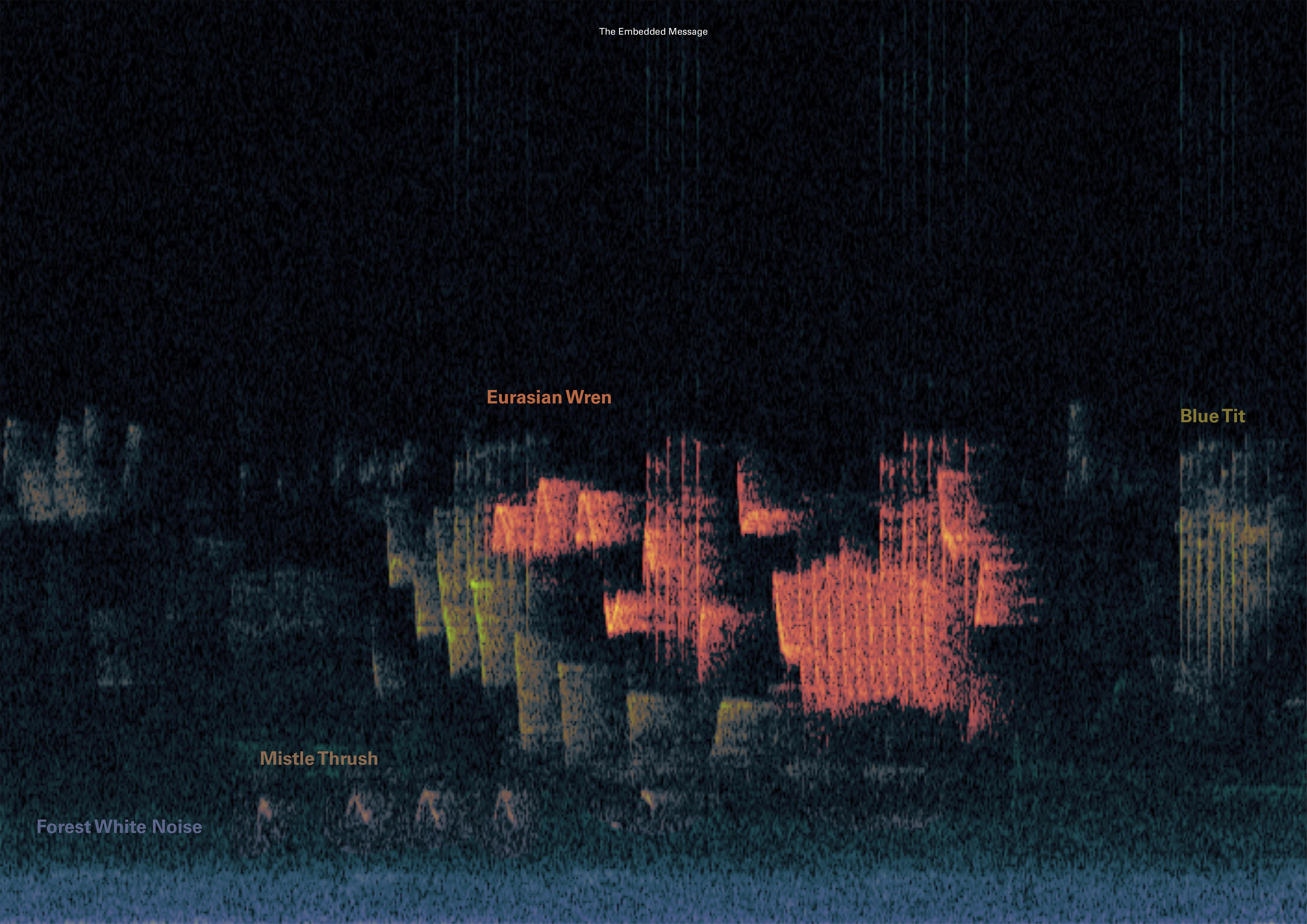
The acoustic information in a soundscape has a variety of ecological applications. It needs to be heard and understood by us, which become the first step of human engagement in Hooke Park's ecosystem.
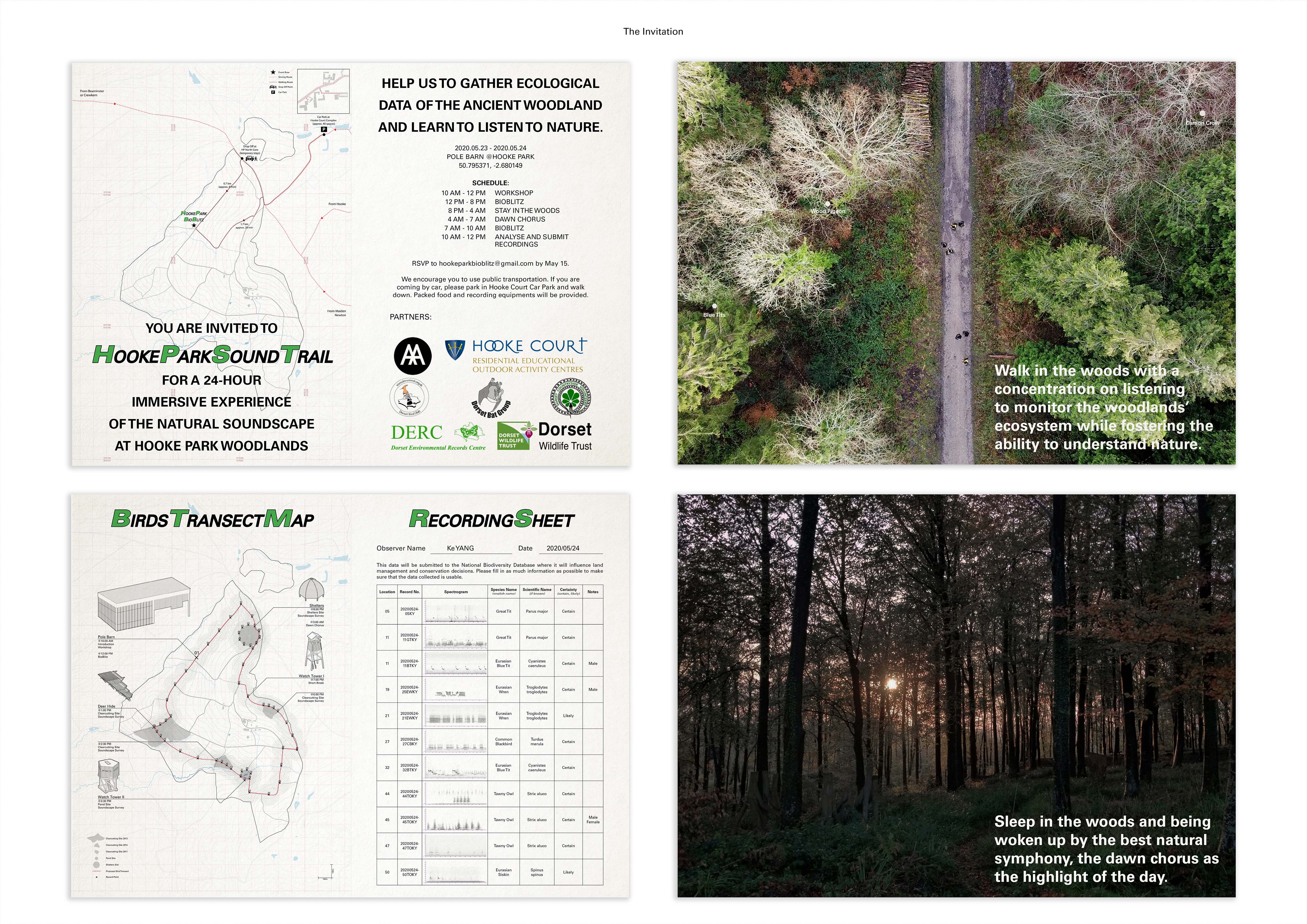
Professionals, local conservationists and the general public will be invited to Hooke Park SoundTrail to study the woodland by hearing while developing their literacy of natural sounds.
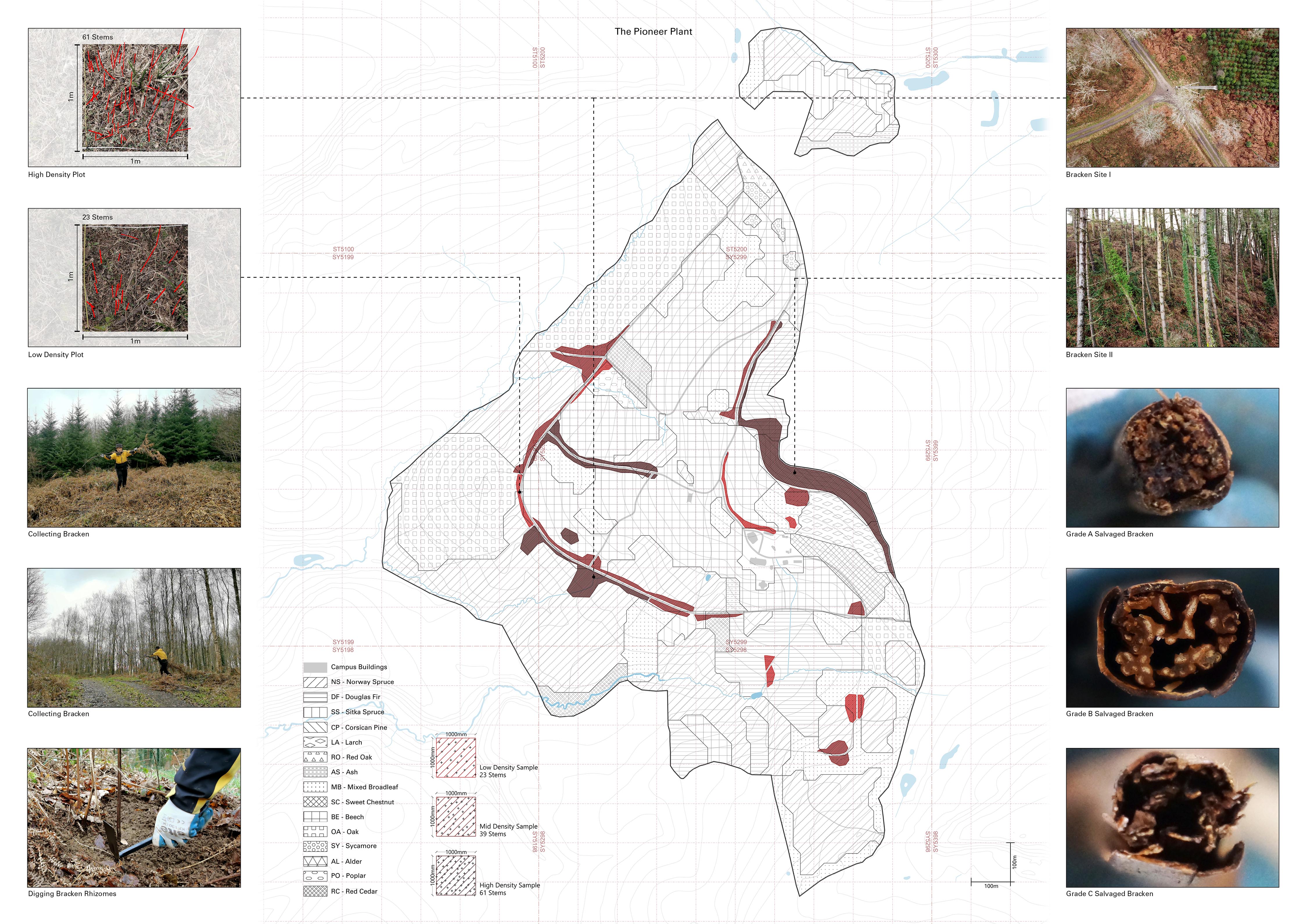
Bracken in Hooke Park has not been managed properly. At clearcut sites, the lands are colonised by bracken, which inhibits the regeneration of the habitats and threatens the local biodiversity.
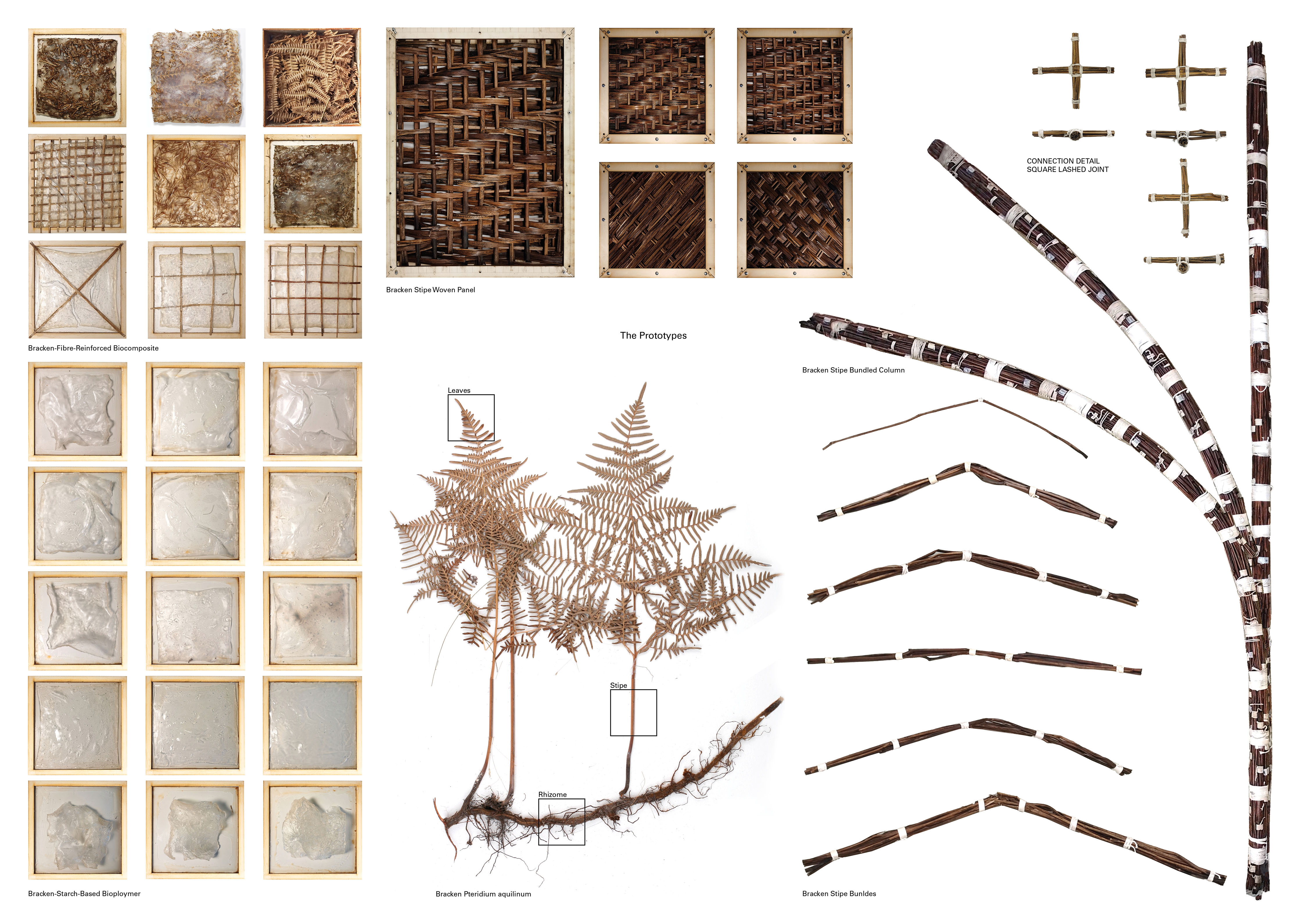
Unlike traditional management methods, I would like to salvage bracken and explore its aesthetic value and architectural potentials, especially the prototypes' acoustic performance.
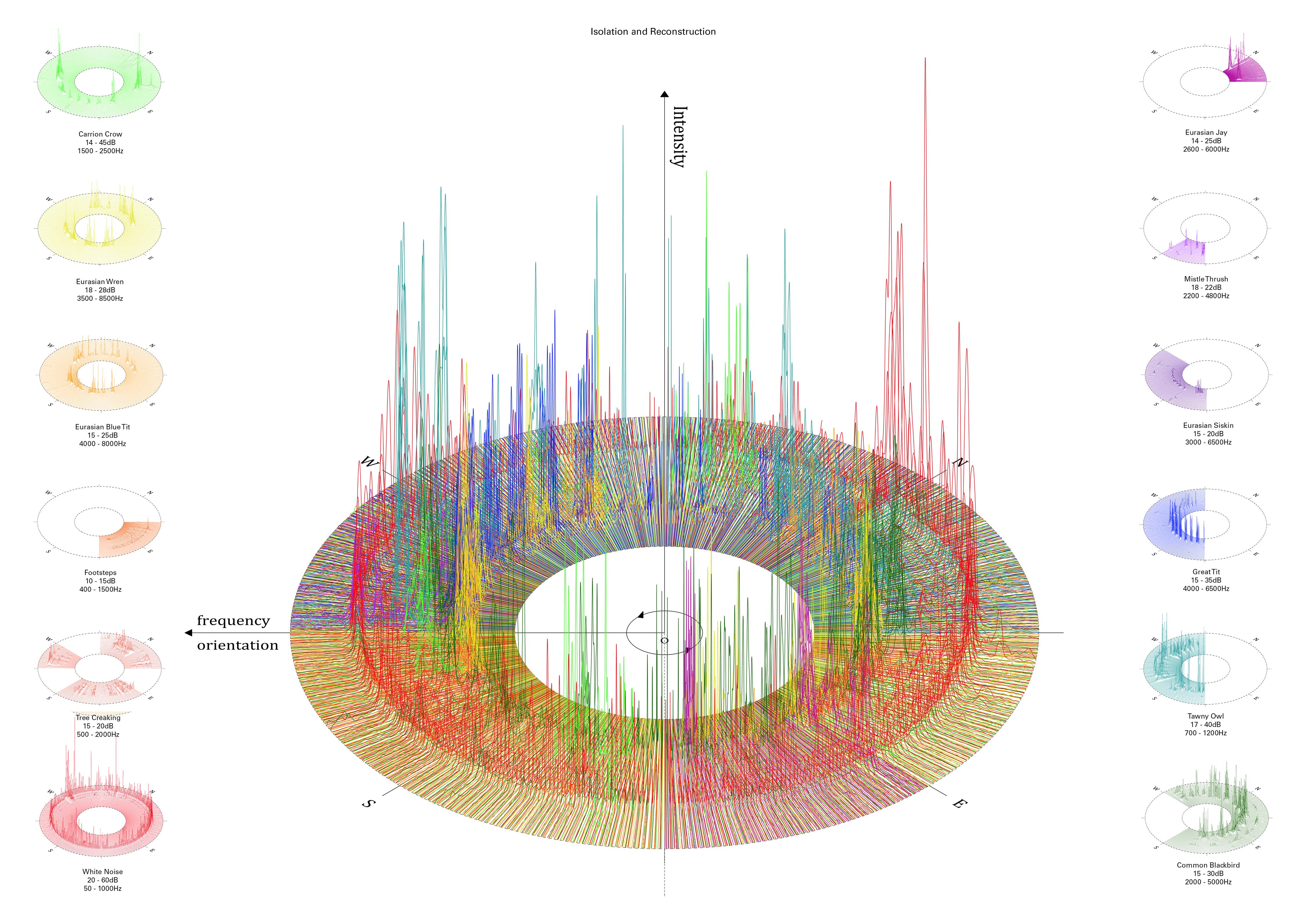
By analysing the spatial audio recorded on-site, the soundscape is analysed, isolated then reconstructed in a digital three-dimensional space.
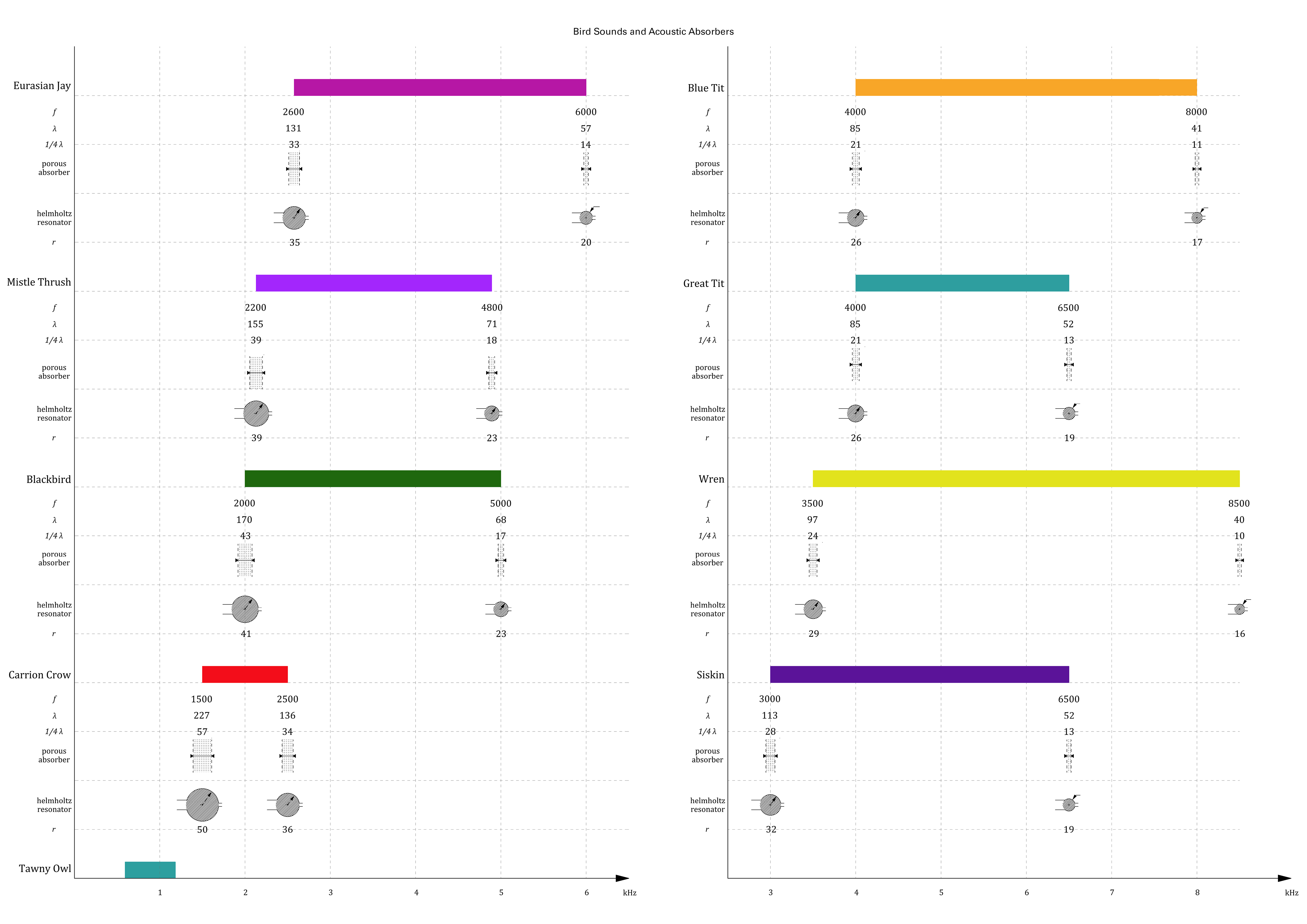
The birds sing within different frequency ranges. In order to achieve selective sound filtration, the link between bird sounds and their corresponding acoustic absorbers is established.
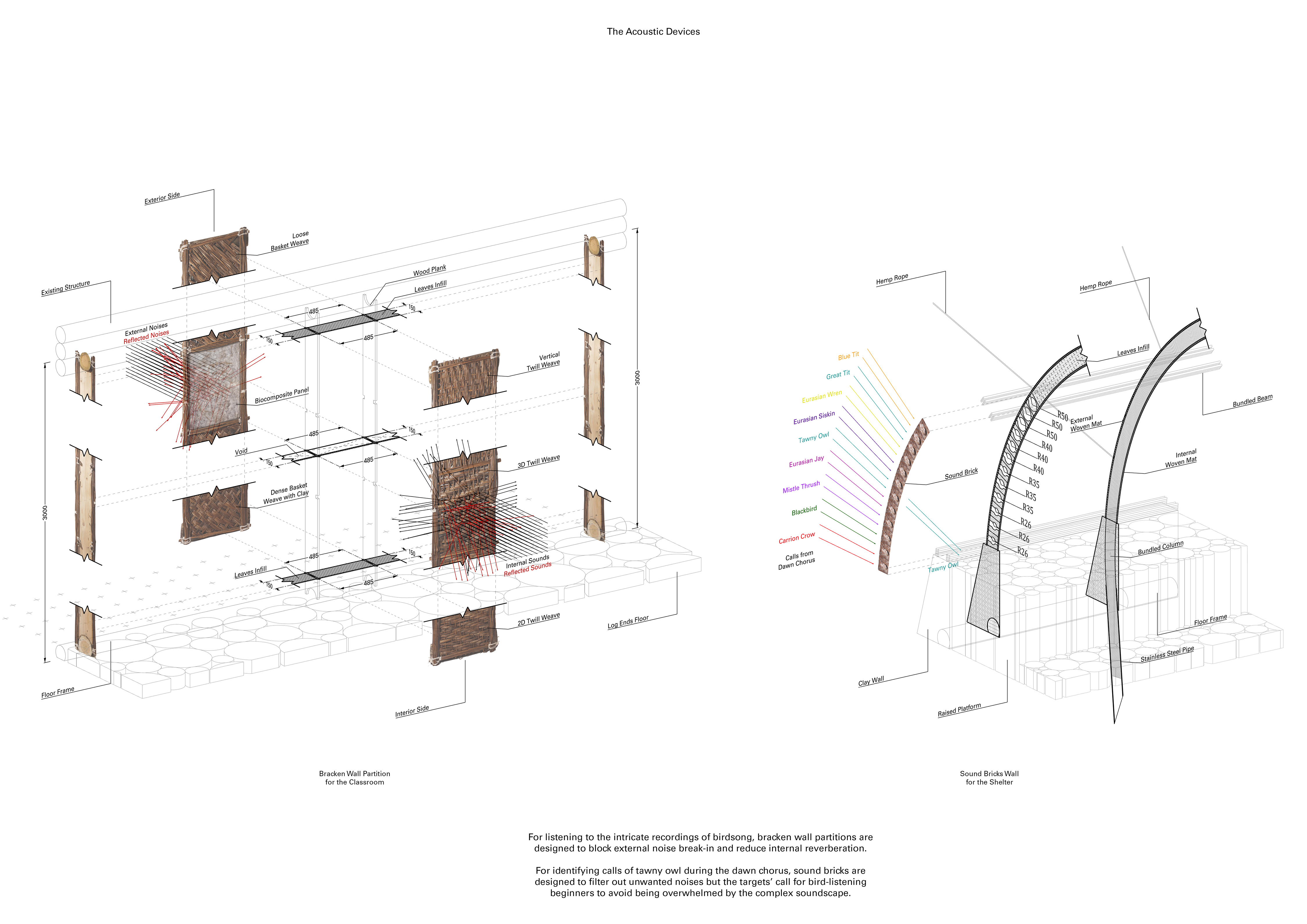
Two Acoustic devices are designed and fabricated to achieve different indoor acoustic environments within the two proposed structures, the classroom and the shelter.