Embracing the Wildlife within Architecture
Joyce Ng, MArch (Year: 5)
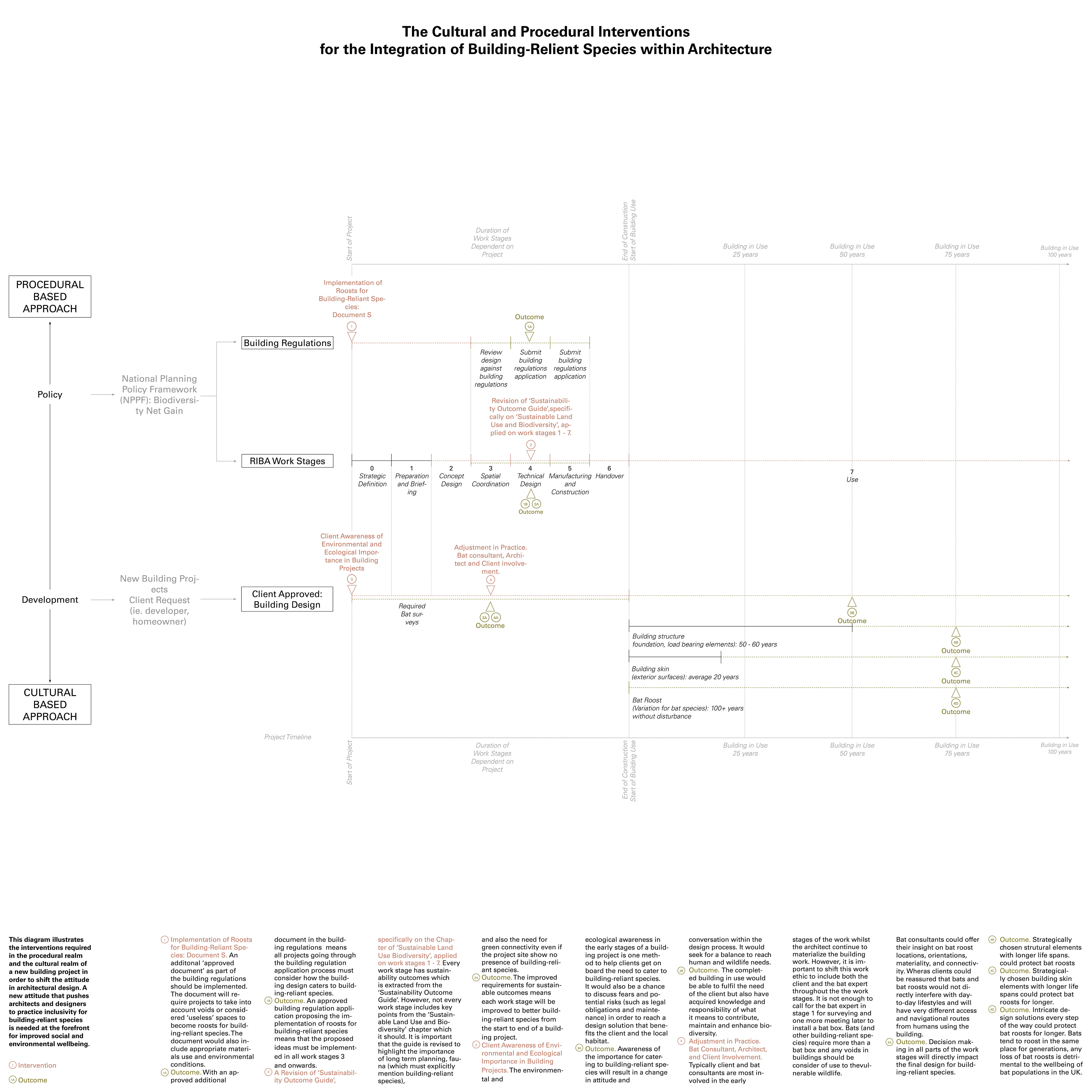
This project highlights the importance of including ‘building-reliant species’, such as bats, within the early stages of architectural practice.
The research begins in Hooke Park as an initial site of exploration, a site that provides crucial habitat for wildlife. However, due to the nature of Hooke Park being both an ancient woodland and a managed one, it was revealed that the lack of natural features such as woodpecker holes and tree splits have affected the way in which bats inhabit the woodland. Bats are biodiversity indicators and are crucial for pollination, seed dispersal and pest control. They do not build their roosts and rely on cracks, crevices and holes for shelter. With the lack of natural features, bats have found homes within Hooke Park’s buildings. This led to questions about where bats choose to live, how they navigate and use the surrounding greenery. The study of the campus unravels an intricate system that extends beyond Hooke Park itself. In fact, as more unmanaged woodlands disappear, ‘building-reliant species’ have emerged and been forced to adapt to man-made architecture in order to survive.
So, how does man-made architecture today consider ‘building-reliant species’ and what more can be done to accommodate them?
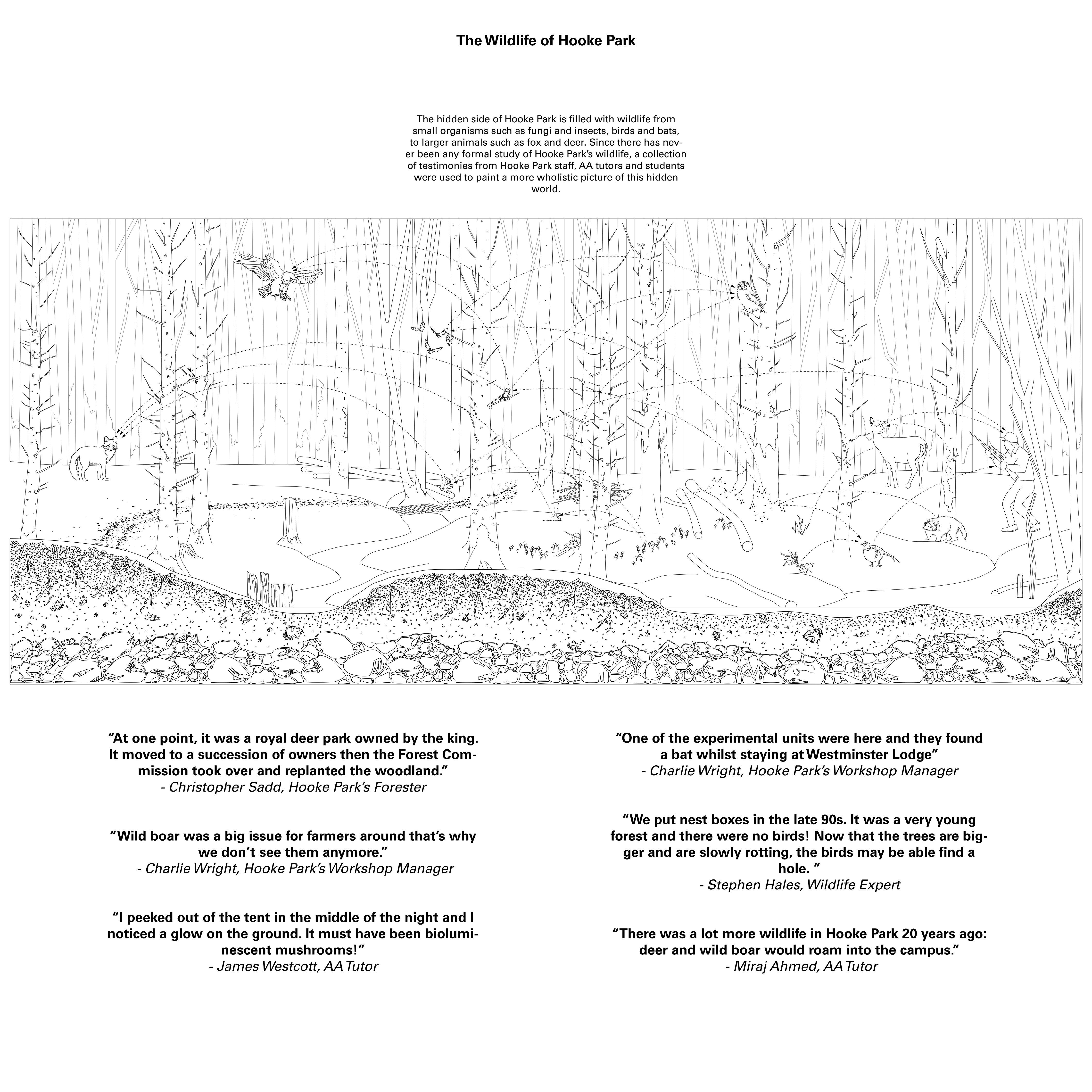
Hooke Park is filled with wildlife from organisms such as fungi and insects, birds and bats, and more. A collection of quotes were collected to paint a more wholistic picture of this hidden world.
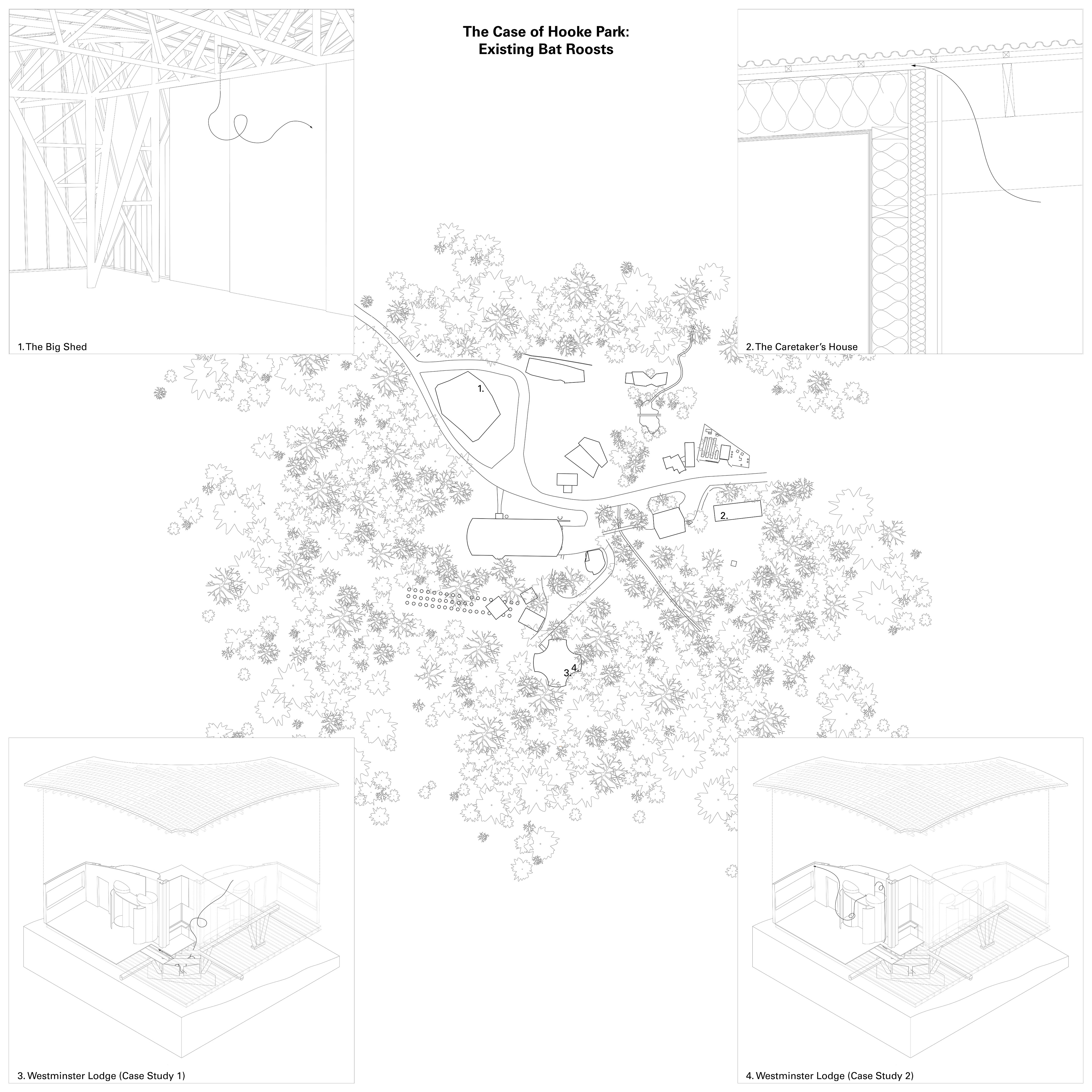
Bats of Hooke Park forage the woods but do not live in it. Due to the nature of Hooke Park being both a young-tree woodland and a managed one. Instead, the bats find ideal roosts in campus buildings.
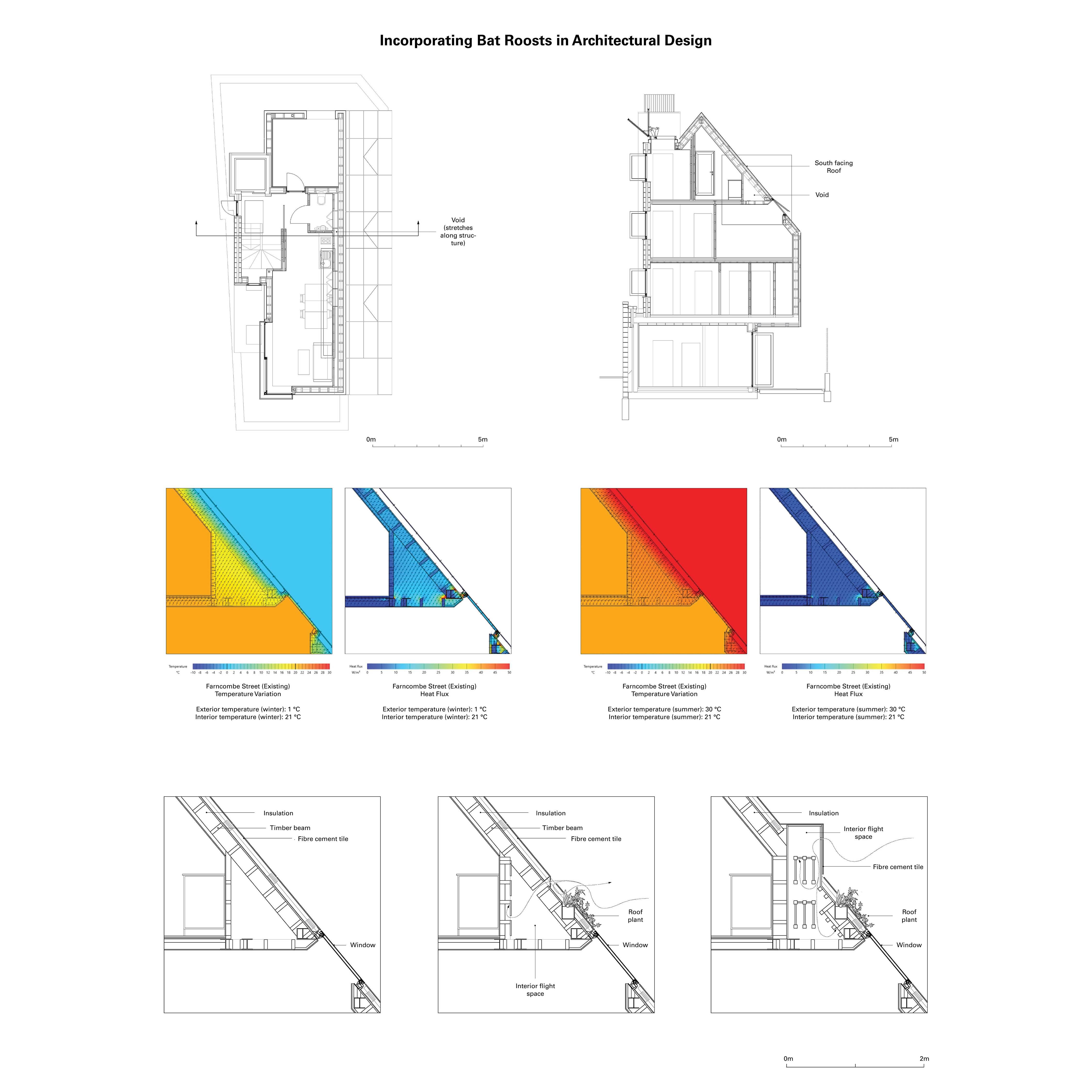
Bats are building-reliant species that have historically lived in woodlands. Today, they are under threat from habitat loss. This study illustrates one way to incorporate bat roosts in buildings.