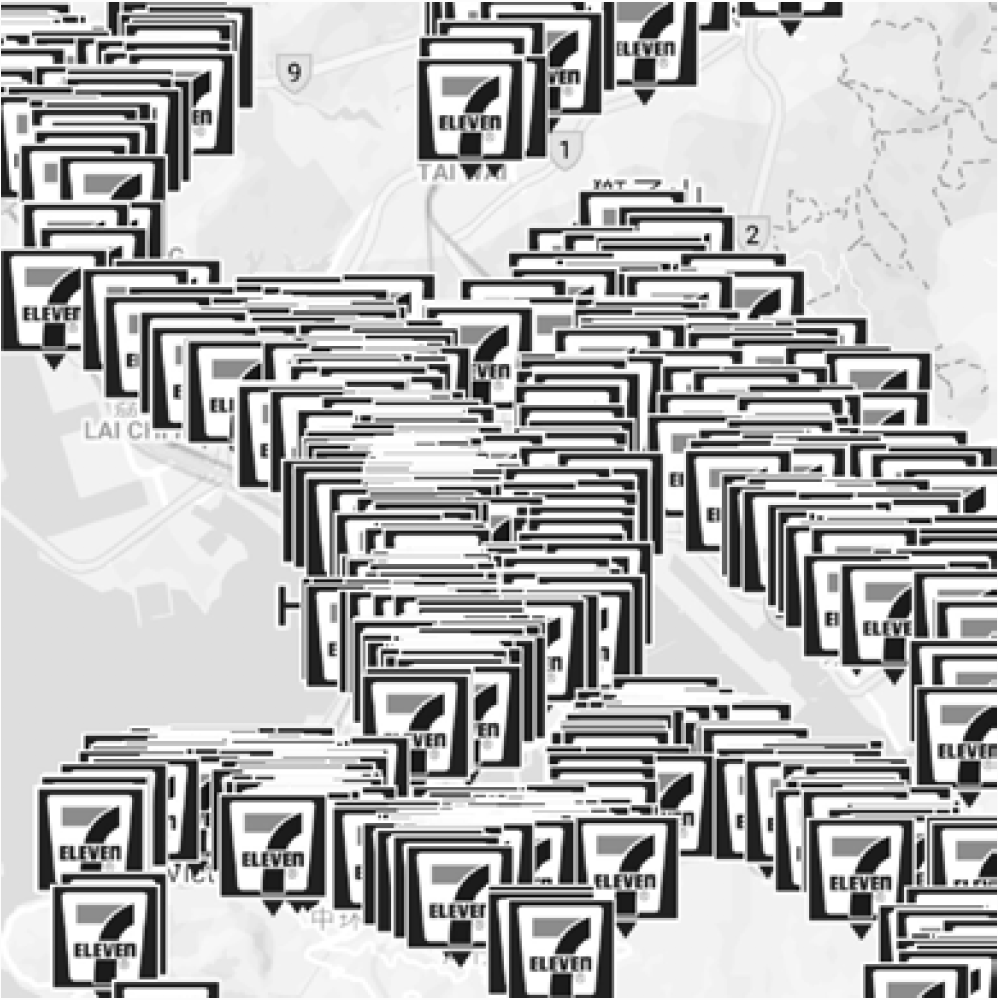
This thesis follows the transcontinental expansion of convenience store chains from Texas to Tokyo with the aim of investigating the typological metamorphosis of such under the cloak of franchised homogeneity. The idea of convenience, which motivated the design of every detail in the eponymous retail model and its larger logistical architecture, is postulated in this research as an imperative of everyday life. While building upon the theoretical premises formed by the works of Henri Lefebvre and Michel de Certeau on the modern concept of everyday, the thesis seeks to polemicize the inert reality of everyday life by tracing the evolving parameters of convenience – the mobility of individuals and the accessibility of products.
Early 20th-century automobile development and the acquisition of ice are crucial historical narratives to be reviewed in conjunction with that of convenience store, which founded its nascent form in a Texan icehouse. Its subsequent typological modifications, too, were made with the purpose of catering to new needs in an era of radically enhanced mobility, and in foreign locales of varied scale and density. It is through the mapping of these layered histories that the pervasive phenomenon of convenience can be addressed.