Emerging from the withdrawal of industry in the late 20th century, Glasgow has seen a number of societal problems surface. These problems, unlike other major former industrial cities, have not been sufficiently addressed, contributing to what has become known as the ‘Glasgow effect’. De-industrialisation, no more prevalent than in the dockyards along the Clyde, specifically in Govan, the city’s primary shipbuilding district, has left low mortality rates, extreme poverty and substance abuse. The latter was made a national emergency following a Scottish Affairs Committee enquiry in November 2019.
The proposal introduces to Govan a healing strategy for its most vulnerable of citizens, along with a strategy to simultaneously heal the land left as relics of an industrial age. Re-imagining the Victorian dockland landscape, the proposal reconciles eco-human relations by using nature as a tool for addiction treatment. The site’s relationship with the surrounding River Clyde is accentuated to create zones of isolation and to protect the district from increasing flooding risk, pulling existing boundaries into an organic organisation that rejuvenates a forgotten relic of a previous age
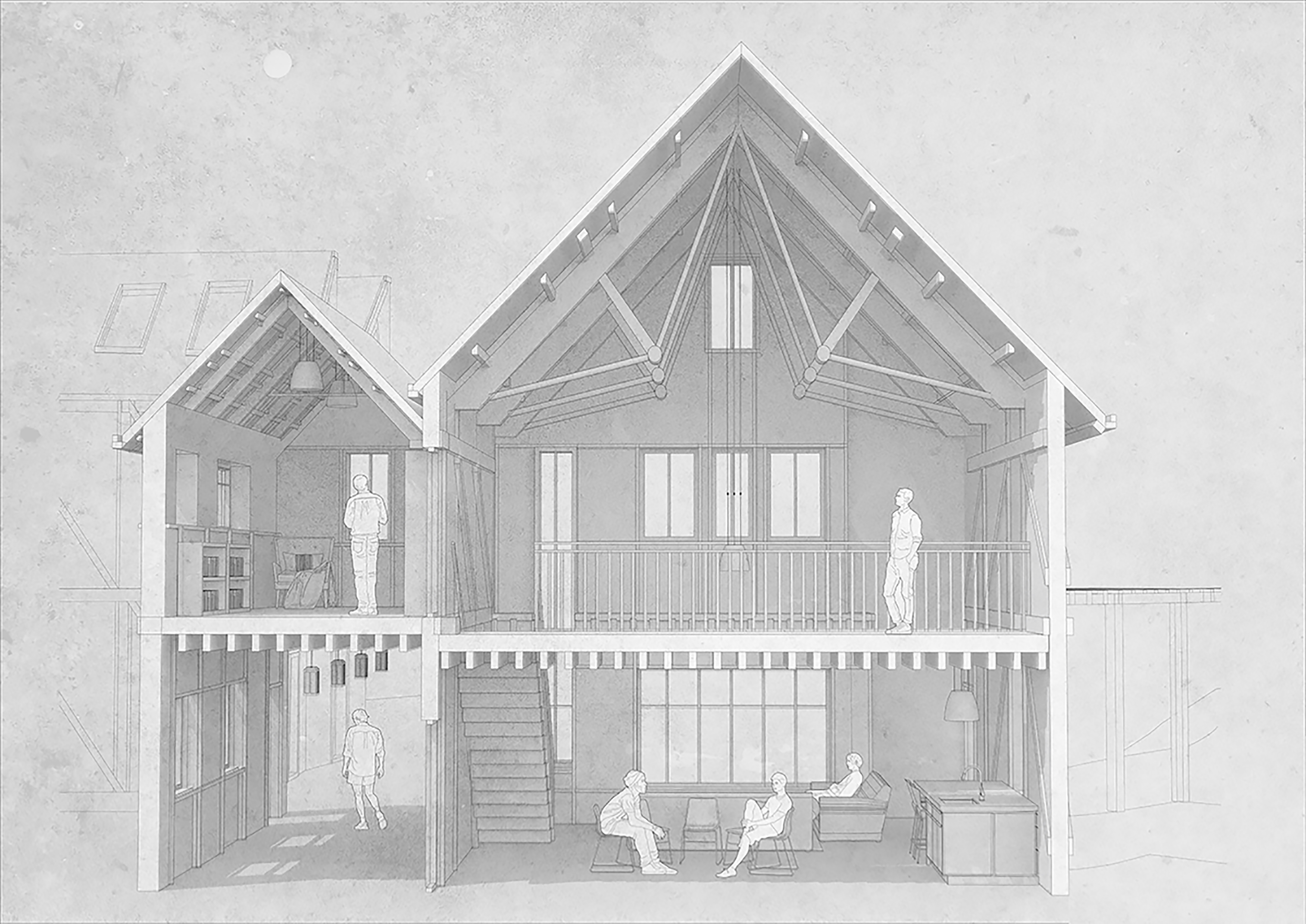
common room perspective section -
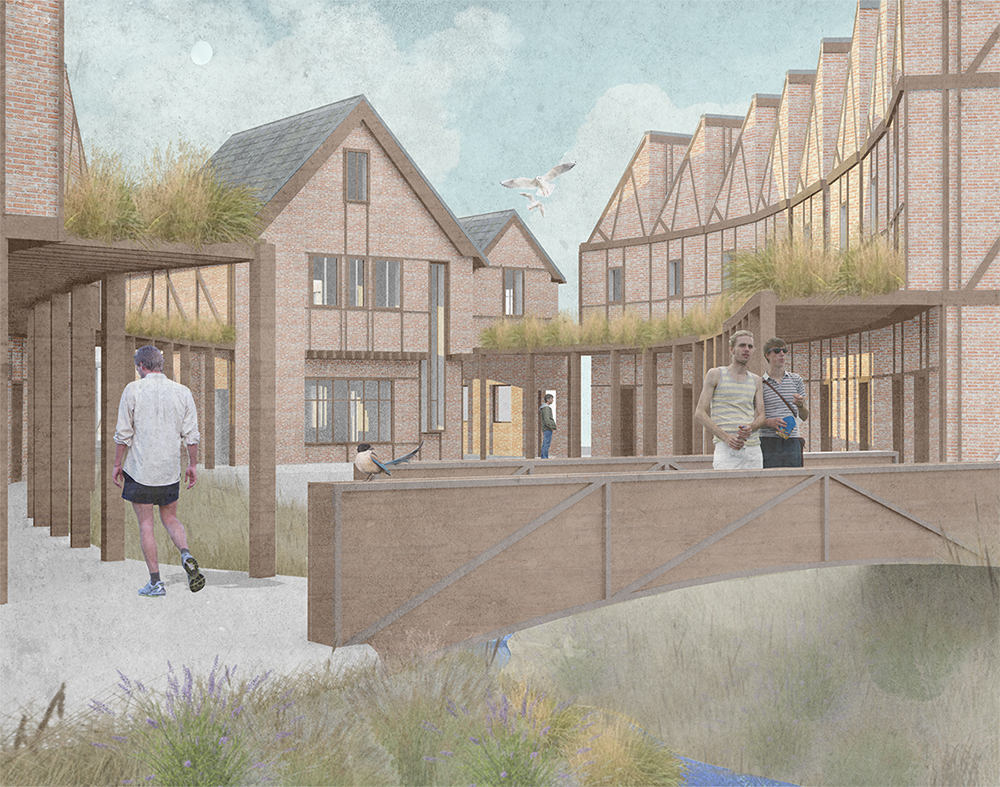
courtyard view of patient Accommodation
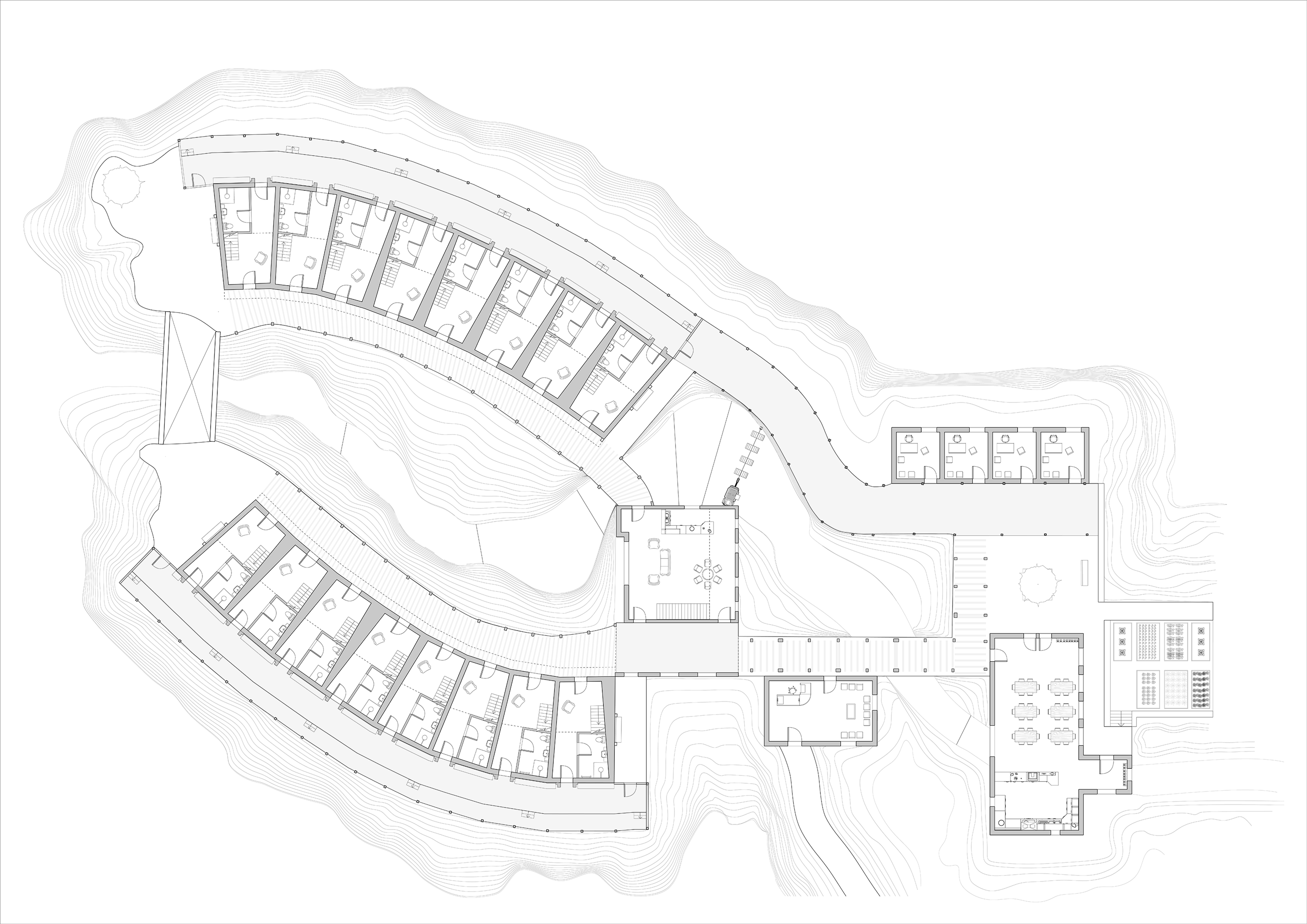
Detailed Plan using a multi courtyard strategy to implement zones of privacy and isolation.
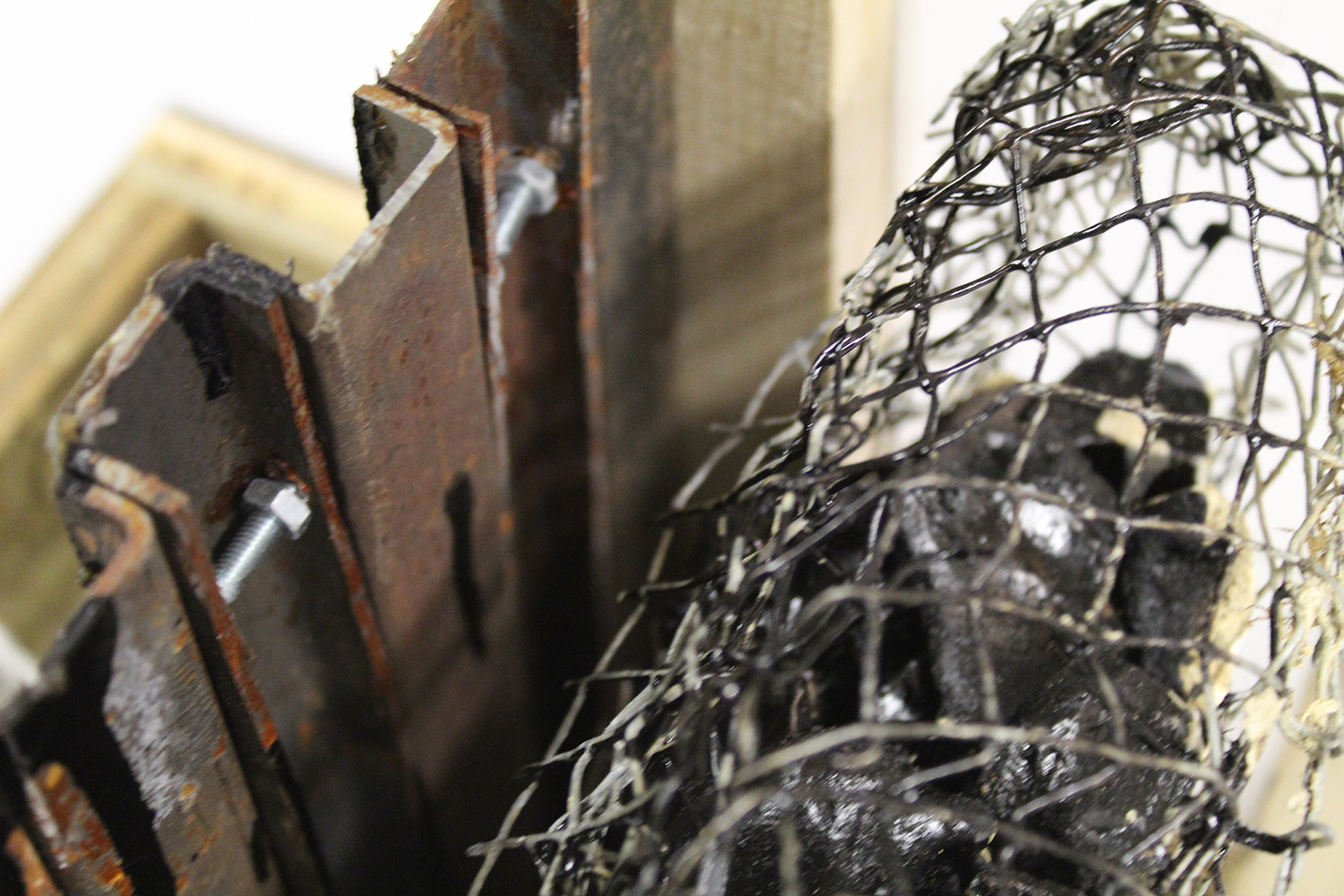
Material Testing of Inter-tidal forms
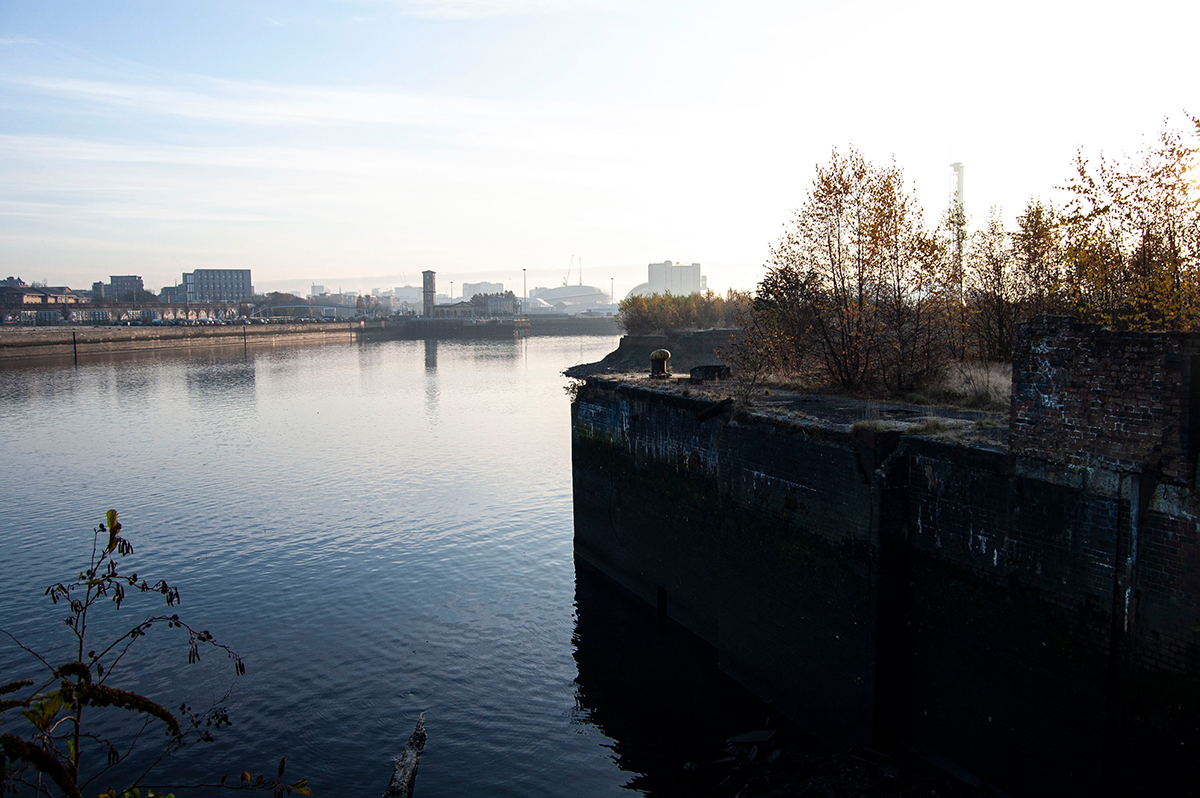
Site Photo of Govan Docks - An Industrial Relic
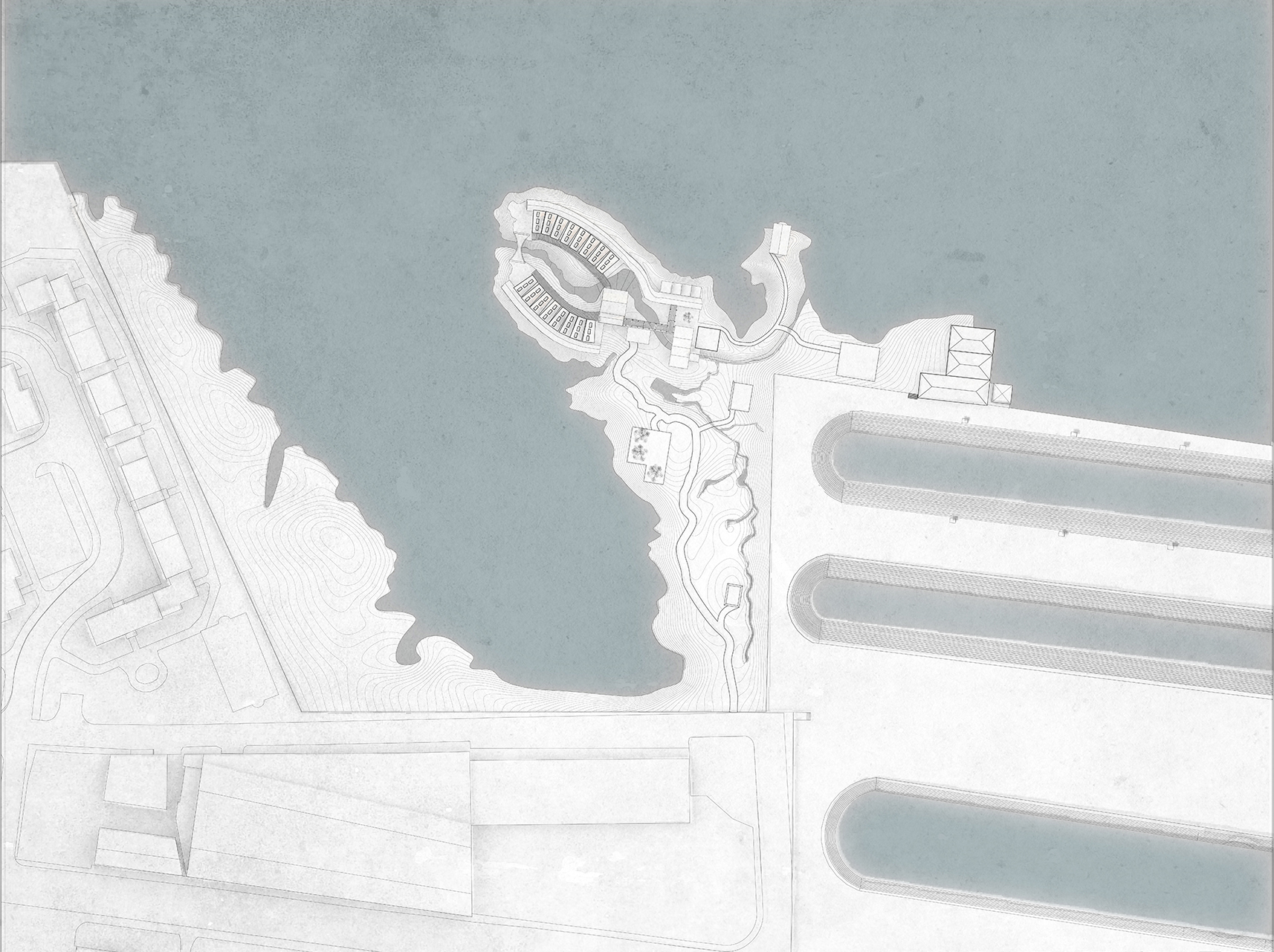
Site Plan that marries a landscape intervention that looks to reconcile industrial excavation of the River and also the effects of de-industrialisation to the people of Glasgow.