From Room to Community:Collective Living Forms and Inclusions of ‘Young-Olds’
Huace Yang
Before diving into this thesis, a few key terms must be introduced, namely, xiaoqu, shequ, danwei and the “young-old”.
A xiaoqu, which can be translated literally as “small districts”, is where most citizens live in urban China. Xiaoqu has been linked to new forms of development of residential compounds since the late-1980s.
The shequ is closely related to the xiaoqu and can sometimes be regarded simply as a xiaoqu but emphasizes territorial and organizational elements and engages with a wide range of activities including welfare, education, sanitation, public health, family planning, public order and so on.
Both xiaoqu and shequ sometimes are regarded as replacement of the danwei, which is the most intensely collective living unit in the context of China. By studying xiaoqus, shequs and danweis, this thesis introduces how the collective living in China has transformed from danwei to xiaoqu and identifies the issue that the Chinese young-old have become the primary participators in the xiaoqu, contemporary China’s most popular form of collective living.
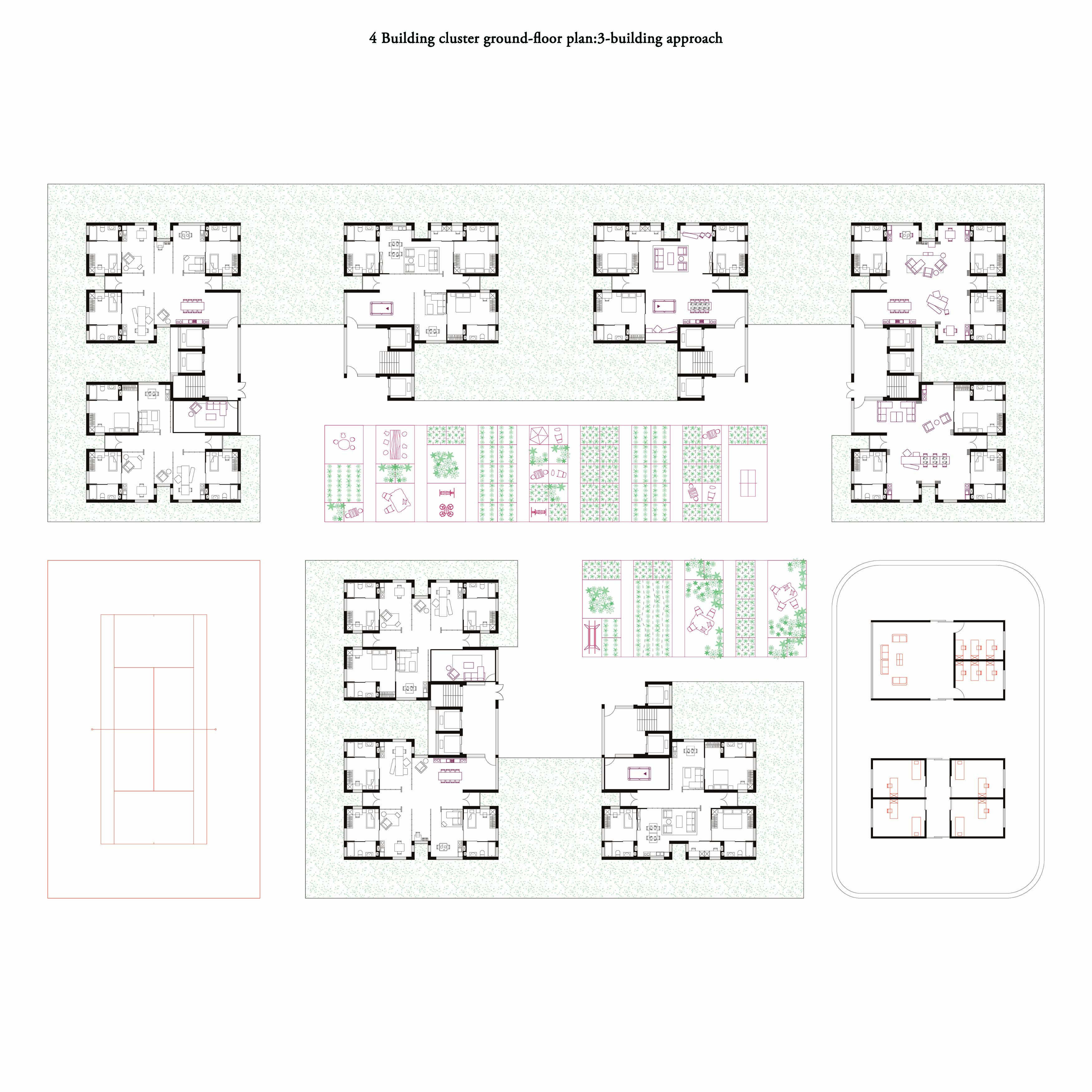
Drawings on the project review 2020 mainly illustrate how a possible approach of a new aged-integrated living community could work in current urban China.
Please find the whole thesis via: https://issuu.com/huaceyang/docs/huace_yang-dissertation
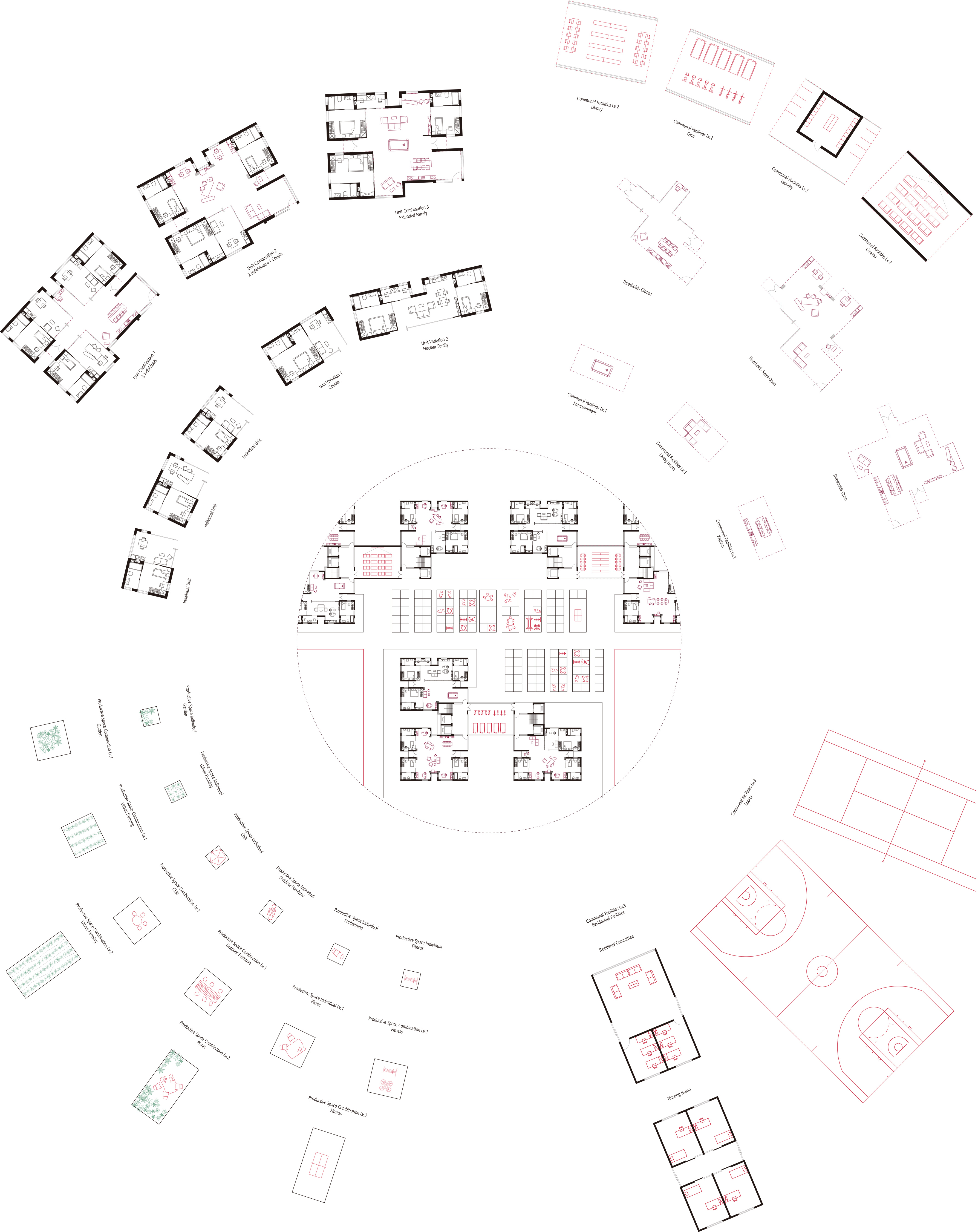
This drawing shows elements of the design approach and their relationships. All of those elements will be introduced in following gifs.
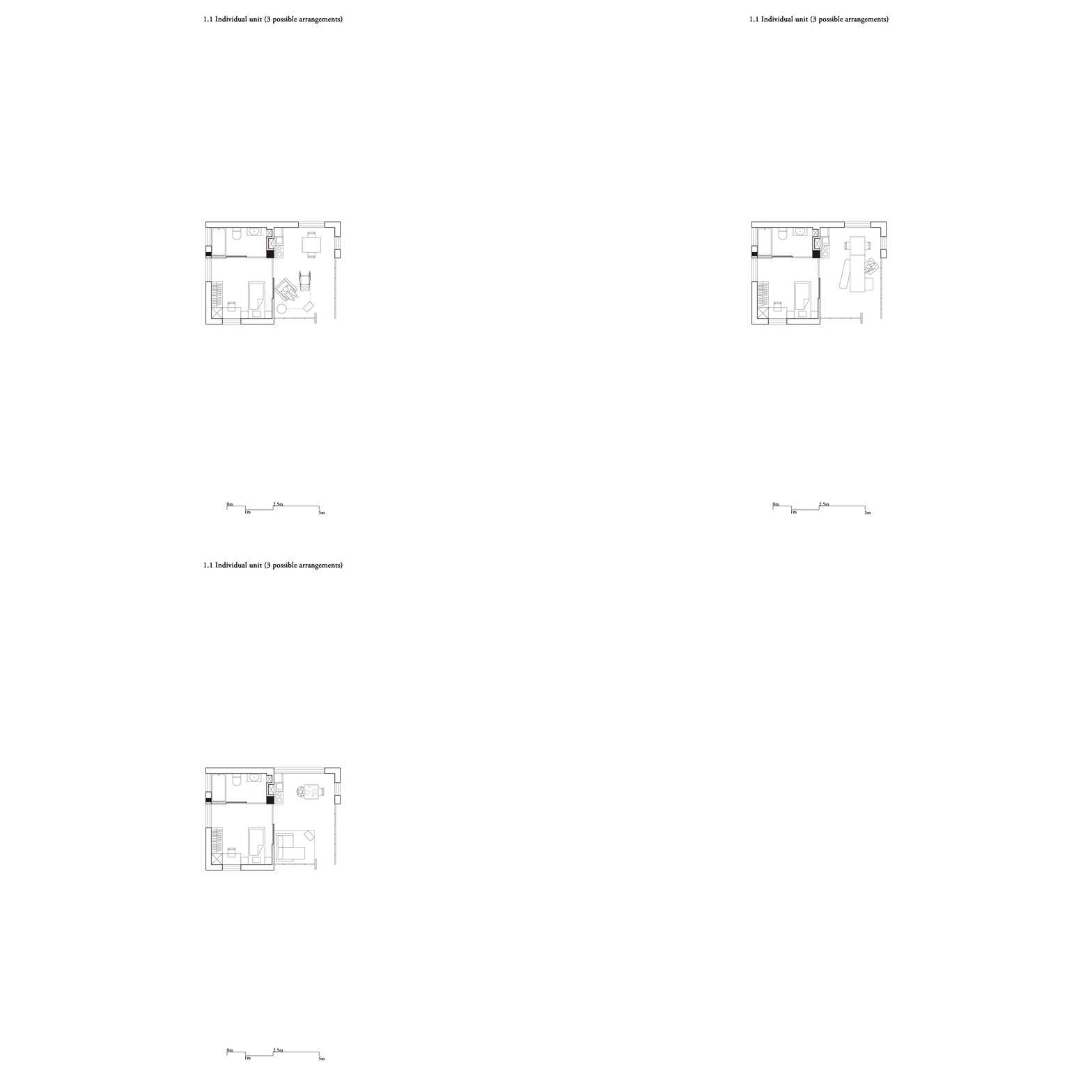
The first step of the design project is to identify its basic unit.I propose the single young-old or the young-old couple as the basic unit of collective living in the multigenerational living xiaoqu.
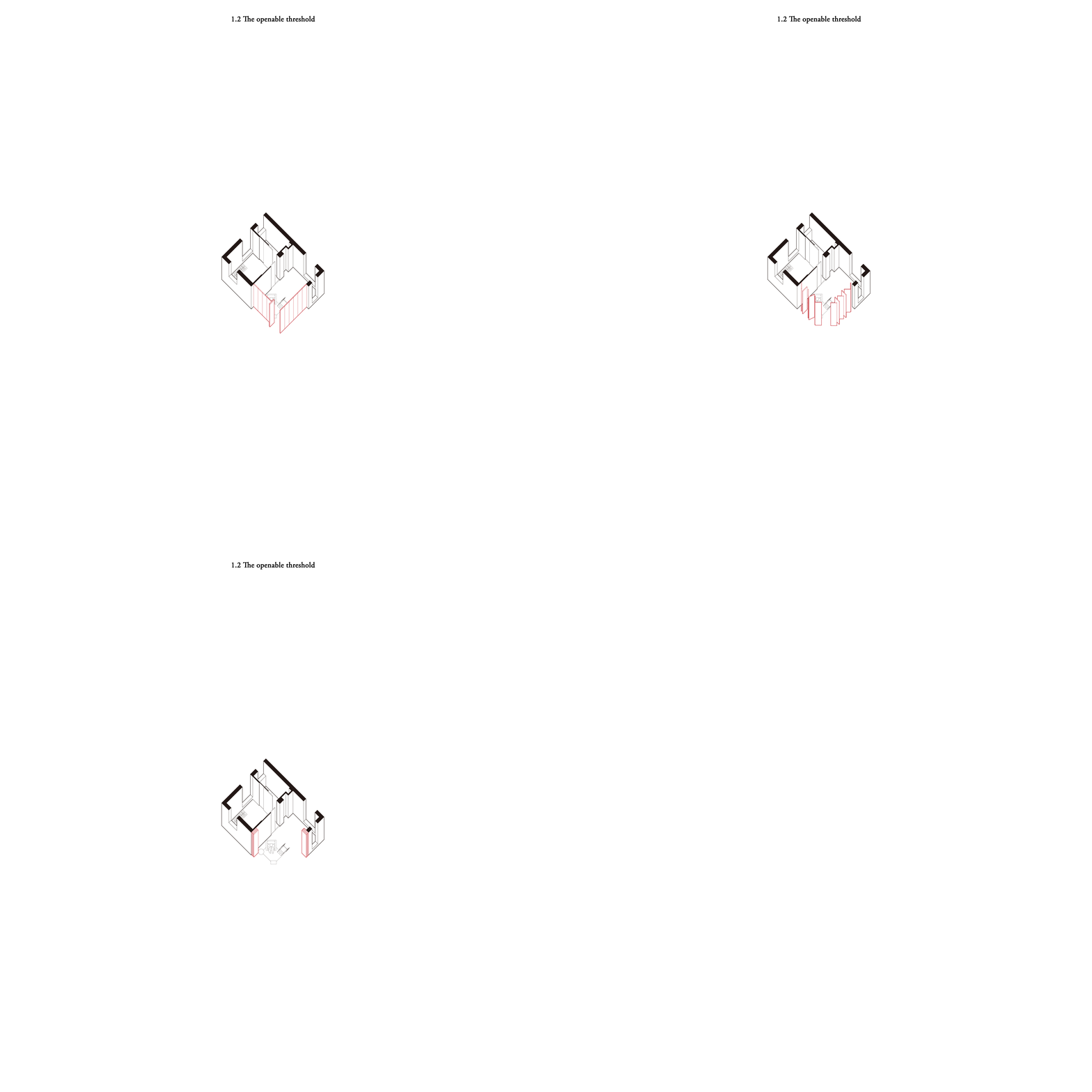
The room aims to bring together personal living space and potential collective living space. An openable threshold is proposed to raise the possibility of sharing one’s living room with neighbours.
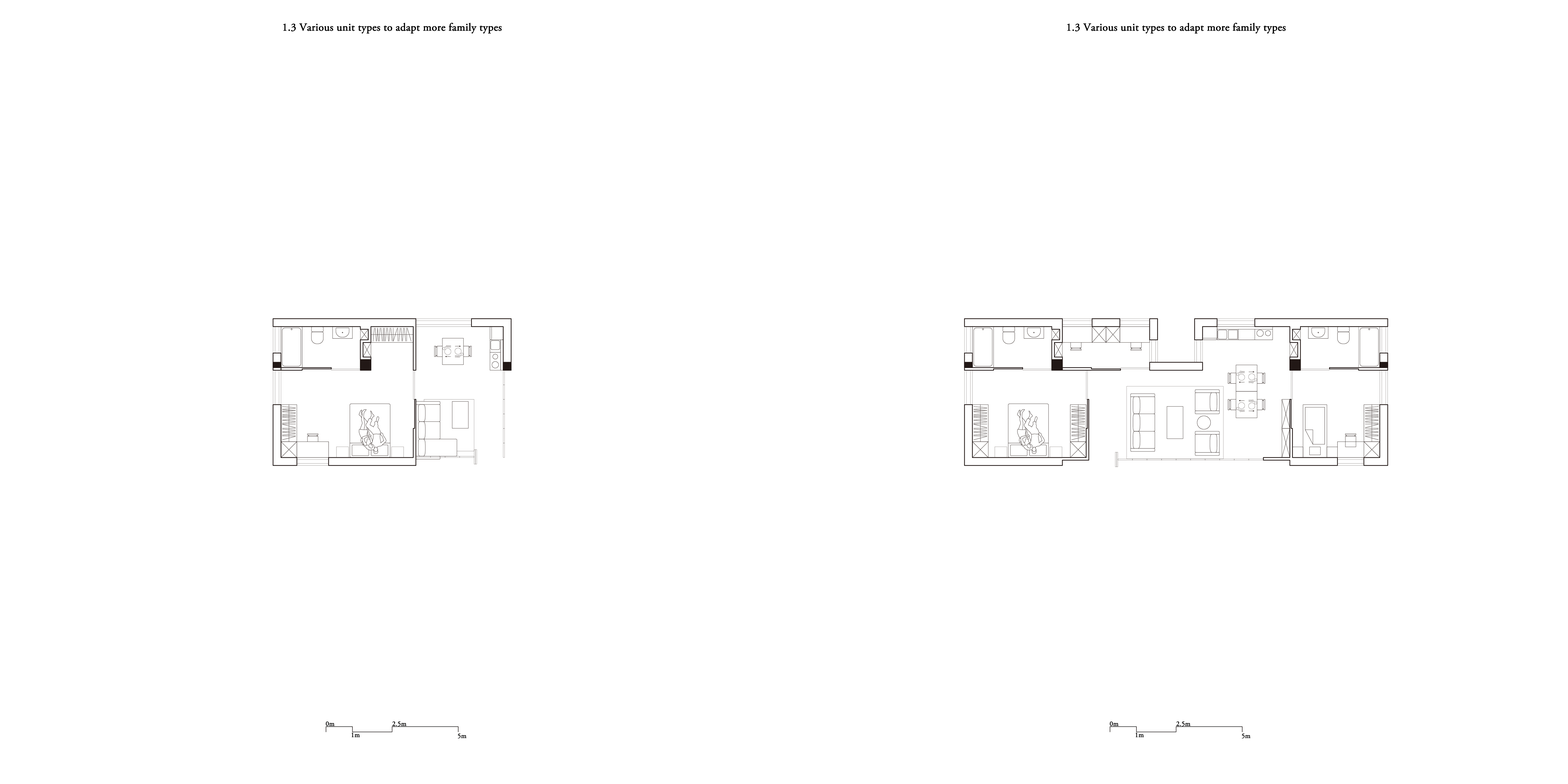
The intention of multigenerational living is implemented by offering more room types adapted from the single room,which allows the young-old to choose whether to live with their kid’s nuclear family.
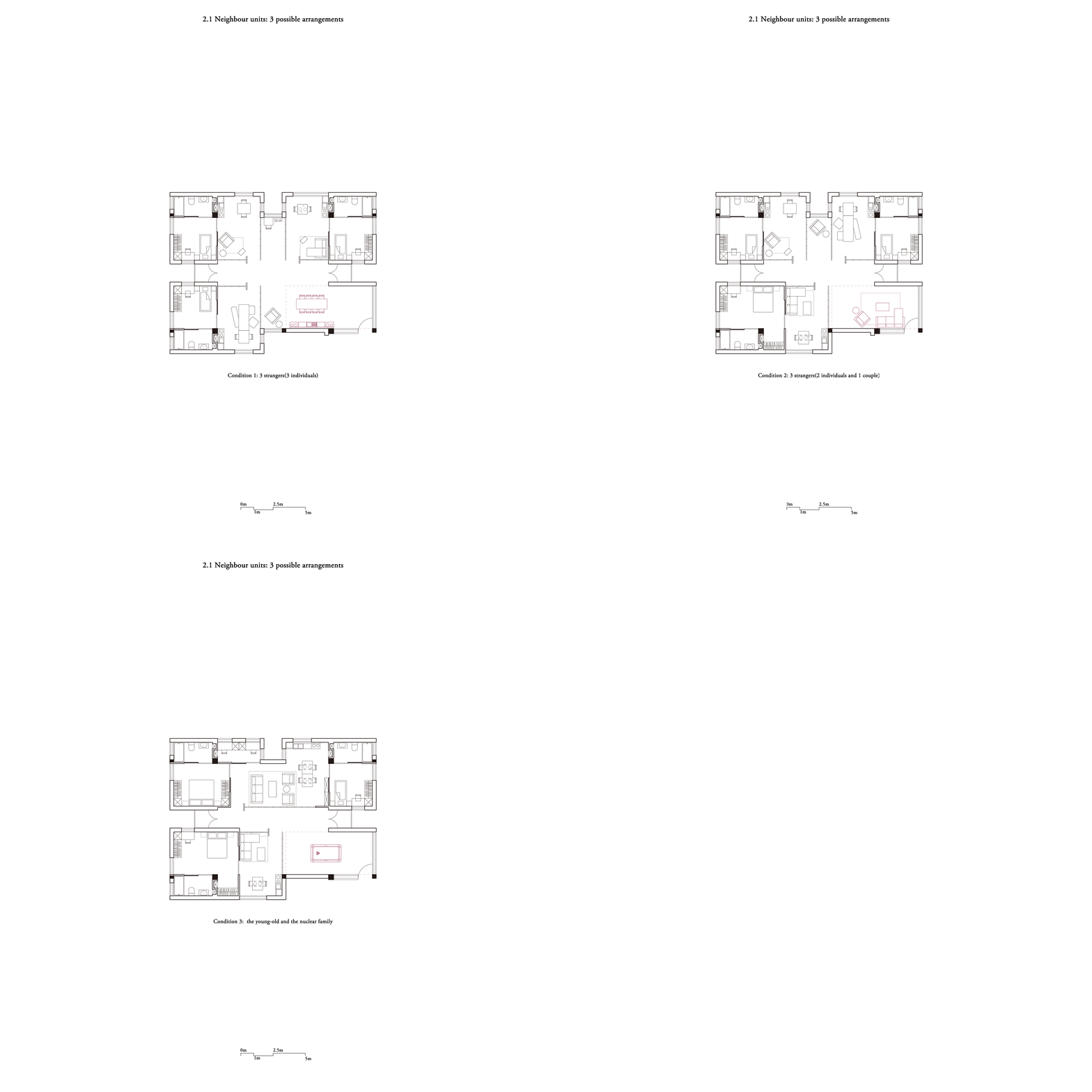
Three rooms are be united in a cluster way on one floor to formulate a neighbourhood with the corner equipped with communal facilities which are maintained by the property management company.
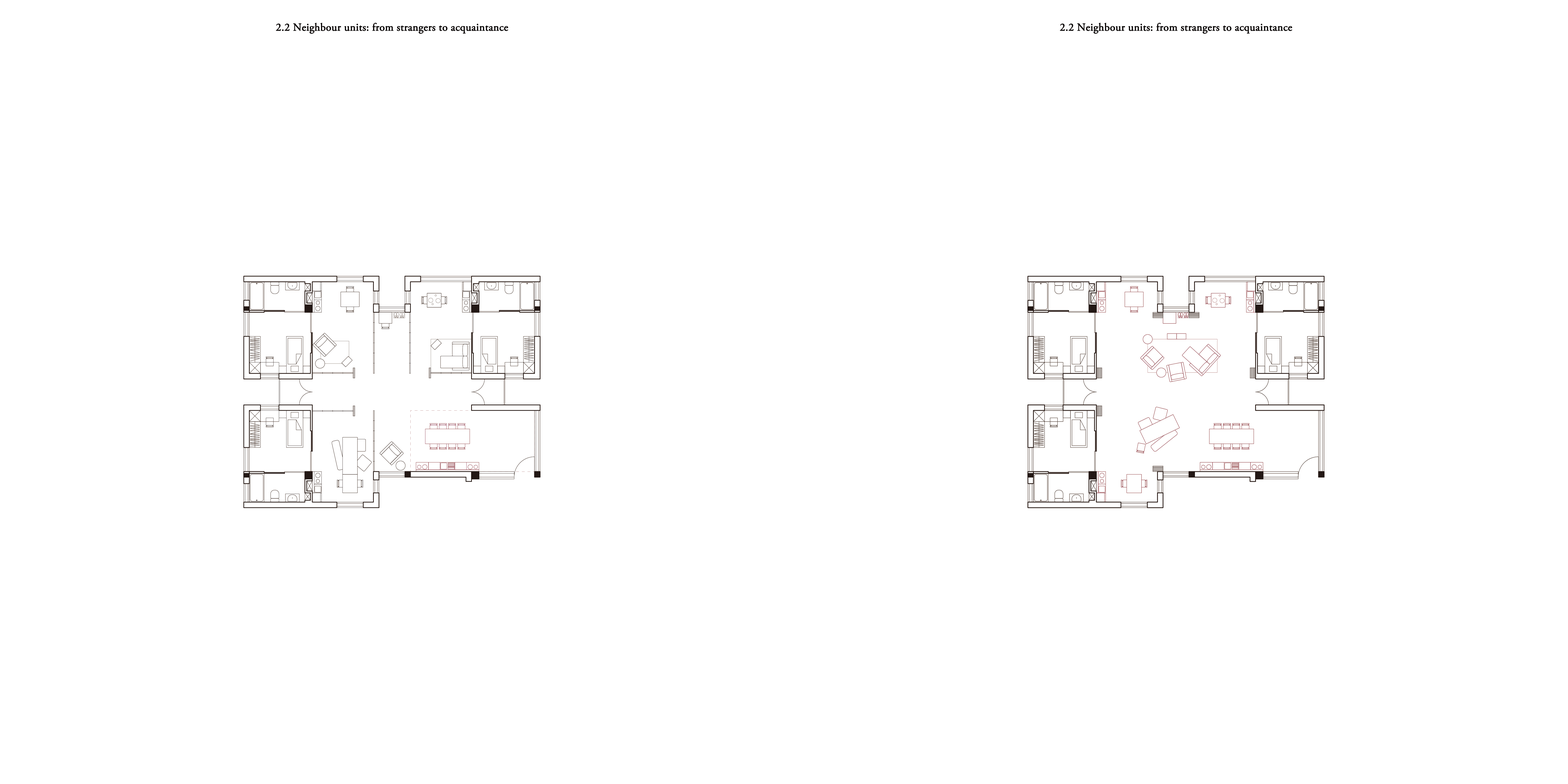
Once neighbours become familiar with one another, the arrangement or replacement of the communal facilities becomes an opportunity to participate in xiaoqu democracy.
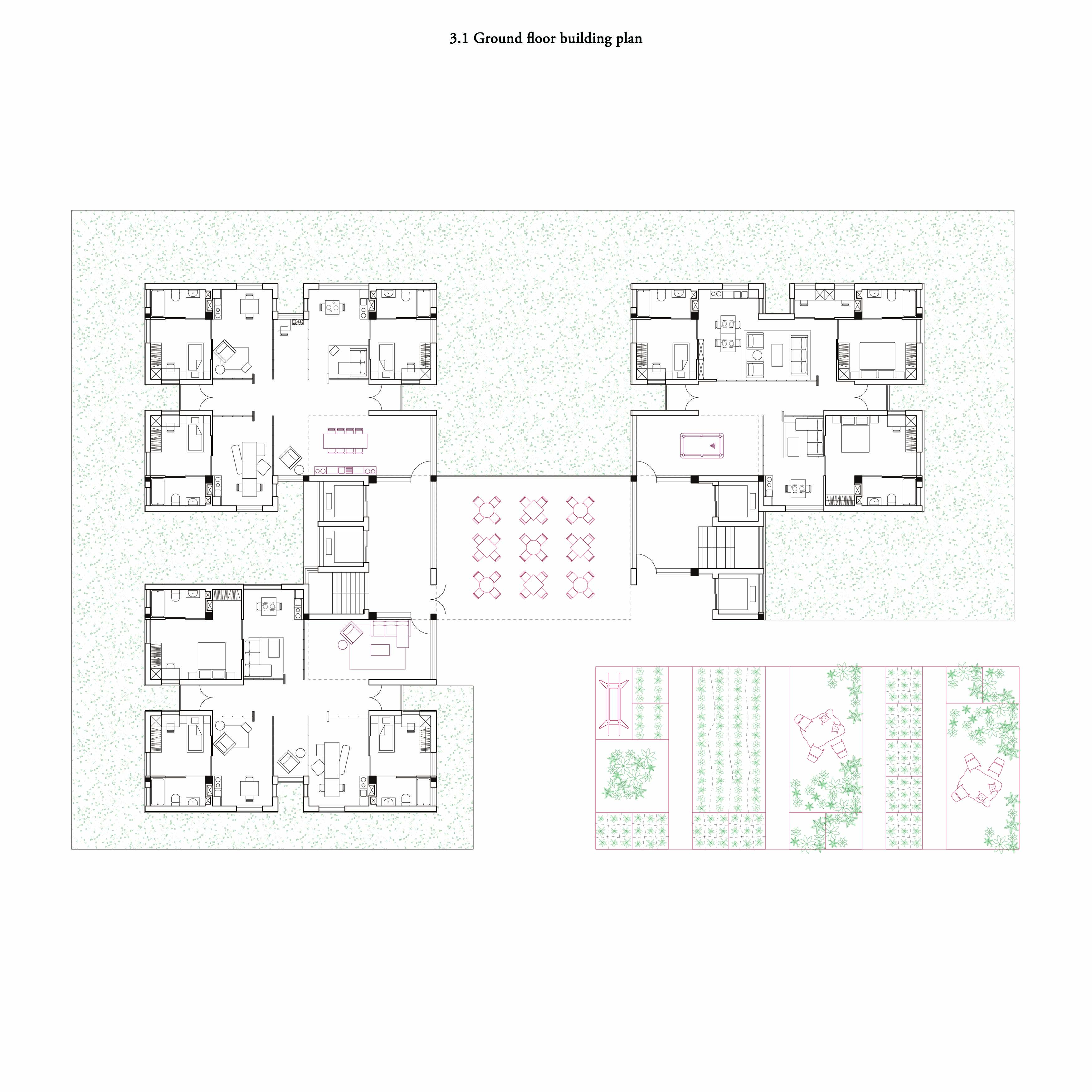
Three neighbour units are organised around second-level communal facilities, which are where the young-old make choices help shape their identity of belonging to a certain social group.
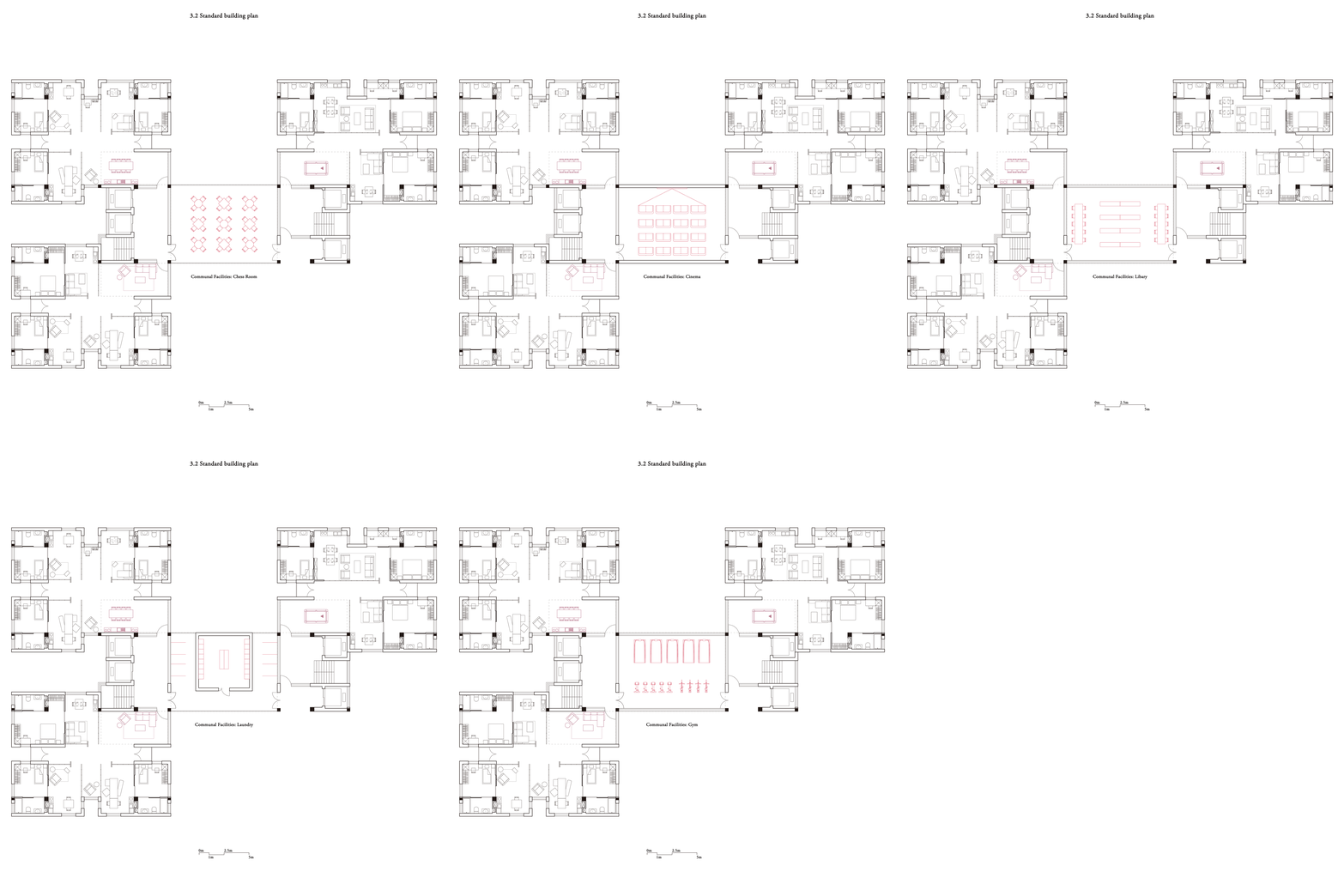
With communal facilities on different levels to neighbour units in the building, self-identification, social groups and familiarity among residents can be built.
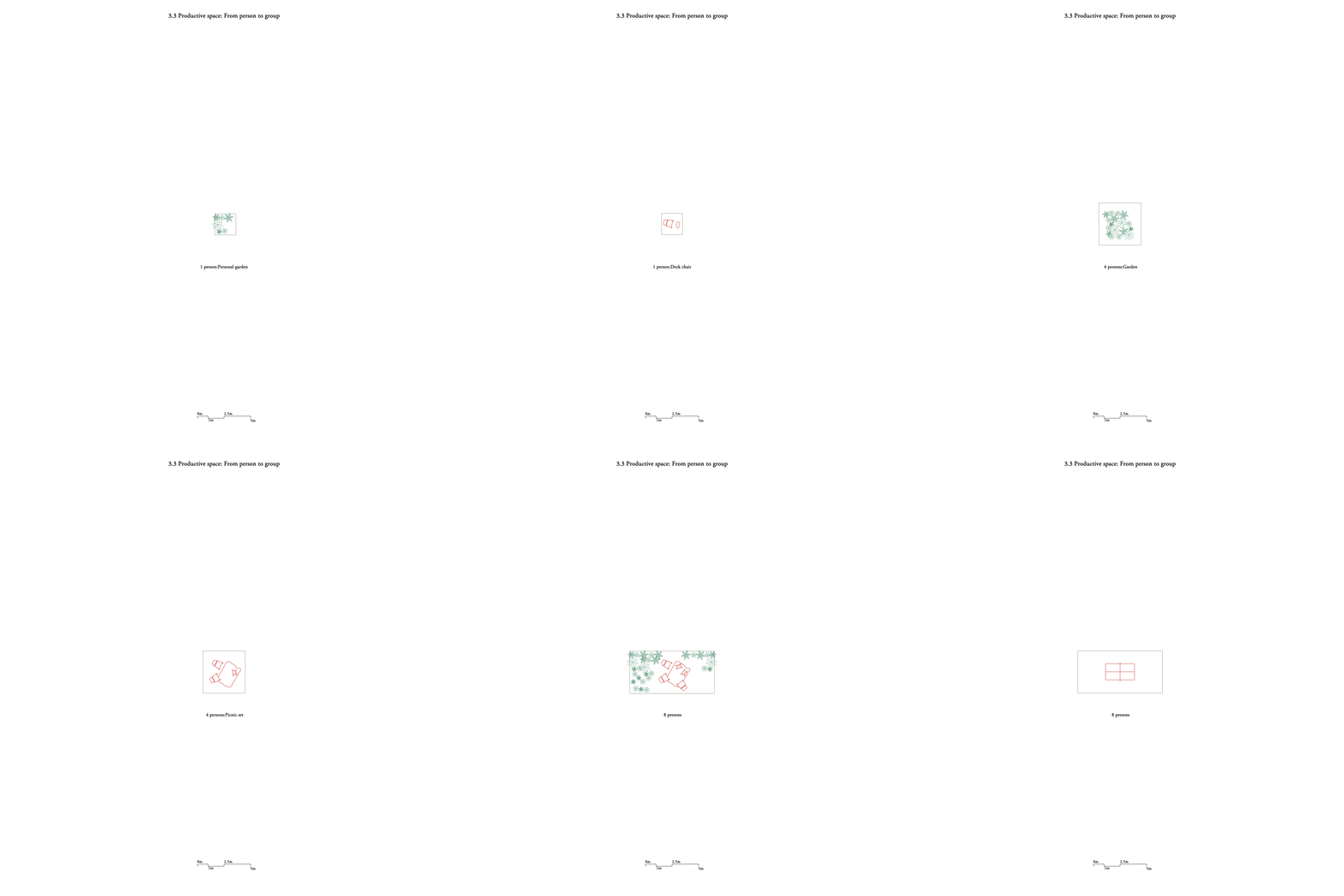
The productive space could be described as a private piece of land for any young-old living in a xiaoqu, challenging the situation that no resident would think the green space belongs to anyone.