The door to the invisible must be visible
Geraldine Spilker
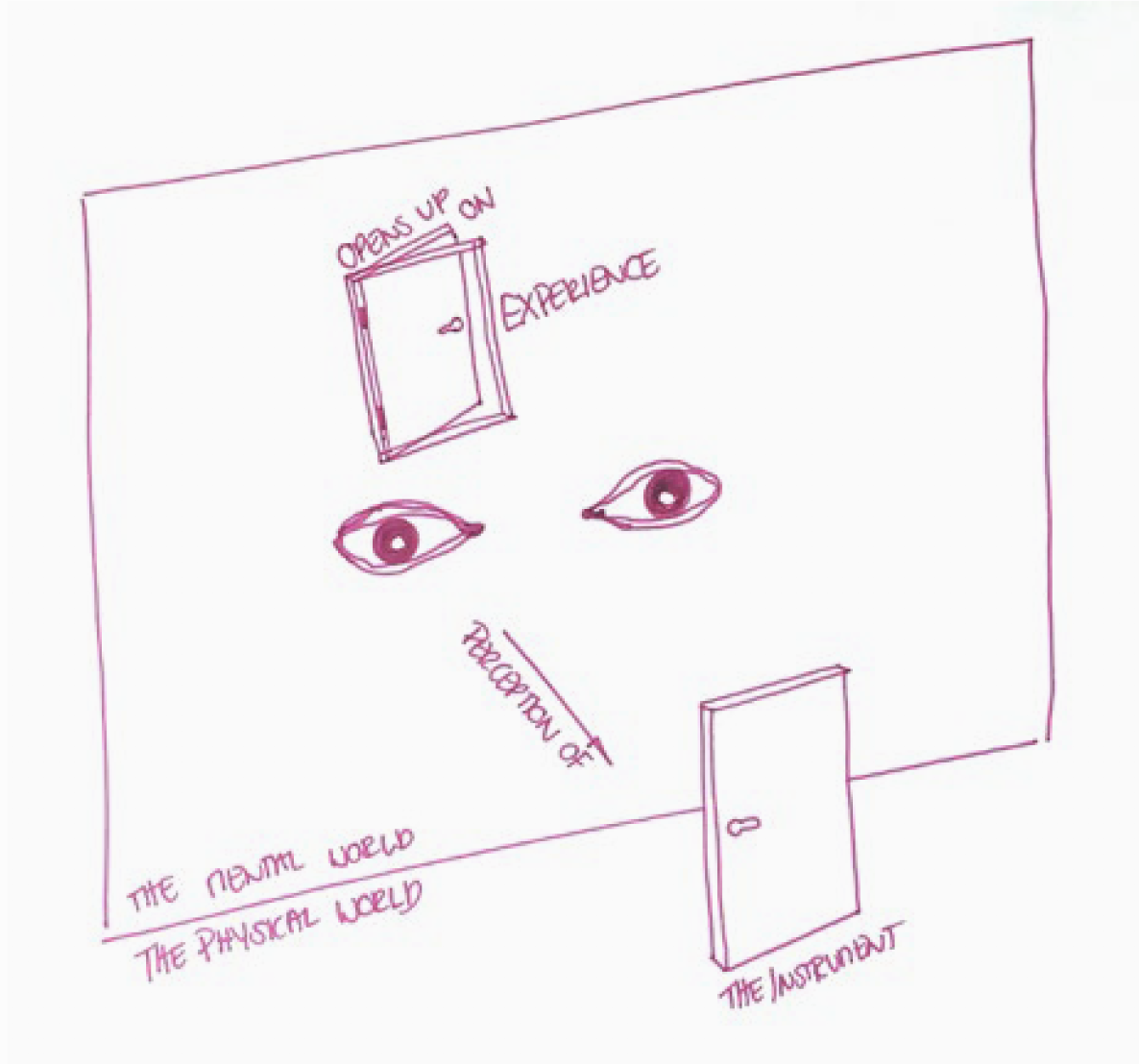
The thesis examines how the intangible and fleeting notion of experience can be seized within the process of architectural conception. Experience in this context is to be understood as the way in which one perceives one’s environment and how this affects the way one feels. Artefacts, from within the field of architecture and other practices, such as Bruno Schulz’s literary short stories, Le Corbusier’s drawings for the little house and Oskar Schlemmer’s mapped choreography will serve as vehicles to encircle the central question of this essay: How can we incorporate and render the notion of experience within the process of design, despite its impossible universal nature? The fabric of perception is interwoven with the seen, the associated, the recollected and the imagined which all contribute to the process of engaging with the world around us.
The aim of the thesis is to challenge the academic study of experience, which has mostly appeared under the strongly theoretical and debated term of phenomenology. Architecture being since its inception a discipline between art and science, with the conception of future experience at its core, merits instruments of a poetic nature for the discussion of spatial experience.