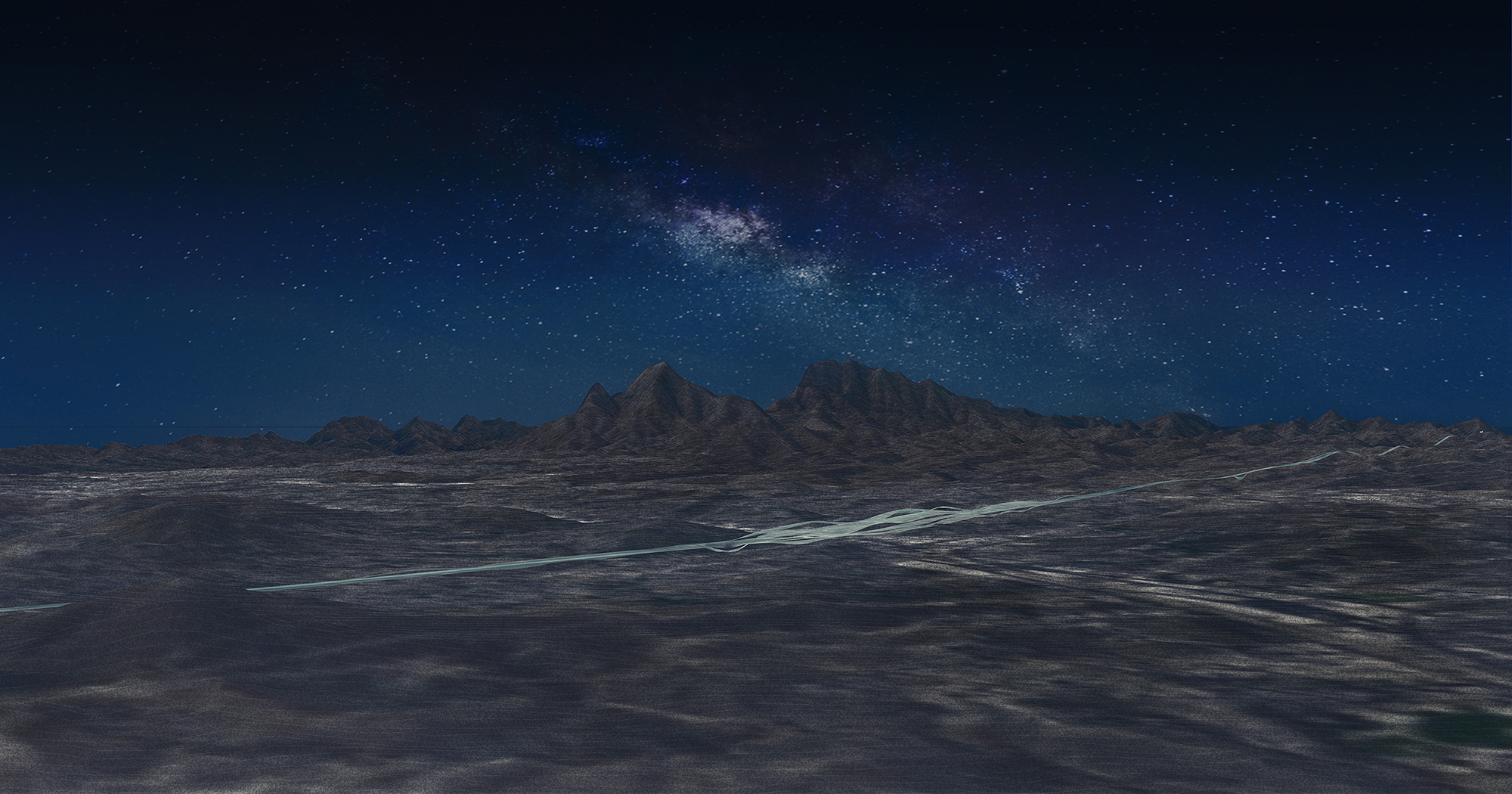
The project proposes to blur the existing boundaries between nation states to instead develop new environments of co-existence. Instead of seeing the border as an exclusive zone, it proposes to activate the border in a dialogue of inclusion. To turn the border condition from a ‘No Man’s Land’, to an ‘All Man’s Land’. Various case studies researched fluctuating state borders around the world in order to paradoxically identify them as constantly transiting entities. The project investigated 'Ambos Nogales', a divided border town by the US-Mexico border in the Sonoran Desert as a prototypical site and proposes to twist the edge condition into uncertain spaces of exchange and opportunity.
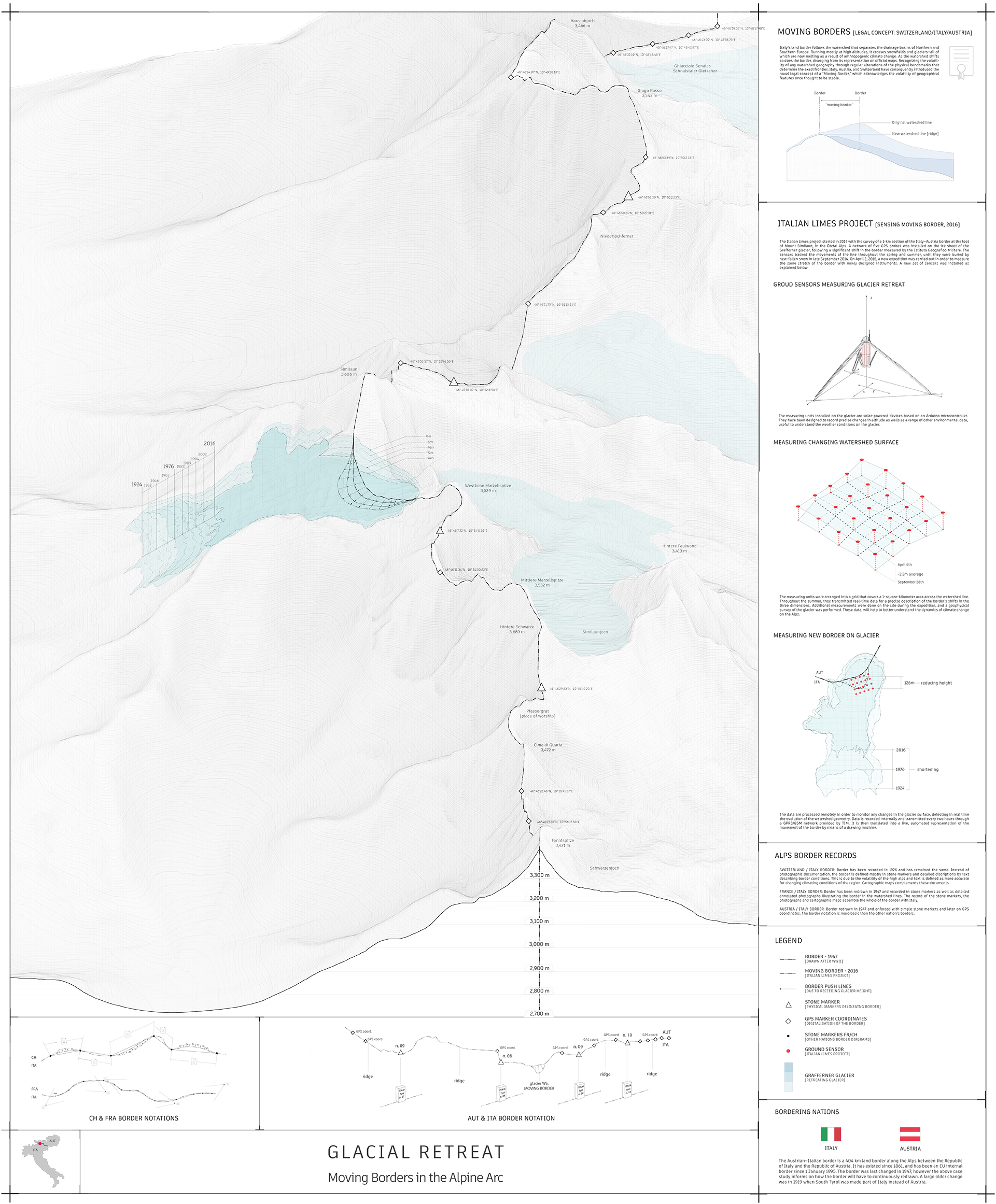
Case Study: Borders pegged to natural formations are in constant flux. A melting glacier between Italy and Austria caused the watershed divide to move over the years, and with it so is the border.
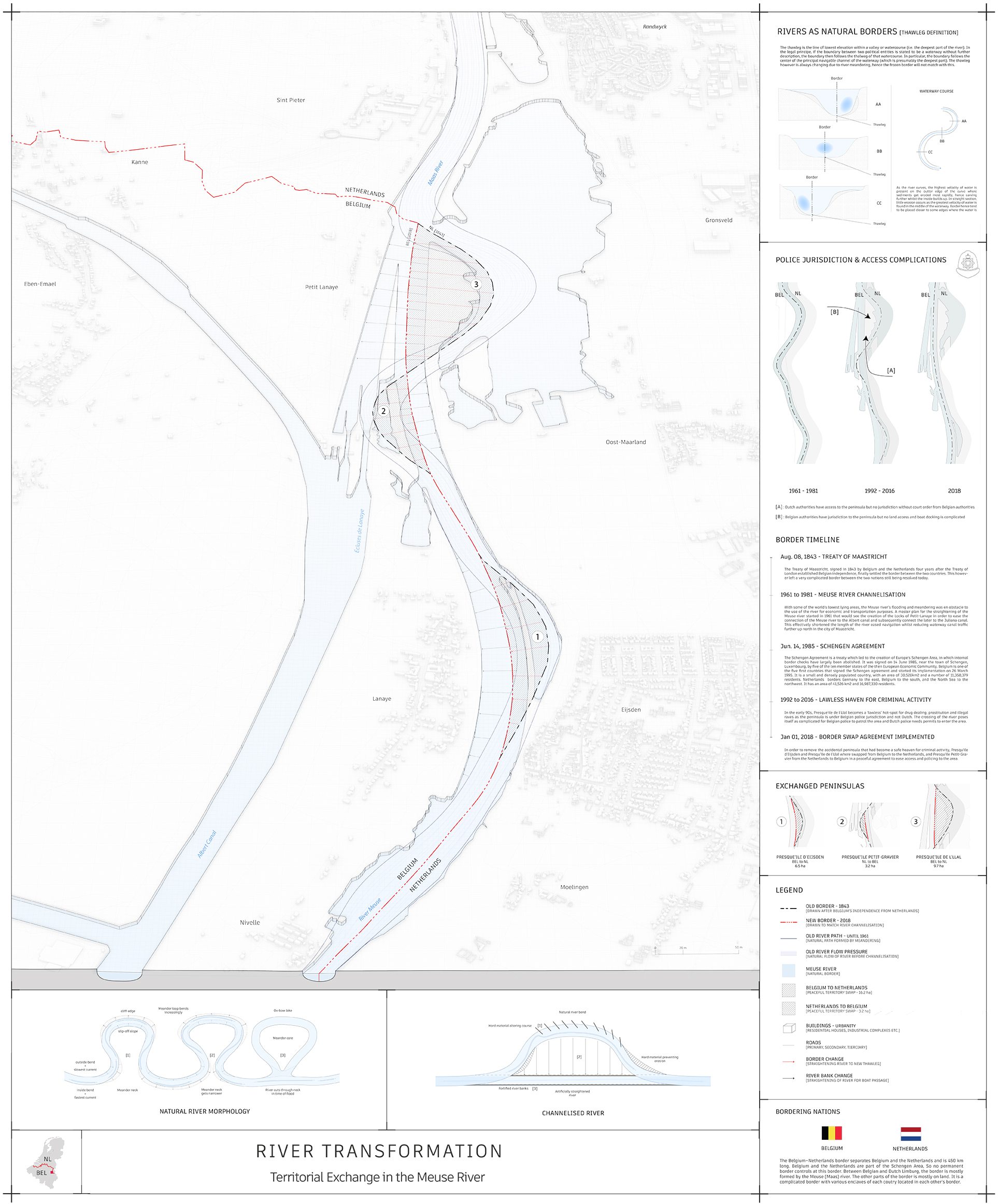
Case Study: A river channelisation between Belgium and the Netherlands left territorial and jurisdictional ambiguities for three peninsulas, allowing them to become lawless enclaves.
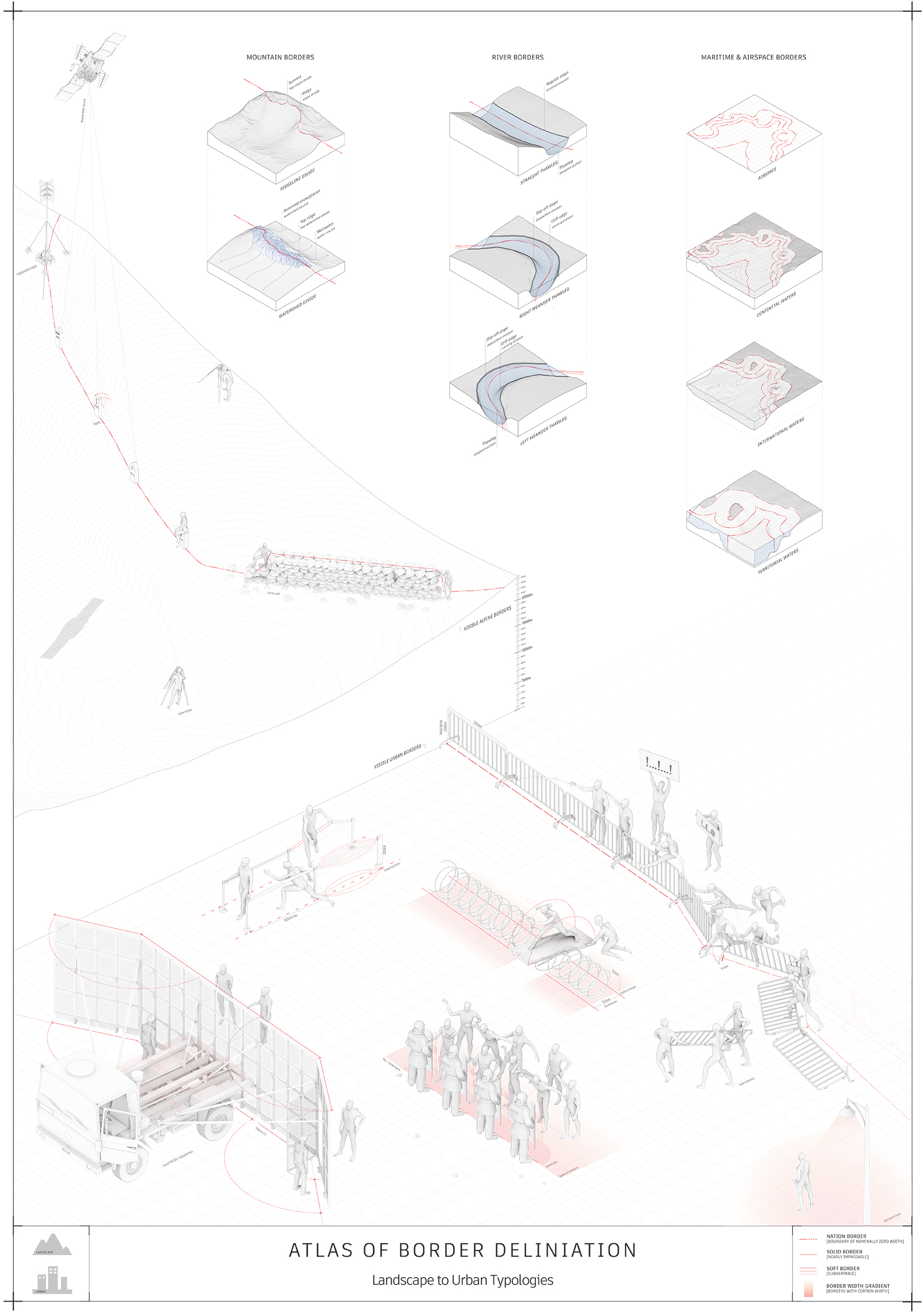
Interactions occur where lines separating two areas actually have a gradient or width, and active distance and a timescale. there is always a tension between the Subject and the Object.
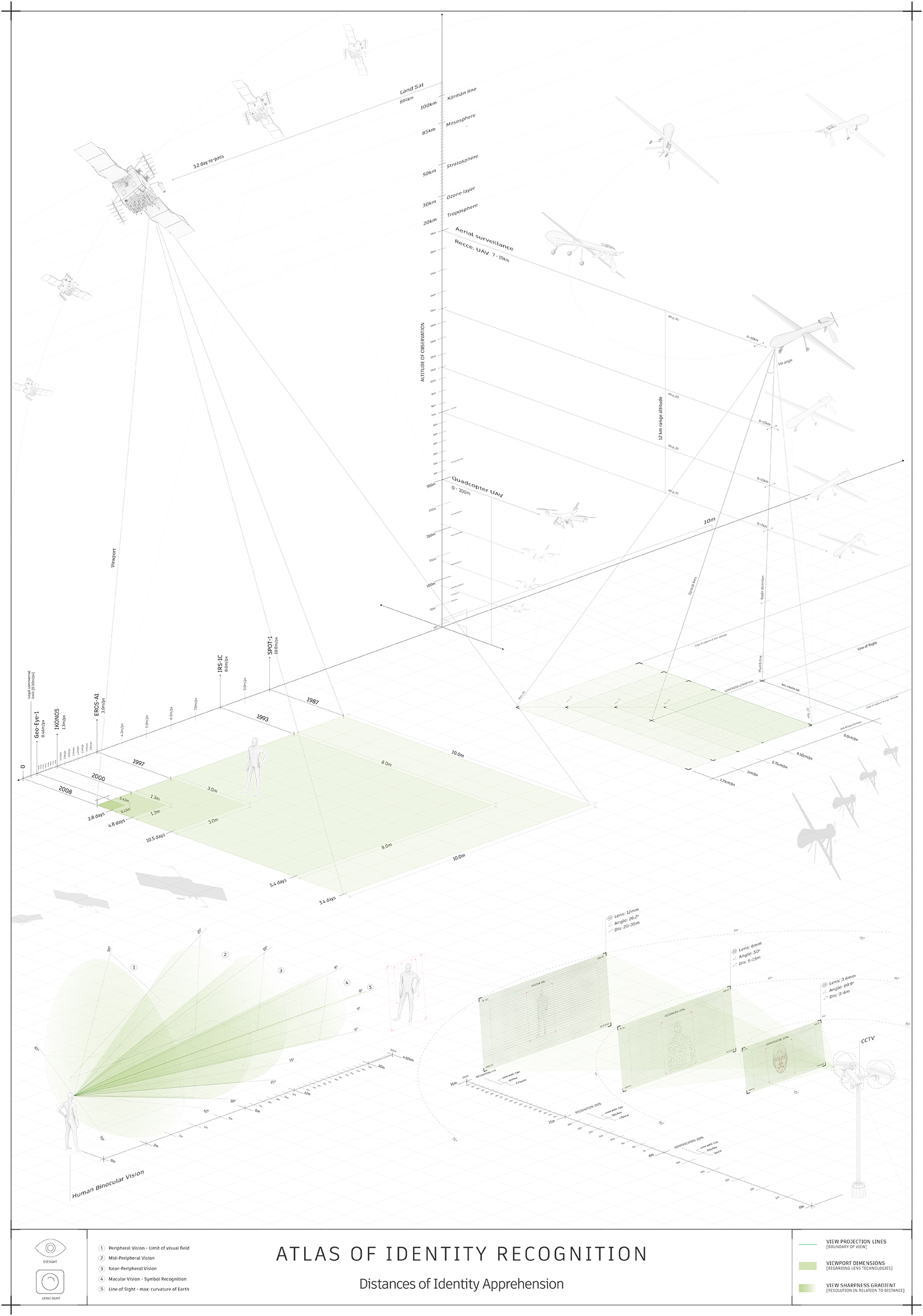
Borders are intensively surveilled to matter of pixels per centimetres. The geological scale of border surveillance therefore highly implicated the scale of the human body.
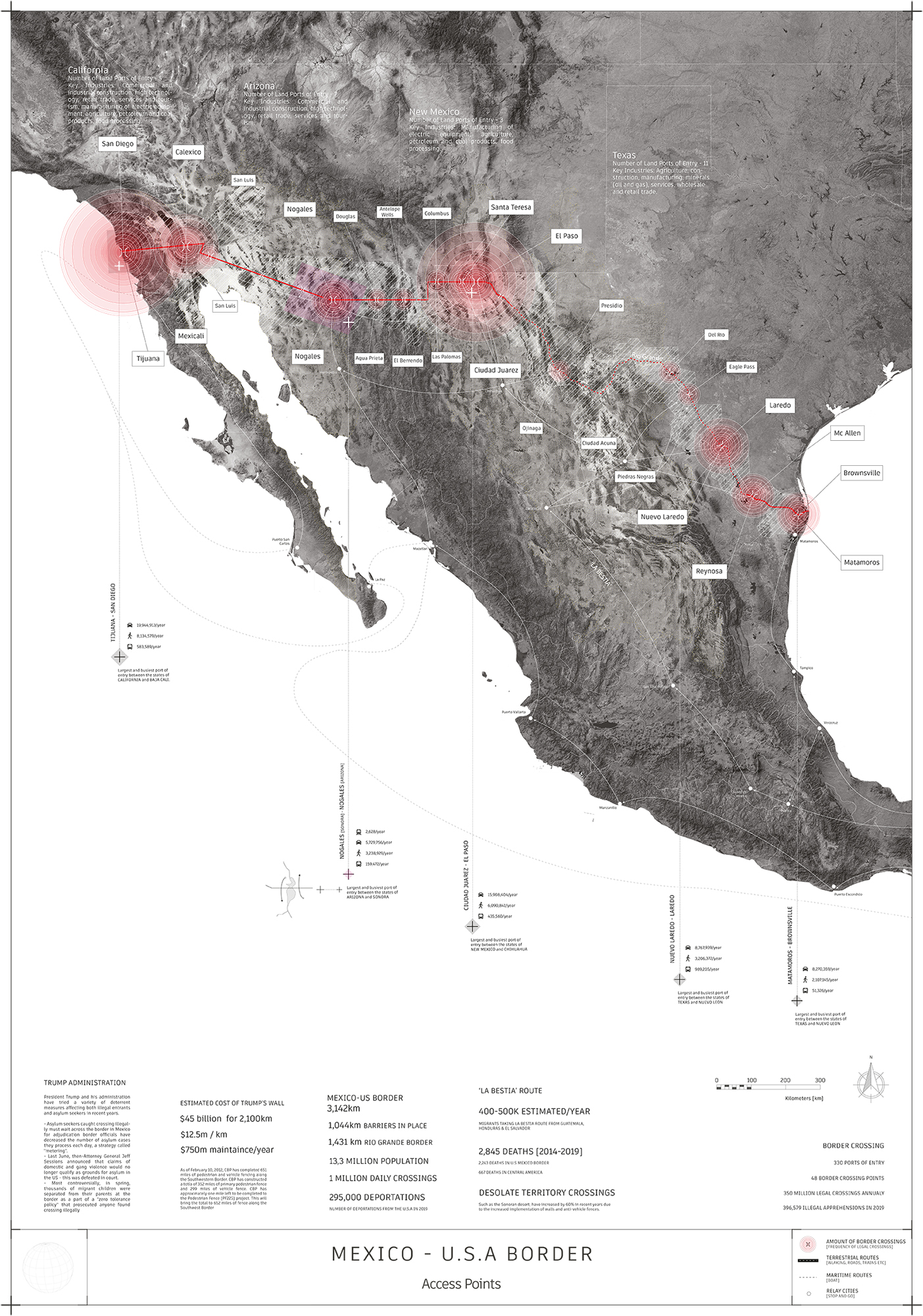
The Mexico-USA border is the most controlled and crossed border in the world. Various border towns have developed around the pervasive border where ambiguity permeates most uncertain interactions.
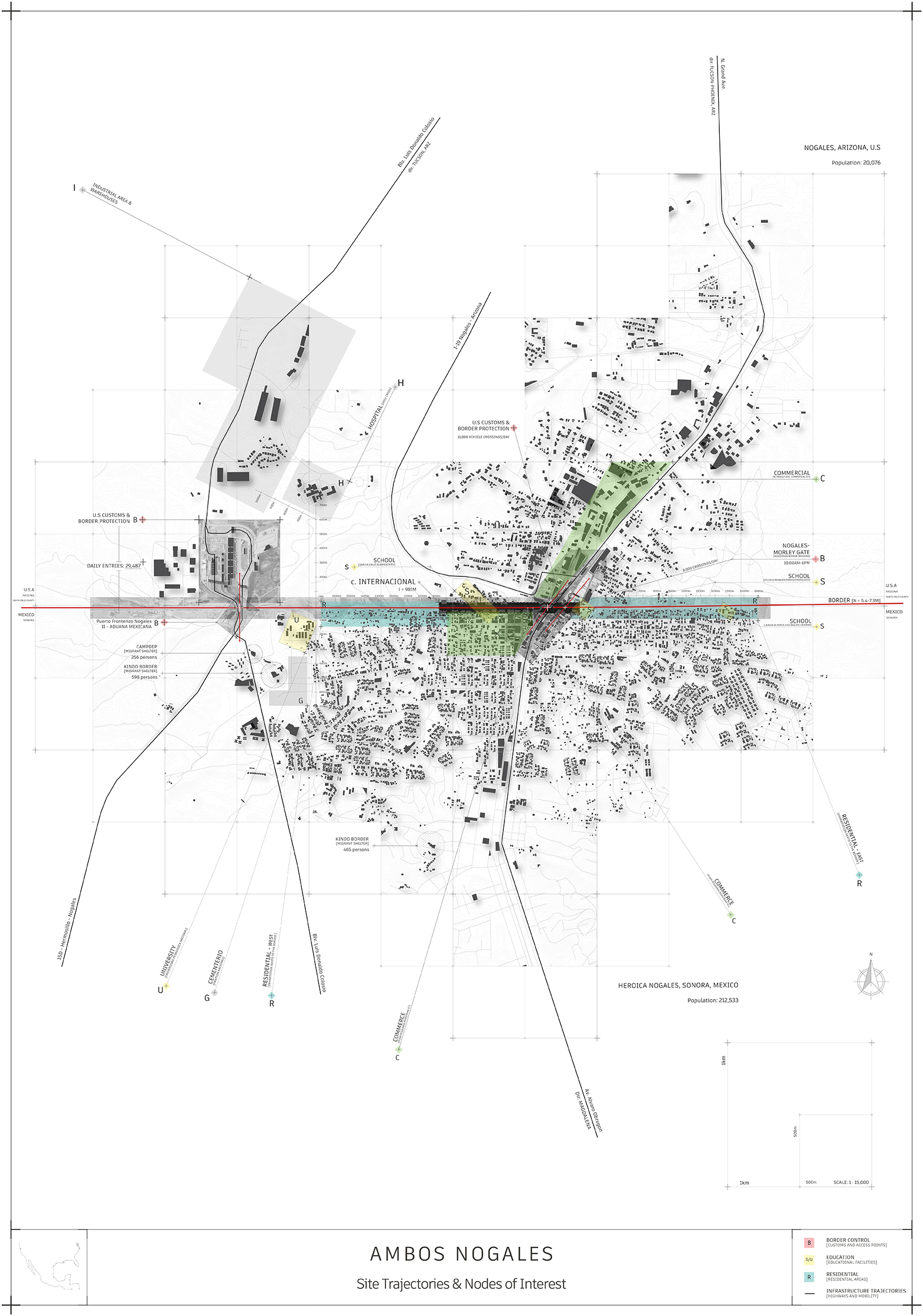
The project focuses on 'Ambos Nogales', a once unified town but now divided by the border wall. Various trajectories and nodes of interactions are used as places of interest.
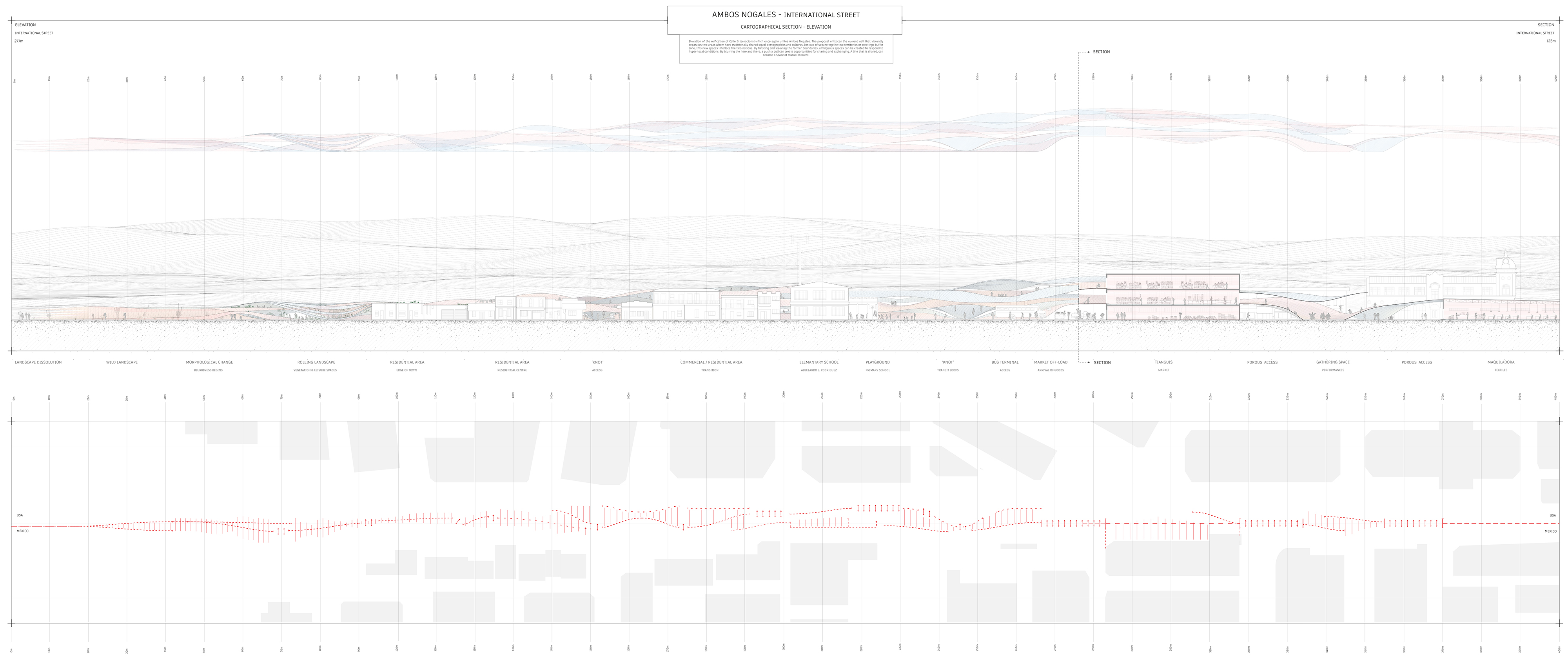
Section of the project across Nogales' International Street. Underneath, a new cartographic protocol illustrates the tension and porosities of the new ambiguous border that twists space on itself.
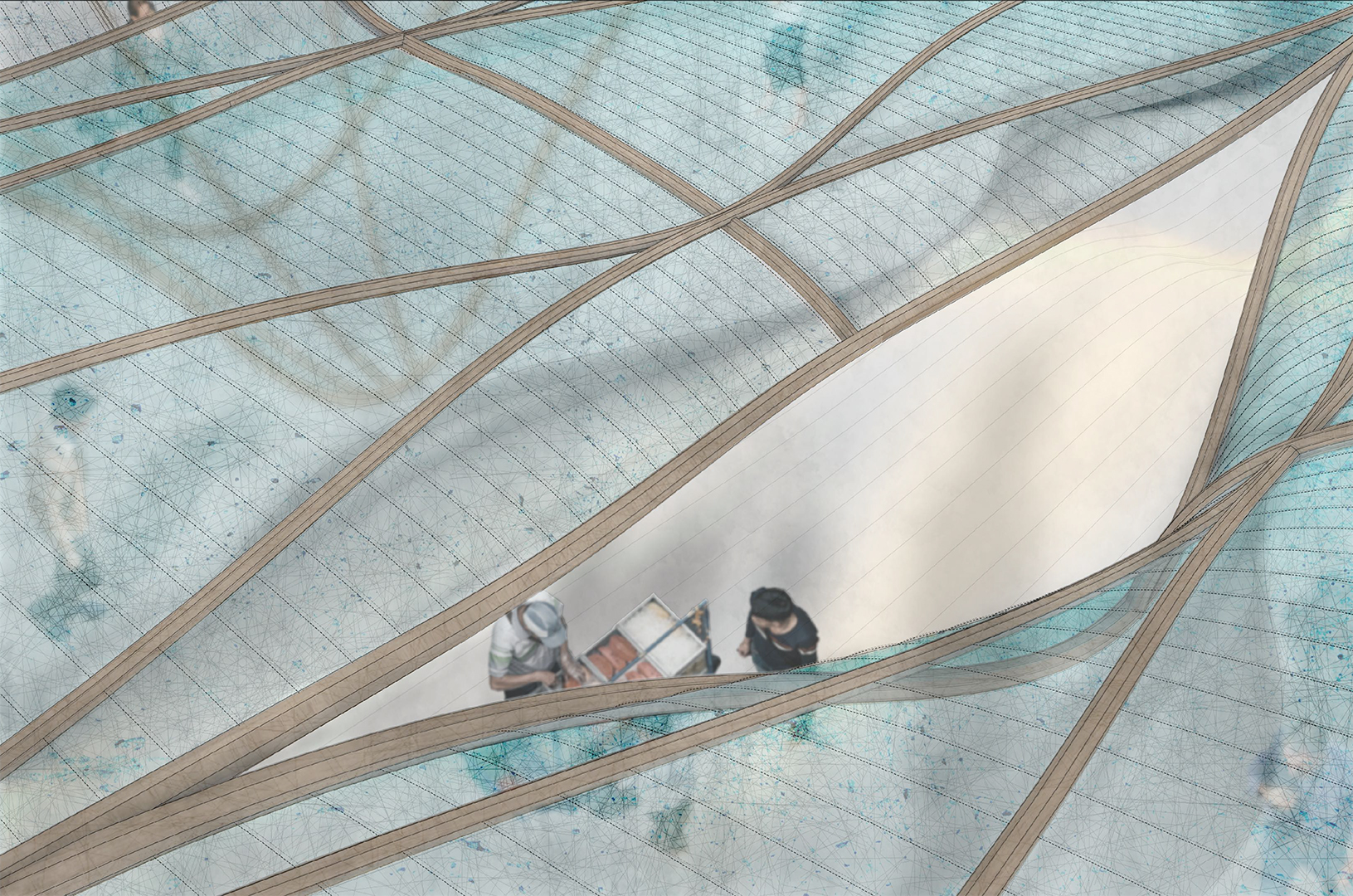
Pockets of spaces foster unexpected moments of exchange. The boundary in not an edge, but a series of shared zones.
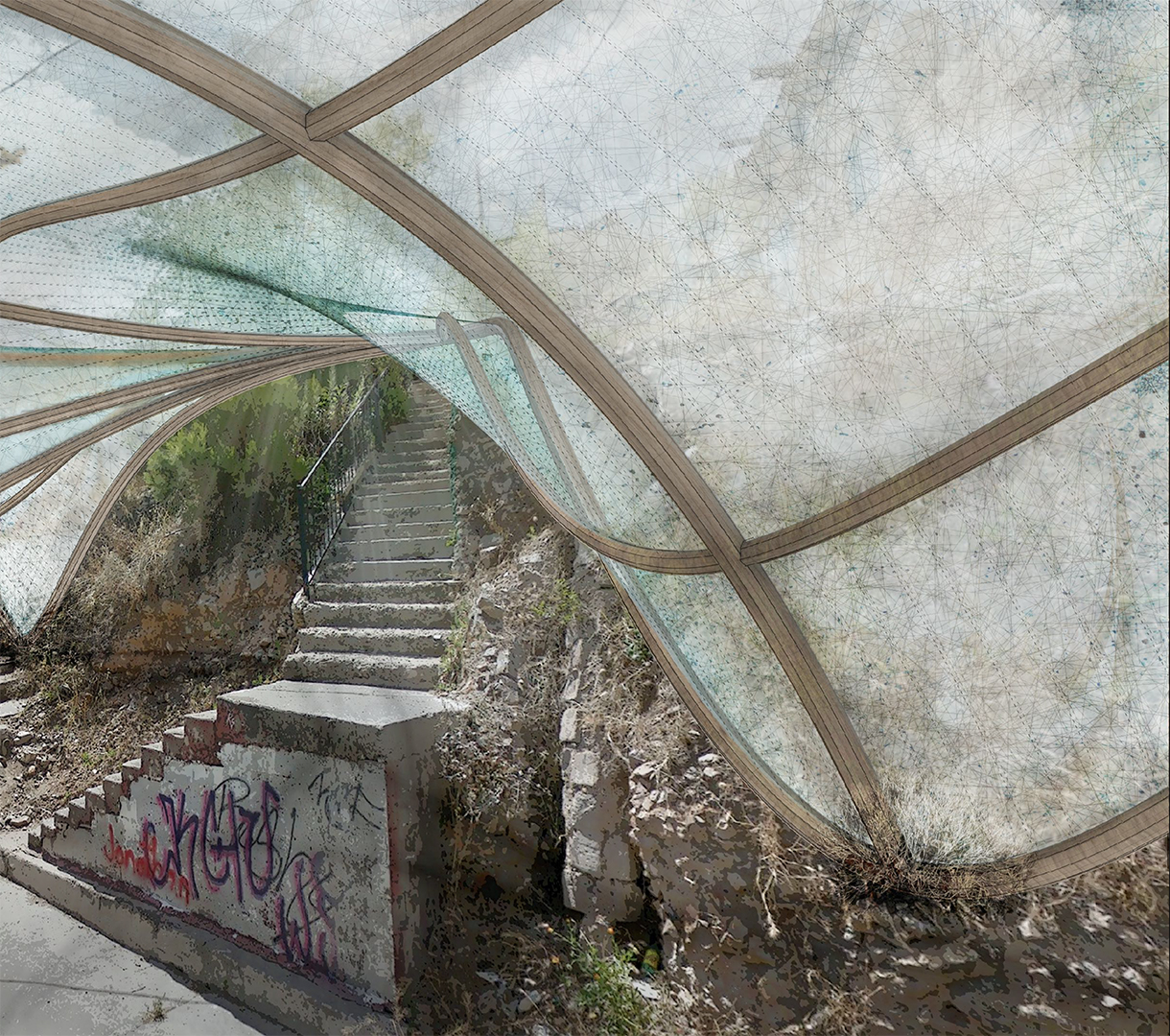
The structure unifies the town, where residents access the border to transit a new space of opportunity. It is transformed from a 'No Man's Land' to an 'All Man's Land'.