Experimental 16
Latent Territories
During the last two decades, the ceaseless accumulation of digital tools and applications has drastically transformed architectural practice, resulting in the fragmentation and diversification of the discipline.
Technology influences our way of thinking, our social relations and our culture – it permeates all aspects of our lives. In certain cases, the development of new technologies for design and construction have been liberating or emancipatory. However, in others, they embed consequential forms of inequalities, divisions of labour, heightened bureaucratisation and other mechanisms of alienation. We will investigate both the positive and perverse aspects of such techniques at a social, ethical and environmental level; analysing their processes of concretisation and their capacities to facilitate democratic accessibility, collaborative agency and transformation.
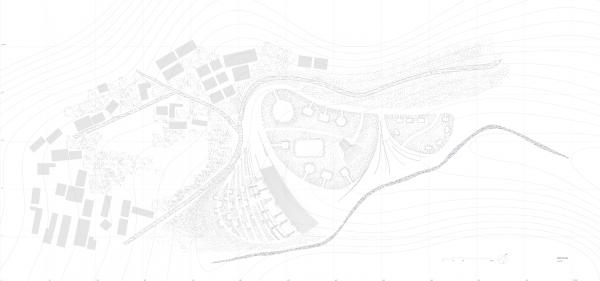
The work of the unit will develop along two primary lines of enquiry: firstly, the design of architectural form for its capacity to engage the human body and secondly, the politics of construction and the role of the architect. Students will work at the intersection between architecture, landscape and art, developing a set of bespoke architectural elements and production strategies that will form the basis of a larger urban project. This work will be grounded in historical and theoretical precedents, combining intense design and material experimentation with social purpose.
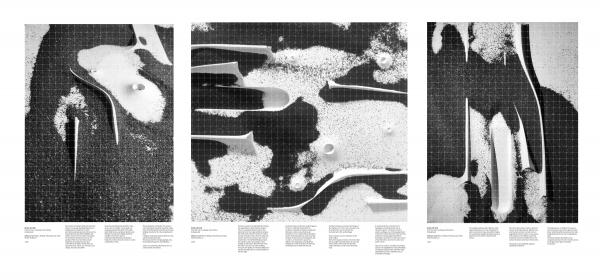
Through the use of détournement, we will intentionally subvert digital and robotic fabrication techniques in search of spaces for collective emancipation, individual fulfilment and pleasure. Students will speculate on and develop elaborate, but nevertheless affordable, production strategies. The unit will challenge a culture of the flat in search of a new materiality nested within digital practice, mixing the use of both physical and digital media.