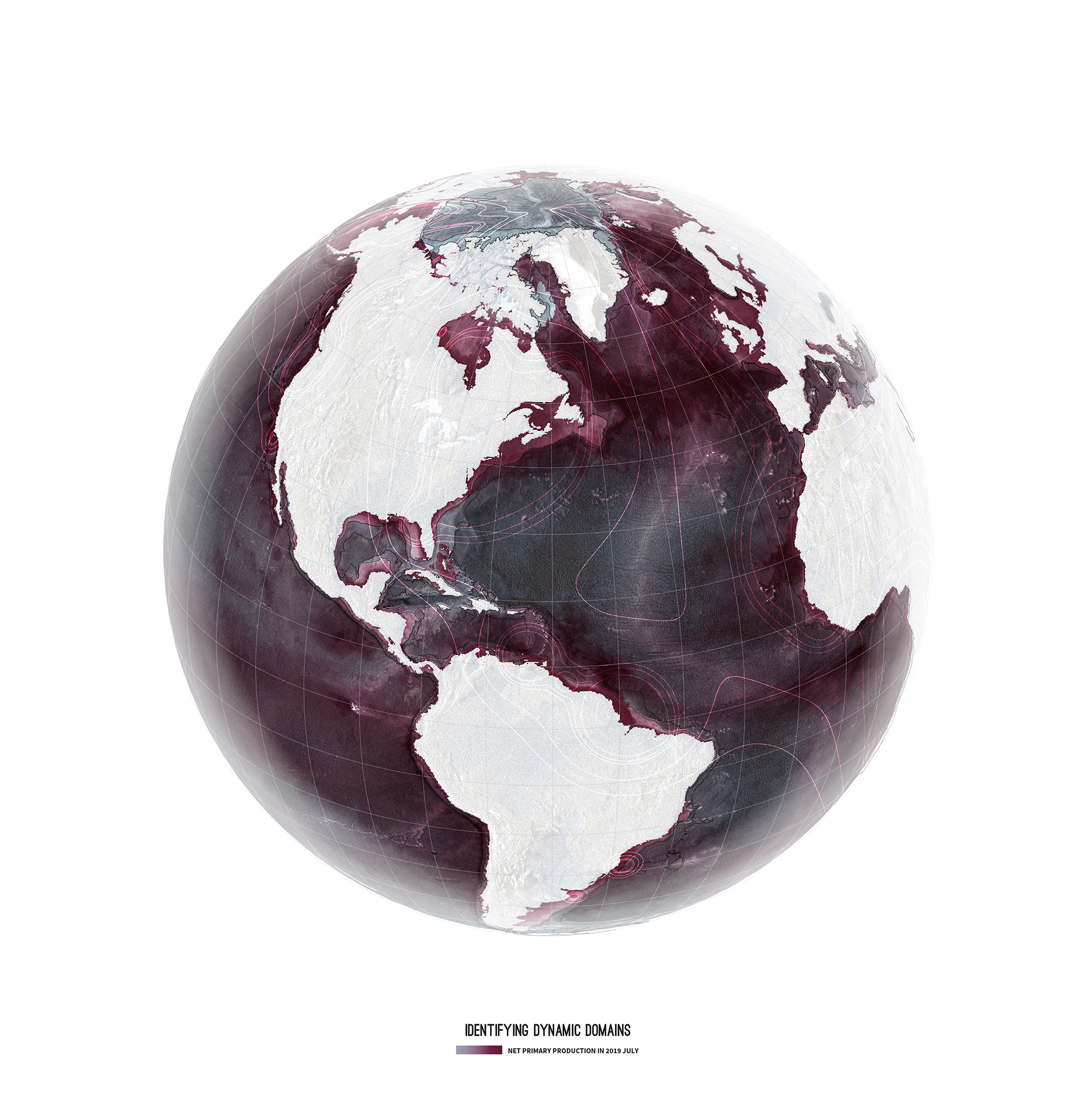
Dynamic Domains of Antarctica by Daniel Kiss and Swadheet Chaturvedi is design thesis project that envisions dynamic forms of designing and managing the Antarctic marine and its resource extraction with an attempt to unfold the commercial krill fishing activities through the models of protection and regulatory systems of global common resources.
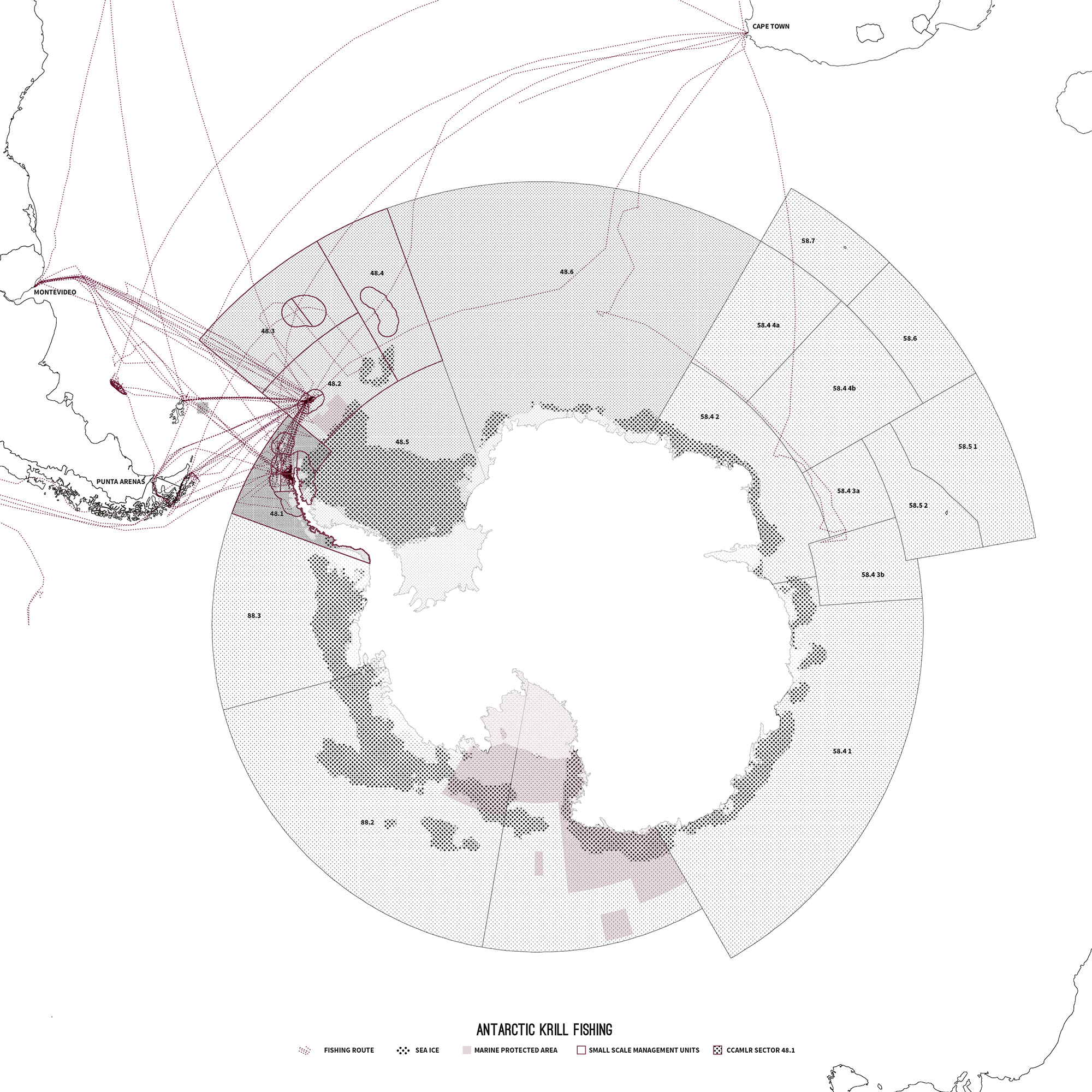
Antarctic system is a global common. Usually our understanding of protecting such systems are inadequate, due to management of them through static boundaries.
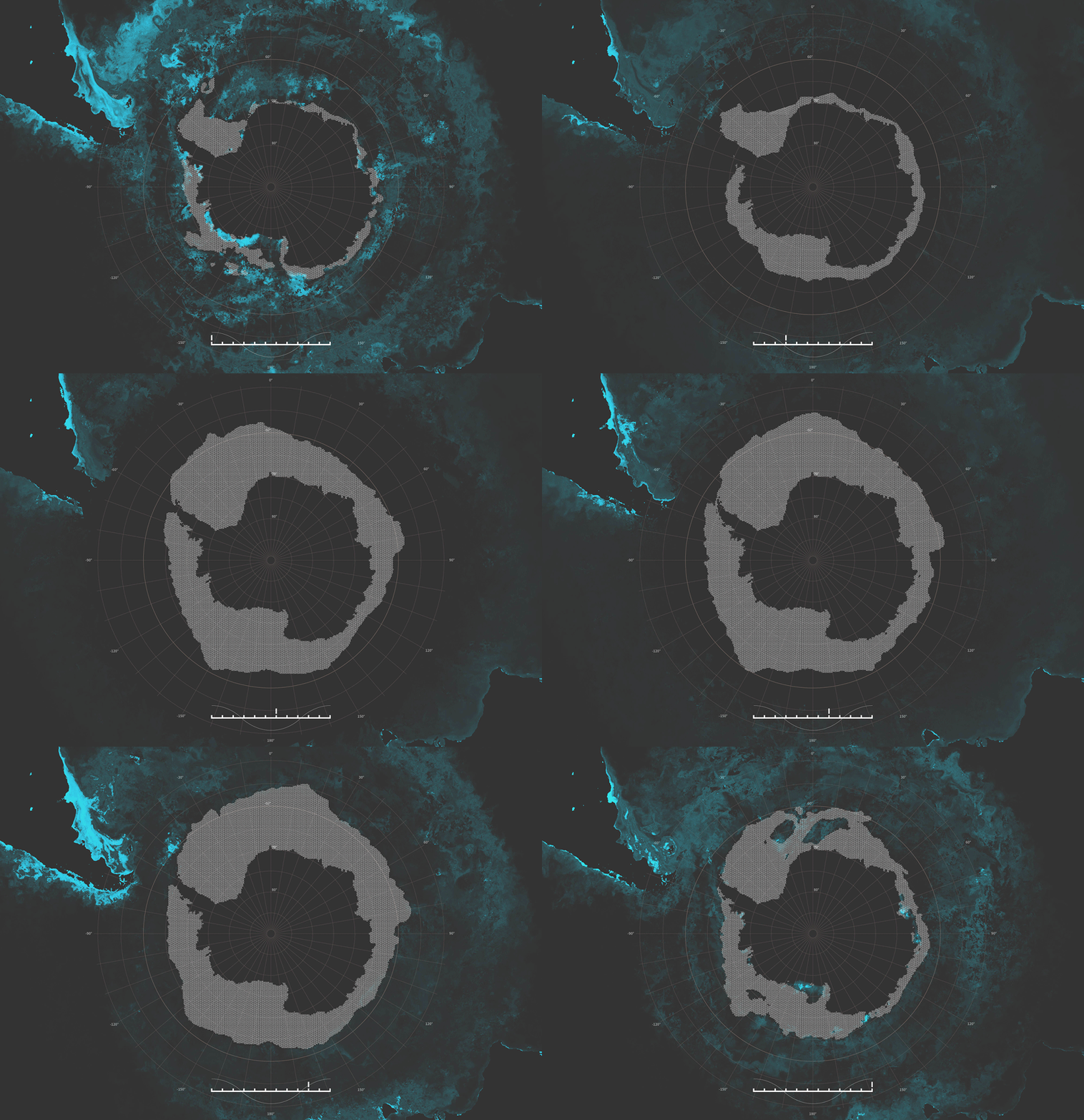
Antarctic system is indeed a dynamic system with its sea ice extent constantly changing throughout the year. The phytoplankton is a fundamental building block of an otherwise complex ecosystem.
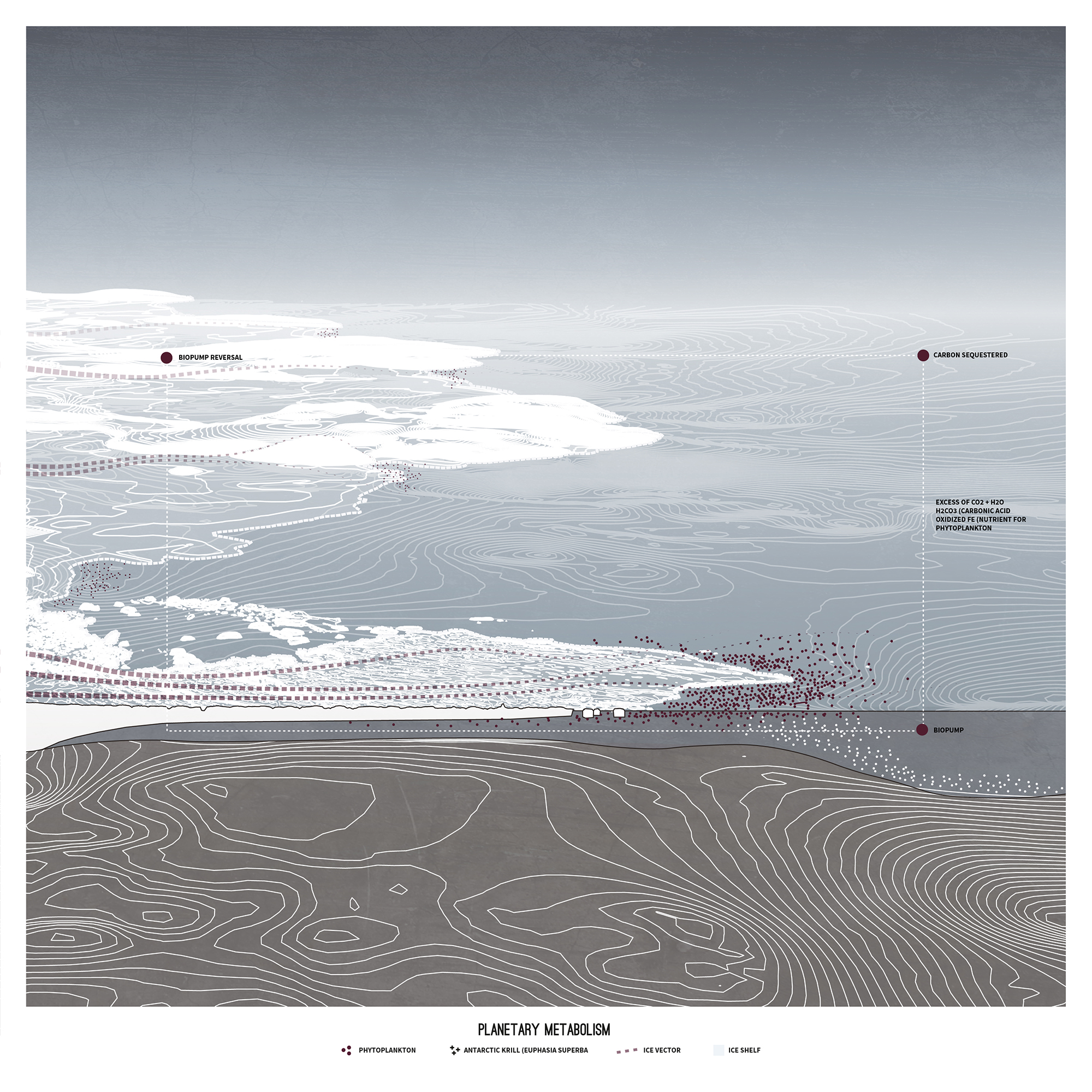
Phytoplankton helps absorb almost 60% atmospheric carbon. Dead phytoplankton accumulates on the seabed sequestering carbon which turns into fossil fuel of thousands of years.
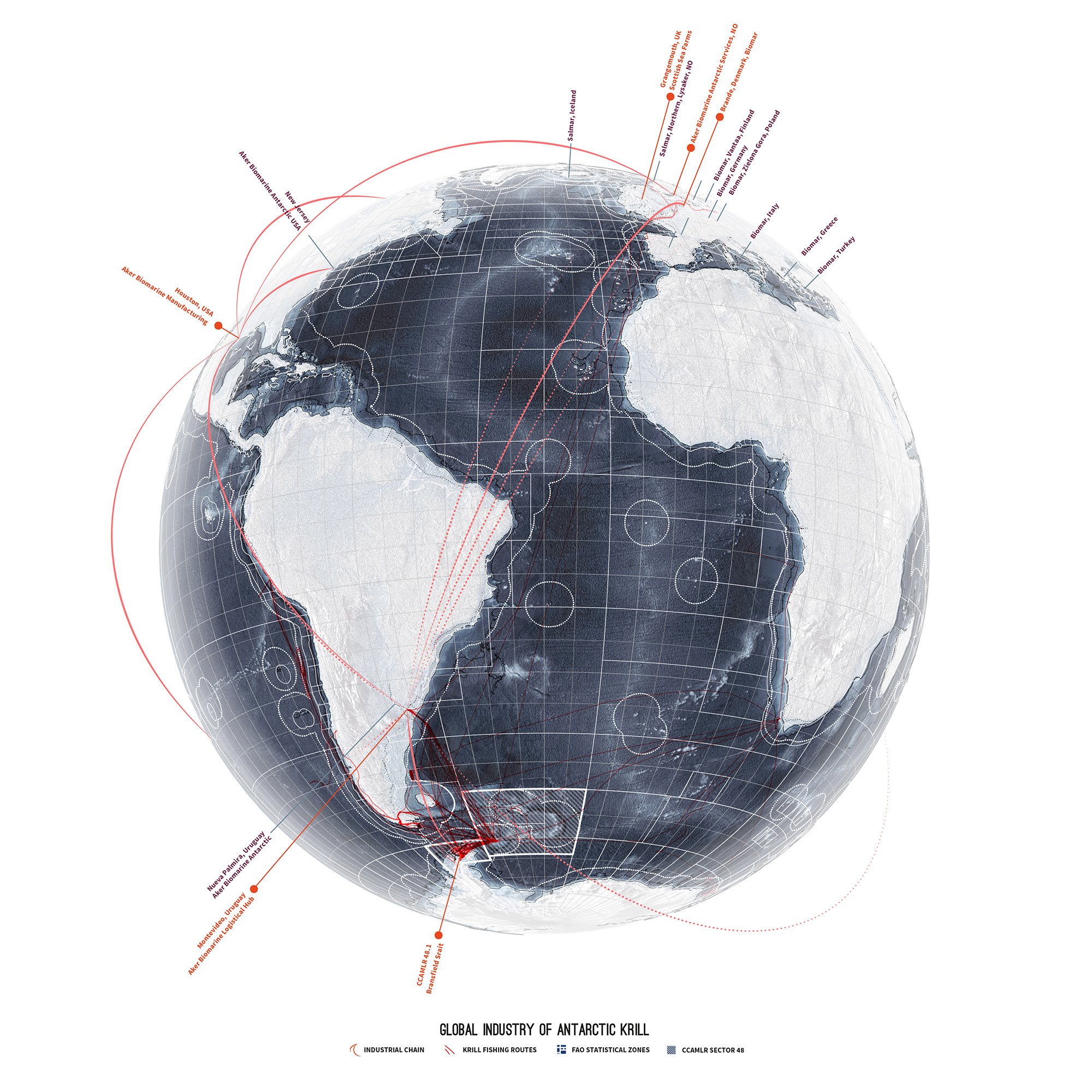
An ever increasing Antarctic Krill industry due to accelerating technological evolutions and rising extractivist economic activities has layers of human agency that is enmeshed on a planetary scale.
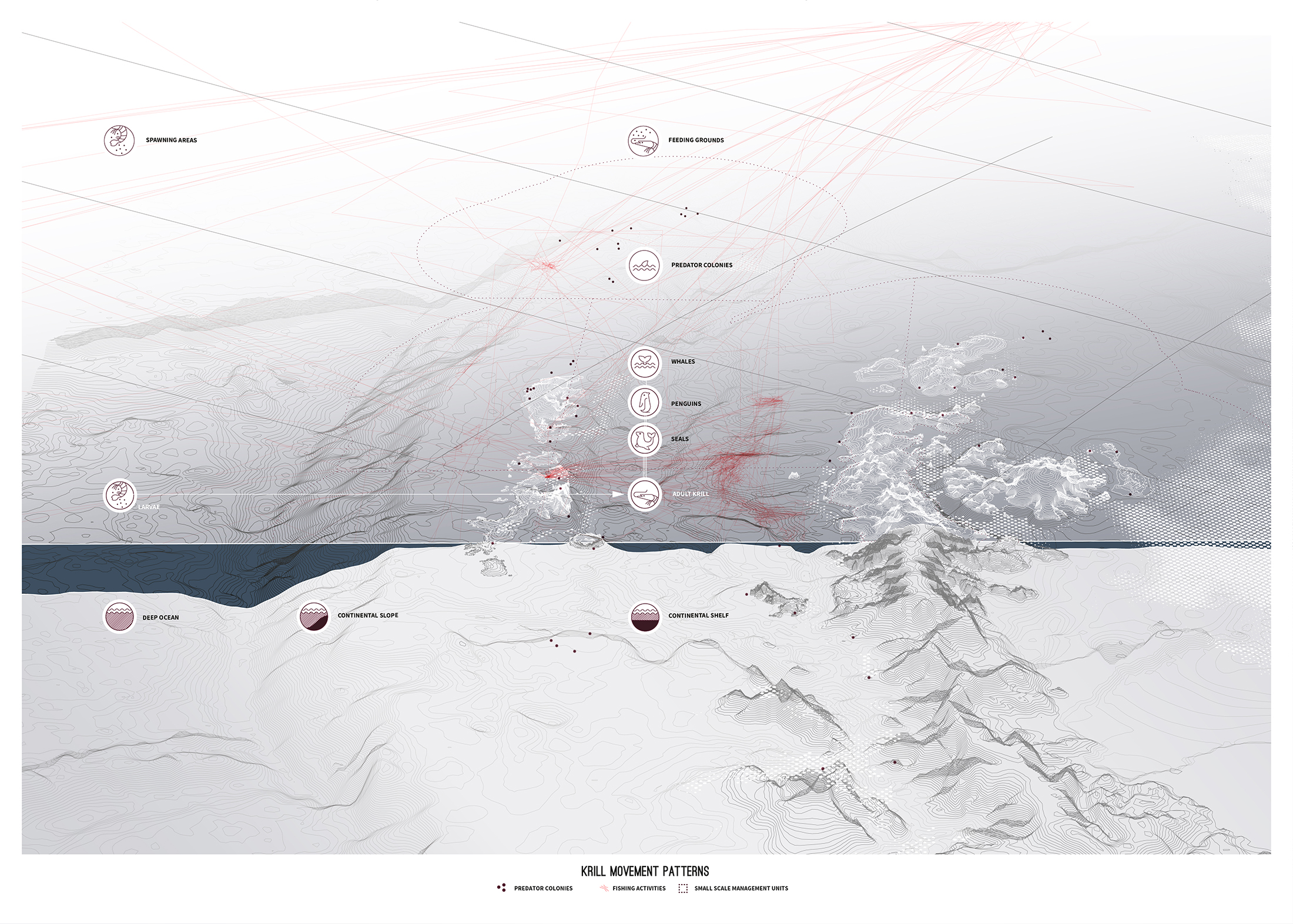
Antarctic Krill travels from deep ocean through the continental slopes, towards the Bransfield Strait overlapping with the predator colonies where fishing activities are operating at the same time.
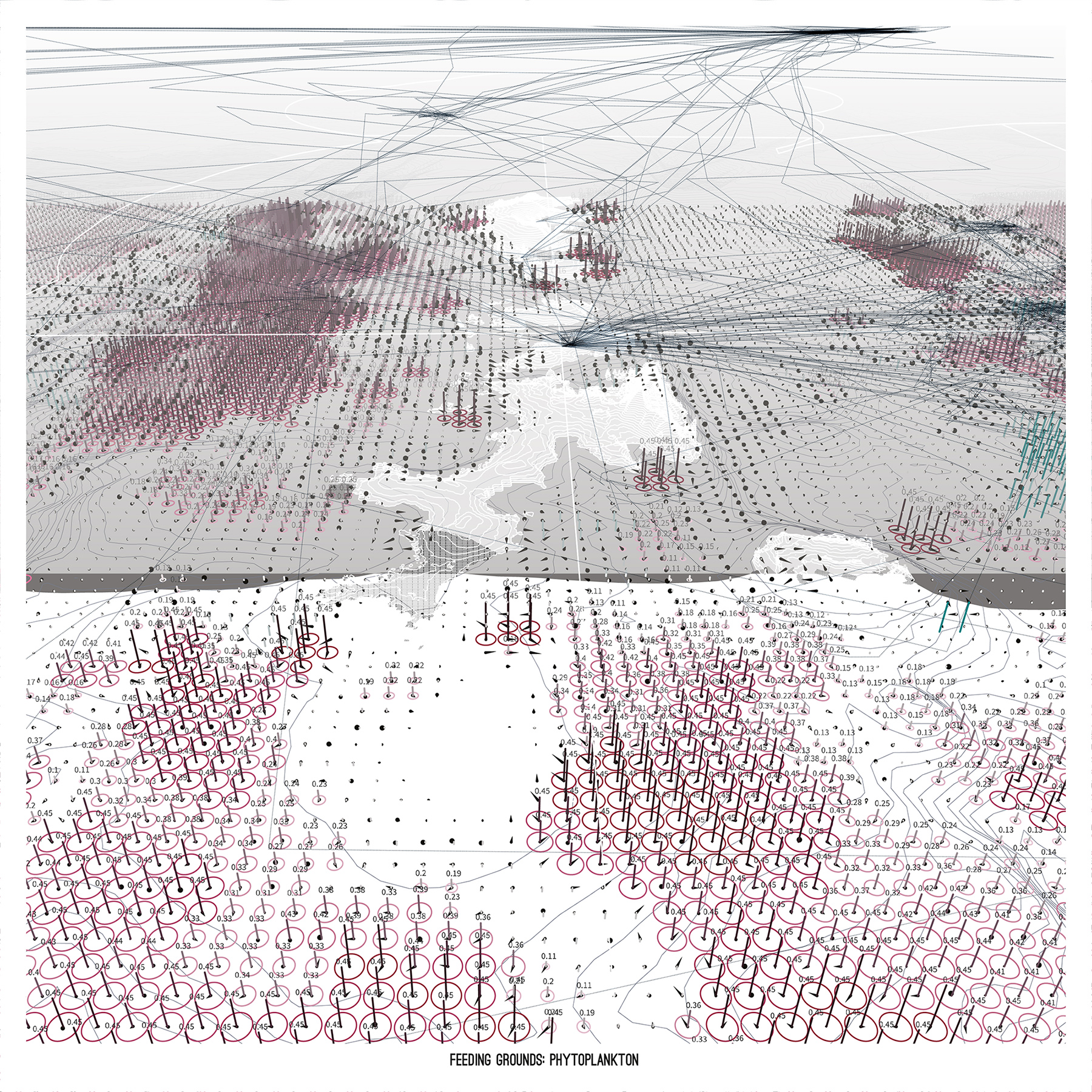
Establishing exclusive zones on the feeding grounds of krill, which change over time which is aligned to the natural processes in order to protect the productive part of krill movement.
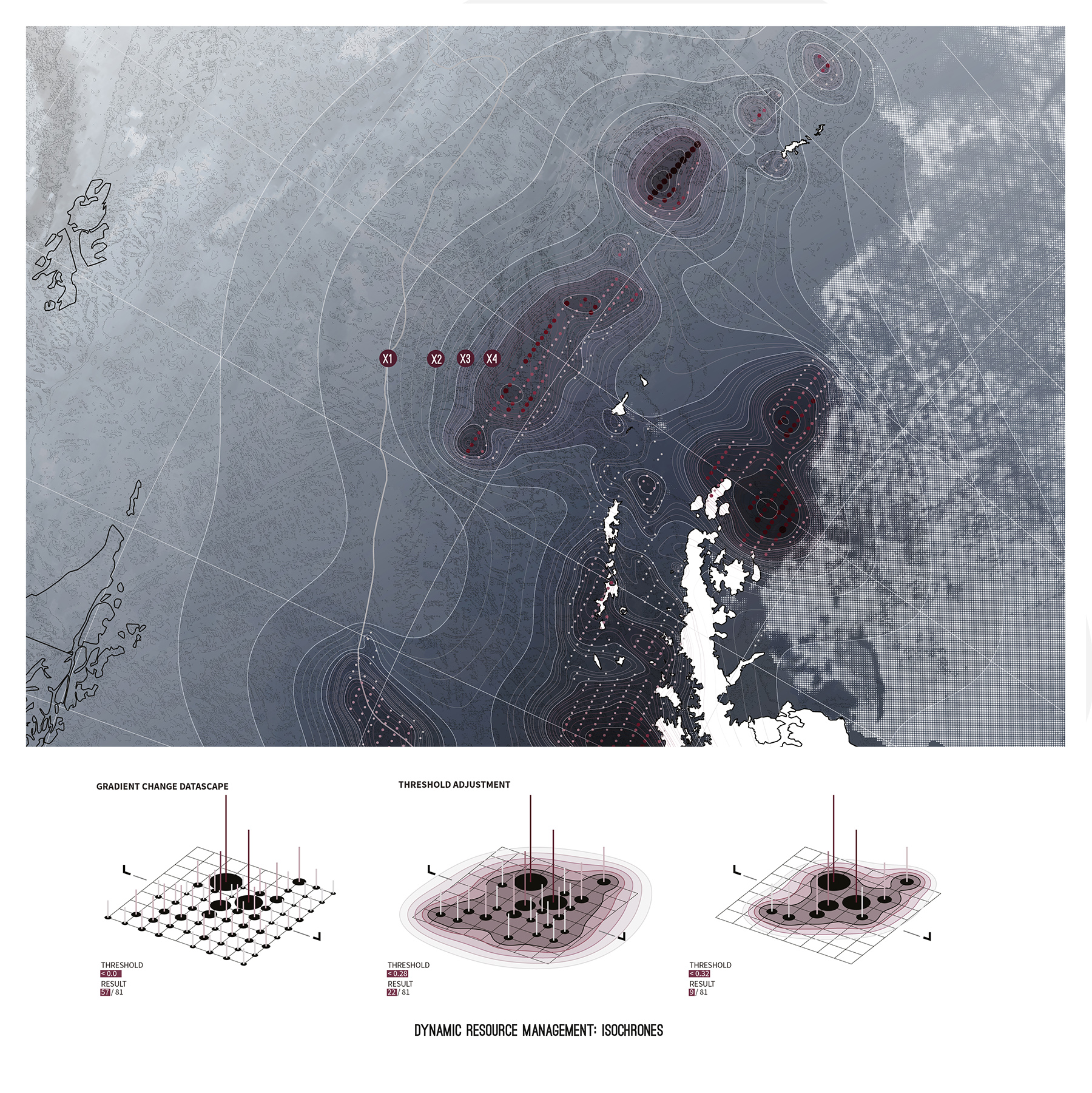
Krill fishing domains are based on isochrones which represent the outlines of sensitive domains originated from the highest concentrations of chlorophyll.
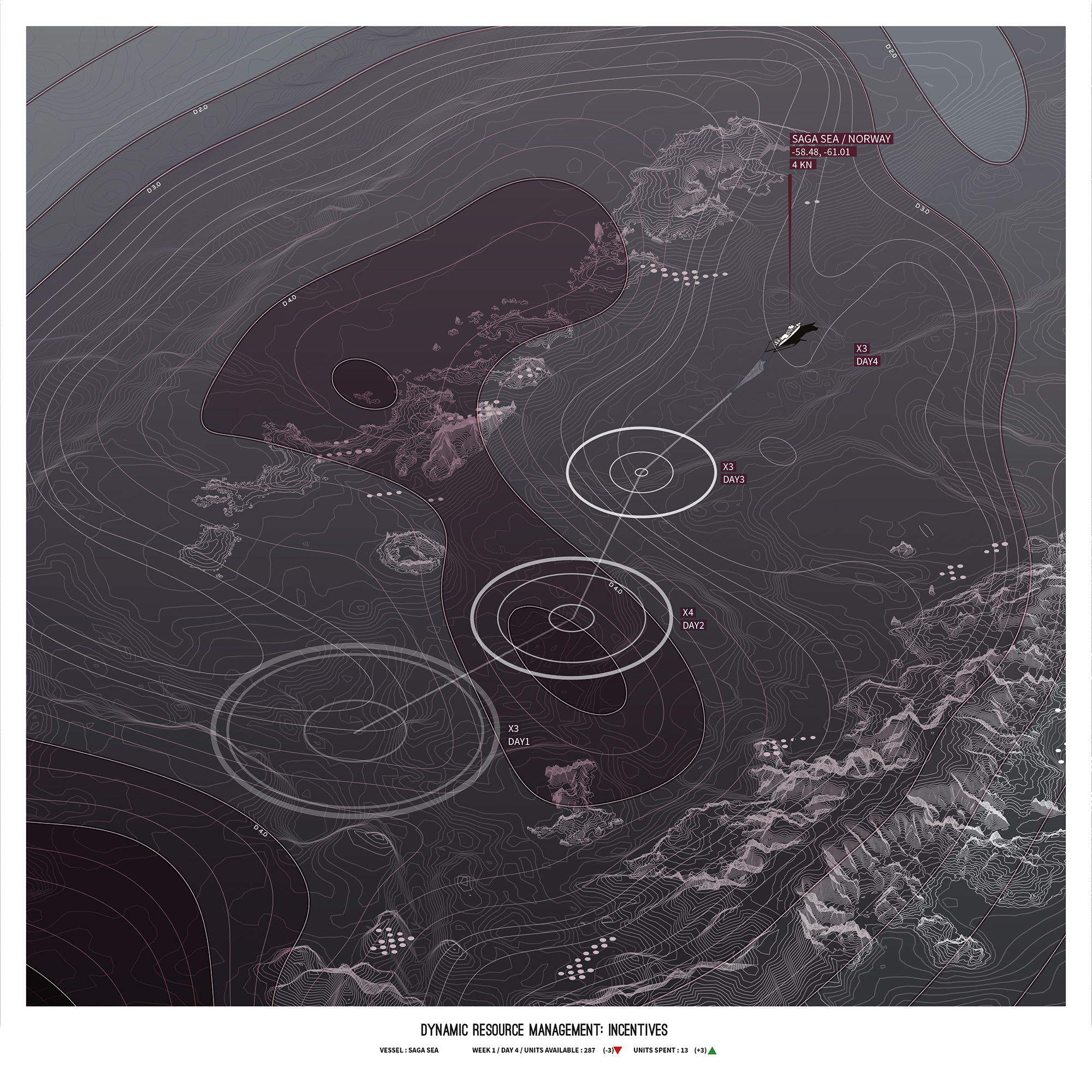
As the vessels change their positions their temporal multiplier is updated too as the idea is to maintain the catch per unit effort while incentivizing them to spend less time in sensitive domains.
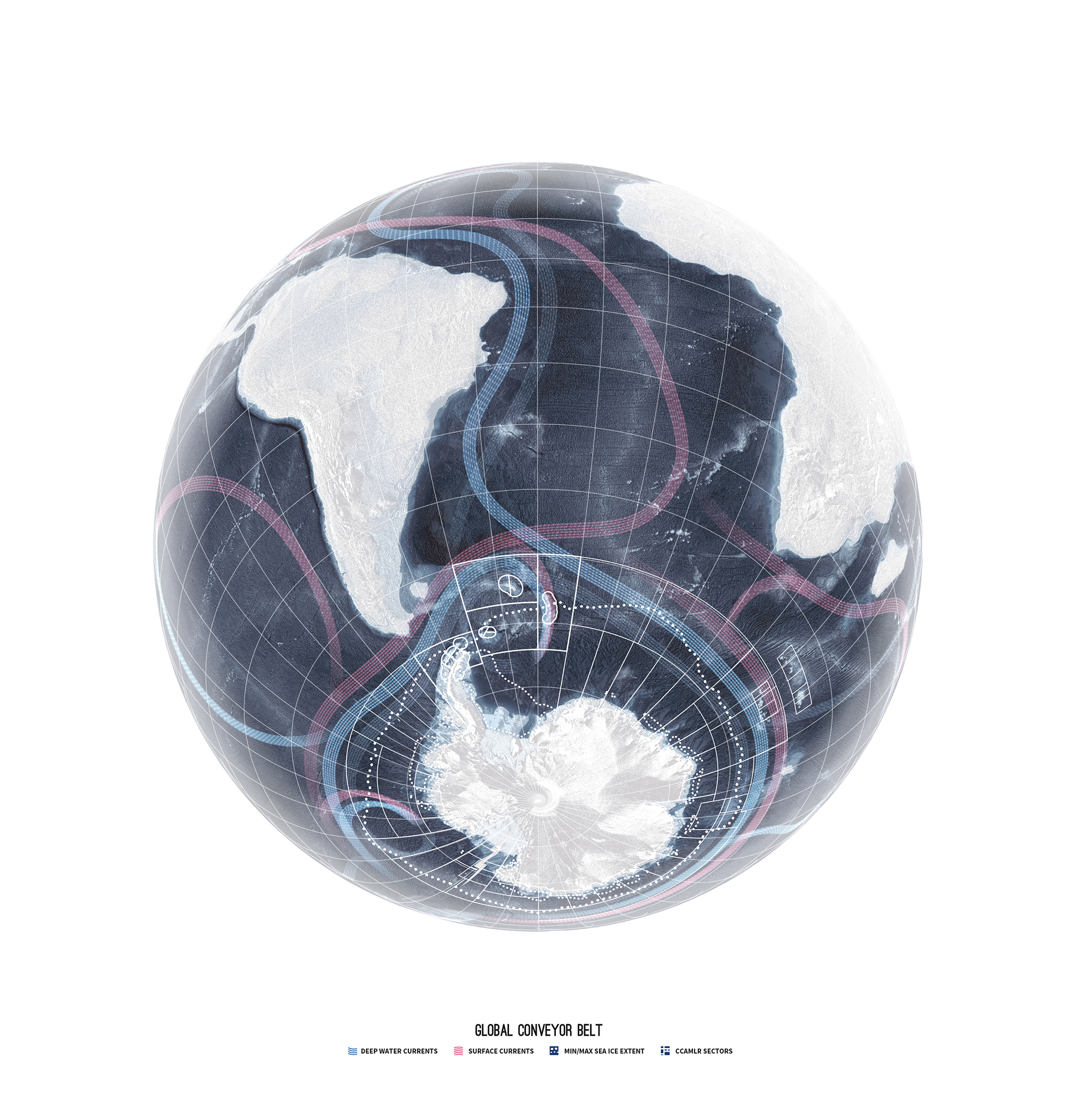
Oceans are in constant motion as polar upwelling systems facilitate vertical mixing by seasonal sea ice production that causes freshening in surface water as the heavier salt water sinks to the seabed