Taking Refuge
Craig Mitchell, MArch (Year: 5)
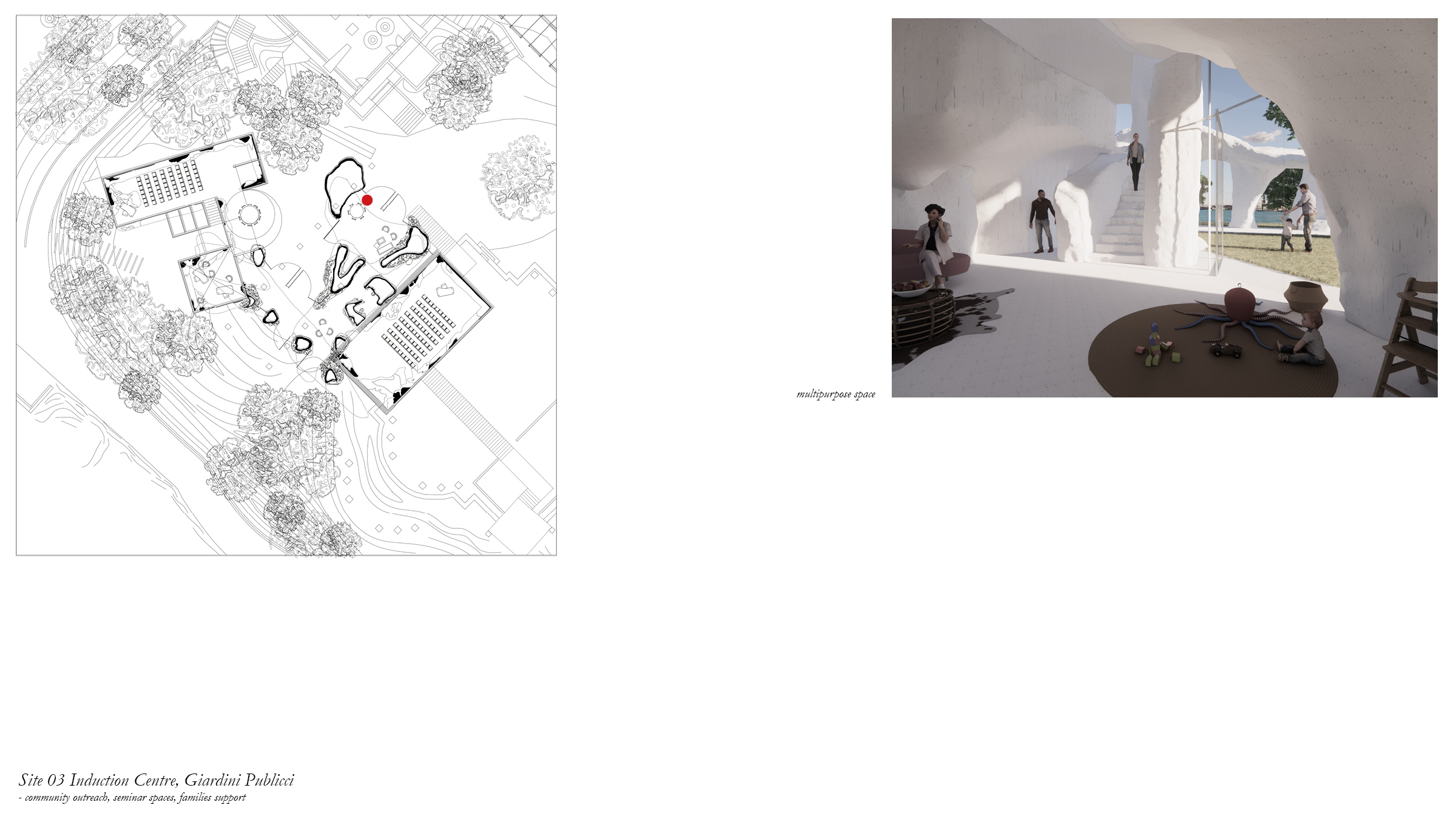
During this period of isolation, sustained by virtual interaction, we crave spatial intimacy more than we might have done before. A space to take refuge from a rapidly changing world. The project contests the physical boundary of the Giardini della Biennale and the institutions hold over previously public space at a time of increasing public and institutional consciousness. The boundary condition sustains a territory that is nation based. Through this coding of the space, La Biennale actively defines exclusions from the Giardini making the territory inherently exclusive. The project explores architecture as a representational tool. It sets out a method capable of producing humane environments that are non-referential in composition and stylistic embellishment. They are derived from a reading existing condition using the expression of materiality and manipulation of surface. Space is produced working between the digital and the analogue and acknowledges the relevance of both rigour and intuition in the process of space making.
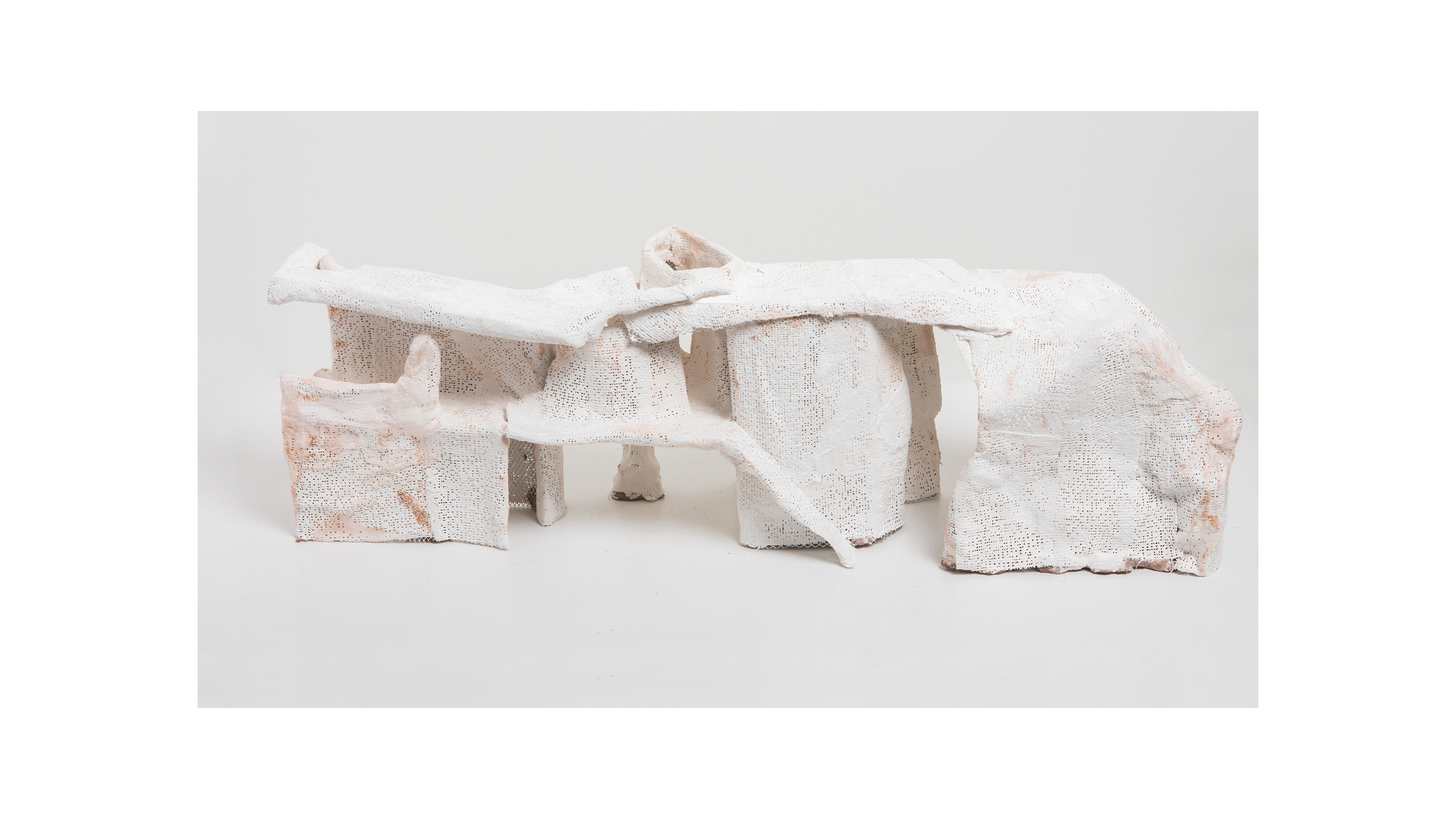
A vernacular manifests that is tactile and irregular, which uses light and scale of space to re imagine traditional paradigms and elements of design.
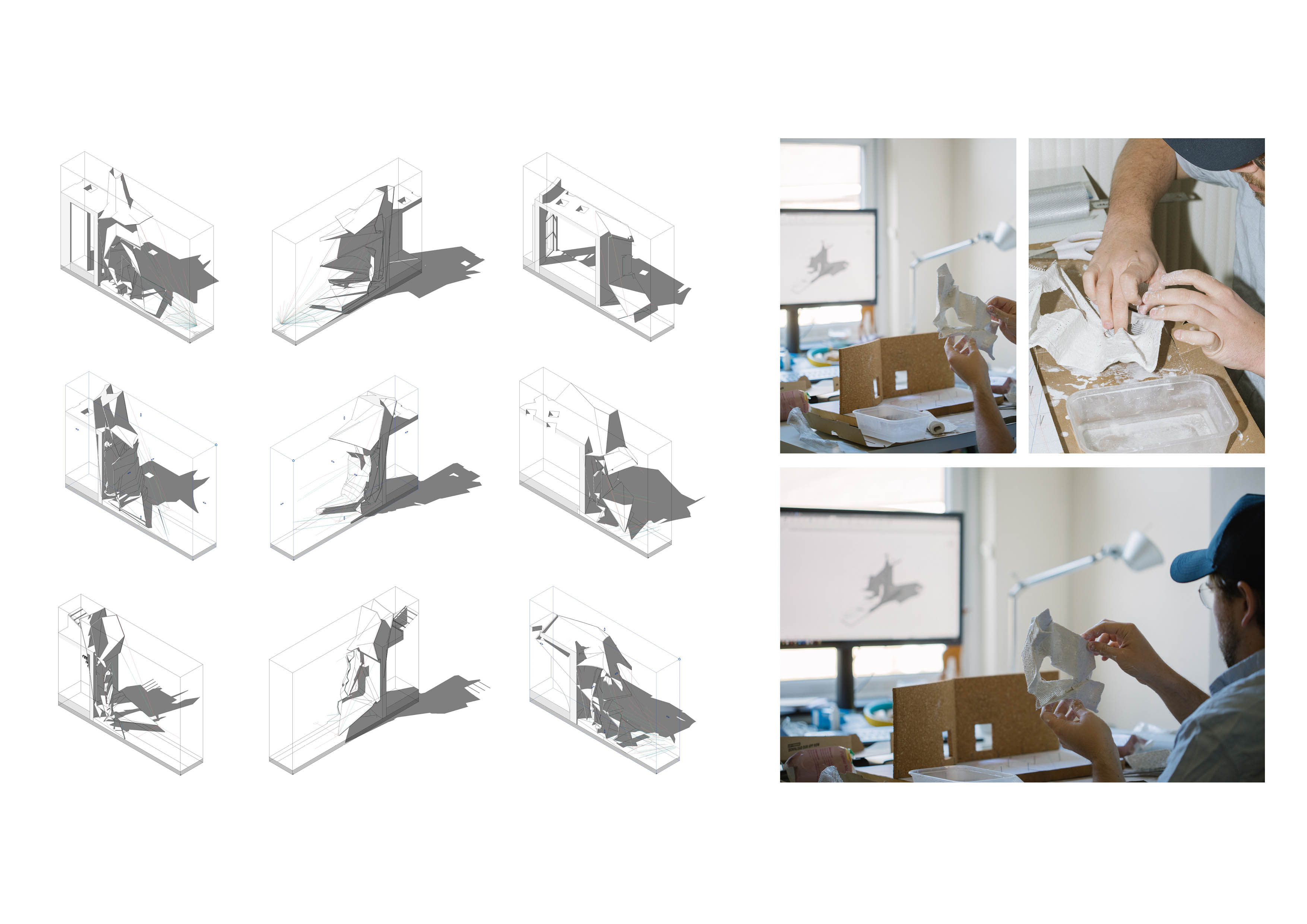
The analogue and the digital are put in to dialogue with one another so as to distort and soften hard edges. Sliced up sections are modelled physically to be reintroduced to the plan and elevation.
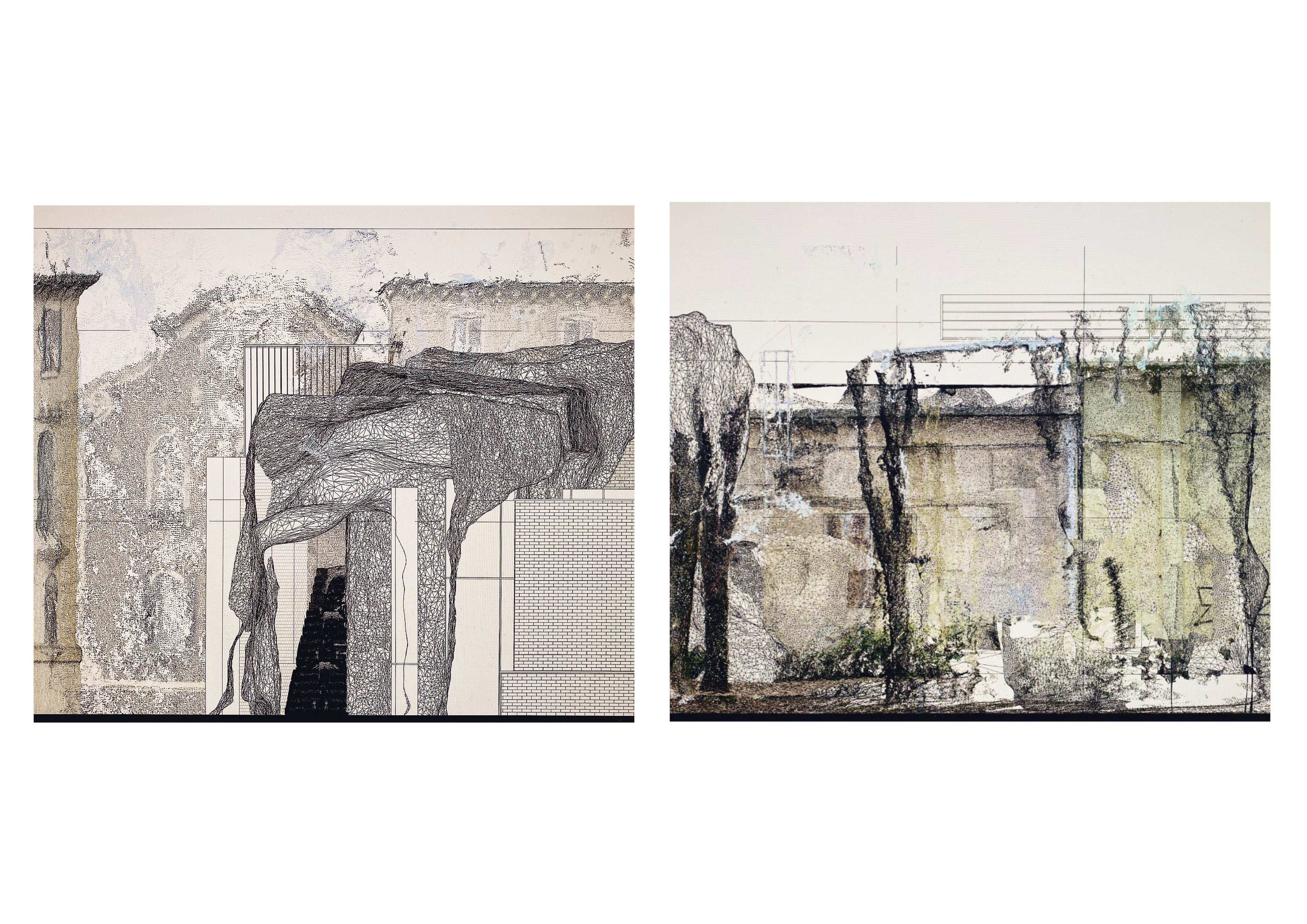
The scanning machines reveal that which is not captured. These are the unrepresented spaces of the Biennale, back walls in which no specific nation is expressed. They provide the sites.
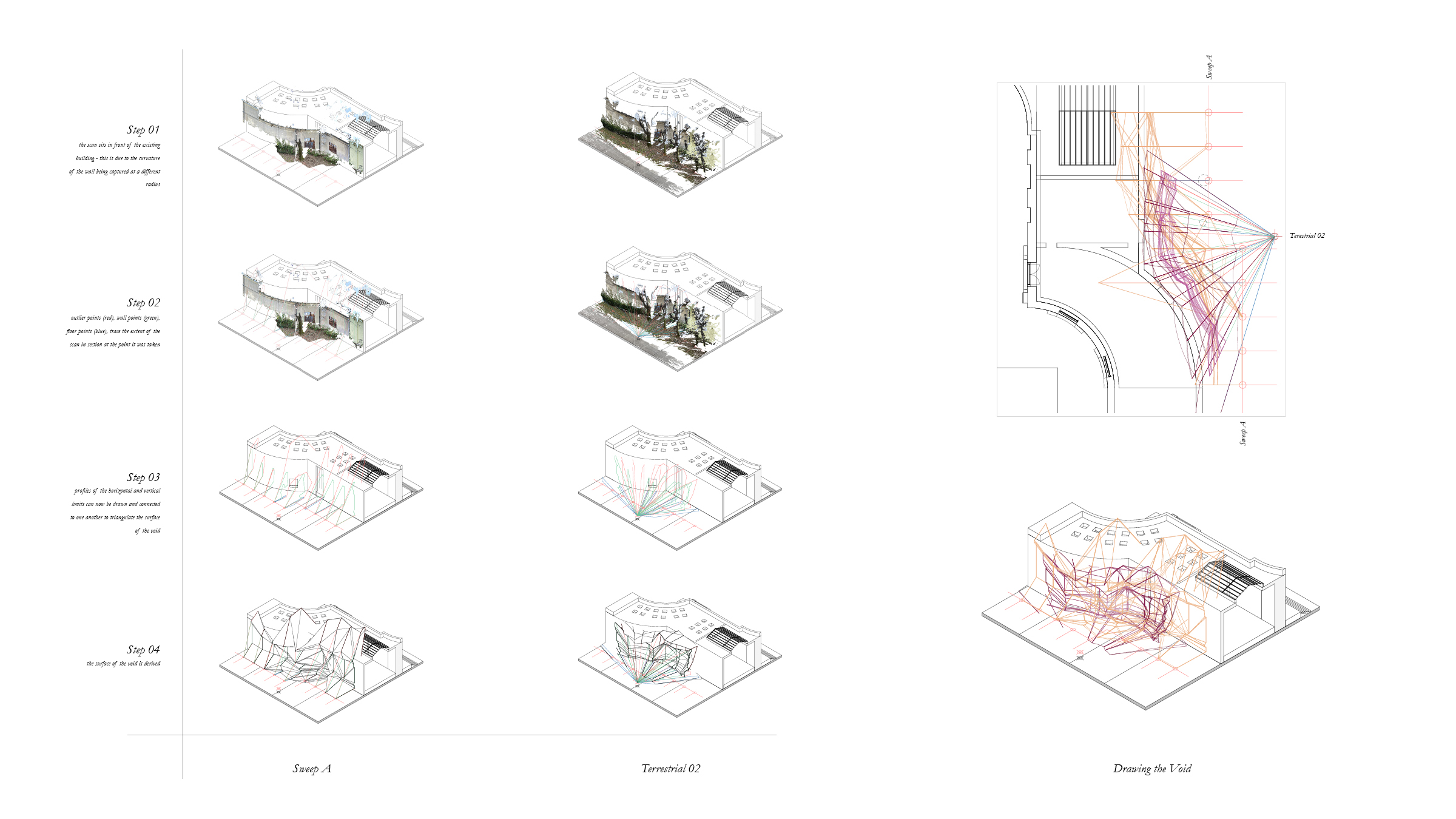
The method works intimately with the existing structures, the limits generated by the two scans showing a new boundary condition drawn from the representation of the existing.
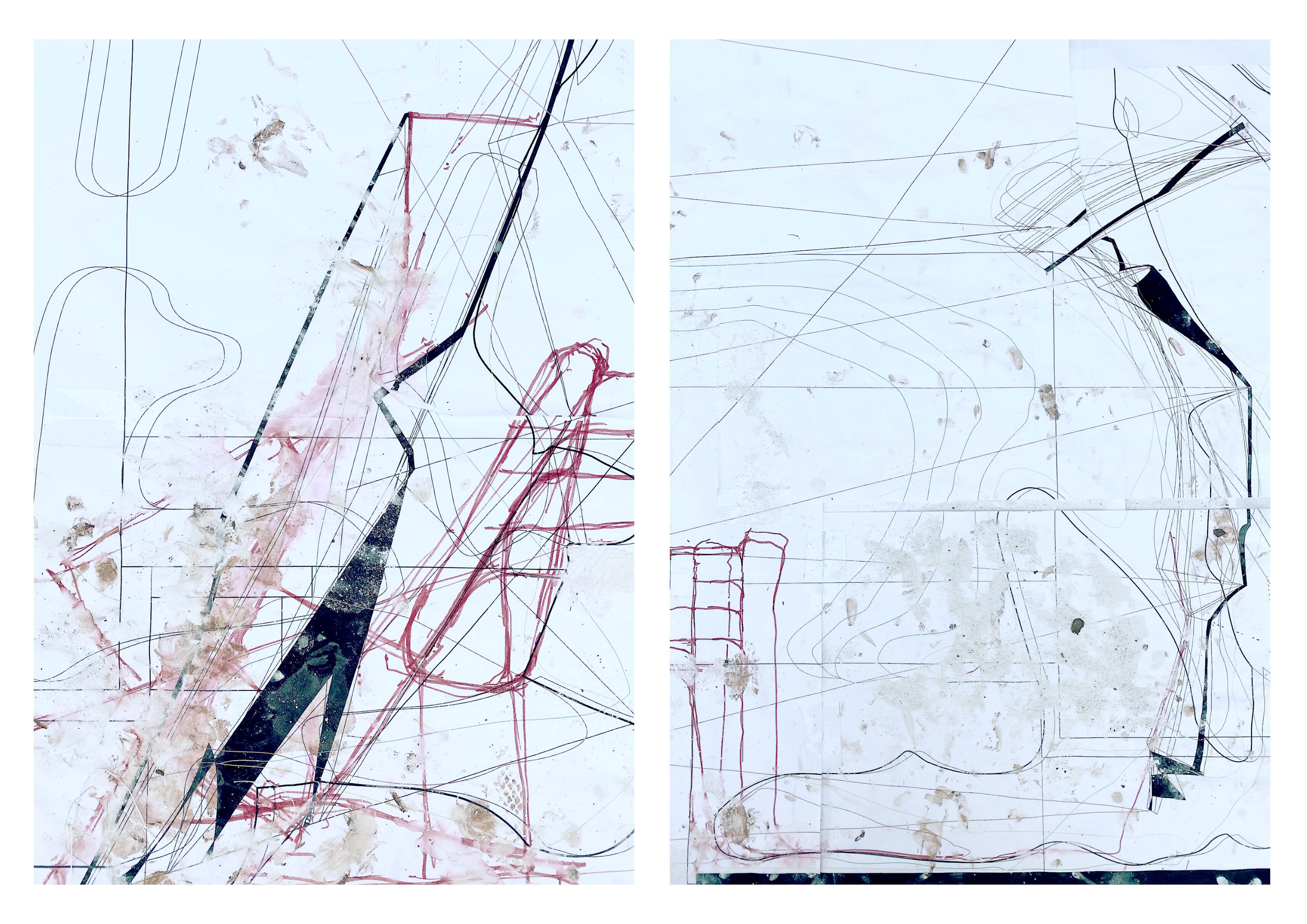
The method allows for three dimensional exploration and understanding that cannot be communicated or represented through a 2D drawing.
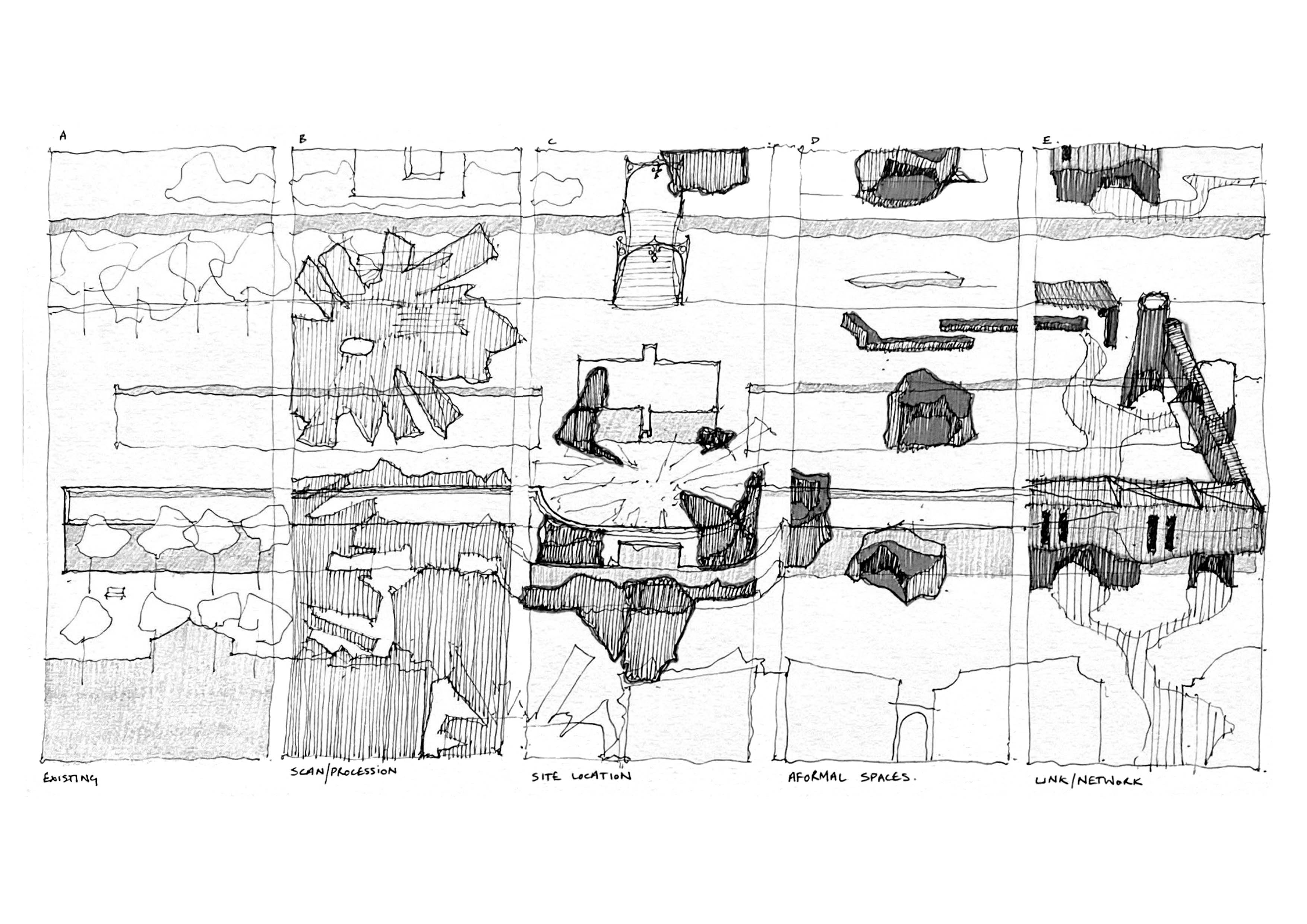
The project explores architecture as a representational tool. It sets out a method capable of producing humane environments that are non-referential in composition and stylistic embellishment.
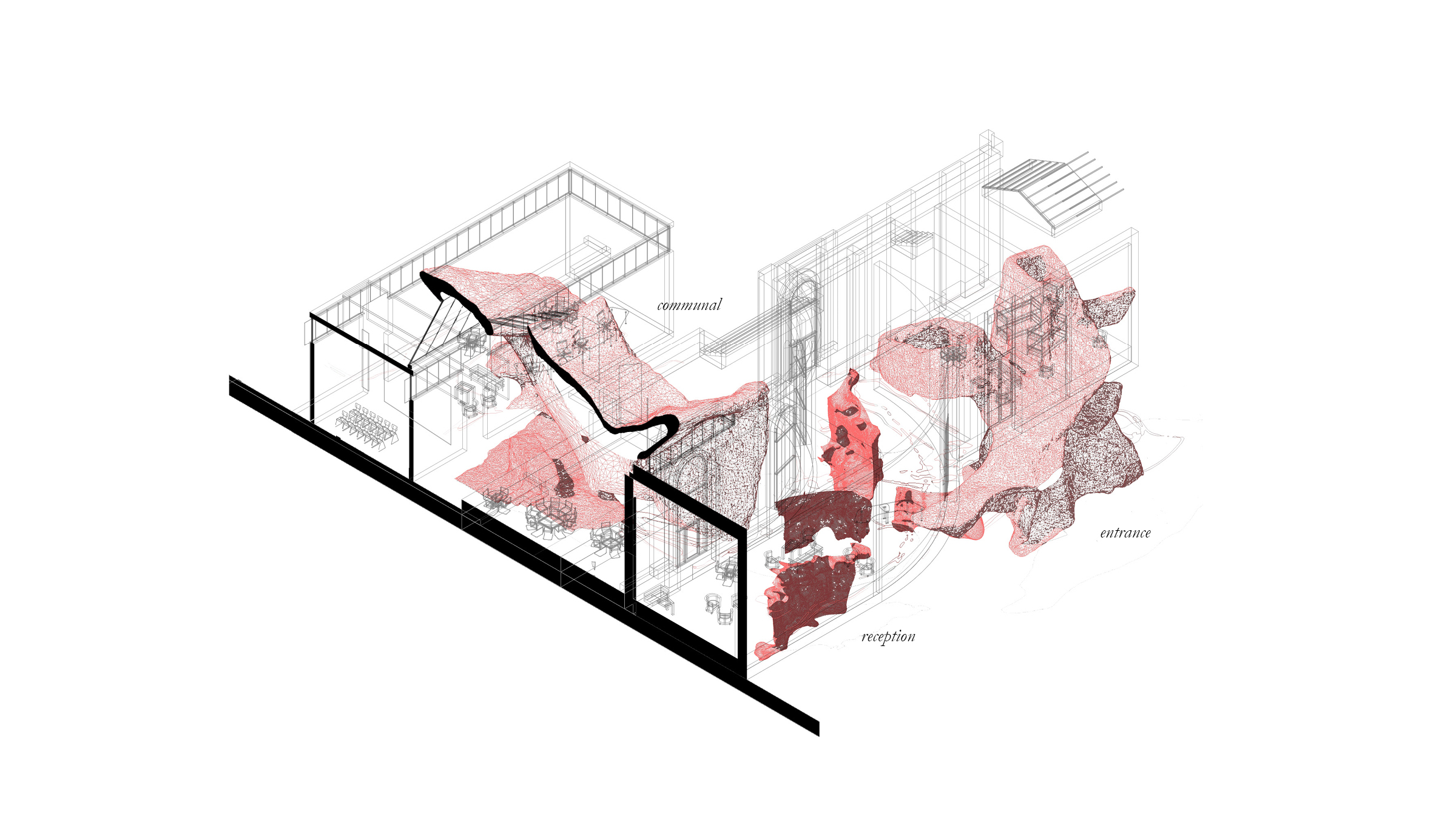
Use is derived from the potential of the new spatial sequence. The project does not curate spaces for specific functions.
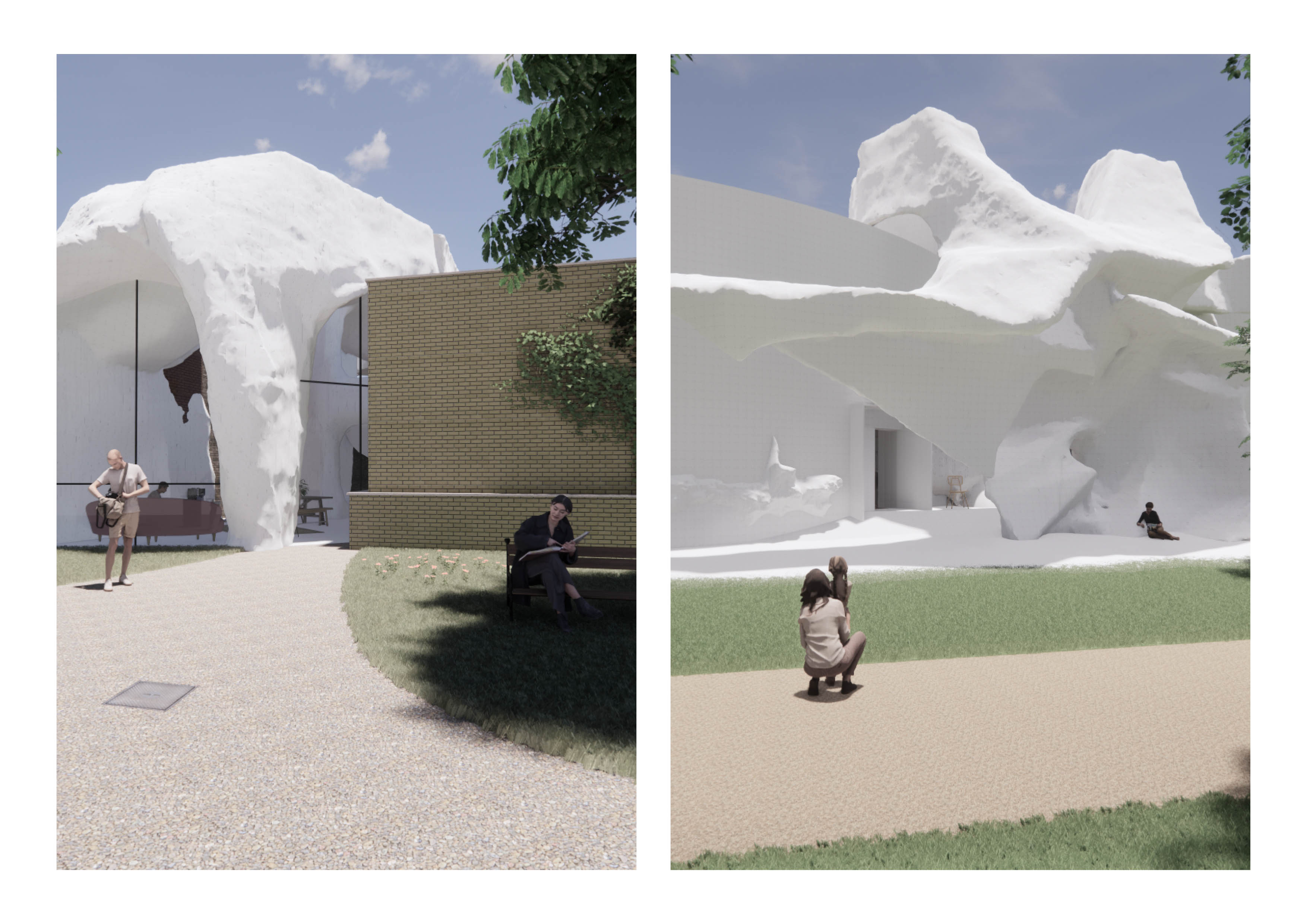
The proposed network operates in an overt manner establishing spaces that are familiar, nostalgic and at odds with the digital mode of their production.
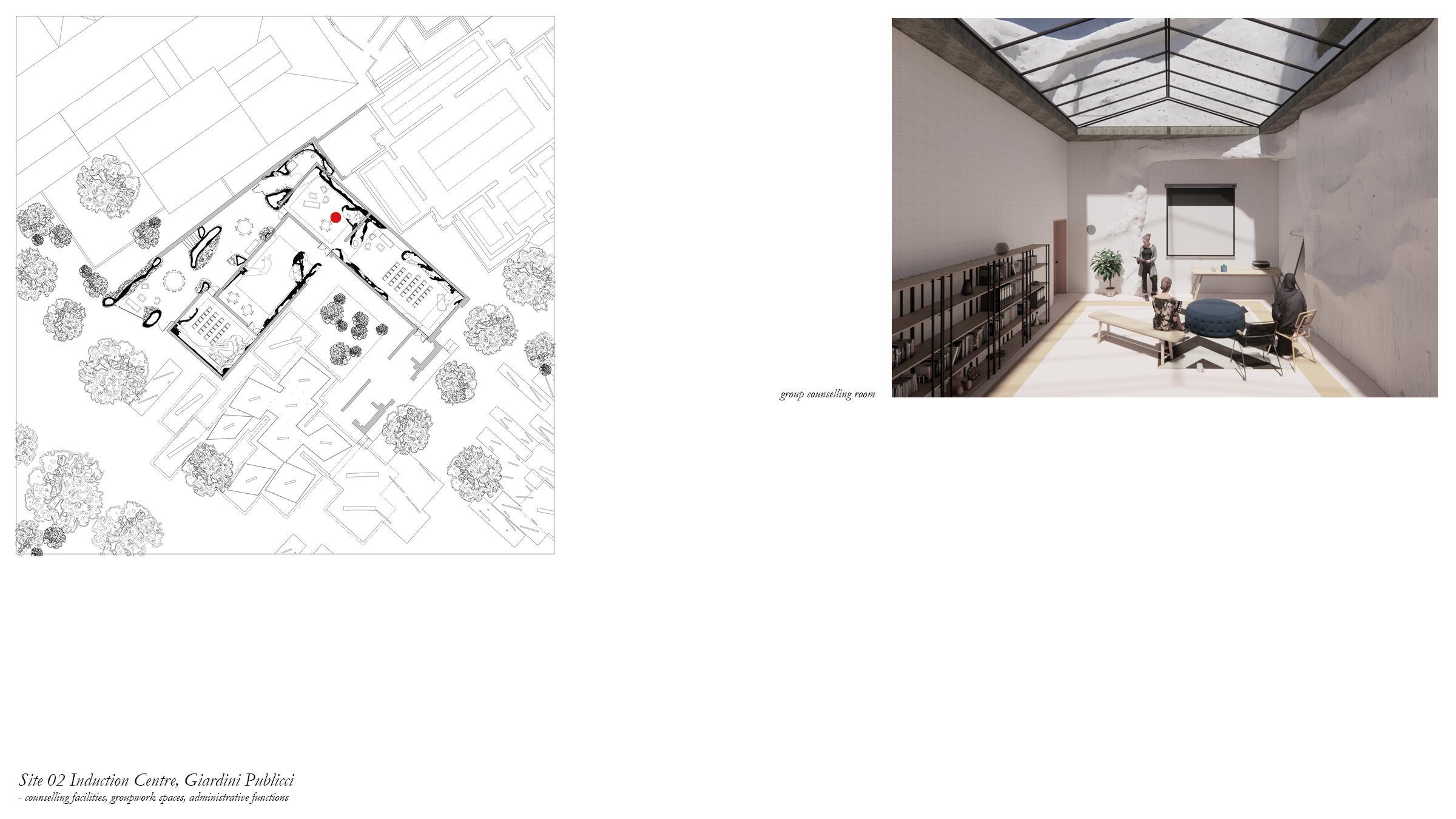
Larger rooms within existing Pavilions are used for language training and workshops.