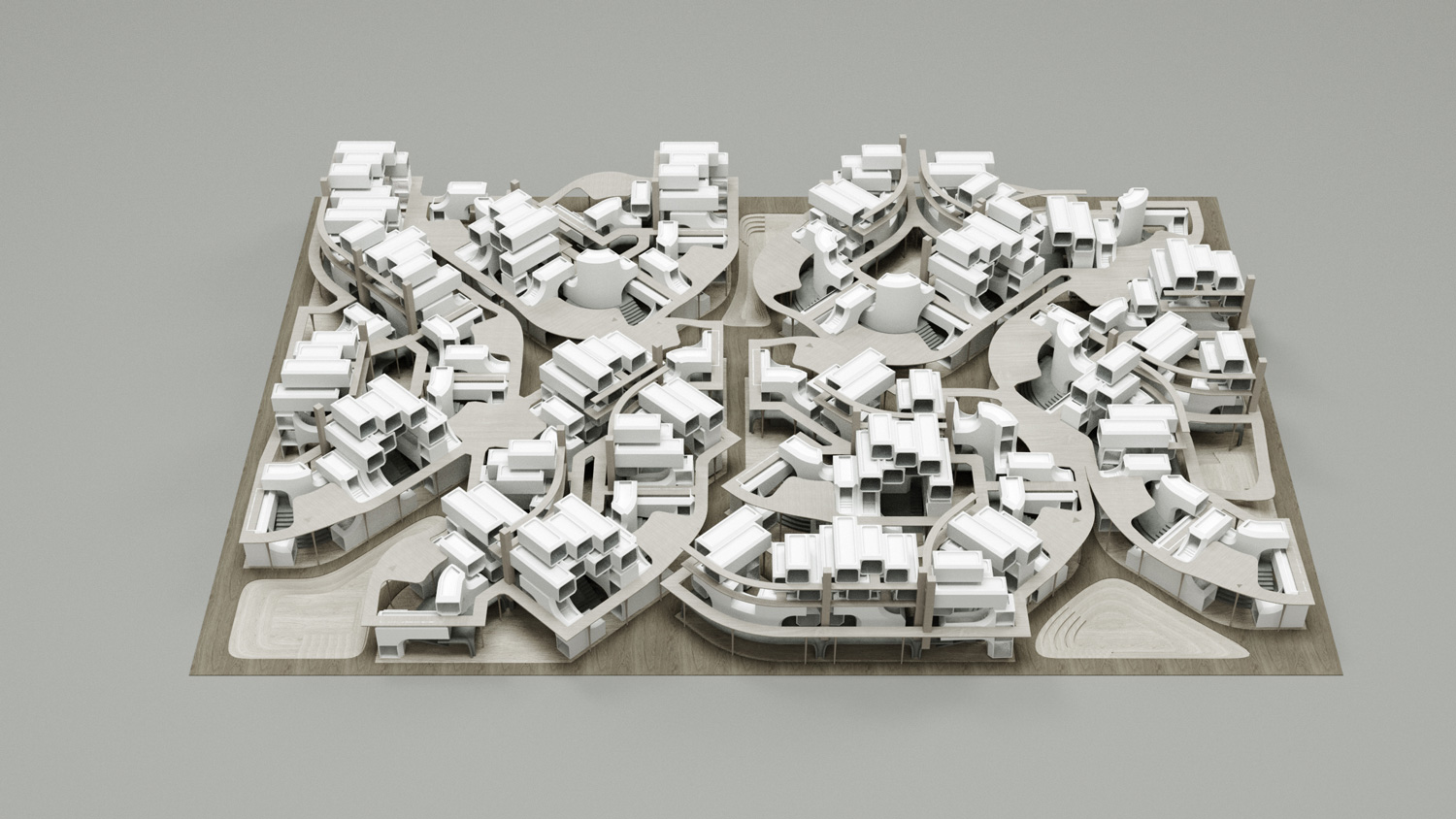
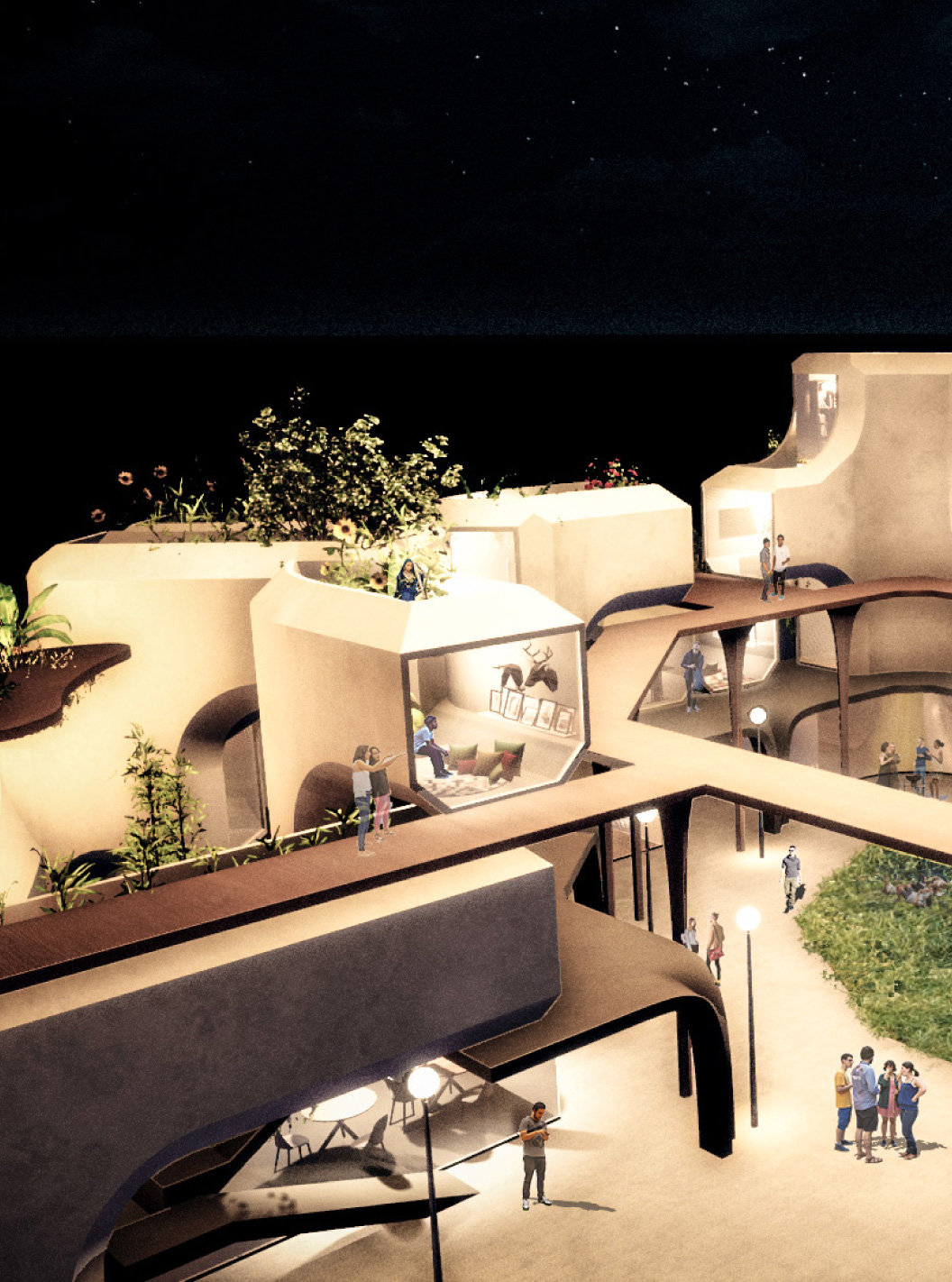
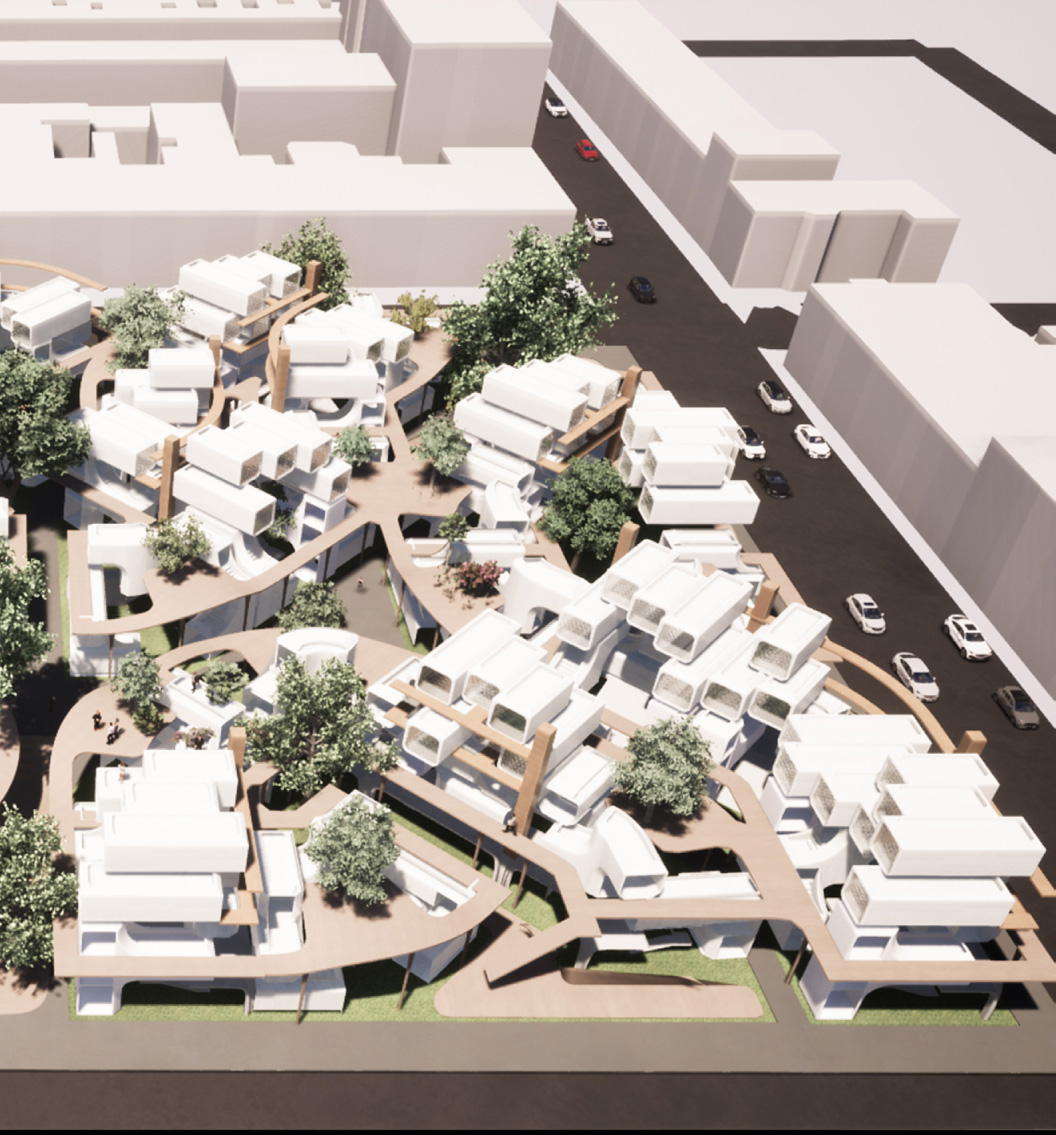
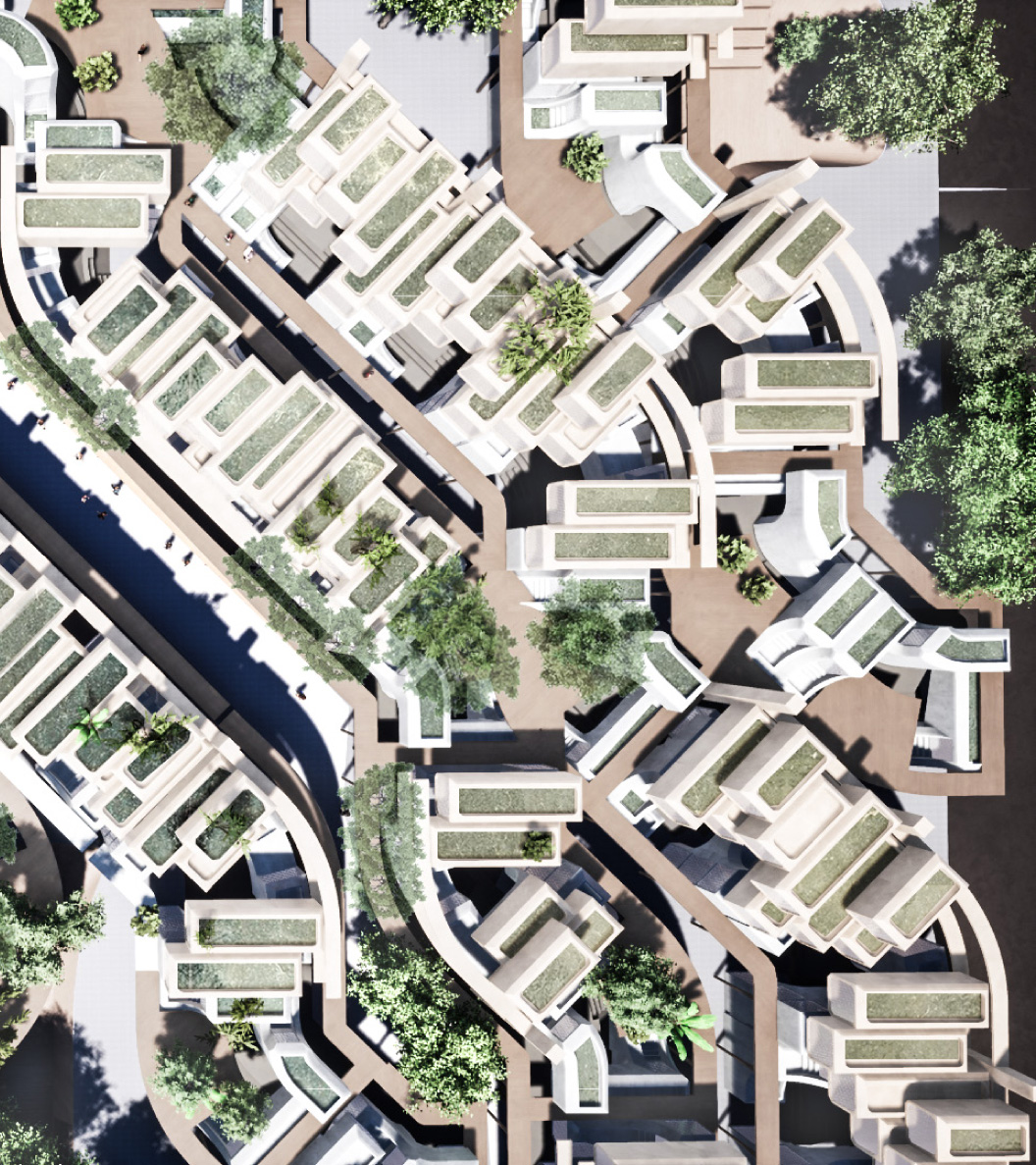
In the past decades, London has experienced the sort of urban sprawl and expansion, due to the influx of population, that creates large distances to cover resulting in inconvenient transportation systems and daily commuting, and a decrease in the human interaction between city dwellers. To address this the project proposes the siting of housing in the parks of central London as a means to activate these spaces as a hub for social and physical interaction.
Our research attempts to expose how these park spaces are under-utilised. The aim is to morphologically change the ground plane, providing a multi-height entertainment area and to spatially organise a series of activity spaces for the inhabitants. Therefore, the landscape is changeable based on the time sequences and routines of the occupants.
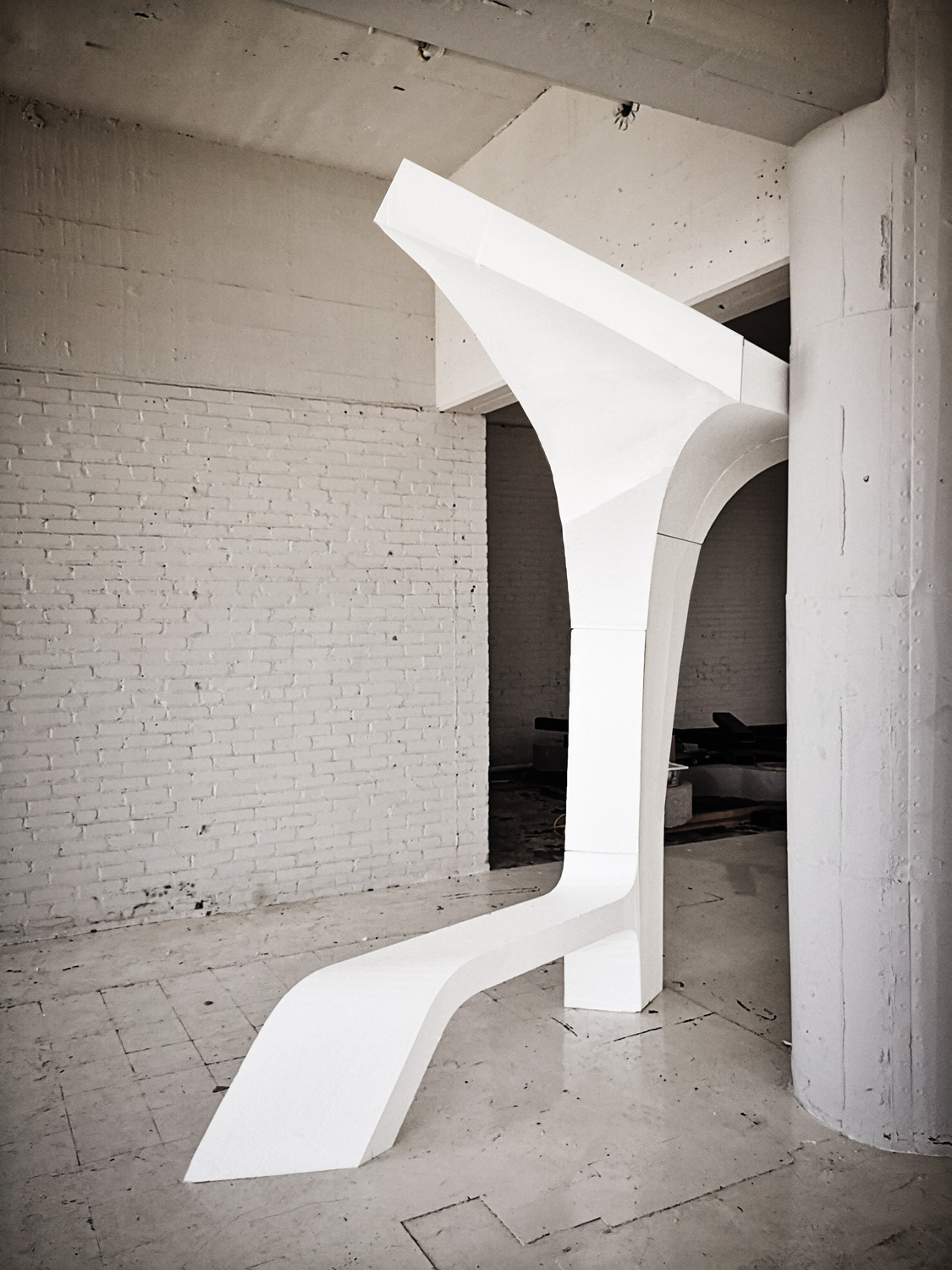
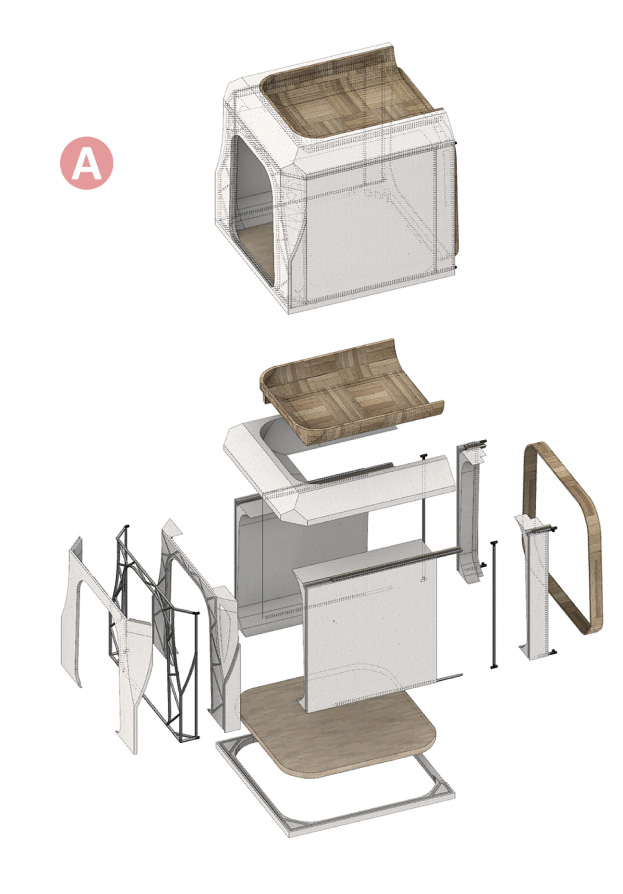
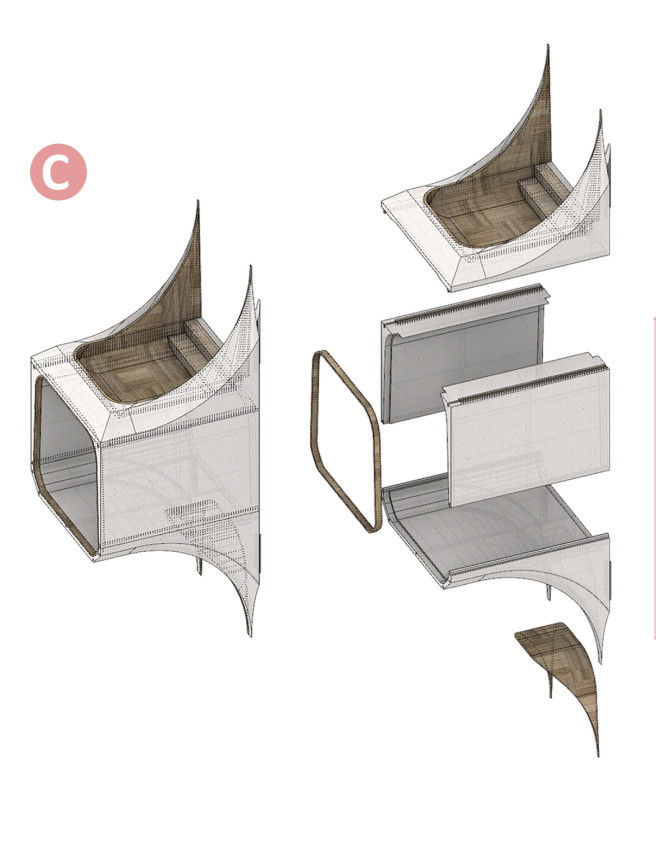
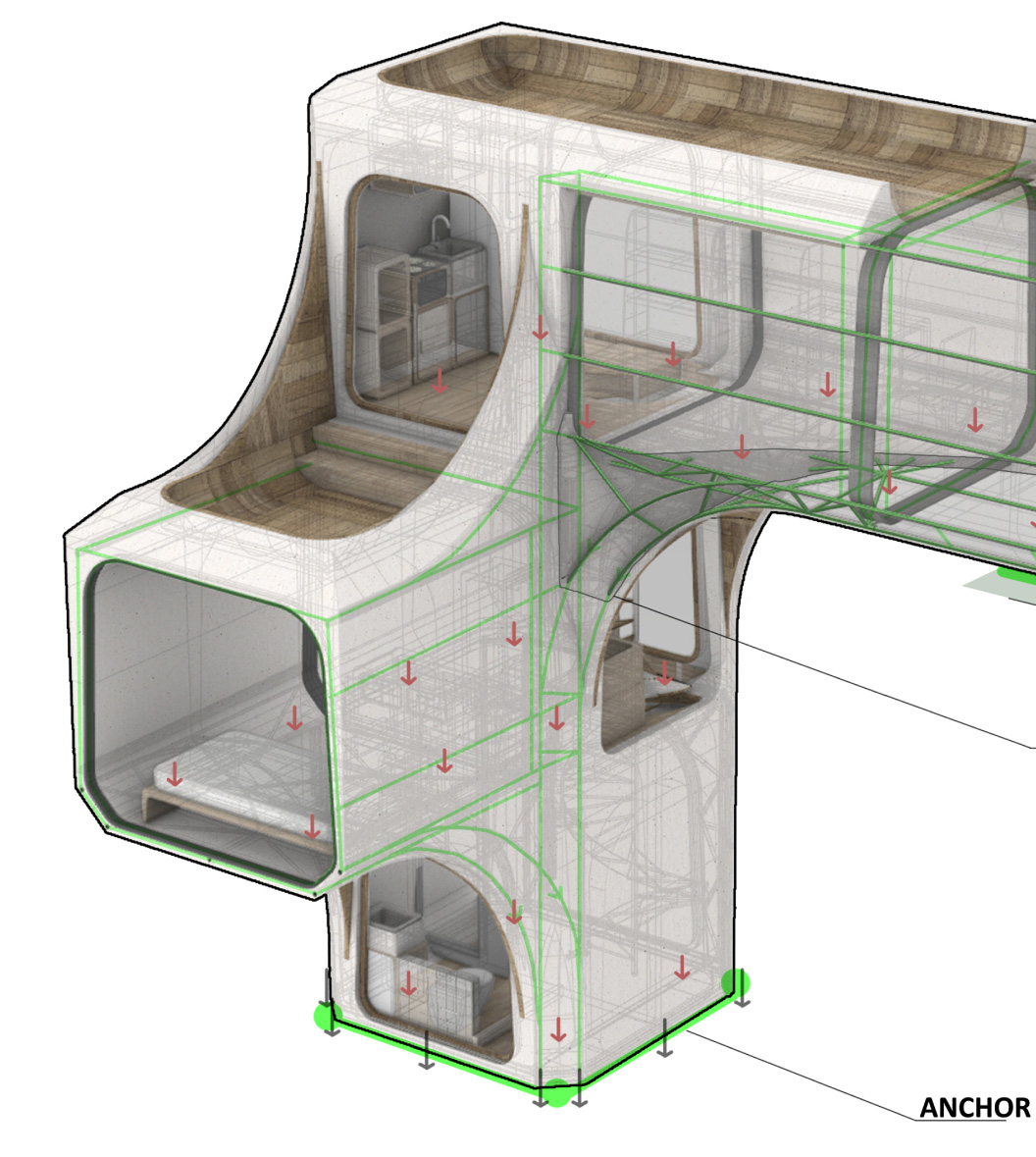
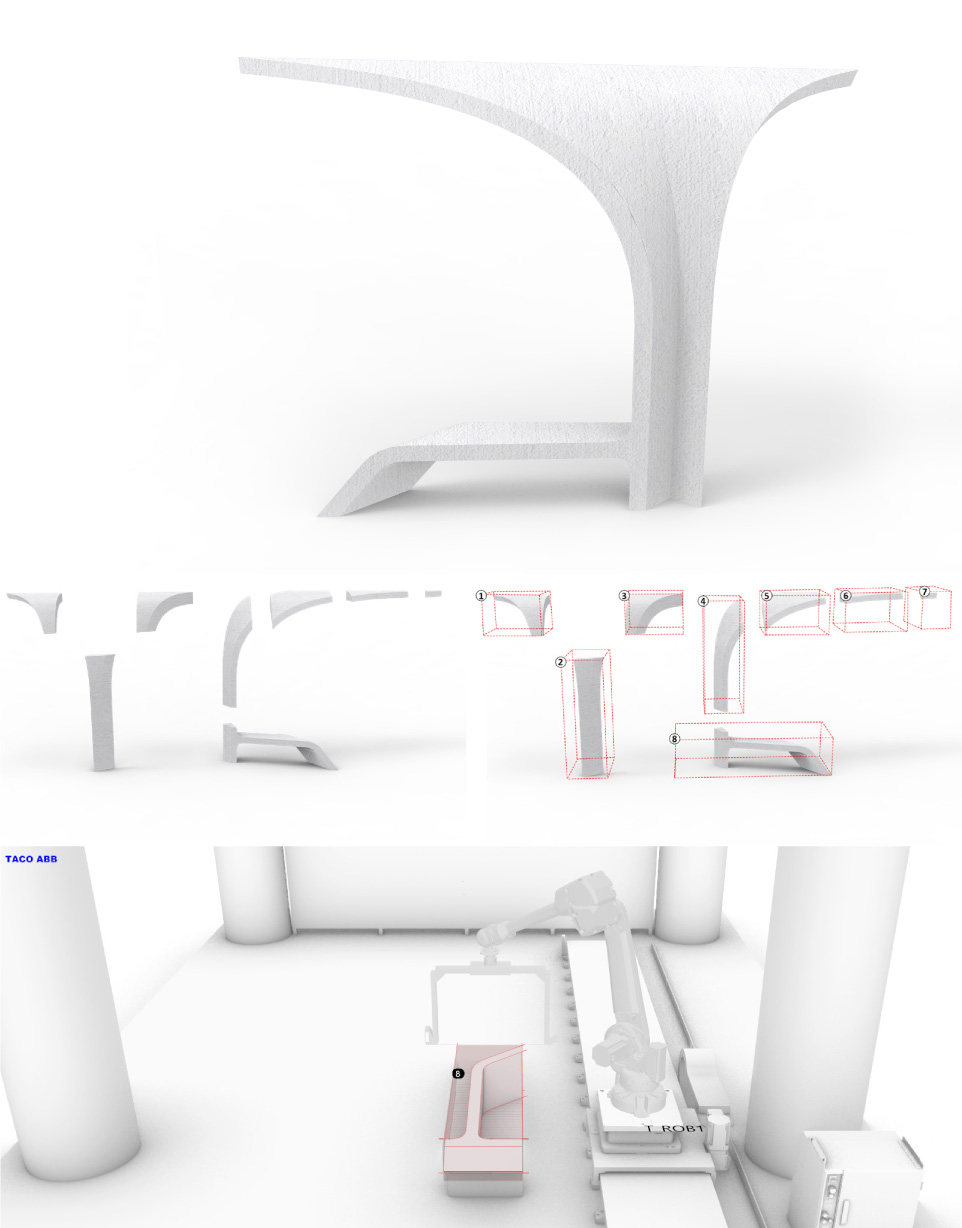
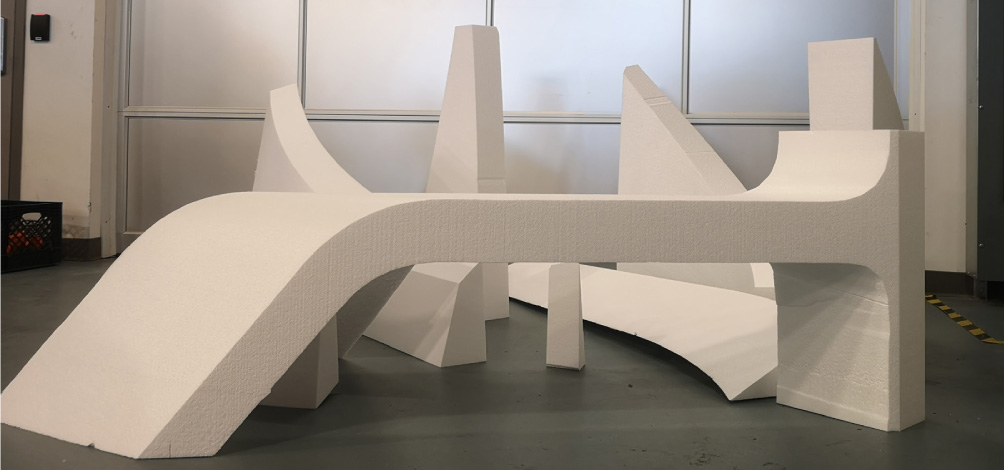
The organisation strategy of the project is supported on a gaming engine that allows the participation of the user in the design process. The modular construction method is reconfigurable and moveable based on the needs and requirements of each household. The material system is controlled by a robotically-driven process of hot wire cutting that constructs the foam formwork, pours the concrete components in a dedicated factory and assembles the structure on site.
1
2
3
4
5
6
7
8
9