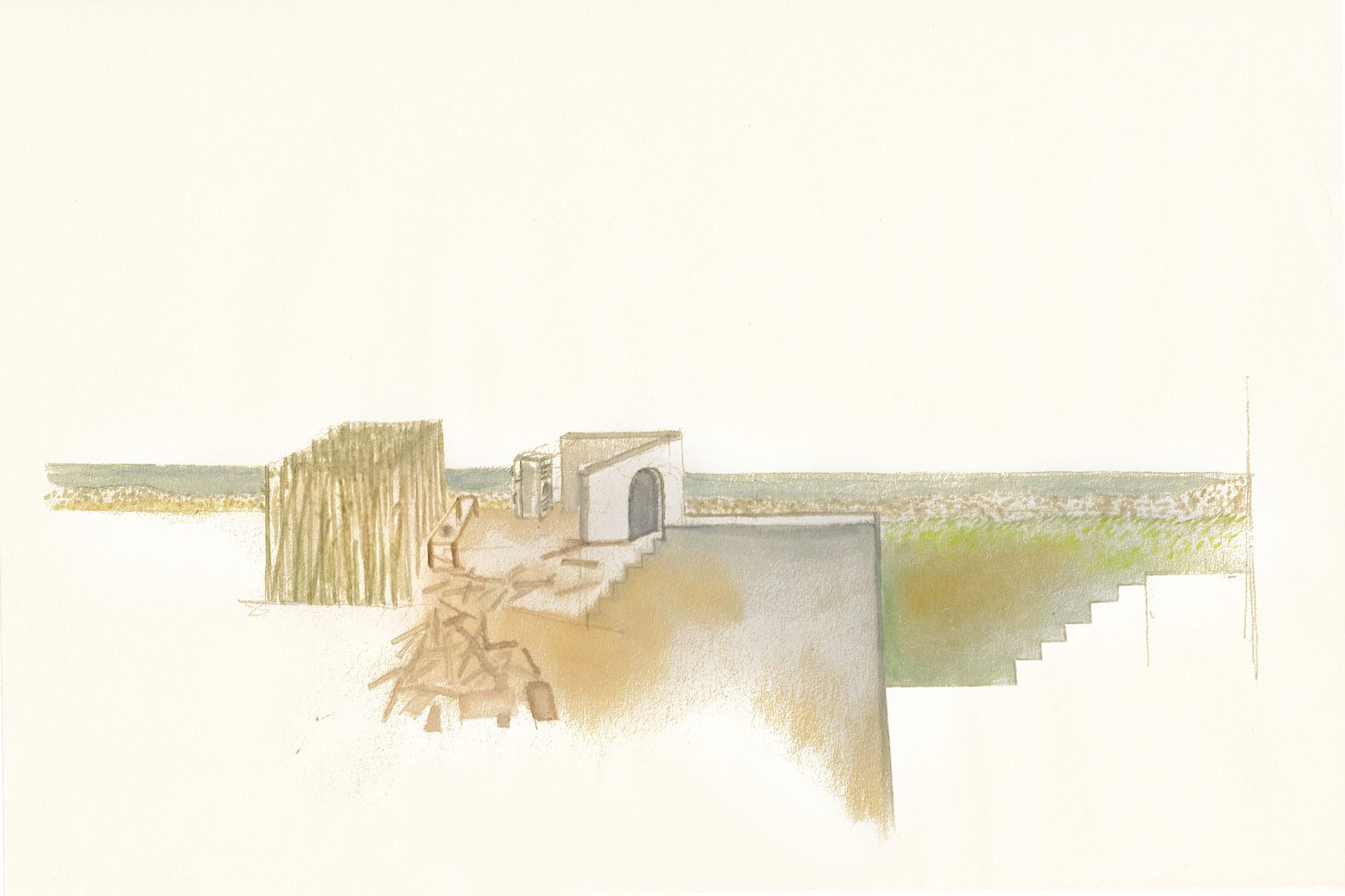
Architectures of displacement
Aylin Gürel
Through examining cases of self-made domestic architectures of political emigrants, questions of resettlement and space-making are posed. Central to the construction of these spaces in the limbo of shifting geopolitics are notions of citizenship, state interventions and forms of belonging.
The narrative, beginning with the 17th century housing typology developed in Izmir by the Sephardi Jewish expelled from Spain, examines specific spaces as instances of carrying and transplanting (typological) architectural traditions in a new urban context. The aim is to understand displacement as a human process, in which people do not only carry goods but also bring with them a spatial expertise that is then re-enacted in a new location.
In the need for resettlement, significance of artifacts as well as mental retention of culture and building methods are observed as part of the establishment of domesticity and cultural space after being relocated. Taking specific material manifestations of construction, re-use and appropriation, I reflect on how what is carried becomes a need to re-domesticate. The research calls the attention, particularly for contemporary urban lower-class refugee housing, of architectural practice, and most importantly of architecture as a discipline.