This project is a proposal for the creation of hydro-communes throughout rural India in response to the crisis in water management.
The project critiques the centralised management of large scale infrastructure projects and proposes a shift in water management, its supply and distribution– by advocating the hydro-commune as a common realm for the local people. It attempts to shift the control of the resource back to the people who are local to the resource, who need and depend on it the most.
Because it is a commons it requires a new local establishment to exist to maintain and monitor it. It will be run by a group of women of the community breaking the barriers in water gendered spaces and envisions a cultural shift in gendered roles in rural Indian communities.
Conflicts today can be best understood, not as battles taking place in the landscape, but rather as a process allowing for the creation of new grounds. The hydrocommune embodies a shift in the imagination of water infrastructure in India and strives to alter the socio-political organization of citizens while promoting community resilience.
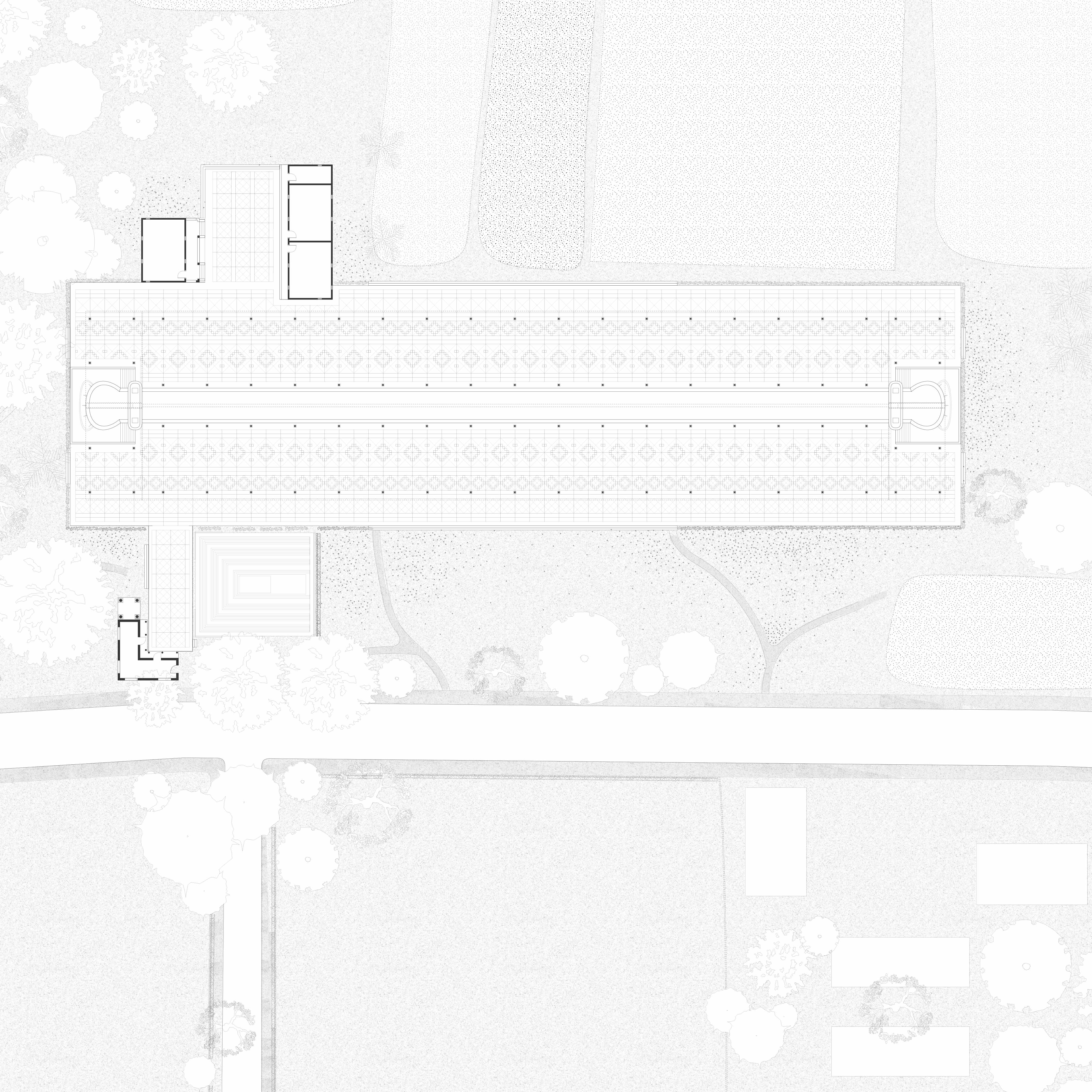
The Hydrocommune I Being strategically located this communal shared water system is formed by a collection of old and new public spaces.
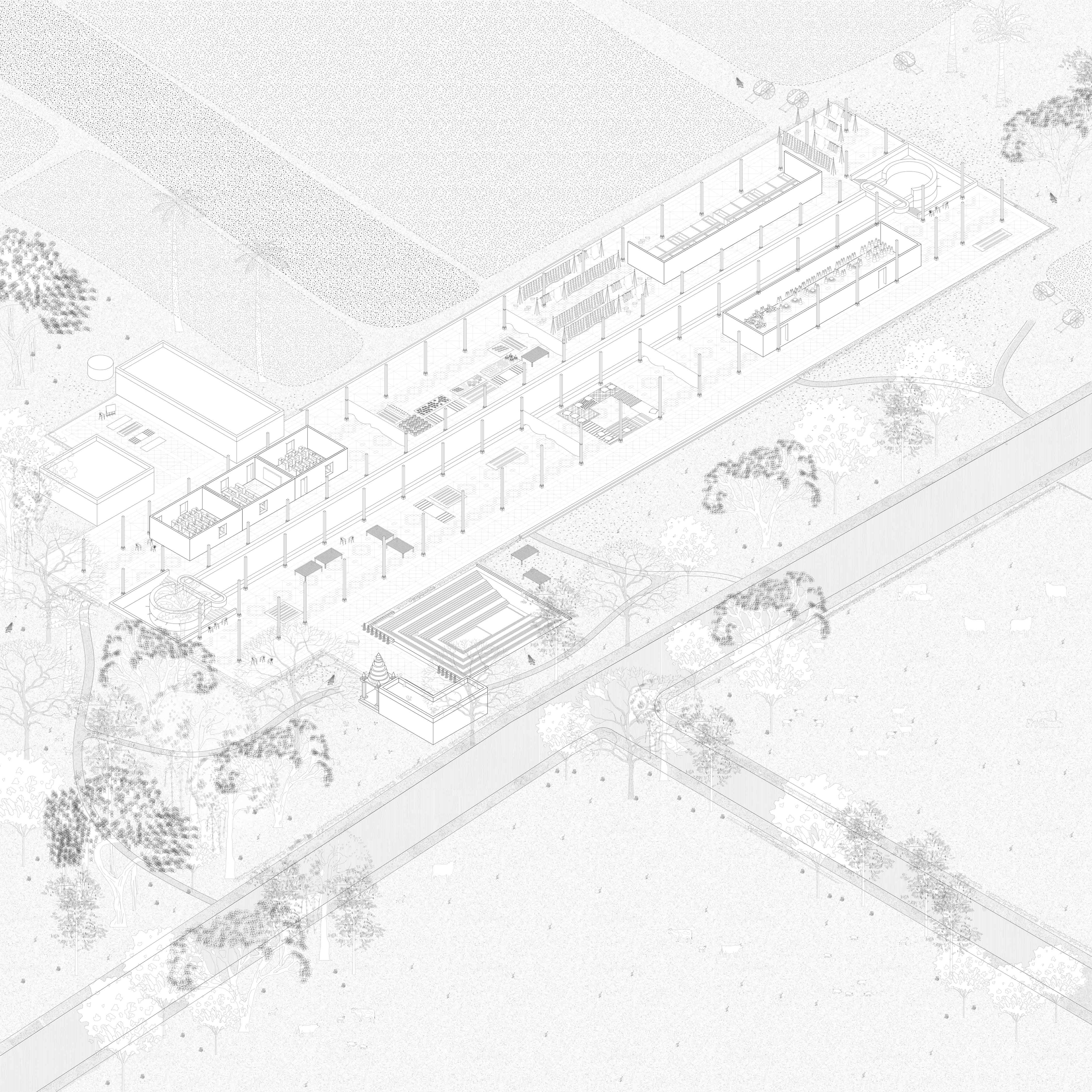
The Hydrocommune I There is a need to reserve more space, for uses on a temporal scale and use resources more efficiently.
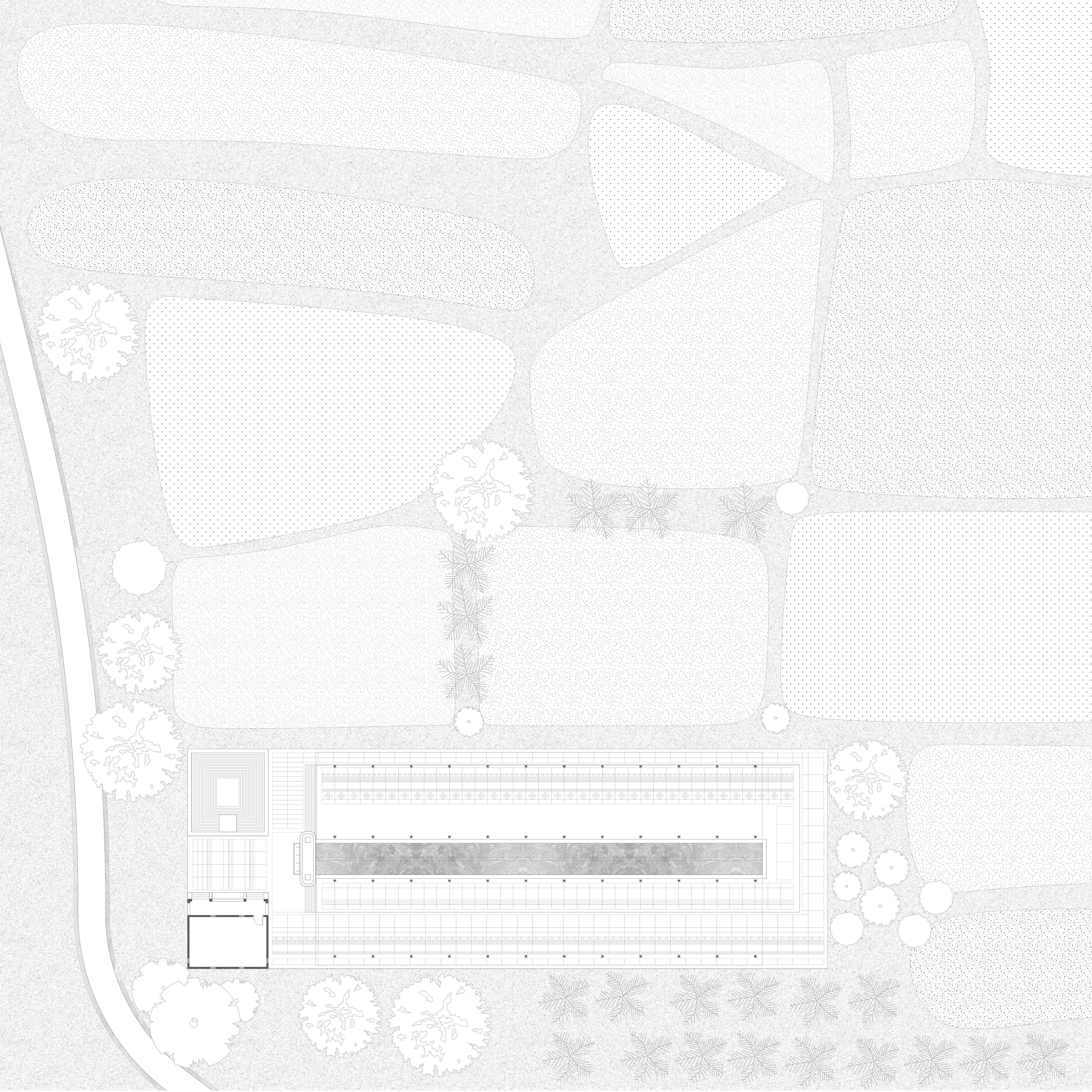
The Hydrocommune II The horizontal orientation of the building in the Indian climatic zone is such, so that the building gets minimum solar exposure.
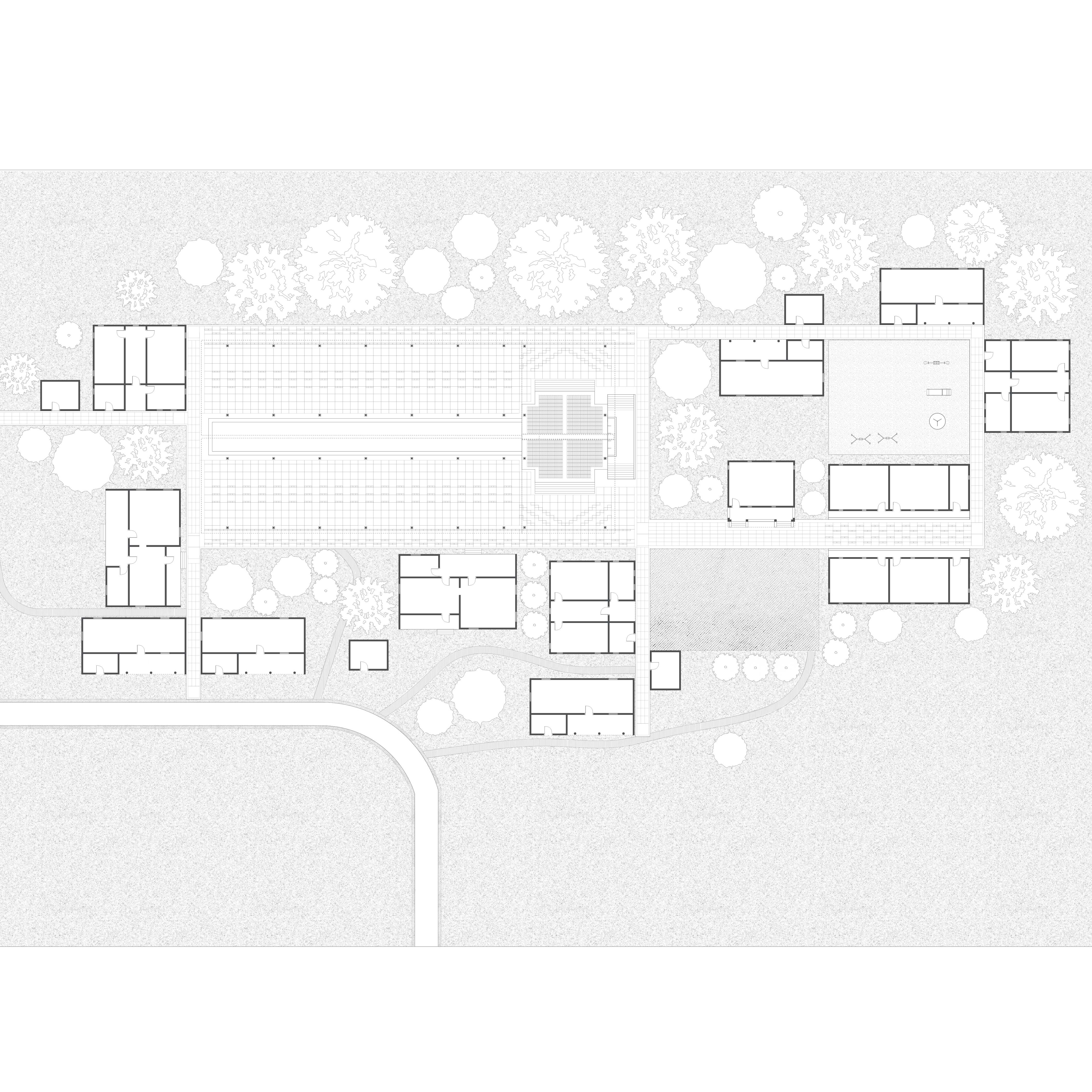
The Hydrocommune III The linearity of the structure is used to weave it into the existing fabric of the village, allowing the ground to extend and be defined by the existing context.

The hydro-commune is deployed in Indian villages where due to climate change and rising population, scarcity and stress will continue to grow and it will provide the community with water resiliency.
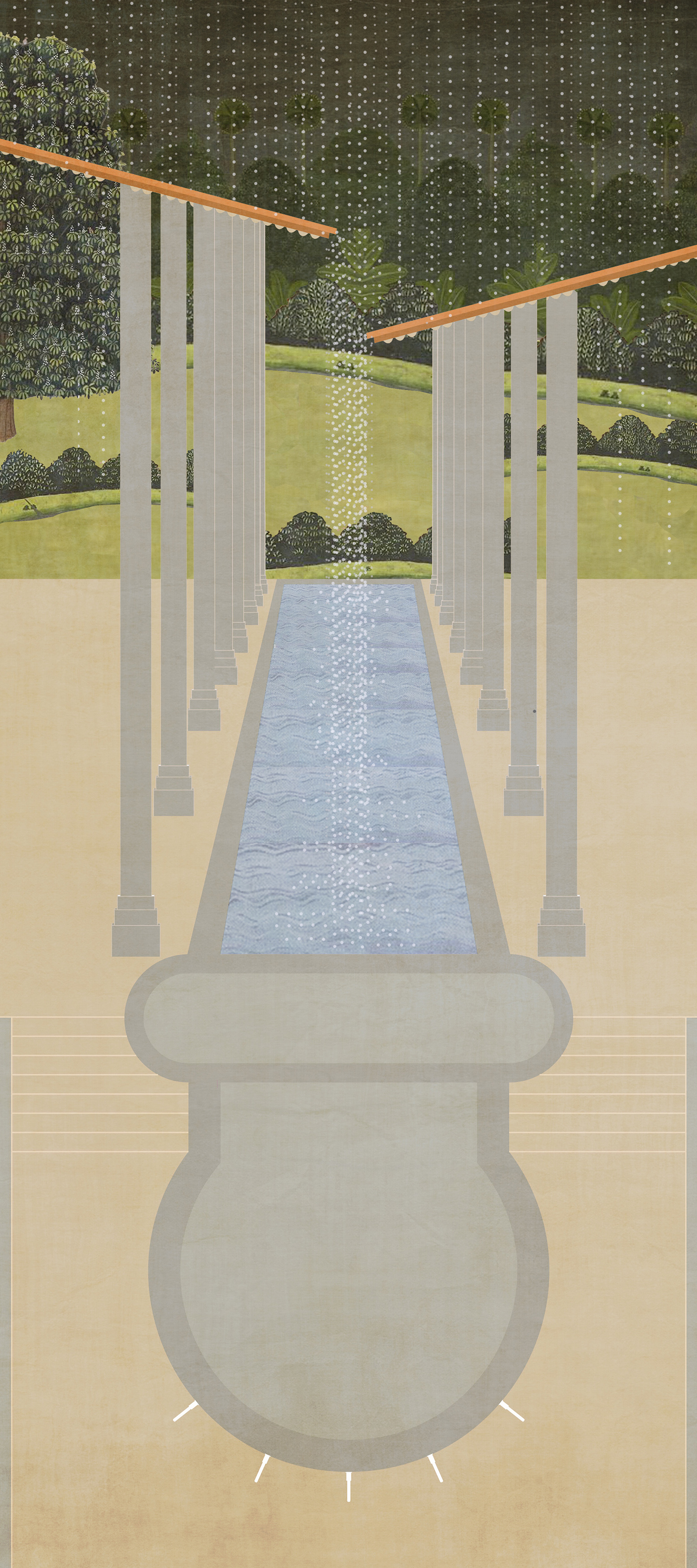
The hydro-commune consists of a water catchment system: A roof to catch rain-water and a tank to store it.

When placed on a ground, it creates spatial opportunities. It addresses how having access to drinking water can improve the life of these communities.
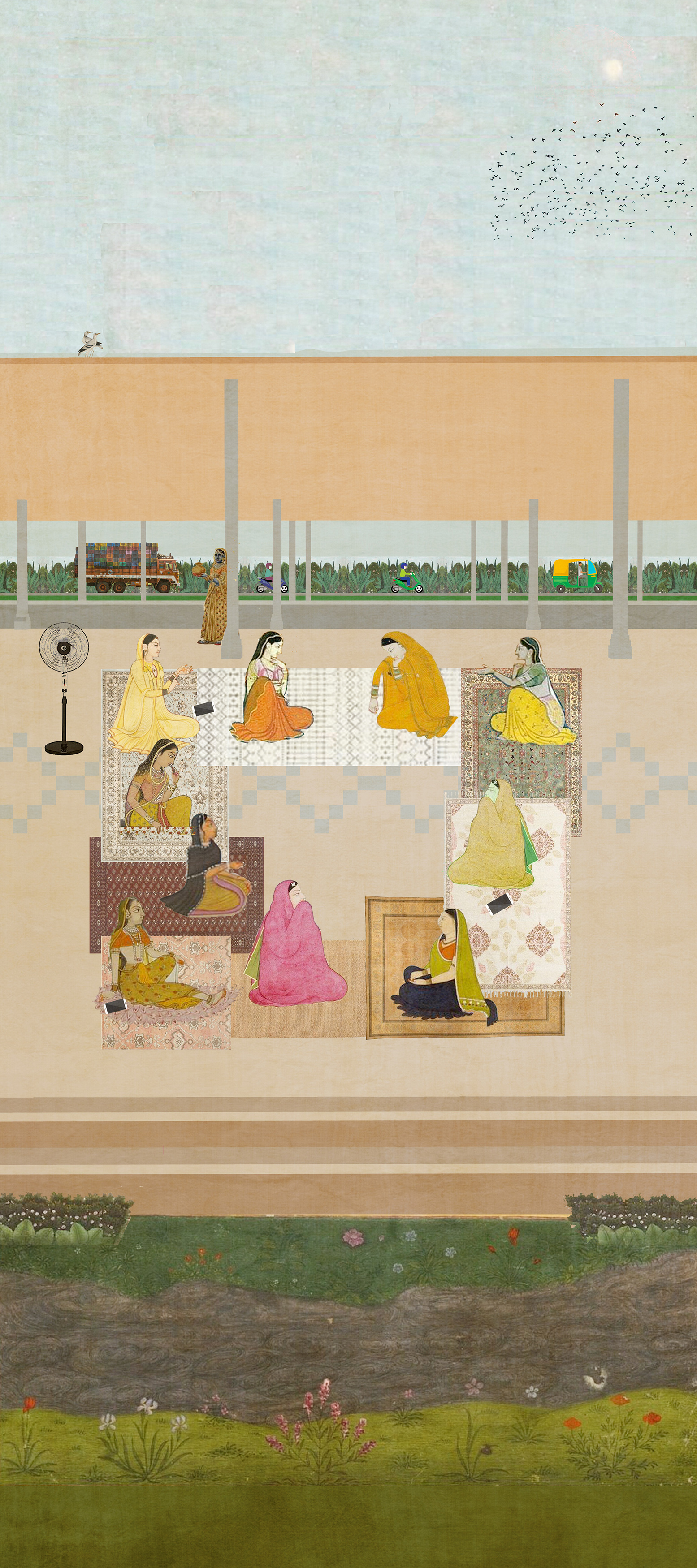
From Water Bearers to Water Managers. The women the community can be trained and skilled to manage the Hydro-commune and not just bring the water home.