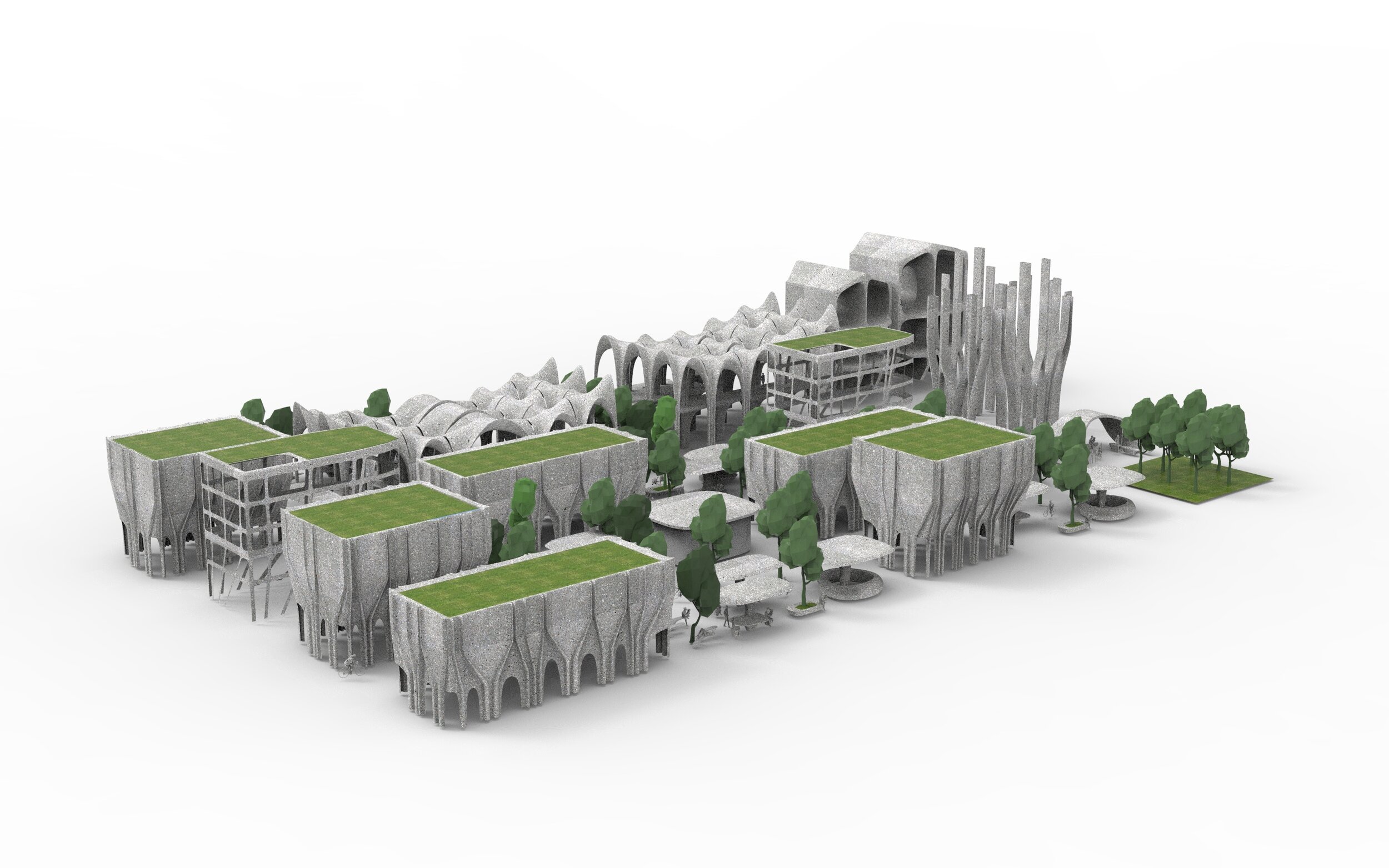
PHASE 1_Industrialis3d
Akash Clive, Dilara Yurttas, Mauricio Villagra Dill’ Erva
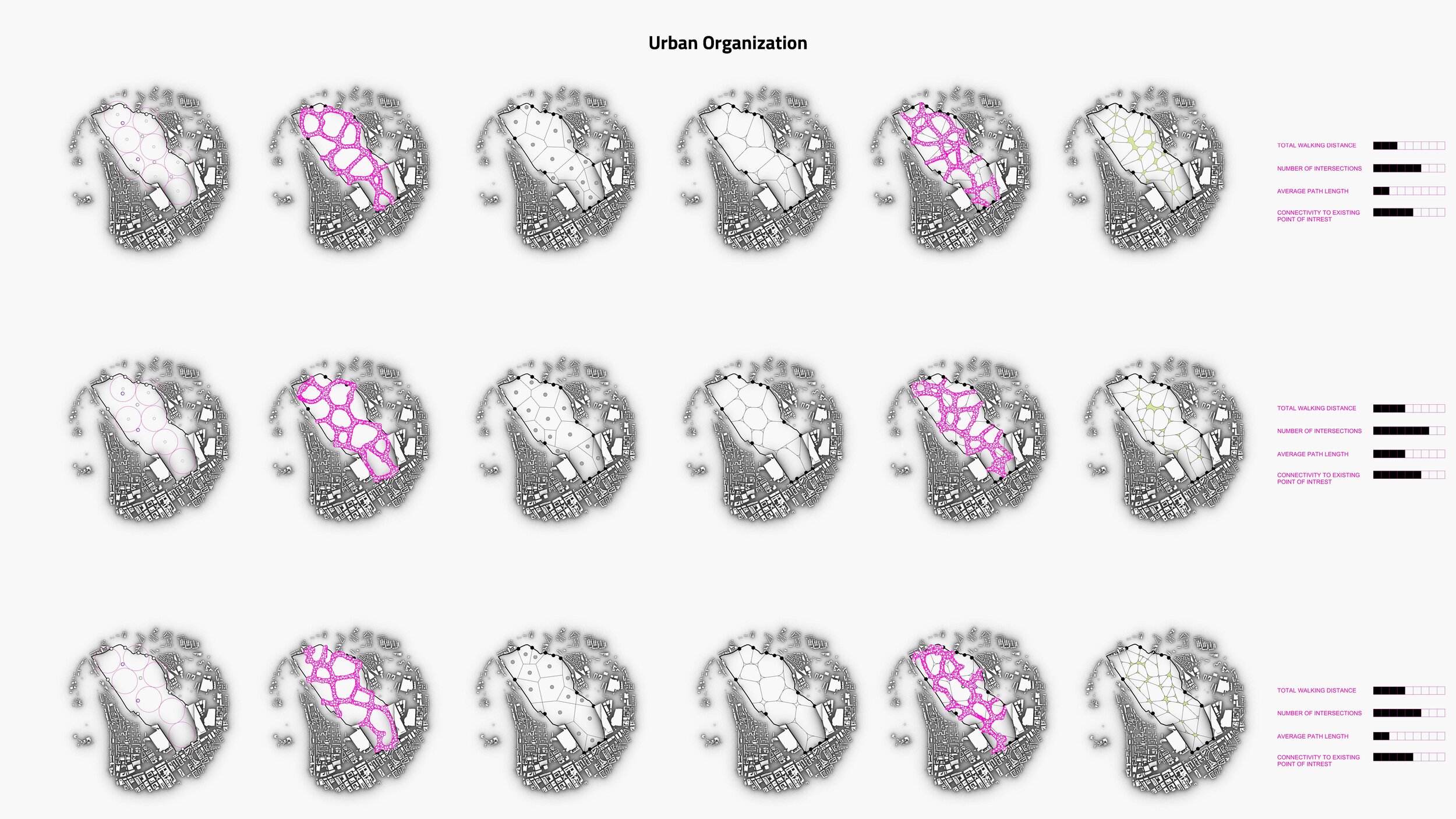
The cities developed during the 20th century that have shaped contemporary metropolitan life, today fail to satisfy the diversified demands of their citizens. Especially after the introduction of cars, the urban fabrics that emerged responded predominantly to the planning of transportation systems which, of course, shaped the circulation infrastructure, but limited any consideration of the movement of people, resulting to a reduced social interaction within the urban fabric.
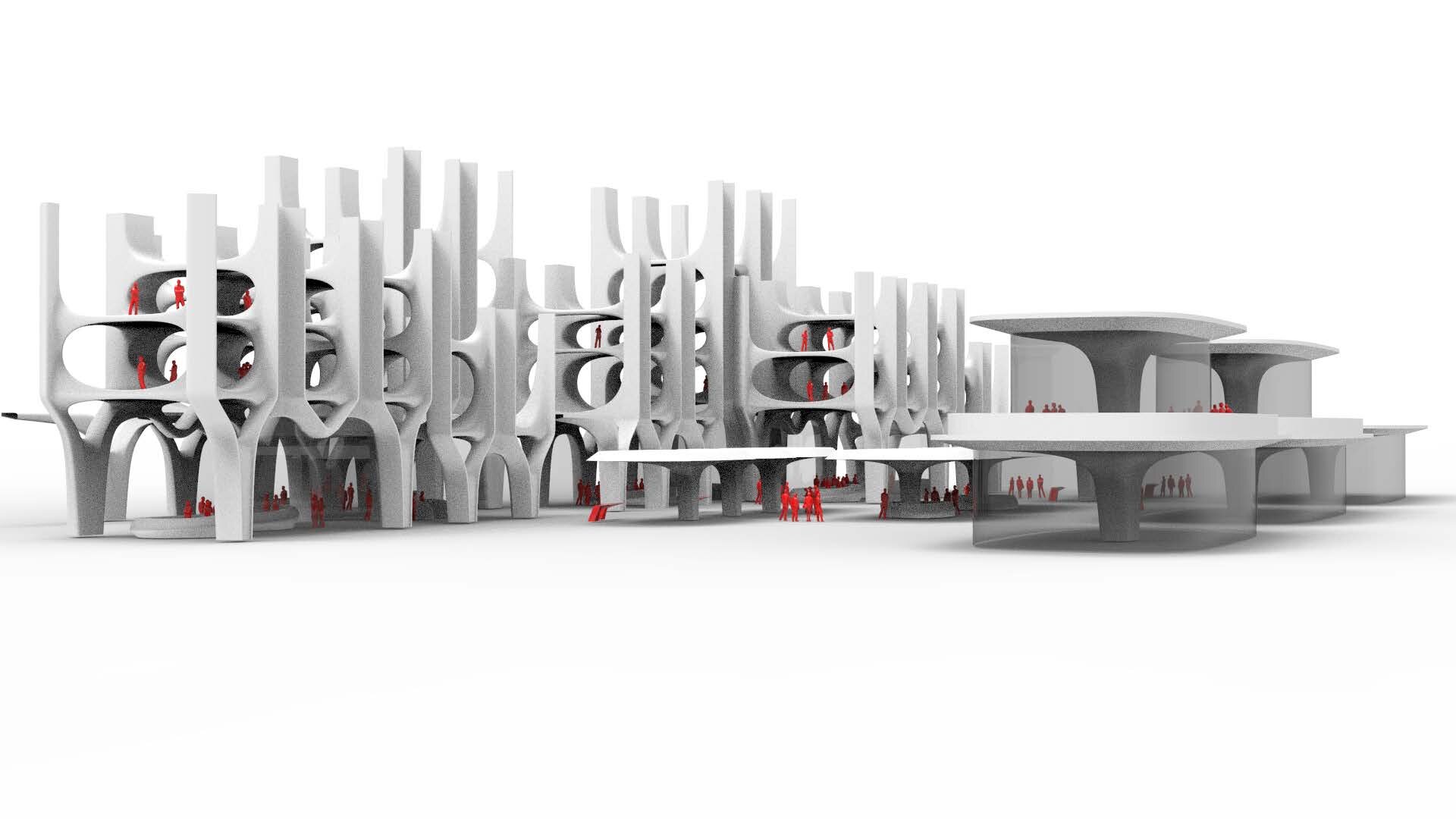
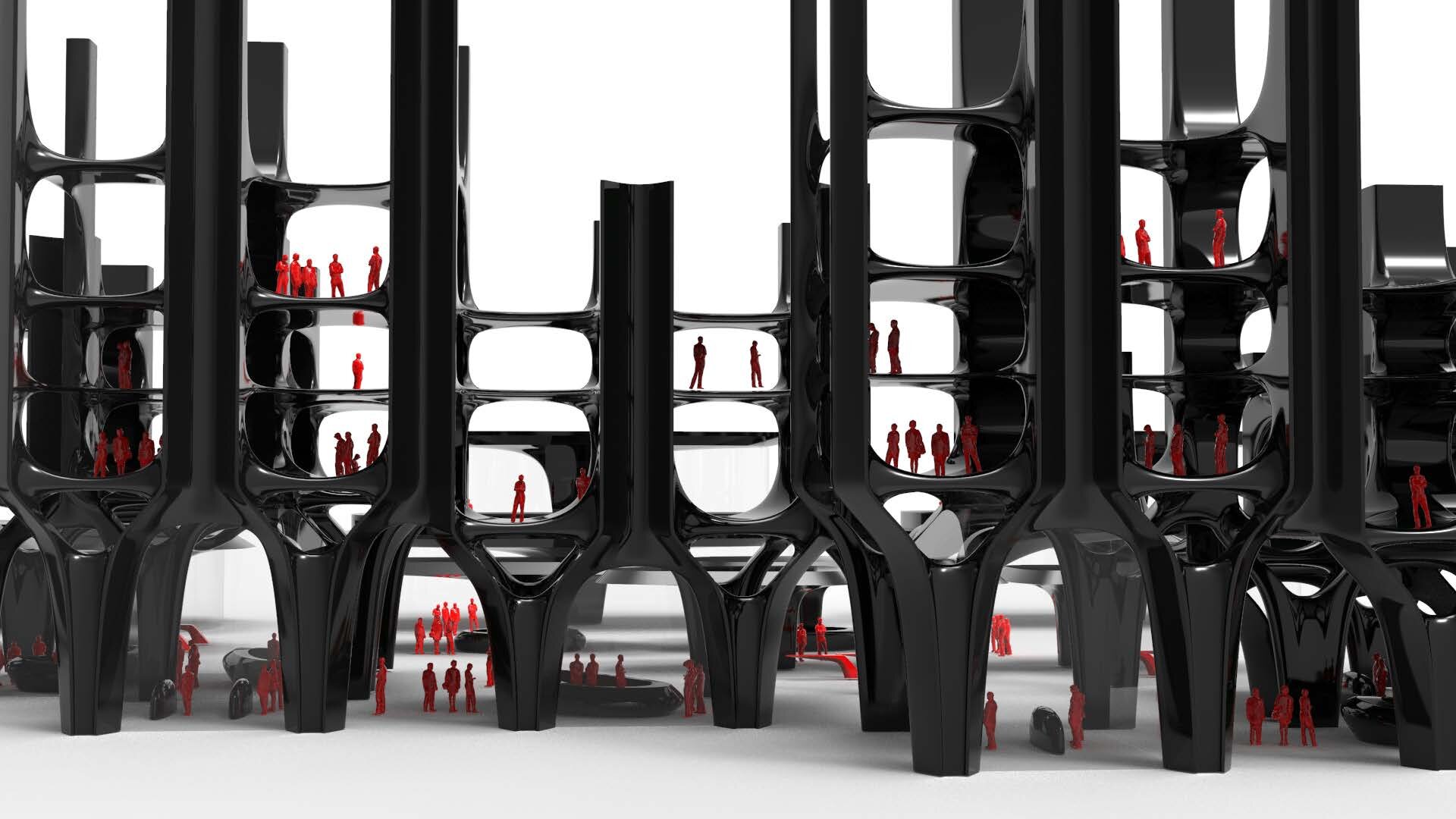
The emergence of micro-mobile devices during the last decade allowed for faster and more compact circulation in the cities. This has reduced the necessity for the construction of large new streets that delineate human movement. Instead, we see an opportunity to redesign the urban fabric looking back to historical examples of cities, aiming for a pedestrian-dominated, car-free, walkable city.
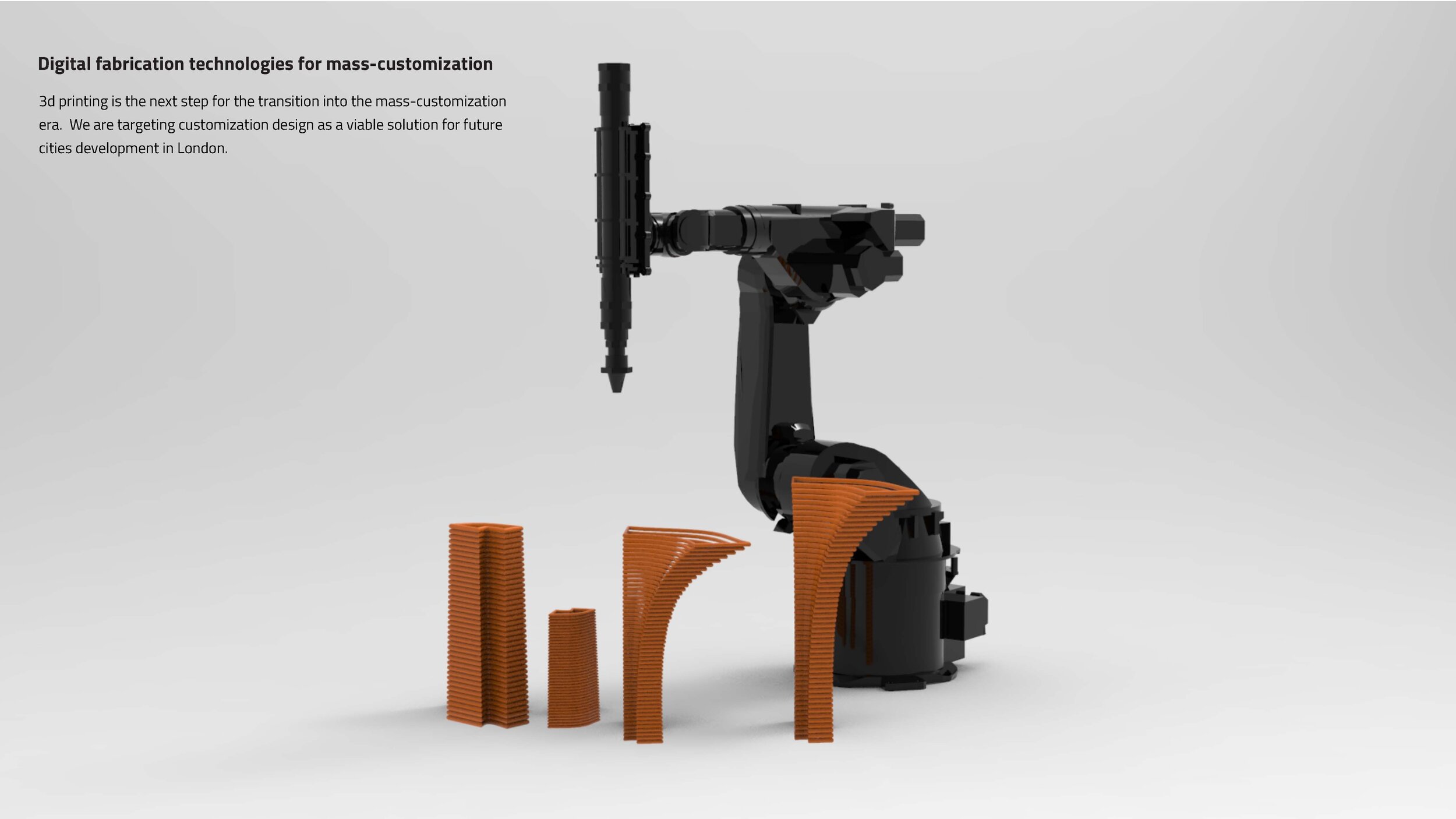
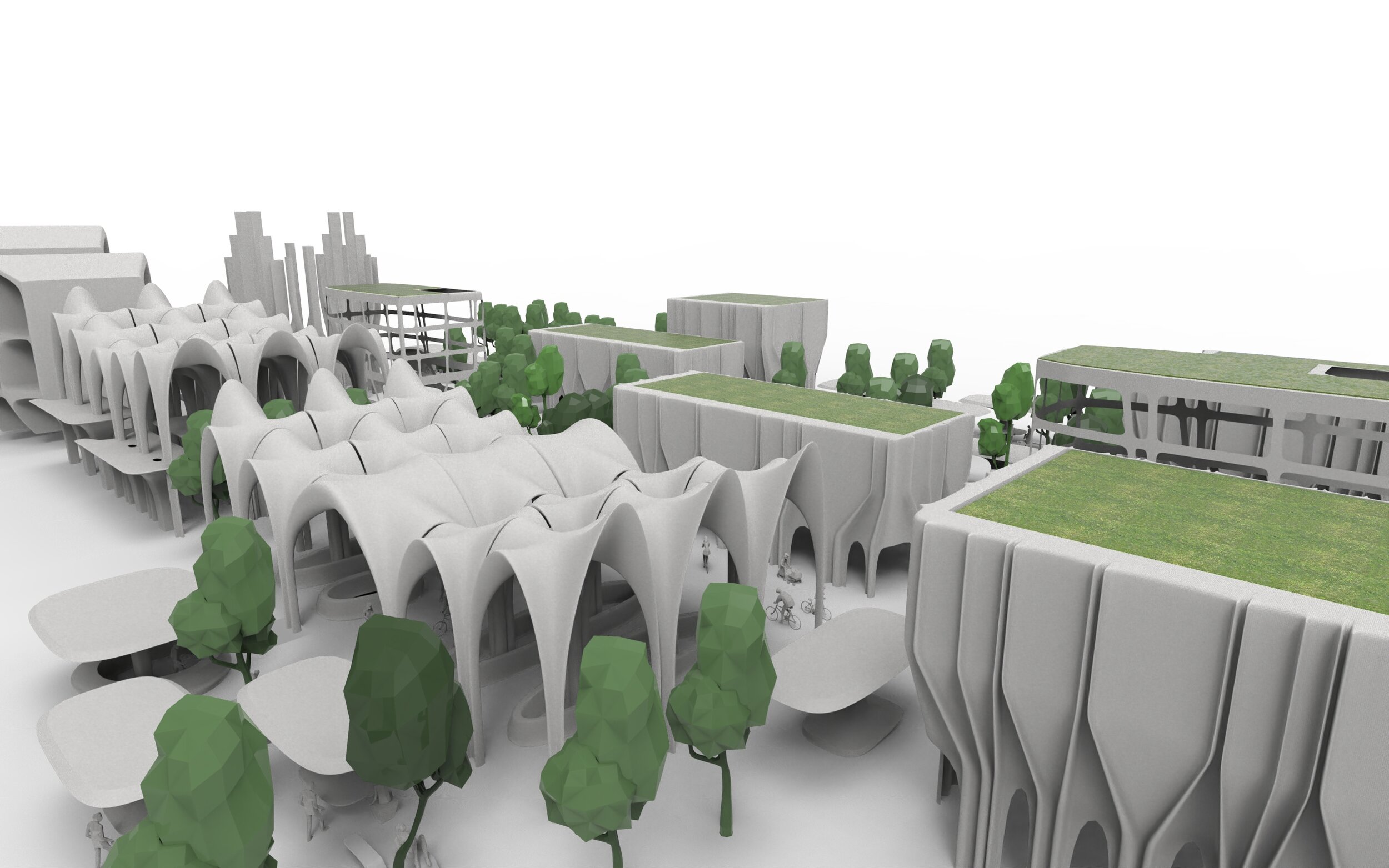
As we are moving towards a human-centric approach to design and build, we need to deliver customised solutions to fit a variety of demands for individuals and communities alike. With additive manufacturing as a fabrication tool, permitting speed, precision, range, and quality compiled by employable materials that are mostly by-products of traditional construction industry, we achieve a multi-material system that is sustainable, resilient and reconfigurable.
1
2
3
4
5
6
7